
Reviewed · WORKSHOPS
Beginners Photography Course – Small Group Workshop
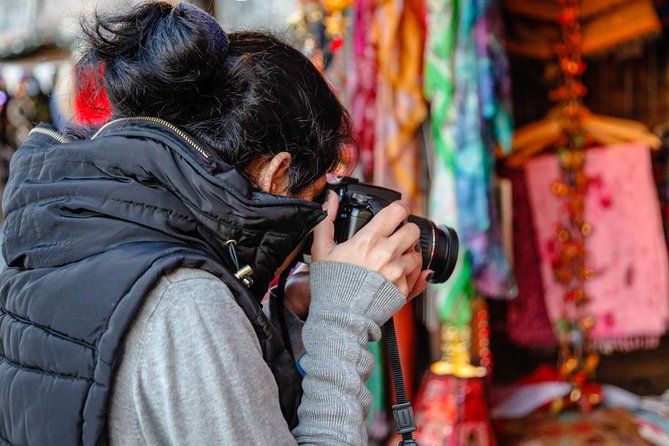
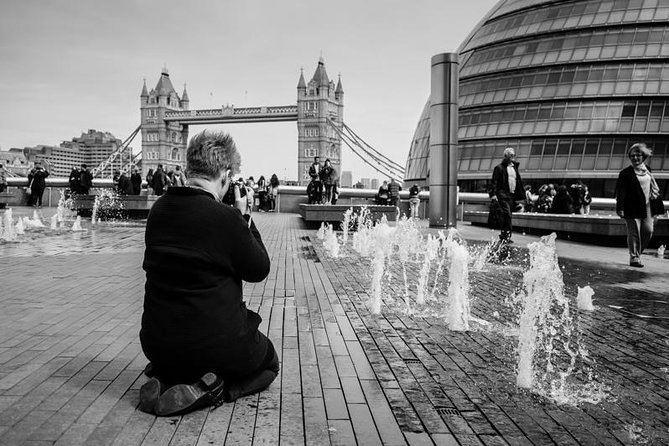
London becomes your classroom in this hands-on photography workshop, where your own camera sets the lesson plan. Instead of listening to a long talk about camera theory, you practice ISO, aperture, shutter speed, focus, and composition beside City Hall, Tower Bridge, and the Tower of London.
I like two things right away: the six-person limit gives you real access to the tutor, and the teaching is adapted to the camera you actually carry. Lou is praised for explaining tricky settings in plain language and for taking time to fix individual problems, including one student’s factory-reset issue.
The main consideration is price. At $336.07 per person, this is a serious spend for about four hours, especially since the famous London sights are viewed from outside and food is not included. You are paying for focused instruction, not entry tickets or a sightseeing tour.
Key points to know before booking
- A maximum of six people keeps the workshop personal and leaves room for one-to-one help.
- City Hall and More London provide the main practice area for ISO, aperture, shutter speed, and other camera controls.
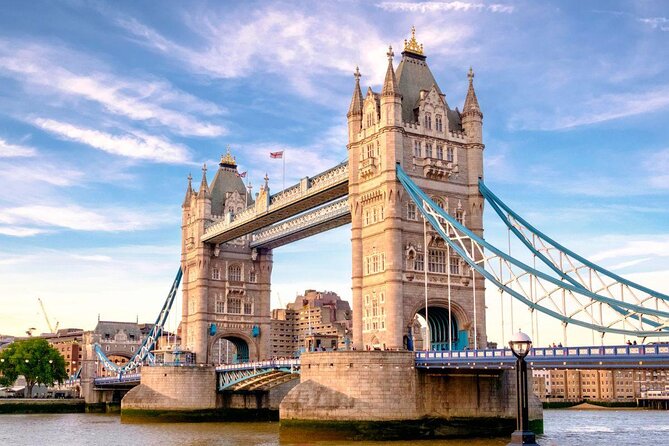
- Tower Bridge and the Tower of London become practical lessons in framing, light, depth of field, and lens choice.
- Lou teaches across many camera makes and models, with advice geared to the camera in your hands.
- Short assignments turn technical explanations into immediate practice rather than passive listening.
- The $336.07 price makes most sense if you own a capable camera but still rely on Auto or Scene modes.
A camera class with London views
This is not a standard photo walk where a guide points out landmarks and tells you where to stand. It is a beginner’s course that uses London as a working studio. You learn a setting, try it on location, then see how the change affects your photograph.
That approach matters because camera controls make more sense when you can see the result. ISO, aperture, and shutter speed are easy to confuse when you meet them only in a manual. Here, you can adjust one of them, take a picture, and get help with the next step.
The workshop is designed for people who have owned a camera for some time but still keep it on Auto. It also suits someone who has inherited a camera, bought an intimidating DSLR, or wants to stop guessing which setting to use. You do not need to arrive with a polished photography style. You need a camera and a willingness to practise.
The group limit is one of the strongest features. Six people is small enough for the tutor to look at your camera screen, check your settings, and answer questions without leaving you waiting for a long stretch. It also helps when the group brings different brands and models, since the buttons and menus may vary from one camera to another.
More photo sessions in London:
- Professional Photoshoot in London Photographer
★ 5.0 · 102 reviews - Private landmarks photoshoot for families and couples
★ 5.0 · 92 reviews - Professional Private Photoshoot in London
★ 5.0 · 63 reviews
Starting at City Hall and More London
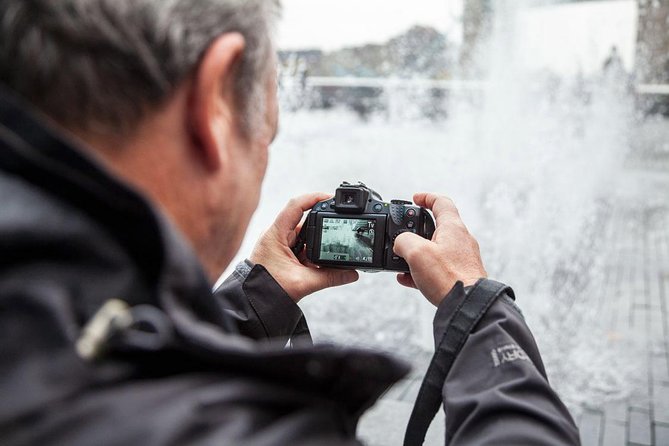
The meeting point is London Bridge Station Approach Road, close to London Bridge and the More London area. The first and longest section takes place around City Hall, with about two hours devoted to learning the camera’s main functions and practising them in the open air.
This is where the course earns its keep. You work through the relationship between ISO, shutter speed, and aperture, rather than memorising isolated definitions. The tutor sets short assignments so you can test what happens when you change a setting.
Aperture affects how much of the scene appears sharp and can change the look of the background. Shutter speed controls how motion is recorded. ISO affects the camera’s sensitivity and can help in darker conditions, though it also changes the quality of the image. The course gives you a practical way to see those differences for yourself.
You also receive advice on approaching different subjects. That may mean deciding what to include in the frame, where to focus, or how to use the available light. These are useful skills for future trips because good travel pictures depend on choices made before you press the shutter.
The tutor works with your personal camera rather than teaching to one standard menu. That is important if you use a less common model or feel lost in your camera’s controls. A previous student needed a factory reset, and Lou took time to sort it out. That example gives you a useful idea of the teaching style: camera problems are treated as part of the lesson, not as an inconvenience.
Tower Bridge as a lesson in composition
The walk then moves to a viewpoint across the river from Tower Bridge, with about 30 minutes for photography and instruction. This is not simply a stop to take the familiar postcard view. You work on composition, framing, depth of field, and the effect of light.
Tower Bridge gives you a clear subject with strong lines and recognizable shapes. That makes it useful for learning how to place a landmark within a frame. You can consider how much river, sky, or surrounding architecture belongs in the photograph, and how the image changes when you alter your position or focal length.
Focusing techniques also come into play here. Your tutor can help you decide what part of the scene should be sharp and how to control focus more deliberately. This is a key step for someone who has allowed the camera to choose everything automatically.
The short timing is both a benefit and a limit. Thirty minutes is enough to practise a focused task, but it is not enough for a slow, relaxed photo session. You should expect instruction and quick exercises, not a long period to wander along the river looking for countless angles.
The Tower of London from across the Thames
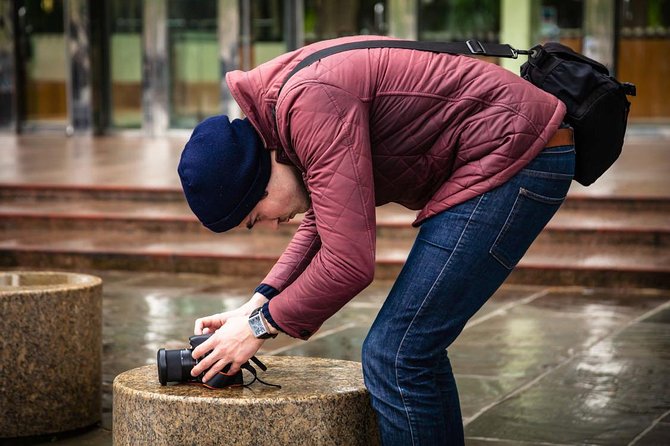
The final named stop is another riverside viewpoint, this time aimed at the historic Tower of London. The session lasts about 30 minutes and continues the practical work on lens choice, shutter speed, composition, and light.
Using two major landmarks helps you apply the same ideas to different subjects. Tower Bridge encourages attention to structure and lines, while the Tower of London gives you a different shape and setting to frame. You can start asking better questions: Should I use a wider lens to show the surroundings? Would a longer focal length make the building more prominent? How does the available light change the mood?
You are not entering either attraction as part of this experience. The value comes from photographing them from across the river and using them as examples. If you want interior visits, guided history, or admission to London landmarks, you will need to arrange those separately.
The tutor remains available while you work. That one-to-one help is especially useful when the problem is not a general photography question but a button, menu, or focusing mode specific to your camera.
More workshops and classes in London:
- London Traditional English Scone Making and Tea Workshop
★ 5.0 · 271 reviews - Street Art Tour and Spray Painting Workshop in London
★ 5.0 · 98 reviews - Street Art Walking Tour and Workshop in London
★ 5.0 · 58 reviews - 3 Hour Chinese Dumpling Cooking Class for 2-6 people in London
★ 5.0 · 44 reviews
What you actually learn in four hours
The course covers the basic controls that shape an image, but the most useful outcome may be confidence. Several students began unable to remember which setting did what. After the workshop, they were practising manual controls and understanding how the functions work together.
Expect attention to:
- ISO, including when changing it helps you work in different light
- Shutter speed and its effect on movement
- Aperture and depth of field
- White balance, as noted in the course feedback
- Focusing techniques and focus choices
- Composition and framing
- Lens selection for different subjects
- The way light changes the final picture
This is a lot for one session, so you should not expect instant mastery. The course can make the controls less confusing, but practice afterward is essential. One student openly recognised that regular shooting would be needed to make the lessons stick. That is sound advice.
The short assignments are a good fit for beginners because they give you a task instead of leaving you to experiment without direction. You can test a setting, see the result, and ask for correction. That cycle is more useful than simply watching the tutor operate a camera.
A small group that includes different skill levels
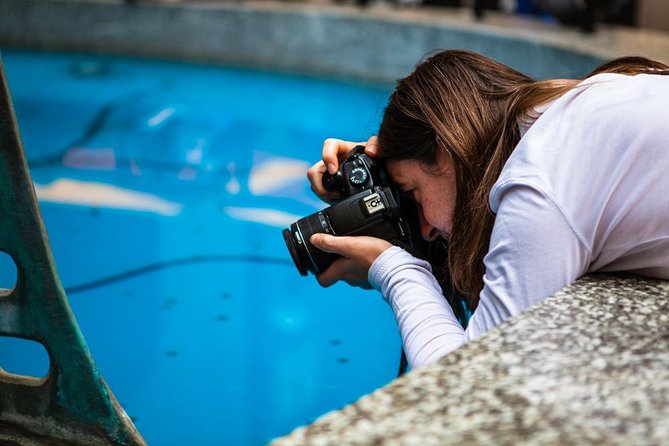
The course is aimed at beginners, but the people in the group may not all start at exactly the same point. One student described being the least experienced person present while still benefiting from the class. That suggests the lesson can handle a mix of complete beginners and camera owners who know a few basics but lack confidence.
The group size helps here. With no more than six participants, the tutor can give extra help to someone who has never used manual settings while still offering more advanced suggestions to someone ready to move beyond Auto.
Lou’s teaching is repeatedly praised for patience, clear explanations, and individual attention. Those qualities matter more than technical jargon in a beginner’s course. A tutor can know every camera in the world, but if the explanation is too fast or too abstract, you will leave just as confused as you arrived.
You should still bring questions. Think about the problems that annoy you most: blurry pictures, confusing menus, poor low-light results, weak composition, or uncertainty about which lens to use. Specific questions make the one-to-one time more useful.
Is $336.07 good value?
The price is $336.07 per person, with group discounts available. That is expensive when compared with a general London walking tour, but this is a specialist lesson with a very small group and a professional photographer who teaches across many camera types.
The strongest value comes if you own a camera that you have not learned to control. A few hours of direct help may save you from years of staying on Auto and taking mediocre pictures. The skills also travel with you. You can use them on future holidays, family occasions, and everyday photography.
The value is weaker if you want a cheap sightseeing activity, a long photo walk, or access to the Tower of London and Tower Bridge. Neither food nor drinks are included, and there is no admission to the sights. You are buying tuition and guided practice.
I would also keep the time in mind. The advertised duration is about four hours, though one piece of participant feedback refers to five hours. Treat four hours as the reliable planning figure and do not book a tight connection afterward.
What to bring and how to prepare
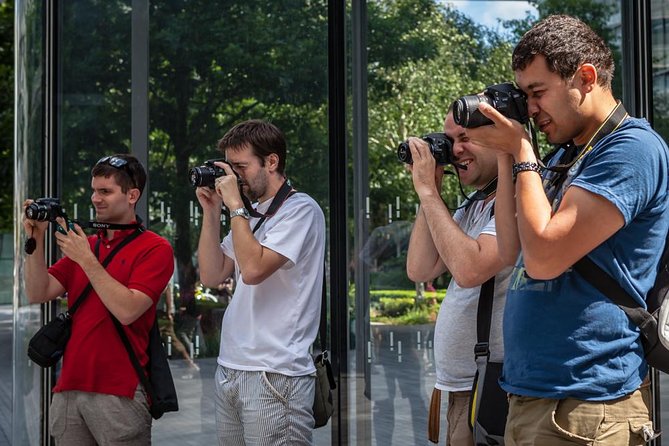
Bring your own digital camera, a fully charged battery, and memory cards. A spare battery is sensible if you have one, since repeated practice and reviewing images can use power.
You do not need to arrive knowing technical terms. In fact, the course is built for people who find those terms confusing. Still, it helps to bring the camera manual if you have it, especially if you are unsure how to reach particular menus.
Wear comfortable shoes for a walking workshop and leave room for food or a drink before or after the session, since neither is provided. The experience begins and ends at the London Bridge meeting point, so the return to that location makes onward planning easier.
The minimum age is 16. Service animals are allowed, the meeting point is near public transport, and most people can take part. The course is offered in English.
Who should book this workshop?
I would recommend it most strongly to you if:
- You own a DSLR, mirrorless, bridge, or other digital camera but mostly use Auto.
- You have inherited a camera and do not know where to begin.
- You want help with your exact camera model rather than a generic online lesson.
- You learn best by taking pictures and receiving immediate corrections.
- You are visiting London and want a practical activity built around major sights.
- You may want to continue with an intermediate or night photography course later.
It is less suitable if your main goal is a historical tour, indoor landmark visits, or a leisurely day spent taking pictures at your own pace. The workshop has a teaching agenda, and the famous views support the lessons rather than define the whole experience.
Booking, cancellation, and the final call
You can cancel up to 24 hours before the start time for a full refund. Changes made within 24 hours are not accepted, and a full refund or another date or experience is offered if the minimum number of participants is not reached.
I would book this if your camera has been sitting in Auto mode and you want a patient, practical way to take control. The small group, camera-specific tuition, and repeated help from Lou are the real reasons to choose it.
I would skip it if $336.07 feels too high for a short workshop or if you are looking mainly for London sightseeing. For the right beginner, though, the course can turn a confusing camera into a useful travel tool. Bring a charged battery, expect to practise rather than simply listen, and plan to keep shooting after the class.
FAQ
Where does the photography workshop start?
It starts at London Bridge Station Approach Road, London SE1 9SP, UK.
Where does the activity finish?
The workshop ends back at the meeting point.
How long does the photography course last?
The stated duration is approximately four hours.
How many people can join the workshop?
The group has a maximum of six participants.
What camera should I bring?
Bring your own digital camera. Instruction is geared to the camera you own, and the tutor works with many different camera makes and models.
What equipment should I bring?
Bring a fully charged battery and memory cards. A spare battery is recommended if you have one.
What subjects and skills are covered?
You practise ISO, shutter speed, aperture, focus, depth of field, composition, framing, lens choices, white balance, and the use of light.
Is food included?
No. Food, drinks, and lunch are not included.
What is the minimum age?
The minimum age is 16.
Is cancellation free?
Yes. You can cancel at least 24 hours before the start time for a full refund. Cancellations or changes made less than 24 hours before the start time are not accepted for a refund.
Recently added around London
- London’s Crown Secret: Self-Guided Royal Puzzle Quest★ 4.5 · 8 reviews
- Postcard London★ 5.0 · 8 reviews
- Private Tour: Downton Abbey London Locations by Taxi★ 5.0 · 8 reviews
- Windsor Castle, Stonehenge & Roman Baths Private Tour★ 4.5 · 8 reviews
- Cotswolds Private Driving Tour from London★ 5.0 · 8 reviews
- A Silent Disco Adventure in London★ 5.0 · 8 reviews
- Skip-the-line London Westminster Abbey and City of Westminster Kid-Friendly Tour★ 5.0 · 8 reviews
- Gangster Tour of Soho★ 4.5 · 8 reviews
Workshops, compared.

London Traditional English Scone Making and Tea Workshop
Read our review →

Chocolate Bar Making Workshop – York Cocoa Works
Read our review →
Browse the lists this tour appears in