Reviewed · LONDON TOURS
The Freemasons Tour of London
London’s grandest stories often hide in small courtyards and narrow lanes. This private walk links Crusader churches, plague pits, monastic ruins, Fleet Street, Temple Church, and Freemasons’ Hall into one tightly packed lesson in London’s religious and military past.
I like the private format, which lets you ask questions and linger when a place catches your interest. I also like the hotel pickup and the route’s unusual stops, from Clerkenwell’s old well to the tiny Seven Stars pub, an early meeting place for Freemasons. The main drawback is pace: 22 stops in about three hours means many are brief exterior visits.
Key points to know
- A private route from Farringdon to Freemasons’ Hall: You finish near Holborn and Covent Garden, well placed for more sightseeing.
- Kevin is a popular guide: His passion for London’s local stories and ability to answer questions are central to the experience.
- The tour links several themes: Knights of St John, the Templars, plague, monastic orders, Dickens, the City of London, and Freemasonry.
- Many stops are outside visits: The Museum of the Order of St John and Temple Church are among the places with included admission.
- Monday and Tuesday planning matters: The Order of St John Museum is closed Mondays and Tuesdays, while Charterhouse and the Freemasons Museum are closed Mondays.
- The $253.66 price buys privacy, not a full day: It is easier to justify for a small group that values a specialist guide and unusual sights.
From Clerkenwell’s old well to the Knights of St John
The tour begins at Farringdon Station at 9:30 a.m., or with pickup from your Central London hotel. The meeting point is practical, since Farringdon puts you close to Clerkenwell, an area many first-time visitors pass without seeing properly.
Your first stop is Clerk’s Well, a small and easily missed site that gave Clerkenwell its name. You get only about five minutes here, but the point is not a long visit. It is a quick reminder that London’s district names often preserve clues to older institutions, trades, and religious life.
Nearby, the Marx Memorial Library adds an entirely different layer. Clerkenwell’s past was not only medieval and religious. It also developed a strong political identity, and this working institute reflects the area’s communist heritage. Admission is not included, and the scheduled stop is short, so expect an exterior look and an explanation rather than a full museum visit.
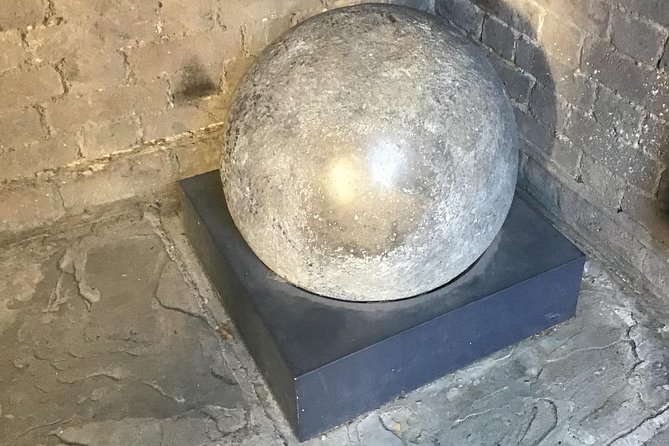
At St John Priory Church, you see an old church garden planted with traditional medicinal plants. The stop also includes a surprising ancient military weapon, a neat example of how this walk keeps placing spiritual and military objects side by side. The garden offers a quieter pause before the more substantial Knights of St John sites.
St John’s Gate is the first major architectural marker. This old gatehouse once served as the entrance to the compound of the Knights of St John. Its weathered presence makes the medieval order feel less like a distant chapter in a textbook and more like something rooted in the streets you are walking.
The Museum of the Order of St John gives you the best chance to step inside that story. You see the gatehouse associated with the Knights of St John and get a brief look at weapons and armour. Admission is included, but the planned visit lasts about 15 minutes, so do not expect to cover every display.
The museum closes on Mondays and Tuesdays. That is one of the most important planning details in the whole tour, since a closed museum changes the balance between exterior views and interior visits.
A few more London half days worth a look
- Stonehenge, Windsor Castle, and Bath from London
★ 4.5 · 18,662 reviews - London Big Bus Hop-On Hop-Off Tour with Optional River Cruise
★ 3.5 · 10,803 reviews - London Small Group Tour of Historical Pubs
★ 5.0 · 10,422 reviews
Charterhouse and the physical traces of the plague
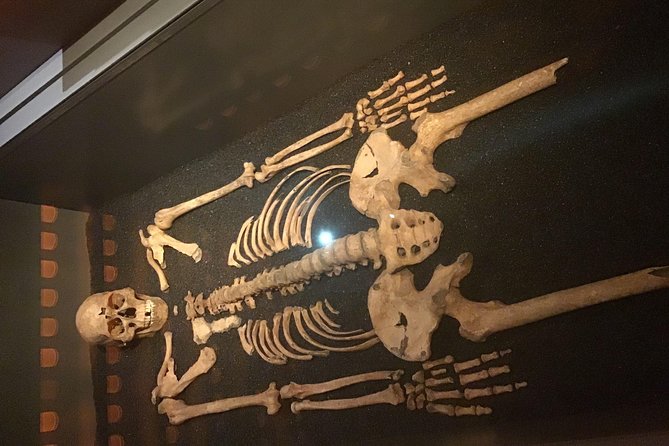
Charterhouse Square brings the tour into London’s plague story. The square was one of the city’s largest plague pits, and the route continues into Charterhouse Chapel, where you may see a recently discovered skeleton linked to a Black Death victim.
This is one of the tour’s more powerful stops because it connects a huge historical event to a human body and a specific place. You are not just hearing that plague swept through London. You are standing in an area used for mass burial and then entering a chapel shaped by centuries of religious and social change.
The Charterhouse museum is closed on Mondays. The stop is listed as free, but the visit is still subject to opening arrangements, so Monday is a poor choice if this site is a priority.
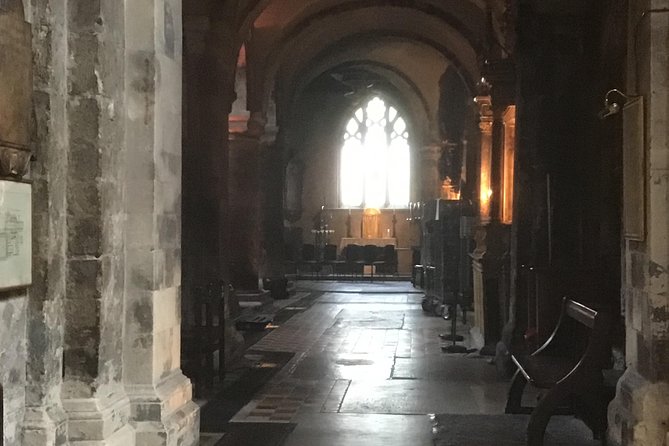
From there, the walk moves toward Smithfield and St Bartholomew the Great, one of London’s oldest churches. It was founded by a Crusader, which fits the tour’s central theme, but the five-minute stop suggests a quick look rather than a full church visit.
St Bartholomew’s Gatehouse is another compact but rewarding pause. Nearly 800 years old, it is easy to overlook if you are hurrying toward better-known sights. Here, the guide’s role matters. Without someone pointing out the surviving structure and explaining its use, you could walk past without knowing what you had missed.
The William Wallace Memorial adds a Scottish connection. You see the spot associated with the death of the figure portrayed in Braveheart and hear about other events tied to this historic location. This is a good example of the tour’s broad reach. It is not only about one order or one period. It uses small sites to connect London with wider British and European stories.
Monastic ruins beneath the shadow of St Paul’s
Christchurch Greyfriars Church Garden is a graceful change of pace. The ruins of the old monastic building form a garden beneath St Paul’s Cathedral. You get one of those London contrasts that makes walking so rewarding: quiet church remnants in the foreground, one of the city’s most famous domes rising nearby.
You then pass Christopher Wren’s Temple Bar, once a gate into the City of London. Its past includes some grim episodes, and the guide can give the gate context beyond its handsome stonework. Admission is not included, and this is another short stop, so think of it as a street-side history lesson.
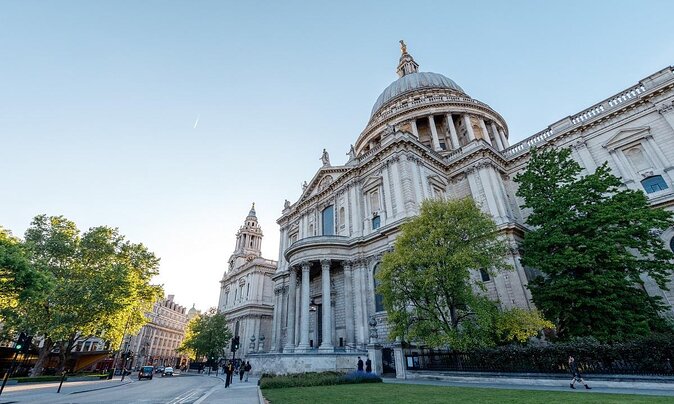
St Paul’s Cathedral receives only about five minutes on this route. You see the cathedral as a major symbol of the City, but you do not tour the interior. If you want the dome, galleries, crypt, or main worship space, plan a separate visit.
Blackfriars follows with a small yard and a tiny alleyway containing the remains of the institution that gave the district its name. This is exactly the kind of stop that rewards a private walk. Large groups often move from landmark to landmark, while a private guide can lead you into spaces that are easy to miss.
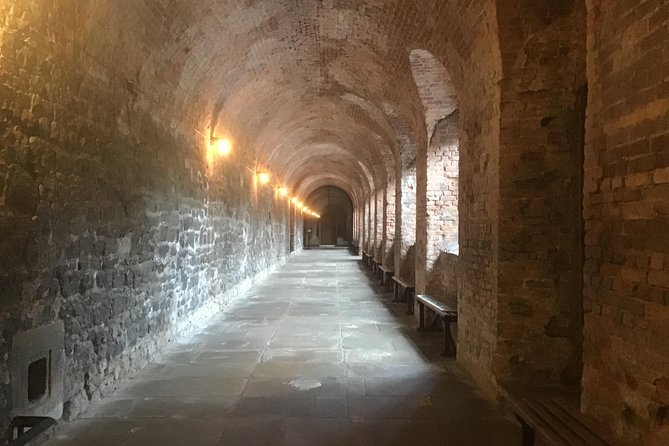
The Crypt on the Green continues the monastic thread. The remains are off the usual sightseeing path, yet they sit directly along the route toward another famous church. The stop is only five minutes, but it shows how much old London survives in fragments rather than complete buildings.
Temple Church and the lane of the Templars
Middle Temple Lane takes you into one of London’s most distinctive legal districts. The area is handsome and quiet, and it has been used as a setting for television and films, including Downton Abbey and works connected with Charles Dickens.
The lane leads to Temple Church, built by the Templars in a form inspired by what they saw in the Holy Land. The church became especially popular after its appearance in Da Vinci Code films, but its current character is quieter and more reflective.
Admission to Temple Church is included, and the scheduled visit lasts about 15 minutes. That is enough time to see the church and hear its connection to the Templars, though not enough for a slow architectural study.
One detail deserves care here. The church was modeled on the Holy Sepulchre, not King Solomon’s Temple. A published comment about the tour raised this distinction, and the operator responded that the guide’s wording was a slip rather than a lack of familiarity. For you, the useful point is simple: if precise medieval architecture and religious history matter, ask questions and expect the guide to clarify the difference.
The Inner Temple gives you another look at this secluded part of London. Its calm courts and gardens feel far removed from nearby traffic. Admission is included for this portion of the route, although the time allotted is about five minutes.
A completely different sort of day out in London:
- Stonehenge, Windsor Castle and Bath with Pub Lunch in Lacock
★ 4.5 · 7,402 reviews - Tower of London and Crown Jewels Exhibition Ticket
★ 4.5 · 6,677 reviews - Thorpe Park Admission Ticket
★ 4.0 · 5,915 reviews - Stonehenge, Windsor Castle and Bath Full Day Guided Tour
★ 4.5 · 5,346 reviews
Fleet Street, Dickens, and an early Masonic meeting place
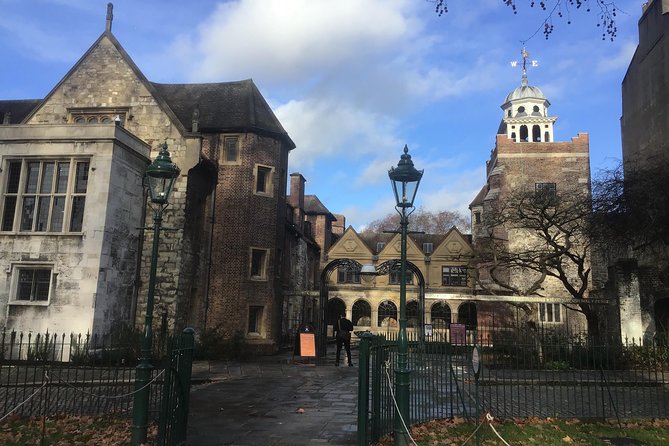
Fleet Street is one of London’s most famous roads, once the center of the British newspaper trade. The walk also points out a lost ruin linked to a notable monastic order, bringing the route back to its religious theme.
The Old Curiosity Shop is a brief exterior stop. The building is associated with Charles Dickens and is described as London’s oldest shop. You pass by rather than shop inside, but it is a pleasant literary detail along the way.
The Seven Stars is much smaller and more personal in scale. This tiny old pub was an early meeting place for Freemasons. It is the sort of detail that gives the final part of the tour a clear direction. Freemasonry is not introduced only at the final building. You have been following traces of its setting and associations for much of the morning.
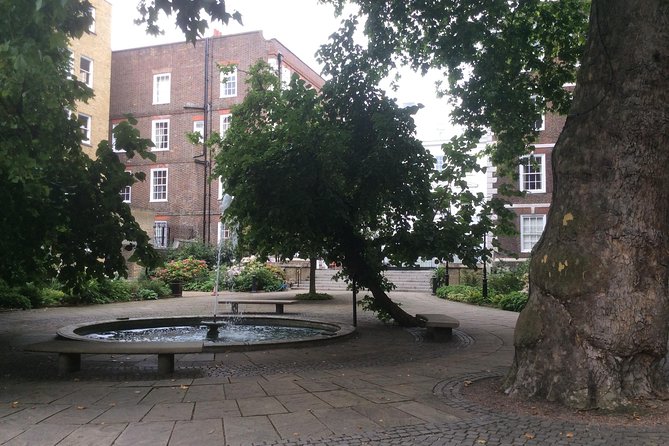
Lincoln’s Inn provides another quiet square rarely visited by tourists. You hear about the Great Fire of London here, and the broad space offers a useful contrast with the narrow lanes and cramped courtyards earlier in the walk.
Freemasons’ Hall and the tour’s final reveal
The walk ends at Freemasons’ Hall on Great Queen Street. This is the headquarters of the United Grand Lodge of England and the Supreme Grand Chapter of Royal Arch Masons of England. It also serves as a meeting place for Masonic lodges in London.
The building is a fitting finish because it turns the tour’s scattered clues into a direct look at Freemasonry. The Freemasons Museum is free to enter, but it is closed on Mondays. The scheduled visit lasts about 15 minutes, so you should view this as an introduction rather than a full museum afternoon.
The ending is convenient. Freemasons’ Hall is a few minutes from Holborn and Covent Garden Underground stations, and you are close to the attractions of Covent Garden. The route therefore finishes in a useful place rather than leaving you at an isolated site.
What the private format is really worth
The price is $253.66 per person. That is a high cost for a three-hour walk if you are comparing it with a large group sightseeing tour. The value improves when you are sharing the price with family or friends and want a private guide rather than a fixed script delivered to a crowd.
You are paying for a tightly planned route, hotel pickup, and access to a guide who can respond to your interests. Kevin is the guide most clearly associated with the tour. His strengths are his long experience as a Londoner, his enthusiasm for local history, and his willingness to answer a large number of questions.
That personal attention is especially useful here because the route contains so many brief stops. You can ask why a ruined church matters, how a religious order shaped the neighborhood, or how the same street connects medieval institutions with modern London. On a standard group tour, there may not be time for those questions.
The tradeoff is that the tour covers an enormous amount of ground in about three hours. Twenty-two stops sounds impressive, and it is, but several visits last only five minutes. You see many sites from the outside, and only selected attractions include admission.
I would book it for a small group that already knows the main London sights and wants obscure churches, courtyards, military stories, and Masonic connections. I would not choose it as your only London tour if you want long interior visits or a relaxed pace.
Walking, transport, and practical planning
The tour requires a moderate level of physical fitness. You move through central London on foot, with the exact walking rhythm shaped by the number of stops and the city streets between them.
Hotel pickup is offered from Central London accommodation. The guide meets you in the hotel reception area, then travels with you to Farringdon by Underground or taxi. Tube tickets before and after the tour are not included, so confirm what transport costs are covered during pickup before you set out.
You can also meet outside Farringdon Station. The tour ends at Freemasons’ Hall, near Holborn and Covent Garden Underground stations. Since the start and finish are in different parts of central London, the route works well as a one-way sightseeing walk.
Choose your day carefully. The Museum of the Order of St John is closed Mondays and Tuesdays. Charterhouse is closed Mondays, and the Freemasons Museum is also closed Mondays. If the interior visits are important, Tuesday through Friday may offer the best chance of seeing the full planned route, though the supplied information does not guarantee every opening arrangement.
The tour is offered in English, includes a mobile ticket, allows service animals, and operates as a private activity for your group alone. Confirmation is sent within 48 hours of booking, subject to availability. You can cancel for a full refund up to 24 hours before the local start time, but later cancellations and changes are not accepted.
Who should book the Freemasons Tour of London?
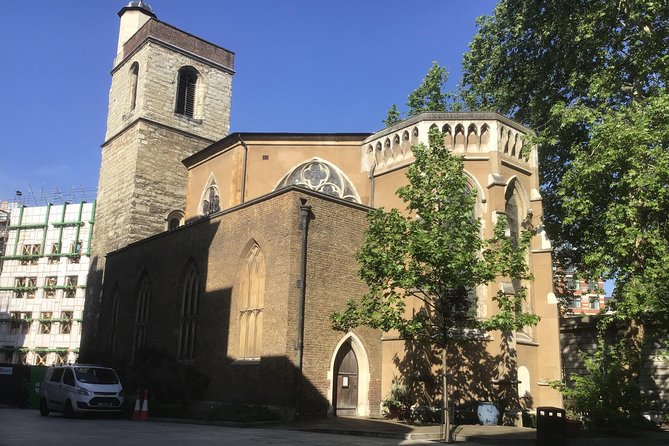
Book this tour if you enjoy London’s lesser-known corners more than its headline attractions. You will get the most from it if you like churches, medieval orders, military objects, plague stories, Dickens, local politics, and the history of Freemasonry.
The tour also suits repeat visitors who have already seen the Tower, Westminster Abbey, and the main royal sights. It gives you a different view of London, one built from small surviving pieces rather than grand monuments.
Skip it if you want to tour St Paul’s Cathedral, spend an hour inside Temple Church, or move at a leisurely pace. The route is ambitious, and the short stop times require you to stay with the guide.
For a private group willing to pay for personal attention, the price can make sense. Kevin’s energy and local command of the subject are a major part of the experience, and his extra care with guests who need help returning to their hotel has been noted. Just plan around museum closures, wear comfortable shoes, and treat the tour as a fast-moving introduction to hidden-in-plain-sight London.
FAQ
How long is the Freemasons Tour of London?
The tour lasts approximately three hours and begins at 9:30 a.m.
Where does the tour start?
You can meet outside Farringdon Station on Cowcross Street, London EC1M 6BY, or arrange pickup from your Central London hotel.
Where does the tour end?
The tour ends at Freemasons’ Hall, 60 Great Queen Street. Holborn and Covent Garden Underground stations are a few minutes away.
Is hotel pickup included?
Yes. Pickup is offered from Central London hotels. The guide meets you in the reception area and travels with you to Farringdon by Underground or taxi.
Are transport tickets included?
Tube tickets before and after the tour are not included. Confirm the transport details for the hotel pickup when booking.
Is this a private tour?
Yes. Only your group participates in the private activity.
Which attractions include admission?
Admission is included at the Museum of the Order of St John, Temple Church, and the Inner Temple. Several other stops are exterior visits or have admission not included.
Can I cancel for a full refund?
Yes. You can cancel at least 24 hours before the local start time for a full refund. Changes or cancellations made less than 24 hours before the start are not accepted.
Recently added around London
- London’s Crown Secret: Self-Guided Royal Puzzle Quest★ 4.5 · 8 reviews
- Postcard London★ 5.0 · 8 reviews
- Private Tour: Downton Abbey London Locations by Taxi★ 5.0 · 8 reviews
- Windsor Castle, Stonehenge & Roman Baths Private Tour★ 4.5 · 8 reviews
- Cotswolds Private Driving Tour from London★ 5.0 · 8 reviews
- Skip-the-line London Westminster Abbey and City of Westminster Kid-Friendly Tour★ 5.0 · 8 reviews
- A Silent Disco Adventure in London★ 5.0 · 8 reviews
- Gangster Tour of Soho★ 4.5 · 8 reviews
London Tours, compared.
Stonehenge, Windsor Castle, and Bath from London
Read our review →
London Big Bus Hop-On Hop-Off Tour with Optional River Cruise
Read our review →
Stonehenge, Windsor Castle and Bath with Pub Lunch in Lacock
Read our review →
Tower of London and Crown Jewels Exhibition Ticket
Read our review →
Stonehenge, Windsor Castle and Bath Full Day Guided Tour
Read our review →
Windsor Castle, Stonehenge, and Oxford Day Trip from London
Read our review →