Reviewed · LONDON TOURS
Law in London Private Tour
London has a wonderfully strange side that most sightseeing tours skip: the working world of British law. This private tour takes you into the Royal Courts of Justice, past the Rolls Building where major international disputes are heard, and through the gardens of Inner Temple and Middle Temple. When court business allows, you may also sit in on a public case.
I like the chance to see legal London as a functioning part of the city, not just as a collection of grand façades. I also like the small extras, especially the complimentary drink and copy of the Magna Carta. The main caution is consistency: one strong guide, Mushin, earned high praise for his grasp of the courts, while another report described a poorly organized outing with missed stops and no court hearing.
Key points to know before booking
- You may enter a working court building: The Royal Courts of Justice visit can include sitting in on a public case, though this cannot be guaranteed.
- The Rolls Building adds a modern legal angle: This is where major commercial and international disputes are settled, including cases involving environmental damage.
- The Inns of Court provide the atmosphere: Inner Temple and Middle Temple offer quiet gardens, fountains, and a glimpse of London’s legal traditions.
- Mushin received especially strong praise: His knowledge of the courts, Inns of Court, and Old Bailey made the experience worthwhile even when the Old Bailey was closed.
- It is a private tour: Only your group participates, so the guide can respond to your interests and questions.
- The value depends on delivery: At $370.24 per person, you are paying for access, interpretation, and a tailored experience, not simply a walk past buildings.
Why legal London makes an unusual afternoon
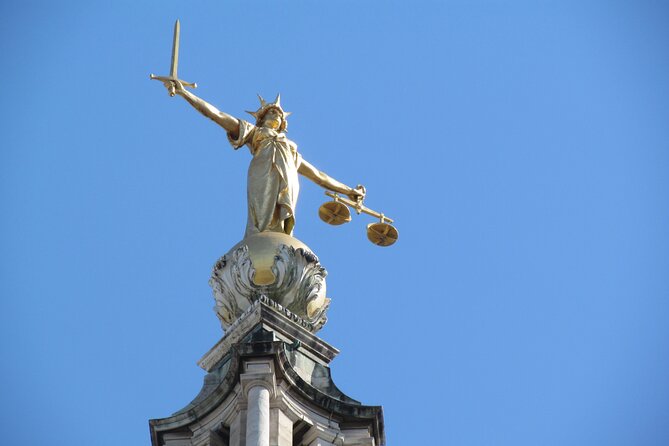
Most first visits to London focus on royal palaces, famous museums, and the Thames. This tour points you toward Fleet Street and the courts, where grand architecture and daily legal business sit side by side.
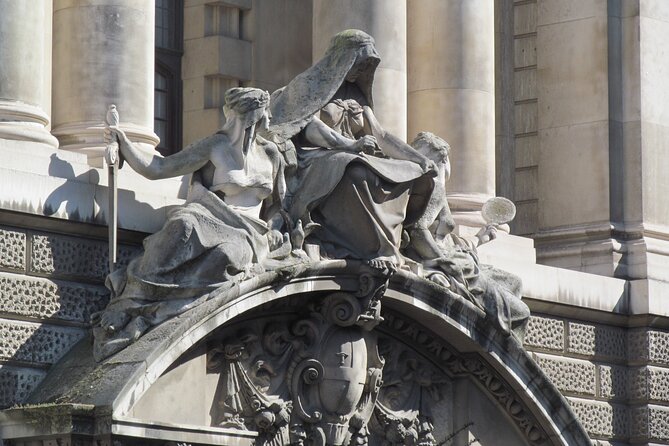
The Royal Courts of Justice is the centerpiece. It is not merely an old courthouse to admire from outside. It is a working institution, and that changes the feel of the visit. You may pass through its interior and, if circumstances permit, sit quietly in a public courtroom during a live case.
That possibility is the tour’s biggest draw, but it is also the part you should treat as an opportunity rather than a promise. Court schedules, security, available seating, and the nature of the day’s proceedings can affect what you see. If you do enter a case, the experience may be brief or formal rather than dramatic. That is part of the point: real court business is usually measured and procedural, not a television courtroom scene.
You are also getting a guided explanation of how Britain’s legal system works. The supplied information does not identify the guide as a lawyer, so I would not book this expecting professional legal advice or a specialist consultation. The best version of the tour is an informed walk through institutions, buildings, traditions, and public proceedings.
A few more London half days worth a look
- Stonehenge, Windsor Castle, and Bath from London
★ 4.5 · 18,662 reviews - London Big Bus Hop-On Hop-Off Tour with Optional River Cruise
★ 3.5 · 10,803 reviews - London Small Group Tour of Historical Pubs
★ 5.0 · 10,422 reviews
Inside the Royal Courts of Justice
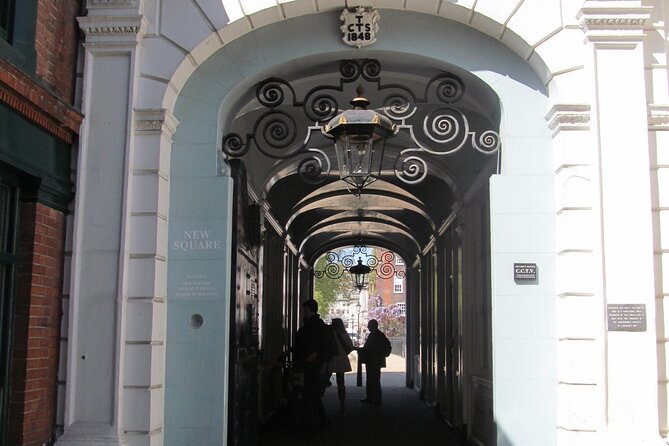
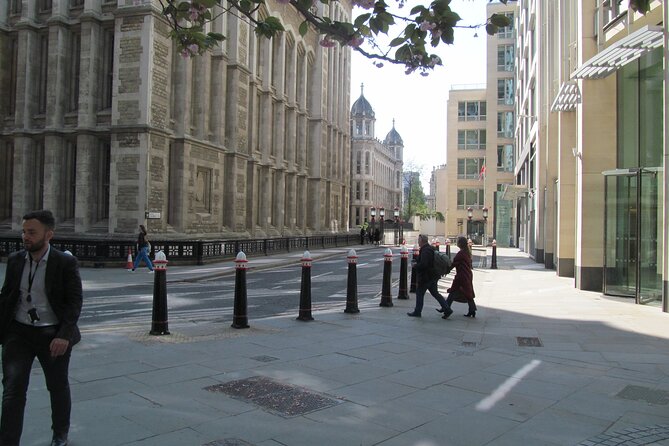
The first scheduled portion lasts about 30 minutes and centers on the Royal Courts of Justice. This gives the tour a clear anchor before you move through the surrounding legal district.
The value here comes from context. A guide can explain what you are looking at, why the building matters, and how a public court visit works. Without that help, you might admire the architecture and leave without understanding the difference between the courts, the cases heard there, and the legal bodies around them.
When possible, you can sit in on a public case. Keep your expectations sensible. This is not a staged demonstration, and access depends on the day’s conditions. A court visit can also require patience and quiet attention. You should be comfortable with a slower, more serious stop rather than expecting constant movement.
One person who joined the tour with Mushin found the visit valuable even though the Old Bailey was closed during the stay. That is useful advice for planning: the quality of the explanation matters as much as the number of buildings you enter. A closed court or unavailable hearing does not automatically ruin the afternoon, but it puts more weight on the guide’s ability to explain the wider system.
The Rolls Building and international disputes
The second court-related stop is the Rolls Building, another 30-minute visit. This is where international and commercial disputes are settled, giving you a different view of British justice from the older atmosphere of the Royal Courts of Justice.
The example provided is the claim against Shell Oil concerning environmental damage in Nigeria. That reference helps show the scale of the cases connected with this part of London. You are not just learning about local disagreements. The building is tied to disputes that can involve large companies, multiple countries, and major financial or environmental consequences.
This stop may appeal most to you if you enjoy current affairs, business, politics, or the machinery behind international disputes. It also helps prevent the tour from becoming purely architectural. You see how London’s legal quarter connects to issues far beyond England.
There is an important practical point here. One detailed negative account said the Rolls Building was not visited at all. Since it is a named part of the planned route, I would confirm the day’s stops with the guide at the beginning, especially if this building is a main reason you booked. A private tour gives you a better chance to ask for that clarity.
Inner Temple, Middle Temple, and the quieter side of Fleet Street
The tour then moves into the grounds of the Inns of Court, including Inner Temple and Middle Temple. This portion is shorter, about 15 minutes, but it may be one of the most pleasant parts of the walk.
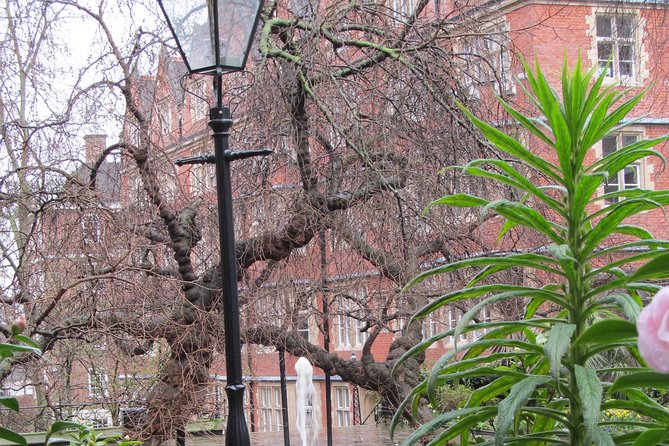
The gardens and fountains offer a calm contrast to the formal court buildings. You may see the Dickens fountain, linked with Martin Chuzzlewit, adding a literary connection to the legal quarter. The setting helps you understand that London’s legal institutions are not confined to courtrooms. They also include historic societies, gardens, dining traditions, and professional communities.
I like this stop because it gives your afternoon some breathing room. Court procedure can feel technical. A garden, fountain, or literary reference makes the area easier to remember and gives you a more human sense of the district.
The short timing also tells you what not to expect. This is a brief introduction, not an extended garden visit. If you want long periods for photography or quiet wandering, you may find 15 minutes tight. The guide’s commentary will likely matter more than the time spent standing in each place.
A completely different sort of day out in London:
- Stonehenge, Windsor Castle and Bath with Pub Lunch in Lacock
★ 4.5 · 7,402 reviews - Tower of London and Crown Jewels Exhibition Ticket
★ 4.5 · 6,677 reviews - Thorpe Park Admission Ticket
★ 4.0 · 5,915 reviews - Stonehenge, Windsor Castle and Bath Full Day Guided Tour
★ 4.5 · 5,346 reviews
What the private format changes
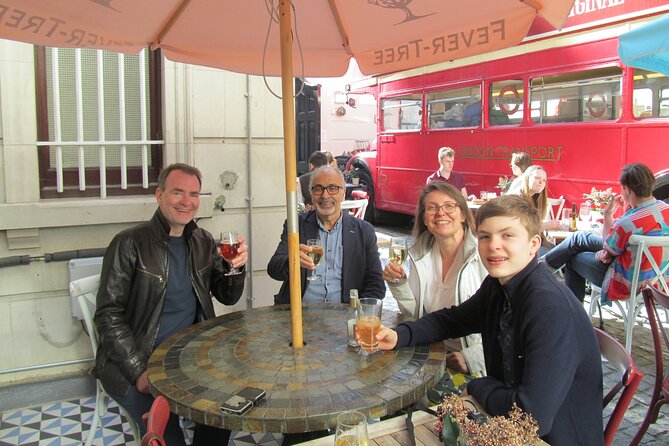
This is a private activity, so only your group takes part. That can make a real difference on a subject where questions are likely to be specific. You can ask about the court system, a building’s purpose, the Inns of Court, or the day’s proceedings without waiting for a large group to catch up.
The private format may also help if your group has a particular interest in legal history or British institutions. One highly positive account described the guide as flexible about specific needs. That is the sort of benefit you should seek from the format: not a completely different route, but a conversation shaped around your curiosity.
Still, private does not mean unlimited. The tour lasts about three and a half hours, begins at 1:30 p.m., and has a minimum booking requirement of two people. Children must be accompanied by an adult. You should also expect a moderate amount of walking and standing, since the route links several nearby legal sites.
The meeting point is listed as GV7P+CPQ in London, and the tour ends at Ye Olde Cheshire Cheese, 145 Fleet Street. The ending point is useful for continuing your afternoon around Fleet Street, though food and drinks beyond the included beverage are not covered.
A realistic look at the guide quality
Guide quality is the biggest variable in this experience. Several comments describe an excellent outing with a friendly guide who explained both the buildings and the English legal system well. Mushin is named specifically and received particularly strong praise for his grasp of the Royal Courts of Justice, the Inns of Court, and the Old Bailey.
That matters because the tour is not packed with guaranteed attractions. If you cannot enter a trial or one building is closed, the guide’s explanation becomes the main product. Mushin’s ability to keep the tour worthwhile despite the Old Bailey being closed is a good sign for the format.
At the same time, a very negative account described a guide who became lost, lacked sufficient court detail, and failed to deliver several expected stops. Another complaint said the guide was not a practicing lawyer and could not answer legal questions. You should read that criticism carefully rather than assuming the tour promises a lawyer. The published information promises a professional guide, not legal credentials.
The overall rating is 4.4 from 14 reviews, with several top scores and some serious complaints. That is a small sample, but it points to a clear booking question: are you paying for guaranteed entry, or for a private guided introduction whose success depends on the person leading it? The second description is safer.
Is $370.24 per person fair?
At $370.24 per person, this is an expensive three-and-a-half-hour walk. You are not buying a standard group sightseeing ticket. The price pays for a private guide, the chance of court access, a personal explanation of British law, a drink, and a copy of the Magna Carta.
The value is strongest for a small group with a serious interest in legal history, public institutions, or unusual London architecture. If several people share the cost of a private booking, the experience may feel more reasonable than it does for one person paying alone. The minimum booking is two people, so it is already designed around a private party rather than a solo budget visit.
The value is weaker if you mainly want to see attractive buildings from the outside. Much of the legal quarter can be explored independently, and access to a live case is not guaranteed. A detailed complaint made exactly this point, saying the group could have seen much of what it did see without paying for a tour.
I would compare the price with your priorities. If you want a reliable, low-cost introduction to London, choose something else. If you want a private conversation about law and the chance to enter a working court, the price may be justified, but only if the guide delivers the full route and provides strong commentary.
How to prepare for the afternoon
Start by arriving with clear expectations. Court access can change, and the Old Bailey is not listed as a guaranteed stop in the provided schedule. It appears in one account as a place the group hoped to visit, but it was closed at that time. Ask at the start which buildings are open and whether a public hearing is available.
Wear comfortable shoes and plan for a moderate level of walking and standing. The route moves among the courts and Inns of Court, and the experience is better when you are not distracted by tired feet.
Bring questions. This is a subject that rewards curiosity. You might ask how public hearings work, what role the Rolls Building plays, how the Inns of Court fit into the legal system, or what makes the Royal Courts of Justice different from other legal buildings. The private format gives you room to guide the conversation.
The tour is offered in English. Confirmation arrives when you book, and free cancellation is available if you cancel at least 24 hours before the 1:30 p.m. start time. Changes or cancellations made within that final 24-hour period are not accepted for a refund.
Who should book this London law tour?
I would recommend it most strongly to you if you enjoy:
- British institutions and political history
- Courtroom procedure and public affairs
- Grand civic buildings with an active purpose
- Literary connections, including the Dickens fountain
- Private tours where you can ask detailed questions
- Less familiar parts of central London
It may also suit repeat visitors who have already seen the main sights. The legal district offers a different afternoon from the Tower, Westminster Abbey, or the British Museum.
I would hesitate if your main goal is a guaranteed trial, a visit to every named building, or professional legal advice. The route can be affected by court business, and the uneven guide reports make it wise to confirm the plan before setting out.
Should you book the Law in London Private Tour?
Book it if the working legal system interests you more than a standard sightseeing checklist. The Royal Courts of Justice, the Rolls Building, and the Inns of Court provide a strong framework, while the possible court hearing gives the afternoon a rare sense of access.
I would book with two conditions. First, confirm which stops are operating on your date. Second, make sure you are comfortable paying a premium for interpretation and access that may vary. A good guide, especially one with the preparation and interest shown by Mushin, can make the tour memorable even when a court is closed. A disorganized guide can leave you feeling that the same walk was available for free.
For the right audience, this is an intriguing and unusual London experience. It is not a guaranteed courtroom spectacle. It is a private introduction to the places, traditions, and working processes behind British law.
FAQ
How long does the Law in London Private Tour last?
The tour lasts approximately 3 hours and 30 minutes.
What time does the tour start?
The listed start time is 1:30 p.m.
Where does the tour begin?
The meeting point is GV7P+CPQ in London, United Kingdom.
Where does the tour end?
The tour ends at Ye Olde Cheshire Cheese, 145 Fleet Street, London EC4A 2BP.
Can I sit in on a real court case?
You may have the chance to sit in on a public court case at the Royal Courts of Justice, when possible. A hearing is not guaranteed.
What is included in the price?
The price includes a professional English-speaking guide, a complimentary drink, and a copy of the Magna Carta.
Is this a private tour, and can children join?
Yes. Only your group participates, and at least two people are required per booking. Children must be accompanied by an adult.
Recently added around London
- London’s Crown Secret: Self-Guided Royal Puzzle Quest★ 4.5 · 8 reviews
- Postcard London★ 5.0 · 8 reviews
- Private Tour: Downton Abbey London Locations by Taxi★ 5.0 · 8 reviews
- Windsor Castle, Stonehenge & Roman Baths Private Tour★ 4.5 · 8 reviews
- Cotswolds Private Driving Tour from London★ 5.0 · 8 reviews
- A Silent Disco Adventure in London★ 5.0 · 8 reviews
- Skip-the-line London Westminster Abbey and City of Westminster Kid-Friendly Tour★ 5.0 · 8 reviews
- Gangster Tour of Soho★ 4.5 · 8 reviews
London Tours, compared.
Stonehenge, Windsor Castle, and Bath from London
Read our review →
London Big Bus Hop-On Hop-Off Tour with Optional River Cruise
Read our review →

Stonehenge, Windsor Castle and Bath with Pub Lunch in Lacock
Read our review →
Tower of London and Crown Jewels Exhibition Ticket
Read our review →
Stonehenge, Windsor Castle and Bath Full Day Guided Tour
Read our review →
Windsor Castle, Stonehenge, and Oxford Day Trip from London
Read our review →