Reviewed · LONDON TOURS
Make a Fascinator Hat with a Designer in London
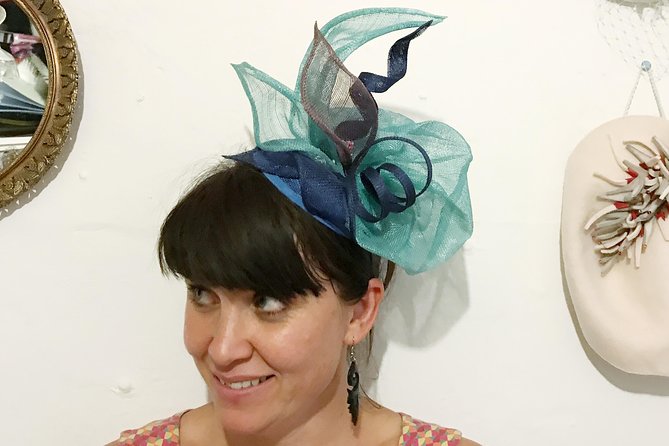
A fascinator class turns a London morning into something you can wear home. At Elena Shvab’s cozy central studio, you’ll shape sinamay straw, wire the edge of a hat base, work with veiling, and finish a piece that is yours alone. It is part craft lesson, part creative outing, and a fine change from checking off famous sights.
I especially like the small group limit of six, since Elena can explain each step and help when the straw refuses to do what you want. I also like that all tools and materials are included, so you can arrive with no craft kit and still leave with a finished hat and useful skills.
The main consideration is the price, $165.13 per person, for about three hours. That is a serious spend for a short activity, and the finished fascinator will reflect your first attempt rather than expert millinery. Still, the personal instruction and take-home creation make it more than a basic craft class.
Key points about the London fascinator workshop
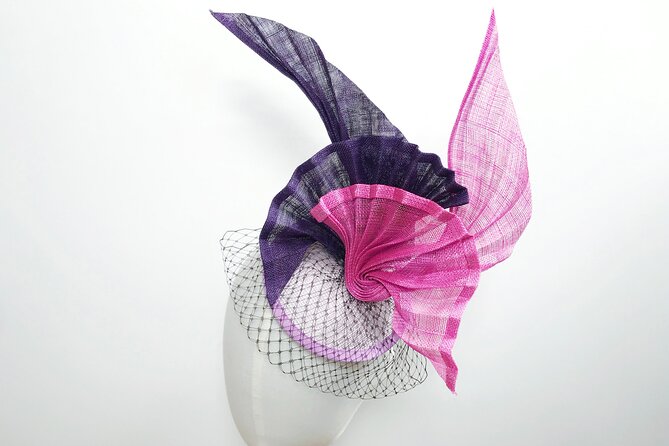
- Learn real millinery techniques: Shape a base, manipulate sinamay, add wire, use veiling, and practice traditional stitches.
- Work with Elena Shvab: The instructor guides you step by step and adjusts her help to your skill level.
- Create a personal design: You choose colors and decorations, so no two finished fascinators need look alike.
- Keep your own finished hat: You leave with a wearable souvenir and the skills to try another project later.
- Enjoy a small studio setting: The class allows up to six people and takes place at Make Space Studios in central London.
- Plan for a focused three hours: The workshop starts at 11:00 a.m. and ends back at the studio.
Why a fascinator is a smart London souvenir
London has plenty of souvenirs that gather dust. A fascinator is more fun because you make it yourself, then have a reason to wear it. It also connects to British dress traditions without requiring a formal event or a visit to a museum.
This is not a quick decoration session where you simply glue a few pieces onto a ready-made base. You learn how a milliner begins with structure. The base must hold its shape, the edge needs wire, and the trim has to sit in a way that looks intentional. Those small decisions are what turn loose materials into a hat.
You also get a short introduction to hat styles, trimmings, and materials before starting. That context matters. You can make better choices once you understand how a large sweep of straw, a fold of veiling, or a cluster of trim changes the look of the finished piece.
The class suits someone who wants to make things with their hands, but you do not need a strong craft background. One participant with little confidence in creative work still produced a pleasing fascinator with Elena’s help. That is useful to know if you tend to admire handmade objects but assume you cannot make them yourself.
A few more London half days worth a look
- Stonehenge, Windsor Castle, and Bath from London
★ 4.5 · 18,662 reviews - London Big Bus Hop-On Hop-Off Tour with Optional River Cruise
★ 3.5 · 10,803 reviews - London Small Group Tour of Historical Pubs
★ 5.0 · 10,422 reviews
Arriving at Make Space Studios for the 11 a.m. start
The meeting point is Make Space Studios on Newnham Terrace, London SE1 7DR. The studio is near public transportation, though the supplied details do not specify a particular station or route, so check your own map before setting out. Give yourself enough time to find the building and settle in before the 11:00 a.m. start.
The setting is described as cozy rather than grand. That is a plus for this kind of lesson. Hat making involves close work, shared tools, and frequent questions. A small studio feels more useful than a large classroom where you might wait for help.
The group can have no more than six people. That number keeps the class social without making it anonymous. You might work alongside a family member, a friend, or people you have just met, but the format leaves room for individual guidance.
The activity ends at the same meeting point. There is no second location to reach and no added sightseeing segment to squeeze into your day. You can plan lunch or another London activity afterward.
Starting with styles, materials, and a design plan
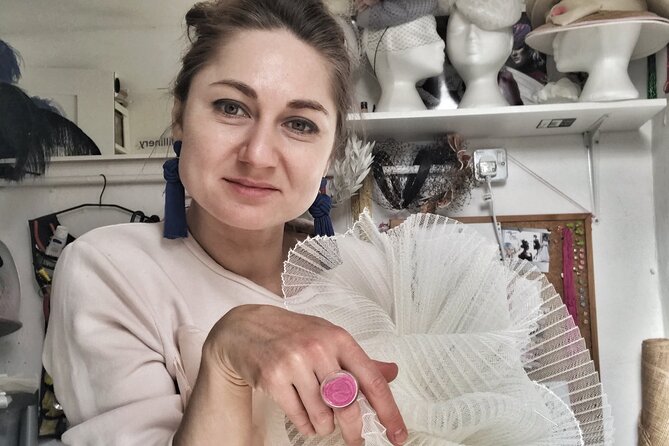
The opening introduction covers different hat styles, trimmings, and materials. It is a practical beginning, since many first-time makers need help deciding what looks balanced before they start cutting, rolling, steaming, or attaching anything.
You will have a chance to think about the feel of your fascinator. The class information specifically notes a choice of colors, and the personal accounts of the session describe a broad range of material options. That choice is one of the strongest parts of the experience because it lets you make something for a particular outfit, event, or simply your own taste.
Do not expect a factory-perfect result. This is a first lesson, not a professional millinery apprenticeship. The value is in learning why materials behave as they do and in making design choices with Elena nearby to correct course when needed.
A good approach is to decide on a general color direction, then stay open to the materials in front of you. You may begin with one idea and discover that another shape or trim works better. The class is hands-on, so the final hat should feel like a personal project rather than a preselected kit.
Building the fascinator base with a traditional hat block

The structural part of the session begins with the base. You learn to use a traditional hat block, which gives the material its form. This is the point where the class becomes more than a decorative workshop. You are learning the foundation of a hat.
Sinamay straw is one of the key materials. It can be shaped and manipulated, but it is not entirely forgiving. You will work with techniques such as rolling the straw and using steam to help it take a new shape. Elena demonstrates the process, then helps you try it yourself.
You also learn how to wire and trim the edges. Wire gives the edge support and allows some control over the final outline. It is a small technical detail, but it makes a major difference in how a fascinator holds its form.
Expect to use your hands throughout. You will fold, shape, adjust, and sometimes undo a step to improve it. That is part of the charm, though it can test your patience if you prefer instant results. Elena’s patient, step-by-step approach is especially useful here.
A completely different sort of day out in London:
- Stonehenge, Windsor Castle and Bath with Pub Lunch in Lacock
★ 4.5 · 7,402 reviews - Tower of London and Crown Jewels Exhibition Ticket
★ 4.5 · 6,677 reviews - Thorpe Park Admission Ticket
★ 4.0 · 5,915 reviews - Stonehenge, Windsor Castle and Bath Full Day Guided Tour
★ 4.5 · 5,346 reviews
Adding sinamay, veiling, and decorative details
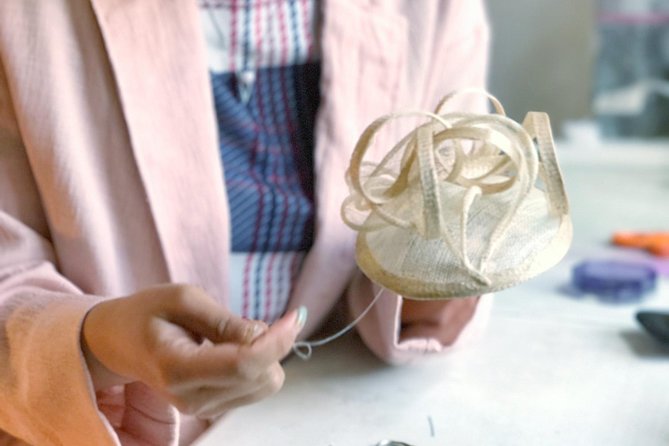
Once the base has shape, the lesson moves into trimming and decoration. Sinamay can be rolled or arranged in different ways, and veiling adds another texture and visual layer. You may also use steaming and a small amount of glue as part of the process.
The decoration stage gives you the most freedom. A fascinator can be neat and restrained or more playful, depending on the colors and trim you choose. Elena helps you understand how to attach details so the hat looks finished instead of overloaded.
You will also learn traditional millinery stitches. That is a worthwhile detail for anyone hoping to continue at home. Glue can solve one problem quickly, but stitching gives you another way to secure and shape parts of a hat.
The workshop has enough variety to keep the three hours moving. You are not sitting through a long lecture. The class alternates between demonstration and making, which helps the techniques stick.
Elena’s teaching style and the value of a tiny class
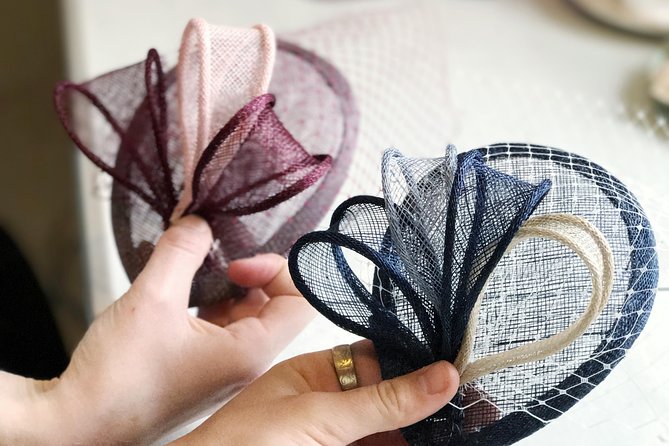
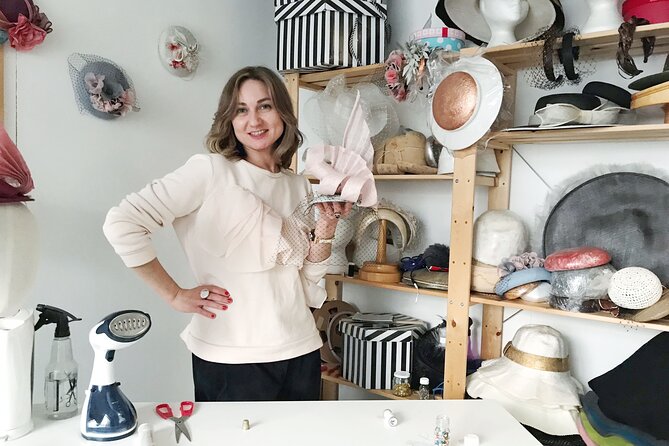
Elena Shvab is the instructor, and the experience depends heavily on her hands-on teaching. Her approach is described as welcoming, patient, and thorough. She explains each stage clearly, demonstrates the technique, then helps you work through your own version.
That matters because millinery has several points where a quick correction can save a lot of frustration. A piece of straw may need a different fold. A trim may need to shift for better balance. A stitch may need to be placed in a less visible spot. In a group of six or fewer, you have a better chance of getting help at the right moment.
The class also seems well suited to mixed ability levels. You can ask plenty of questions without feeling rushed, and you do not need to arrive as an experienced sewer or maker. The teaching is built around doing, not showing off what you already know.
The warm atmosphere adds to the appeal. Tea and snacks have been offered during the session, although you should treat that as a pleasant touch rather than the main feature of the booking. The focus remains on learning and making.
A good choice for family and special-event outings
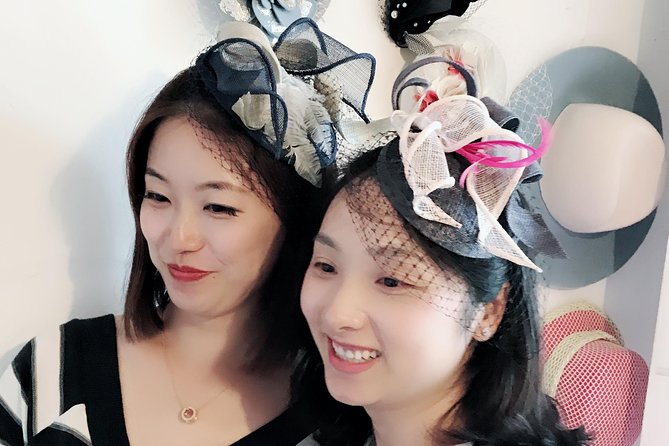
This activity works particularly well for a mother and daughter, grandmother and granddaughter, or aunt and niece. The shared task gives you something to talk about and do together, rather than simply moving from one attraction to the next.
It also suits couples and friends. One husband and wife enjoyed making fascinators together, and the format allows people with different levels of craft confidence to take part. You do not need matching designs. The fun comes from seeing how each person interprets the same materials.
A special event can give the project extra purpose. You might be making a fascinator for a wedding, party, tea, or other occasion. The class information does not promise a specific event-ready style, so you should not assume the finished piece will match a particular dress. But choosing colors and decoration with an event in mind can make the result more meaningful.
Children under eight are not permitted. Older children may participate, but the activity involves wire, hot or steaming techniques, small tools, and concentrated handwork, so an adult should consider the child’s patience and interest before booking.
Is $165.13 good value for three hours?
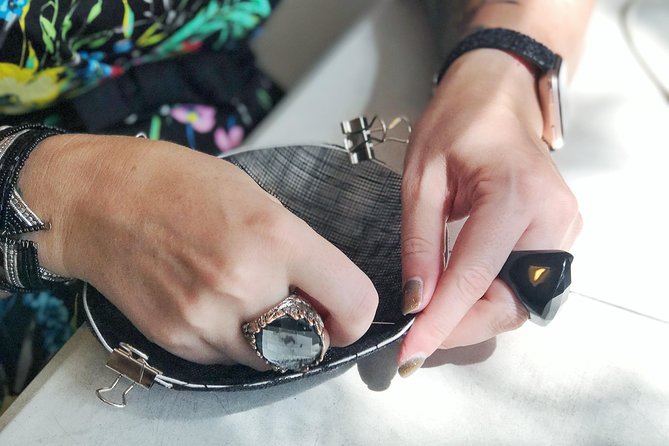
At $165.13 per person, this is not a bargain activity. You are paying more than the cost of a simple souvenir or a casual craft session. The price needs to cover instruction, materials, studio time, specialist tools, and the finished item you take away.
The value improves if you care about the process as much as the product. You receive individual guidance, access to millinery materials and equipment, an introduction to traditional techniques, and a custom fascinator. You also gain enough basic knowledge to try making another one later.
The value is weaker if you only want an inexpensive hat for one afternoon. You may be happier buying a ready-made accessory. The handmade result can be charming, but it is still the work of a beginner, and the session lasts about three hours.
For a London trip built around personal activities, the price is easier to justify. You get a tangible reminder of the city that is tied to your own effort. The class also fills a rainy morning well, though the cancellation terms oddly state that the activity requires good weather. If poor weather causes the session to be canceled, you are offered another date or a full refund.
What to know before booking your morning
The class is offered in English. That is important because the lesson depends on clear instructions and questions about shape, placement, and technique.
All materials and tools are provided, so you do not need to bring anything. You may still want to wear clothing that is comfortable for close handwork. The supplied details do not set a dress code or name any personal equipment requirements.
Confirmation is sent within 48 hours of booking, subject to availability. The experience is often booked around 29 days ahead, so leaving it until the final days of a London trip may be risky, especially if you need a particular date.
Free cancellation is available up to 24 hours before the local start time for a full refund. Changes or cancellations made inside that 24-hour window are not accepted for a refund. Keep the 11:00 a.m. start in mind when calculating the deadline.
Most people can participate, and the activity is near public transportation. The meeting point and ending point are the same, which keeps the logistics simple.
How this compares with a standard London sightseeing stop
A fascinator class will not show you a famous landmark or give you a broad tour of the city. Its reward is narrower and more personal. You spend three hours learning one craft in a small studio, then carry the result with you.
That makes it a good choice for a second or third day in London, when you may want a break from major sights. It also works on a day when the group wants to do something together but not everyone wants another museum or walking tour.
The workshop gives you a closer look at a British fashion tradition. It does not claim to cover the full history of millinery, and it should not be booked for that reason. Instead, it offers a compact introduction through materials, tools, shaping, and decoration.
I like that balance. You are not only hearing about a craft. You are using the same kinds of techniques that make the craft distinctive, then seeing the result on your own head.
Should you book Elena Shvab’s fascinator class?
Book it if you enjoy making things, want a personal London souvenir, or are planning a family activity with a creative twist. It is especially appealing for people who like fashion, handmade objects, or the idea of wearing something connected to their trip.
I would also recommend it to beginners. Elena’s patient instruction and the six-person limit make the class approachable, even if you do not think of yourself as artistic.
Skip it if your budget is tight, you dislike detailed handwork, or you want a polished designer hat without spending time learning how it is made. At $165.13, the experience earns its price through personal instruction and the finished custom piece, not through speed or sightseeing coverage.
For the right person, this is a memorable London morning: a little straw, a little steam, a few careful stitches, and a hat that can tell the story of where you made it.
FAQ
Where does the fascinator workshop take place?
The class takes place at Make Space Studios, Newnham Terrace, London SE1 7DR, UK.
What time does the workshop start?
The workshop starts at 11:00 a.m.
How long does the experience last?
The session lasts approximately three hours.
What will I learn during the class?
You will learn to make a fascinator base with a traditional hat block, manipulate sinamay straw, wire and trim the edges, work with veiling, use steaming techniques, and practice traditional millinery stitches.
Are materials and tools included?
Yes. All materials and tools are provided, so you do not need to bring anything.
How many people can join the class?
The activity has a maximum of six participants.
Is the workshop suitable for children?
It is not suitable for children under eight years old. Most other people can participate.
Can I cancel for a refund?
Yes. You can cancel at least 24 hours before the local start time for a full refund. Cancellations or changes made less than 24 hours before the start time are not refunded or accepted. If the activity is canceled because of poor weather, you are offered another date or a full refund.
Recently added around London
- London’s Crown Secret: Self-Guided Royal Puzzle Quest★ 4.5 · 8 reviews
- Postcard London★ 5.0 · 8 reviews
- Windsor Castle, Stonehenge & Roman Baths Private Tour★ 4.5 · 8 reviews
- Private Tour: Downton Abbey London Locations by Taxi★ 5.0 · 8 reviews
- Cotswolds Private Driving Tour from London★ 5.0 · 8 reviews
- A Silent Disco Adventure in London★ 5.0 · 8 reviews
- Skip-the-line London Westminster Abbey and City of Westminster Kid-Friendly Tour★ 5.0 · 8 reviews
- Gangster Tour of Soho★ 4.5 · 8 reviews
London Tours, compared.

Stonehenge, Windsor Castle, and Bath from London
Read our review →
London Big Bus Hop-On Hop-Off Tour with Optional River Cruise
Read our review →

Stonehenge, Windsor Castle and Bath with Pub Lunch in Lacock
Read our review →
Tower of London and Crown Jewels Exhibition Ticket
Read our review →
Stonehenge, Windsor Castle and Bath Full Day Guided Tour
Read our review →
Windsor Castle, Stonehenge, and Oxford Day Trip from London
Read our review →