
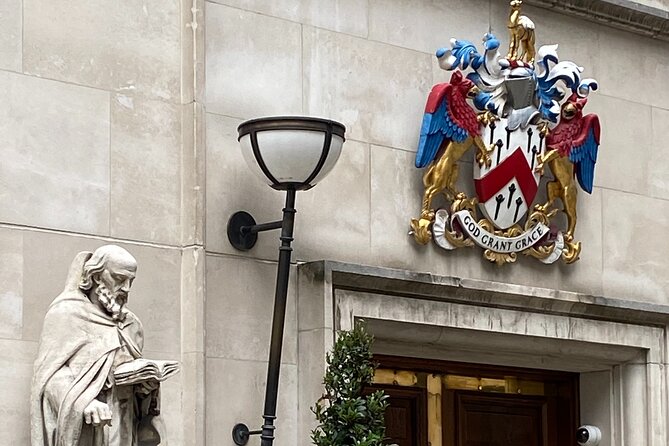
Reviewed · CITY TOURS
Money and Power in the City Sightseeing Tour
London’s financial district is much older than its glass towers suggest. This two-hour walk connects Roman beginnings, medieval trade, East India Company influence, coffeehouse speculation, and the modern Stock Exchange. You are not just looking at grand buildings. You are following the trail of how money and political power took root in the City.
I like the small maximum of eight people, which gives the guide room to answer questions and adjust the pace. I also like the way the walk links famous places such as the Royal Exchange, Bank of England, Mansion House, Guildhall, and St Paul’s Cathedral into one clear story.
The main consideration is that this is an outdoor walking tour, and it requires good weather. At about $41.14 per person, it offers solid value if you want context and storytelling, but it is not the right choice if you prefer to enter several major attractions or spend most of your time inside.
Key points at a glance
- Roman London to modern finance: The tour follows the City’s long economic story instead of treating the financial district as a collection of office blocks.
- A genuinely small group: With no more than eight people, you can hear the guide clearly and ask questions without shouting across a crowd.
- Terry brings context to complicated subjects: He explains financial and political history in plain language, with gossip and scandal mixed into the serious material.
- Coffeehouses helped create modern markets: Exchange Alley offers a memorable link between everyday meeting places and the beginnings of stock trading.
- A strong finish by St Paul’s: The route ends near the London Stock Exchange in Paternoster Square, with St Paul’s Cathedral providing a powerful contrast.
- Good value for a short orientation walk: Two hours is enough to get your bearings without taking over your afternoon.
Why this City of London walk is different
Many London sightseeing walks focus on royal buildings, famous churches, or literary connections. This one asks a different question: how did the City become a place where money, trade, and authority gathered?
That focus gives the tour a useful shape. You move from the Roman and medieval foundations of London to the institutions that helped build Britain’s commercial power. The walk then reaches the modern stock market, showing you how older systems still echo through the City today.
I find this kind of approach especially useful at the start of a London visit. The financial district can look formal and confusing at first, with narrow lanes beside grand stone buildings and modern towers rising above them. A guide can explain why those pieces belong together.
The tone also appears to be broader than a dry lecture on banking. Terry brings in stories, gossip, scandal, and personalities, which helps keep the subject human. You do not need a background in economics to follow the main ideas.
A few more London half days worth a look
- Stonehenge, Windsor Castle, and Bath from London
★ 4.5 · 18,662 reviews - London Big Bus Hop-On Hop-Off Tour with Optional River Cruise
★ 3.5 · 10,803 reviews - London Small Group Tour of Historical Pubs
★ 5.0 · 10,422 reviews
Roman beginnings and the first foundations
The opening section looks at the Roman and medieval beginnings of the Financial District. That matters because the City of London is not a modern business quarter that simply appeared around the Bank of England. Its position and importance were shaped over many centuries.
You can expect this part to give you a basic framework for the rest of the walk. The guide explains how early London developed and how trade, civic authority, and valuable goods helped define the area.
This is one of the strongest reasons to take the tour on foot. You can see the relationship between streets, lanes, and major buildings as you move through them. A map can show you where the City is, but walking helps you notice how compact and layered it feels.
The Roman and medieval material also gives the later financial story more meaning. Institutions such as exchanges, banks, and guilds did not appear in isolation. They grew from older patterns of trade and civic life.
The East India Company and the reach of trade
One stop focuses on the most important historic location connected with the East India Company, after the walk has already introduced other sites linked to it. This adds a wider political dimension to the tour.
The East India Company was not simply a business name. Its story connects commerce with overseas expansion and political influence. Within the City, its history helps explain how financial institutions could affect events far beyond London’s streets.
You should listen for the connection between commercial power and public life here. The tour is called Money and Power in the City for a reason. It is not only about where money changed hands. It is also about who gained influence, how institutions protected their interests, and how trade could shape national decisions.
This section may be especially useful if you want more than architectural sightseeing. The buildings are important, but the stories behind them explain why certain companies and institutions mattered so much.
The Royal Exchange, Bank of England, and Mansion House
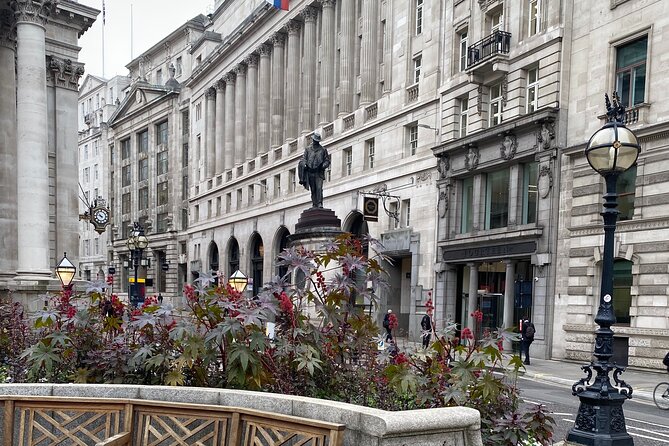
The walk then reaches three of the City’s grandest symbols: the Royal Exchange, the Bank of England, and Mansion House. Their neo-classical appearance gives this part a strong visual lift after the narrower streets and older lanes.
The Royal Exchange represents organized trade and the public face of commercial London. The Bank of England brings monetary authority into the picture. Mansion House adds the civic and political side of the City.
Seeing these buildings together helps you compare different kinds of power. One is tied to business and trade, another to finance, and another to the City’s civic leadership. The guide’s job is to show how those roles overlap without turning the stop into a list of dates and names.
I would pay attention to the buildings’ scale and placement. Their formal architecture sends a message about confidence, order, and importance. You can read that message more clearly when Terry explains the institutions behind the façades.
The drawback is that this is primarily an exterior walking experience. If you want a full interior visit to the Bank of England or another major building, this tour will not provide it. Its value comes from the explanation and the connections between sites.
A completely different sort of day out in London:
- Stonehenge, Windsor Castle and Bath with Pub Lunch in Lacock
★ 4.5 · 7,402 reviews - Tower of London and Crown Jewels Exhibition Ticket
★ 4.5 · 6,677 reviews - Thorpe Park Admission Ticket
★ 4.0 · 5,915 reviews - Stonehenge, Windsor Castle and Bath Full Day Guided Tour
★ 4.5 · 5,346 reviews
Exchange Alley and the coffeehouse origins of stock trading
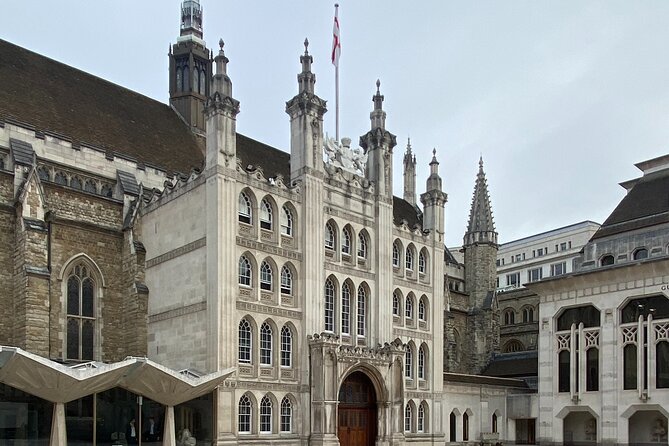
One of the most distinctive stops is the location of the coffee shop where the stock market was first based. The route also takes in Exchange Alley, sometimes called Change Alley, a narrow passage linking Cornhill and Lombard Street.
This is the kind of place that is easy to miss if you are walking alone. Exchange Alley served as a shortcut from the Royal Exchange on Cornhill toward the Post Office on Lombard Street, and it remains one of the small routes connecting those streets.
The point is not simply that people once drank coffee there. Coffeehouses provided places where merchants and other interested parties could meet, share news, discuss prices, and arrange deals. That setting offers a more personal picture of early finance than a grand bank building does.
I like this stop because it makes financial history feel practical. Markets begin with people meeting, talking, comparing information, and deciding whom to trust. A narrow alley and a former coffeehouse location can explain that process better than a polished modern tower.
This is also where the tour’s gossip and scandal can add color. The story of money is rarely only about ledgers. It involves ambition, rumor, risk, and personalities. Terry’s energetic style appears well suited to that material.
Medieval Guildhall and the guild buildings nearby
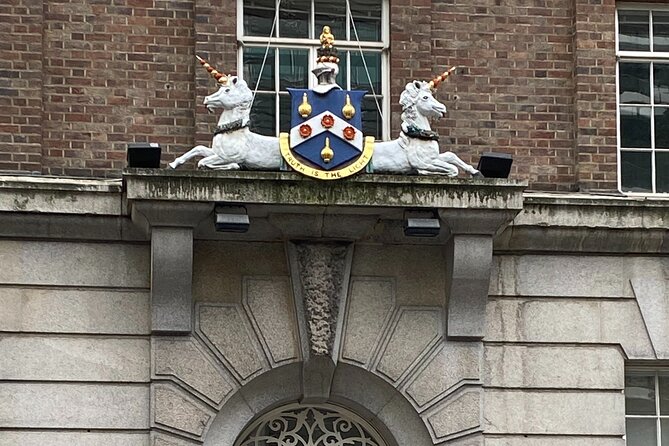
The next section turns to Guildhall and selected nearby guild buildings. Medieval guild halls served practical purposes, including storing goods and hosting events. They could also become places where townspeople gathered for entertainment, including Passion plays.
That detail gives you a more social picture of medieval London. Guilds were not only business associations hidden behind old walls. Their buildings supported trade, civic life, ceremonies, and public gatherings.
Guildhall is valuable in the tour because it connects commerce with the ordinary life of the city. Goods needed to be stored, merchants needed rules, and people needed places to meet. The City’s business culture developed through these shared institutions.
Look for the contrast between the medieval guild buildings and the financial structures seen earlier in the route. The forms have changed, but the basic needs are familiar: people organize, protect their interests, control trade, and create public authority.
Because the tour covers a long period in a short time, you may not receive every detail about each guild or building. That is a fair trade for a two-hour route. The aim is to give you a firm foundation rather than a specialist study of medieval guild history.
The modern Stock Exchange beneath St Paul’s
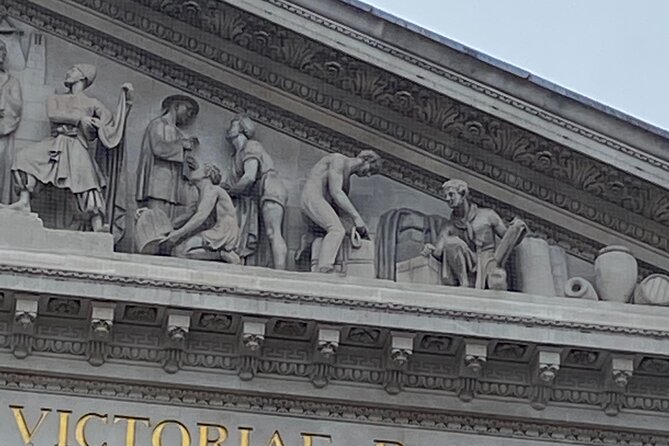
The walk ends at the London Stock Exchange in Paternoster Square, by the main column. This is a fitting final stop because it brings the story into the present.
The modern Stock Exchange represents an organized version of the trading networks introduced earlier at the coffeehouse and in the City’s historic institutions. You can see the shift from informal meetings in narrow lanes to a highly structured modern market.
Then there is St Paul’s Cathedral. Rising from Ludgate Hill at one of the highest points in the City, the cathedral provides a dramatic counterpoint to the Stock Exchange. It represents religious and civic London, while the nearby market represents modern finance.
That contrast gives the ending real visual strength. You finish with two powerful symbols close together, one associated with faith and the historic life of the city, the other with money and markets.
The end point is also practical. Paternoster Square is a clear place to finish, and you can continue exploring the City afterward. The tour does not return you to its starting point, so remember that you will need to make your own way onward after the walk.
What Terry adds to the experience
The guide is identified as Terry, and the strongest praise centers on his ability to make complicated subjects understandable and enjoyable. He is described as having plenty of energy, answering questions clearly, and adapting to different levels of prior knowledge.
That last point matters. A family group or a first-time visitor may know very little about London finance, while another person may already have an interest in economics or political history. The tour appears designed to meet both groups at a sensible starting point.
Terry’s approach also places events in context. Instead of giving you isolated facts, he connects early London, the medieval guild system, overseas trade, financial institutions, and the present-day market. That makes the route easier to remember after the tour ends.
You should expect storytelling rather than a silent procession from one building to the next. The mood includes humor, gossip, and scandal along with serious history. That balance is useful because two hours of financial terminology could otherwise become heavy going.
The feedback is uniformly positive, with every listed rating at five out of five and 100 percent recommending the experience. That is a very small sample, so I would not treat it as a guarantee. Still, the repeated praise for Terry’s clarity, energy, and ability to provide context points to the tour’s main strength.
Price, timing, and group size
The price is $41.14 per person for about two hours. That is reasonable if you want a focused introduction to the City and value a guide who can connect the sights. You are paying for interpretation, not admission to a series of indoor attractions.
The small group is important to that value. A maximum of eight people allows for a more personal feel than a large city walk. You should be able to hear the guide more easily, ask questions, and keep the group moving through narrow streets.
The start time is 2:00 pm. That makes the tour convenient for an afternoon plan, though you should allow enough time to reach the starting point at Emperor Trajan, A100, London EC3N 4DR.
The experience is offered in English and includes a mobile ticket. Most people can participate, and service animals are allowed. It is near public transportation, which helps with arrival and departure, though the supplied details do not specify a particular station or line.
The tour is booked, on average, 33 days ahead. That suggests you should reserve early if your London dates are fixed, especially because the group is limited to eight people.
Weather, walking, and practical planning
This is an outdoor walking tour, so check the forecast before setting out. If poor weather causes cancellation, you will be offered another date or a full refund.
Wear shoes that are comfortable for two hours on city streets. The route includes narrow alleys and several historic areas, and the pace needs to keep moving to cover the main sites. The supplied information does not give a precise accessibility description, so contact the operator if you have specific mobility needs.
Bring your phone with the mobile ticket ready. Since the walk ends at a different location from where it starts, plan your next stop from Paternoster Square rather than assuming you will finish back at Emperor Trajan.
You can cancel for a full refund up to 24 hours before the start time. Changes made less than 24 hours before the tour are not accepted, and cancellations inside that period are not refunded.
Who should book this City of London tour?
I would choose this walk for a first or second visit to London if I wanted to understand the City beyond its famous façades. It suits anyone curious about the links between commerce, politics, civic institutions, and the modern market.
It is also a good fit for families and mixed-interest groups. The material can be serious, but the storytelling, gossip, and scandal keep it from feeling like a classroom lecture. You do not need specialist knowledge to follow the main story.
History-minded visitors will appreciate the span from Roman beginnings to the present. Architecture fans will enjoy the Royal Exchange, Bank of England, Mansion House, Guildhall, and St Paul’s, even though the tour is mainly about the stories behind them.
You may want something else if your priority is entering famous buildings, spending time inside St Paul’s Cathedral, or getting a broad tour of all central London. This route is tightly focused on the City’s money and power, and that focus is its strength.
Should you book Money and Power in the City?
Book it if you want a lively, compact explanation of how London’s financial district developed. The strongest reasons are the small group, the clear route from Roman London to the Stock Exchange, and Terry’s ability to connect complex subjects with memorable stories.
At $41.14, the tour makes the most sense when you value expert explanation and personal attention. It is less appealing if you want included attraction entry, a hop-on hop-off overview, or a weatherproof activity.
For a history-focused afternoon, I think it is a smart choice. You will leave with a better sense of why the City looks the way it does, and why its narrow lanes, grand institutions, guild buildings, and modern markets belong in the same story.
FAQ
Where does the Money and Power in the City tour start?
The tour starts at Emperor Trajan, A100, London EC3N 4DR, UK.
Where does the tour end?
The tour ends at the London Stock Exchange, 10 Paternoster Square, London EC4M 7LS, UK, by the main column in Paternoster Square.
What time does the tour begin?
The start time is 2:00 pm.
How long does the tour last?
The tour lasts approximately two hours.
How large is the tour group?
The experience has a maximum of eight participants.
What language is the tour offered in?
The tour is offered in English.
Can I cancel for a full refund?
Yes. You can cancel at least 24 hours before the experience start time for a full refund. If poor weather causes the operator to cancel the tour, you will be offered another date or a full refund.
Recently added around London
- London’s Crown Secret: Self-Guided Royal Puzzle Quest★ 4.5 · 8 reviews
- Postcard London★ 5.0 · 8 reviews
- Private Tour: Downton Abbey London Locations by Taxi★ 5.0 · 8 reviews
- Windsor Castle, Stonehenge & Roman Baths Private Tour★ 4.5 · 8 reviews
- Cotswolds Private Driving Tour from London★ 5.0 · 8 reviews
- Skip-the-line London Westminster Abbey and City of Westminster Kid-Friendly Tour★ 5.0 · 8 reviews
- A Silent Disco Adventure in London★ 5.0 · 8 reviews
- Gangster Tour of Soho★ 4.5 · 8 reviews
City Tours, compared.


Liverpool City Sights Hop On Hop Off City Tour – 24hr Ticket
Read our review →
1.5-hour Oxford City and University Walking Tour
Read our review →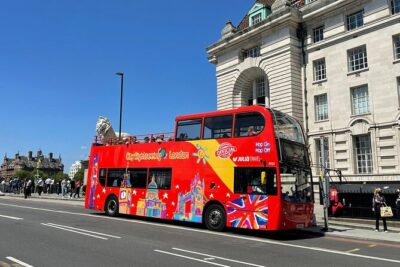
City Sightseeing London Hop-On Hop-Off Bus Tour & Bookable Extras
Read our review →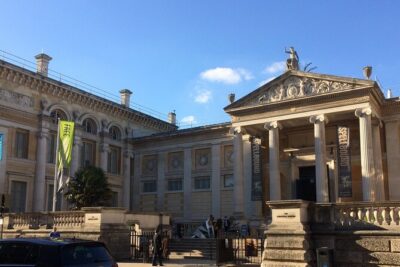
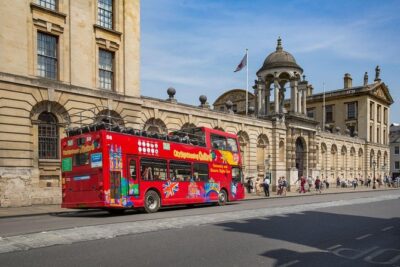
City Sightseeing Oxford Hop-On Hop-Off Bus Tour
Read our review →
Browse the lists this tour appears in