Reviewed · LONDON TOURS
Thames Beachcombing
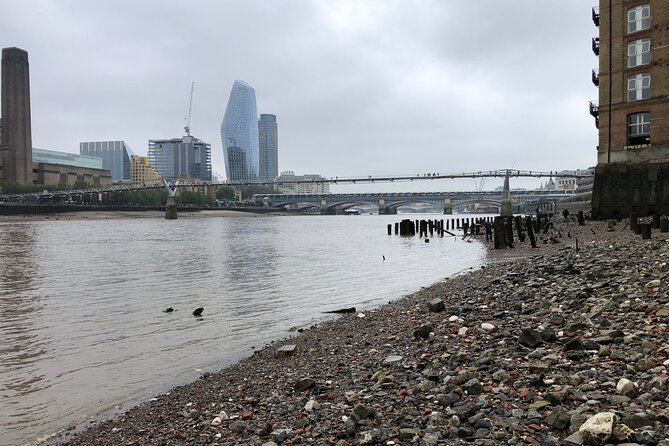
The River Thames is more than a scenic ribbon through London. At low tide, its foreshore can reveal clay pipes, pottery, roof tiles, and other small pieces of the city’s past. This two-hour Thames Beachcombing experience lets you search for those objects yourself, then learn what you have found from guide Robert.
I like the hands-on format, since you are not just looking at old objects behind glass. I also like the relaxed pace and small-group setup, which give you time to search and ask questions. The main consideration is that the exact foreshore site changes with the tide and season, so the quality and number of finds can vary.
Key points to know before you book
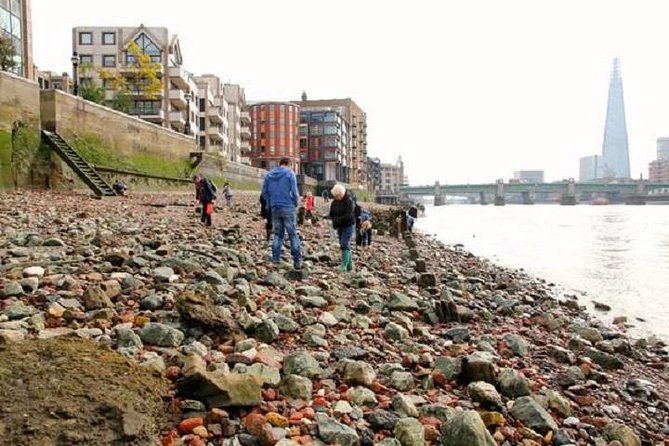
- You search the Thames foreshore at low tide, walking over stones and mud rather than along a normal riverside path.
- Robert helps identify your finds, including pottery, tiles, clay pipes, and other objects.
- The activity lasts about two hours, with roughly 1.5 hours spent actively searching.
- Gloves and plastic bags are provided, but you need wellington boots or hiking boots.
- The meeting place and start time change, so Robert contacts you with the details.
- The group is intended to be small, though the information gives a maximum ranging from 15 to 20 people.
Why mudlarking feels different from a standard London tour
Most London sightseeing keeps you at street level. You follow a guide past grand buildings, hear a few dates, and move on. Mudlarking changes the scale. You crouch near the water, scan the ground, and hold a fragment that may have been part of an ordinary London life centuries ago.
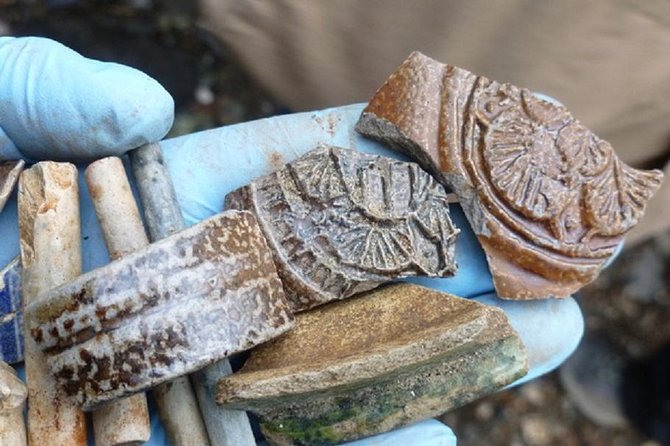
That personal search is the heart of the experience. You might find a piece of pottery with a pattern still visible, a tile made before the Great Fire of London, or part of a clay pipe. You might also find very little of note. That uncertainty is not a flaw in the activity. It is part of the appeal, though it means you should come for the search and the setting, not a guaranteed archaeological prize.
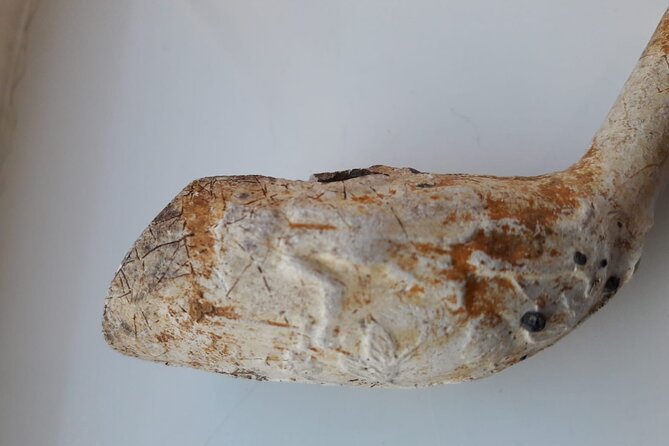
The guide gives meaning to small objects that could otherwise look like broken rubbish. At the end, Robert examines the group’s finds and explains what each item may be, how old it could be, and what it suggests about life beside the river. A bowl handle with a fingerprint impression, for example, can feel surprisingly personal. It connects you with the person who shaped it long ago.
A few more London half days worth a look
- Stonehenge, Windsor Castle, and Bath from London
★ 4.5 · 18,662 reviews - London Big Bus Hop-On Hop-Off Tour with Optional River Cruise
★ 3.5 · 10,803 reviews - London Small Group Tour of Historical Pubs
★ 5.0 · 10,422 reviews
A two-hour outing shaped by the tide
The meeting point is somewhere in London, but there is no fixed location listed for every departure. The group uses different parts of the Thames foreshore during the year, and the start time changes as the tides change. Robert contacts you with the exact time and place, so you need to watch for that information after booking.
Once you meet, you receive gloves and a plastic bag. Robert explains what to look for and may show examples or pictures of likely finds before the search begins. This short introduction matters, especially if you have never tried mudlarking. A broken tile can look like ordinary debris until you know what features to notice.
The main search lasts about 1.5 hours within the two-hour activity. You walk along the foreshore at low tide, scanning the ground and picking up objects with your eyes only. The information specifically describes looking rather than digging, so expect a surface search, not an excavation.
At the end, everyone gathers for an identification session. Robert sorts through the objects and helps separate more interesting pieces from common or modern material. You also learn from the finds made by other people in the group, which adds a useful shared-history lesson to your own discoveries.
The activity ends back at the meeting point. It is not a long walking tour of central London, and the exact stretch of river depends on the day. One point to note is that at least one departure was considered disappointing because the chosen section produced fewer and less varied objects than another Thames location. That is a fair warning: the river does not reveal the same material everywhere.
What you might find on the riverbank
The possible finds listed for this experience include clay pipes, pottery fragments, tiles, and other objects washed or exposed along the foreshore. Several people found pieces that appeared to predate the Great Fire of London, while others enjoyed spotting clay pipes and small pieces of old London.
You should keep your expectations sensible. A successful outing may mean finding several small objects rather than one dramatic artifact. The pleasure comes from spotting something yourself, then having Robert explain it. A fragment with an old glaze or an unusual shape can become interesting once you understand its likely use.
The best finds are not always the prettiest. A roof tile may look plain, but its age can give it real value as a piece of the city’s past. A pottery handle may carry the imprint of the maker’s finger. These details bring a human touch to an activity that could otherwise feel like simple beachcombing.
The final identification session is especially useful for beginners. Without help, you may collect fragments without knowing which are old, which are modern, and which are simply stones or building waste. Robert’s explanations help you develop an eye for the foreshore, so the search becomes more rewarding as it continues.
Robert’s role makes the difference
A guide is essential here. Without one, you can look at the mud and stones, but you may not know what deserves a closer look. Robert is repeatedly described as helpful, approachable, and well informed about the objects found along the river.
His role is practical rather than theatrical. He points out what to search for, answers questions as you go, and identifies pieces at the end. That suits the activity. You need someone who can read a fragment, not someone giving a long speech while you stand still.
Most of the feedback about Robert is highly positive, with particular praise for his explanations and his willingness to help each person. One less positive experience described the guide as lacking energy, so the tone may not be identical on every departure. Still, the guide’s ability to identify finds is the main service you are paying for, and Robert appears to provide that well most of the time.
The small group helps. The activity is described as having no more than 15 people, while the additional information gives a maximum of 20. That difference is worth noting, but either number is manageable for a search spread along the foreshore. You should still confirm the group size if individual attention is important to you.
A completely different sort of day out in London:
- Stonehenge, Windsor Castle and Bath with Pub Lunch in Lacock
★ 4.5 · 7,402 reviews - Tower of London and Crown Jewels Exhibition Ticket
★ 4.5 · 6,677 reviews - Thorpe Park Admission Ticket
★ 4.0 · 5,915 reviews - Stonehenge, Windsor Castle and Bath Full Day Guided Tour
★ 4.5 · 5,346 reviews
The physical side: mud, stones, and changing ground
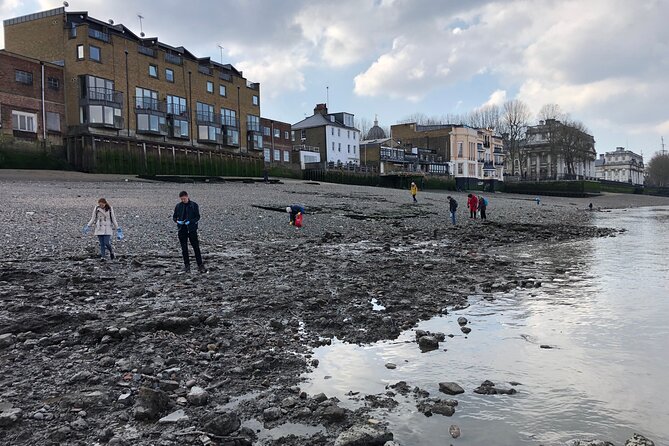
This is not a difficult hike, but it is not a polished walking tour either. The foreshore is stony and can be muddy, so wellington boots or sturdy hiking boots are required. Comfortable shoes with smooth soles are a poor choice.
You need a moderate level of physical fitness. The search involves walking over uneven ground, bending down, and standing for periods of time. If crouching or walking on stones is uncomfortable, the activity may be tiring even though it lasts only two hours.
Gloves and bags are included, which keeps the preparation simple. Bring clothing you do not mind getting dirty, especially if the weather has been wet. The gloves supplied may not fit very young children well. One family found that oversized gloves kept slipping off a five-year-old’s hands, so you may want to bring smaller gloves for a young child.
The activity requires good weather. If poor weather causes cancellation, you are offered another date or a full refund. Since the foreshore is exposed and the ground can become unpleasant in wet conditions, this policy is useful rather than surprising.
Is it suitable for children?
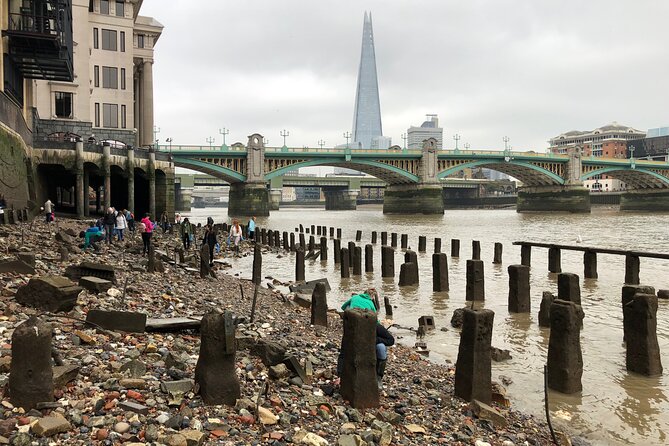
The activity can work well for families. Children aged five, eight, and nine were able to stay engaged, especially because the search turns the riverbank into a treasure hunt. Clay pipes and bits of old pottery are more exciting to a child when he or she has found them personally.
Children under 16 must be accompanied by an adult. You should also consider the ground carefully. The foreshore is uneven, muddy, and stony, and younger children may need help moving around safely.
I would frame the activity as a shared search rather than a lesson. Children do not need to know London history in advance. They only need patience, sturdy footwear, and an interest in spotting small objects. The identification session at the end gives them a clear payoff after the search.
For families with toddlers or children who dislike mud, the experience may be less successful. The supplied gloves may also be too large for smaller hands. That is a small issue, but bringing a child-sized pair could make the outing more comfortable.
How the changing site affects value
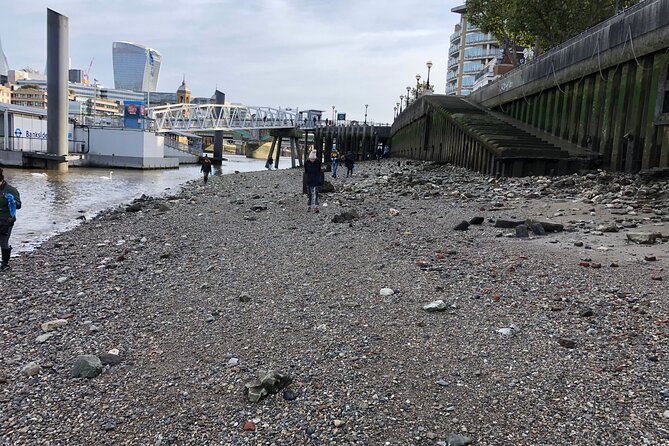
The experience costs $41.41 per person. That is a reasonable price if you value a guided, hands-on activity and the chance to learn how to identify finds. Your fee covers the local guide, gloves, bags, and about two hours of organized time.
The value depends heavily on your expectations. If you want a guaranteed collection of old artifacts, the price may feel high because the river controls what you find. If you enjoy the process, Robert’s explanations add real value. You are paying for access to the activity, local guidance, and interpretation, not for a promised treasure.
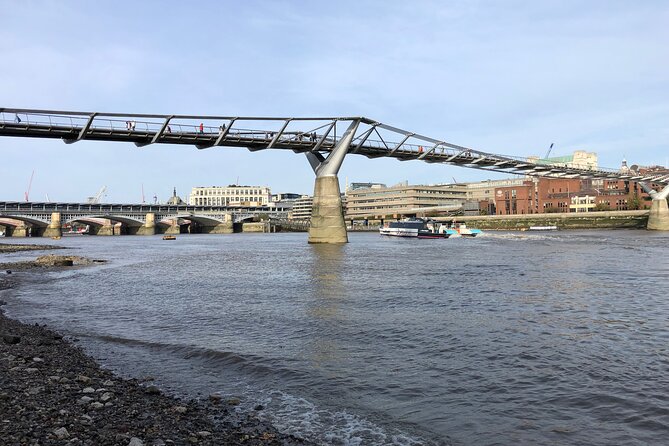
The chosen site matters. Different parts of the Thames can produce different objects, and one outing near the Cannon Street area was compared unfavorably with a previous search below the Millennium Bridge. Another outing took place at Putney Bridge and still produced enjoyable small finds, though the guide received a less favorable assessment there.
This variation is worth accepting before you book. A particular location may offer fewer objects, but the search can still be pleasant and informative. I would book this for curiosity and the experience of looking, not because you expect every patch of foreshore to deliver rare material.
The activity is often booked well ahead, with an average lead time of 67 days. That suggests you should arrange it early if it is a priority for your London visit. The tide and weather shape the schedule, so last-minute planning may be harder.
Practical planning for your London day
Because the location and time change, do not place this activity into a tight morning itinerary until you receive the meeting details. Leave room for the possibility that the tide sets an early or later start than you expected.
The meeting point is near public transportation, but you make your own way there. Once Robert sends the details, check the route and allow extra time. The tour ends where it begins, so you do not need to plan a separate pickup.
Wear boots, old trousers, and layers suited to the forecast. The supplied gloves and bag cover the basic search equipment, but they do not replace sensible clothing. A small bag for personal items may also help, since your hands will be occupied while you search.
The mobile ticket makes entry simple. Confirmation is sent within 48 hours of booking, subject to availability. Free cancellation is available up to 24 hours before the start time, with a full refund. Changes or cancellations inside that 24-hour window are not accepted, and the local start time controls the cut-off.
Who will enjoy Thames Beachcombing most?
I would choose this for you if you like history in small, ordinary details. It suits people who enjoy museums but want a more active way to connect with the past. It also works for families, couples, solo visitors, and anyone who likes the quiet focus of searching.
The activity is particularly good for:
- People fascinated by London’s past and everyday objects
- Families with children who enjoy treasure hunts
- Visitors seeking something beyond major attractions
- Anyone comfortable with mud, stones, and uneven ground
- Repeat visitors who want to see a different part of the Thames
I would hesitate if you need a fixed itinerary, polished paths, or a guaranteed result. The river may offer a memorable object, or it may offer a handful of modest fragments. Your enjoyment depends on treating the search itself as the main event.
The activity has a 4.7 rating from 100 reviews, and 93 percent of customers recommend it. Those figures fit my assessment: the guide, the personal search, and the chance to handle small pieces of the past are the strongest parts. The main risks are the variable site, the weather, and the possibility of a guide whose energy does not match your own.
Should you book this Thames mudlarking experience?
Book it if you want an unusual London activity that puts you in direct contact with the city’s past. Robert’s help with identification is a major reason to choose a guided outing rather than simply walking beside the river alone.
Go with flexible expectations. You may find pre-Great Fire tiles, clay pipes, pottery, or a small object with a maker’s mark. You may also spend much of the time scanning stones for fragments that turn out to be ordinary. Either way, you get a calm, hands-on two hours that feels very different from standard sightseeing.
For most history-minded visitors, families, and curious first-time mudlarkers, the $41.41 price is fair. Wear proper boots, allow for a changing meeting time, and book early if your London dates are fixed.
FAQ
How long does Thames Beachcombing last?
The activity lasts approximately two hours. About 1.5 hours is spent searching the Thames foreshore, followed by time with the guide to identify your finds.
Where does the tour take place?
The activity takes place at different Thames foreshore locations during the year. The exact meeting point and time change, and the guide contacts you with those details.
What can I find while mudlarking?
Possible finds include clay pipes, pottery fragments, tiles, and other objects exposed or washed up along the foreshore.
Is equipment provided?
Yes. Gloves and plastic bags are provided for the search.
What should I wear?
You should wear wellington boots or hiking boots because the foreshore is stony and can be muddy.
Are children allowed?
Yes. Children under 16 must be accompanied by an adult.
How large is the group?
The activity is described as a small-group experience with no more than 15 people, while the additional information gives a maximum of 20 travelers.
Does the activity require good fitness?
You should have a moderate level of physical fitness. The foreshore is uneven and involves walking, standing, and bending while searching.
What happens if bad weather cancels the activity?
If poor weather causes cancellation, you are offered a different date or a full refund. You can also cancel up to 24 hours before the start time for a full refund.
Recently added around London
- London’s Crown Secret: Self-Guided Royal Puzzle Quest★ 4.5 · 8 reviews
- Postcard London★ 5.0 · 8 reviews
- Windsor Castle, Stonehenge & Roman Baths Private Tour★ 4.5 · 8 reviews
- Private Tour: Downton Abbey London Locations by Taxi★ 5.0 · 8 reviews
- Cotswolds Private Driving Tour from London★ 5.0 · 8 reviews
- A Silent Disco Adventure in London★ 5.0 · 8 reviews
- Skip-the-line London Westminster Abbey and City of Westminster Kid-Friendly Tour★ 5.0 · 8 reviews
- Gangster Tour of Soho★ 4.5 · 8 reviews
London Tours, compared.

Stonehenge, Windsor Castle, and Bath from London
Read our review →
London Big Bus Hop-On Hop-Off Tour with Optional River Cruise
Read our review →

Stonehenge, Windsor Castle and Bath with Pub Lunch in Lacock
Read our review →
Tower of London and Crown Jewels Exhibition Ticket
Read our review →
Stonehenge, Windsor Castle and Bath Full Day Guided Tour
Read our review →
Windsor Castle, Stonehenge, and Oxford Day Trip from London
Read our review →