Reviewed · LONDON TOURS
Visit the Birthplace of The Rolling Stones – Private Tour
The most revealing Rolling Stones stories began in ordinary rooms, pubs, and dance halls, not grand concert venues. This private tour follows that trail from Earl’s Court to Richmond, stopping at the flat where Brian Jones, Mick Jagger, and Keith Richards lived, the studios where major albums took shape, and the clubs that helped launch the band.
I like the small private group, which means your guide can keep the talk focused on your interests rather than delivering a fixed speech to a busload of people. I also like the route’s mix of famous names and modest places, including 102 Edith Grove and the former Crawdaddy Club sites. The main consideration is that many stops are exterior visits, so this is a sightseeing drive with short pauses, not a series of indoor museum visits.
Key points at a glance
- 102 Edith Grove: See the Chelsea flat shared by Brian, Mick, and Keith between 1962 and 1963.
- Olympic Studios: Stop at the studio where The Stones recorded six consecutive albums from 1966 to 1972.
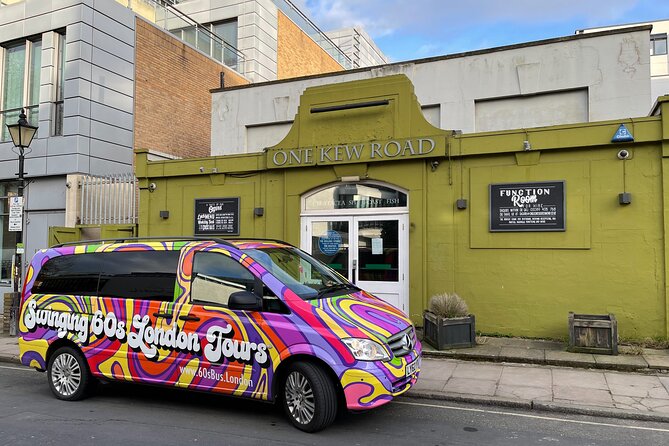
- Richmond beginnings: Visit the former Station Hotel, where the original Crawdaddy Club gave the band an early residency.
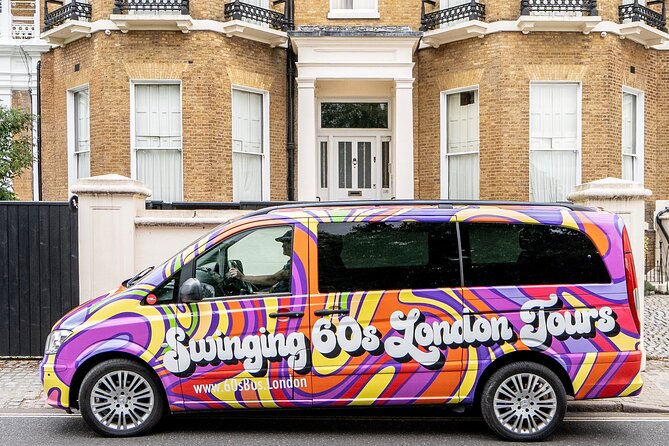
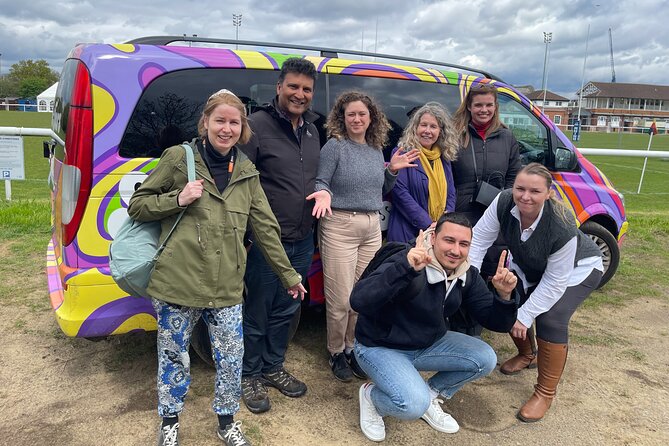
- Private minivan: Travel with only your own group, up to six people, in an air-conditioned vehicle.
- A useful finish: End at Richmond Station, with quick train and Tube links across London and to Windsor.
- A Stones-heavy afternoon: Hear band stories and trivia as you move between Chelsea, Putney, and Richmond.
From Earl’s Court to the Stones’ first rooms
The tour begins at 1:00 pm beside the Earl’s Court Police Box on Earls Court Road. That meeting point is near public transportation, and the route then heads west through parts of London tied to the band’s early days.
Before the first named stop, you pass the former location of the Wetherby Pub. Bill Wyman auditioned for The Rolling Stones there, and the band also rehearsed at the pub. It is a quick visual reminder that the group’s beginnings were tied to working London rather than polished tourist attractions.
The first proper stop is 102 Edith Grove, the flat shared by Brian Jones, Mick Jagger, and Keith Richards. They lived there from 1962 to 1963, when the band was still finding its shape. You get about five minutes outside the building, with no admission fee.
This is one of the most useful stops for understanding the group. It puts the early Stones in a real domestic setting, where cramped rooms and uncertain plans formed part of daily life. The flat is not presented as a preserved museum, so keep your expectations realistic. You are looking at the exterior and hearing the story rather than entering a carefully staged historic interior.
The flat also connects the Stones with The Beatles. After first meeting The Beatles in Richmond, the Stones invited them back to Edith Grove. That small social link helps place both bands in the same London music circle before they became global names.
A few more London half days worth a look
- Stonehenge, Windsor Castle, and Bath from London
★ 4.5 · 18,662 reviews - London Big Bus Hop-On Hop-Off Tour with Optional River Cruise
★ 3.5 · 10,803 reviews - London Small Group Tour of Historical Pubs
★ 5.0 · 10,422 reviews
Cheyne Walk and the Chelsea years
The route continues to Cheyne Walk, one of London’s most desirable streets. Mick Jagger and Keith Richards bought houses here in 1968, by which point the band was no longer a struggling club act.
You stop for about two minutes to look at the houses from outside. There is no included admission, and the appeal is mainly visual and contextual. Cheyne Walk shows the sharp change in the band’s fortunes: from shared accommodation in Edith Grove to expensive homes on a prestigious riverside street.
After that, the drive passes through Chelsea, a key part of the old Swinging London scene. This is where you hear about the former Chelsea Drugstore and the fashion and music venues that helped define the era.
For a first-time London visitor, Chelsea also gives the tour some local texture. You are not simply moving between isolated rock landmarks. You are seeing the streets where music, style, nightlife, and celebrity overlapped. Still, much of this part is viewed from the vehicle, so stay alert and listen closely as the guide points things out.
The Half Moon in Putney
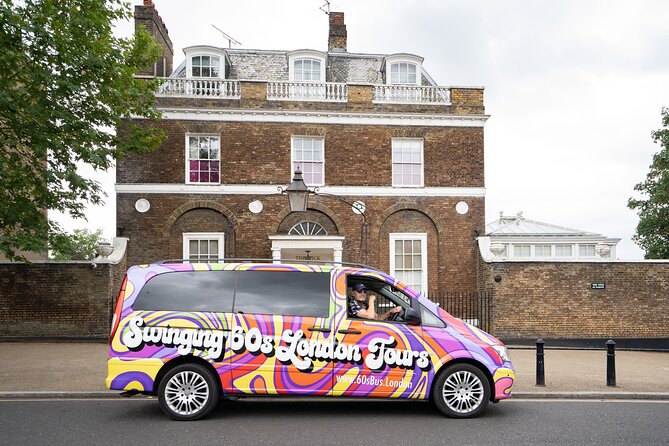
At The Half Moon in Putney, you have about ten minutes. The Stones performed there at a private party as recently as 2000, linking the venue to both the band’s early circuit and its later career.
The Half Moon is a working music venue, so this stop has more atmosphere than a plain residential address. Even with only ten minutes, you can get a sense of the kind of intimate room where bands played before arenas became the norm.
The stop is free, but it is not built around a full indoor visit. If you want a long look at the venue or hope to see a performance, this tour does not promise either. The value comes from the guide’s story and from seeing the place in person as part of a larger route.
Olympic Studios and six consecutive albums
The Olympic Studios Cinema receives another ten-minute stop. The Stones recorded six consecutive albums at Olympic between 1966 and 1972, working with Chris Kimsey and Glyn Johns.
That stretch covers a major period in the band’s recording career. The building’s importance is easy to miss if you only pass it in a taxi, so having the recording context supplied by a guide makes the stop more meaningful.
You also hear that the band’s first hit, Come On, was recorded at Olympic’s earlier location off Baker Street in London. This detail adds a useful distinction: the current Olympic site is tied to a long run of important albums, while the earlier Baker Street location connects to the band’s first hit.
The stop is outside the Olympic Studios Cinema, and admission is free. Ten minutes is enough for a quick look and explanation, but not for a full studio tour. If your main goal is to enter recording facilities, this experience may feel limited. If your goal is to connect famous recordings with actual London addresses, it works well.
A completely different sort of day out in London:
- Stonehenge, Windsor Castle and Bath with Pub Lunch in Lacock
★ 4.5 · 7,402 reviews - Tower of London and Crown Jewels Exhibition Ticket
★ 4.5 · 6,677 reviews - Thorpe Park Admission Ticket
★ 4.0 · 5,915 reviews - Stonehenge, Windsor Castle and Bath Full Day Guided Tour
★ 4.5 · 5,346 reviews
Richmond and the original Crawdaddy Club
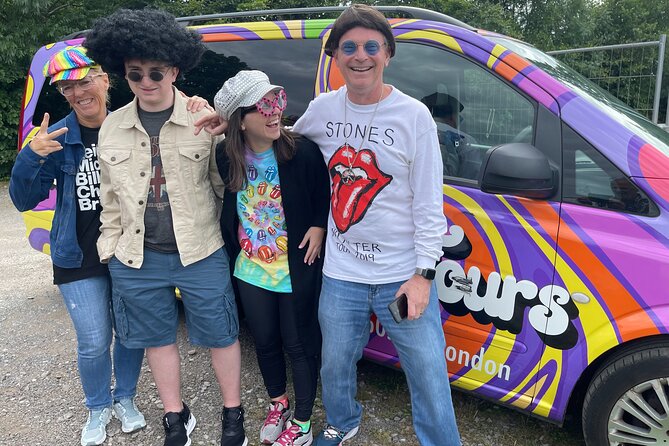
The tour then reaches Richmond, where the early Stones story becomes especially concentrated. At All Bar One Richmond, formerly the Station Hotel, you see the location of the original Crawdaddy Club.
The Stones secured their first residency there on Sunday, February 24, 1963. This was also where they first met The Beatles and signed for Decca Records. You get about ten minutes at the site, with no admission fee.
This is one of the strongest stops because several turning points meet in one place. The band found a regular stage, met another rising group, and made a major recording deal connection. The present-day bar is not a preserved Crawdaddy Club museum, so the guide’s explanation matters. You are visiting the address and reconstructing its role through stories rather than original displays.
The route’s design is smart here. After seeing the Stones’ early living quarters and recording connections, you arrive at the place where steady performances helped move them forward. Richmond was not just a later stop on the band’s story. It was central to their first breakthrough.
Richmond Hill, homes, and a famous song
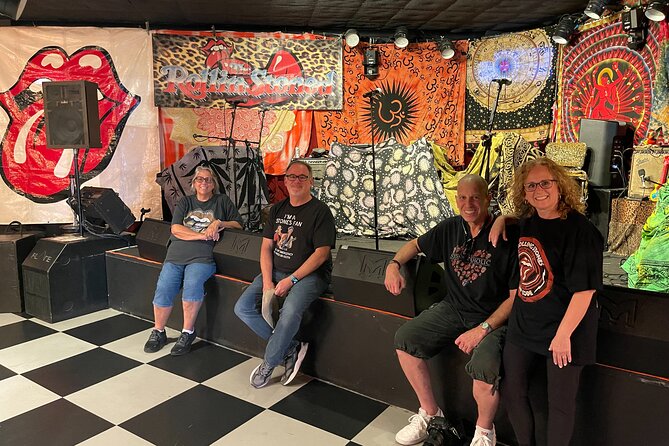
At Terrace Gardens on Richmond Hill, you pause for about five minutes. The stop looks at homes connected with Mick Jagger, Jerry Hall, Ronnie Wood, and Pete Townshend.
Mick Jagger and Jerry Hall lived here in the early 1990s, and Jerry Hall still lives in the area with her new husband, Rupert Murdoch. Ronnie Wood lived here from 1971. The house associated with Pete Townshend is currently offered for sale for £15 million, an eye-catching detail that gives the stop a little modern London property drama.
The most important musical link is that It’s Only Rock ’n Roll (But I Like It) was written here in 1973. That gives the stop more weight than a simple celebrity-home drive-by. You are seeing a setting connected to both the band’s personal lives and one of its well-known songs.
The address is viewed from outside, and admission is not included. Please treat this as a respectful look at private residences, not a chance to approach homes or expect entry. The stop is brief, but the view from Richmond Hill adds a change of pace after the denser Chelsea and Putney streets.
Ormond Road and the Sandover Hall site
Ormond Road brings you to the Richmond location of Sandover Hall, where The Stones performed between 1962 and 1963. You have roughly five minutes here, with no admission fee.
This stop helps fill in the gap between the group’s earliest performances and its Crawdaddy residency. It is another example of the tour’s basic idea: follow the band through the rooms and streets where it built an audience, rather than only visiting places associated with later fame.
As with several locations, the building is not described as an active museum or formal attraction. The experience depends on seeing the place, hearing its connection to the band, and understanding how these smaller venues formed a working circuit.
The second Crawdaddy Club and festival roots
The final main stop is the second Crawdaddy Club location. In 1963, The Yardbirds replaced The Stones as the resident band here.
The building also hosted Harold Pendleton’s National Jazz and Blues Festival from 1961 to 1965. After moving through several locations, the festival eventually settled in Reading and became the world’s longest-running pop festival.
This is a worthwhile closing stop because it widens the story beyond The Stones. You see how clubs, promoters, and festivals created a network for British music. The Yardbirds connection also shows how one band’s progress made room for another group to rise.
You spend about ten minutes here, and the visit is free. The location is best for music fans who enjoy connections between bands and events, not just direct Stones memorabilia.
What the three-hour format feels like
The tour lasts about three hours and uses an air-conditioned minivan. That matters in London, where a route covering Chelsea, Putney, and Richmond would take more effort by public transportation, especially if you were trying to keep several short stops in order.
The pace is brisk. Several visits last only two to five minutes, while The Half Moon, Olympic Studios, All Bar One Richmond, and the second Crawdaddy Club site receive about ten minutes each. You will spend plenty of time moving between locations, with the guide filling the drive with Stones stories and trivia.
That format suits you if you want a broad musical map of west London. It is less suited to anyone who prefers to linger at each address, browse exhibits, or spend time inside historic buildings.
Because the tour is private, only your group participates. The vehicle can accommodate up to six people. That makes the experience especially practical for a family or group of friends who can split the cost and keep the conversation tailored to their interests.
The tour is offered in English, and the minimum age is nine. Most people can participate, though the supplied details do not promise specific vehicle accessibility features, so you should ask the operator if that is important for your group.
Is $575.86 good value for your group?
The listed price is $575.86 per group of up to six people. For six people, that works out to roughly $96 per person before considering currency changes or your own transport to the meeting point. For two people, the per-person cost is much higher.
The value comes from the private vehicle, the guide, and the amount of ground covered in three hours. You are paying to connect a long list of addresses without planning the route yourself, changing trains, or trying to work out which places still exist under different names.
The cost is harder to justify if you mainly want to see one or two sites, or if you are comfortable building your own self-guided route. Most stops are free to view from outside, so the main purchase is the guide’s interpretation and the convenience of private transport.
Snacks are not included, and public transportation is listed at £5 per person. Since the tour ends at Richmond Station, you can continue by train or Tube afterward rather than arranging a separate ride back into central London.
Ending at Richmond Station
The tour ends at Richmond Station, at Stop C. This is a useful finish rather than an awkward drop-off. Fast and frequent train and Tube services connect Richmond with other parts of London and Windsor.
You can also stay in Richmond after the tour. A walk along the river or time in Richmond Park would make a sensible follow-on, especially if you want to turn the rock-music outing into a longer west London afternoon. Richmond Park is known for roaming deer and a long history, though park time is not included in the three-hour tour.
Starting at 1:00 pm and finishing around 4:00 pm gives you a reasonable chance to continue sightseeing afterward. Exact timing can vary with traffic, so avoid booking a tight evening commitment immediately after the scheduled end.
Booking, timing, and cancellation
Confirmation is received when the booking is accepted, and the card is charged only after tour availability is confirmed. Availability cannot be checked without making a booking, so plan your London schedule with some flexibility until confirmation arrives.
This experience is often booked well ahead, with an average booking lead time of 93 days. That does not guarantee that every date will sell out, but it is a strong reason to reserve early if your visit is built around The Rolling Stones.
Free cancellation is available up to 24 hours before the start time for a full refund. Cancellations or changes made less than 24 hours before the start time are not accepted for a refund, and the cut-off follows local time.
Who should book this Stones tour?
You should consider it if you are a serious Rolling Stones fan, a music-history enthusiast, or a small group that wants a private afternoon with plenty of stories. It is also a good choice if you want to see Richmond and west London without spending your day managing connections.
I would be more cautious if you need indoor attractions, long visits, or a large amount of museum-quality memorabilia. The tour is about places, connections, and storytelling. It does not promise access inside private homes, recording studios, or former clubs.
My call is simple: book it for the route and the guide, especially if you can fill most of the six seats. The strongest value comes from having a private vehicle carry your group between many scattered sites while the guide explains why each one matters. If you want the most direct, authentic look at the Stones’ London beginnings, this is a well-focused afternoon.
FAQ
Where does the tour start?
It starts at the Earl’s Court Police Box, 232 Earls Court Road, London SW5 9RD.
What time does the tour begin?
The scheduled start time is 1:00 pm.
Where does the tour end?
It ends at Richmond Station, Stop C, Richmond TW9 1DJ.
How long is the tour?
The experience lasts approximately three hours.
How many people can join the private tour?
The private vehicle and activity are available for your group of up to six people.
What language is the tour offered in?
The tour is offered in English.
Is transportation included?
An air-conditioned vehicle and professional guide are included. Public transportation is listed separately at £5 per person.
Are admission fees included?
All listed stops are exterior visits with free admission, except Cheyne Walk and Terrace Gardens, where admission is not included. The tour does not describe entry into private homes, studios, or clubs.
What is the minimum age?
The minimum age is nine years old.
Can I cancel for a full refund?
Yes. You can cancel at least 24 hours before the experience start time for a full refund. Changes or cancellations made less than 24 hours before the start time are not accepted for a refund.
Recently added around London
- London’s Crown Secret: Self-Guided Royal Puzzle Quest★ 4.5 · 8 reviews
- Postcard London★ 5.0 · 8 reviews
- Windsor Castle, Stonehenge & Roman Baths Private Tour★ 4.5 · 8 reviews
- Private Tour: Downton Abbey London Locations by Taxi★ 5.0 · 8 reviews
- Cotswolds Private Driving Tour from London★ 5.0 · 8 reviews
- Skip-the-line London Westminster Abbey and City of Westminster Kid-Friendly Tour★ 5.0 · 8 reviews
- A Silent Disco Adventure in London★ 5.0 · 8 reviews
- London: National Gallery English Audio Tour with free fast Entry★ 3.0 · 8 reviews
London Tours, compared.
Stonehenge, Windsor Castle, and Bath from London
Read our review →
London Big Bus Hop-On Hop-Off Tour with Optional River Cruise
Read our review →
Stonehenge, Windsor Castle and Bath with Pub Lunch in Lacock
Read our review →
Tower of London and Crown Jewels Exhibition Ticket
Read our review →
Stonehenge, Windsor Castle and Bath Full Day Guided Tour
Read our review →
Windsor Castle, Stonehenge, and Oxford Day Trip from London
Read our review →