

Reviewed · MUSEUMS
The Postal Museum Admission Ticket
Mail Rail is the star here: a small train carries you through London’s former underground postal tunnels, where letters once moved beneath the city. I like the surprising mix of engineering and social history, plus the hands-on displays that give children something to do beyond reading labels.
I also like the museum’s unusual family appeal and its usefulness on a wet London day. The main drawback is practical: the railway can close for maintenance or other conditions, and the café has a limited food selection. Check the Mail Rail status before you go.
Key points to know
- Ride through the old postal tunnels: Mail Rail offers a short, atmospheric train journey beneath London.
- Two buildings across the street: Visit the Mail Rail site and the main museum, or you may miss half the experience.
- Excellent for families: Interactive models, pneumatic tubes, and working displays keep children involved.
- A different kind of London history: The museum explains how postal services helped connect communities and countries.
- Allow up to 2.5 hours: Families may need extra time for hands-on exhibits and queues for the train.
- Check access before booking: Most areas are step-free, but the ride requires walking 100 metres and climbing at least 70 steep steps.
Why Mail Rail is the museum’s main event
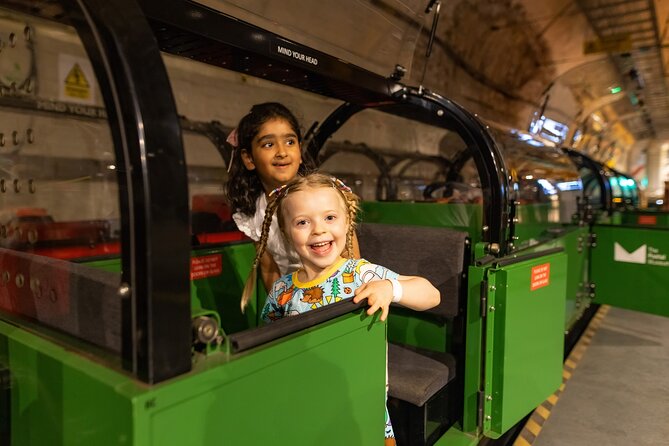
London has plenty of grand museums, but few let you ride a train through a forgotten service network. Mail Rail was part of the underground railway used to move post across central London, and the experience turns that practical system into a compact historical adventure.
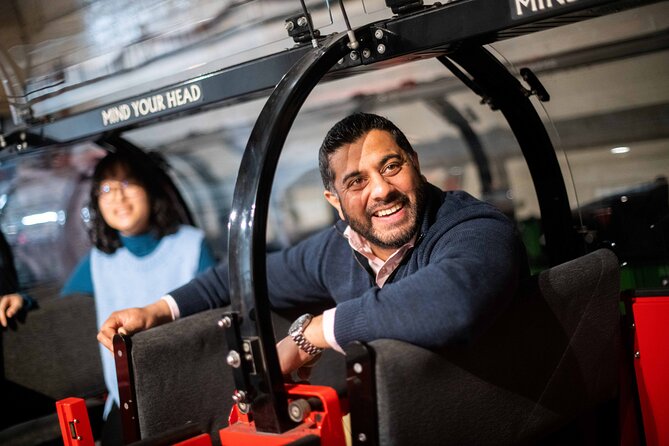
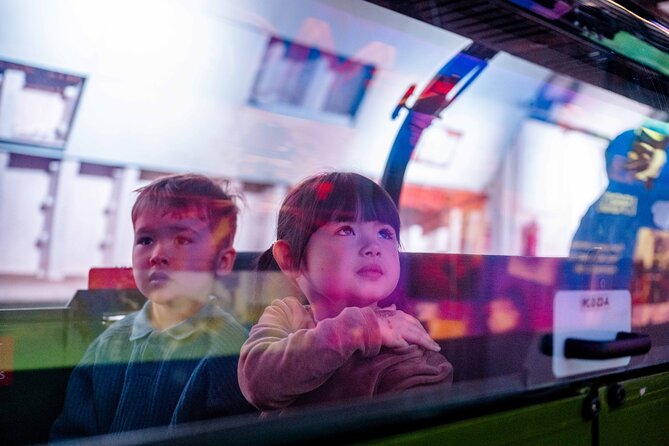
The train ride is dark, close, and atmospheric. Along the route, information and visual effects explain how the railway operated and how its role changed over time. It is not a long railway journey, but it gives the museum a strong physical center. You are not just looking at old equipment. You are moving through the place where the work happened.
Children often respond to the train first, which is useful if you are visiting with a young family. The ride has enough story to hold adult attention, too. It gives you a sense of the scale and difficulty of moving huge amounts of mail below a busy city.
The cars are compact. If you are tall, you may find the roof uncomfortably close, especially during parts of the ride. Younger children may also find the darkness, noise, or enclosed setting unsettling. Keep that in mind before booking for very small children or anyone who dislikes confined spaces.
More museums and galleries in London:
- Tower of London and Crown Jewels Exhibition Ticket
★ 4.5 · 6,677 reviews - Chelsea FC Stadium Tours and Museum
★ 5.0 · 1,908 reviews - Official tickets: Moco Modern & Contemporary Art Museum
★ 4.5 · 1,157 reviews
Start at Mail Rail, then cross to the main museum
The experience is split between two buildings across the street from one another. That arrangement is easy to overlook, and poor signage has caused some people to miss the main exhibition. I recommend beginning at the Mail Rail building, then crossing to The Postal Museum afterward.
Starting with the train makes sense for two reasons. First, the railway is the most time-sensitive part of the visit. Second, it gives you a lively introduction before you move into the larger collection of objects and displays.
The Mail Rail building includes more than the ride itself. After leaving the train, you can explore displays about the railway and the people who worked there. Old lockers and their contents help turn an industrial site into a human story. They suggest the everyday routines of the staff, rather than presenting the railway as a machine with no people behind it.
Allow extra time if your children want to test every interactive station. A family moving quickly may manage the visit in about 90 minutes, but two to two and a half hours is more comfortable. You may also face a wait for the train during busy periods, including school holidays.
Five centuries of communication in the main exhibition
The main museum follows the development of postal communication across roughly five centuries. Its subject is wider than stamps and postboxes. You see how messages, packages, workers, transport, and systems helped people maintain contact across Britain and the wider world.
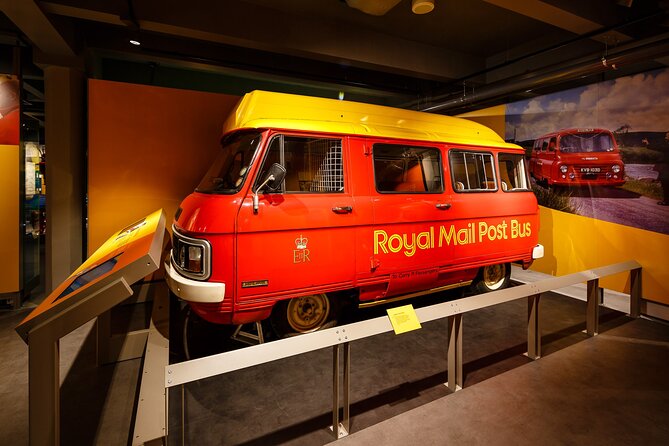
The collection includes early stamps, unusual postal vehicles, and equipment connected with sorting and delivery. Five-wheeled cycles offer one of the more memorable glimpses of the ingenuity used by postal workers. These objects are useful because they show the postal service as a practical operation, not just a set of familiar red boxes and uniforms.
I particularly like the way the museum links postal work to ordinary life. The displays can prompt conversations about how communities once depended on local postmen and women for news, money, medicine, and personal contact. For older visitors, the museum may recall a time when postal workers were visible and trusted figures in the neighborhood. For children, it explains a world in which letters were central to daily communication.
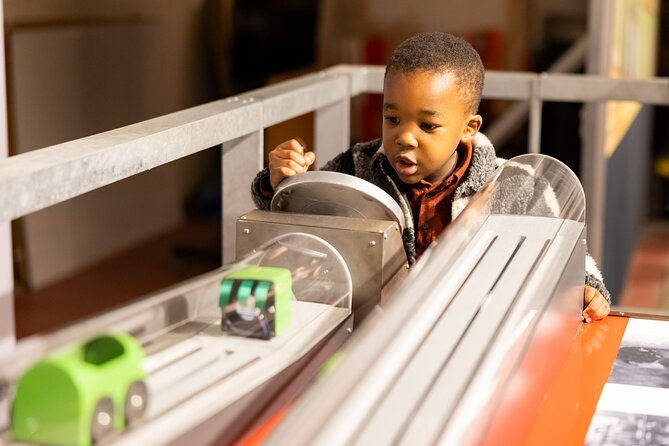
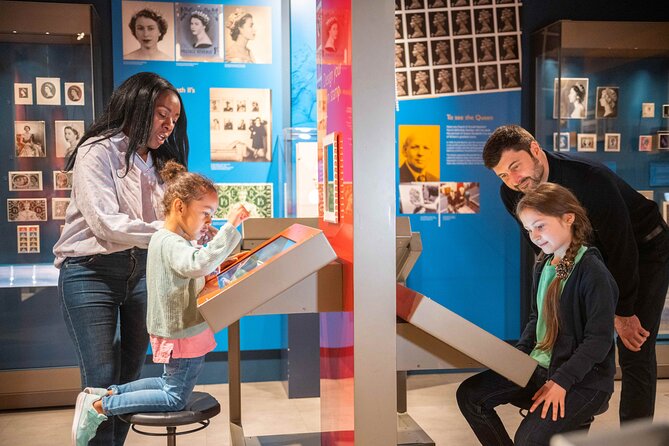
The exhibits are bright and interactive rather than solemn. You might find pneumatic tubes, working models, and touchable elements that show how messages and mail were moved. Those features matter if you are visiting with children who have already had their fill of traditional museums. They also help adults understand systems that can seem abstract when shown only in diagrams.
The Voices of Resistance exhibition adds needed depth
One important part of the museum is Voices of Resistance: Slavery and Post in the Caribbean. It examines postal communication in connection with slavery and resistance, giving the broader story more weight than a simple celebration of British postal achievement.
This exhibition is especially worthwhile if you want to understand how communication systems affected power, movement, and the exchange of information. It adds historical context to the idea that postal services helped connect societies. Connection was not always neutral or equal, and this exhibit gives you a chance to consider who controlled communication and who used it to resist control.
The subject may be more suitable for older children and adults than for very young visitors. If your family is interested in social history, allow time to read this section rather than rushing straight from the train to the next interactive display.
The museum also has an archive area on the second floor of the main building that opens on the second Saturday of each month. This is a limited opening, so you should not plan around it unless the date matches your visit. When available, it offers a quieter change of pace from the busier family areas.
A few more London half days worth a look
- Stonehenge, Windsor Castle, and Bath from London
★ 4.5 · 18,662 reviews - London Big Bus Hop-On Hop-Off Tour with Optional River Cruise
★ 3.5 · 10,803 reviews - London Small Group Tour of Historical Pubs
★ 5.0 · 10,422 reviews - Stonehenge, Windsor Castle and Bath with Pub Lunch in Lacock
★ 4.5 · 7,402 reviews
A museum that works well with children

The Postal Museum is built for families, but it does not treat children as an afterthought. Interactive displays let them press, move, test, and watch. That makes the history easier to grasp, especially when the subject involves machinery and work routines.
The pneumatic tubes are a likely favorite. They show the basic pleasure of sending something through a system and watching it appear somewhere else. Displays like this make postal technology tangible for children who may know the post mainly as parcel deliveries.
The Mail Rail ride is a strong choice for children who like trains, tunnels, or machines. It can also rescue a museum day when young visitors have lost interest in display cases. A six-year-old may find it awesome, while a three-year-old may enjoy the movement but react to the darkness or sound.
Children must be accompanied by an adult. There is also Sorted!, a postal-themed play space for children aged 0 to 8. It costs an additional £4.50 per person, so check your total before booking if you want to add it. This can make sense for families with very young children, but older children may get more from the main displays and Mail Rail.
The museum has an accredited family-friendly café, though food choices may be limited. Coffee is available, but the selection has been described as modest, with no hot food at some visits. I would treat the café as a convenient pause rather than the reason to choose this attraction for lunch.
How long should you allow?
The advertised visit takes about 1 hour 30 minutes to 2 hours 30 minutes. Your timing depends on how much your group reads, how long you spend at interactive exhibits, and how busy the train is.
Here is a practical plan:
- Allow about 30 to 45 minutes for Mail Rail and the displays around the railway.
- Allow at least 45 minutes for the main museum if you want a proper look.
- Add more time for children, the social history exhibitions, and the Sorted! play space.
- Build in extra minutes to cross between the two buildings and find the correct entrance.
A rushed visit can still cover the train and a quick look at the main displays. If you have a train to catch or a tightly planned London day, you may need to choose your priorities. The Mail Rail building alone can be worthwhile for a child who loves trains, but the full ticket makes more sense when you visit both sites.
Price and what you get for $25.55
At about $25.55 per person, this is not a free museum stop. The price can still be fair if you use the ticket for the train and both exhibition buildings, especially compared with a separate London attraction built around a short ride.
The value depends on your visit style. If you spend only an hour, ride Mail Rail, and leave without seeing the main collection, the price may feel high. If you stay for two hours or more, use the interactive exhibits, and take time with the social history displays, the admission provides a fuller experience.
An audio guide is available as an upgrade. It may suit adults who want more explanation as they move through the museum, while families with young children may prefer the displays and live interaction without adding another layer of information.
An annual entry option for the museum exhibitions is listed at £2 per person. The supplied details do not explain all the conditions, so confirm exactly what it covers before paying. Sorted! costs £4.50 per person and is aimed at children from birth through age eight.
Because the ticket is non-refundable and cannot be changed, I would avoid booking too tightly around a complicated London itinerary. Choose a time slot you can reach comfortably, and check for any Mail Rail closure notice before committing.
Weather, closures, and the small print that matters
This is a rainy-day-friendly museum because most of the experience takes place indoors. However, the booking information says the experience requires good weather and may be canceled in poor conditions, with a different date or a full refund offered if that happens.
The Mail Rail ride has also closed for planned maintenance in the past. That is the single biggest risk to your plans because the train is the main reason many people book. Check the museum’s own website shortly before your visit for service updates, especially if your schedule is built around the ride.
If the train is unavailable, the main museum still offers postal equipment, interactive displays, and social history. But I would not pretend it is the same experience. If your children are coming mainly for the railway, confirm that it is running.
The attraction is near public transportation, and confirmation is provided at booking. The ticket is mobile, which is handy for a London day when you are already carrying maps, rail tickets, and restaurant reservations.
Accessibility and sensory considerations

All spaces in The Postal Museum have step-free access. The Mail Rail building is also step-free except for the ride itself. Accessible toilets include gender-neutral facilities, and a Changing Places facility is available.
The key physical requirement is more demanding than the step-free wording may suggest. You must be able to walk unaided for at least 100 metres over uneven surfaces with minimal lighting and climb at least 70 steep steps. This requirement is tied to the ride, so check the full accessibility details before booking if anyone in your group has limited mobility.
Service animals are allowed. Resources are available for autistic visitors, along with an audio-described introduction to the museum. The train’s dark and enclosed setting may be uncomfortable for some people, so consider the sensory needs of your group as carefully as the physical requirements.
The supplied information does not give detailed guidance for deaf visitors, and much of the ride includes spoken information. If you rely on captions, signing, or visual interpretation, contact the museum before booking to ask what support is available.
Who will enjoy The Postal Museum most?
I would put this high on the list for families with children from about six to twelve, particularly if they like trains, machines, or hands-on exhibits. Younger children can use Sorted!, while older children can connect the objects to questions about how people communicated before smartphones and instant messages.
It also suits adults interested in transport, engineering, local history, or the changing role of public services. The museum does not assume that postal history is automatically thrilling, so the train and interactive displays give the subject needed energy.
It is a good choice for grandparents and grandchildren because the exhibits can bridge different memories. One generation may remember postmen and women as important daily figures, while another may know the postal service mainly through online shopping and parcel deliveries.
You may want to skip it if you dislike enclosed spaces, have limited tolerance for noise and darkness, or want a large art collection. This is a focused museum about communication, work, technology, and society. It is unusual, but it is not a general-purpose London museum.
Practical verdict: should you book it?
Book The Postal Museum if you want a London attraction with a real sense of place, a short underground train ride, and enough hands-on material to keep a family busy. The best plan is to check that Mail Rail is operating, begin at the railway building, then cross to the main museum and allow around two hours.
I would be more cautious if you are paying mainly for the train and cannot tolerate the possibility of a closure. The café is basic, the two-building layout needs attention, and the ticket cannot be refunded or amended. Still, when the railway runs, the combination of tunnels, machinery, postal stories, and interactive exhibits offers good value for a distinctive London afternoon.
FAQ
Where is The Postal Museum?
The Postal Museum is in London, England. The Mail Rail building and the main museum are across the street from each other.
How long does a visit take?
Plan for approximately 1 hour 30 minutes to 2 hours 30 minutes. Families who want time for interactive exhibits may need the longer end of that range.
Is Mail Rail included with admission?
Yes. Admission includes access to The Postal Museum and the immersive Mail Rail experience, subject to the railway operating during your visit.
Can I add an audio guide?
Yes. An audio guide is available as an upgrade.
Is The Postal Museum suitable for children?
Yes. It offers family-friendly interactive exhibitions, and the Mail Rail train is especially appealing to many children. Children must be accompanied by an adult.
What is Sorted!?
Sorted! is a postal-themed play space for children aged 0 to 8. It costs an additional £4.50 per person.
Is the museum accessible for wheelchair users?
All spaces in The Postal Museum have step-free access. The Mail Rail building is also step-free except for the ride. The ride requires walking at least 100 metres over uneven surfaces in minimal lighting and climbing at least 70 steep steps.
Are service animals allowed?
Yes. Service animals are allowed.
What happens if the experience is canceled because of bad weather?
If the experience is canceled due to poor weather, you will be offered a different date or a full refund. The ticket itself is non-refundable and cannot normally be changed if you cancel or request an amendment.
Recently added around London
- London’s Crown Secret: Self-Guided Royal Puzzle Quest★ 4.5 · 8 reviews
- Postcard London★ 5.0 · 8 reviews
- Windsor Castle, Stonehenge & Roman Baths Private Tour★ 4.5 · 8 reviews
- Private Tour: Downton Abbey London Locations by Taxi★ 5.0 · 8 reviews
- Cotswolds Private Driving Tour from London★ 5.0 · 8 reviews
- Skip-the-line London Westminster Abbey and City of Westminster Kid-Friendly Tour★ 5.0 · 8 reviews
- A Silent Disco Adventure in London★ 5.0 · 8 reviews
- London: National Gallery English Audio Tour with free fast Entry★ 3.0 · 8 reviews
Museums, compared.

Tower of London and Crown Jewels Exhibition Ticket
Read our review →
Official tickets: Moco Modern & Contemporary Art Museum
Read our review →
British Museum London Guided Tour Semi-Private 8ppl Max
Read our review →
The British Museum London – Exclusive Guided Museum Tour
Read our review →

Skip the Line: Liverpool Beatles Museum – The perfect tribute to the Beatles
Read our review →
Browse the lists this tour appears in