
Reviewed · MUSEUMS
Tate Modern Museum London Guided Tour Semi-Private 8ppl Max
Tate Modern is the kind of museum that can leave you staring at a canvas and wondering if you missed the point. This two-hour guided visit gives you a friendly way into the big questions, from Mondrian’s neat blocks of color to Duchamp’s famously cheeky Fountain. I like the small group, capped at eight, and the chance to ask questions without fighting for a guide’s attention.
I also like the human side of the tour. Guides such as Becky and Sasha have made the art personal and conversational, helping first-time modern-art visitors connect artists’ lives to their work. The main trade-off is simple: temporary exhibitions are not included, and two hours can only cover a selected path through a very large museum.
Key points at a glance
- Eight people maximum: The small group makes it easier to ask questions and keep the discussion moving.
- A clear route through modern art: Expect Mondrian, Picasso, Dalí, Monet, Rothko, Warhol, and Duchamp.
- Art explained through people: The guide links paintings and objects to artists’ lives, politics, and ideas.
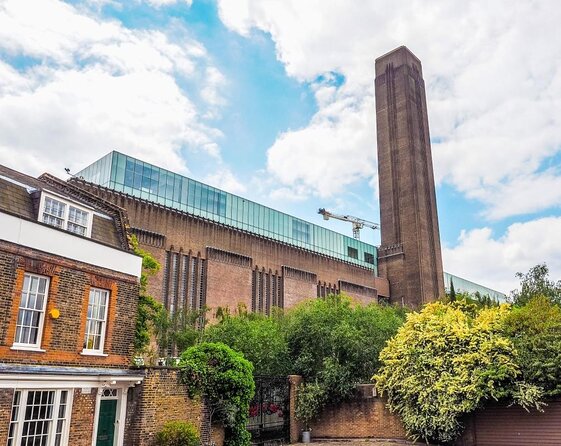
- A converted power station: Tate Modern’s building is part of the experience, not just a container for the art.
- Good for modern-art beginners: The tour is built to make unfamiliar work less puzzling and more relatable.
- Two hours, then free time: You get a focused introduction and can continue on your own afterward.
Why a small group helps at Tate Modern
Tate Modern is free to enter, but free entry does not always mean an easy museum visit. The building is large, the collection covers major movements, and modern art often asks you to supply your own questions. A guide gives your visit a shape.
The maximum group size is eight people. That matters here. In a packed tour, you may hear a lecture and move on before you can ask why a particular painting matters. With a small group, you have room to say, I do not understand this, or I see something different. Those are exactly the useful questions in a modern-art museum.
The guide’s role is not simply to name dates and artists. The strongest approach is interactive. You are encouraged to look closely, form an opinion, and then test it against the historical setting. One past guide, Becky, was praised for giving context without telling the group exactly what each work must mean. That is the right balance for art that often has no single answer.
Sasha has also led the tour, selecting a broad mix of art forms and encouraging visitors to think rather than simply collect famous names. That range is useful because Tate Modern is not one long lesson in painting. It includes sculpture, objects, abstract work, political art, and pieces that challenge your idea of what belongs in a museum.
More museums and galleries in London:
- Tower of London and Crown Jewels Exhibition Ticket
★ 4.5 · 6,677 reviews - Chelsea FC Stadium Tours and Museum
★ 5.0 · 1,908 reviews - Official tickets: Moco Modern & Contemporary Art Museum
★ 4.5 · 1,157 reviews
Starting inside a converted power plant
Your meeting point is Tate Modern at Bankside, London SE1 9TG. The museum occupies a converted power station, and the architecture gives you an immediate sense that this will not be a traditional gallery visit.
The former industrial setting suits modern art. Huge halls and exposed structural elements give many works room to breathe, while the building’s past helps explain why Tate Modern feels different from a quiet old picture gallery. Your guide includes the building’s story as part of the visit, so you are not only looking at art. You are also considering how an old power plant became a major cultural space.
The tour begins and ends at Tate Modern. It does not include hotel pickup or drop-off, so plan your own ride to Bankside. The museum is near public transportation, and the operator recommends using a taxi or Uber for transfers if that suits your plans.
Arrive prepared for security. Large bags and suitcases are not allowed inside. Handbags and small, thin backpacks are permitted through security, but packing light will make the start of the visit easier.
Mondrian, Picasso, and Dalí: finding a way into modern art
Mondrian is a smart early stop because his work looks simple at first glance. Straight lines and blocks of color seem easy to copy, yet the balance between each shape is carefully judged. A guide can help you look at the relationships in the work rather than dismissing it as decoration.
The value of this explanation is practical. You learn how to spend time with abstract art without waiting for it to show you a recognizable person, place, or object. You may still prefer another artist, but you will have a better method for looking.
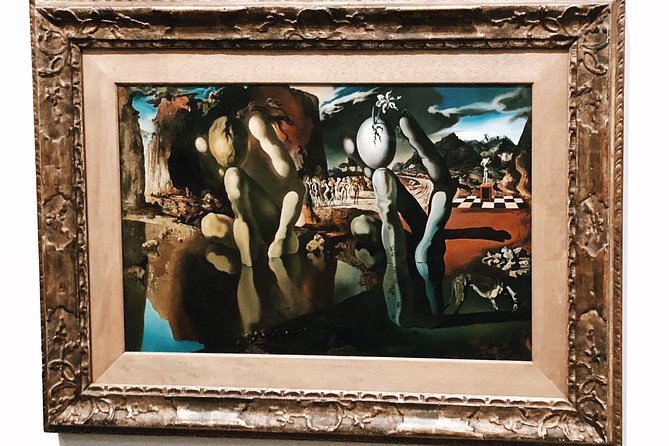
Picasso and Dalí bring a different kind of tension. Both were Spanish-born artists whose work developed during a period marked by the Spanish Civil War. The guide connects personal stories and political upheaval to the art, giving you more than a list of famous names.
That context does not require you to treat every painting as a history lesson. It helps you see why artists made radical choices and why certain images carry emotional weight. For a first visit, this link between biography, politics, and visual style can turn an intimidating gallery into a sequence of human decisions.
Monet to Rothko: from visible scenes to feeling in color
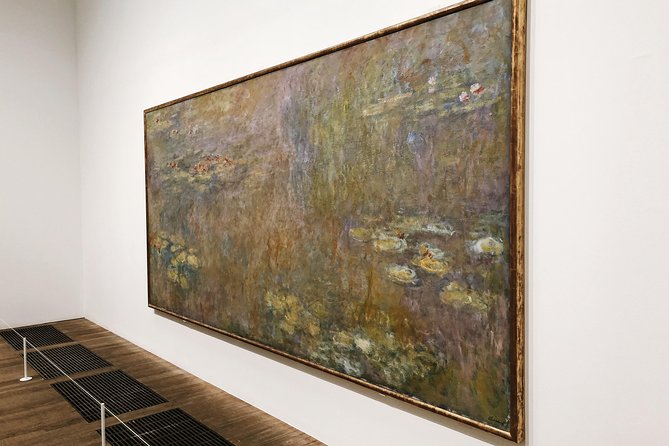
Monet offers a bridge to modern art. Impressionism is more familiar to many people than abstract expressionism, so beginning with Monet can help you notice how artists gradually loosened the traditional rules of painting.
The point is not to force a straight line from Monet to every later artist. Instead, your guide can show how attention shifted toward light, sensation, color, and the act of painting itself. That makes the move to Mark Rothko less abrupt.
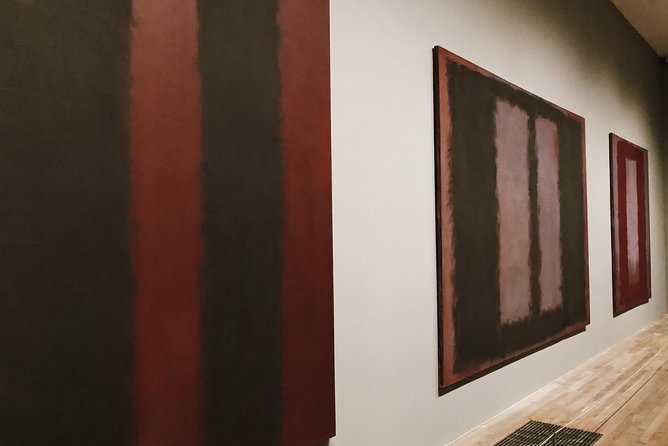
Rothko’s large fields of color can be hard to approach without context. If you stand in front of one and think, Is that all?, you are having a perfectly normal reaction. The tour gives you permission to ask that question and then look again.
A good guide does not tell you what emotion you must feel. The discussion can focus on scale, color, space, and the way a work affects your attention. One of the strongest features of this experience is that it aims to make modern art relatable without pretending every piece will appeal to everyone.
A few more London half days worth a look
- Stonehenge, Windsor Castle, and Bath from London
★ 4.5 · 18,662 reviews - London Big Bus Hop-On Hop-Off Tour with Optional River Cruise
★ 3.5 · 10,803 reviews - London Small Group Tour of Historical Pubs
★ 5.0 · 10,422 reviews - Stonehenge, Windsor Castle and Bath with Pub Lunch in Lacock
★ 4.5 · 7,402 reviews
Warhol, Duchamp, and the question of what counts as art
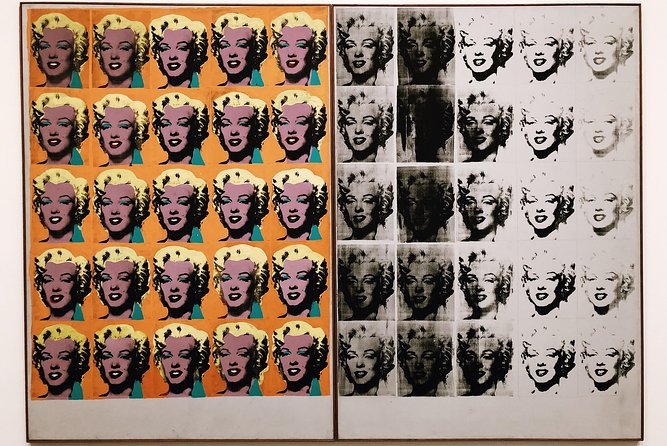
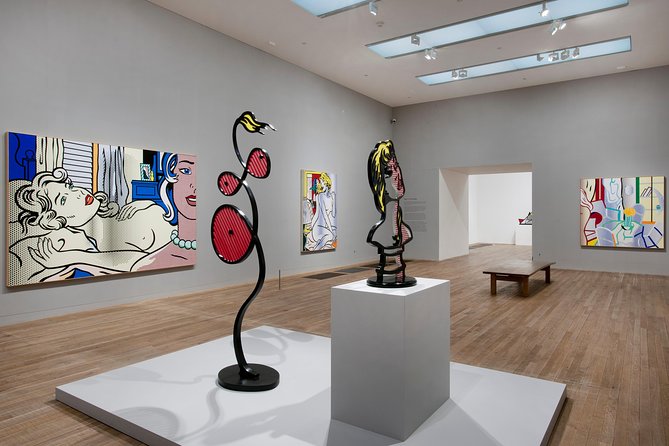
Andy Warhol’s pop art provides a more familiar doorway. Images of Marilyn Monroe and other celebrities connect the museum to advertising, fame, mass production, and popular culture. You can recognize the faces quickly, but the guide helps you consider why Warhol repeated them and what happens when a familiar public image becomes a museum object.
This is also a useful moment to think about celebrity culture. Warhol’s work is not only about a famous face. It raises questions about repetition, desire, commercial images, and the way public figures become products.
Then comes Marcel Duchamp’s Fountain, an object that can make you question the entire museum visit. It is deliberately provocative, and the best response is not to pretend you immediately love it. Ask what Duchamp changed by presenting an ordinary manufactured object as art.
The guide can help you consider the role of the artist, the museum, the viewer, and the idea behind the object. That conversation is one reason the small group matters. You may have a strong reaction, and the tour gives you room to express it.
A selected route, not every Tate Modern gallery
Two hours is enough for a focused introduction. It is not enough to see every major room, read every label, and give each artist equal time. Your guide selects works from across the collection, which is better than trying to march through the entire building at speed.
Expect a changing mix of painting, sculpture, abstract work, pop art, and challenging objects. Collections can vary during the year, so the exact works on view may not always be identical. Some rooms also require quiet or restrict speaking. In those spaces, your guide explains the rules before you enter.
That practical care helps preserve the atmosphere for everyone. It also means you should not expect a nonstop talk from beginning to end. Some rooms may call for silence, and the guide may offer the explanation before or after entering.
The tour ends back at the meeting point. This is useful because you can continue exploring independently if you still have energy. A guide can also point you toward works worth seeing on your own, as one guide did for a visitor with limited modern-art experience.
What the $107.45 price means
At $107.45 per person, this is a premium experience in a museum with free general admission. You are paying for the guide’s time, the small group, and the structure of a private-style visit, not for entry to Tate Modern itself.
The value depends on how you use the tour. If you already know modern art well and prefer wandering alone, the cost may be hard to justify. If you tend to move quickly through abstract galleries because you are not sure what to look for, the guide can make two hours far more productive.
The eight-person limit is important to the price calculation. This is not a giant group where you stand at the back and hope to hear. You get a more direct conversation and more chances to raise a question. For a family, couple, or small group of friends, that personal format may be worth more than a standard large-group walk-through.
Group discounts are available, though the exact saving depends on the booking arrangement. The tour is offered in English, and admission to the permanent museum collection is listed as free. Temporary exhibitions cost extra if you choose to visit them separately.
Who will get the most from this tour?
I would recommend this experience most strongly if modern art makes you curious but uncertain. You do not need a background in art history. In fact, the tour seems especially useful if you have ever walked into a gallery, looked at a blank-looking canvas, and moved on because you did not know how to begin.
It also suits families with older children or teenagers who enjoy discussion. One group conversation connected modern art to personal reflection and led to interesting exchanges between a parent and son. That is a good sign for anyone who wants more than a silent march from room to room.
Art students and experienced museum visitors may still enjoy the guide’s selections, but they should keep expectations realistic. The tour offers a broad introduction, not a specialist study of one movement or artist.
You should be comfortable with a moderate amount of walking and standing. The tour is not available to people with walking disabilities or those using a wheelchair. Appropriate dress may be required for entry to some sites, and the museum can occasionally close rooms or delay opening without warning.
Timing, cancellation, and small practical details
The tour lasts about two hours. It requires at least two people to operate, and the maximum is eight. If the minimum is not reached, you are offered an alternative or a full refund.
You receive confirmation when booking, and you must provide a mobile phone number with the country code. That is important if the operator needs to reach you about meeting arrangements or a change.
Free cancellation is available until 24 hours before the start time. Cancel later than that, or request a change inside the 24-hour window, and you will not receive a refund.
Museum closures can happen without warning. If the opening is delayed by more than one hour, an appropriate alternative is offered, but refunds or discounts are not provided in those circumstances. It is wise to keep your schedule flexible around the tour rather than placing an immovable booking immediately afterward.
Should you book the Tate Modern small-group tour?
Book it if you want help seeing modern art rather than simply walking past it. The strongest reasons are the eight-person limit, the interactive style, and the clear spread of artists from Mondrian and Monet to Warhol and Duchamp.
I would skip it if you mainly want the freedom to wander, plan to visit only a temporary exhibition, or already have a strong command of modern-art movements. Remember that the museum’s permanent collection is free, so the paid part is the guidance and the focused conversation.
For most first-time Tate Modern visitors, that can be a fair trade. You leave with a route through the collection, a few artists to seek out again, and better questions for the next strange canvas you meet.
FAQ
How long does the Tate Modern guided tour last?
The tour lasts approximately two hours.
What is the maximum group size?
The group has a maximum of eight people.
What language is the tour offered in?
The tour is offered in English.
Where does the tour start and end?
It starts at Tate Modern, Bankside, London SE1 9TG, and ends back at the meeting point.
Is admission to Tate Modern included?
The tour includes a semi-private museum tour and professional guide. General admission to Tate Modern is free, while temporary exhibitions are not included.
Are hotel pickup and drop-off included?
No. Hotel pickup and drop-off are not included. The operator recommends using Uber or a taxi.
Is the tour suitable for wheelchair users?
No. The tour is not available for people with walking disabilities or those using a wheelchair. A moderate physical fitness level is required.
What happens if the minimum number of people is not reached?
The tour requires at least two people to operate. If that number is not reached, you are offered an alternative or a full refund.
What is the cancellation policy?
You can cancel at least 24 hours before the start time for a full refund. Cancellations or changes made less than 24 hours before the start time are not accepted for a refund.
Recently added around London
- London’s Crown Secret: Self-Guided Royal Puzzle Quest★ 4.5 · 8 reviews
- Postcard London★ 5.0 · 8 reviews
- Windsor Castle, Stonehenge & Roman Baths Private Tour★ 4.5 · 8 reviews
- Private Tour: Downton Abbey London Locations by Taxi★ 5.0 · 8 reviews
- Cotswolds Private Driving Tour from London★ 5.0 · 8 reviews
- Skip-the-line London Westminster Abbey and City of Westminster Kid-Friendly Tour★ 5.0 · 8 reviews
- A Silent Disco Adventure in London★ 5.0 · 8 reviews
- London: National Gallery English Audio Tour with free fast Entry★ 3.0 · 8 reviews
Museums, compared.

Tower of London and Crown Jewels Exhibition Ticket
Read our review →
Official tickets: Moco Modern & Contemporary Art Museum
Read our review →
British Museum London Guided Tour Semi-Private 8ppl Max
Read our review →
The British Museum London – Exclusive Guided Museum Tour
Read our review →


Skip the Line: Liverpool Beatles Museum – The perfect tribute to the Beatles
Read our review →Browse the lists this tour appears in