
Reviewed · BRIGHTON TOURS
SEA LIFE Brighton Admission Ticket
SEA LIFE Brighton takes you from a Victorian arcade into a hot rainforest, then down to a glass tunnel beneath sharks, rays, tropical fish, and two rescued green sea turtles named Lulu and Gulliver. The mix of old Brighton architecture and modern marine displays gives this family attraction more character than a simple aquarium.
I like the rainforest section, where an anaconda, water dragons, poison dart frogs, piranhas, and rescued terrapins appear along a winding route. I also like the huge 750,000-liter ocean display, especially the slow-moving turtles above the underwater tunnel. The main drawback is that the visit can feel short if you move quickly, and the ticket instructions require care because you are advised to print your voucher before arrival.
Key points to know before you go
- A Victorian setting: The aquarium occupies a Victorian building with an auditorium dating from 1872, giving the visit an unusual sense of place.
- Two rescued turtles: Look up in the ocean display for Lulu and Gulliver, large green sea turtles that glide over the glass tunnel.
- A proper rainforest start: The route opens with tropical heat, an anaconda, colorful poison dart frogs, water dragons, piranhas, and terrapins.
- A useful conservation message: Secrets of the Reef explains threats to coral and SEA LIFE’s work with a local community in the Maldives.
- Small creatures get attention: The seahorse area covers breeding work and lets you watch these delicate animals use their curly tails.
- Plan for about two hours: You can explore at your own pace, but the attraction is best treated as a compact Brighton activity rather than a full-day outing.
From Victorian arcade to tropical rainforest
The most surprising part of SEA LIFE Brighton comes at the start. You step out of a Victorian arcade and into a warm, humid rainforest setting. Roots and tree trunks frame the route, and the change in temperature helps create the feeling of leaving central Brighton behind.
The rainforest zone is more than a quick introduction. It gives you several kinds of animals to look for, which works well for families with children who may not want to linger at one large tank. A giant tree leads toward an anaconda, while the route continues toward a ruined temple setting filled with water dragons, piranhas, and poison dart frogs.
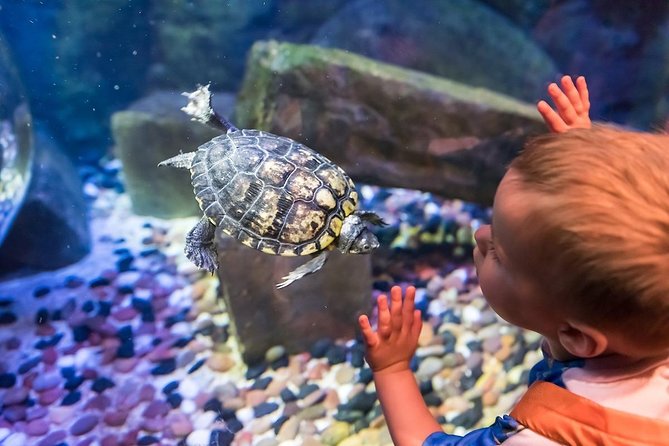
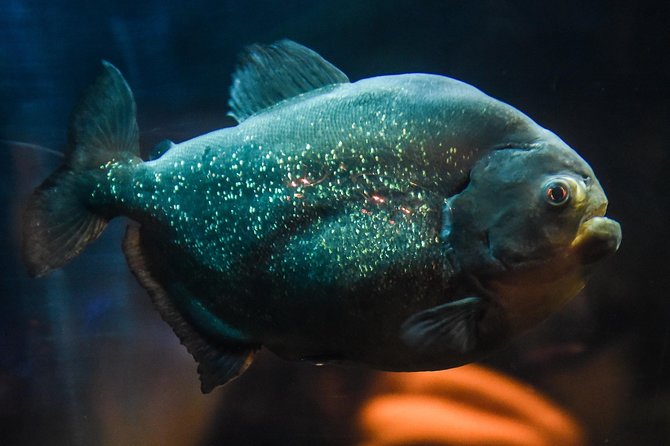
I would take this opening section slowly. Poison dart frogs can be easy to miss because of their small size, while the piranhas reward a closer look. The rescued terrapins are another good pause point, especially for younger children who may connect more easily with animals moving at eye level than with fish in a large, dark tank.
The rainforest is also a practical choice for mixed-age groups. A two-year-old can enjoy the colors and movement, while an older child can look for different species and ask why the animals live in such different environments. One family found the attraction worked well for a young grandson, and that matches the layout: there are plenty of short stops instead of one long presentation.
A few more Brighton half days worth a look
- Brighton Bar Crawl
★ 5.0 · 377 reviews - The Brighton story – walking tour
★ 5.0 · 251 reviews - From Brighton: Seven Sisters Boat Tour
★ 4.9 · 169 reviews
The 750,000-liter ocean display
After the rainforest, the visit shifts to the main ocean display. It holds 750,000 liters of water and can be viewed from above in a Victorian auditorium built in 1872. That setting matters. You are not simply looking at a tank in a modern gallery. You are sitting inside an old Brighton structure while large marine animals move through the water below.
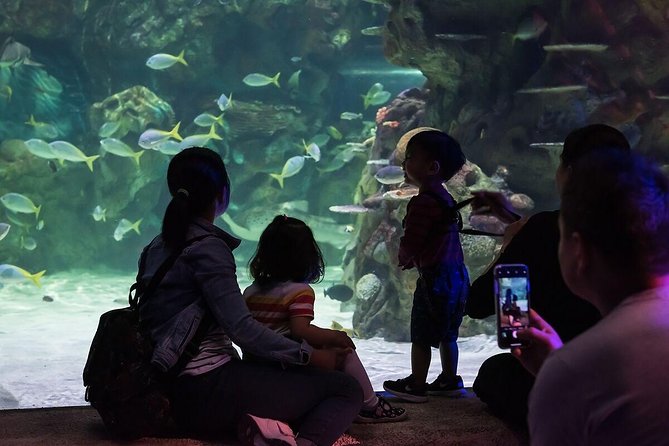
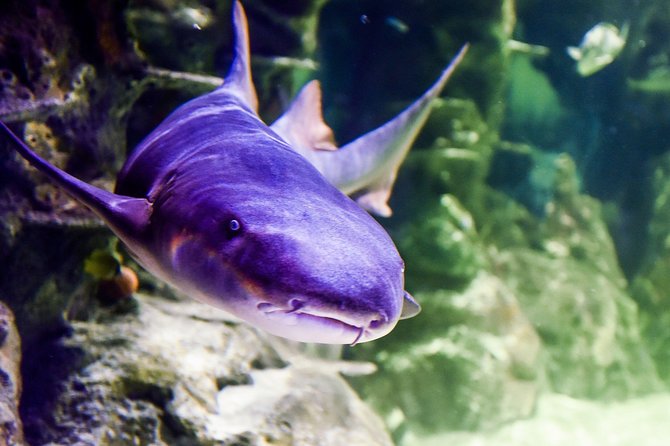
From the upper viewpoint, you can see three species of sharks, rays, tropical fish, and rescued sea turtles. This is a good place to pause before moving on, since the wider view helps you understand the size of the display. If you rush straight toward the glass tunnel, you may miss the animals passing through the upper part of the tank.
The shark display is likely to be a highlight for children, but the turtles provide the gentler moment. Lulu and Gulliver are named green sea turtles, and seeing them glide above you gives the tunnel a calm, almost weightless feel. The turtle area also has value for adults because it connects the attraction to rescue and care work rather than presenting marine life only as spectacle.
You may be able to watch feeding or care activity if your timing happens to match it. One visitor arrived as the turtles were being fed and found that moment especially rewarding. Feeding times are not provided here, so you should not plan your entire visit around one, but it is worth asking staff if anything is taking place during your visit.
Walking beneath sharks and turtles
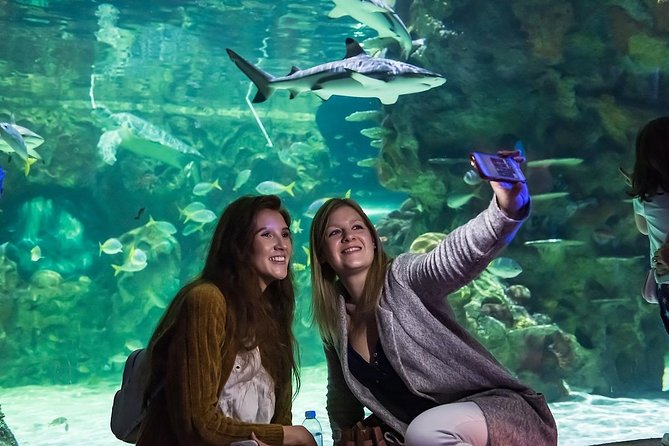
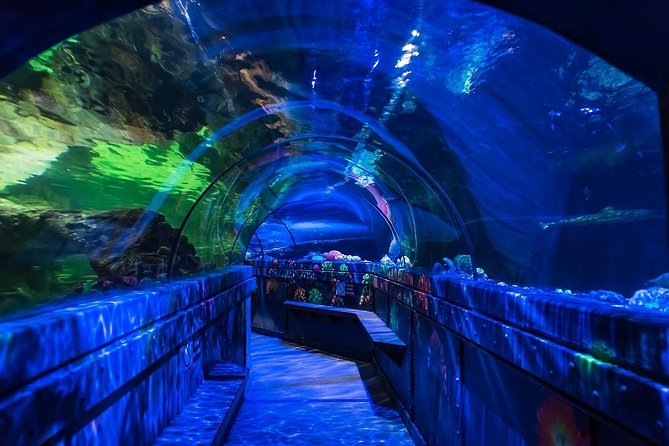
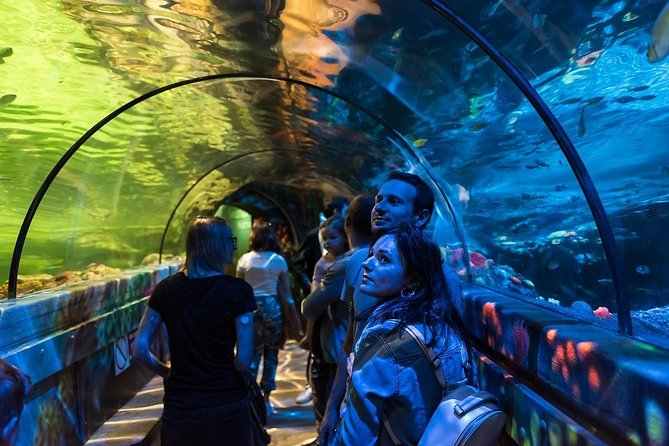
The glass tunnel is the central visual moment. Shoals of fish move around you, while sharks and rays pass through the water above. The effect works best when you stop in the middle rather than treating the tunnel as a corridor.
The tunnel can become the busiest-feeling part of the attraction, particularly when families pause for photos. You may need patience to find a clear view, but the display is large enough that animals continue to appear from different directions. If you have a child with you, this is a useful place to point out the difference between the animals: sharks with their steady movement, rays with their broad bodies, and turtles with their slower, more deliberate motion.
A glass-bottom boat experience is also available as an extra purchase. You can buy that ticket at admissions at the start of your visit. It is not included in the basic entry price, so decide early if you want it rather than assuming it comes with admission.
The boat option may appeal to children who want a closer look at the main display. Still, the standard viewing areas and glass tunnel already provide several angles, so I would treat the boat as an optional add-on rather than a necessary part of the visit.
Seahorses, coral reefs, and conservation
The seahorse area slows the pace. These animals grip seagrass with curly tails and use straw-like snouts to draw in tiny shrimp. You may even hear their unusual finger-clicking sounds while they feed, although that depends on timing and how close you are to the display.
This section is particularly good for adults who want something more delicate and unexpected than the usual shark tank. Seahorses look almost mythical, yet the display gives you a clear sense of how they move, feed, and hold on. You can also learn about SEA LIFE Brighton’s seahorse breeding program.
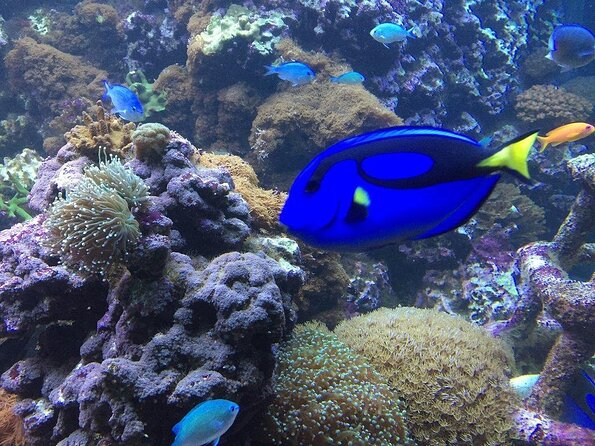
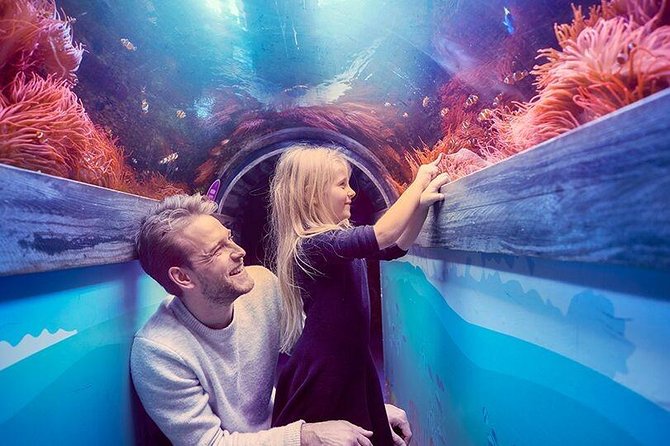
The Secrets of the Reef display shifts attention to tropical coral habitats. It presents a Maldives reef setting with familiar reef species such as regal tangs and clownfish. A crawl-through tunnel brings you close to the display, which should work well for children who want to see fish at their own height.
The useful part here is the conservation message. You learn what threatens coral reefs and how SEA LIFE works with a local community in the Maldives to help rebuild a reef. That gives the colorful fish a wider context. The attraction is still designed for a general audience, but this section helps you understand that reefs are living systems under pressure, not just bright scenery in an aquarium.
I would give this area more time than you might expect. Clownfish are easy to spot, while other fish may reward a slower look. The crawl-through design also makes the exhibit feel more active for younger children, though adults may need to wait while children pass through.
A completely different sort of day out in Brighton:
- Fun, Flexible Treasure Hunt Around Brighton with Cryptic Clues & Hidden Gems
★ 5.0 · 154 reviews - City Sightseeing Brighton Hop-On Hop-Off Bus Tour
★ 4.5 · 152 reviews - The V.I.B (Very Independent Brighton) Walking Food Tour
★ 5.0 · 151 reviews - The Hunt: Team Activity in Brighton, Sussex
★ 5.0 · 149 reviews
Crabs and the Claws exhibit
The Claws exhibit focuses on crustaceans and the way their bodies work. It introduces the anatomy of crabs and explains why these animals can be powerful predators on the seabed.
The headline animal is the Japanese spider crab, the largest arthropod in the world. Fully grown, its legs can reach 12 feet across. That measurement is hard to picture until you see the animal in relation to its tank, and it gives this section a strong sense of scale.
This is a good reminder that the attraction is not only about large fish. Crabs can seem familiar, but their armor, limbs, and feeding habits make them just as interesting as the more obvious stars. The exhibit also includes crustaceans from around the world, giving you a chance to compare forms and sizes.
The Claws area may not hold a young child’s attention as long as the sharks, but it is a worthwhile stop for anyone interested in unusual marine life. I would use it as a quieter section after the main tank and tunnel.
How long the visit takes
The advertised visit lasts about two hours, and that is a sensible planning figure. You can explore at your own pace and stay inside as long as you like, but the attraction is compact enough that most people will not need a full day.
A fast visit could take less than two hours. A family moving slowly, stopping for photos, reading displays, and adding the glass-bottom boat experience may spend longer. Feeding or care activity could also extend your stay if it happens during your visit.
Because the route includes several distinct zones, I would plan the visit around the rest of your Brighton day. It works well as a rainy-weather stop, a family activity, or a break from walking along the seafront. The location is near public transportation, and transportation to or from the attraction is not included in the ticket.
The attraction has a maximum group size of five for this booking. That detail matters most if you are arranging admission for a larger party, since you may need to check the booking terms carefully rather than assuming one reservation covers everyone.
Is the $21.94 ticket good value?
At $21.94 per person, the ticket is fairly easy to justify if you plan to stay for close to two hours and make time for the main displays. The value is strongest for families, since the attraction offers quick visual rewards for young children as well as information about breeding, rescue, and reef protection for older visitors.
The price feels less attractive if you expect a large, all-day aquarium. SEA LIFE Brighton is a focused city attraction. Its best features are the Victorian building, the rainforest opening, the 750,000-liter ocean display, the glass tunnel, and the named turtles. You are paying for a compact visit with several strong set pieces, not a giant marine park.
Prebooking can save time at the admission desk. The booking confirmation is provided at the time of purchase, and the ticket is mobile, but the practical instruction is important: print your voucher in advance. One visitor found that a printed document was needed to receive entry tickets, so I would not rely only on the phone version.
The glass-bottom boat costs extra, as do souvenir photos. You can buy photos and other items, such as a fridge magnet, inside, but budget for those separately if you are visiting with children.
Who will enjoy SEA LIFE Brighton most?
I would recommend this attraction most to families with young children, couples looking for a short indoor activity, and anyone who likes aquariums with a strong sense of place. The rainforest zone gives younger children plenty to spot, while the sharks, turtles, reef fish, and Japanese spider crab provide memorable larger displays.
It also suits visitors who want freedom rather than a fixed tour. There is no guide-led schedule described here. You move through the attraction at your own pace, stop when something catches your eye, and spend longer in the areas that interest you.
The attraction may be less satisfying for someone seeking a very large aquarium with many hours of exhibits. It can also feel crowded around the most popular viewing points, and the basic ticket does not include the glass-bottom boat or souvenir photos.
Children must be accompanied by an adult. Most people can take part, and the attraction is near public transportation, but the supplied information does not give detailed access guidance for every part of the building. If that matters for your visit, contact the provider before booking.
Booking, cancellation, and the small details that matter
The provider is Merlin SEA LIFE Centres. Your confirmation arrives when you book, and the ticket is offered in English. Since the ticket information says mobile ticket but also instructs you to print the voucher, printing it is the safest approach.
Free cancellation is available if you cancel at least 24 hours before the experience start time. A cancellation within 24 hours is not refunded, and changes made within that period are not accepted. The cut-off follows local time in Brighton.
The attraction is commonly booked about seven days ahead. That does not guarantee that every date sells out, but it suggests that you should reserve earlier if your Brighton schedule is fixed, especially if you want a particular day.
My verdict: book it for a compact family visit
I would book SEA LIFE Brighton if you want a manageable two-hour activity with sharks, turtles, rainforest animals, seahorses, coral reef fish, and one enormous crab. The rescued turtles, the Victorian auditorium, and the conservation displays give the visit more substance than a quick photo stop.
I would skip it if you want a full-day aquarium or if your budget does not allow for possible extras. For most families, though, the combination of short walking distances, varied animals, and freedom to set your own pace makes the $21.94 admission a reasonable Brighton add-on. Print the voucher, arrive ready to look up as well as ahead, and save time for the ocean tunnel.
FAQ
How long does SEA LIFE Brighton take to visit?
The visit takes about two hours. You can explore at your own pace and stay inside as long as you like.
What animals can I see at SEA LIFE Brighton?
You can see sharks, rays, tropical fish, rescued sea turtles, seahorses, terrapins, an anaconda, water dragons, poison dart frogs, piranhas, clownfish, regal tangs, and crustaceans.
Are Lulu and Gulliver at SEA LIFE Brighton?
Yes. Lulu and Gulliver are rescued green sea turtles living in the main ocean display.
Is the glass-bottom boat included?
No. The glass-bottom boat is an optional extra. You can purchase a ticket at admissions when you begin your visit.
Is transportation included?
No. Transportation to and from the attraction is not included. The attraction is near public transportation.
Do I need to print my voucher?
Yes. Although a mobile ticket is offered, the booking information specifically advises you to print your voucher in advance.
Can children visit without an adult?
No. Children must be accompanied by an adult.
Is the ticket offered in English?
Yes. The experience is offered in English.
Are souvenir photos included?
No. Souvenir photos are available to purchase separately.
What is the cancellation policy?
You can receive a full refund if you cancel at least 24 hours before the experience start time. Cancellations and changes made within 24 hours are not accepted, and the amount paid is not refunded.
Recently added around Brighton
- Brighton to Heathrow Airport private taxi transfers★ 5.0 · 8 reviews
- The Brighton Food and Beer Walking Tour Min 8 people★ 5.0 · 8 reviews
- Vineyard & Cheesemaker Bus Tour of Sussex★ 5.0 · 8 reviews
- Seven Sisters Tour★ 5.0 · 8 reviews
- Yoga & Soundbath in Nature near Brighton★ 5.0 · 9 reviews
- An Historical Walking Tour of Brighton and its Hidden Gems★ 5.0 · 9 reviews
- LGBTQ History Tour in Brighton (semi-private)★ 5.0 · 10 reviews
- East Sussex Electric Bike Rental★ 5.0 · 11 reviews
Brighton Tours, compared.

Fun, Flexible Treasure Hunt Around Brighton with Cryptic Clues & Hidden Gems
Read our review →
City Sightseeing Brighton Hop-On Hop-Off Bus Tour
Read our review →The V.I.B (Very Independent Brighton) Walking Food Tour
Read our review →

Handcrafted Donuts & Tea: Brighton’s Artisan Sweet Treat Tour
Read our review →Browse the lists this tour appears in