Reviewed · LONDON TOURS
Turmoil, Templars & Oliver Twist London’s Squalor and Splendour
London’s past gets especially vivid when you walk through the streets where law, crime, religion, and poverty once crowded together. This two-hour route links Oliver Twist locations with Temple Church, old criminal courts, Freemasonry, medieval power, and the narrow streets of Holborn.
I like the small maximum of 15 people, which gives you room to hear the guide and ask questions. I also like the range of subjects: you move from the Bow Street Runners to the Knights Templar, then from silver vaults to the Old Bailey. The main drawback is simple: you need to walk about two miles at a reasonable pace, and five minutes at each listed stop means this is a brisk introduction rather than a slow, detailed visit inside every building.
Key points at a glance
- Oliver Twist connections: See places tied to Charles Dickens and the world he used in his famous novel.
- Temple Church and the Knights Templar: Explore one of London’s most unusual medieval stories.
- A compact small-group format: The group is limited to 15, with a good chance to ask questions.
- Seven contrasting stops: Courts, prisons, silver dealers, Masonic history, and old legal buildings all appear on one route.
- A practical central London finish: The walk ends near Blackfriars Station on the northern bank of the Thames.
- Strong value at $27.42: You get a guided two-hour walk across several historic districts without separate admission charges.
Why this route gives you a different London
Many first visits to London focus on royal landmarks, grand museums, and famous views. This walk takes a less polished route through Holborn and the legal quarter, where the city’s institutions grew beside some of its roughest streets.
That contrast explains the title. You get splendour in the form of grand courts, formal halls, and medieval churches. You also get turmoil through stories of crime, punishment, prisons, and the hard urban life that shaped Dickens’s fiction.
I find this kind of walk useful early in a London stay. It helps you understand why the city is not one neat historic center. Its past is layered. A modern court may sit close to a medieval church, while a retail vault for silver occupies a site with connections to London’s old commercial life.
The guide matters here. Tom is named in the booking information and is repeatedly singled out for clear explanations, engaging stories, and strong answers to questions. He also gives suggestions for other historic places to visit, which is useful if you want to build the walk into a larger sightseeing plan.
A few more London half days worth a look
- Stonehenge, Windsor Castle, and Bath from London
★ 4.5 · 18,662 reviews - London Big Bus Hop-On Hop-Off Tour with Optional River Cruise
★ 3.5 · 10,803 reviews - London Small Group Tour of Historical Pubs
★ 5.0 · 10,422 reviews
Starting at Covent Garden and reaching the old legal quarter
The meeting point is Covent Garden Underground Ltd on Long Acre, London WC2E 9JT. That puts you in a very central part of the West End, close to public transport and easy to combine with other plans.
From there, the route heads toward Holborn and the legal district. The walk is not just a parade of famous façades. Its value comes from the connections between the stops. Crime led to courts. Courts were tied to prisons and punishment. Religious orders shaped property and politics. Dickens then turned the city’s social tensions into stories that still define how many people picture Victorian London.
Plan for roughly two hours and about two miles of walking. The pace should suit anyone who can walk that distance at a reasonable speed, but it may not work well if you need frequent rests or prefer a leisurely stroll with long periods at each site.
Bow Street and the beginnings of organized policing
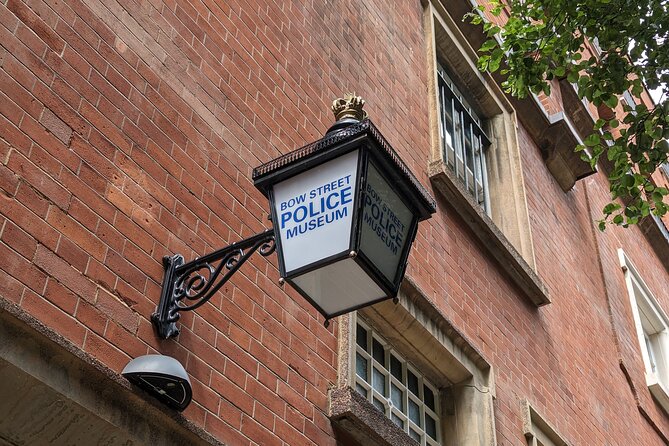
The first stop is the Bow Street Museum of Crime and Justice, where you hear about the Bow Street Runners. The stop is listed as about five minutes, so expect an outdoor explanation rather than a full museum visit with time to examine displays.
The Bow Street Runners provide a useful opening because they show London moving toward a more organized response to crime. Their story also sets up the tour’s wider theme: the city’s system of justice developed in response to crowded streets, theft, violence, and fears about public order.
This stop should appeal to you if you enjoy the practical side of history. Instead of starting with kings and palaces, the walk begins with the people who pursued suspects and helped enforce the law. It gives the rest of the route a clear thread.
Freemasons’ Hall and the city of private institutions
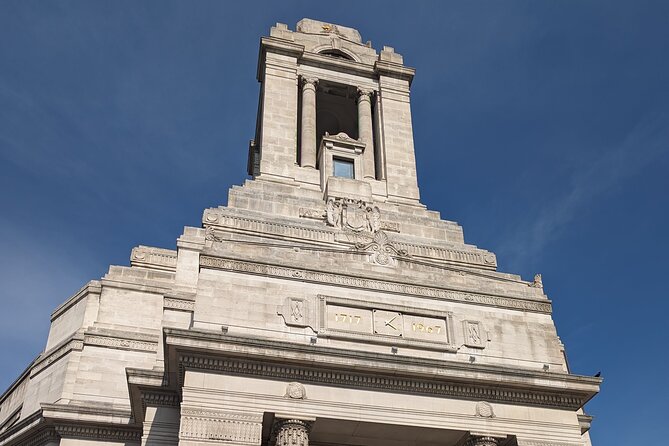
At Freemasons’ Hall, the guide explains the building’s history and the role of Freemasonry. Again, the visit is brief, with about five minutes assigned to the stop.
The appeal here is less about entering the building and more about seeing how private societies became part of London’s civic story. Freemasons’ Hall adds another layer to a neighborhood already filled with legal and religious institutions.
You should keep your expectations sensible. The tour description does not promise an interior visit or extended time at the hall. Think of it as a focused explanation while standing near an important building, not a full architectural tour.
A completely different sort of day out in London:
- Stonehenge, Windsor Castle and Bath with Pub Lunch in Lacock
★ 4.5 · 7,402 reviews - Tower of London and Crown Jewels Exhibition Ticket
★ 4.5 · 6,677 reviews - Thorpe Park Admission Ticket
★ 4.0 · 5,915 reviews - Stonehenge, Windsor Castle and Bath Full Day Guided Tour
★ 4.5 · 5,346 reviews
The Royal Courts of Justice and London’s legal power
The Royal Courts of Justice gives the walk a change of scale. Its grand appearance reflects the importance of the legal system, and the guide uses the stop to explain its place in London’s history.
I like this part of the route because it creates a sharp contrast with the earlier discussion of crime and policing. You move from officers chasing suspects to the formal machinery of courts and law. The building also helps you see why this part of London feels different from nearby shopping streets and theater districts.
The five-minute timing means you will not receive a full legal history or an extended architectural analysis. Still, a clear guide can make a short stop worthwhile by tying the building to the larger story of justice in the capital.
Temple Church and the Knights Templar
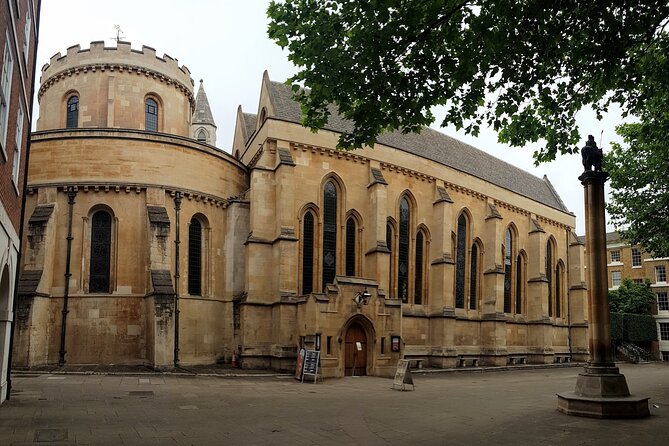
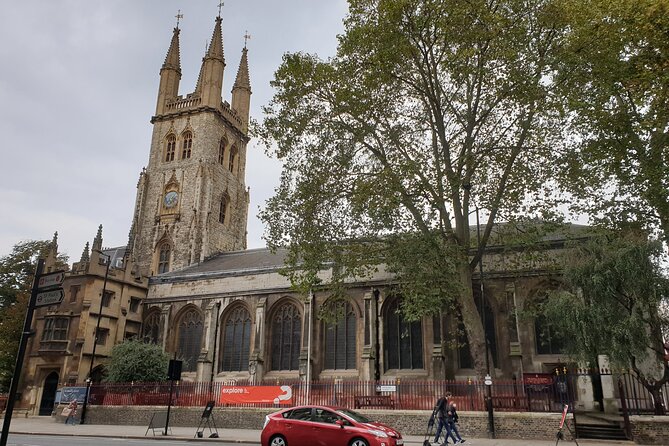
Temple Church is likely the medieval high point of the walk. The guide covers the Knights Templar and the church’s history, introducing an older London shaped by religious military orders, wealth, land, and political influence.
The Templars are a natural subject for a walking tour because their story carries mystery, power, and conflict. Here, the subject is not treated as an isolated medieval tale. It helps explain why the Temple area has such a distinctive identity and why legal institutions later became so firmly rooted nearby.
The church stop is also where I would pay close attention to the setting. The value is in seeing the building within its surrounding district, then hearing how the area changed over time. The stop is listed at about five minutes, so you should not assume a lengthy interior visit or a full examination of the church.
One useful detail from the tour’s feedback is that the Temple and law-court sections receive particular praise for being interesting and easy to follow. That fits the route well: these stops bring together medieval religion, legal history, and the physical shape of central London.
The London Silver Vaults and a glimpse of old commerce
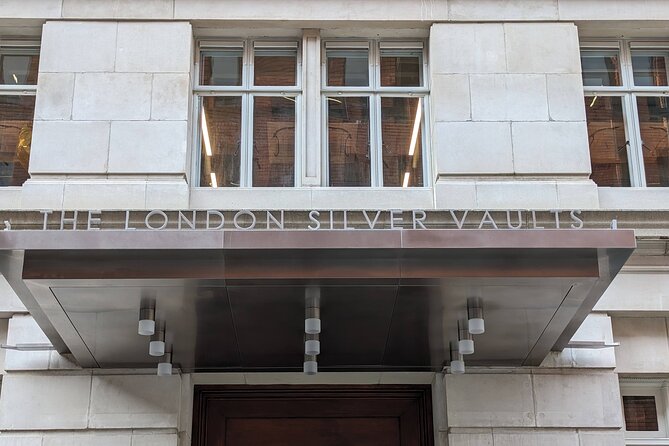
The London Silver Vaults adds an unexpected stop. It is described as the world’s largest collection of retail silver, making it quite different from the church and court buildings around it.
You might expect a traditional history walk to skip modern retail collections, but this stop helps broaden the story. London’s identity has always depended on trade, craft, money, and specialist businesses. The vaults give you a glimpse of that commercial side.
The stop is scheduled for about five minutes, so you should not plan on browsing every dealer or shopping. Instead, listen for the explanation of what makes the vaults important and how they fit into the district.
This is also a good reminder that the tour is not only about famous monuments. Some of its most interesting moments may come from places you would walk past without knowing their significance.
Staple Inn and the survival of old legal London
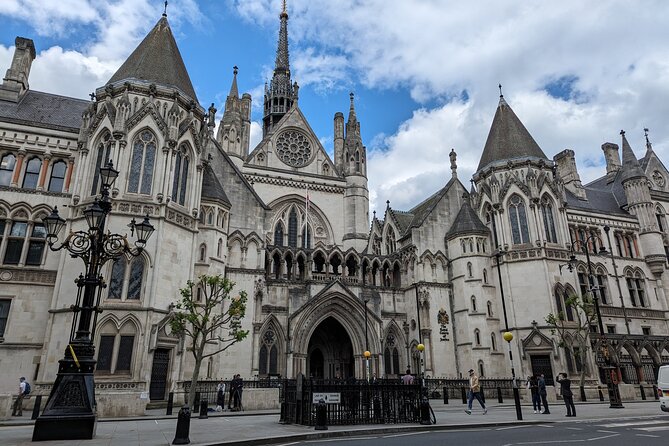
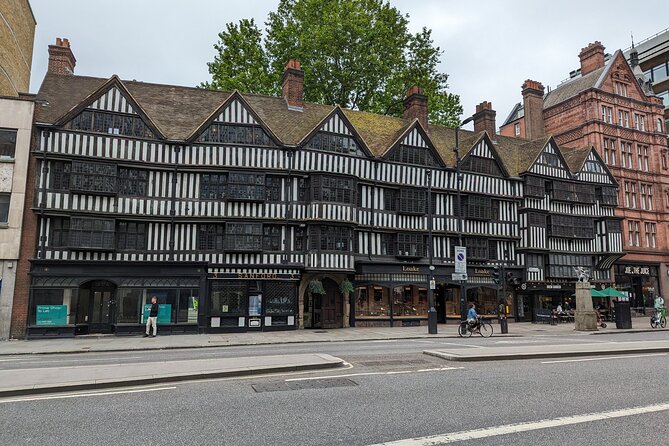
Staple Inn is described as the last remaining building of the Inns of Chancery. Its timbered appearance and historic setting offer a visual change from the monumental Royal Courts of Justice.
The Inns of Chancery were connected with legal education and the professional world of lawyers. That makes Staple Inn an important link between the buildings you see and the people who worked within London’s legal system.
For you, the main benefit is context. A quick photograph of an old façade would not explain much. A guide can show why the building survived as a reminder of an earlier legal neighborhood and how it fits with the courts and Temple Church.
The stop is brief, so this is another place where the story matters more than a long visit. I would keep an eye on the details of the building while listening, since the tour gives you only a short window there.
Old Bailey and the memory of Newgate Prison
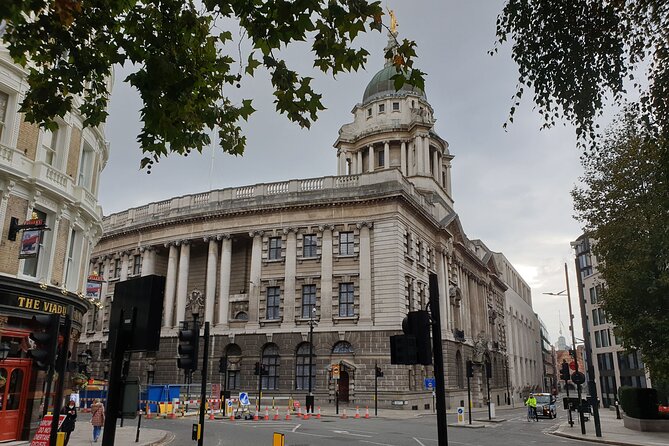
The final historic stop is the Old Bailey, home of the Central Criminal Court. The site is also linked with Newgate Prison, which once stood here.
This is a strong ending because it brings the route back to crime and punishment. You have already heard about the Bow Street Runners and the operation of the courts. At the Old Bailey, those ideas meet at one of London’s best-known criminal justice sites.
The connection to Newgate Prison gives the Dickens theme extra weight. It helps you picture the harsh conditions and social divisions behind stories such as Oliver Twist, rather than treating the novel as a simple tale of Victorian street life.
The stop is listed at about five minutes, so the guide will need to keep the explanation focused. That can work well on a short tour, especially if you prefer a clear story over a long lecture. If you want a detailed history of Newgate Prison or the Old Bailey’s court cases, you will need a separate visit or more research after the walk.
How Oliver Twist fits the route
The Dickens element is one of the clearest reasons to choose this tour. You see locations associated with Oliver Twist and hear how the city’s streets, institutions, and social divisions shaped the novel.
Do not expect a theatrical Dickens performance or a tour devoted only to literary scenes. The route gives Oliver Twist one thread in a wider story that includes medieval religion, policing, courts, prisons, and trade.
That mix is a strength if you want literature connected to real places. I prefer seeing how a novel grows out of the city around it. The buildings and streets do not simply illustrate Dickens. They help explain the conditions he wrote about.
If Dickens is your main interest, pay close attention to the links between the legal district, poverty, crime, and the old prison site. Those connections are likely to be more useful than a list of fictional addresses.
The guide and small-group experience
The group limit is 15 people. That is small enough for the guide to keep the walk together and answer questions without the atmosphere of a large sightseeing crowd.
Tom is the guide identified in the supplied information, and his approach seems especially suited to this route. He is described as clear, engaging, and willing to answer detailed questions. He also offers ideas for additional historic places to see, which can make the tour useful beyond its two-hour route.
I would choose this experience if you enjoy asking questions rather than simply following a script. The range of subjects means you can ask about medieval history, Dickens, the court system, architecture, or London crime.
The trade-off is that the experience depends heavily on the guide’s storytelling. Since the stops are short, a strong explanation matters. Tom’s clear and engaging style appears to be one of the experience’s main strengths, but you should still understand that this is a guided overview, not a long-form seminar.
Is $27.42 a fair price?
At $27.42 per person, the tour is reasonably priced for a two-hour guided walk in central London. You are paying for a focused route, a guide, local context, and the chance to ask questions in a group capped at 15.
The value is strongest if you would otherwise walk through Holborn without understanding what you are seeing. The tour ties together seven stops that might feel unrelated on your own. You also avoid the problem of spending an hour researching each building before arriving.
There are limits. The tour does not list admission to attractions, and each stop is assigned only about five minutes. You are buying interpretation and route design, not extended entry time at museums or churches.
I consider the price good for an introduction, especially if you use the walk to plan later visits. It is less suitable if you want a full-day historical program or access to every interior.
Who should book this walk?
I would recommend it for:
- First-time London visitors who want something beyond the main royal sights.
- Repeat visitors who have already seen Covent Garden, Westminster, and the major museums.
- Readers interested in Oliver Twist and Dickens’s London.
- People curious about crime, courts, prisons, and the Knights Templar.
- Small groups who enjoy asking a guide questions.
- Anyone able to walk about two miles at a reasonable pace.
You may want to skip it if you dislike walking, need a slow pace, or want extensive time inside each building. The walk also covers several subjects, so it is not the best choice if you want only Dickens or only medieval London.
The meeting point is near Covent Garden. The finish is at Superdrug Health Clinic, 36 to 37 New Bridge Street, near Blackfriars Station on the northern bank of the Thames. That ending is useful for continuing your sightseeing, but you should allow time to orient yourself after the tour.
Free cancellation is available if you cancel at least 24 hours before the start time. A minimum number of participants is required, and if that minimum is not met, you are offered another date or experience, or a full refund.
Should you book Turmoil, Templars & Oliver Twist?
Book this walk if you want London explained through its less polished institutions: courts, prisons, policing, legal buildings, medieval religious power, and the social world behind Dickens. The combination is unusual, and the small group gives the guide room to respond to your questions.
At $27.42, it offers solid value as a two-hour orientation to Holborn and the Temple area. Just keep the limits in mind. You will walk at a steady pace, spend only a short time at each stop, and receive a broad story rather than a detailed interior tour.
For a curious visitor who likes history with a little crime, literature, and medieval intrigue, I would book it. For a slower, building-by-building experience, choose something with fewer stops and more time at each site.
FAQ
Where does the tour start?
The tour starts at Covent Garden Underground Ltd on Long Acre, London WC2E 9JT, UK.
Where does the tour finish?
It finishes at Superdrug Health Clinic, 36 to 37 New Bridge Street, London EC4V 6BJ, near Blackfriars Station on the northern bank of the River Thames.
How long does the tour last?
The walking tour lasts approximately two hours.
How much does the tour cost?
The listed price is $27.42 per person.
What language is the tour offered in?
The tour is offered in English.
How large is the group?
The maximum group size is 15 people.
How much walking is involved?
You should be able to walk about two miles at a reasonable pace.
Which Oliver Twist connection does the tour cover?
The walk visits locations Charles Dickens used in Oliver Twist and explains how London shaped the novel.
Does the tour include admission tickets?
The experience includes a guided walking tour. The listed stops show no admission ticket charge.
Can I cancel for a full refund?
Yes. You can cancel at least 24 hours before the start time for a full refund. Changes or cancellations made less than 24 hours before the start time are not accepted for a refund.
Recently added around London
- London’s Crown Secret: Self-Guided Royal Puzzle Quest★ 4.5 · 8 reviews
- Postcard London★ 5.0 · 8 reviews
- Windsor Castle, Stonehenge & Roman Baths Private Tour★ 4.5 · 8 reviews
- Private Tour: Downton Abbey London Locations by Taxi★ 5.0 · 8 reviews
- Cotswolds Private Driving Tour from London★ 5.0 · 8 reviews
- A Silent Disco Adventure in London★ 5.0 · 8 reviews
- Skip-the-line London Westminster Abbey and City of Westminster Kid-Friendly Tour★ 5.0 · 8 reviews
- Gangster Tour of Soho★ 4.5 · 8 reviews
London Tours, compared.
Stonehenge, Windsor Castle, and Bath from London
Read our review →
London Big Bus Hop-On Hop-Off Tour with Optional River Cruise
Read our review →
Stonehenge, Windsor Castle and Bath with Pub Lunch in Lacock
Read our review →
Tower of London and Crown Jewels Exhibition Ticket
Read our review →
Stonehenge, Windsor Castle and Bath Full Day Guided Tour
Read our review →
Windsor Castle, Stonehenge, and Oxford Day Trip from London
Read our review →