
Reviewed · CAMBRIDGE TOURS
Scholars & Secrets of Cambridge: Self-Guided Puzzle Adventure
Cambridge is at its best when you slow down and look up. This smartphone puzzle walk sends you through the city center by way of a secret-society story, linking famous college gates, clocks, churches, and courtyards with riddles rather than a standard spoken tour.
I like the freedom to start at any hour and stop for coffee or a college visit. I also like the price, about $8.68 per person, which makes it an inexpensive way to get your bearings. The main catch is that the game depends on clear instructions and working clues. A few players found the route short, some puzzles too easy, and one reported trouble at Trinity College.
Key points to know before you play
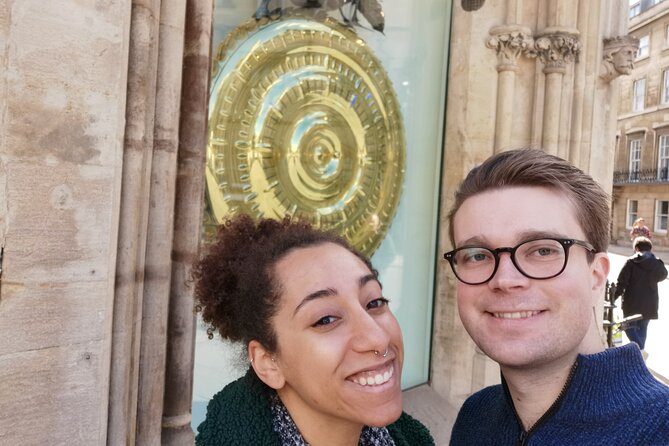
- The Corpus Clock is your starting clue: Begin outside Corpus Christi College at 58 Trumpington Street.
- Eight named sights shape the route: You visit King’s, Gonville and Caius, Clare, Trinity, St. John’s, the Round Church, and Christ’s College.
- You control the pace: Start when you wish, pause at any point, and resume later.
- The game works offline: You do not need a live internet connection once the city game is ready to play.
- It is private by design: Only your own group participates, with no physical guide joining you.
- Expect an outdoor introduction, not an indoor college tour: Several colleges may be viewed from outside only, and access can change.
A secret-society story for central Cambridge
The idea is simple: you walk through Cambridge while solving a chain of clues. Each answer points you toward the next place, where another puzzle explains how to continue. Along the way, the app provides short pieces of information about the buildings and sights you find.
That format gives you more freedom than a traditional walking tour. You are not tied to a departure time, a guide’s pace, or a fixed group. If a college gate catches your eye, you can pause. If your children need a snack, you can stop and pick up the game later.
The story also gives ordinary sightseeing a little purpose. Instead of wandering from one famous building to another, you have something to look for. The secret-society theme is especially useful for families and teenagers who might not be thrilled by a straight lecture about college architecture.
Still, this is a game first and a sightseeing guide second. The information at each stop is likely to be brief, and the route covers only a small part of Cambridge. If you want detailed explanations of university traditions, college foundations, or interior art, you will need another tour or a guidebook alongside it.
More self guided walks in Cambridge:
- Private Self-Guided Dinky Door Hunt in Cambridge
★ 4.5 · 103 reviews - Former Student’s Cambridge Colleges: An Outdoor Audio Tour
★ 4.0 · 54 reviews - Cambridge’s History & Secrets with Self-Guided Walking Tours
★ 4.5 · 9 reviews
Starting beneath the Corpus Clock
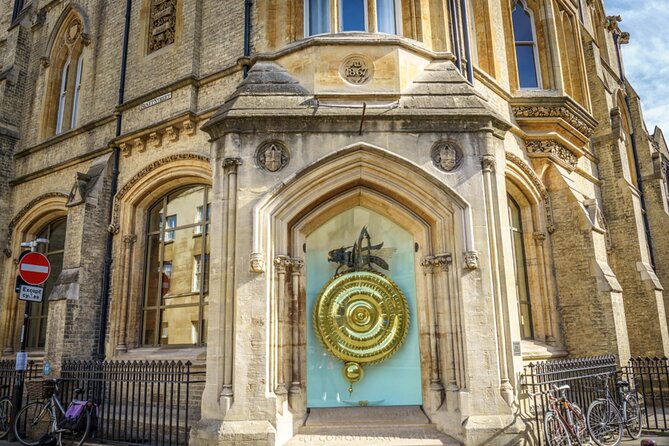
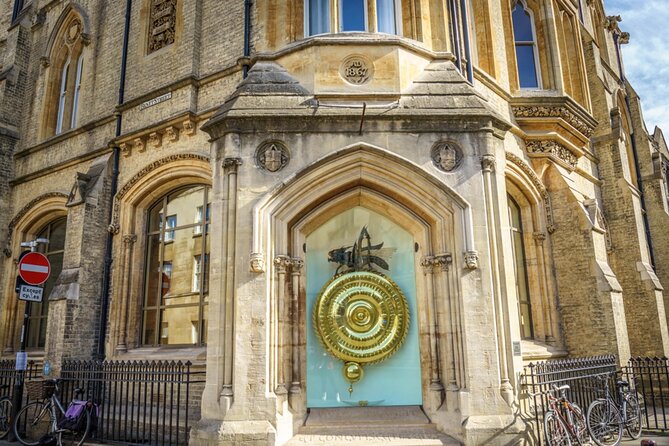
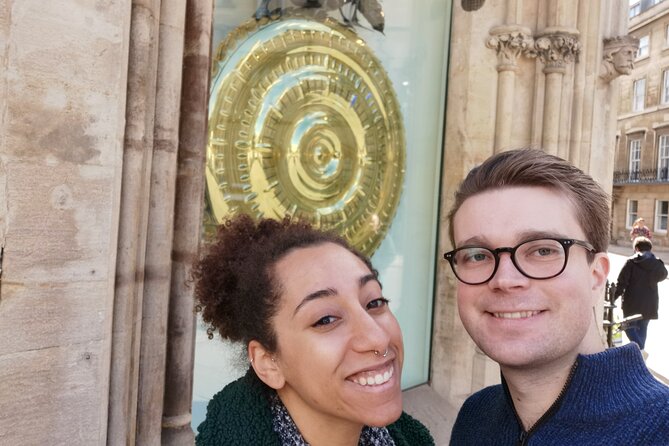
The meeting point is the Corpus Clock, outside the Taylor Library at Corpus Christi College, at 58 Trumpington Street. This strange, sculptural clock sits at street level and is one of the more unusual objects in central Cambridge.
Allow about ten minutes here. The clock is not simply a practical timepiece, so it works well as the opening point for a puzzle built around secrets and clues. You will use the app to study the surroundings, solve the first prompt, and learn where to go next.
The free admission listed for this stop means you are seeing the clock from the street. You are not paying for entry to Corpus Christi College or a guided visit inside the library.
This is a good place to begin if you have not yet explored Cambridge. The route starts close to the historic center, and the first puzzle helps you notice details that a quick walk might miss. Keep your phone charged, since the device is your map, clue sheet, and storyteller.
King’s College and the view from King’s Parade
King’s College is one of Cambridge’s most recognizable sights. Its position beside the River Cam and facing King’s Parade gives you one of the city’s classic views, even if you only see the college from outside.
The game allows roughly ten minutes here. That is enough for a quick look at the frontage and surrounding street, but not enough for a full visit. The college may restrict access, and the experience is designed as an outdoor game rather than an indoor tour.
This distinction matters. If your main aim is to enter King’s College Chapel or spend time inside the college grounds, do not treat this puzzle walk as a substitute for an admission ticket. Use the stop to take in the exterior, solve the clue, and decide if you want to return later for a separate visit.
The route’s strength here is its intimacy. You are not being hurried through a large group. Your own party can inspect the building, discuss the answer, and move on when ready.
Gonville and Caius College, one of the older colleges
Next comes Gonville and Caius College, the fourth-oldest college at Cambridge. The stop is planned for about ten minutes, giving you time to look at the exterior and work through the next piece of the story.
Older college buildings can blur together when you see several in one afternoon. A puzzle gives this stop a clear job: find the clue, connect it to the secret-society plot, and pay attention to the details around you.
The tradeoff is that the app may not explain the college at the length a human guide would. You will get a sense of place and a few useful facts, but the experience does not promise a full account of the college’s people, rooms, or academic life.
I would approach this stop with modest expectations. It is one chapter in a walking game, not a stand-alone college visit.
A few more Cambridge half days worth a look
- Cambridge University Walking Tour by Alumni™ Kings College Option
★ 5.0 · 2,336 reviews - Cambridge University With Alumni: Optional Kings College Entrance
★ 5.0 · 1,987 reviews - Punting Tour in Cambridge
★ 4.5 · 1,690 reviews - Cambridge: Guided River Cam Punting Tour
★ 4.7 · 1,469 reviews
Clare College and the sometimes tricky clues
Clare College was founded in 1326 as University Hall, making it the second-oldest surviving college after Peterhouse. The planned stop lasts about ten minutes and gives you time to examine the area while solving the next prompt.
This is also the point where clue quality matters. One puzzle involved colored arrows at Clare College, and the directions were not immediately obvious. That kind of challenge can be amusing when the answer clicks, but frustrating when the visual marker is hard to spot.
You may want to read the clue slowly and compare it with what is actually around you. If the answer seems to point somewhere impossible, check the wording before assuming you have taken a wrong turn. The game’s appeal depends on the clues being accurate and visible.
Clare is a good stop for a family because several people can search together. One person can hold the phone while others scan the gates, signs, or nearby details. That said, the format can feel awkward if one member of the group does all the reading and phone work.
Trinity College and a route worth checking
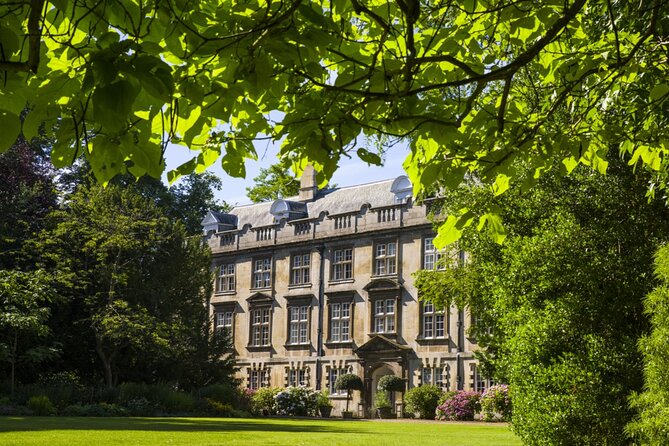
Trinity College is the largest Cambridge college by undergraduate numbers, with around 600 undergraduates, 300 graduates, and more than 180 fellows. The game gives this stop about five minutes, so expect a quick exterior encounter rather than a long exploration.
Trinity is one of the places where you should pay close attention to the directions. A problem at the college gates once caused a player to abandon the game. Access points and signs can change, and a route that worked at one time may not be perfectly clear later.
If the app tells you to use a particular gate, compare that instruction with what you see on the ground. Do not waste ten minutes forcing the wrong entrance. Re-read the clue, check nearby gates, and use the app’s next instruction if available.
The short time allocation is both helpful and limiting. It keeps the walk moving, but it does not leave much room for confusion. Trinity is a major Cambridge sight, so you may also want to return separately if you want more than a quick puzzle stop.
St. John’s College and the founder behind it

St. John’s College was founded by Lady Margaret Beaufort. The planned stop lasts about five minutes, making it one of the briefest points on the route.
That short pause works if you want a compact introduction to several colleges in one walk. You can learn the basic connection, solve the clue, and continue. It is less satisfying if you hope to study the college closely or hear a longer account of its buildings and founder.
The game’s structure encourages you to keep moving through central Cambridge. Each college becomes part of a larger sequence rather than a separate attraction. For a first visit, that can help you see how concentrated the university quarter is.
Remember that the route may show you the college from outside. The experience does not include a physical guide or guaranteed indoor admission.
The Round Church, a change of pace
The Church of the Holy Sepulchre, usually called the Round Church, adds variety to a route otherwise centered on university colleges. It is an Anglican church in Cambridge and serves as another clue location.
The stop is planned for about ten minutes. That gives you a little more time than the five-minute college stops, which makes sense. The church has a different shape and purpose, so it breaks up the repeated pattern of college gates and facades.
The Round Church is also called a visitor centre, but the game’s listed admission is free and the activity remains outdoors. Do not assume the puzzle includes a full interior visit. If the church is closed or access is limited, you may need to solve the clue from the surrounding area.
This stop shows the value of the route’s format. You are not only ticking off university colleges. You are also being led to a religious building that helps broaden your picture of Cambridge’s center.
Christ’s College and the final clues
Christ’s College is the last named stop, with about five minutes assigned to it. As with Trinity and St. John’s, the visit is quick, focused on finding the clue and learning enough about the place to continue.
The final stage works best if you have kept track of the story as you go. The game does not simply point you from one attraction to the next. It asks you to solve each step, so rushing can make the ending less satisfying.
The activity returns you to the meeting point at the Corpus Clock. The exact route between the listed places is controlled by the clues, and the supplied details also indicate several additional puzzle stops whose names are not specified in advance. At each one, you follow a clue, solve a puzzle, and receive the next instruction.
That means the route may feel less predictable than a standard sightseeing loop. It also means you should not plan a tight appointment immediately afterward. The advertised time is about one to two hours, but puzzle-solving speed varies.
What the $8.68 price really gives you
At roughly $8.68 per person, this is a low-cost activity for central Cambridge. The value is strongest when you want an inexpensive way to organize your first walk through the city, especially with a small group or family.
You are paying for a self-guided game, not a live tour. There is no physical guide to answer a question, adjust the route, explain a building in greater depth, or rescue you instantly if a clue seems unclear.
The group discount option can improve the deal for larger parties. Since only your group participates, you also avoid paying for a shared guide or joining a set departure. The private format is useful if you want to pause, split up briefly to search for a clue, or let younger players take the lead.
The price is less attractive if you already know Cambridge well or mainly want access to college interiors. In that case, you may get more from paying for a specific college entry ticket or a traditional guided walk.
How the smartphone format works in practice
You need a smartphone to play. GPS helps direct you through the route, while riddles and puzzles provide the main structure. The activity is designed to work offline, so you do not need a live internet connection during the game.
That offline feature is practical in a crowded city center. You can avoid using mobile data while still following the game. I would still prepare the activity before setting off and make sure your phone has enough battery for one to two hours of use.
The game is available every day and is advertised as open around the clock. The stated operating information also lists daily hours of 8:00 a.m. to 9:00 p.m. Because those details do not perfectly match, check the current booking information before choosing a very early or late start.
The private, no-contact setup suits people who prefer independent sightseeing. It also lets you choose your own start time, take breaks, and resume later. Those are real advantages over a fixed walking tour.
The weak point is human help. If the instructions are not clear, you cannot ask a guide to rephrase them. One practical way to play is to have one person read the instructions while another carries the phone, then switch roles so the activity feels shared rather than like one person doing all the work.
Who should book this Cambridge puzzle walk?
I would recommend it most strongly to:
- Families with children or teenagers who need a reason to keep looking at buildings
- First-time visitors who want a structured introduction to central Cambridge
- Couples or friends who enjoy riddles and light competition
- Independent sightseers who dislike fixed departure times
- Small groups looking for a low-cost private activity
You may want to skip it if you want a detailed academic account of Cambridge, guaranteed entry into the colleges, or a guide who can answer questions on the spot. It is also a poor fit if unclear clues quickly spoil your mood.
The age fit depends on the children in your group. A 15-year-old was drawn into the walk by the clues, which suggests the game can work well for teenagers who would resist a conventional tour. Younger children may need an adult to explain the instructions and keep the group moving.
Practical tips for a smoother game
Start with a little spare time. The advertised duration is one to two hours, but you may pause for food, photos, or a college stop. You finish back at the Corpus Clock, so plan around that point.
Keep the group together near gates and street crossings. The route uses GPS and city clues, but the supplied information does not promise a guide or live support. A second phone may help with general orientation, though the game itself is designed for offline play on your playing device.
Take the clues literally, but not blindly. Some players found answers that could be guessed before reaching the location, which reduces the challenge. Other clues were difficult because a statue or marker was missing, and pandemic-era closures affected access to college grounds.
If something looks different from the clue, do not assume you have failed. Recheck the wording and the surrounding entrance. Cambridge has many similar gates, and the Trinity section has already shown how a wrong direction can stop the game.
Finally, plan separate time for the sights you most want to enter. King’s College, Trinity, St. John’s, and other colleges may be viewable only from outside during this experience.
Should you book Scholars & Secrets of Cambridge?
Book it if you want a cheap, flexible way to see central Cambridge with a bit of play. The secret-society story, offline access, private format, and pause-anytime schedule make it especially useful for families and first-time visitors.
I would not book it as your only Cambridge experience. The route is fairly compact, the clues may vary in clarity, and the activity does not provide a physical guide or guaranteed indoor access. Think of it as a playful first walk that helps you find the city’s main sights, then add college visits or a guided tour if you want deeper detail.
Free cancellation is available when you cancel at least 24 hours before the local start time. Within 24 hours, the payment is not refunded, and late changes are not accepted.
FAQ
How long does the Cambridge puzzle adventure take?
The activity takes approximately one to two hours, depending on how quickly you solve the clues and whether you pause along the way.
Where does the activity start?
It starts at the Corpus Clock, located at 58 Trumpington Street, Cambridge CB2 1RH, UK.
Where does the activity finish?
The activity ends back at the Corpus Clock meeting point.
Do I need an internet connection to play?
No. The game is designed to work offline, so you do not need an internet connection during the activity.
Is this a group tour with other people?
No. It is a private activity, and only your own group participates.
Is a physical tour guide included?
No. The experience is self-guided through a smartphone, with riddles, GPS technology, and puzzles directing you between stops.
Can I pause the game and continue later?
Yes. You can start at any hour, take a break whenever you like, and resume the game later.
Recently added around Cambridge
- Cambridge’s History & Secrets with Self-Guided Walking Tours★ 4.5 · 9 reviews
- Cambridge: The Original Uncomfortable Cambridge™ Tour★ 4.8 · 13 reviews
- Private | Cambridge University Colleges Guided Punting Tour★ 4.5 · 13 reviews
- From Cambridge: Guided Day Tour to Bath and Stonehenge★ 4.8 · 14 reviews
- Tangential Cambridge: Private Walking Tour of Cambridge★ 5.0 · 14 reviews
- Explore Cambridge Student Life & Top Colleges Walking Tour★ 3.5 · 18 reviews
- Cambridge: Shared Chauffeured Punting Tour★ 4.8 · 18 reviews
- Cambridge Famous Alumni Quest Experience★ 4.5 · 18 reviews
Cambridge Tours, compared.
Cambridge University Walking Tour by Alumni™ Kings College Option
Read our review →
Cambridge University With Alumni: Optional Kings College Entrance
Read our review →
University Alumni Tour with Kings College Option
Read our review →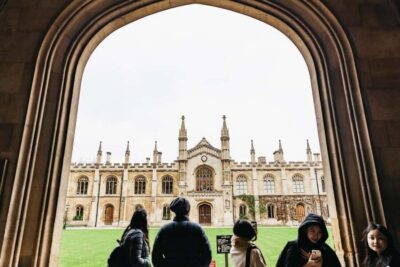
Alumni-Led Walking Tour w/ King’s College Option
Read our review →
Cambridge Walking & Punting Tour by Alumni™ King’s College Option
Read our review →Browse the lists this tour appears in