
Reviewed · BATH TOURS
Best of Bath Walking Tours – Georgian Tour
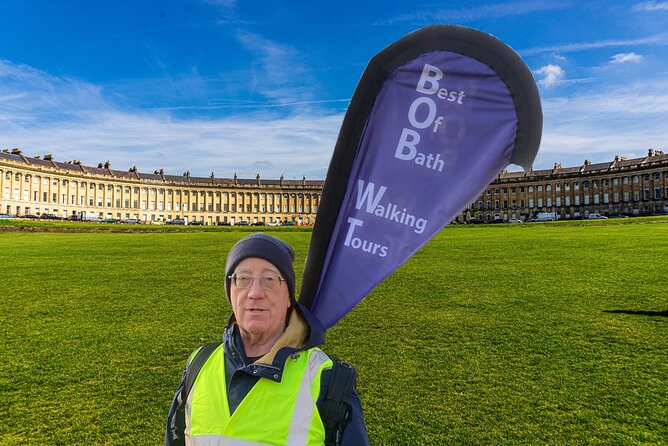
Bath is easiest to understand from street level, where the grand Georgian buildings line up like a carefully staged theatre set. This walk with Bob leads you from Bath Abbey through Queen Square, the Circus, the Royal Crescent, Pulteney Bridge, and the Guildhall Market, while explaining the people and ideas behind the stone facades. I especially like the small group limit of 15 and the way the tour links architecture with everyday life, not just dates and building names.
I also like the easy, conversational pace. Bob welcomes questions, uses dry humor, and has a knack for pointing out details you could pass without noticing, including an old medieval path near the former city wall. The main caution is that the walk covers a lot of ground in about two hours, sometimes longer, and several attractions are viewed from outside unless you buy separate admission.
Key points to know before booking
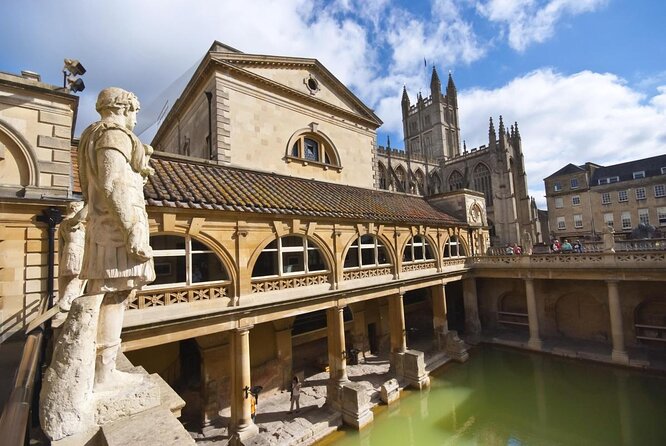
- Bob leads the walk personally, bringing Georgian architecture, Bath’s characters, and local stories together.
- The route begins and ends beside Bath Abbey, making it easy to fit into a day of sightseeing.
- The Circus and Royal Crescent are the architectural stars, with Queen Square helping you understand how the plan developed.
- The Roman Baths, Assembly Rooms, No. 1 Royal Crescent, and Mineral Hospital are outside visits, and admission is not included.
- Groups are limited to 15 people, a useful size for questions and a more personal feel.
- The walk usually lasts two to three hours, with a gentle pace and frequent stops.
Why Georgian Bath makes such a good walking tour
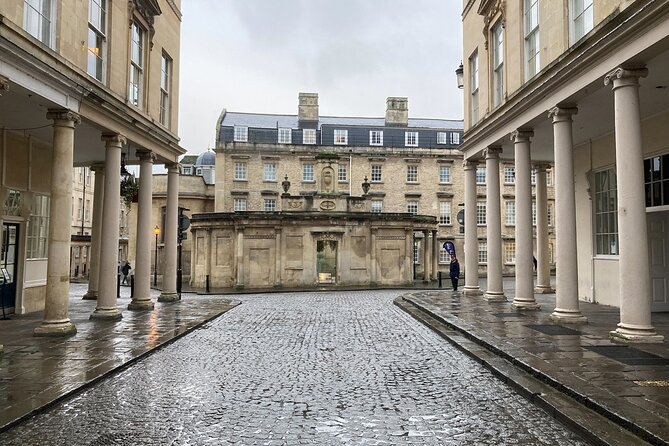
Bath is compact, but its story is layered. Roman bathing, medieval trade, Georgian fashion, mineral-water medicine, and modern film locations all overlap within a short walk. You do not need a full day to see the city’s main sights, but you do need help reading them.
That is where Bob’s tour earns its keep. A grand building can look impressive while telling you very little. Bob explains why it was built, who paid for it, who lived there, and how Bath became a fashionable resort in the 18th century. The result is less like a parade of stone fronts and more like a guided lesson in how a city reinvents itself.
I would choose this tour early in a Bath visit. It gives you a useful map of the center, then helps you decide which places deserve a later paid visit. It also helps prevent the common Bath problem: walking past a famous building without realizing what makes it important.
The advertised price is $27.73 per person. For a two-hour walk with a maximum of 15 people, that is a fair price, especially if you ask questions and use the tour to plan the rest of your day. It is not an admission package, though. You will need to pay separately if you want to enter the Roman Baths, the Assembly Rooms, No. 1 Royal Crescent, or the Royal Mineral Water Hospital.
More Walking Tours in Bath
- Walking Tour of Bath with Blue Badge Tourist Guide
★ 5.0 · 1,877 reviews - Roman Baths and Bath City Walking Tour
★ 4.5 · 762 reviews - Bad of Bath fun Walking Tour of Bath
★ 5.0 · 402 reviews
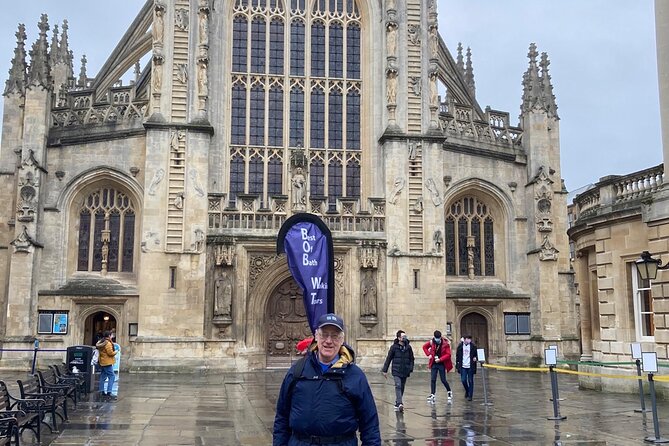
Meeting Bob beside Bath Abbey
The tour starts at 1:00 pm in Abbey Churchyard, in front of Bath Abbey. This is a practical meeting place because the Abbey is one of the easiest landmarks to find in central Bath, and the walk returns here at the end.
Bath Abbey has a long story of its own. It was founded in the 7th century, reorganized in the 10th century, and rebuilt in the 12th and 16th centuries. Bob uses the churchyard as more than a place to gather. It sets up the contrast between Bath’s medieval religious center and the polished Georgian city that developed around it.
The final return to Abbey Churchyard is useful if you want to continue exploring, enter the Abbey, visit the Roman Baths, or head toward the station. Bob also allows time at the end for questions and discussion, so you are not simply dropped at the finish point when the clock runs out.
Roman Bath ruins and the city’s hot springs
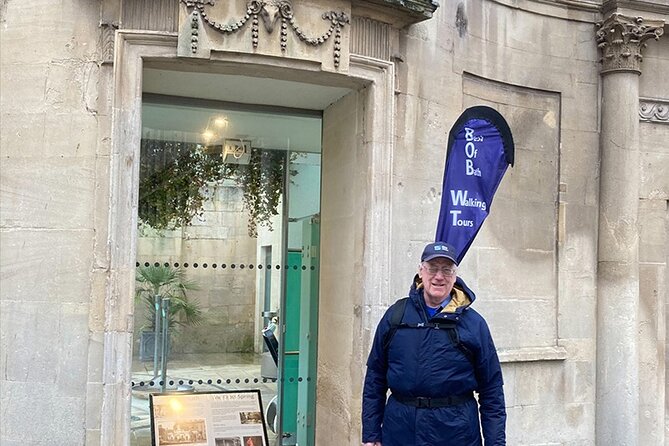
One early stop is the Roman Baths, where Bob explains the importance of Bath’s natural hot springs. A temple was built here around 60 to 70 AD, during the first decades of Roman Britain. The original Roman complex later fell into ruin, and the area changed again during the medieval period.
The tour does not include admission to the Roman Baths, and the stop is brief. Think of it as an introduction rather than a substitute for the museum. If you plan to go inside, this walk can help you notice the site’s wider setting and understand why the springs shaped the city’s identity for centuries.
This is also a good example of the tour’s value. Bob does not treat Georgian Bath as an isolated architectural showpiece. He connects the later spa town to the much older reason people came here in the first place.
The Royal Mineral Water Hospital and Bath’s medical promise
The Royal Mineral Water Hospital is another short stop. Construction began in 1737, at a time when faith in Bath’s mineral waters was joined by growing confidence in scientific treatment.
The building reflects an important part of Bath’s Georgian appeal. People did not come only for balls, social contacts, and elegant addresses. They also came hoping the waters would improve their health. That mixture of medicine, belief, status, and tourism helped shape the city’s economy.
Admission is not included, and the stop lasts only a few minutes. Still, it adds useful context. Without it, Georgian Bath can seem like a city built only for wealthy pleasure seekers. The hospital reminds you that healing was central to Bath’s public image.
A completely different sort of day out in Bath:
- Stonehenge, Avebury & the Cotswolds from Bath (Small group)
★ 5.0 · 798 reviews - Fully Guided Bath Ghost Tours
★ 5.0 · 539 reviews - The Cotswolds Tour From Bath (Small group)
★ 5.0 · 349 reviews - Bath Tootbus Hop-on Hop-off Sightseeing Bus Tour
★ 4.5 · 247 reviews
Queen Square begins the Georgian sequence
Queen Square is the first major architectural set piece on the route. Its Georgian houses form the opening part of a sequence that continues through the Circus and ends at the Royal Crescent. Every building in the square is Grade I listed.
The important thing here is not just the handsome stone. The square shows how Bath’s planners used formal spaces to create a sense of order and prestige. Bob explains how the buildings relate to one another, allowing you to see the city as a connected design rather than a collection of unrelated houses.
You will spend only a few minutes at this stop, but the explanation gives the rest of the walk a stronger foundation. Pay attention to the relationship between the square, the surrounding streets, and the later circular and crescent-shaped developments.
The Assembly Rooms and Bath’s fashionable society
The Assembly Rooms provide a window into how Georgian Bath worked as a social resort. The new or upper rooms opened with a grand ball in 1771. Balls, concerts, and gambling took place here, and the building became a meeting place for fashionable society.
Jane Austen and Charles Dickens were among the famous figures associated with Bath’s social world, along with members of the nobility. Bob uses these connections to make the architecture feel inhabited. You are not simply looking at a large 18th-century building. You are considering the crowded social life that gave it purpose.
The Assembly Rooms are an outside stop unless you purchase admission. The tour allows about five minutes here, so anyone especially interested in Georgian interiors should plan a separate visit. That is not a flaw in the walking tour, but it is worth knowing before you book. The walk is about orientation and interpretation, not extended indoor visits.
The Circus reveals Georgian planning at its boldest
The Circus is one of Bath’s most memorable spaces. Designed by John Wood the Elder and built between 1754 and 1768, it is a circular ring of large townhouses with three entrances.
Its design rewards a slow look. Each section faces one of the entrances, creating a classical facade directly ahead as you move around the circle. This was not accidental decoration. It was a carefully controlled architectural composition, built to make the whole space feel balanced and grand.
Bob’s explanations are particularly useful here because the Circus can be admired quickly but understood slowly. The tour gives you time to look up, compare the repeated details, and see how the houses work as one composition.
The stop lasts about 10 minutes and does not require an admission ticket. It is one of the strongest parts of the route for anyone interested in architecture or urban planning.
The Royal Crescent and No. 1
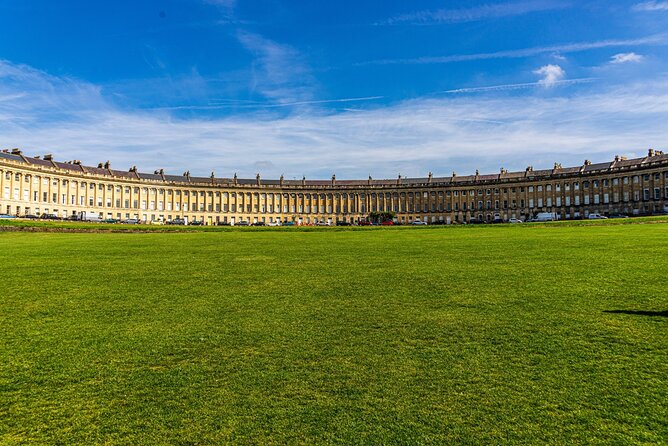
The Royal Crescent is Bath’s signature view: 30 terraced houses arranged in a broad sweep. John Wood the Younger designed it, and construction took place between 1767 and 1774.
The power of the crescent comes from its scale. From the front, the long curved facade looks like a single grand residence. In reality, it is a row of individual homes. That blend of private property and public display says much about Georgian Bath, where social position was part of the city’s architecture.
The tour includes about 10 minutes at No. 1 Royal Crescent. Admission is not included, so you can choose to enter later if you want to see how one of these houses worked inside. I like this arrangement because it keeps the walking tour moving while giving you enough background to decide if the museum suits your interests.
The route also includes Gravel Walk, a quieter connection near the Royal Crescent. One especially useful feature of Bob’s guiding is his attention to small details and less obvious routes. He has been known to point out places connected with film productions, including spots used for Bridgerton, but the main focus remains Bath’s architecture and people.
Pulteney Bridge crosses into another side of Bath
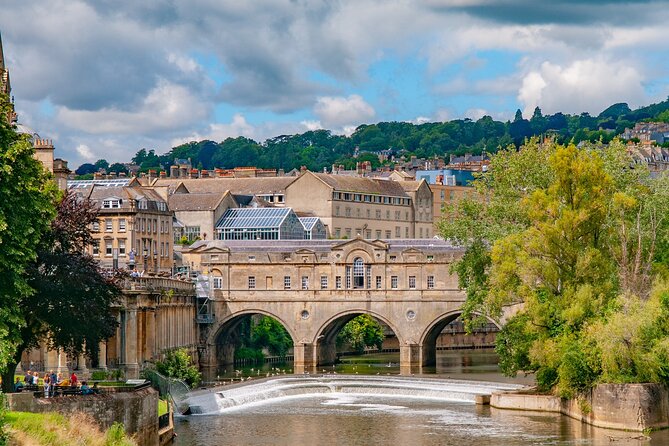
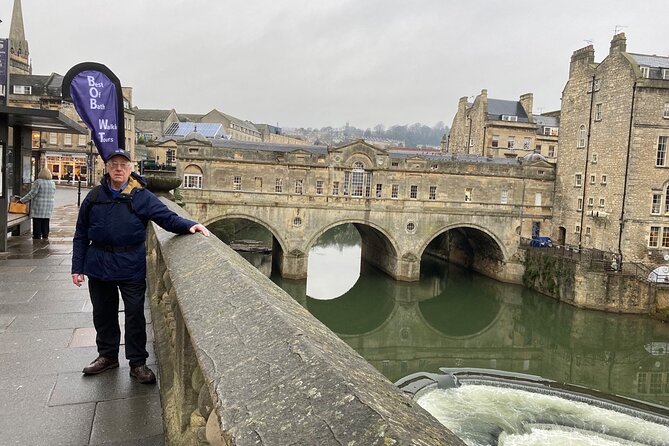
Pulteney Bridge gives the walk a change of rhythm. Completed by 1774, it crosses the River Avon and connects the city with land intended for development by the Pulteney family.
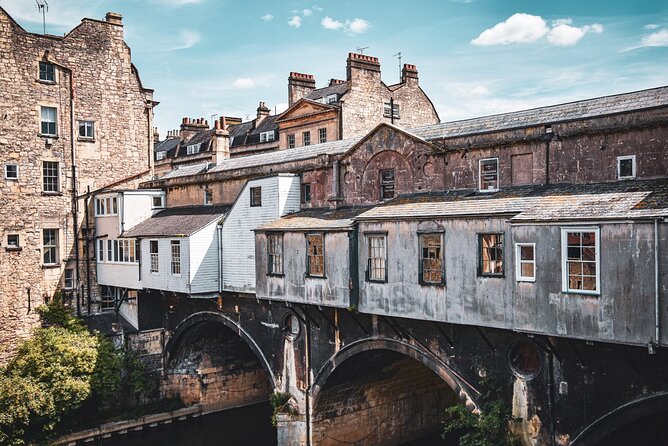
Robert Adam designed the bridge in a Palladian style. Its most unusual feature is that shops run across the full span on both sides. This makes it feel less like a bridge you cross and more like a narrow shopping street suspended over the river.
The stop lasts about five minutes and is free to view. You can cross the bridge, look at its shopfronts, and take in the river setting without needing a ticket. Bob’s explanation helps connect the bridge to Bath’s expansion, showing that Georgian architecture was also a tool for investment and development.
Guildhall Market and the return to the Abbey
The Guildhall Market offers a final glimpse of everyday commerce. The indoor market has existed since 1284 and occupies an attractive historic building. You can wander among the stalls for a few minutes before returning to Abbey Churchyard.
This stop is a welcome counterpoint to the grand squares. Bath is not only a city of crescents, balls, and elegant facades. It is also a working place where people have traded goods for centuries.
The walk ends back at the Abbey, with about 10 minutes available for further questions. The finish is convenient, but it also gives the tour a satisfying shape. You begin with Bath’s religious and medieval center, move through Roman and Georgian stories, then return to the same place with a clearer sense of how the city fits together.
Bob’s guiding style and group size
Bob is the heart of this experience. His style is friendly, informal, and lightly humorous rather than formal or theatrical. He encourages questions and is willing to admit when he does not know an answer, which makes the conversation feel natural.
The strongest praise for the tour centers on his ability to connect buildings with people. You can expect stories about the figures who built and occupied Bath, along with explanations of why certain facades look the way they do. He also checks the group’s pace and makes an effort to keep the walk comfortable and inclusive.
The group maximum is 15 people. That is small enough for questions to be heard and for Bob to respond to individual interests, but it is not a private tour. If everyone wants to stop often, the two-hour schedule can stretch. One walk lasted about two hours and 10 minutes, while another went beyond the allotted time because the group kept asking questions.
Pace, fitness, and practical planning
The tour lasts approximately two to three hours and requires a moderate level of physical fitness. You will be walking through the city and standing at several stops, so comfortable shoes are sensible. The route is described as gentle in pace, but it is still a city walk rather than a seated talk.
The 1:00 pm start works well if you arrive in Bath in the morning or want to pair the walk with an earlier visit to the Roman Baths. Since several major attractions are outside stops, you may want to schedule paid indoor visits before or after the tour rather than expecting long entries during it.
The experience is offered in English and uses a mobile ticket. It is near public transportation, and service animals are allowed. The tour requires good weather, and if poor conditions cancel it, you are offered another date or a full refund. A minimum group size also applies.
The tour is often booked about 28 days ahead. That does not mean you must always plan a month out, but it is a useful warning for weekends, holidays, and popular travel dates.
Who should book the Georgian Tour
I would recommend this walk if you want Bath to make sense quickly. It suits first-time visitors, architecture fans, readers interested in Jane Austen’s Bath, and anyone who prefers stories to silent sightseeing.
It is also a good choice for independent explorers. Bob shows you where the main sights are and points out details you might otherwise miss, but he does not try to replace your free time. You can use the walk as a framework, then return to the places that catch your interest.
You may want something else if your priority is long indoor access to the Roman Baths or Assembly Rooms. Those are not included, and the stops are short. This is best understood as a guided city walk with selected viewpoints, not an all-inclusive attraction ticket.
Should you book Best of Bath Walking Tours?
Book it if you want a friendly guide, a manageable group, and a clear explanation of why Bath’s Georgian center looks the way it does. At $27.73, the price is sensible for a two to three hour walk, especially when Bob’s humor, local detail, and willingness to answer questions are part of the appeal.
I would book early if your schedule is fixed, then plan your paid indoor visits around the walk. If you prefer exploring without a guide, Bath is compact enough to manage alone, but you will likely miss some of the connections between the Roman springs, the Georgian building boom, and the people who made the city fashionable.
FAQ
How long does the Georgian Tour last?
The tour lasts approximately two to three hours. The usual walk is described as about two hours, but it can run longer when the group asks many questions.
Where does the tour start?
It starts at 1:00 pm in Abbey Churchyard, Bath BA1, in front of Bath Abbey.
Where does the tour finish?
The walk ends back at Abbey Churchyard, the same place where it begins.
What attractions are included in the route?
The route includes Bath Abbey and Abbey Churchyard, the hot springs area, the old city wall, the Royal Mineral Water Hospital, Queen Square, the Roman Baths, the Assembly Rooms, the Circus, the Royal Crescent, Gravel Walk, Pulteney Bridge, and Guildhall Market.
Are admission tickets included?
Admission is not included for the Roman Baths, the Royal Mineral Water Hospital, the Assembly Rooms, or No. 1 Royal Crescent. Several outdoor stops are free to view.
Who guides the tour?
Bob leads the tour. He focuses on Georgian architecture, Bath’s wider history, the people connected with the city, and questions from the group.
How large is the group?
The maximum group size is 15 people.
Can I cancel for a full refund?
Yes. You can cancel at least 24 hours before the start time for a full refund. Changes or cancellations made less than 24 hours before the start are not accepted for a refund.
Recently added around Bath
- Private Day Tour from Bath to Stonehenge and Salisbury with Pickup★ 5.0 · 9 reviews
- Wells, Cheddar Cheese and Cheddar Gorge – Private Day Trip from Bath★ 5.0 · 10 reviews
- The Beatles in Bath June 10th 1963★ 4.5 · 10 reviews
- Bath Private Guided Walking Tour★ 5.0 · 10 reviews
- Private Cotswolds tour from Bath★ 5.0 · 12 reviews
- Bath City Tour & Fly a Hawk Experience – Day Tour from Bath★ 5.0 · 13 reviews
- Private Day Tour from Bath to Glastonbury and Wells with Pickup★ 5.0 · 14 reviews
- Private Tour of Quintessential Wiltshire and Cotswold Villages★ 5.0 · 14 reviews
Bath Tours, compared.
Walking Tour of Bath with Blue Badge Tourist Guide
Read our review →
Stonehenge, Avebury & the Cotswolds from Bath (Small group)
Read our review →

Bath Tootbus Hop-on Hop-off Sightseeing Bus Tour
Read our review →
Fun, Flexible Treasure Hunt Around Bath with Cryptic Clues & Hidden Gems
Read our review →Browse the lists this tour appears in