
Reviewed · CAMBRIDGE TOURS
Cambridge: University Walking Tour
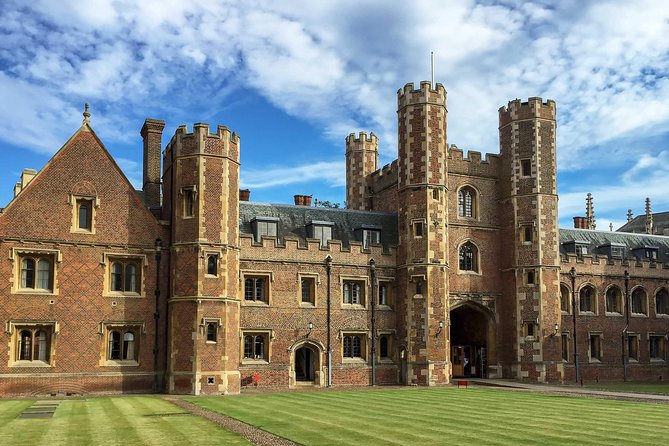
Cambridge is best understood through its ideas, not just its postcard views. This two-hour walk links the university’s Christian beginnings with the Reformation, modern science, religious freedom, and the campaign to end the British slave trade. Along the way, you’ll see the Senate House, Corpus Clock, and Cavendish Laboratory, while guides such as Dave, Ian, Jon, and Julia bring the people behind the buildings into focus.
I like the small maximum group of 15, which gives you a better chance to hear the guide and ask questions. I also like the Round Church admission, exhibition, and 23-minute film, since they give the walk a useful starting point rather than dropping you straight into a maze of college names and old stone.
The main thing to consider is access. The tour moves at a moderate to fast pace, involves plenty of standing, and is not suitable for wheelchair users or people with mobility impairments. College entry is also not guaranteed, and it is unavailable during exam term from late April through June.
Key points at a glance
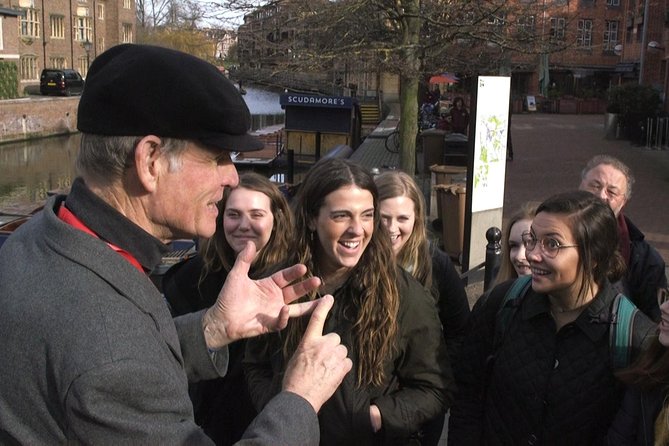
- Christian heritage with a wider purpose: The tour connects Cambridge’s religious beginnings to science, law, liberty, and social reform.
- A personal small-group walk: Numbers are capped at 15, making it easier to follow the guide and ask questions.
- Famous minds brought into the story: Isaac Newton, William Wilberforce, John Milton, and other Cambridge figures appear as part of a larger world story.
- Round Church entry included: You can see the exhibition and watch the 23-minute film, subject to opening times.
- College visits depend on the day: The route may include one or two colleges, but access can change and is closed during exam term.
- Allow the full two hours: The walk lasts 90 to 120 minutes, and one visitor had to leave early to catch a train.
Why this Cambridge walk feels different
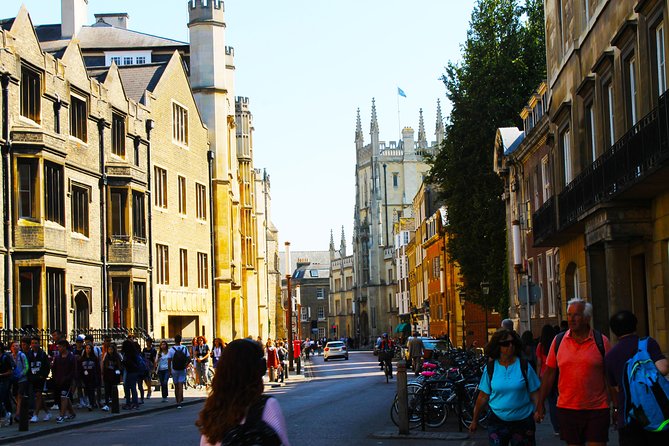
Many Cambridge walks focus on architecture, royal connections, college traditions, and famous students. This one gives those subjects a clear thread: how ideas formed, spread, and changed the world.
The central theme is Christian heritage, but you do not need to be religious to get something from it. The walk also looks at sceptics, scientists, reformers, scholars, and campaigners. One guide may spend time on the university’s roots in Christian monasteries, then move into the Protestant Reformation or the rise of modern science.
That broader view is the tour’s strongest feature. Cambridge can otherwise feel like a collection of impressive gates and courtyards. Here, the buildings are used as prompts for questions about faith, authority, freedom, education, and social change.
You’ll hear about figures such as Isaac Newton, whose work helped shape modern science; John Milton, the poet and political thinker; and William Wilberforce, associated with the campaign to abolish the British slave trade. These are not just names attached to plaques. The guide uses them to show how Cambridge ideas reached far beyond the city.
The tone is serious, but it is not dry. Dave is repeatedly singled out for his clear explanations, gentle humour, and easy manner. Ian is praised for making the time pass quickly, while Jon is described as positive and attentive to the group. Julia and Martin have also led enjoyable walks. The guide can make a real difference here, since the route depends less on spectacle than on storytelling.
More Walking Tours in Cambridge
- Cambridge University Walking Tour by Alumni™ Kings College Option
★ 5.0 · 2,336 reviews - Cambridge: Alumni-Led Walking Tour w/ King’s College Option
★ 4.8 · 1,177 reviews - Cambridge Walking & Punting Tour by Alumni™ King’s College Option
★ 4.5 · 698 reviews
Starting inside the Round Church
Your meeting point is inside the Round Church, officially the Church of the Holy Sepulchre, on the edge of Cambridge’s central university area. Go indoors and check in at the welcome desk before the 2:15pm start on Wednesday, Thursday, Friday, or Saturday.
This arrangement is useful. You are not left searching for a guide on a crowded street corner, and the church gives you a clear place to wait. Arrive early enough to check in, look around, and settle into the group.
Admission to the church is part of the experience. The exhibition and 23-minute film add background before you set off, although access depends on opening times. If the film is available, it gives you a helpful introduction to the church and its place in Cambridge.
The Round Church also sets the mood for the walk. Its unusual shape and long connection with the city make it a fitting starting point for a tour about faith, institutions, and the way old ideas continue to affect modern life.
From monasteries to a university city
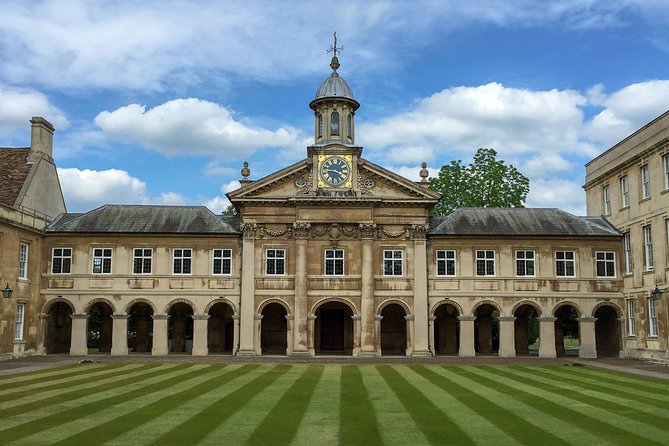
The first part of the walk explains how the University of Cambridge grew from a religious setting. That matters because the university was not created as a detached centre for abstract study. Its early life was tied to Christian institutions, clergy, worship, and the needs of medieval society.
Your guide then places Cambridge within larger changes in England. The Protestant Reformation altered religious practice and political power, while the Tudor period brought new pressures to the country’s churches and institutions. The walk also touches on Viking influence and the growth of Cambridge as a city.
This is a good section for anyone who wants more than a list of dates. You’ll begin to see why college chapels, courtyards, libraries, and formal university spaces look the way they do. The religious past is not treated as a side note. It helps explain the university’s original purpose and the debates that later shaped it.
The subject can sound weighty, but the small group helps. You can ask a question when a point needs more explanation, and the guide can adjust the pace or add a story. The best guides also use humour, which keeps the talk from becoming a lecture.
Senate House and the heart of university power
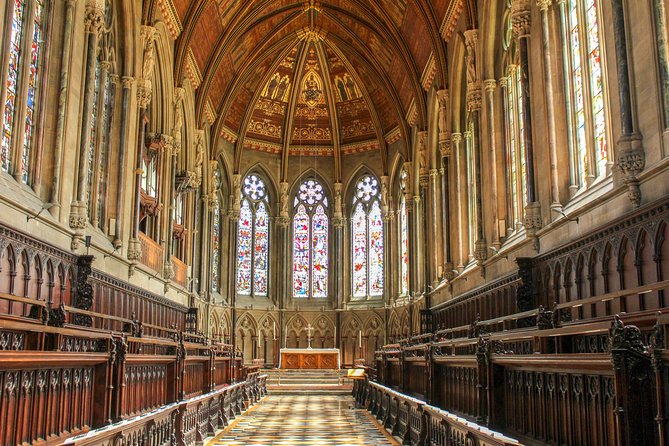
The Senate House is one of the key stops. Its grand appearance reflects the formal side of Cambridge, where examinations, ceremonies, and university authority have long mattered.
From here, the guide can explain how the university operates as an institution, rather than presenting it only as a pretty collection of old buildings. That distinction is valuable. Cambridge has centuries of ceremony, but it has also been a working place of teaching, testing, argument, and research.
You may spend time listening outside major buildings rather than walking straight through them. That means the tour is not a non-stop sequence of indoor visits. If you prefer a tour filled with rooms, galleries, and grand interiors, you should keep that in mind.
Still, the exterior stops are worthwhile because the guide explains what you are looking at and why it matters. Bring a camera, but listen first. The architecture is easier to appreciate once you understand the role these buildings play.
A completely different sort of day out in Cambridge:
- Cambridge University With Alumni: Optional Kings College Entrance
★ 5.0 · 1,987 reviews - Punting Tour in Cambridge
★ 4.5 · 1,690 reviews - Cambridge: Guided River Cam Punting Tour
★ 4.7 · 1,469 reviews - Cambridge: University Alumni Tour with Kings College Option
★ 4.7 · 1,282 reviews
The Corpus Clock and Cambridge’s changing ideas
The Corpus Clock is one of Cambridge’s most unusual sights. Its strange, elaborate design makes it an easy photo stop, but the guide uses it to talk about time, science, and the university’s continuing interest in new ideas.
This is where the walk shifts naturally from old religious foundations to modern questions. Cambridge is not simply a place that preserves the past. It has also helped create new ways of understanding the world.
The Corpus Clock works well in the route because it is compact and memorable. You do not need a long visit to appreciate it, but you do benefit from knowing what you are seeing. The guide’s explanation turns a quick look into part of the larger story.
Expect some standing while the guide speaks. In cold or wet weather, this can become uncomfortable, especially if the group pauses at several outdoor sites. Warm layers and waterproof clothing are sensible, even for a short afternoon walk.
The Cavendish Laboratory and the rise of modern science
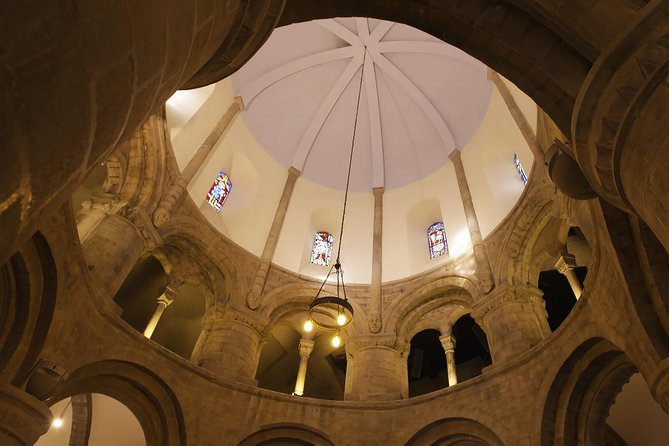
The Cavendish Laboratory represents Cambridge’s scientific side. Its place in the route helps show how the university moved from a mainly religious and classical education toward the modern study of physics and the natural world.
The exact route can vary, so treat this as a likely highlight rather than a guaranteed stop in precisely the same order. The guide may frame the laboratory through the people and discoveries connected with it, then link that scientific work to the older Cambridge tradition of questioning and study.
That connection is one of the tour’s best ideas. Science is not presented as a complete break from Cambridge’s past. Instead, you see how a university shaped by Christian learning could also become a major centre for modern scientific thought.
If you are especially interested in laboratories, expect a view and explanation rather than a behind-the-scenes visit. This is a walking tour of the city and university sites, not a specialist science tour.
Famous Cambridge people and their wider influence
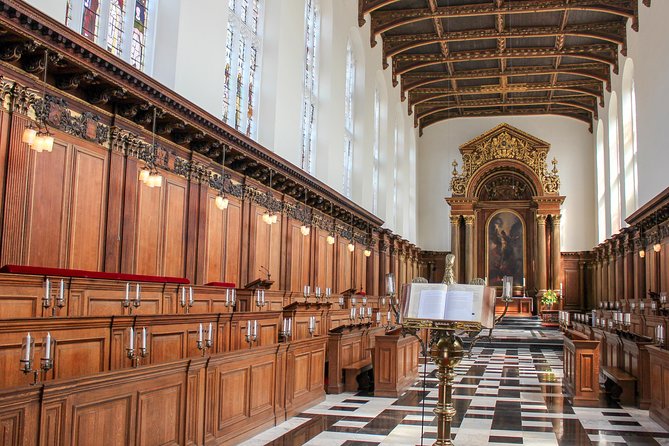
The walk’s character comes from its people. Newton, Milton, and Wilberforce each open a different door into Cambridge and the world beyond it.
Newton points toward mathematics, physics, and the way scientific thought changed society. Milton brings literature, politics, and questions about liberty into the picture. Wilberforce connects Cambridge to moral reform and the long campaign against the British slave trade.
The point is not to claim that Cambridge alone created these changes. A good guide shows how people, institutions, arguments, and political movements overlap. That makes the tour useful for first-time visitors and for anyone who already knows a little about English history.
You may also hear about saints, sinners, sceptics, and scholars who do not appear on every city tour. That mix keeps Cambridge from looking too polished. Its story includes conviction and doubt, achievement and conflict, tradition and reform.
I especially like this human scale. You are not asked to admire the university from a distance. You are encouraged to think about the choices made by real people, and about how their work affected law, religion, education, science, and public life.
College entry and what you may actually see
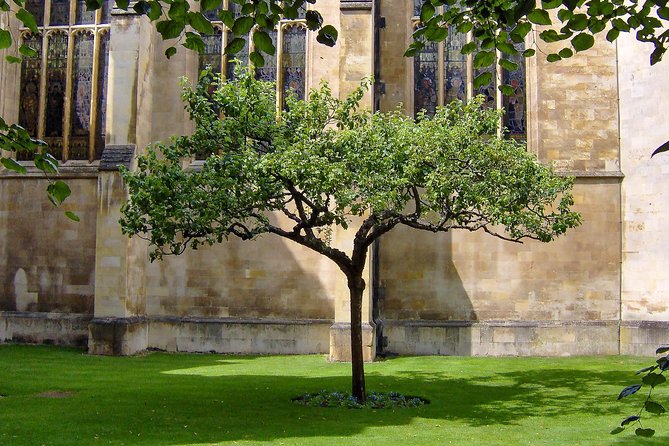
The tour aims to enter roughly one or two colleges when the gates are open. This can be a major bonus, since college courtyards and chapels are among Cambridge’s most sought-after sights.
But you should book with the understanding that college entry is not guaranteed. University schedules and college access can change, and no college visits are possible during exam term from late April through the end of June.
The route may also vary slightly from the standard plan. That flexibility is normal in Cambridge, where college access depends on opening arrangements and university activity. The guide will still take you to key historic sites, but the exact balance of interiors and exteriors may differ.
If you visit with a dog, you must remain outside any colleges included in the walk because of college restrictions. Assistance dogs are allowed. Pets are otherwise not permitted.
This uncertainty is the main reason not to book the tour solely for a particular college interior. If your priority is seeing one famous college from inside, check its separate admission arrangements. Book this walk for the wider story, the guide, and the chance of college access.
Pace, comfort, and group size
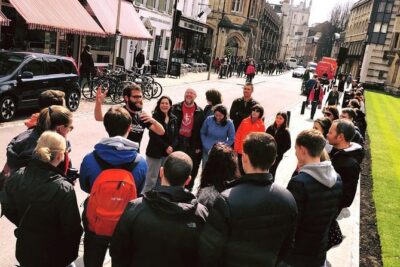
The group is limited to 15 people, a useful size for a city walk with frequent explanations. You can usually hear the guide without standing shoulder to shoulder, and questions are easier than they would be in a large crowd.
The pace is moderate to fast. The route is suitable for pushchairs, but it is not wheelchair accessible, and the tour is not suitable for people with mobility impairments. You should be comfortable walking and standing for up to two hours.
Wear comfortable shoes. Cambridge’s central streets and university areas reward walking, but your attention will be split between uneven surfaces, crowds, and the guide’s explanations. Water is worth carrying, and weather-appropriate clothing matters more than a smart outfit.
Cold weather deserves special attention. One January group was able to stop for a hot drink, but another visitor noted that standing outside can feel chilly. A warm coat, hat, and gloves can make the difference between enjoying the final half hour and wishing the tour would end.
Children under 16 must be with a responsible adult, and unaccompanied minors are not allowed. Smoking and audio recording are not permitted.
Is $22 a fair price?
At $22 per person, this is a reasonable buy if you want a guided introduction to Cambridge rather than a quick photo walk. The price includes the local guide, the small-group format, the Round Church, its exhibition and film when open, and possible entry to one or two colleges.
The value depends on how much you use the interpretation. If you only want to see buildings, you can walk through the city on your own for free. But you may miss the links between the monasteries, Reformation, scientific work, political thought, and reform movements.
A guide also saves you from spending your limited time sorting out which gate, clock, laboratory, or college matters. For a day trip, that can be important. One visitor who had tried exploring Cambridge alone found that it was easy to take photographs without learning much. This walk gives you a framework, after which you can continue exploring independently.
The tour lasts 90 to 120 minutes, so allow the full two hours. Do not schedule a train immediately after the advertised finish. The route may run long, and leaving early means missing the final part.
Free cancellation is available up to 24 hours before the start, and you can reserve now and pay later. These terms are useful if your East of England plans are still shifting.
Who should book this walk?
You should book if you like history explained through people and ideas. It suits first-time Cambridge visitors, day trippers from London or elsewhere in England, and anyone who wants a strong orientation before visiting more sites alone.
It is also a good choice if Christian heritage interests you, or if you are curious about how religion shaped English institutions. Nonreligious visitors can enjoy it too, since the walk includes science, literature, law, political liberty, and the abolition movement.
Families with older children may find the stories more useful than a formal museum visit, but the pace and standing may not suit young children. Under-16s need an adult, and everyone should be ready for a serious history talk with some outdoor waiting.
You may prefer another option if you need guaranteed college entry, a slow stroll, wheelchair access, or a tour conducted in a language other than English. This is an English-language experience, and the guide’s explanation is the main attraction.
Should you book the Cambridge University Walking Tour?
For $22, I would book this walk if you want Cambridge to make sense, not just look beautiful. Its best features are the small group, the excellent individual guides, and the clear thread connecting Christian beginnings with science, freedom, reform, and world-changing scholarship.
Book it early in your Cambridge day if possible, then use the rest of your time to return to any college, museum, or street that catches your interest. Just leave room in your schedule, dress for the weather, and do not count on entering a college.
It is not the perfect tour for every visitor. But if you enjoy thoughtful history, live storytelling, and a walk that asks what Cambridge has contributed to the modern world, it offers solid value and a memorable introduction to the city.
FAQ
Where does the Cambridge University Walking Tour meet?
The tour meets inside the Round Church Visitor Centre. Enter the church and check in at the welcome desk before the scheduled start.
What time and days does the tour run?
Walking tours meet at 2:15pm on Wednesdays, Thursdays, Fridays, and Saturdays.
How long does the tour last?
The walk lasts between 90 and 120 minutes. You should allow the full two hours when planning transport afterward.
Is entry to Cambridge colleges included?
The tour may enter approximately one or two colleges, subject to college opening availability. Entry is not guaranteed, and colleges cannot be visited during exam term from late April through the end of June.
Is the Round Church included?
Yes. Admission to the Round Church is included, along with its exhibition and 23-minute film, subject to opening times.
Is the tour suitable for wheelchair users?
No. The route is pushchair accessible but not wheelchair accessible, and the experience is not suitable for people with mobility impairments.
Can I cancel or pay later?
You can cancel up to 24 hours in advance for a full refund. You can also reserve your place and pay later.
Recently added around Cambridge
- Cambridge’s History & Secrets with Self-Guided Walking Tours★ 4.5 · 9 reviews
- Cambridge: The Original Uncomfortable Cambridge™ Tour★ 4.8 · 13 reviews
- Private | Cambridge University Colleges Guided Punting Tour★ 4.5 · 13 reviews
- From Cambridge: Guided Day Tour to Bath and Stonehenge★ 4.8 · 14 reviews
- Tangential Cambridge: Private Walking Tour of Cambridge★ 5.0 · 14 reviews
- Explore Cambridge Student Life & Top Colleges Walking Tour★ 3.5 · 18 reviews
- Cambridge: Shared Chauffeured Punting Tour★ 4.8 · 18 reviews
- Cambridge Famous Alumni Quest Experience★ 4.5 · 18 reviews
Cambridge Tours, compared.
Cambridge University Walking Tour by Alumni™ Kings College Option
Read our review →
Cambridge University With Alumni: Optional Kings College Entrance
Read our review →
University Alumni Tour with Kings College Option
Read our review →
Alumni-Led Walking Tour w/ King’s College Option
Read our review →
Cambridge Walking & Punting Tour by Alumni™ King’s College Option
Read our review →Browse the lists this tour appears in