
Reviewed · CITY TOURS
City & Secrets: Explore London’s Hidden Gems
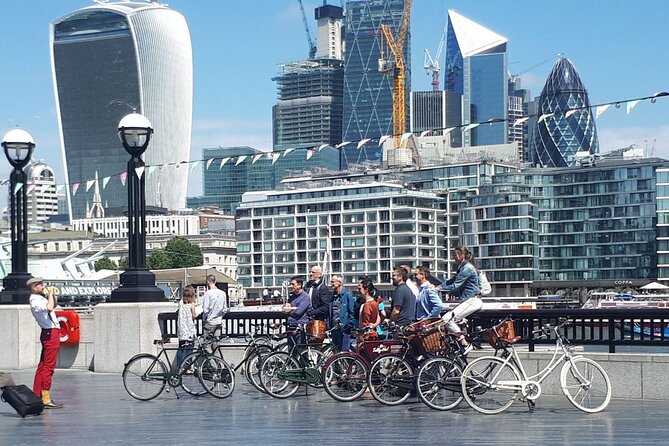
London reveals itself differently from a bicycle. This four-hour ride leaves Waterloo, follows the Thames, cuts through the City, and reaches the old East End docks. You pass grand landmarks, but the best moments often come on backstreets, beside canals, and at small remnants of Roman and medieval London.
I like the small maximum group of 12, which makes it easier to keep together on busy streets. I also like the mix of famous sights and less obvious stops, from Roupell Street’s Georgian workers’ houses to the Cable Street mural and Shadwell Basin. The main catch is that this is a sightseeing ride, not a series of interior visits. You will see many places from outside, and four hours leaves little time at each one.
Key points to know
- A Waterloo-to-Waterloo loop: Start at 2 p.m. on Hercules Road and return to the same meeting point.
- A hand-built British bicycle: The bike, helmet, tweed cap, and rain poncho if needed are supplied.
- London in several chapters: Follow a route through Roman, medieval, Tudor, Victorian, wartime, and modern London.
- A small-group format: No more than 12 people ride together, with recent groups sometimes much smaller.
- A moderate physical outing: You need to be comfortable cycling for about four hours in changing weather.
- A useful first-day orientation: You leave with a broad map of London and tips for the rest of your stay.
Why this bike tour works so well for a first look at London
The route covers an impressive amount of ground without making you spend the day underground or in a sightseeing bus. You move from Waterloo to the City of London, east to the old docks, then back along the river toward Southwark and Tate Modern.
That range gives you a helpful sense of how London fits together. You see the financial district beside surviving medieval churches, dock warehouses beside modern cultural buildings, and quiet church ruins only a few minutes from crowded streets.
I especially like the way the ride links history to place. The guide can explain smugglers near the docks, Cockney identity around Bow bells, and the Great Fire while you are close to the streets where those events unfolded. The stories are not limited to kings and famous buildings. Sailors, dock workers, firefighters, protesters, and ordinary London families all have a part in the route.
The ride is also practical. Guides Katie and Stewart have received particularly strong praise for being engaging, organized, and fun. A small group of four on one recent ride made it easier to handle crowded parts of the city. That matters in London, where a large bicycle group can quickly become awkward at crossings and narrow lanes.
A few more London half days worth a look
- Stonehenge, Windsor Castle, and Bath from London
★ 4.5 · 18,662 reviews - London Big Bus Hop-On Hop-Off Tour with Optional River Cruise
★ 3.5 · 10,803 reviews - London Small Group Tour of Historical Pubs
★ 5.0 · 10,422 reviews
Starting at Roupell Street and Blackfriars Bridge
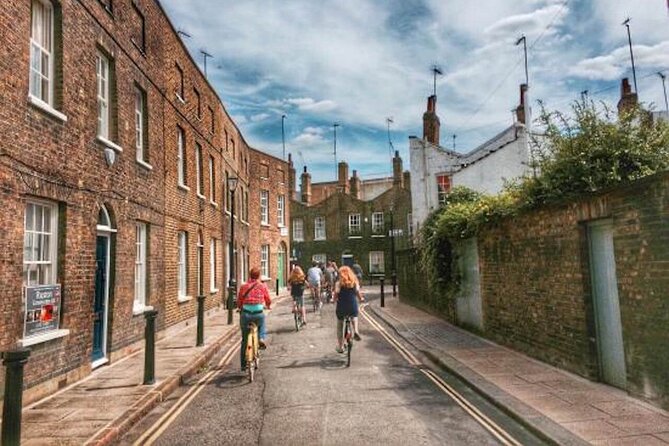
The meeting point is at 189 Hercules Road, near Waterloo, with the ride scheduled to begin at 2 p.m. The first stop is Roupell Street, a compact pocket of early nineteenth-century housing that feels far removed from the nearby railway district.
The Georgian houses were built for working people on land reclaimed by John Roupel. Street names once confused postmen, so some were changed. Look for old fire insurance plaques on the houses. Before modern public fire services, the plaque could determine which private firefighting company responded.
The King’s Arms adds another layer to the stop. The Grade II Victorian pub was once an undertaker’s business and a magistrates’ court. Today it serves Thai food and carries a selection of real ales. You do not get a meal or drink as part of the tour, but it could be worth noting for later.
At Blackfriars Bridge, the guide shifts to London’s religious past. The bridge opened in 1869 and recalls the Dominican friars whose monastery once occupied the north end. The support columns are shaped like pulpits, a small design detail that is easy to miss from a car or tour bus.
St. Paul’s, Bow Bells, and the old City
The route then moves through the City of London, the historic core of the capital and now its main financial district. Stops are short, often five to ten minutes, so you should expect an outdoor introduction rather than a full tour of each site.
At The Cockpit pub, you hear about the monastic buildings that once occupied the area and the claim that Shakespeare bought and lived in the gatehouse. St. Paul’s Cathedral follows, with its long story of destruction and rebuilding. The medieval cathedral was lost in the Great Fire of 1666, and Christopher Wren created the great domed building you see today.
The guide also connects St. Paul’s with more recent national events, including Prince Charles and Diana’s wedding and Winston Churchill’s funeral. Wellington and Nelson are buried inside. You will not enter during the brief stop, so plan a separate visit if you want the interior, dome, or galleries.
At St. Mary le Bow, London identity becomes the subject. The church’s bells are tied to the old definition of a Cockney, someone born within the sound of Bow Bells. It is a simple story, but it helps explain how local identity in London can be tied to a very specific patch of the city.
Guildhall brings in medieval civic customs and the City’s unusual traditions. At Mansion House and the Bank of England, the guide points out the high ground that has mattered since Roman times. These stops are useful for orientation, though people who want extended architecture or finance commentary may find the pace quick.
Leadenhall Market and the City’s wild architecture
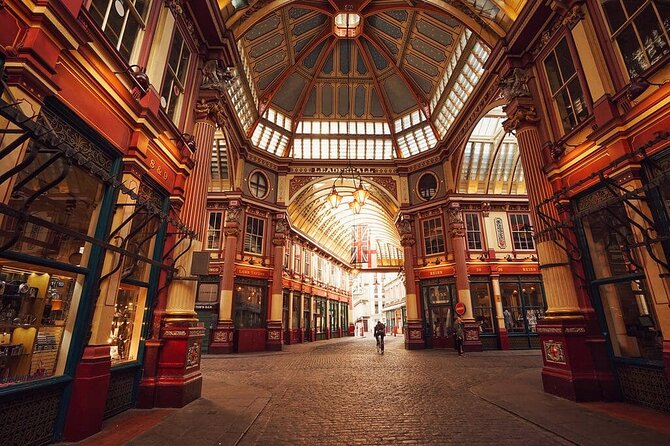
Leadenhall Market is one of the route’s most photogenic pauses. The Victorian market was designed by Sir Horace Jones on ground that once held the Roman forum and basilica. Its ornate structure gives you a clear picture of how London repeatedly builds over its own past.
The market is also linked with Harry Potter filming locations, including the settings used for Diagon Alley and the Leaky Cauldron. The stop is free, and you have time for photographs, but it is not a shopping break or meal stop.
Next comes one of the sharpest contrasts in London. Lloyd’s of London, designed by Richard Rogers, rises beside the Cheesegrater and the Gherkin. Nearby, St. Andrew Undershaft dates from the period before the Great Fire and was built when Henry VIII was king.
This is one reason cycling works here. You can take in several very different buildings in a short stretch, then move on before the City’s office crowds and traffic slow you down. At London Wall, you see part of the Roman defensive wall, with sections dating to around 200 AD. The remains are modest, but they make London’s age visible beneath the glass towers.
A completely different sort of day out in London:
- Stonehenge, Windsor Castle and Bath with Pub Lunch in Lacock
★ 4.5 · 7,402 reviews - Tower of London and Crown Jewels Exhibition Ticket
★ 4.5 · 6,677 reviews - Thorpe Park Admission Ticket
★ 4.0 · 5,915 reviews - Stonehenge, Windsor Castle and Bath Full Day Guided Tour
★ 4.5 · 5,346 reviews
Cable Street and the old docklands
East London gives the ride a different tone. At the Cable Street mural, the guide explains the 1936 clash between fascists and protesters in an area that was then largely Jewish. The mural, completed in 1983, sits in one of London’s most multicultural districts and offers a direct link between local politics, migration, and street art.
From there, the route reaches Shadwell Basin. The area was part of London’s dock system, once among the busiest in the world, and has been regenerated since the 1980s. You then continue to Tobacco Dock, where old tobacco warehouses and an ornamental canal recall the commercial life of the London Docks.
These are valuable stops because they show a side of London that can be missed if you stay around Westminster, the West End, and the main royal sights. The old docks were places of hard work, international trade, and rough waterfront life. Stories of sailors, smugglers, and pirates help give the route a little edge, though some material may be disturbing.
St. Katharine Docks completes this section. Built in 1825, it was the last of London’s docks to be constructed and the first to close, in the 1960s. The site also recalls St. Katherine’s Hospital, founded by Queen Matilda in 1147.
Tower Bridge, the Tower, and HMS Belfast
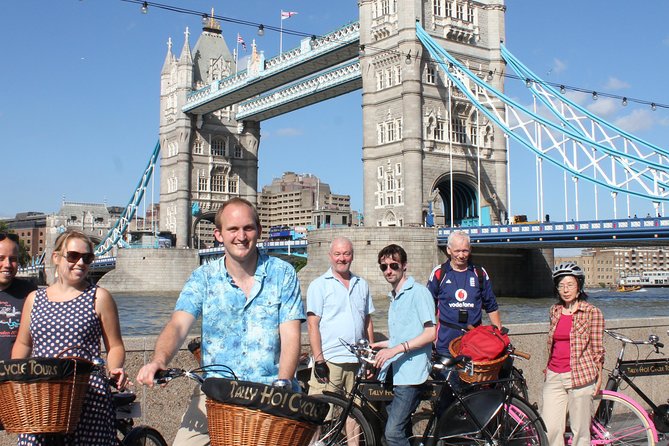
Tower Bridge is a natural high point of the ride. Completed in 1894, it combines suspension and bascule bridge design, with two neo-Gothic towers connected by a high walkway. The bascules still rise for tall ships, around 800 times a year.
You stop for views and photographs, not for the Tower Bridge Exhibition. If you want the glass floor, engine rooms, or upper walkway, you need a separate ticket and a longer visit.
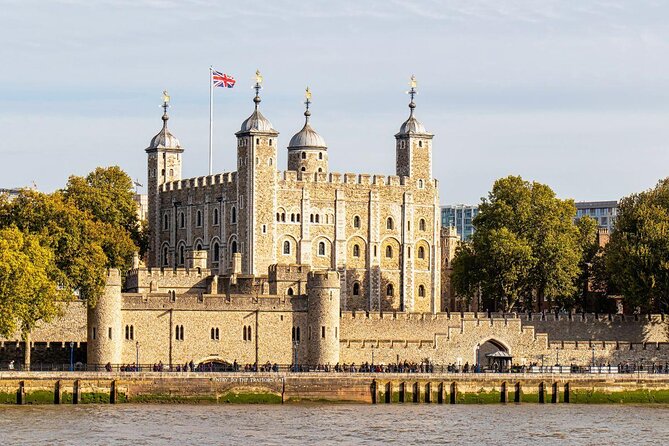
The Tower of London is next. The fortress began after William the Conqueror’s victory in 1066 and has served as a palace, armoury, menagerie, observatory, prison, and execution site. Traitors’ Gate and the stories of Anne Boleyn, Catherine Howard, Thomas More, and other prisoners give the stop its darker side.
The Crown Jewels are inside the Tower, but entry is not included and the brief stop does not allow time to visit. Treat this point as a preview that can help you decide if the Tower deserves a full half-day later.
Across the river, HMS Belfast provides another strong visual landmark. The cruiser was built in Belfast, in the same shipyard associated with Titanic, and served in World War II, the Korean War, and the D-Day landings. It now operates as a floating museum. You can see it from the outside on the ride, while a separate ticket is needed to explore its decks and rooms.
City Hall, St. Dunstan, and the Great Fire
The former City Hall, designed by Norman Foster, brings the route into modern London. Its unusual form makes a useful contrast with the Tower and the old warehouses nearby.
St. Dunstan in the East is one of the most pleasant pauses. The church was destroyed in the Great Fire and rebuilt by Wren, then damaged again in World War II. Its surviving walls and greenery create a quiet pocket in the middle of the City.
At the Monument to the Great Fire, the guide returns to the 1666 disaster. The column rises 202 feet and commemorates the fire that began at Thomas Farriner’s bakery on Pudding Lane. It is a concise lesson in how one event reshaped London’s streets, buildings, and building rules.
Southwark Bridge, Shakespeare, and Tate Modern
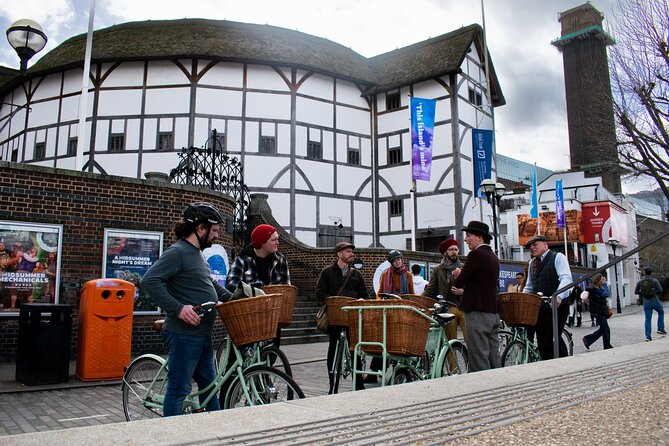
The return route crosses Southwark Bridge, where you can look toward Shakespeare’s Globe. The present Globe is a 1997 reconstruction of the 1599 theater connected with Shakespeare and the Lord Chamberlain’s Men.
You then pass Tate Modern, a former Bankside Power Station transformed into an art museum in 2000. Its brick building and later pyramid-like extension are worth seeing even if modern art is not your main interest. The museum includes work by artists such as Mondrian, Richter, Rothko, and Picasso, but the cycling stop is for an exterior look and river views.
This final stretch brings the tour back to the Thames and completes the loop to Waterloo. It is a fitting finish: industrial London, cultural London, and the river that ties the whole city together.
Price, pace, bikes, and what to bring
At $103.35 per person, this is not the cheapest way to see London, but the price covers about four hours with a local guide, a hand-built British bicycle, and the chance to cover a wide area. It can be good value for a first day, especially if you would otherwise pay for several separate walks or spend money on taxis between distant sights.
The tradeoff is depth. Most stops last five or ten minutes, and admission to places such as St. Paul’s, the Tower of London, HMS Belfast, Tower Bridge, and Tate Modern is not included. You are paying for movement, commentary, and orientation rather than museum entry.
You need moderate physical fitness and must be at least 13 years old. Helmets and tweed caps are optional, and a rain poncho is available if required. The ride operates in all weather, so bring practical clothing and expect conditions to affect comfort.
Eat before you go. One recent ride ran from 10:30 a.m. to about 2 p.m., and the advice to have a large breakfast is sensible for an afternoon departure as well. Snacks and drinks are not included, and the route does not promise a dedicated lunch stop.
Free cancellation is available up to 24 hours before the start time. Poor weather or too few bookings can lead to a cancellation, with a different date or a full refund offered.
Who should book City & Secrets?
I would choose this ride if you are visiting London for the first time, have only a few days, or want a clear sense of the city before choosing which sites deserve longer visits. It suits active adults, older children aged 13 and up, and anyone who prefers local streets to a fixed bus route.
I would not choose it as your only London history experience if you want long interior visits, museum time, or a slow architectural study. The route is broad and lively, but the stops are short.
Book it if you like cycling, stories about ordinary city life, and a small group led by a guide such as Katie or Stewart. Eat first, dress for the weather, and use the ride as your map for the rest of London.
FAQ
How long is the London bike tour?
The experience lasts approximately four hours.
Where does the tour begin?
It begins at 189 Hercules Road, London SE1 7LD, near Waterloo.
What time does the tour start?
The scheduled start time is 2 p.m.
Does the tour return to its starting point?
Yes. The activity ends back at the meeting point.
What is included with the bicycle?
A hand-built British bicycle is included. Helmets and tweed caps are optional, and a rain poncho is provided if required.
Are food and drinks included?
No. Snacks and drinks are not included.
What age must riders be?
Riders must be at least 13 years old. The minimum alcohol drinking age stated for the experience is 18.
How large is the group?
The tour has a maximum of 12 travelers.
Can I cancel for a full refund?
Yes, if you cancel at least 24 hours before the experience start time. Poor weather or too few bookings can also lead to a different date or a full refund.
Recently added around London
- London’s Crown Secret: Self-Guided Royal Puzzle Quest★ 4.5 · 8 reviews
- Postcard London★ 5.0 · 8 reviews
- Private Tour: Downton Abbey London Locations by Taxi★ 5.0 · 8 reviews
- Windsor Castle, Stonehenge & Roman Baths Private Tour★ 4.5 · 8 reviews
- Cotswolds Private Driving Tour from London★ 5.0 · 8 reviews
- Skip-the-line London Westminster Abbey and City of Westminster Kid-Friendly Tour★ 5.0 · 8 reviews
- A Silent Disco Adventure in London★ 5.0 · 8 reviews
- Private Full Day Cotswolds Tour From London★ 5.0 · 8 reviews
City Tours, compared.
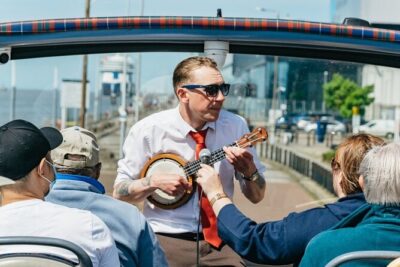

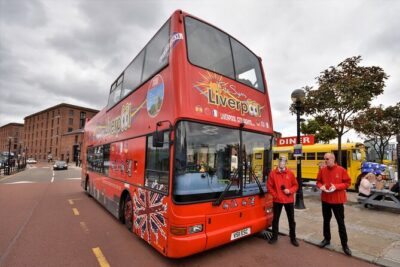
Liverpool City Sights Hop On Hop Off City Tour – 24hr Ticket
Read our review →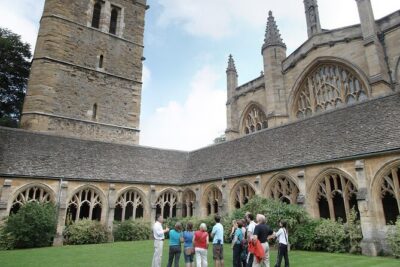
1.5-hour Oxford City and University Walking Tour
Read our review →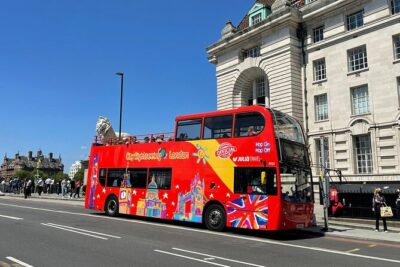
City Sightseeing London Hop-On Hop-Off Bus Tour & Bookable Extras
Read our review →
City Sightseeing Oxford Hop-On Hop-Off Bus Tour
Read our review →
Browse the lists this tour appears in