
Reviewed · MUSEUMS
Explore Bible Art at the National Gallery of London
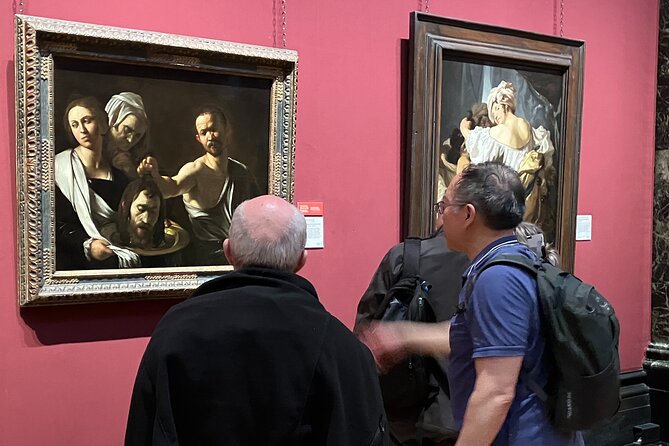
The most unusual thing about this National Gallery experience is its clear purpose: you use famous paintings as a path into Bible study. David leads you from scenes of Jesus’ birth, miracles, death, and resurrection to stories of Joseph, Moses, and David, while asking how artists shaped these accounts for their own time. I like the small group of up to 10 and the way the tour connects visual details with Scripture rather than treating the paintings as pretty wallpaper.
I also like that the discussion reaches beyond standard Bible scenes into apocryphal stories, Greek myths, and selected works by artists such as Van Gogh and Monet when time allows. The main consideration is that paintings move around the museum and may be off display, so the exact route and works cannot be guaranteed.
Key points to know before you book
- A Bible study inside a major art museum: Paintings provide the starting point for discussion about Jesus, Israelite figures, Christian traditions, and apocryphal stories.
- David is the named guide: His style is interactive, enthusiastic, humorous, and focused on linking art details with Scripture.
- A three-hour afternoon visit: The tour begins at 1:00 pm and returns to the meeting point outside the National Gallery.
- Works by major artists: The route may include Leonardo da Vinci, Rembrandt, Caravaggio, Michelangelo, Van Gogh, and Monet, depending on time and display.
- A separate museum ticket is needed: National Gallery admission is free, but you should book a free entry ticket before arriving.
- Practical small-group format: The group can include no more than 10 people, and folding stools are available if requested.
Meeting David at Trafalgar Square
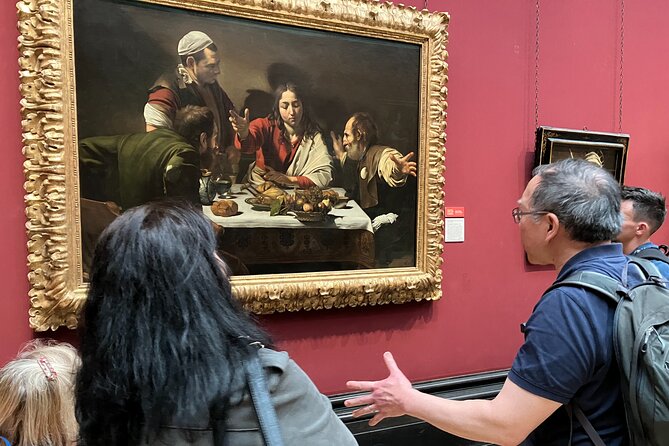
Your meeting point is the George Washington statue at 44 Trafalgar Square, directly outside the National Gallery. The tour begins at 1:00 pm, so give yourself enough time to reach Trafalgar Square and find the statue without rushing.
This is a useful meeting spot because the National Gallery sits right on the square, but Trafalgar Square can feel confusing if you arrive late or are trying to navigate it for the first time. I would arrive early, confirm the exact statue, and have the Viator app installed so you can read important messages in the proper format.
The activity ends back at the same meeting point. That makes your afternoon easier to plan, since you will not need to work out a second pickup location after several hours indoors.
More museums and galleries in London:
- Tower of London and Crown Jewels Exhibition Ticket
★ 4.5 · 6,677 reviews - Chelsea FC Stadium Tours and Museum
★ 5.0 · 1,908 reviews - Official tickets: Moco Modern & Contemporary Art Museum
★ 4.5 · 1,157 reviews
Why biblical art works so well as a guide
A Bible passage gives you words and ideas. A painting gives you faces, gestures, clothing, architecture, light, and a particular artist’s interpretation. This tour uses those visible clues to ask how a story is being presented and what the painter may want you to notice.
The paintings are representational, meaning the people and events are usually easy to identify. You are not being asked to decode a wall of abstract symbols or guess at an unclear subject. That matters if you want a direct connection between the artwork and a familiar Bible story.
You can expect the early part of the experience to move through the world of Jesus. Scenes of his birth, miracles, death, and resurrection offer a natural structure, and the gallery’s religious art lets you compare how different artists handled the same subject.
The discussion then reaches further back into the Old Testament. Joseph, Moses, David, and other Israelite figures appear in paintings that can help you place their stories in a visual and cultural setting. David also uses the art to point you back to Scripture, so the experience is not simply a museum talk with a religious theme added on top.
From Joseph and Moses to the life of Jesus
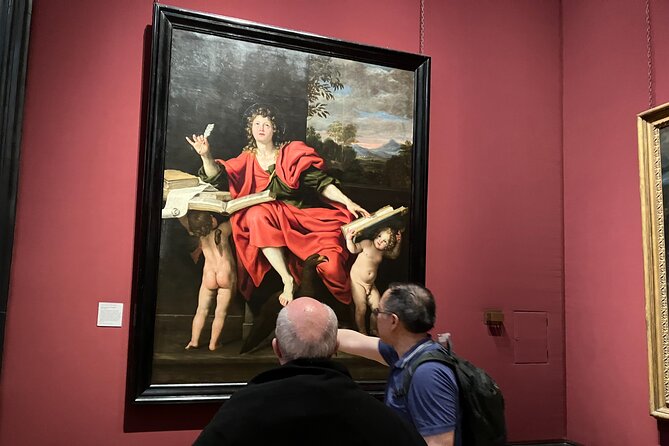
The Old Testament subjects give the tour a wider frame. Stories of Joseph, Moses, and David are not isolated pictures. They form part of the visual language that later artists used when painting the life of Jesus and other Christian subjects.
You might spend time looking at how a painter presents authority, suffering, faith, or betrayal. Even when you already know the story, small choices in posture or expression can change the emotional force of the scene. The value here comes from slowing down and asking questions that you might skip during an independent museum visit.
The Jesus paintings provide the central thread. Birth scenes may lead to questions about the people gathered around the child. Miracle scenes can prompt discussion about who is watching and how the painter shows belief or doubt. Depictions of the crucifixion and resurrection bring the tour into more serious territory, with attention to how artists present sorrow, sacrifice, and hope.
This format should suit you if you already know the Bible and want to see familiar stories from a different angle. It is also useful if you know little about art but want a clear subject to help you focus inside a large museum.
Apocryphal stories and the question of what counts as biblical
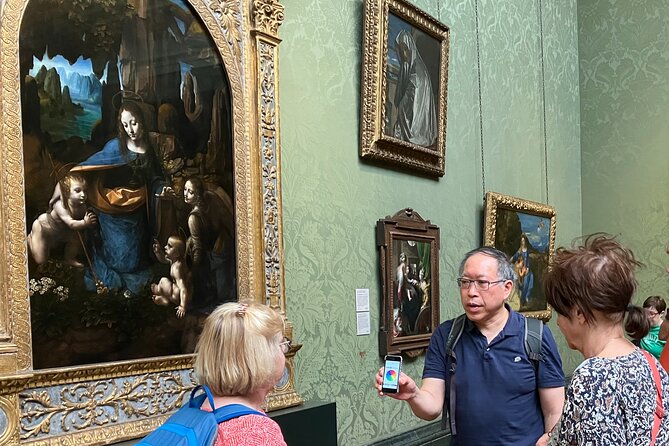
One of the more distinctive parts of the experience is its treatment of apocryphal material. These are stories included in some Bibles but left out of others, and artists have sometimes painted them even when the stories are not part of every Christian tradition.
That gives the discussion a welcome layer of care. You are not simply told that every painted event appears in the Bible in the same form. Instead, you can consider how religious art draws from Scripture, church tradition, legend, and other writings.
The tour also includes legends linked to biblical figures. This distinction matters, especially if you want to understand the difference between a direct biblical account and a later story that became popular in Christian art. David’s approach, as described through the experience, is to explain the background and use Scripture to support the discussion.
If your faith tradition treats biblical books and apocryphal texts differently, you may find this part especially useful. It gives you room to compare sources rather than flattening them into one account.
A few more London half days worth a look
- Stonehenge, Windsor Castle, and Bath from London
★ 4.5 · 18,662 reviews - London Big Bus Hop-On Hop-Off Tour with Optional River Cruise
★ 3.5 · 10,803 reviews - London Small Group Tour of Historical Pubs
★ 5.0 · 10,422 reviews - Stonehenge, Windsor Castle and Bath with Pub Lunch in Lacock
★ 4.5 · 7,402 reviews
Leonardo, Rembrandt, Caravaggio, and more
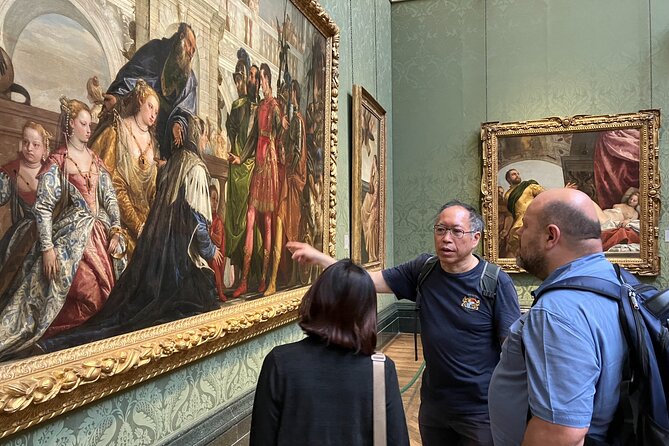
The National Gallery has plenty to offer beyond the religious theme, and the tour can include major artists when the timing and group interest allow. Leonardo da Vinci, Rembrandt, Caravaggio, Michelangelo, Van Gogh, and Monet are all named possibilities.
Leonardo, Rembrandt, and Caravaggio fit naturally into a Bible-focused visit because their religious paintings are so important to European art. Their works can show you how artists used light, expression, composition, and human drama to make sacred stories feel immediate.
Michelangelo adds another link to the larger tradition of Christian art. Van Gogh and Monet provide a useful change of pace if the group has time to look at non-biblical work. You may also see famous Greek myths and historical events, which helps place religious painting beside other subjects that shaped European art.
Do not book this expecting a fixed checklist of every named artist. The museum regularly moves paintings and removes them from display. The tour’s strength is the guided interpretation, not a promise that one particular canvas will be on the wall that day.
A three-hour pace inside a large museum
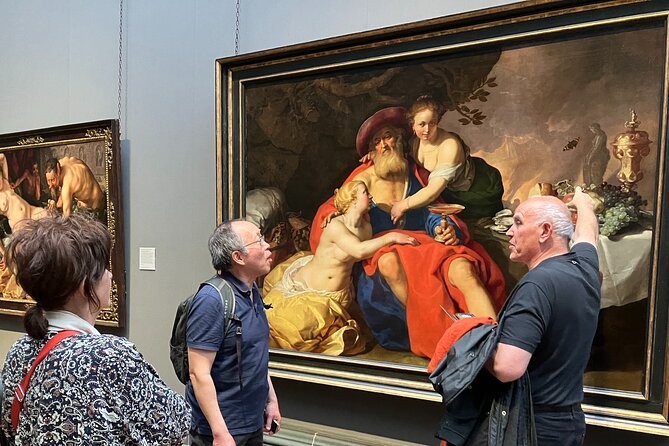
The stated duration is about three to four hours, with the main tour described as three hours. That is long enough for a serious look at several paintings, but short enough to fit into a full London sightseeing day.
You will wind through different galleries rather than remain in one room. That movement helps you see a range of styles and subjects, though it also means the pace may change depending on where the selected works are located and how much discussion the group wants.
David’s style is interactive. You should expect questions, conversation, and explanations rather than a one-way speech from start to finish. The strongest fit is for someone who enjoys asking questions and thinking aloud about what a painting shows.
The small group helps here. With a maximum of 10 people, the guide has a better chance of responding to individual interests than on a large museum walk. It also means the discussion can spend more time on a particular painting if the group is engaged.
Folding stools are available on request. If standing for long periods is a concern, ask for one before the tour or when arranging your booking.
The value of $76.51
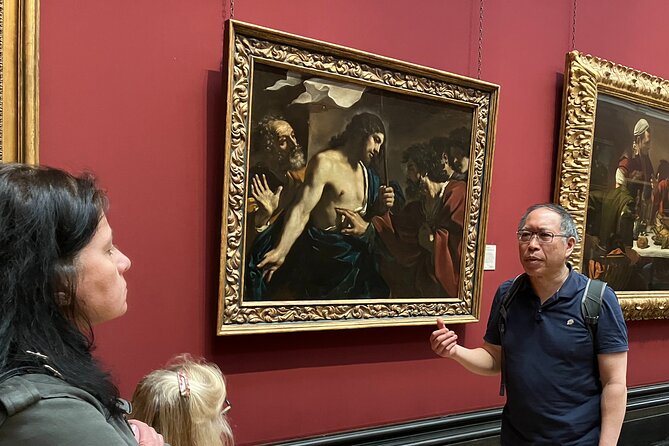
At $76.51 per person, this is not a cheap way to enter the National Gallery. That comparison needs one important correction: gallery admission itself is free, and you should book a free entry ticket separately through the National Gallery’s website.
So the price is paying for the guided experience, the Bible-focused structure, and the chance to discuss the works with David in a group capped at 10. If you would be happy reading labels and following your own route, you can visit the museum without this cost.
I see better value here if you have a strong interest in Christian theology, Bible stories, or the way religious art developed. The tour gives you a clear framework in a museum that can otherwise feel huge and unfocused. It can also save you from walking past paintings that seem familiar without noticing why they matter.
The price may be harder to justify if you want a standard art-history tour, a broad survey of the whole National Gallery, or a guaranteed list of specific masterpieces. The route is shaped by display conditions, time, and group interest, so flexibility is part of the deal.
What the guide’s style adds
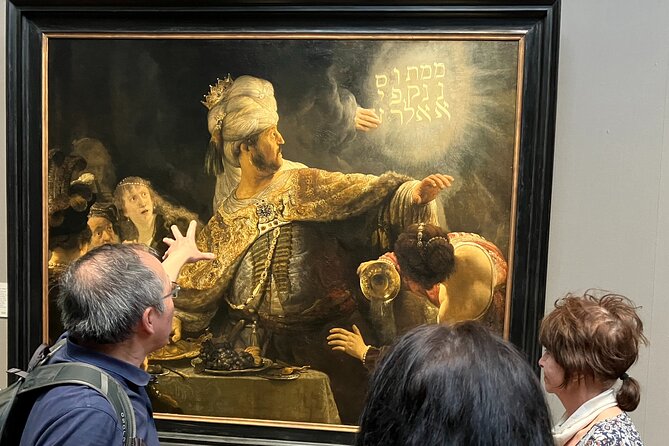
David’s appeal is his energy and personal involvement. He brings paintings to life, explains dates and events, and adds background about the stories behind portraits and other works. His approach also includes humor and active listening, which can keep a long museum visit from becoming a lecture.
The central feature is the link between looking and reading. You are encouraged to examine the image, then consider the related Scripture and the artist’s choices. That back-and-forth can make the visit feel like both a museum lesson and a group Bible study.
You should still expect differences in interpretation. A painting can reflect a particular church tradition, period, or artistic convention. The tour gives you a way into those questions, but it is not a substitute for every possible theological viewpoint.
The experience is best for people who want discussion, not just facts. If you prefer to move quietly from room to room at your own pace, the scheduled group format may feel restrictive.
Who should book this National Gallery experience
I would recommend it most strongly to:
- Christians who already know Bible stories and want to explore how artists pictured them
- People interested in the difference between Scripture, legend, and apocryphal writing
- Museum visitors who enjoy discussion and questions rather than a silent self-guided route
- First-time National Gallery visitors who want a clear theme to organize the collection
- Small groups looking for an art-based religious study in central London
Families and mixed groups may also find it worthwhile if everyone is comfortable with theological discussion. The tour is offered in English, and most people can participate. Service animals are allowed, and the location is close to public transportation.
It may not be the right choice if you want a general tour of the National Gallery, a private guide, or a fixed route built around particular paintings. Since works move on and off display, you need to accept some uncertainty about what you will see.
Booking details that affect your afternoon
Confirmation arrives within 48 hours of booking, subject to availability. The experience is often booked about 39 days ahead, so planning early is sensible if your London dates are fixed.
Book the National Gallery’s free entry ticket separately. The supplied instructions say that any time will suffice, but you should still follow the museum’s current booking process and arrive ready for the 1:00 pm meeting time.
Free cancellation is available if you cancel at least 24 hours before the start time. Cancellations or changes made within 24 hours are not accepted for a refund, and the cut-off uses London local time.
The tour is offered in English and accepts mobile tickets. Install the Viator app because important messages may be formatted for viewing there.
Should you book it?
Book this tour if you want to see the National Gallery through a clearly Christian lens and enjoy active discussion. David’s enthusiasm, the small group, and the links between paintings and Scripture give the visit a purpose that a standard museum stroll may lack.
Think twice if your main goal is to see a specific Leonardo, Rembrandt, or Caravaggio. Paintings can be moved or taken off display, and the optional works by Van Gogh, Monet, Michelangelo, Greek myth subjects, and historical scenes depend on time and interest.
For the right audience, the $76.51 fee buys more than museum access. It gives you a focused three-hour conversation about how artists have pictured faith, doubt, suffering, power, and hope. If that is the kind of London afternoon you want, this is a thoughtful choice.
FAQ
Where does the tour meet?
The tour meets at the George Washington statue at 44 Trafalgar Square, London WC2N 5DN, outside the National Gallery.
What time does the tour start?
The start time is 1:00 pm.
How long does the experience last?
The experience lasts about three to four hours, with the main gallery visit described as three hours.
Where does the tour end?
The activity ends back at the meeting point at the George Washington statue.
Is National Gallery admission included in the price?
The National Gallery has free admission, but you must book a separate free museum entry ticket. The instructions provide the National Gallery booking link and state that any entry time will suffice.
How many people can join the tour?
The maximum group size is 10 people.
Is the tour offered in English?
Yes. The tour is offered in English.
Is the experience accessible for service animals?
Yes. Service animals are allowed, and most people can participate. Folding stools are available on request.
Can I cancel for a full refund?
Yes, if you cancel at least 24 hours before the experience start time. Cancellations and changes made less than 24 hours before the start time are not accepted for a refund.
Recently added around London
- London’s Crown Secret: Self-Guided Royal Puzzle Quest★ 4.5 · 8 reviews
- Postcard London★ 5.0 · 8 reviews
- Private Tour: Downton Abbey London Locations by Taxi★ 5.0 · 8 reviews
- Windsor Castle, Stonehenge & Roman Baths Private Tour★ 4.5 · 8 reviews
- Cotswolds Private Driving Tour from London★ 5.0 · 8 reviews
- Skip-the-line London Westminster Abbey and City of Westminster Kid-Friendly Tour★ 5.0 · 8 reviews
- A Silent Disco Adventure in London★ 5.0 · 8 reviews
- London: National Gallery English Audio Tour with free fast Entry★ 3.0 · 8 reviews
Museums, compared.

Tower of London and Crown Jewels Exhibition Ticket
Read our review →
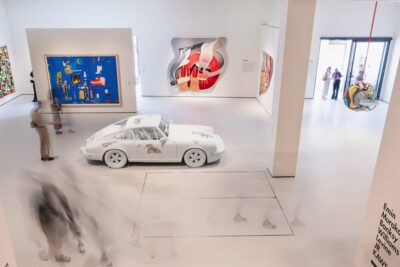
Official tickets: Moco Modern & Contemporary Art Museum
Read our review →
British Museum London Guided Tour Semi-Private 8ppl Max
Read our review →
The British Museum London – Exclusive Guided Museum Tour
Read our review →

Skip the Line: Liverpool Beatles Museum – The perfect tribute to the Beatles
Read our review →Browse the lists this tour appears in