
Reviewed · LIVERPOOL TOURS
Liverpool Slavery Walking Tour – Commercial Side
Liverpool’s slavery story is not confined to a museum. It is built into the city’s churches, banks, docks, cotton offices, monuments, and grand civic buildings. This two-hour walk follows the commercial machinery behind the trade, showing how merchants, bankers, shipowners, and traders helped turn Liverpool into a wealthy port.
I like the route for two reasons: it connects familiar streets with hard-to-see history, and it keeps the focus on buildings and places you can still visit. Guides Edward and Tommy Allen also bring in useful side stories, from old Liverpool streets to local names and wartime damage. The main drawback is that the tour moves quickly, with roughly ten minutes at most stops, and several locations are viewed from outside.
Key points to know before booking
- The route starts at the Liver Building and ends at Liverpool’s Old Dock, making it easy to pair with the waterfront and the International Slavery Museum.
- You follow the money as well as the ships, with stops tied to banking, cotton, insurance, shipping, and merchant wealth.
- The group is limited to 12 people, which should make it easier to hear the guide and ask questions.
- Guides including Edward and Tommy Allen use old photographs and local stories, adding detail to buildings you might otherwise walk past.
- The tour covers difficult material in a city setting, so expect historical explanation rather than a theatrical reenactment.
- The $38.19 price is reasonable if you want a guided city walk, but less attractive if you prefer to spend most of your time inside museums.
Why Liverpool’s commercial past matters
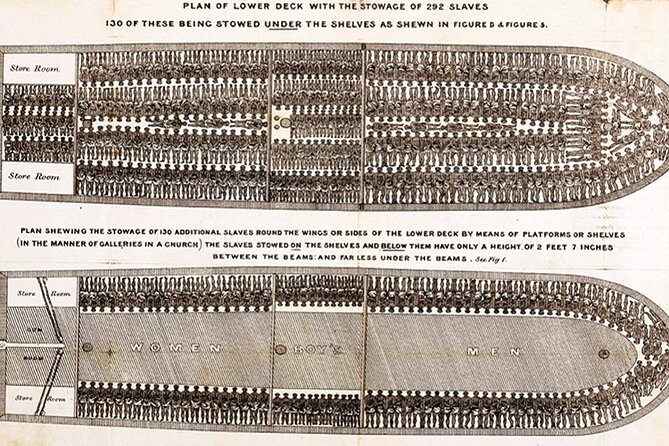
Liverpool’s connection to slavery was not only about ships carrying enslaved people. The city also handled finance, cotton, shipping, repairs, insurance, and trade with America. That wider system is the subject here.
You begin at the Liver Building, near the Pier Head, then work inland through the old business quarter before returning toward the docks. The route helps you see how commercial power spread through the city. A church, a bank, a cotton exchange, and a dock each tell part of the same story.
I find this approach useful because it avoids treating slavery as a distant subject with no link to daily city life. You see the streets where merchants worshipped, the offices where money changed hands, and the docks where ships were loaded and repaired.
The subject is serious. The walk does not turn it into entertainment, and you should be ready for discussion of the forced movement and exploitation of enslaved people. At the same time, the guides add other Liverpool details, which can give the walk a wider sense of place.
More Walking Tours in Liverpool
- A Walk Through Time: History of Liverpool Walking Tour
★ 5.0 · 911 reviews - Liverpool Ghost Walking Tour
★ 5.0 · 862 reviews - Beatles Famous Walking Tour Of Liverpool- Fully Guided
★ 5.0 · 751 reviews
Our Lady and Saint Nicholas Church: merchants at worship
The first stop is Our Lady and Saint Nicholas Church and its garden. Many slave traders worshipped there, and some were buried in the churchyard.
This is a strong opening because it places the people involved in the trade inside an ordinary civic and religious setting. You are not simply hearing a list of names. You are looking at a place where merchants lived part of their public lives, surrounded by other townspeople and institutions.
The stop lasts about ten minutes and includes admission. Because the church and garden are active historic places, the guide’s explanation is important. You will learn about the lives of traders connected with the site, not just their business activities.
Banks and cotton offices in the old city
The next group of stops explains how trade became wealth. At the Hargreaves Building, you hear about cotton broker and banker William Brown, who founded the Bank of Liverpool and Brown & Shipley Merchant Bankers.
The focus then moves to the Cotton Exchange Building. Liverpool was once a world leader in cotton trading, and the guide explains how cotton built the fortunes of the city and its merchants. You also learn about the Liverpool Rules, which still exist today.
These stops are valuable if you want to understand the business side of slavery. Cotton was closely tied to plantation economies in America, and Liverpool’s merchants profited from the buying, selling, financing, and shipping connected with it.
You should expect to view the buildings from the outside. The Hargreaves Building has no admission charge, and the Cotton Exchange stop is also listed as free, but the tour is not presented as an interior architectural visit. The guide’s account is what connects the stonework to the trade.
Tithebarn Street and Liverpool’s Confederate network
At Tithebarn Street, the route takes in Rumford Place and the former Confederate Embassy connected with the American Civil War.
Here, the story shifts from slavery-era commerce to Liverpool’s later role in supporting the Confederacy. You learn how Bulloch established a spy network in Liverpool and how Confederate armies received weapons and ships.
This is an unusual part of the walk. It shows that Liverpool’s American connections continued beyond the earlier Atlantic trade, with local business and shipping networks involved in a major international conflict.
The stop lasts about ten minutes. Admission is included, and the location adds variety to the route. Instead of hearing only about 18th-century merchants, you see how Liverpool’s commercial ties with the United States continued to shape the city.
A completely different sort of day out in Liverpool:
- Beatles Magical Mystery Tour
★ 5.0 · 9,266 reviews - Liverpool: “Blue Route” – City & Beatles Tour
★ 5.0 · 8,562 reviews - Liverpool City Sights Hop On Hop Off City Tour – 24hr Ticket
★ 4.5 · 2,555 reviews - The LFC Stadium Tour
★ 5.0 · 1,548 reviews
Exchange Flags and the Nelson Monument
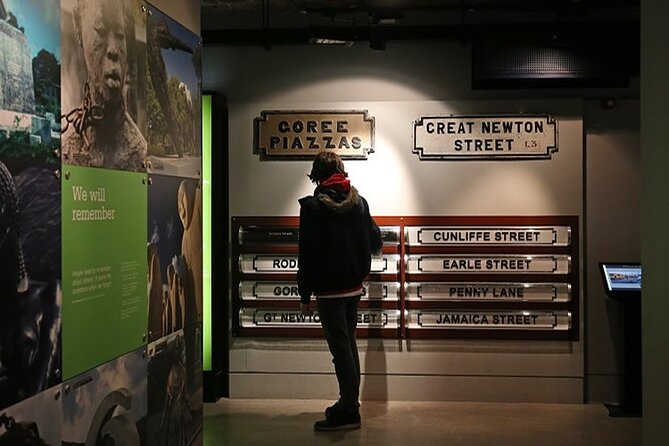
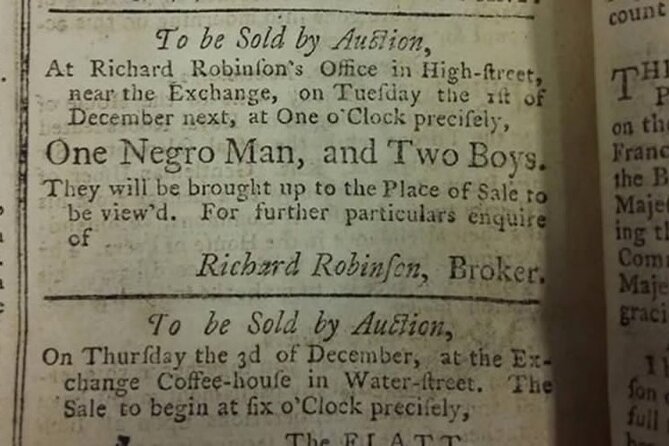
Exchange Flags was the original exchange where traders carried out business. It was also connected with the sale of enslaved people, making it one of the most confronting stops on the route.
The guide also explains the Nelson Monument and its meaning. This gives you a chance to consider how public monuments present national pride, naval power, and commerce, while nearby places reveal the human cost of the systems that made such wealth possible.
The stop lasts ten minutes and includes admission. Allow yourself time to look around rather than treating it as just another address. The value is in seeing how trade took place in a public urban setting, not in an isolated warehouse far from the city center.
Sir Alfred Lewis Jones and the shipping economy
The memorial to Sir Alfred Lewis Jones introduces a later shipping figure. You learn how he gained his fortune and secured a monopoly connected with the Elder Dempster Shipping Line.
The guide also covers Jones’s philanthropy and his funding of the School of Tropical Medicine. This makes the stop more complex than a simple account of wealth. You see how money made through shipping could later support public and educational institutions.
That does not erase the source of the wealth. Instead, it gives you a clearer picture of how commercial fortunes were converted into civic influence, buildings, schools, and reputations.
The stop lasts ten minutes and includes admission. It is a useful reminder that Liverpool’s story includes both private profit and public giving, and that the two were often closely linked.
Water Street and the old banking houses

Liverpool Water Street takes you into the banking and business district of the 18th and 19th centuries. The guide points out the Martins Bank Building and the old Bank of Liverpool Building, explaining how bankers profited from American trade and used that money to build elaborate banking houses.
This is one of the best places to pay attention to the buildings themselves. Grand façades were not decoration alone. They projected stability, power, and trust, all vital qualities for banks handling international commerce.
Admission is not included at this stop. The experience is mainly an outdoor walk and explanation, so wear shoes that are comfortable for pavement and cobbles. The route is compact, but fifteen stops in two hours means you will be on your feet almost the whole time.
Dale Street and old Liverpool lanes
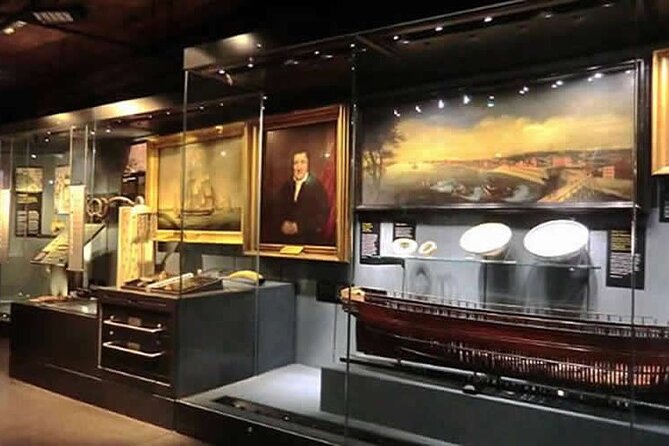
Dale Street offers some of the route’s most atmospheric walking. Parts of the 18th-century street pattern survived the Victorian widening of the road, leaving narrow streets and passageways that hint at older Liverpool.
You also visit a public house that existed in 1726 and may have been used by early slave traders. The description allows time for a drink, but that is not presented as a required part of the tour. If you stop, remember that it will use some of your limited time.
I like this section because it moves beyond major monuments. Narrow lanes and old buildings can show how a working commercial city felt at street level. They also help you picture the distance between grand banking houses and the everyday urban world around them.
Admission is included at this stop. The route’s uneven historic surfaces may not suit everyone equally, although most people can participate and service animals are allowed.
Castle Street and the first Bank of England branch
Castle Street brings the focus back to merchant buildings and formal city power. You learn how the buildings were linked to merchants and slavery, then see the building that housed the first Bank of England branch outside London.
This is a useful stop for understanding Liverpool’s growing financial importance. A Bank of England branch was not a small local detail. It reflected the city’s role in national finance and international trade.
The stop lasts ten minutes and has no admission charge. You may find the setting easier to appreciate after the earlier explanations of cotton, American trade, and banking. By this point, the route has built a clear chain from port activity to financial authority.
Queen Victoria Monument and the lost castle
At the Queen Victoria Monument, you learn where Liverpool Castle once stood before it was demolished in 1726. The site later became home to St George’s Church, where Liverpool mayors and town councillors worshipped.
This short stop lasts only five minutes. It works as a quick piece of urban history, showing how the city replaced medieval structures with newer civic and religious buildings.
The site also adds an important time layer. Liverpool was not created by 18th-century commerce alone. The commercial city grew over an older settlement, changing its streets, buildings, and public symbols as its wealth increased.
Liverpool Town Hall and public displays of wealth
Liverpool Town Hall, the Mansion House of the city’s Lord Mayor, is one of the route’s most impressive architectural stops. The guide explains how the building was funded and what it was used for.
You also see depictions of African people on the building’s frieze. That detail deserves careful attention. It shows how Africa was represented in a grand civic setting shaped by the trade and wealth discussed throughout the walk.
Admission is not included here. The emphasis is on the exterior, architecture, and historical explanation. If you want a longer look inside the building, you should plan separate time after the walk, as the tour allows only about ten minutes.
Graving Dock: the work after the voyage
The graving dock stop explains what happened when a slave ship returned to Liverpool after its terrible journey from Liverpool to Africa, then to America, and back again.
Such ships were often in poor condition and needed refitting. The original graving docks from the mid-1700s remain in Liverpool, giving you a physical place to consider the labor and maintenance behind the voyages.
This is a valuable correction to the usual port story. Ships did not simply arrive, unload, and disappear. They required repairs, workers, materials, and money before sailing again.
The stop lasts about five minutes and includes admission. Because the time is short, listen for the basic sequence and ask questions if the group allows. The dock works best as part of the wider route rather than as a long standalone visit.
Salthouse and Canning Docks
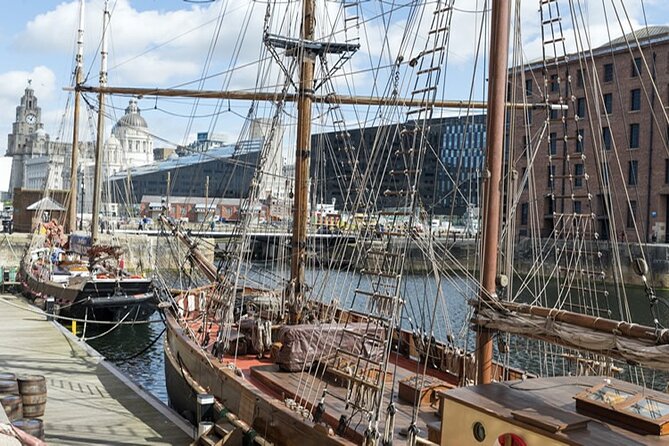
At Salthouse Dock, you see the Salthouse and Canning Docks, built in quick succession after Liverpool’s Old Dock to handle the fast-growing trade with America.
Parts of the docks were built with large stones from Liverpool Castle. You are also walking on cobbles and stones used by merchants and ship workers handling cargo.
This is one of the route’s most direct links between physical infrastructure and commercial growth. The docks were not just scenic waterfront features. They were working spaces built to manage expanding trade.
The stop lasts about five minutes and includes admission. You may want to pause for a moment and look at the surfaces beneath your feet. The setting gives the subject a physical quality that an indoor lecture cannot provide.
Thomas Steers Way and the Old Dock
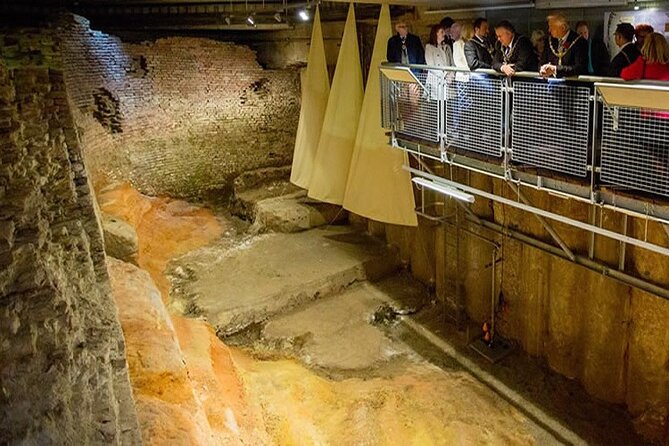
The final waterfront section takes you to the place where Thomas Steers built Liverpool’s Old Dock in 1715. This dock helped Liverpool use its position on the map and expand its African and transatlantic trade.
You can see part of the old dock through an observation window set into the ground. A guided visit to the actual dock may be possible by prior arrangement, but it is not described as part of the standard walk, so you should not assume it will be included.
This is a fitting end because the dock represents the infrastructure that allowed Liverpool’s commercial system to grow. You finish at 2 Custom House Place, at the site of the Old Dock in the L1 shopping center.
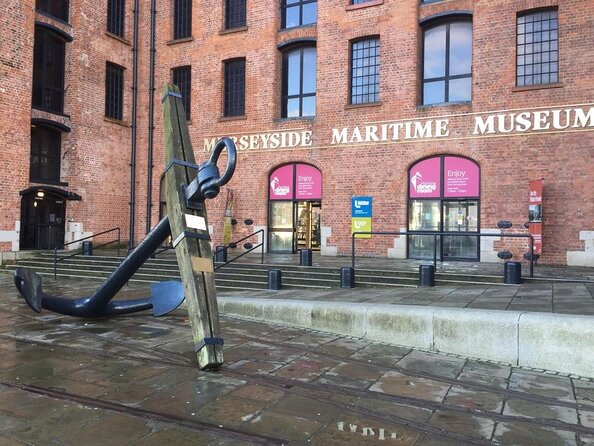
The stop is free and lasts about five minutes. From here, you can visit the nearby Merseyside Maritime Museum, which houses the International Slavery Museum. The museum can be visited free of charge after the tour, making it a sensible way to continue the subject with more time and indoor displays.
James Street and the final walk through Victorian Liverpool
James Street takes you through back streets lined with classic Victorian architecture and old banking houses. The guide also points out a modern sculpture that evokes the slave house on Goree Island.
This final section links older commercial buildings with a modern reminder of the places where enslaved people were held. It is a good closing note because it brings the story back to human suffering after so much discussion of finance, buildings, and trade.
The stop lasts about ten minutes and has no admission charge. By now, you will have walked through much of Liverpool’s central commercial quarter, so the guide’s comments can help you connect details seen earlier rather than presenting one isolated site.
Guide style, group size, and pace
The tour is offered in English and has a maximum group size of 12. That is a useful limit for a walking tour packed with short stops. You should be able to hear the guide and ask questions without the experience feeling like a large street lecture.
Edward is described as using old photographs to show how Liverpool looked in the past. Tommy Allen is noted for bringing in local details and answering questions beyond the planned route. One guide even adds connections involving Paul McCartney’s father, Freddie Mercury’s inspiration for the name Queen, and Second World War damage.
These extra stories are not the main subject, but they can help you get your bearings in Liverpool. The strongest part of the guiding is the ability to point out things you may have walked past many times without noticing.
The pace is the main practical concern. Fifteen stops in approximately two hours leaves little time at each location. If you want long visits inside buildings, this is not the right format. If you like a brisk city walk with a clear theme, the pace should work well.
Is $38.19 good value?
At $38.19 per person, the tour costs more than a self-guided walk but gives you a route, context, and a local voice. The value comes from the connections between places, not from paid attractions. Most stops are outdoor explanations, with admission included at some locations and no charge at others.
I think the price makes sense if you want a focused introduction to Liverpool’s commercial role in slavery and American trade. You are paying for interpretation, not a long museum visit or a private vehicle.
The small group helps the value. With only up to 12 people, you should have a better chance to ask about a building, family name, or street that catches your attention. The free International Slavery Museum nearby also lets you extend the subject without adding an admission cost.
Who should book this Liverpool walk?
I would choose this tour if you have already seen some of Liverpool’s famous waterfront sights and want to understand the city beyond music and football. It suits history fans, architecture lovers, local residents who want fresh context, and anyone interested in the links between Britain, America, shipping, and finance.
It is also a good choice if you prefer active learning. You are not sitting in one room. You move through churches, streets, banks, monuments, and docks while the guide builds the story around you.
I would think twice if you want a highly emotional memorial experience centered only on the lives of enslaved people. This walk focuses strongly on the commercial side, including merchants, bankers, shipping, cotton, and civic wealth. Pairing it with the International Slavery Museum would give you a fuller account.
The tour requires good weather. If poor weather cancels it, you are offered another date or a full refund. You can cancel for a full refund up to 24 hours before the start time, but late cancellations and changes are not accepted.
Should you book it?
Book it if you want to see how Liverpool’s wealth was built and how slavery reached into ordinary city institutions. The best features are the compact central route, the small group, the old photographs, and the guides’ ability to add local stories.
You should plan to walk steadily, listen closely, and save time for the International Slavery Museum afterward. For $38.19, this is a useful, serious introduction to Liverpool’s commercial past, especially when you want more than the standard waterfront highlights.
FAQ
Where does the Liverpool Slavery Walking Tour begin?
The tour begins at the Liver Building, Liver Building, Pier Head, Liverpool L3 1HU, UK.
Where does the walking tour end?
It ends at 2 Custom House Place, Liverpool L1 8LZ, at the site of Liverpool’s Old Dock on Thomas Steers Way in the L1 shopping center.
How long does the tour last?
The tour lasts approximately two hours.
What language is the tour offered in?
The tour is offered in English.
How many people can join the tour?
The experience has a maximum group size of 12 people.
Is admission included at every stop?
No. Some stops include admission, while others are free or have no admission included. Liverpool Town Hall and Liverpool Water Street are listed as having admission not included. The route also passes the Merseyside Maritime Museum and International Slavery Museum, which can be visited free of charge after the tour.
Is the tour suitable for most people?
Most people can participate, and service animals are allowed. The tour takes place on city streets, cobbles, and historic paths, so you should be prepared to walk for about two hours.
Can I cancel for a full refund?
Yes. You can cancel at least 24 hours before the local start time for a full refund. Cancellations or changes made less than 24 hours before the start time are not accepted.
Recently added around Liverpool
- Liverpool Football Club Museum Entry★ 5.0 · 10 reviews
- The Liverpool Pass®: All top attractions inc. Hop-On Hop-Off Bus Tour | 2-Days★ 4.5 · 11 reviews
- 2-Hour Private Liverpool Walking Tour★ 5.0 · 12 reviews
- Private Liverpool Culture Walking Tour, Ghosts & Two Cathedrals.★ 4.5 · 12 reviews
- Liverpool Film and Music – 2 hour Private Walking Tour★ 5.0 · 12 reviews
- Liverpool’s Best Craft Drinks & Pub Food With A Local: Private & Personalized★ 5.0 · 12 reviews
- Liverpool Ultimate Beatles Ticket To Ride Half-Day PRIVATE Tour★ 5.0 · 12 reviews
- 4 Hour Private Beatles Tour in Liverpool★ 5.0 · 13 reviews
Liverpool Tours, compared.
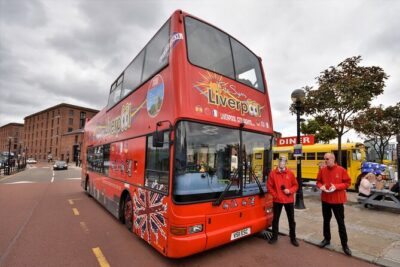
Liverpool City Sights Hop On Hop Off City Tour – 24hr Ticket
Read our review →

Private 3-Hour Guided Beatles Classic Tour of Liverpool
Read our review →
Browse the lists this tour appears in