
Reviewed · JACK THE RIPPER TOURS
London Jack The Ripper Guided Walking Tour
Jack the Ripper’s story is best understood on foot, where narrow streets, old brick houses, and church spires help explain how Victorian Whitechapel looked and felt. This two-hour East London walk visits murder locations and lesser-known corners that a bus cannot reach.
I like the use of original photographs and police reports, which lets you compare today’s streets with the places shown in 1888. I also like the attention given to the five victims, the local architecture, and daily life in Whitechapel, rather than treating the killer as the only character in the story.
The main drawback is group size. The tour can include up to 36 people, and a large group may be hard to gather around narrow streets or hear clearly when the guide has to project their voice.
Key points to know before you book
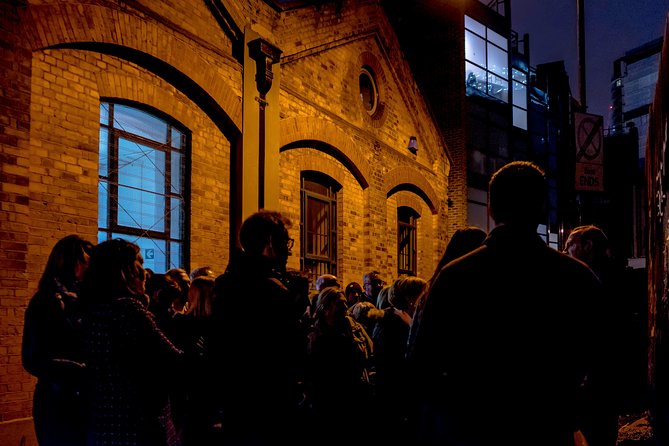
- The walk begins at Aldgate East Station and finishes at Mitre Square, close to Aldgate Underground Station.
- Spitalfields, Christ Church, and Brick Lane provide the main setting for the two-hour route.
- Guides including Jeremy, Angie, Philip, and Jackie are praised for clear storytelling, humor, passion, and careful handling of sensitive material.
- Original crime-scene photographs, police reports, and press reports add useful evidence to the theories.
- The five victims receive proper attention, along with the suspects, investigation, and social conditions of 1888.
- A free 194-page ebook gives you something substantial to read after the walk.
- The listed price is $0.00, though you should confirm the current price and booking terms before paying.
Why this Jack the Ripper walk works better than a bus tour
The strongest feature here is the simple act of walking from place to place. Jack the Ripper’s crimes are tied to a compact part of East London, and the route lets you see the relationships between streets, alleys, markets, churches, and squares.
A bus can show you a broad slice of London, but it cannot take you through the smaller lanes or pause beside a specific building while the guide explains what happened there. On foot, the story becomes a sequence of locations rather than a collection of facts.
You also get a useful sense of change. Modern shops, roads, and buildings have replaced some of the original scenes. That can be disappointing if you expect every murder site to look untouched, but the change is part of the lesson. The original photographs help bridge the gap between present-day East London and the streets of 1888.
The guides bring different personalities to the walk. Jeremy is repeatedly singled out for strong storytelling, easy group management, humor, and his ability to involve younger participants. Angie is described as deeply passionate about the subject and especially good at explaining the story with energy. Philip uses light humor carefully, while Jackie is praised for clear enthusiasm.
That variety matters because the subject is grim. A guide who simply recites dates and gruesome details could make the walk feel flat or tasteless. Here, the better guides balance facts, questions, social context, and occasional humor without losing sight of the people who were killed.
More Walking Tours in London
- Tour for Muggles The Ultimate Harry Potter Walking Tour in London
★ 5.0 · 4,684 reviews - Changing of the Guard Guided Walking Tour in London
★ 5.0 · 1,793 reviews - The Great British Rock and Roll Walking Tour
★ 5.0 · 1,371 reviews
Starting at Aldgate East Station
The meeting point is Aldgate East Station in London E1. This is a practical starting place because the route remains in East London and ends near Aldgate Underground Station, so you do not need to retrace the entire walk to get back onto public transport.
Bring a mobile ticket, since the experience uses mobile admission. The tour has no included travel to or from the meeting point, so you are responsible for reaching Aldgate East and arranging your onward journey from Mitre Square.
At the start, your guide sets up the central mystery: the police investigation, the main suspects, the five victims, and the evidence that has kept the case alive for more than a century. The tour is not only about identifying a possible killer. It also explains the conditions in which the crimes took place and why the investigation became such a lasting public obsession.
You should expect the subject matter to be dark. The tour deals with murder and the circumstances surrounding the victims. The guides are praised for treating that material with care, but this is still not a light sightseeing walk. Families can enjoy it, and Jeremy is noted for handling younger participants well, but you should decide in advance if the theme suits everyone in your group.
Spitalfields Market and the opening story
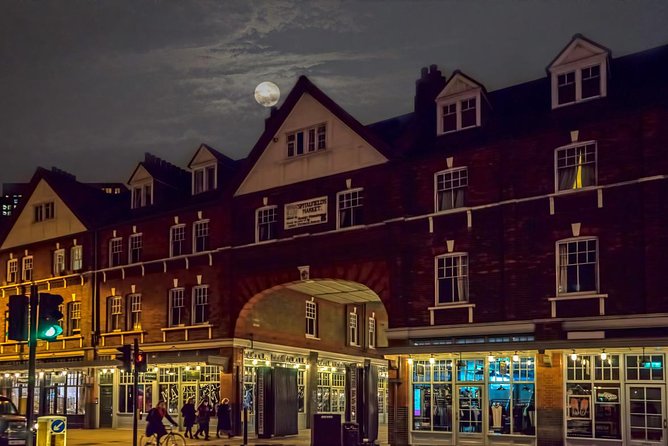
Spitalfields Market serves as the main base for the tour. The surrounding area gives you an immediate sense of East London’s mix of old buildings, modern businesses, and busy public spaces.
Your guide spends about two hours covering the wider historic district, with several stops along the way. The route includes places connected with the murders, police work, suspects, and the press reports that helped turn the case into a national sensation.
The value of this part is the setting. You are not hearing the story in a museum room removed from the streets. You are standing in the district where the events unfolded, while the guide uses period images to show how different the area once appeared.
The original photographs are especially useful here. They provide visual evidence of former streets and buildings, and they help explain why some locations are difficult to recognize today. You might find that a modern structure now occupies a site that once had a very different appearance. That is one reason the photographs are more than a decorative extra.
The tour also covers the victims instead of focusing only on the unknown murderer. That is an important distinction. True crime can easily turn a killer into a celebrity, while the people harmed become footnotes. The attention to the five victims gives the story a more responsible center.
You can ask questions as the route progresses and discuss the case with the guide and other participants. If you already know the main theories, this is a good chance to test your assumptions against the evidence presented by the guide.
Christ Church Spitalfields and the Victorian setting
The stop at Christ Church Spitalfields lasts about eight minutes. You stand beneath the church’s soaring spire, a landmark that dominates the area today and would also have been a major reference point when the crimes occurred.
This is a short stop, but it adds useful orientation. A large church landmark helps you picture the district as a network of recognizable points rather than an anonymous maze. The surrounding streets, houses, and public buildings formed the backdrop to ordinary life and police work in 1888.
The church also helps the guide explain the architecture of the area. Several people particularly enjoy learning how local buildings and streets have changed, not just hearing the crime details. If you are interested in London’s built environment, this portion may be more rewarding than you expect.
Do not expect a long interior visit or a separate church tour. The attraction here is the exterior setting and its connection to the surrounding streets. The stop is part of the walking narrative, not a full architectural visit.
More Ripper walks after dark:
- London Jack the Ripper Guided Tour with Ripper-Vision
★ 4.5 · 4,840 reviews - Ultimate Jack the Ripper : Guided Tour of London
★ 5.0 · 1,495 reviews - The Original Jack the Ripper : Guided Tour
★ 5.0 · 1,264 reviews - London Jack The Ripper Small-Group Walking Tour
★ 5.0 · 1,013 reviews
Brick Lane and the streets around it
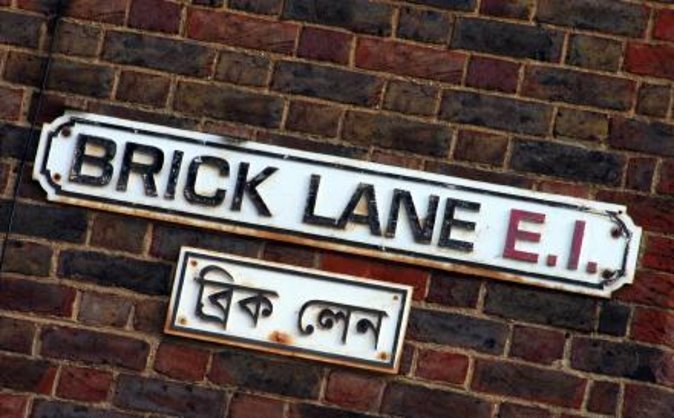
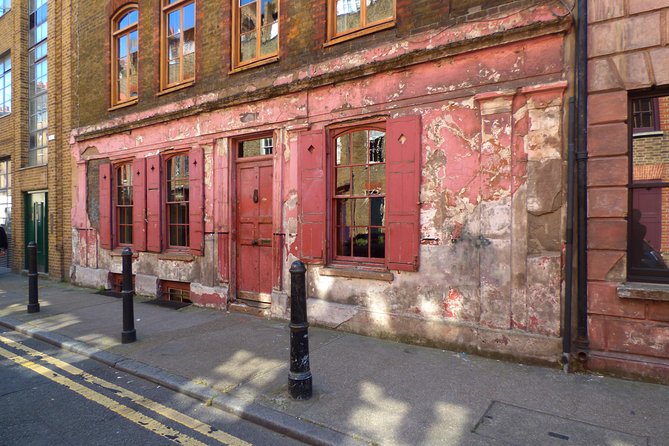
The walk spends about 25 minutes around Brick Lane. The area is lined with sturdy 18th-century houses, many of which have changed less than other parts of East London. This gives you one of the better chances to picture the physical setting of the case.
The contrast between the old houses and present-day Brick Lane is part of the appeal. You see a neighborhood that has developed and changed, yet still holds pieces of the older street pattern and building stock.
Here, the guide connects the locations with the social conditions of the period. The story becomes more useful when you understand the neighborhood as a place where people lived and worked, not simply as a stage for a famous crime. The walk places the murders within Victorian East London and explains how the streets functioned at the time.
You will also hear about the investigation, the suspects, and the press coverage. Original police and newspaper reports give the case a paper trail, while the photographs let you compare past and present. The combination is stronger than a guide relying on dramatic storytelling alone.
Brick Lane can be a difficult place for a large group. The maximum group size is 36, and one participant found a group of roughly 30 to 35 hard to manage because the guide had to call out over the street noise. Smaller groups are easier to hear and easier to position near a location. If your group is large, stay close to the guide and avoid drifting behind at each stop.
Mitre Square and the end of the route
The tour ends at Mitre Square, London EC3A 5DE, close to Aldgate Underground Station. This makes the final stop practical as well as historically important.
Mitre Square provides a clear endpoint for the narrative. After moving through the broader Spitalfields and Brick Lane area, you finish at a specific location linked to the case. The walk does not return to Aldgate East Station, so plan your route from the end rather than assuming you will finish where you started.
The end of the walk is also a good time to ask final questions. You receive a link to the free 194-page ebook, which gives the experience value beyond the two hours on the street. If you want to keep researching the suspects, evidence, and victims, that follow-up material is a useful bonus.
Some of the original sites have been lost beneath newer buildings and modern amenities. This may leave you wishing for more visible remnants, but the guide’s period images and explanations help fill in the gaps. The walk is most satisfying if you value historical reconstruction rather than expecting a preserved crime scene at every stop.
The guides make or break the experience
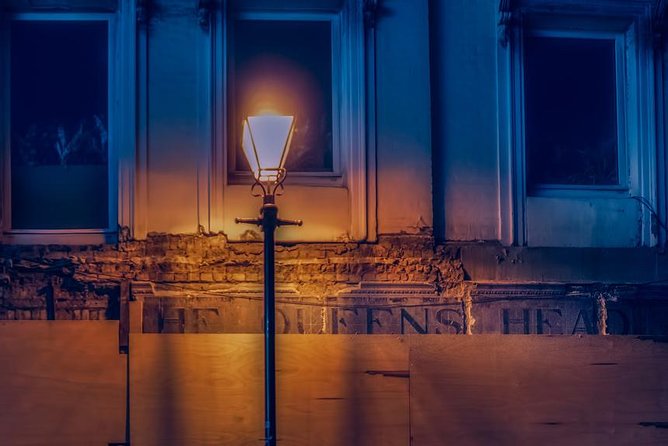
The guide matters greatly on a story this familiar. The central facts are widely known, so the quality of the walk depends on how well the guide separates evidence from speculation and keeps the story moving.
Jeremy receives especially strong praise for being informative, friendly, funny, and comfortable with a mixed-age group. His ability to manage a crowd is useful on a route where people gather in public spaces and need to keep moving.
Angie brings intense personal interest to the subject. Her passion comes through in the way she explains the case, and she is a strong choice for anyone who wants a guide who treats the topic as a serious historical puzzle rather than a simple ghost story.
Philip is noted for adding light humor to a grim subject while still explaining what changed between 1888 and today. Jackie is also praised for her enthusiasm and command of the material.
You cannot choose a specific guide based on the details provided, so it is best to judge the experience as a company offering with several capable storytellers. The common thread is a focus on facts, theories, victims, architecture, and period context.
Group size, pace, and practical comfort
The walk lasts about two hours and covers several locations in East London. You should be ready to remain on your feet for the duration and move between stops at a steady pace.
Most people can participate, and service animals are allowed. The tour operates near public transport, with Aldgate East at the start and Aldgate Underground Station near the finish.
The main practical issue is not the distance but the public setting. Streets may be narrow, busy, or noisy. A large group can make it harder to hear, especially when the guide needs to speak over traffic and city activity. Stand where you can see the guide’s face, stay near the center of the group, and listen for instructions when the route changes.
The evening setting may add atmosphere, and some participants describe the walk as a fun night out, with the option of having a drink afterward. That said, the exact tour time is not stated here, so check your selected departure before planning dinner or other activities.
After a full day of sightseeing, two hours on foot may feel long for children or tired adults. One family found the duration a little demanding after a long day. Schedule it when your group still has energy, rather than treating it as an easy final stop after a packed itinerary.
Price and what you actually receive
The listed price is $0.00. If that price applies at the time you book, the tour offers unusual value: a guided two-hour walk, access to original photographs, police and press reports, opportunities for questions, and a 194-page ebook at no listed charge.
Still, you should confirm the final booking price before relying on the figure. The supplied details do not explain why the price is shown as zero, and travel to and from the tour is not included.
The real value lies in the guide and the research material. The ebook gives you a substantial follow-up resource, while the photographs and reports make the walk more than a series of dramatic anecdotes. If you already know the case well, the local setting and discussion with the guide may be the main benefit. If you are new to the subject, the route provides a clear introduction.
The experience also gives you an easy way to combine true crime with local history. You see Spitalfields, Christ Church, Brick Lane, and Mitre Square in one focused walk, while learning how the streets and buildings relate to the events.
Who should book this walk?
I would choose this tour if you enjoy true crime but also want history, architecture, police work, and social context. The walk suits first-time visitors to the Jack the Ripper story because the guide explains the main people, locations, evidence, and theories in one sitting.
It is also a good match for visitors who prefer walking tours to museum displays. You move through the real district and see how modern London overlaps with the old street plan.
Families can take part, especially with a guide such as Jeremy, who is praised for working well with younger participants. But the murders are a serious subject, so parents should decide if the content is suitable for their children.
I would hesitate if you dislike crowded walking tours, have trouble hearing outdoors, or want every location to look exactly as it did in 1888. Modern construction has erased some original sites, and a group approaching 36 people may feel unwieldy.
Final verdict: a strong choice for place, story, and context
This is a well-shaped London walk for anyone curious about the Jack the Ripper case and the East End streets tied to it. The best parts are the original images, police and press material, attention to the victims, and guides who can make a grim subject clear without turning it into cheap spectacle.
Book it if you want to understand how the locations connect and how much of Victorian East London remains visible today. Choose another activity if you want a quiet, small-group experience or a preserved set of crime scenes. Before booking, confirm the price, meeting time, and group arrangements, then allow enough energy for a full two hours on foot.
FAQ
Where does the Jack the Ripper walking tour start?
The tour starts at Aldgate East Station in London E1, UK.
Where does the tour finish?
It finishes at Mitre Square, London EC3A 5DE, close to Aldgate Underground Station.
How long does the tour last?
The walking tour lasts approximately two hours.
Which places are included on the route?
The stated stops include Spitalfields Market, Christ Church Spitalfields, Brick Lane, and Mitre Square.
Are original photographs included?
Yes. The guide uses original photographs showing locations as they appeared around the time of the murders.
Can I see police and press reports?
Yes. You will be able to peruse police and press reports about the crimes during the experience.
Is an ebook included?
Yes. A link to a free 194-page ebook is included with the tour.
How many people can join the tour?
The maximum group size is 36 participants.
Can I cancel for a full refund?
Yes, if you cancel at least 24 hours before the experience start time. Cancellations within 24 hours are not refunded, and changes within 24 hours are not accepted.
Recently added around London
- London’s Crown Secret: Self-Guided Royal Puzzle Quest★ 4.5 · 8 reviews
- Postcard London★ 5.0 · 8 reviews
- Windsor Castle, Stonehenge & Roman Baths Private Tour★ 4.5 · 8 reviews
- Private Tour: Downton Abbey London Locations by Taxi★ 5.0 · 8 reviews
- Cotswolds Private Driving Tour from London★ 5.0 · 8 reviews
- A Silent Disco Adventure in London★ 5.0 · 8 reviews
- Skip-the-line London Westminster Abbey and City of Westminster Kid-Friendly Tour★ 5.0 · 8 reviews
- Gangster Tour of Soho★ 4.5 · 8 reviews
Jack the Ripper Tours, compared.
London Jack the Ripper Guided Tour with Ripper-Vision
Read our review →
Ultimate Jack the Ripper : Guided Tour of London
Read our review →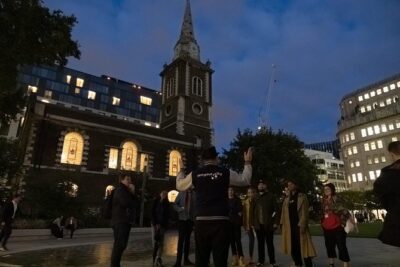

London Jack The Ripper Small-Group Walking Tour
Read our review →

The Original Jack the Ripper Coach Tour of Haunted London
Read our review →
Browse the lists this tour appears in