
Reviewed · LONDON TOURS
London Photography Tour – Private Tour
Central London becomes your photography classroom on this private four-hour walking tour, which links Trafalgar Square, Piccadilly Circus, Whitehall, Westminster, and the London Eye. You are not simply pointed toward famous sights. A Fine Art photographer works with your camera and shows you how to frame, focus, and use light with purpose.
I like two things right away: the one-to-one teaching and the variety of subjects. In one morning, you can photograph lions, statues, red buses, guards on horseback, phone boxes, architecture, river views, and street scenes. Guide Lou also reviews your progress during the walk, a useful touch if you want advice that fits your own camera.
The main drawback is the price: $336.40 per person is a serious spend for four hours, especially if you already know your camera well. The walking route also moves through busy central London, so this is more about learning and collecting strong images than taking a slow, quiet sightseeing stroll.
Key points to know before you book
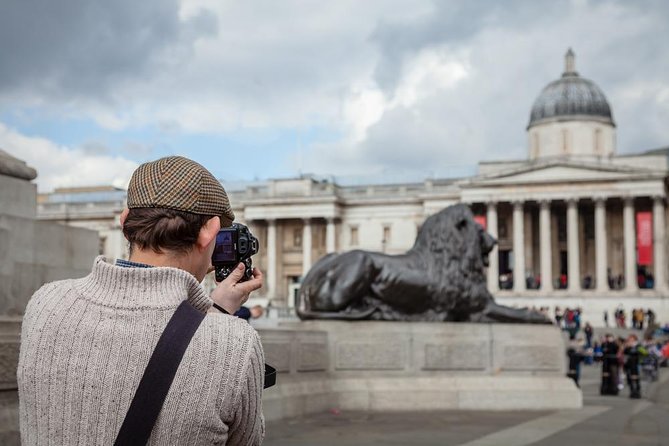
- Trafalgar Square starts the lesson: You work on aperture, depth of field, framing, composition, and the use of light among fountains, statues, lions, entertainers, and the National Gallery.
- Lou teaches to your equipment: The tour suits SLR cameras, other digital cameras, and smartphones, with guidance on settings and handling matched to what you bring.
- Nine major London photo locations fit into four hours: The route includes Leicester Square, Piccadilly Circus, Horse Guards Parade, Big Ben, Parliament Square, Westminster Abbey, and the London Eye.
- You get private attention: Only your own group takes part, so you can ask basic questions freely or focus on more advanced settings.
- The walk produces a useful mix of photographs: Expect chances to shoot architecture, statues, portraits, transport, guards, shopfronts, phone boxes, and river views.
- The tour is tuition first, sightseeing second: You leave with new camera skills, but you should not expect entry into the National Gallery, Westminster Abbey, or other attractions.
A photo lesson that doubles as a central London walk
The route begins at Charing Cross and ends at Victoria Embankment. That makes practical sense for a city tour: you start near Trafalgar Square and finish beside the Thames, with many of London’s best-known sights linked on foot.
The private format matters. You are not trying to keep up with a large group while a guide gives a generic camera talk. You can ask Lou to explain aperture again, request help with a particular camera menu, or spend a little more time on a subject that interests you.
This is also a useful choice for mixed-skill groups. One person can work on basic camera handling while another experiments with exposure, depth of field, or shutter speed. A 17-year-old photographer joined one tour with an SLR, showing how well the format can suit a parent and teenager traveling together.
The pace is active but not rushed. The scheduled stops add up to about four hours, and there can be a short working break to review your progress. One participant also described taking a brief café break, so you may have a chance to rest, though refreshments and lunch are not included.
More photo sessions in London:
- Professional Photoshoot in London Photographer
★ 5.0 · 102 reviews - Private landmarks photoshoot for families and couples
★ 5.0 · 92 reviews - Professional Private Photoshoot in London
★ 5.0 · 63 reviews
Trafalgar Square: start with composition and light
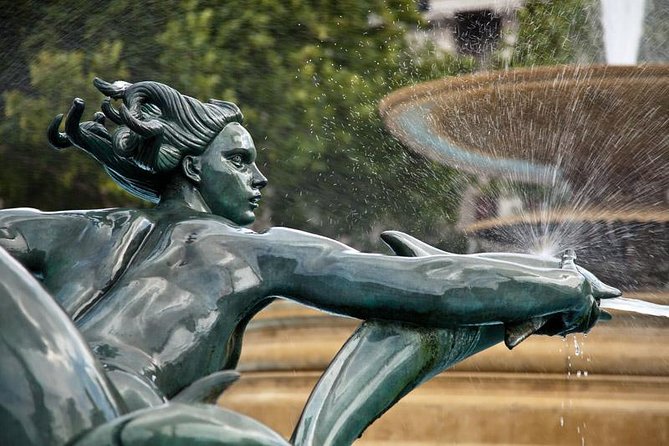
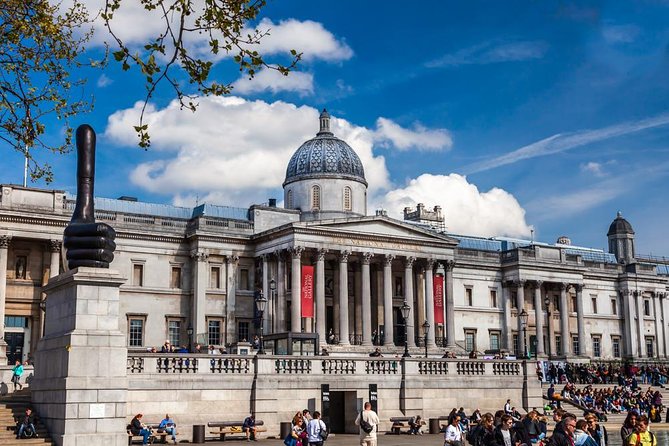
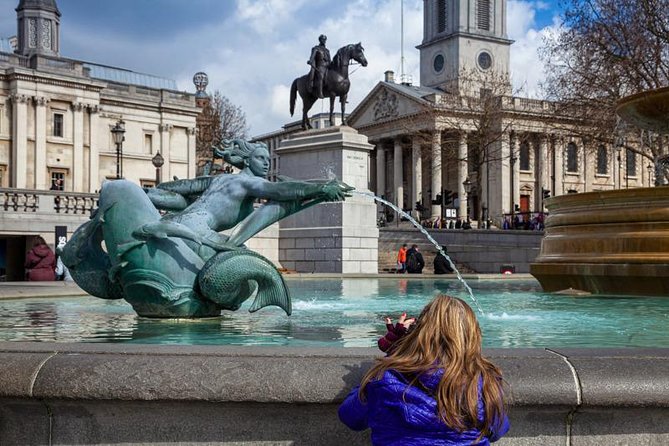
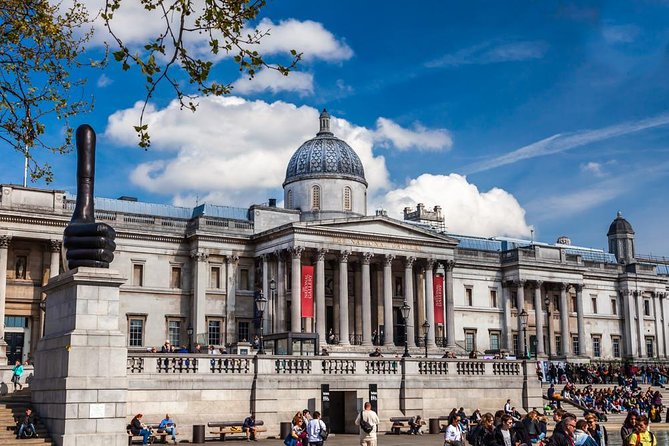
Trafalgar Square is an excellent opening classroom because it gives you many different subjects within a small area. You can frame the Landseer lions, fountains, statues, the National Gallery, street entertainers, and pavement drawings without needing to search for a picture.
Here, you begin with the foundations: aperture, depth of field, light, lens choice, framing, and composition. The goal is not just to photograph a famous place, but to decide what deserves attention in the frame and what should be left out.
The long view toward Whitehall gives you a chance to work with distance and scale. You can try a wider composition that shows the square, then move closer and make a statue or performer the main subject. Lou’s advice on framing should help you see how a familiar location can produce several very different pictures.
Crowds and performers can change the feel of the square from one moment to the next. That is good for variety, but it also means you need to stay alert and work quickly when a useful scene appears. This is one reason the lesson on light and camera settings is valuable so early in the tour.
The National Gallery: use architecture as your subject
The National Gallery stop focuses on the building rather than an indoor museum visit. Admission is free, but the tour does not include an arranged visit inside. You will work with the architecture, looking at angles, textures, contrast, and lines.
This is where the instruction moves from basic composition toward visual structure. Changing your angle of view can make the same building appear broad and imposing, narrow and graphic, or full of repeating details. Depth of field and focusing techniques help you decide which parts of the frame should command attention.
For anyone who usually points a camera at people or landmarks, this short stop is useful. Buildings force you to think about shape and perspective. It is also a natural chance to practice after the opening lesson before the route becomes more varied.
Leicester Square: statues, gardens, and changing viewpoints
The walk continues to Leicester Square, a location tied to film premieres and red-carpet events. The square also offers gardens, fountains, and statues, including William Shakespeare and Charlie Chaplin.
The instruction here covers composition, framing, light, aperture, depth of field, and general camera handling. A statue makes a forgiving portrait subject because it does not move, allowing you to test different angles and aperture settings without pressure.
Try photographing Shakespeare as part of the gardens, then make a tighter portrait that removes most of the background. Charlie Chaplin gives you another chance to consider expression, posture, and the direction of light, even though the subject is made of stone.
Leicester Square can feel busy, and the surrounding area is built for entertainment and shopping. That may not appeal if you want old London at its quietest. For photography, though, the mix of people, signs, gardens, and public art gives you more choices than a single monument would.
A few more London half days worth a look
- Stonehenge, Windsor Castle, and Bath from London
★ 4.5 · 18,662 reviews - London Big Bus Hop-On Hop-Off Tour with Optional River Cruise
★ 3.5 · 10,803 reviews - London Small Group Tour of Historical Pubs
★ 5.0 · 10,422 reviews - Stonehenge, Windsor Castle and Bath with Pub Lunch in Lacock
★ 4.5 · 7,402 reviews
Piccadilly Circus: practice seeing beyond the obvious
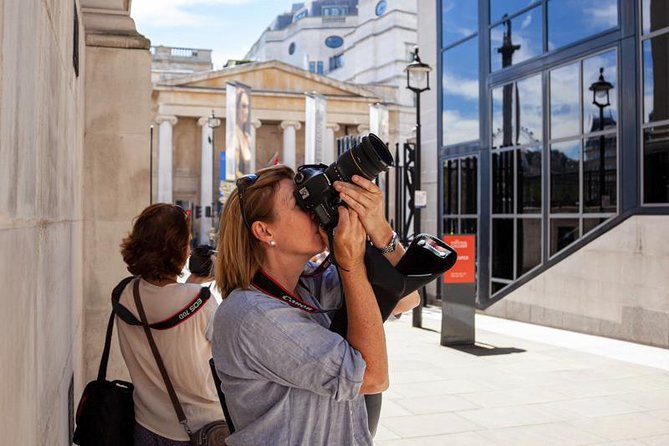
From Leicester Square, you walk through side streets and small shops toward Piccadilly Circus. Along the way, you may find red telephone boxes, London buses, shopfronts, and older-looking details that make good supporting subjects.
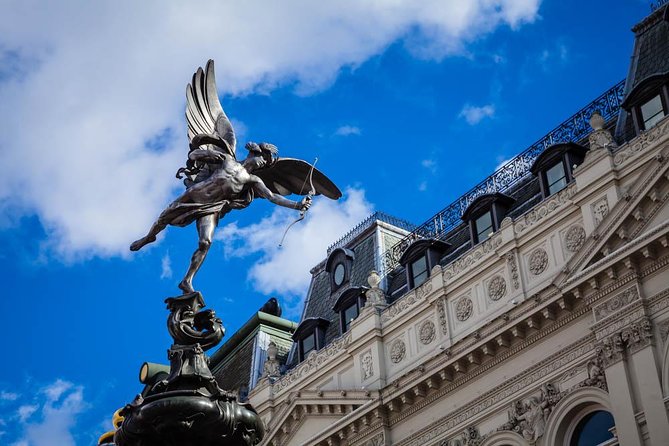
At Piccadilly Circus, the Statue of Eros and the banners over Regent Street provide the main landmarks. The useful lesson here is not simply how to record the scene. Lou works with you on camera handling, composition, light, white balance, and finding a fresh viewpoint.
This is a good place to test how your camera reacts to different light conditions. White balance can affect the feel of a photograph, while a small change in viewpoint can keep a recognizable landmark from looking like every other snapshot.
There is a short working break to review your progress and discuss how to improve during the rest of the tour. That pause gives the experience a practical shape. You are not waiting until the end to discover that your settings need changing.
Horse Guards Parade and Whitehall: freeze motion and capture portraits
The route then heads through Admiralty Arch, Horse Guards Parade, and Whitehall. This section brings people, uniforms, horses, monuments, and government buildings into the picture.
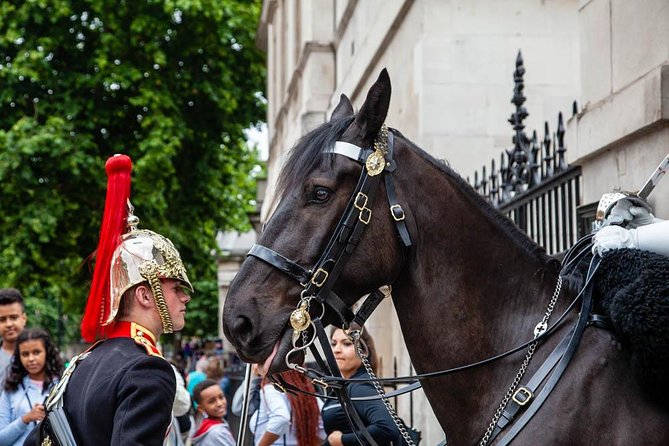
Mounted guards and sentries give you a chance to practice portrait settings and action photography. Lou discusses aperture values for portraits, shutter speed for freezing movement, focusing techniques, and fill flash. The subjects are formal and imposing, so you can work on making a strong image without losing detail in uniforms or equipment.
The area also includes the Cabinet War Rooms and statues honoring the Women of the Second World War. A Westminster Tube sign provides another classic London subject. These smaller details help keep the walk from becoming a checklist of only the biggest landmarks.
You should keep your camera ready here, since action and people do not always wait for perfect conditions. At the same time, this is a public route with working guards and pedestrians, so follow your guide’s advice and avoid treating the people on duty as studio models.
Big Ben and Parliament Square: frame London icons with care
At Westminster, you photograph Big Ben, the Houses of Parliament, and a familiar red telephone box. The challenge is to make these famous subjects feel personal rather than standard.
A wide lens can help you include the tower and surrounding architecture, while a tighter view can isolate details. Your guide can help you choose an approach based on the equipment you brought. Smartphone users can also take part, although the controls and lens choices will differ from those available on a dedicated camera.
Parliament Square adds statues of Winston Churchill, Mahatma Gandhi, and Nelson Mandela. Their placement against the Houses of Parliament lets you practice layering a foreground subject with a strong architectural background.
The scheduled time at Big Ben is short, followed by a longer stop at Parliament Square. That division works well. You get a quick chance to record the iconic view, then more time to consider statue placement, scale, and composition.
Westminster Abbey: photograph scale from the outside
Westminster Abbey is photographed from outside. The tour does not include admission, but the exterior offers strong lines, stone detail, arches, and a clear sense of scale.
The lesson covers composition, framing, lens choice, zoom selection, and creative aperture settings. You can work on showing the full building, then use a longer focal length or a tighter crop to bring out architectural detail.
The abbey is linked with royal weddings, including the wedding of Prince William and Kate Middleton, and its public importance gives the photograph extra context. Still, the value of this stop is visual rather than a detailed interior visit.
If entering the abbey is a priority, plan that separately. This tour gives you photography instruction and an exterior view, not a guided visit inside.
The London Eye: finish with river views and scale
The final photo stop is the London Eye, photographed from across the river. At 443 feet, or 135 metres, it gives you a clear subject for working with scale and proportion.
You can include the wheel in a broad river composition, isolate its structure, or place it beside surrounding buildings and river activity. Lou discusses light, depth of field, shutter speed, focus, lens choice, and composition here.
This is a fitting end because the setting asks you to combine many of the skills introduced earlier. You must decide how much sky, water, architecture, and human activity to include. The river also gives you changing reflections and moving subjects, making shutter speed and focus useful in a practical way.
The tour ends at Victoria Embankment. Since the walking route has covered much of central London, you may want to allow time afterward for lunch or a separate visit. Neither lunch nor refreshments is included.
What the photography teaching is really worth
The strongest part of this experience is the direct help with your own equipment. Lou has experience with many types of cameras and can work with SLRs, other digital models, and smartphones. That matters because photography advice is only useful when you can apply it to the controls in front of you.
The teaching covers a solid range:
- Aperture and depth of field
- Exposure and light
- Composition and framing
- Angles of view
- Focusing techniques
- White balance
- Shutter speed for action
- Fill flash
- Lens and zoom selection
- General camera handling
You also review photographs during the tour and discuss how to improve. That is especially helpful for beginners who are unsure why an image looks flat, soft, too dark, or too busy.
More experienced photographers may still find value in the private format, but the price is harder to justify if you already handle these settings comfortably. In that case, the best reason to book is the chance to photograph central London with a Fine Art photographer who can offer location-specific ideas and a fresh eye.
Price, group size, and practical value
At $336.40 per person, this is not a low-cost sightseeing walk. Its value depends on how much you want personal photography instruction rather than a standard tour of London’s landmarks.
For one person or a small private group, the price buys four hours of focused help, route planning, camera guidance, and photo review. Group discounts are available, which may make the cost easier to manage for families or friends traveling together.
You should bring your own camera, a fully charged battery, and extra memory cards. The route may produce hundreds of images, especially if you practice several settings at each stop. A smartphone is acceptable, so you do not need a dedicated camera to join.
The tour runs in all weather. Wear suitable clothing and comfortable footwear, and be prepared for a walking experience rather than a vehicle-based tour. It is near public transportation, with Charing Cross as the nearest rail and Tube station at the meeting point.
Confirmation is provided at booking. The tour is conducted in English, service animals are allowed, and most people can participate. Free cancellation is available up to 24 hours before the start time. Changes or cancellations inside that window are not refunded.
Who should book this London photo walk?
I would point this tour toward:
- Beginners who want to understand their camera instead of leaving it on automatic
- Parents and teenagers with an interest in photography
- Couples or friends who want a private pace
- Smartphone photographers who want better framing and light
- Experienced photographers looking for location-based guidance
- Anyone who wants a sightseeing walk with a clear creative purpose
I would hesitate if you mainly want deep historical commentary, indoor admissions, or a relaxed ride between sights. The tour gives context through the places you visit, but its main purpose is photography tuition.
The four-hour route also covers a lot of ground. That is a plus if you want many famous sights in one session, but it means you will not spend a long time at any single location. The listed stop times range from 15 to 45 minutes, with Piccadilly Circus and Trafalgar Square receiving some of the longest working sessions.
Should you book the London Photography Tour?
Book it if you want to return home with more than the usual London snapshots. You will practice real camera skills while photographing major sights, and the private format lets Lou adjust the lesson to your level and equipment.
The best fit is a beginner, family, couple, or small group willing to pay for personal instruction. The high price is easier to defend when several people share the private experience or when learning photography is a main goal of your London visit.
Skip it if you already know aperture, shutter speed, focus, white balance, and composition well, or if you want to enter the National Gallery and Westminster Abbey. For everyone else, this is a smart way to combine a central London walk with a useful skill you can carry into every future trip.
FAQ
How long does the London Photography Tour last?
The tour lasts approximately four hours.
Where does the tour begin?
It begins at Charing Cross, London WC2N 5DP, UK. Charing Cross is the nearest rail and Tube station.
Where does the tour end?
The tour ends at Victoria Embankment in London.
Is this a private tour?
Yes. Only your own group participates.
What sights are included?
The route includes Trafalgar Square, the National Gallery exterior, Leicester Square, Piccadilly Circus, Horse Guards Parade, Whitehall, Big Ben, the Houses of Parliament, Westminster Abbey exterior, and the London Eye viewed from across the river.
Do I need a professional camera?
No. The tour is suitable for all types of digital cameras, including smartphones, and for all skill levels.
Who leads the photography instruction?
The tour is led by a professional Fine Art photographer with teaching experience. Lou is named as the guide in the provided tour information.
What photography skills will I learn?
Instruction may include aperture, depth of field, composition, framing, light, lens choice, focusing, shutter speed, white balance, fill flash, and general camera handling.
Should I bring extra camera equipment?
Bring your own camera, a fully charged battery, and additional memory cards for the photographs you take.
Are food and drinks included?
No. Refreshments and lunch are not included.
Does the tour operate in bad weather?
Yes. It operates in all weather conditions, so you should dress appropriately.
Can I cancel for a refund?
You can cancel at least 24 hours before the experience start time for a full refund. Cancellations or changes made less than 24 hours before the start time are not accepted for a refund.
Recently added around London
- London’s Crown Secret: Self-Guided Royal Puzzle Quest★ 4.5 · 8 reviews
- Postcard London★ 5.0 · 8 reviews
- Private Tour: Downton Abbey London Locations by Taxi★ 5.0 · 8 reviews
- Windsor Castle, Stonehenge & Roman Baths Private Tour★ 4.5 · 8 reviews
- Cotswolds Private Driving Tour from London★ 5.0 · 8 reviews
- Skip-the-line London Westminster Abbey and City of Westminster Kid-Friendly Tour★ 5.0 · 8 reviews
- A Silent Disco Adventure in London★ 5.0 · 8 reviews
- Gangster Tour of Soho★ 4.5 · 8 reviews
London Tours, compared.
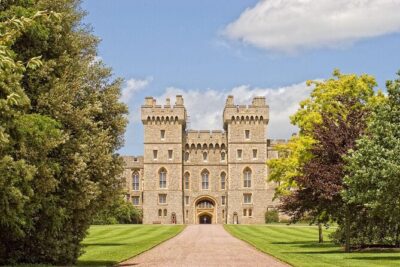
Stonehenge, Windsor Castle, and Bath from London
Read our review →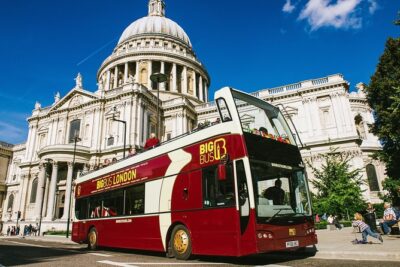
London Big Bus Hop-On Hop-Off Tour with Optional River Cruise
Read our review →
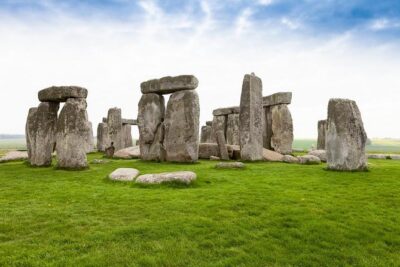
Stonehenge, Windsor Castle and Bath with Pub Lunch in Lacock
Read our review →
Tower of London and Crown Jewels Exhibition Ticket
Read our review →
Stonehenge, Windsor Castle and Bath Full Day Guided Tour
Read our review →
Windsor Castle, Stonehenge, and Oxford Day Trip from London
Read our review →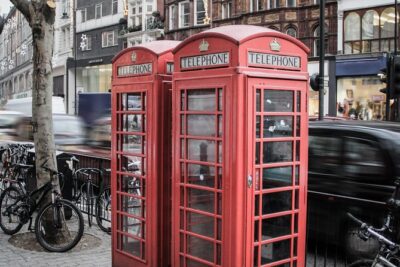
London Jack the Ripper Guided Tour with Ripper-Vision
Read our review →Browse the lists this tour appears in