
Reviewed · LIVERPOOL TOURS
Private Liverpool Self-Guided Tour
Liverpool’s Beatles story is only part of the appeal here. This self-guided audio walk links the Cavern Quarter, Pier Head, Royal Albert Dock, grand civic buildings, theatres, football memory, and museum stops in one useful route. At $12.35 per person, it gives you a good way to get your bearings without paying for a private guide.
I like the freedom to pause inside a museum, take shelter from rain, or linger by the Liver Building. I also like the practical format: GPS directions, maps, photos, videos, and local tips are all in the app, with Jenny providing a human-recorded voice instead of a computer-generated one.
The main drawback is simple: this is not a live walking tour. You must manage the app, follow the route, and pay separately for places such as the Cavern Club. A technical problem could spoil the experience, so activate the tour before setting off and check the instructions carefully.
Key points to know before you book
- Eighteen points of interest connect Liverpool’s civic, Beatles, maritime, and football stories.
- Jenny’s recorded narration gives you audio commentary, photos, videos, and directions through the app.
- Three weeks of unlimited access lets you split the route across more than one outing.
- The route runs from St. George’s Hall to Royal Albert Dock, with a useful choice of museums and restaurants at the end.
- The $12.35 price is good value if you want structure without an in-person guide.
- Admission fees are extra, including entry to the Cavern Club and any paid museum event.
Why this Liverpool route works well
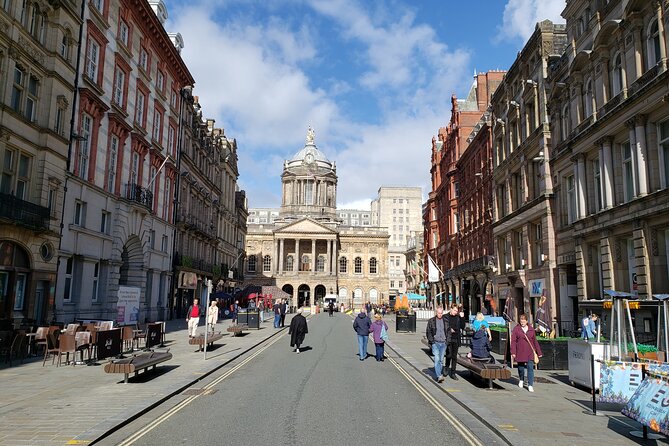
Liverpool can feel scattered at first. Its grand public buildings sit north of the centre, the Cavern Quarter occupies a tight cluster of old streets, and the waterfront stretches along the Mersey. This tour gives those places a sensible order, beginning at St. George’s Hall and finishing at Royal Albert Dock.
The stated time is two to four hours, though the stop timings add up to roughly three hours before you spend real time inside museums or stop for food. I would treat the shorter estimate as a brisk walk with brief pauses. Give yourself four hours if you want to listen carefully and look around.
The app format is useful for a city walk because you can stop without holding up a group. You can pause the narration at a café, duck into the Central Library, or wait out a shower before continuing. The three-week access period also means you do not need to force every museum and landmark into one afternoon.
The audio is presented by Jenny, and the material includes stories rather than only dates and building names. That matters in Liverpool, where the meaning of a place often comes from its connection to music, migration, trade, football, or local memory.
More self guided walks in Liverpool:
- Western Approaches Self Guided Tour
★ 5.0 · 505 reviews - Liverpool Ghost Hunt: Paranormal Detective Self-Guided Game
★ 4.5 · 26 reviews - Westminster Abbey Entrance Ticket Including Audio Guide
★ 4.0 · 661 reviews
St. George’s Hall and Liverpool’s civic heart
The route begins at St. George’s Hall, at St. George’s Place. This is a strong starting point because it introduces Liverpool before the Beatles and before the great dock buildings. You hear how the city began as a tidal pool beside the River Mersey, then grew into a major port and city.
St. George’s Hall is a Grade I listed building, designed with the appearance of an ancient temple. Its raised podium was chosen to make the building dominate the surrounding streets. That detail helps you read the building as more than a handsome façade. It was meant to project civic power.
From here, the walk moves along William Brown Street, Liverpool’s main cultural quarter. The street was named for William Brown, a merchant, MP, and philanthropist who donated the land in 1860 for cultural purposes.
Look for the former County Sessions Court, Walker Art Gallery, Central Library, World Museum Liverpool, the former North Western Hotel, Empire Theatre, Steble Fountain, and Wellington Memorial. The route is especially useful here because it explains how these buildings work together as a planned civic district rather than treating each one as an isolated sight.
The Central Library and World Museum stop
The Central Library and World Museum share a Grade II listed classical building. The tour gives you orientation for both, including suggestions about which rooms and exhibits to seek out.
This is one of the places where the self-guided format helps. You can listen outside, then pause the tour while you explore indoors. Entrance is generally free, though an event or special presentation may sometimes charge a fee.
You should not think of the ten-minute or twenty-five-minute stop estimates as museum visit limits. They are guide times, not a replacement for exploring the buildings. If you enjoy museums, use the three-week access period and return on another day.
The World Museum began as the Derby Museum, built around the natural history collection of the 13th Earl of Derby. That origin gives the building a different character from the Beatles-focused stops later in the route. Liverpool’s cultural story is much broader than popular music, and this section makes that clear.
St. John’s Gardens and the Hillsborough memorial
Next comes St. John’s Ornamental and Memorial Gardens, beside St. George’s Hall. The gardens occupy what was once heathland known as the Great Heath. Flower beds, statues, and memorials give the area a quieter mood after the large civic buildings.
The tour pays particular attention to the Hillsborough disaster, the fatal crush at Hillsborough Stadium in Sheffield on April 15, 1989. This is a serious part of the route, and it is handled as an important piece of Liverpool’s public memory, not as a passing football fact.
You may find this stop especially meaningful if you follow football, but you do not need to support Liverpool or Everton to understand why it matters. The story reaches beyond sport and helps explain a lasting part of the city’s identity.
A few more Liverpool half days worth a look
- Beatles Magical Mystery Tour
★ 5.0 · 9,266 reviews - Liverpool: “Blue Route” – City & Beatles Tour
★ 5.0 · 8,562 reviews - Liverpool City Sights Hop On Hop Off City Tour – 24hr Ticket
★ 4.5 · 2,555 reviews - The LFC Stadium Tour
★ 5.0 · 1,548 reviews
Williamson Square, Liverpool Playhouse, and the Radio Tower
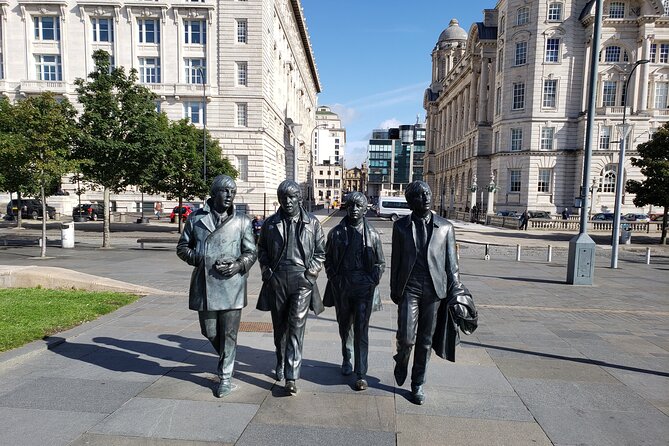
Williamson Square brings you back into the city centre. Its fountain uses playful colored lights, while Liverpool Playhouse gives the square its theatrical link.
The theatre opened in 1866 as the Star Concert Hall and later became the Liverpool Playhouse. The audio commentary traces its development and the performers connected with it. This is a nice counterpoint to the nearby music story: Liverpool’s performing arts history includes serious theatre as well as rock and pop.
Behind the theatre rises the Radio Tower, once known as St. John’s Beacon. The tower was once abandoned and unpopular with many local people, but later gained a new place in the city’s affection. That change in public feeling makes the stop more interesting than a simple architectural description.
The Cavern Quarter and Beatles connections
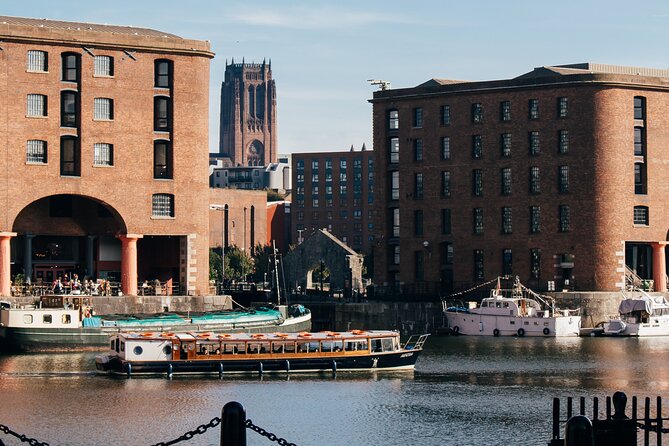
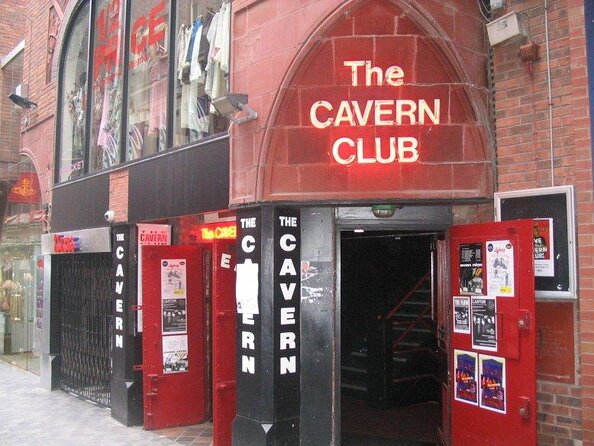
The Cavern Club is the route’s most famous music stop. The surrounding Cavern Quarter is made up of narrow pedestrian streets lined with pubs, clubs, restaurants, and live music venues. The Beatles story hangs over the area, but the district is also part of Liverpool’s current night-time music scene.
The audio explains how the Cavern Club became a centre of Liverpool’s early 1960s rock and roll scene and its link with Merseybeat and the Beatles. You get context before deciding how much time to spend inside.
Entry to the Cavern Club is not included. That is important when judging the price. The $12.35 buys the route and commentary, not a complete attraction package. Check the current admission arrangements before you go, especially if entering the club is a key reason for booking.
A self-guided route is handy in this quarter because you can pause for photographs, look into nearby venues, or return later in the evening. The audio gives you the background without requiring a live group to move on.
Castle Street, the Town Hall, and difficult history
Castle Street is one of Liverpool’s seven ancient streets, appearing on maps from the 13th century. It lies at the heart of the city’s former World Heritage area and is packed with listed architecture.
The Town Hall and former Bank of England are Grade I listed buildings, while 17 other buildings on the street have Grade II status. The route encourages you to look upward and compare the façades rather than simply walk from one modern shop to the next.
The walk continues to Exchange Flags Square, where the commentary addresses Liverpool’s past in commerce, war, and slavery. It also explains the figures connected with that history and the controversies surrounding the bronze monument to Nelson.
This is one of the tour’s more valuable features. Liverpool’s prosperity came through trade and the port, but that story includes uncomfortable subjects. A good city walk should not reduce the past to pretty buildings and famous musicians.
Pier Head and the Three Graces
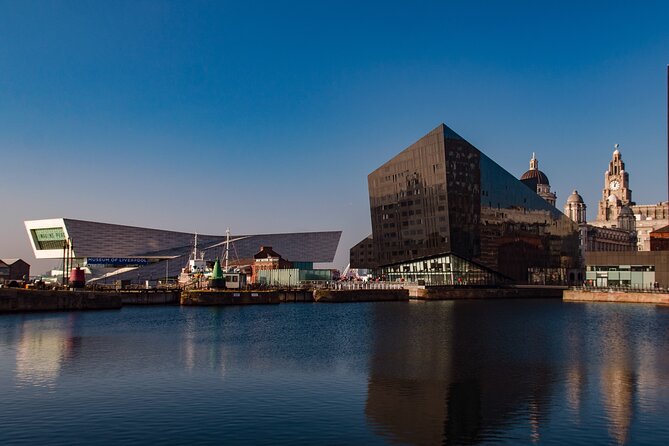
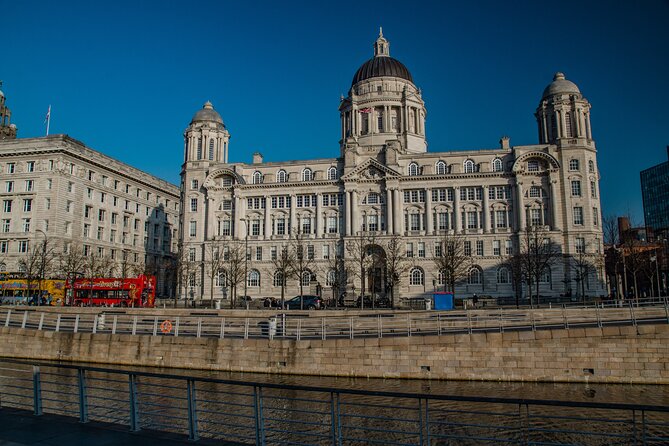
At Pier Head, you reach Liverpool’s defining waterfront view. The Three Graces are the Royal Liver Building, Cunard Building, and Port of Liverpool Building, arranged along the riverfront.
The Royal Liver Building is known for its pair of Liver Birds and was an early reinforced-concrete building. The tour explains the legends around the birds, their link to Liverpool’s coat of arms, and why they became such powerful city symbols.
The Cunard Building combines Italian Renaissance and Greek Revival influences. Its design was shaped in part by Italian palace architecture, a fitting choice for a major shipping company with an international reach.
The Port of Liverpool Building, formerly the Mersey Docks and Harbour Board Offices, is the oldest of the Three Graces. Designed by Sir Arnold Thornely and F. B. Hobbs, its features were intended to reflect Liverpool’s importance in maintaining the British Empire.
You also hear stories about the Beatles monument at Pier Head. This makes the stop work on two levels: grand maritime architecture behind you, and a modern music memorial in front of you.
The waterfront is an ideal place to pause the audio. Let the route explanation do its job, then take time to look across the Mersey and compare the buildings. You do not need to hurry through this part.
Royal Albert Dock and the final museum choices
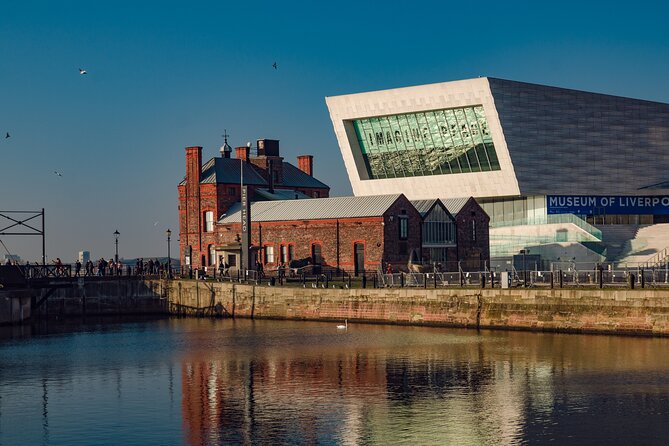
The route finishes at Royal Albert Dock, where Liverpool’s maritime past meets its arts and museum district. The dock’s size shaped the waterfront, and the commentary explains how it was used before and after World War II.
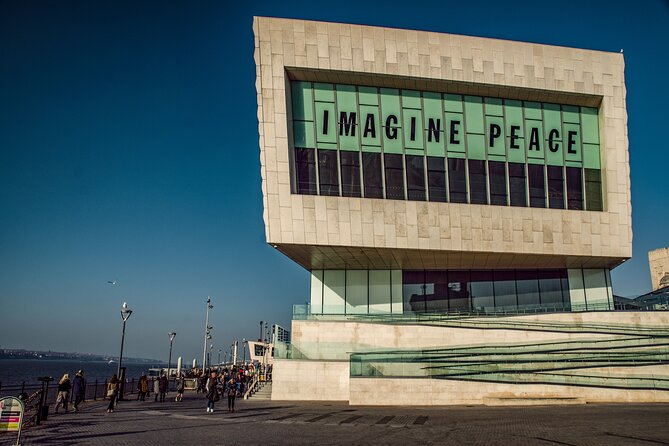
You also hear about the city’s connection to the Titanic and why several museums were established around the dock. The Museum of Liverpool, The Beatles Story, and Merseyside Maritime Museum all offer different versions of the city.
The tour gives general guidance for the Museum of Liverpool, including what to expect and where you might want to go inside. It also leaves you with suggestions for museums, restaurants, and other things to do after the walk.
This is a sensible endpoint. You are not dumped at an obscure street corner with the tour finished. Instead, you end in an area where you can keep exploring, eat, or choose a museum based on your interests.
At the same time, the dock can tempt you into spending much more time than the stated walking duration. That is not a flaw, but you should plan for it. The attraction fees are separate, and you may want to budget for at least one museum or the Cavern Club.
What the $12.35 price really buys
At $12.35 per person, this is a low-cost way to add shape to a Liverpool visit. You receive three weeks of unlimited access, a GPS route, map, directions, stop information, audio narration, images, videos, stories, and local suggestions.
The strongest value comes from flexibility. A private live guide would give you direct conversation and immediate answers, but this app lets you move at your own speed and revisit the route. For a solo visit, that can be a major advantage.
The price is less attractive if you want a person beside you explaining the city. An in-person guide is specifically not included. You also need to pay attraction admission separately, and the route itself does not remove the need to plan food, museum time, or weather breaks.
One practical warning deserves attention. The activation instructions arrive by email, and the booking reference is not the activation code. Follow the Before You Go directions rather than waiting until you reach St. George’s Hall.
Most users can take part, service animals are allowed, and the route is near public transportation. The published opening window runs from midnight to 11:30 p.m. daily, but you should still consider daylight, weather, and the operating hours of any attraction you plan to enter.
Who should choose this self-guided tour?
I would choose this for a solo visitor, a couple, or a private group that dislikes being tied to a guide’s pace. It also suits anyone who wants a clear first walk through Liverpool but prefers to decide later which museums deserve serious time.
It is particularly useful for Beatles fans who also want the city’s wider story. You get the Cavern Club, Pier Head Beatles monument, maritime buildings, theatre history, civic architecture, and football memory in one route.
Families may like the freedom to pause, though the serious Hillsborough section and the long list of buildings may not hold every child’s attention. Museum lovers should use the route as an introduction, then take advantage of the three-week access to return to the Central Library, World Museum, or Museum of Liverpool.
I would be cautious if your phone connection, battery, or app use is unreliable. One person had trouble connecting to the tour, and although support is available by phone, chat, and email around the clock, you do not want to discover an access problem after beginning the walk.
Should you book it?
Book it if you want an inexpensive, flexible introduction to Liverpool with a strong mix of Beatles, maritime, civic, theatre, and football stories. The route is at its best when you use it as a framework, pausing at the places that catch your interest rather than treating the two-hour estimate as a race.
Skip it if you want a lively conversation with a local guide or if your main goal is a fully escorted Beatles experience. For everyone else, $12.35 is a reasonable price for three weeks of access and a well-planned walk, provided you activate the app in advance and remember that attraction tickets cost extra.
FAQ
How much does the Liverpool self-guided tour cost?
The price is $12.35 per person.
How long does the tour take?
The approximate duration is two to four hours. Your actual time will depend on how long you pause, visit museums, or stop for food.
Where does the tour begin?
The tour begins at St. George’s Hall, St. George’s Place, Liverpool L1 1JJ, UK.
Where does the tour finish?
It finishes at Royal Albert Dock Liverpool, L3 4AD. The dock has museums and restaurants for you to explore afterward.
How long can I access the tour?
You receive three weeks of unlimited access to the self-guided tour through the app.
Is there a live guide?
No. An in-person guide is not included. Jenny provides the audio commentary through the app.
What is included in the tour?
You receive the app tour, map, directions, GPS route, stop information, audio commentary, photos, videos, stories, and local tips.
Are attraction entrance fees included?
No. Entrance fees are not included. The Cavern Club and any attraction with a paid event or admission charge require separate payment.
Is the tour available in other languages?
The tour is offered in English.
Recently added around Liverpool
- Liverpool Football Club Museum Entry★ 5.0 · 10 reviews
- The Liverpool Pass®: All top attractions inc. Hop-On Hop-Off Bus Tour | 2-Days★ 4.5 · 11 reviews
- 2-Hour Private Liverpool Walking Tour★ 5.0 · 12 reviews
- Private Liverpool Culture Walking Tour, Ghosts & Two Cathedrals.★ 4.5 · 12 reviews
- Liverpool Film and Music – 2 hour Private Walking Tour★ 5.0 · 12 reviews
- Liverpool’s Best Craft Drinks & Pub Food With A Local: Private & Personalized★ 5.0 · 12 reviews
- Liverpool Ultimate Beatles Ticket To Ride Half-Day PRIVATE Tour★ 5.0 · 12 reviews
- 4 Hour Private Beatles Tour in Liverpool★ 5.0 · 13 reviews
Liverpool Tours, compared.

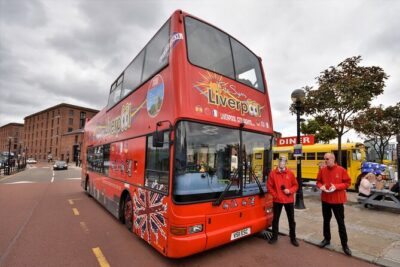
Liverpool City Sights Hop On Hop Off City Tour – 24hr Ticket
Read our review →
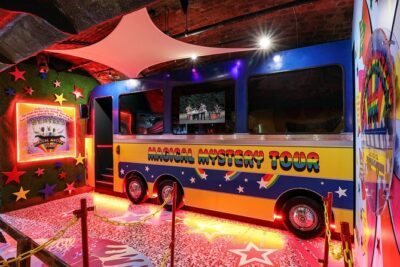

Private 3-Hour Guided Beatles Classic Tour of Liverpool
Read our review →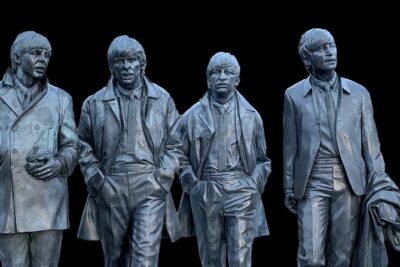
Browse the lists this tour appears in