
Reviewed · LONDON TOURS
Private Night Photography Tour in London
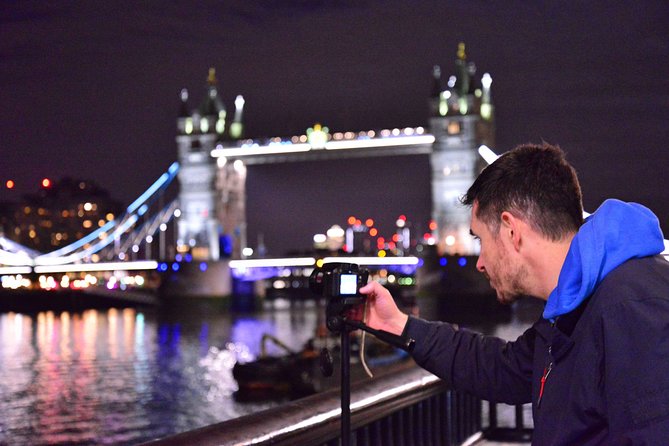
London looks made for night photography. River reflections, glowing landmarks, red bus lights, passing boats, and long ribbons of traffic give you far more to work with than a simple postcard view. On this private photography walk, professional photographer David helps you turn those sights into stronger images, using either a DSLR, another camera, or your phone.
I like two things right away: you do not need an expensive camera, and David adjusts his teaching to your level. He has helped people use both an iPhone and a Canon on the same evening, and he can explain everything from basic settings to multiple exposures and zoom effects during a long exposure. The e-guidebook also gives you something useful to keep after the walk.
The main consideration is the wording around group size. It is sold as a private activity for your group, but one booking described three participants. Confirm the arrangement if one-to-one tuition is essential. You should also plan for a moderate amount of walking, bring a charged battery, and expect a tripod to be important for the longest exposures.
Key points at a glance
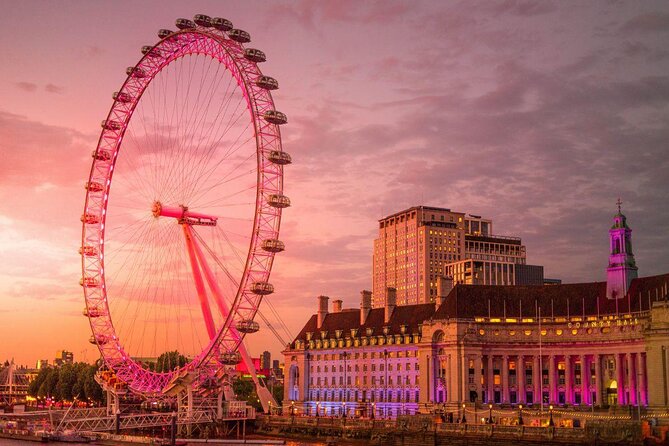
- London after dark: Photograph the London Eye, St Paul’s Cathedral, the City of London, and Tower Bridge.
- Works with a phone or camera: David can teach smartphone techniques as well as manual camera settings.
- Creative night effects: Practice light trails, river reflections, passing boats, multiple exposures, and lens zoom effects.
- Personal instruction: The private format lets you ask questions and work on the camera you actually use.
- Useful backup materials: Your booking includes a photography e-guidebook, plus tour and group photos.
- Flexible cancellation: You can cancel at least 24 hours before the start for a full refund.
Why London at night makes a fine classroom
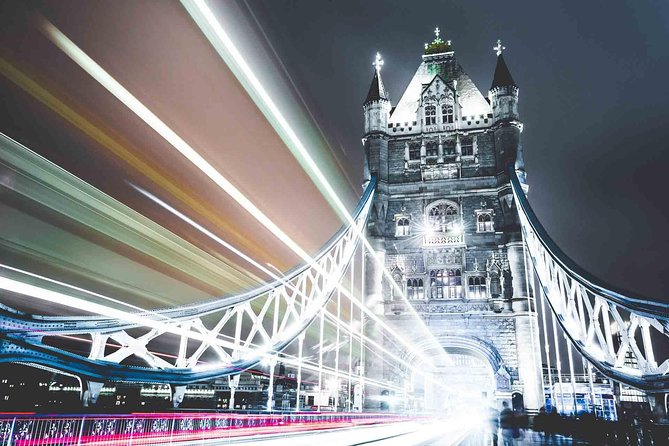
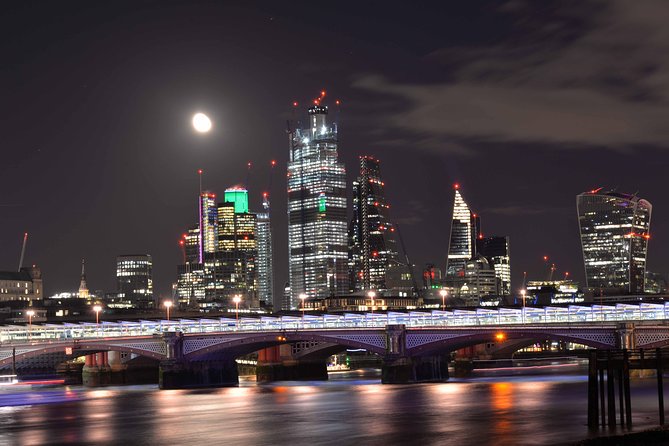
Daylight gives you clear landmarks. Darkness gives you movement, color, and time to experiment. A boat sliding across the Thames can become a soft blur. A line of cars can turn into bright streaks. Reflections near the river can make a familiar building look almost abstract.
That is the real point of this experience. You are not simply being taken to four famous places and told where to stand. David demonstrates how small changes in camera settings affect the final image, then gives you time to try the technique yourself.
The teaching suits several levels. If you are new to photography, you can work through basic controls and learn why night images often need more care than snapshots. If you already understand your camera, you can focus on creative choices such as composition, light trails, multiple exposures, and zooming the lens during a long exposure.
I especially like that the instruction is not limited to one brand or one type of equipment. The tour is designed for a DSLR or smartphone, and one participant changed to an iPhone after a camera battery ran low. That makes the experience practical for people who packed light or who simply prefer taking pictures on their phone.
More photo sessions in London:
- Professional Photoshoot in London Photographer
★ 5.0 · 102 reviews - Private landmarks photoshoot for families and couples
★ 5.0 · 92 reviews - Professional Private Photoshoot in London
★ 5.0 · 63 reviews
Starting near Westminster at Caffè Nero
The meeting point is Caffè Nero, Unit B, Portcullis House, 1-2 Bridge Street, London SW1A 2JH. The experience begins and ends there, so you have a clear place to return to at the end of the evening.
The exact start time is not provided here, but the tour is built around night photography and includes a period often described as blue hour and the time after dark. That changing light is useful. You may begin with some remaining color in the sky, then move into full night conditions as the city lights take over.
Use the first part of the walk to explain your goals. Tell David if you want help with basic camera operation, if you are keen on long exposures, or if you mainly want better phone photographs. The more specific you are, the easier it is to make the session work for you.
Bring the camera you want to learn, not a camera you think sounds impressive. A smartphone is acceptable. If you use a dedicated camera, charge the battery fully and bring any tripod you have. One participant had lost a tripod with checked luggage and was able to share a spare tripod brought by David, but your own tripod will give you more freedom.
London Eye: light, scale, and creative effects
The London Eye is an excellent first major subject because it offers both a strong outline and plenty of artificial light. Its illuminated wheel can anchor a composition, while the Thames and nearby movement give you room to experiment.
Here, David can show you how to handle bright lights without losing the darker parts of the scene. You may work on framing the wheel, balancing it against the river, or using long exposure to make moving elements softer. The stated focus includes light streaks and creative effects, so this is not just a stop for a standard landmark photograph.
A phone can produce a good result here if you use its night mode or manual controls, where available. A dedicated camera gives you more control, but it also gives you more ways to make a mistake. That is where personal guidance matters. You can ask why a setting works instead of simply copying it.
The London Eye is also a good place to think about composition. The most recognizable subject is not always the best photograph. David may suggest a different angle or a less obvious framing, helping you make an image that feels more personal.
St Paul’s Cathedral and the long exposure lesson
St Paul’s Cathedral brings a different kind of challenge. Its pale stone and large dome can catch light strongly, while traffic and city movement provide lines and contrast around it.
This is the sort of setting where long exposure can make a major difference. Keep the camera still, allow the shutter to remain open, and moving lights can stretch across the frame. The result may show traffic as clean ribbons rather than individual cars.
A tripod is especially useful here. Handholding a camera during a long exposure usually makes the building soft, so do not treat a tripod as an optional extra if your goal is a sharp night image. The tour information does not list a tripod as an included item, although David has brought a spare for someone who needed one.
You will also get a useful lesson in patience. Night photography often involves making a test image, checking it, adjusting the exposure, and trying again. That process is part of the value. You leave with a method you can use later, not just one lucky photograph.
More evening outings in London:
- London by Night Bus Tour with Christmas Lights and Live Guide
★ 4.5 · 2,040 reviews - London by Night Sightseeing Tour – Open Top Bus
★ 4.5 · 1,060 reviews - London by Night Sightseeing Open Top Bus Tour with Live Guide
★ 4.5 · 977 reviews - River Thames Evening Cruise with Sparkling wine and Canapés
★ 4.0 · 569 reviews
The City of London for less obvious angles
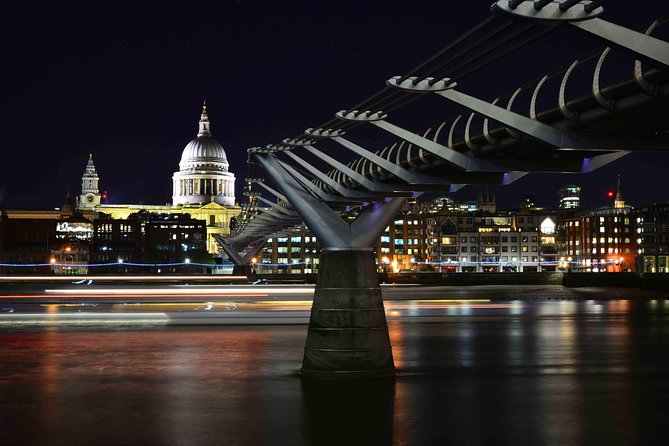
The City of London section adds variety. Instead of stopping only at the most famous postcard viewpoints, the walk can include smaller corners, unusual angles, and details that work better as photographs than as sightseeing stops.
This is where David’s local sense of good viewpoints becomes helpful. The aim is to find artistic angles and vantage points, not merely to collect proof that you saw a landmark. You might photograph architecture framed by a narrow passage, use reflections, or capture the contrast between old forms and modern lights.
The City also gives you a chance to practice without relying on one huge subject. Street lighting, windows, shadows, and passing movement can all become part of the frame. For someone learning, this is important because you will not always have a famous building available when you take photographs on your own.
More experienced photographers can use this portion to work on visual choices rather than camera basics. Ask yourself what deserves attention, what can be left out, and how much empty space helps the image. David’s role is to guide those choices while helping you get the settings under control.
Tower Bridge and the Thames reflections
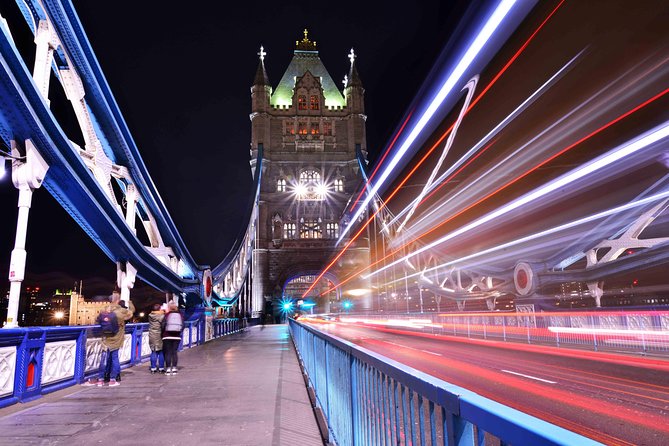
Tower Bridge is the grand finale on paper, and it earns that role. Its towers, suspension lines, river setting, and night illumination give you several strong compositions in one place.
The Thames adds movement. Passing boats can blur during a longer exposure, while reflections break up and stretch across the water. Traffic and city lights give you additional points of color, so you can make a clean architectural image or a more abstract one.
This stop is particularly useful if you want to combine several techniques. You may keep the bridge sharp, let boat lights soften, and use the water as a second layer in the composition. That kind of image takes more than simply pointing a phone at the landmark, but David’s demonstrations help you understand the steps.
One practical point: river conditions, passing traffic, and light levels can change during the session. You should expect guidance and good chances to practice, not a guarantee that every photograph will look identical to an example. Night photography always involves timing and a little luck.
What David teaches during the walk
David receives the strongest praise for his instruction, patience, and ability to find useful viewpoints. He is described as an excellent guide, teacher, and conversationalist, which matters on a private activity lasting roughly two and a half hours.
The teaching can include:
- Basic camera controls and how small setting changes alter an image
- Low-light photography
- Long exposure technique
- Light trails from cars
- Blurred movement from boats
- Reflections along the Thames
- Multiple exposure functions
- Creative zoom effects during a long exposure
- Framing and composition
- Smartphone night photography
The most useful part is the practice. You do not just hear a tip and move on. You can try it, check the result, and ask what to change. That makes the instruction easier to remember.
David is familiar with many camera types, though one participant found that he was less familiar with a Fuji camera. That was not a major problem for someone who already knew the camera menus. If you use a less common or unfamiliar camera, learn the basic controls before the tour. You will get more from the time if you can quickly change shutter speed, aperture, ISO, focus, or shooting mode when asked.
Phone photographers are welcome here
Many photography tours quietly favor people with dedicated cameras. This one does not. The experience specifically accepts smartphones, and the instruction includes tips that can improve travel photographs in general, not only images taken at night.
That makes the tour a good fit for couples or families using different equipment. One person can use a Canon while another uses an iPhone, and both can work on the same scene. You are not required to buy a DSLR to take part.
Phone users should still arrive prepared. Charge your phone, clear some storage, and know how to open the camera settings quickly. If your phone has a night mode, portrait mode, manual controls, or a long-exposure function, David can help you make better use of those tools.
You should also keep expectations sensible. A phone may handle a bright landmark very well, but a dedicated camera offers more control in difficult light. The strength of this activity is that you learn how to get the best from what you already own.
Private format, group size, and pace
The experience is described as private, meaning only your party should participate. That usually gives you more room to ask questions and spend extra time on the techniques that matter to you.
There is one point worth checking before you pay. A booking described three people taking part and referred to the session as a group tour. If you are booking because you want exclusive, one-to-one coaching, confirm how the private arrangement applies to your date.
The pace should suit people with a moderate physical fitness level. You will move between major central London sights, and the session includes outdoor photography after dark. Wear comfortable shoes and bring a waterproof layer. Rain interrupted one session, and David helped by buying an umbrella, but weather can still affect your comfort and the time available at each stop.
Food and drinks are not included unless specifically stated. Plan to eat before the meeting point or after the activity, rather than expecting a meal break during the photography walk.
Is the $164.52 price good value?
At $164.52 per person, this is not a cheap sightseeing walk. It becomes better value if you think of it as both a London evening tour and a practical photography lesson.
You are paying for a professional photographer’s time, help with your own equipment, access to several major night viewpoints, an e-guidebook, and tour and group photos. A private format can also be valuable for two people with different skill levels, since you can ask questions that would be difficult to fit into a large class.
The value is weaker if you only want a guide to point out landmarks. You can see the London Eye, St Paul’s Cathedral, the City, and Tower Bridge without booking a photography session. The price makes sense when you want to leave with better skills, not simply a pleasant walk.
Group discounts may improve the cost for a larger party. Check the final price for your group, since the listed amount is per person.
Who should book this photography walk?
I would recommend it most strongly to:
- A beginner who wants direct help with camera settings
- A phone photographer tired of flat or blurry night images
- A couple using different cameras
- A hobbyist who wants to learn long exposures
- Someone who wants unusual views of familiar London landmarks
- An experienced photographer who wants guidance on night work and composition
It may not suit you if you dislike walking outdoors at night, want a fast landmark checklist, or expect fully private instruction without first confirming the group arrangement. It is also less useful if your camera battery is unreliable and you have no backup.
The tour has a strong record, with a 4.9 rating from 29 ratings and 97 percent recommendation. More important than the number is the consistent pattern in the experience: David helps people get better results, explains techniques patiently, and works with both phones and dedicated cameras.
Final call: book it if you want skills, not just pictures
Book this tour if you want London’s famous sights to become a practical night photography workshop. David’s teaching, the mix of landmark and less obvious viewpoints, and the chance to practice light trails, reflections, and long exposures give the evening real substance.
Before booking, confirm the group size if private tuition is crucial. Bring a charged device, dress for changing weather, and use a tripod if you have one. You can cancel for a full refund up to 24 hours before the start time, but changes or cancellations inside that window are not refunded.
For a simple sightseeing walk, spend less elsewhere. For hands-on help that can improve your travel photographs long after you leave London, this is a worthwhile use of an evening.
FAQ
Where does the Private Night Photography Tour in London start?
The tour starts at Caffè Nero, Unit B, Portcullis House, 1-2 Bridge Street, London SW1A 2JH, UK.
Where does the tour end?
The activity ends back at the meeting point.
How long does the tour last?
The stated duration is approximately 2 hours and 30 minutes. The tour description also refers to a three-hour night tour, so confirm the expected timing when booking.
Can I use a smartphone instead of a DSLR?
Yes. The experience is designed for both DSLR cameras and smartphones. You can learn night photography techniques using the equipment you already have.
Is this a private tour?
It is described as a private activity for your group only. One account described three participants, so confirm the group arrangement if you require one-to-one instruction.
What happens if I need to cancel?
You can cancel at least 24 hours before the start time for a full refund. Cancellations or changes made less than 24 hours before the start are not accepted for a refund.
Recently added around London
- London’s Crown Secret: Self-Guided Royal Puzzle Quest★ 4.5 · 8 reviews
- Postcard London★ 5.0 · 8 reviews
- Private Tour: Downton Abbey London Locations by Taxi★ 5.0 · 8 reviews
- Windsor Castle, Stonehenge & Roman Baths Private Tour★ 4.5 · 8 reviews
- Cotswolds Private Driving Tour from London★ 5.0 · 8 reviews
- A Silent Disco Adventure in London★ 5.0 · 8 reviews
- Skip-the-line London Westminster Abbey and City of Westminster Kid-Friendly Tour★ 5.0 · 8 reviews
- Private Full Day Cotswolds Tour From London★ 5.0 · 8 reviews
London Tours, compared.
Stonehenge, Windsor Castle, and Bath from London
Read our review →
London Big Bus Hop-On Hop-Off Tour with Optional River Cruise
Read our review →
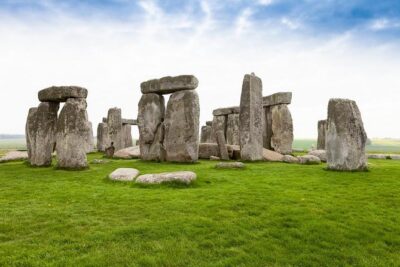
Stonehenge, Windsor Castle and Bath with Pub Lunch in Lacock
Read our review →
Tower of London and Crown Jewels Exhibition Ticket
Read our review →
Stonehenge, Windsor Castle and Bath Full Day Guided Tour
Read our review →
Windsor Castle, Stonehenge, and Oxford Day Trip from London
Read our review →
London Jack the Ripper Guided Tour with Ripper-Vision
Read our review →Browse the lists this tour appears in