Reviewed · LONDON TOURS
See Tate Modern with an Art Historian in London
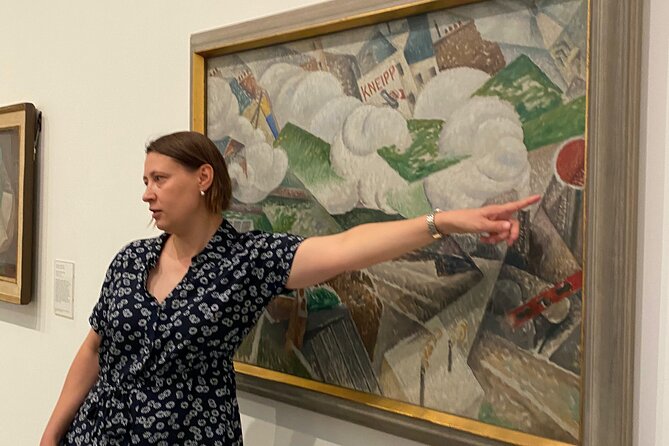
The best thing about this Tate Modern tour is its method: you look first, form your own response, and only then hear how an art historian might place the work in its historical and cultural setting. Julia is often the guide, though Rosa may lead some departures, and both bring serious art training without turning the visit into a lecture.
I like the small group limit of 10, which gives you room to ask questions and speak up. I also like the two-hour length. Tate Modern is huge, so a focused visit can give you a useful starting point while leaving time to wander on your own.
The main drawback is price. At $137.12 per person, this is a costly way to visit a museum with free general admission. The value depends on how much help you want with modern art, and on whether your guide is available for the date you choose.
Key points to know before you book
- You learn how to look at art: The guide asks for your first impressions before adding art history and context.
- The group stays small: A maximum of 10 people makes discussion easier than on a large museum walk.
- Julia is a frequent guide: Her approach is lively, interactive, and friendly to adults, children, and people who feel unsure about contemporary art.
- The tour covers big questions: Expect discussion of abstraction, photography, sculpture, gender, politics, and who decides what counts as art.
- General admission is included: You can visit Tate Modern without buying a separate entry ticket, but paid temporary shows cost extra.
- Two hours is only a beginning: The tour offers highlights, then sends you back into the museum with better tools for exploring alone.
Why Tate Modern works well with a guide
Tate Modern can be a hard museum to tackle cold. Its modern and contemporary works do not always tell you what to see, where to begin, or why a particular piece matters. You may find yourself intrigued by one room and completely baffled by the next.
That uncertainty is part of the point, but it can also become tiring. An art historian gives you a way into the collection without insisting that there is only one correct response.
The tour is built around questions rather than a string of dates and names. You may consider how abstract art developed, what happened to sculpture during the 20th century, and whether photography belongs in the category of art.
You also discuss the place of artists in society. Questions about gender, political attitudes, cultural setting, and the power to decide what is accepted as art give the visit a wider frame.
I like this approach because it respects your own eyes. You are not expected to arrive with art-school training, and you are not required to like every work to understand why it was made or why it is displayed.
A few more London half days worth a look
- Stonehenge, Windsor Castle, and Bath from London
★ 4.5 · 18,662 reviews - London Big Bus Hop-On Hop-Off Tour with Optional River Cruise
★ 3.5 · 10,803 reviews - London Small Group Tour of Historical Pubs
★ 5.0 · 10,422 reviews
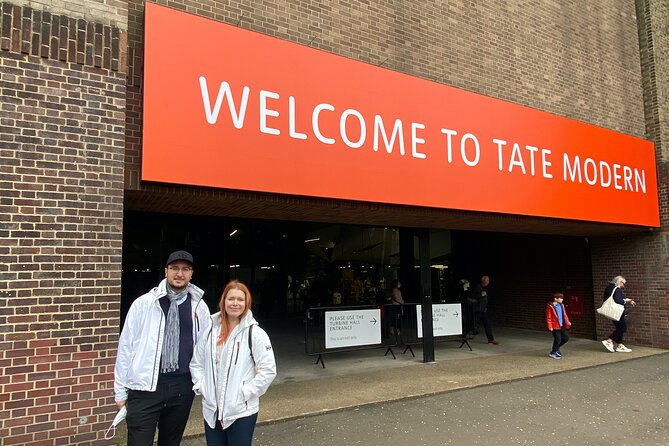
Starting at Tate Modern in London
The meeting point is Tate Modern, London SE1. The activity begins and ends there, so you do not need to follow a guide across different parts of the city.
The museum is near public transportation, and the tour includes free luggage storage. That is useful if you are fitting Tate Modern between other plans, though you should still allow enough time to arrive at the meeting point without rushing.
Your confirmation arrives when you book. The activity is offered in English, and most people can take part. Service animals are allowed.
The group can include solo visitors, couples, families, teams, and larger parties booking together. A family group with an 11-year-old found the guide able to involve a child in the discussion, and another group appreciated the way a 10-year-old was included.
That does not mean every child will enjoy two hours of art discussion. It does mean the format can work for families when the child is curious and willing to talk.
The first look: your response comes before the explanation
The most useful part of the method is simple. You first spend time with a work and say what you notice, what feels strange, or what you think might be happening.
Only after that does the guide add information about the artist, period, materials, and cultural setting. This order matters because it stops you from treating the guide’s interpretation as a test answer.
Julia is often praised for making the tour interactive. She asks questions, welcomes different readings, and lets the group compare reactions before offering her own explanation.
That makes modern art less intimidating. If you see a painting as playful, troubling, political, or confusing, you can say so and still learn how an art historian might read it.
You may not leave liking every work. The goal is more practical: to become better at noticing choices and asking useful questions.
Highlights from modern and contemporary art
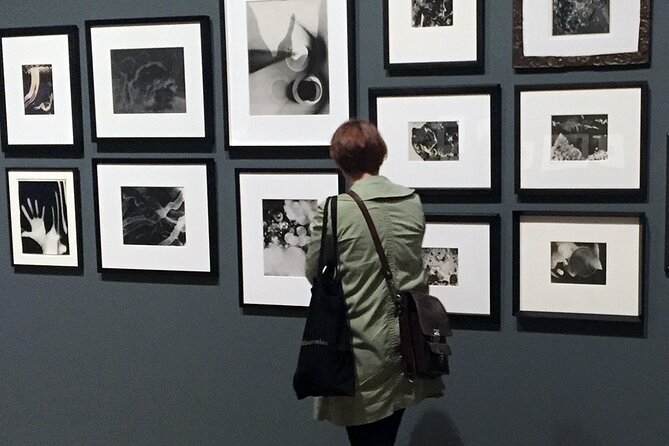
The exact works shown can vary, since Tate Modern’s displays change and the guide adjusts to the group. The tour promises highlights from the collection rather than a fixed list of every room.
You can expect attention to important modern and contemporary works, along with lesser-known pieces that might be easy to pass without help. One particularly memorable work mentioned by a participant was Juan Gris’s Bottle of Rum and Newspaper.
The guide may connect an artwork to the artist’s timeline, political views, and the events around its creation. This can turn a work from a silent object into evidence of a particular argument, mood, or moment.
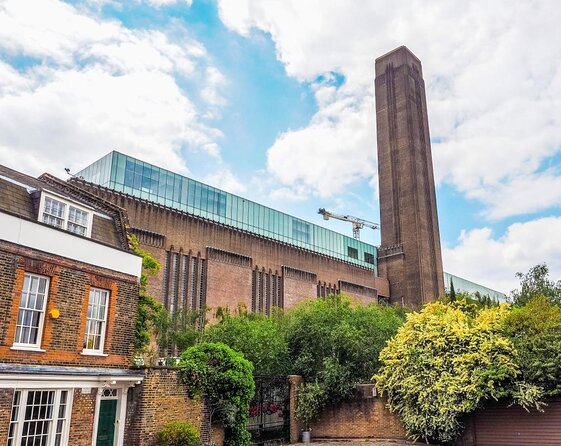
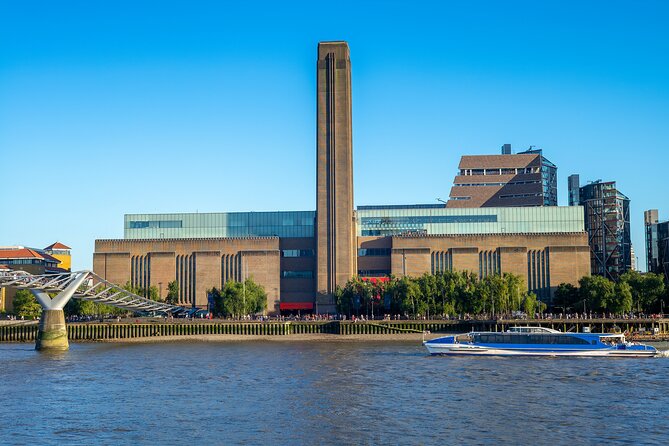
The museum itself also becomes part of the tour. One guide drew attention to Tate Modern’s magnificent structure as well as its art, giving you a fuller sense of the place rather than treating the building as a neutral box.
You should not expect to see everything. Tate Modern is too large for that in two hours, and trying to cover every room would weaken the discussion. A good tour here chooses a manageable group of works and gives each one time.
A completely different sort of day out in London:
- Stonehenge, Windsor Castle and Bath with Pub Lunch in Lacock
★ 4.5 · 7,402 reviews - Tower of London and Crown Jewels Exhibition Ticket
★ 4.5 · 6,677 reviews - Thorpe Park Admission Ticket
★ 4.0 · 5,915 reviews - Stonehenge, Windsor Castle and Bath Full Day Guided Tour
★ 4.5 · 5,346 reviews
Big questions that make the visit worthwhile
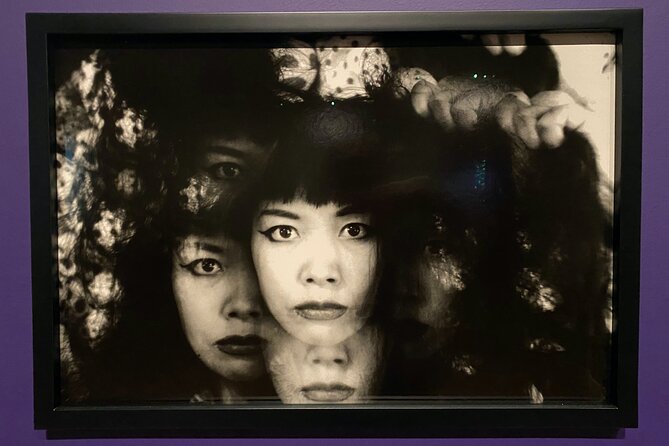
The tour asks questions that reach beyond individual paintings and sculptures. How did abstract art come about? Does the gender of an artist affect how we understand the work?
You may also look at the changing role of sculpture during the 20th century. Photography receives attention too, along with the larger issue of who has the authority to label something art.
Political activist art is another theme that can appear. This is especially useful if you want to understand why an artwork might be confrontational, public-minded, or tied to a social argument.
The guide also asks if art can change the world. That question links museum objects to real life without pretending that every work has a single clear message.
I find this better than a tour that merely lists famous names. You learn a habit of thought that can help with works you see later, both inside Tate Modern and elsewhere.
Julia and Rosa: what the guide style is like
Julia receives the most direct praise in the supplied material. She is described as energetic, witty, enthusiastic, and highly informed, with a knack for making the subject approachable.
Her strongest skill seems to be teaching. She does not simply tell you what a work means. She asks what you see, listens to your interpretation, and then supplies historical and artistic context.
That style suits people who usually say they do not like museums. It also suits regular museumgoers who want more than labels on the wall.
Rosa is another named guide. She has worked at the National Gallery and has detailed knowledge across different art periods. If Rosa leads your tour, you can expect a serious art-historical approach.
You cannot assume a particular guide unless the booking clearly confirms one. If Julia’s style is a major reason you are booking, check the available details before paying.
A good choice for families and mixed-interest groups
Modern art can be a useful shared activity because people often see the same work in different ways. A child may notice color or shape first, while an adult may focus on politics or the artist’s intent.
The guide’s question-based style gives everyone a role. You do not need to know the vocabulary of art criticism, and a child can contribute a useful observation without having studied the artist.
The tour has also worked well for solo visitors, couples, teams, and groups with different levels of interest. For a mixed group, that flexibility may be worth more than a standard museum audio guide.
Still, two hours requires attention. Families should decide if their children will enjoy talking about art rather than simply looking at it. The tour can include younger participants, but it is not designed as a separate children’s program.
What the $137.12 price really buys
The headline price is $137.12 per person. That is a serious expense when Tate Modern’s general entry is free.
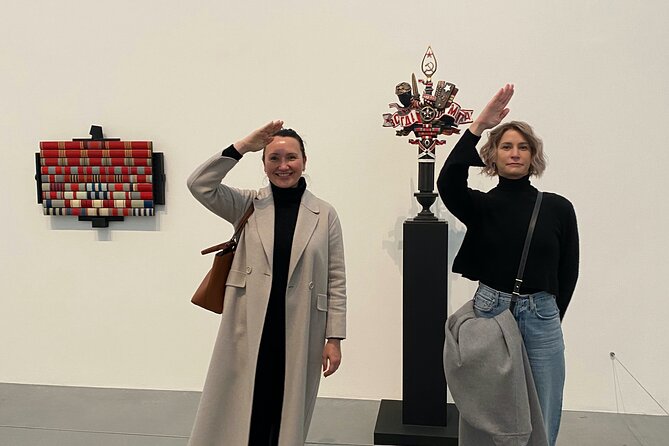
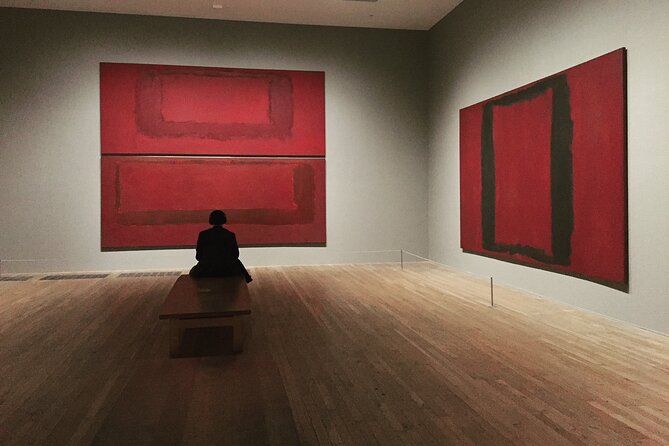
Your payment is mainly for the guide’s time, art-historical training, route planning, personal explanations, and the chance to discuss works in a small group. You also receive a photograph or two in front of artwork you choose and free luggage storage.
For a first visit, the price may make sense if you feel lost in large museums or want to learn a method you can use afterward. The tour can save you from wandering through a large collection without knowing what deserves your attention.
The value is weaker if you already feel comfortable reading modern art on your own. You may prefer to enter for free, choose a few rooms, and spend the money on a paid temporary exhibition or another London activity.
There is one important distinction. Paid temporary exhibitions are not included. General entry is free, but a special show may require a separate ticket.
One review refers to the guide taking the group to a paid Do Ho Suh exhibition without charging them for the ticket, but you should not treat that as a standard inclusion. The stated terms exclude paid temporary exhibitions, so check before assuming a special show is covered.
Two hours, then time to explore
The short format is one of the tour’s best practical features. Two hours is long enough to learn the museum’s basic ideas and see selected works, but short enough to fit into a busy London day.
Afterward, you can continue through the collection at your own pace. You may find that the guide has given you a better way to approach rooms that seemed confusing at first.
This arrangement also protects you from museum fatigue. A full day at Tate Modern can be too much, especially if you are also visiting other museums and sights.
The limitation is coverage. You will not receive a room-by-room survey of the collection, and you should not book this expecting every major artist to appear.
Think of it as a guided introduction with time afterward for your own discoveries. That is a sensible way to handle a museum of this size.
The small group makes a real difference
The maximum group size is 10. That is small enough for questions to be heard and for the guide to adjust the conversation to the people in front of her.
A small group also makes it easier to admit confusion. In a crowded large-group tour, you may hesitate to say that a work does not make sense. Here, the whole format is based on asking what you see and how you respond.
The experience may sometimes feel more personal than a standard public tour, but you should not assume it will always be a private tour. Some people book as couples or families, while others may join the same departure.
If you want a fully private visit, confirm the arrangement before booking. The published maximum is 10, not a promise that only your party will attend.
Practical booking advice and cancellation terms
The experience is usually booked about 25 days ahead, so it is sensible to reserve early if your London dates are fixed. Confirmation is provided at booking, and the tour is offered in English.
You can cancel for a full refund up to 24 hours before the local start time. Cancellations or changes made inside that window are not refunded or accepted.
The activity requires a minimum number of participants. If that minimum is not met, you can receive a different date or experience, or a full refund.
The provider also lists a weather requirement. If poor weather causes cancellation, you are offered another date or a full refund. Since the tour takes place indoors, this condition may relate to operating arrangements rather than the museum visit itself.
One serious service failure appears in the supplied material: a guide once did not arrive and the tour was cancelled, with a prompt refund issued. That seems to be an exception rather than the normal pattern, but it is fair to keep in mind when paying a high per-person price.
Who should book this Tate Modern experience?
I would choose this tour if modern art makes you curious but unsure. It is especially useful for a first Tate Modern visit, a couple with different levels of art interest, or a family whose child enjoys asking questions.
It also suits you if you want political and cultural context instead of a quick list of artist names. The discussion of abstraction, sculpture, photography, gender, and activist art gives the visit a broad frame.
Solo visitors may appreciate the social side of a small group. You can ask questions without needing to organize a private guide.
I would think twice if your main goal is to see a paid temporary exhibition, since that cost is separate. I would also compare the price carefully if you already have a strong background in modern art or prefer unstructured museum time.
Should you book it?
Book it if you want Tate Modern to feel less like a maze and more like a conversation. The strongest reason to go is the teaching style: look first, talk openly, then add context.
The price is high for a museum with free general entry, so this is not the best choice for every budget. But if Julia or Rosa is available, your group is small, and you value help understanding modern art, the two-hour tour can give your London visit real purpose.
After the guide leaves, keep exploring. The best result is not that you memorize a few artworks. It is that you can stand in front of the next puzzling piece and know how to begin.
FAQ
How long does the Tate Modern tour last?
The tour lasts approximately two hours.
Where does the experience begin and end?
It begins at Tate Modern in London, SE1, and ends back at the meeting point.
Is admission to Tate Modern included?
Yes. Free entry to Tate Modern is included.
Are temporary exhibitions included?
No. Paid temporary exhibitions are not included in the tour price.
How many people can join the tour?
The activity has a maximum of 10 travelers.
Is prior art knowledge required?
No. The experience welcomes people without prior art knowledge.
Is the tour offered in English?
Yes. The tour is offered in English.
What is the cancellation policy?
You can cancel at least 24 hours before the start time for a full refund. Cancellations or changes made less than 24 hours before the start time are not refunded or accepted.
Recently added around London
- London’s Crown Secret: Self-Guided Royal Puzzle Quest★ 4.5 · 8 reviews
- Postcard London★ 5.0 · 8 reviews
- Windsor Castle, Stonehenge & Roman Baths Private Tour★ 4.5 · 8 reviews
- Private Tour: Downton Abbey London Locations by Taxi★ 5.0 · 8 reviews
- Cotswolds Private Driving Tour from London★ 5.0 · 8 reviews
- Skip-the-line London Westminster Abbey and City of Westminster Kid-Friendly Tour★ 5.0 · 8 reviews
- A Silent Disco Adventure in London★ 5.0 · 8 reviews
- Gangster Tour of Soho★ 4.5 · 8 reviews
London Tours, compared.

Stonehenge, Windsor Castle, and Bath from London
Read our review →
London Big Bus Hop-On Hop-Off Tour with Optional River Cruise
Read our review →

Stonehenge, Windsor Castle and Bath with Pub Lunch in Lacock
Read our review →
Tower of London and Crown Jewels Exhibition Ticket
Read our review →
Stonehenge, Windsor Castle and Bath Full Day Guided Tour
Read our review →
Windsor Castle, Stonehenge, and Oxford Day Trip from London
Read our review →