
Reviewed · CITY TOURS
Slave Trade Money Trail Tour in the City of London
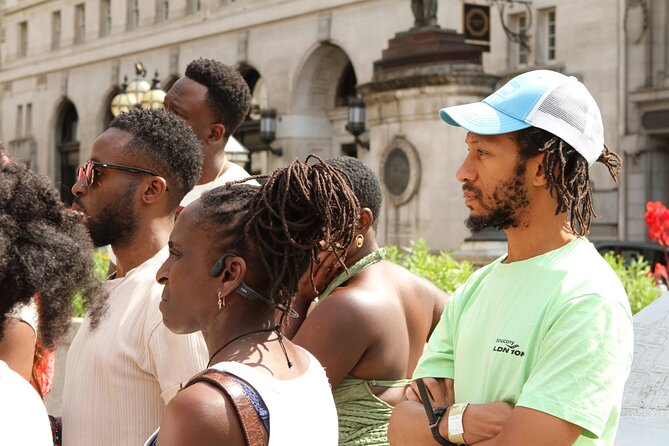
London’s polished financial quarter has a darker story beneath its grand facades. On this three-hour walk, guide Darrel Blake connects the City of London’s banks, insurers, shipping firms, and markets to the wealth created through the transatlantic slave trade.
I like the route for two reasons: it links familiar landmarks to a lesser-known past, and it treats the subject as part of modern London rather than as a sealed-off chapter. The booklet and Darrel’s use of artifacts also give you something to consider after the walk ends.
The main drawback is the emotional weight. This is not a light sightseeing stroll, and some visitors may find the material painful or confronting. You should also plan for changing weather, since the experience requires good conditions and takes place outdoors.
Key points to know before booking
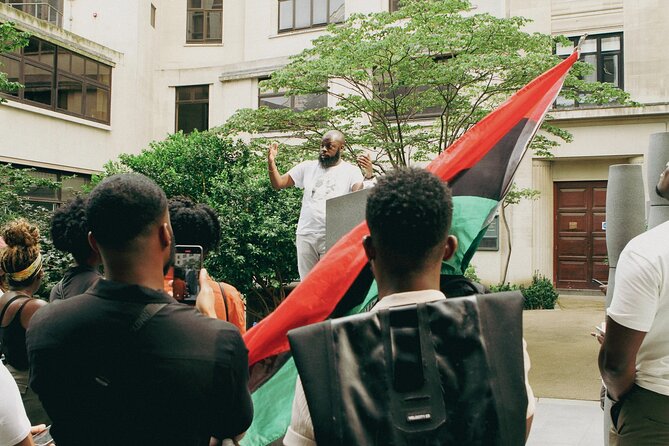
- Darrel Blake leads a direct, personal history walk focused on slavery, colonialism, and London’s financial growth.
- The Royal Exchange, Lloyd’s of London, and Fenchurch Street become evidence of how commerce supported the slave trade.
- Borough Market provides a food-and-trade connection, especially through sugar and tobacco produced by enslaved labor.
- A tour booklet and physical artifacts help turn the discussion into something you can continue exploring afterward.
- The three-hour route ends at Borough Market, making it easy to continue sightseeing or find food afterward.
- The maximum group size is 30, with free cancellation available up to 24 hours before the start time.
Why this City of London walk matters
Many London tours focus on kings, churches, fires, and famous buildings. This one asks a harder question: where did the money behind London’s growth come from, and who paid the human cost?
The answer is not confined to distant plantations or ports. It is also found in offices, banks, insurance houses, trading companies, and markets. The tour places those connections in the City of London, where the buildings are still part of daily life.
That setting gives the walk its force. You are not looking at an isolated museum display. You are standing beside working financial institutions and historic commercial sites while learning how British wealth was tied to African enslavement and colonial trade.
Darrel Blake’s approach is central to the experience. He presents the material clearly and directly, then uses questions to keep you involved. His method includes checking that the group has followed the information and inviting people to think about how familiar versions of British history leave out important parts.
That makes this better suited to active listeners than to people who want a quiet walk with occasional facts. You will have opportunities to ask questions, reflect, and connect the evidence to present-day London.
A few more London half days worth a look
- Stonehenge, Windsor Castle, and Bath from London
★ 4.5 · 18,662 reviews - London Big Bus Hop-On Hop-Off Tour with Optional River Cruise
★ 3.5 · 10,803 reviews - London Small Group Tour of Historical Pubs
★ 5.0 · 10,422 reviews
Starting near the Royal Exchange
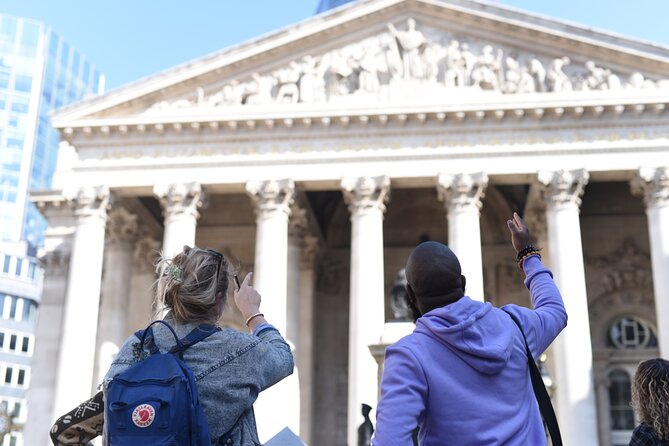
The meeting point is the Royal Exchange in the City of London, with the tour beginning at noon. The first part of the walk covers the historic Bank area, where the focus is on financial institutions linked to the transatlantic slave trade.
You will then spend about 20 minutes at the Royal Exchange itself. The building is an obvious place to begin because it once sat at the centre of London’s commercial life. Its grand design can seem remote from the suffering caused by the trade, which is precisely why the connection is worth examining.
The tour does not treat the Royal Exchange simply as an attractive landmark. It uses the site to explain how commercial networks worked, how money moved, and how institutions could profit from goods and businesses tied to slavery.
I like this opening because it changes the way you look at the City. After hearing the financial background, the surrounding streets no longer appear to be just a collection of impressive facades. They become part of a system that joined London finance to Atlantic shipping, plantation production, and colonial power.
The opening section lasts about 15 minutes around the Bank area, followed by the Royal Exchange stop. Exact timing can shift with the group and the pace of discussion, so do not treat the schedule as a rigid sequence.
Fenchurch Street and London’s shipping economy
The longest stop is at 20 Fenchurch Street, where you spend about 50 minutes examining the area’s connections to shipping and the British economy.
This is likely to be one of the most useful sections for anyone who already knows the broad outline of slavery but wants to understand how an entire economy supported it. The discussion focuses on major companies and shipping interests based in or linked to this part of London.
The key lesson is that the trade needed far more than ships and plantations. It relied on investors, insurers, merchants, lenders, suppliers, and commercial offices. Profits could pass through several hands before becoming buildings, fortunes, and institutional power in Britain.
That wider view helps explain why London grew so rapidly during the 17th to 19th centuries, while enslaved Africans endured forced labor and extreme violence overseas. The tour connects those two realities without treating the city’s development as separate from the exploitation that helped fund it.
You may find this stop especially valuable if school lessons gave you a basic timeline of abolition but little sense of Britain’s financial role. Darrel’s presentation also brings personal experience and supporting artifacts into the discussion, giving the subject a human focus rather than reducing it to names and dates.
Because this is the longest stop, it is also where the pace may feel most demanding. You will need to listen closely for nearly an hour, often while standing outdoors. The payoff is a fuller picture of how trade, finance, and political power reinforced one another.
Lloyd’s of London and the business of risk

The 20-minute stop at Lloyd’s of London looks at insurance and underwriting. This is an important part of the story because an ocean voyage carrying enslaved people and plantation goods involved enormous financial risk.
Insurance allowed merchants and investors to protect their interests. If ships, cargo, or human property were lost, financial arrangements could limit the damage to those who profited. That fact brings an especially cold edge to the history: systems designed to calculate risk also helped make human trafficking commercially workable.
The tour uses Lloyd’s as a way to show that slavery was supported not only by direct trade but by professional services. Insurance, banking, shipping, and law all had roles in making the system function.
For me, this is the kind of stop that gives the tour its practical value. It moves beyond the simple idea that wealthy merchants made money from slavery. You begin to see how an entire commercial structure could benefit, even when every person involved was not standing on a ship or working a plantation.
The building itself is still an active symbol of London’s financial identity. That contrast can be uncomfortable, but it is also the point. The walk asks you to consider how institutions carry their history, even when modern activity looks very different from past practice.
A completely different sort of day out in London:
- Stonehenge, Windsor Castle and Bath with Pub Lunch in Lacock
★ 4.5 · 7,402 reviews - Tower of London and Crown Jewels Exhibition Ticket
★ 4.5 · 6,677 reviews - Thorpe Park Admission Ticket
★ 4.0 · 5,915 reviews - Stonehenge, Windsor Castle and Bath Full Day Guided Tour
★ 4.5 · 5,346 reviews
Borough Market and the goods London consumed
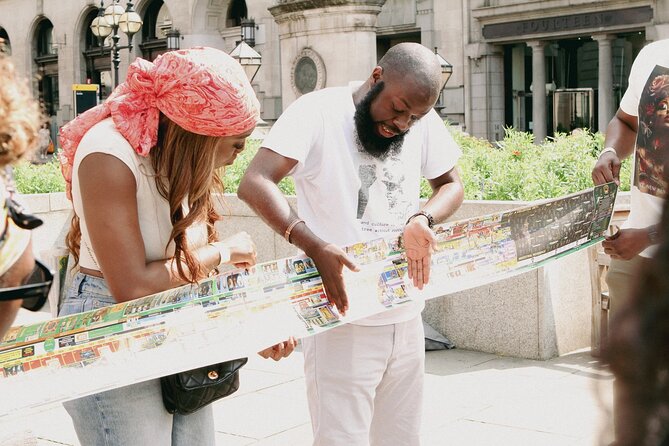
The final stop is Borough Market in Southwark, reached after the City of London section. The tour spends about 20 minutes here, examining the market’s links to goods such as sugar and tobacco, both associated with enslaved labor.
Borough Market is a lively public place, and that makes the discussion especially tangible. Sugar is not an abstract commodity when you think about how common it became in British food and drink. Tobacco, too, links ordinary consumption to colonial production and forced labor.
This section helps complete the chain. Earlier stops focus on money, shipping, and insurance. Borough Market shows how trade reached daily life through the goods people bought, sold, and consumed.
The market is also a practical ending point. You can continue exploring Southwark afterward, but remember that food and drinks are not included in the tour price. The listed details also specify that lunch and bottled water are not provided, so bring water and plan your own meal.
The route ends at Borough Market, London SE1 9AL. Since the walk begins at the Royal Exchange, you should expect a one-way experience rather than a return to the starting point. That is useful if you are planning an afternoon in Southwark, but less convenient if you need to return immediately to the Bank area.
Darrel Blake’s teaching style
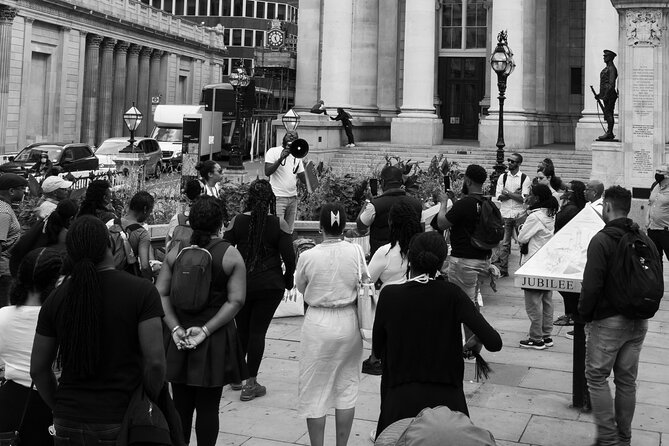
Darrel’s strongest quality is his ability to make a difficult subject understandable without softening it. He speaks plainly, brings evidence into the discussion, and encourages the group to remember what it has just heard.
His delivery is also personal. He shares artifacts and draws on his own connection to the subject, which adds meaning for people researching Caribbean or African heritage. Several comments about the experience describe a sense of finally seeing links that had been left out of earlier education.
That does not mean the tour is only for people with a family connection to the Caribbean. It is also suited to anyone interested in British history, human rights, social justice, or the relationship between colonialism and modern London.
Families with older children may find it useful. The experience has been attended by young people aged 13 and 15, and the clear presentation can work for teenagers who are ready for serious historical material. Parents should make their own judgment about whether the topic is suitable for their children.
You should expect a conversation rather than a scripted parade of facts. That is a strength if you like asking questions and making connections. It may be less appealing if you prefer a fast-moving tour with little discussion.
What the $48.01 price includes
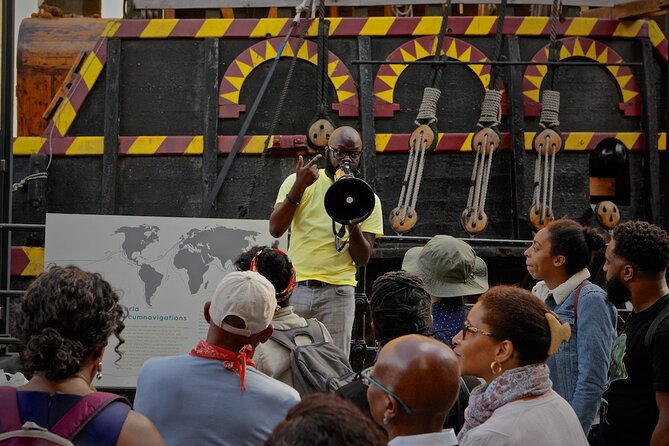
At $48.01 per person, this is not the cheapest way to spend three hours in London. Still, the value depends on what you want from a walking tour.
You are paying for a focused subject, a guide-led interpretation of several important locations, a tour booklet, and the chance to ask questions as the story unfolds. The stops themselves do not require admission tickets, so the cost is mainly for the guide’s research, presentation, and organization.
That price makes more sense if you have already seen the standard London sights and want a different way to understand the city. It also suits visitors who would rather spend three hours on one serious theme than collect a long list of disconnected landmarks.
The value is weaker if you are looking for entertainment, dramatic scenery, or a broad introduction to London. This is a specialist tour. Its reward is context, not spectacle.
The maximum group size is 30 people. That is small enough for a shared discussion, though a full group may make personal questions harder to fit in. If the topic matters deeply to you, arrive ready to listen closely and speak up when there is an opening.
Practical advice for the three-hour route

The tour starts at noon at the Royal Exchange and is offered in English. You receive confirmation when booking, and the route is near public transportation.
Wear shoes suitable for several hours of walking and standing. The tour requires good weather, so check the forecast and keep your schedule flexible. If poor weather causes a cancellation, you are offered another date or a full refund.
Bring water, since bottled water is not included. You should also plan lunch for after the finish at Borough Market, or budget for food there if you want to eat as soon as the walk ends.
Service animals are allowed, and most people can participate. The practical details suggest a generally accessible city walk, but the supplied information does not specify the exact surface conditions, seating, or step-free access at every stop. If you have specific mobility needs, confirm those points before booking.
Free cancellation is available up to 24 hours before the start time for a full refund. Changes or cancellations made less than 24 hours before the start are not refunded, so pay attention to London local time.
Who should book this experience
You should book this walk if you want to understand how slavery and colonialism shaped London’s money, institutions, and everyday trade. It is a particularly good fit for history buffs, students of social justice, people tracing Caribbean or African heritage, and visitors who have already covered the city’s standard attractions.
I would also recommend it to families with teenagers who are ready for an honest discussion of slavery. The questioning style and physical artifacts may help younger participants stay engaged.
You may want to skip it if you want a relaxed sightseeing walk, dislike extended discussion, or have only one day in London and need to focus on the city’s essential landmarks. The subject is serious, and the tour can be emotionally difficult.
FAQ
Where does the Slave Trade Money Trail Tour begin?
The tour begins at the Royal Exchange, Royal Exchange, London EC3V 3LL, at 12:00 pm.
Where does the tour finish?
The walk ends at Borough Market in London SE1 9AL.
How long does the tour last?
The experience lasts approximately three hours.
What language is the tour offered in?
The tour is offered in English.
Is food or bottled water included?
No. Lunch and bottled water are not included.
How many people can join the tour?
The maximum group size is 30 travelers.
Can I cancel for a full refund?
Yes. You can cancel at least 24 hours before the start time for a full refund. If poor weather forces the provider to cancel, you are offered another date or a full refund.
Should you book it?
Book this tour if you want London history with the comfortable myths removed. Darrel Blake takes you from the Royal Exchange through the City’s financial and insurance networks, then ends with the goods sold at Borough Market. That route makes the subject concrete.
At $48.01, the cost is fair for a specialist three-hour walk with a booklet, artifacts, and a guide who encourages discussion. Just bring water, wear sensible shoes, prepare for serious material, and check the weather. If you are ready to look at London’s wealth through the lives it harmed as well as the buildings it funded, this is a worthwhile choice.
Recently added around London
- London’s Crown Secret: Self-Guided Royal Puzzle Quest★ 4.5 · 8 reviews
- Postcard London★ 5.0 · 8 reviews
- Private Tour: Downton Abbey London Locations by Taxi★ 5.0 · 8 reviews
- Windsor Castle, Stonehenge & Roman Baths Private Tour★ 4.5 · 8 reviews
- Cotswolds Private Driving Tour from London★ 5.0 · 8 reviews
- Skip-the-line London Westminster Abbey and City of Westminster Kid-Friendly Tour★ 5.0 · 8 reviews
- A Silent Disco Adventure in London★ 5.0 · 8 reviews
- London: National Gallery English Audio Tour with free fast Entry★ 3.0 · 8 reviews
City Tours, compared.


Liverpool City Sights Hop On Hop Off City Tour – 24hr Ticket
Read our review →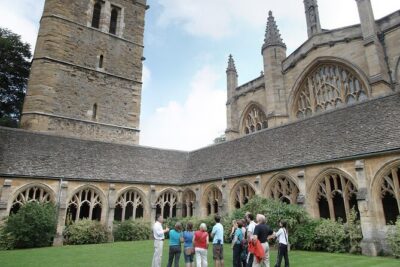
1.5-hour Oxford City and University Walking Tour
Read our review →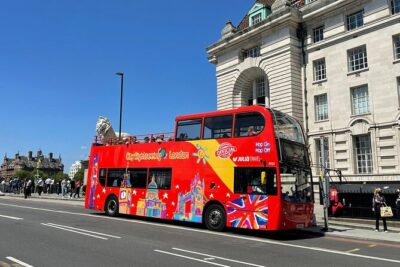
City Sightseeing London Hop-On Hop-Off Bus Tour & Bookable Extras
Read our review →
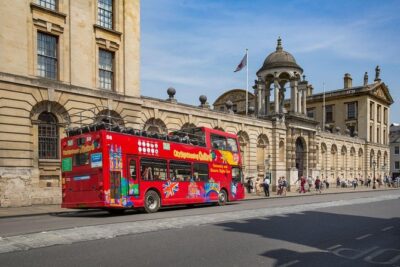
City Sightseeing Oxford Hop-On Hop-Off Bus Tour
Read our review →
Browse the lists this tour appears in