
Reviewed · HISTORICAL TOURS
The History of London City Center Tour Semi-Private 12ppl Max
London’s story comes into focus on this 2.5-hour walk from Covent Garden to Westminster Abbey. In one steady route, you pass theatres, royal palaces, government buildings, war rooms, and the clock tower most visitors simply call Big Ben. It is a useful first look at central London, especially if you want context before exploring on your own.
I like the small group cap of 12, which gives your guide room to answer questions and adjust the pace. I also like the broad sweep of the route: you get royal history, political drama, naval memory, and wartime stories without spending the whole day in one museum.
The main consideration is the walking. This is an active city tour with many outdoor stops, and most landmarks are viewed from the outside. Entry to Westminster Abbey and a guided visit inside are not clearly included in the supplied details, so confirm that point before booking.
Key points to know before booking
- Covent Garden to Westminster Abbey: The route links many major sights in a logical westward walk.
- No more than 12 people: The semi-private format is small enough for questions and conversation.
- A guide-led overview: Expect stories about Roman London, monarchs, Parliament, Winston Churchill, and modern royal life.
- Mostly exterior sightseeing: Buckingham Palace, 10 Downing Street, Big Ben, Parliament, and Westminster Abbey are primarily viewed from outside.
- Moderate physical effort: Bring comfortable shoes, water, and rain protection. The tour runs in all weather.
- Guides vary by departure: Past departures have featured Matilda, Guy, Andrew, Andy, Jake, Alexandra, Becky, Gerg, and Becca.
Why this route works for a first day in London
This tour is built around orientation. Rather than sending you into one attraction for several hours, it connects a dozen important places in central London and explains how they fit together.
You begin at Covent Garden, walk through Trafalgar Square, follow Whitehall toward Parliament, pass royal buildings and Buckingham Palace, then finish near Westminster Abbey. That progression helps you understand London as a city shaped by three forces: the Crown, the government, and public ceremony.
I think the route is especially useful on your first full day. You get a mental map of the West End and Westminster, then you can return later to the places that caught your interest. One family used it as an early introduction to the city and found that the guide made British history and the royal family easier to follow. That is the real purpose here: not exhaustive sightseeing, but a clear beginning.
The $59.28 price sits in a reasonable range for a guided walk of this length, particularly with a maximum of 12 people. You are paying for a live guide and a carefully arranged route rather than admission to several attractions. If you prefer to wander independently and read signs as you go, the price may feel less attractive. If you want the landmarks tied together with political and historical context, it offers fair value.
More History Tours in London
- London Small Group Tour of Historical Pubs
★ 5.0 · 10,422 reviews - Soho Music & Historic Pubs Tour
★ 5.0 · 1,993 reviews - Royal Historic Pubs Walking Guided Tour in London
★ 5.0 · 803 reviews
Starting among theatres and markets at Covent Garden
The meeting point is Covent Garden, and the walk starts at 10:00 a.m. This is a practical place to begin because it is easy to reach by public transport and already gives you a taste of London’s layers.
The area began as a Saxon settlement as early as the seventh century. Today, it is better known for shops, restaurants, theatre, street activity, and its long connection with London entertainment. Your guide uses this opening stop to set up the city’s older story before moving toward the grand civic spaces.
You spend about 10 minutes here, with no admission fee. Do not expect a full tour of every corner of Covent Garden. Think of it as the starting chapter and a chance to meet your guide and group.
Trafalgar Square and Nelson’s Column
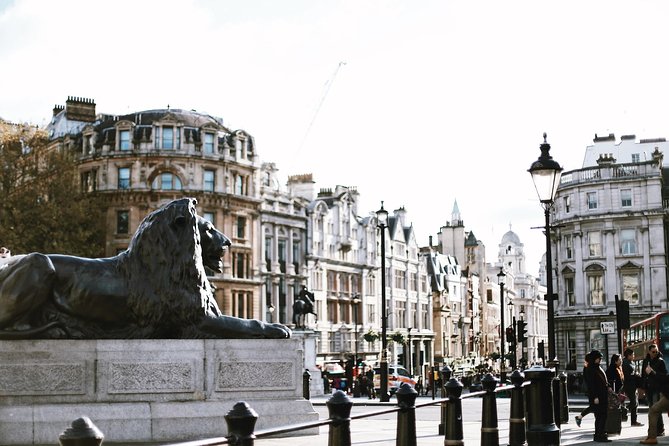
From Covent Garden, you continue to Trafalgar Square, one of London’s best-known public spaces. The square commemorates the British naval victory at the Battle of Trafalgar in 1805, where Admiral Horatio Nelson died.
Nelson’s Column gives the square its central focus. Your guide explains both the monument and the event behind it, helping you see why naval power mattered so much to Britain’s national story.
The square is also a place of public protest and demonstrations. That detail matters because Trafalgar Square is not only a monument to a military victory. It remains a civic meeting place where people gather to make political points, celebrate, and object.
The tour allows about 10 minutes for Trafalgar Square and another 10 minutes for Nelson’s Column. Those time blocks are enough for explanation and photographs, but not a lengthy inspection of every statue or fountain. Keep your camera ready, since the group continues fairly quickly.
Admiralty Arch and the road toward Whitehall
Admiralty Arch links Trafalgar Square with The Mall, the ceremonial avenue leading toward Buckingham Palace. The building was commissioned by King Edward VII in memory of his mother, Queen Victoria.
This is a good example of how the walk uses streets and buildings as historical evidence. You are not just moving between attractions. You are following the route of royal ceremony and state power through the center of London.
Next comes Whitehall, the government district running from Charing Cross toward the Houses of Parliament. The name also covers nearby streets, squares, and government buildings. The area has been tied to central government since Henry VIII’s court occupied Whitehall Palace in the 1530s.
Whitehall is one of the more useful parts of the tour for visitors who want political context. Your guide can explain how the royal court, government offices, and Parliament developed in close proximity. You spend roughly 10 minutes at each of these stops, though the actual walking between them adds to the time on your feet.
A completely different sort of day out in London:
- Stonehenge, Windsor Castle, and Bath from London
★ 4.5 · 18,662 reviews - London Big Bus Hop-On Hop-Off Tour with Optional River Cruise
★ 3.5 · 10,803 reviews - Stonehenge, Windsor Castle and Bath with Pub Lunch in Lacock
★ 4.5 · 7,402 reviews - Tower of London and Crown Jewels Exhibition Ticket
★ 4.5 · 6,677 reviews
10 Downing Street and the working government
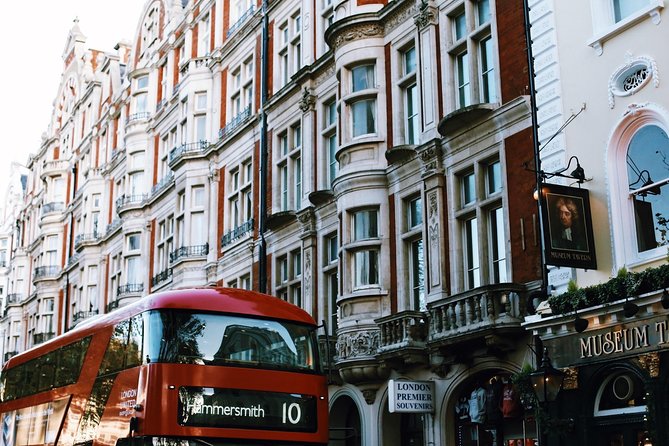
Downing Street dates from the 1680s and is best known for Number 10, the official residence and office of the British Prime Minister.
Security means you should expect to see the famous entrance from outside rather than walk down the street as if it were an ordinary shopping lane. That limitation is part of modern London, where important public buildings often cannot be entered casually.
Still, the stop has real value. Your guide can put the address into the wider story of British government and explain why one modest-looking doorway became one of the most recognized political addresses in the world.
The tour gives this stop about 10 minutes. That is plenty for an explanation and a photograph, but not for a visit inside. If your main aim is to tour government interiors, this walk will not replace a dedicated attraction visit.
St. James’s Palace and the royal route
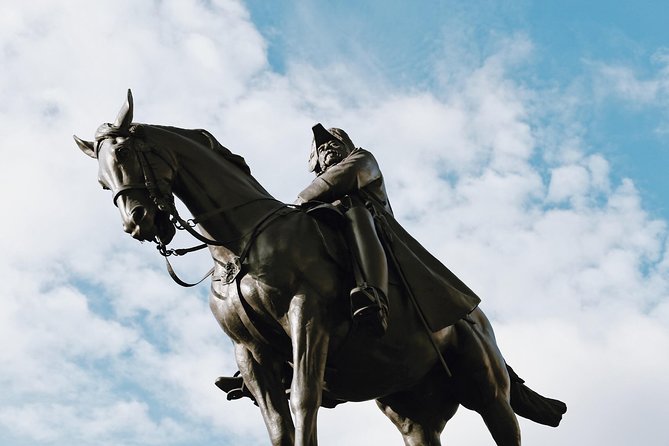
The route then passes St. James’s Palace, described as the most senior royal palace in the United Kingdom. It served as a royal residence for more than 300 years and has hosted major events in royal history.
This stop adds useful contrast to Buckingham Palace. St. James’s Palace is less visually overwhelming, but its age and role in royal life make it an important part of the story. Your guide can help you understand that London’s royal center is not limited to one palace and one famous balcony.
The stop lasts about 10 minutes and is exterior sightseeing. That makes it a quick introduction rather than a palace tour.
Buckingham Palace and the modern monarchy
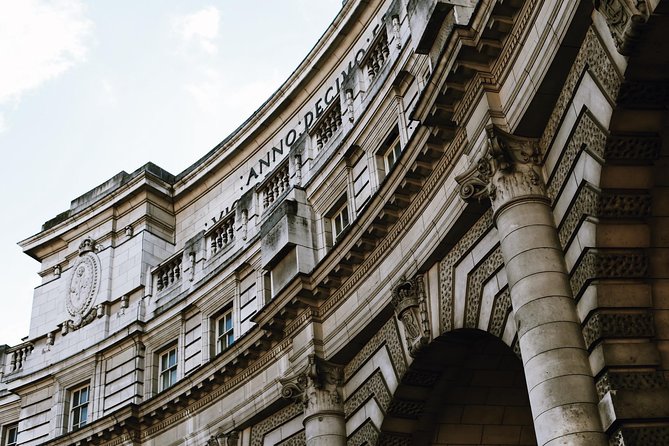
Buckingham Palace is the most instantly recognizable royal stop on the route. It became the official London residence of the British sovereign in 1827 and remains a working building, including the administrative headquarters of the monarch.
Your guide connects the building to monarchs including Queen Elizabeth II and to the public ceremonies that take place around it. You may also hear about royal routines and the way the palace functions as an office as well as a ceremonial home.
The tour does not promise interior access. That is important, since a photograph in front of the palace and a palace visit are very different things. If you want to see the State Rooms, you will need a separate plan and ticket.
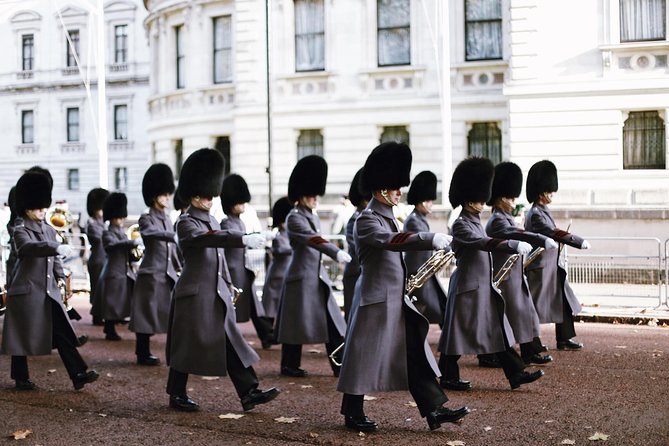
One departure had the good fortune to see the Changing of the Guard and service bands while walking through the area. Treat that as a bonus, not a guaranteed part of the tour. Ceremonies can depend on the day, season, official events, and route changes.
Churchill War Rooms and London’s wartime story
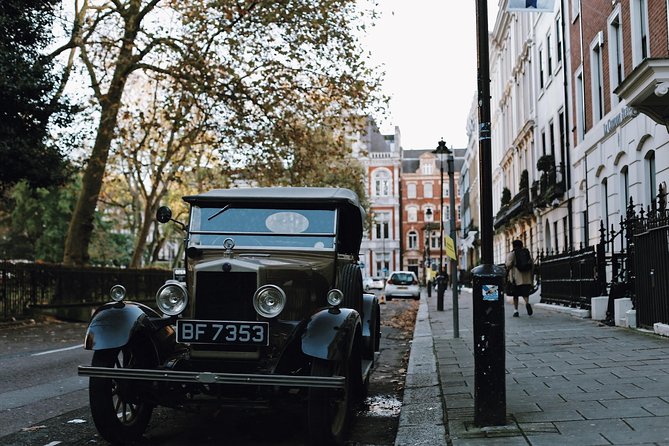
The walk continues past the Churchill War Rooms, part of the Imperial War Museum. The museum includes the Cabinet War Rooms, an underground command center used by the British government during the Second World War, and the Churchill Museum, which covers Winston Churchill’s life.
The tour passes the museum rather than taking you through it. That distinction matters. You will receive background about Churchill and wartime leadership, but you will not get the underground rooms or museum exhibits as part of this walk.
I like this section because it broadens the tour beyond royal ceremony. London’s central streets are tied not just to kings and queens, but also to decisions made during national emergencies. If the wartime material interests you, mark the museum for a separate visit. Its admission is not included in the walking tour.
Big Ben, Parliament, and the final view
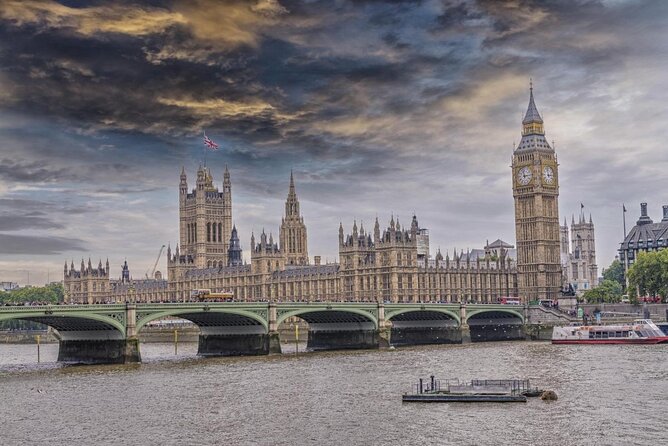
Near the end, you see Big Ben and the Palace of Westminster, commonly called the Houses of Parliament. Big Ben is technically the clock tower’s great bell, though the name is widely used for the tower itself.
The Palace of Westminster has more than 900 years of parliamentary history behind it. Today, the House of Commons and House of Lords meet there. The Gothic building is one of the strongest visual rewards of the route, particularly when seen alongside the River Thames and Westminster Bridge area.
The guide explains how the building functions and why Parliament is central to British public life. As with the other major landmarks, the standard tour is an exterior visit. Admission to the interior is not included.
This final section is a fitting end because it brings together the themes introduced earlier: monarchy, government, war, and public ceremony. You have followed the route from a former Saxon settlement to the seat of national politics.
Finishing at Westminster Abbey
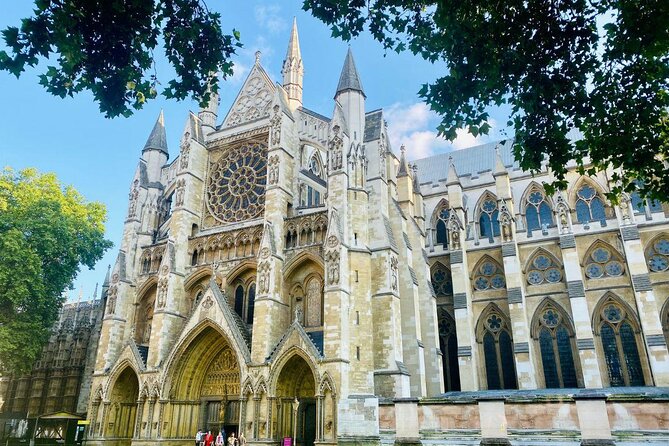
The tour ends outside Westminster Abbey. The abbey is one of London’s most important religious and royal buildings, but the walk does not provide a guided interior visit.
The supplied details contain an important inconsistency. One note says the tour finishes with entry tickets to Westminster Abbey, while the itinerary and admission information say entry is not included and specify an exterior ending. Confirm this directly with Babylon Tours London before paying, especially if going inside the abbey is a major reason for your booking.
Even if you only see the exterior, the ending is convenient. You are near Westminster stations, Parliament, Big Ben, and other central sights, so you can continue exploring or make your own plan for the afternoon.
The guides and the small-group difference
The guide assigned to your date can vary. Names associated with past departures include Matilda, Guy, Andrew, Gerg, Andy, Jake, Alexandra, Becky, and Becca.
The strongest pattern in the guide feedback is clear delivery, warmth, and strong command of London’s political and royal story. Matilda was described as friendly, perceptive, and easy to talk with. Guy brought an upbeat manner and was nicknamed the animal whisperer. Andy was especially attentive to the group’s interests and gave useful explanations of political and wartime events.
Becca had an academic background in history and art, which helped bring both the city and the royal family into focus for adults and children. Alexandra made the route work well for people arriving in London that day, even when jet lagged. These details suggest that the guide’s personality can shape the outing, but the exact person is not guaranteed.
A group of six is smaller than the 12-person maximum, but you should book this knowing the tour can reach the full limit. Even at 12, the format is more personal than a large coach or a crowded public walk. A private upgrade is available if you want the guide’s full attention or have a very specific pace and interest.
Walking conditions, timing, and what to carry
The tour runs rain or shine. London weather can change quickly, so bring an umbrella or rain jacket, plus a hat in summer. Comfortable shoes are essential, and a bottle of water is sensible.
The operator describes the activity as requiring moderate physical fitness. It is not available to people with walking disabilities or those using a wheelchair. No large bags or suitcases are allowed, so do not plan to arrive with airport luggage.
The starting point is near public transport, while the tour does not include hotel pickup or drop-off. You can use public transport to reach Covent Garden, and a taxi or Uber may be useful if you are carrying belongings. The finish at Westminster Abbey makes it easy to continue on foot or connect with public transport.
National celebrations can affect the route. In those cases, an alternative route is used so the major highlights can still be seen, but refunds or discounts are not offered for the change.
Who will get the most from this walk
I would choose this tour for a first visit, for families who want history explained in plain language, and for active visitors who prefer streets and viewpoints to long indoor sessions. It also suits anyone who wants to see the major royal and political sights before deciding which ones deserve a separate ticket.
It is less suitable if you want extensive interior access, a slow photographic walk, or a route designed around one subject alone. The tour covers a lot of ground, so each stop receives a short explanation rather than a full lecture.
You can cancel for a full refund up to 24 hours before the start time. The tour needs at least two people to operate. If that minimum is not met, you are offered another date or a full refund.
Should you book The History of London City Center Tour?
Book it if you want a compact, guide-led introduction to central London, especially with a small group and a strong focus on royal, political, and wartime stories. The route is well chosen, the price is fair for 2.5 hours of live guiding, and the finish near Westminster Abbey is practical.
Before booking, confirm the Westminster Abbey ticket issue and understand that nearly all sights are exterior stops. If you are comfortable walking in changing weather and want to get your bearings fast, this is a sensible first-day choice. If you need wheelchair access or want detailed interior tours, choose a different plan.
FAQ
How long is the tour?
The tour lasts approximately 2 hours and 30 minutes.
Where does the tour start?
It starts at Covent Garden in central London.
Where does the tour finish?
It finishes in front of Westminster Abbey, near London SW1H 0NE.
What time does the tour start?
The listed start time is 10:00 a.m.
How many people can join the semi-private tour?
The maximum group size is 12 people.
What sights are included on the route?
The route includes Covent Garden, Trafalgar Square, Nelson’s Column, Admiralty Arch, Whitehall, 10 Downing Street, St. James’s Palace, Buckingham Palace, the Churchill War Rooms, Big Ben, the Houses of Parliament, and Westminster Abbey.
Does the tour include entry to Westminster Abbey?
The supplied details conflict. One note refers to entry tickets at the end, while the itinerary says admission is not included and describes an exterior finish. Confirm this directly before booking. A guided interior tour is not included.
Is hotel pickup included?
No. Hotel pickup and drop-off are not included.
Is the tour suitable for wheelchair users?
No. The tour is not available to people with walking disabilities or those using a wheelchair.
What happens if the tour does not reach its minimum number?
The tour requires at least two people. If it is canceled because that minimum is not met, you will be offered another date or a full refund.
Recently added around London
- London’s Crown Secret: Self-Guided Royal Puzzle Quest★ 4.5 · 8 reviews
- Postcard London★ 5.0 · 8 reviews
- Private Tour: Downton Abbey London Locations by Taxi★ 5.0 · 8 reviews
- Windsor Castle, Stonehenge & Roman Baths Private Tour★ 4.5 · 8 reviews
- Cotswolds Private Driving Tour from London★ 5.0 · 8 reviews
- Skip-the-line London Westminster Abbey and City of Westminster Kid-Friendly Tour★ 5.0 · 8 reviews
- A Silent Disco Adventure in London★ 5.0 · 8 reviews
- London: National Gallery English Audio Tour with free fast Entry★ 3.0 · 8 reviews
Historical Tours, compared.

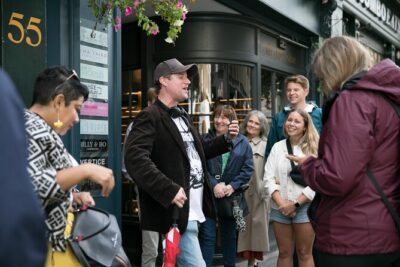
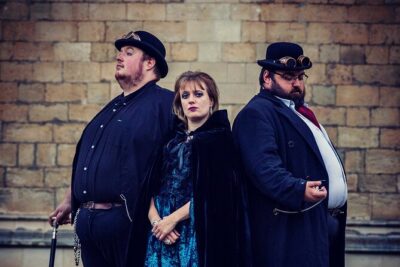
Shadows of York: Ghost Walk and Horrible History.
Read our review →
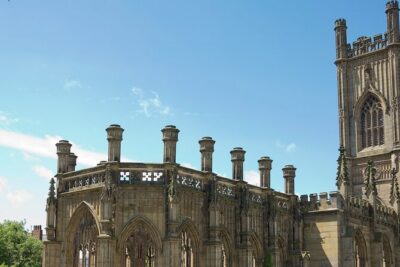
A Walk Through Time: History of Liverpool Walking Tour
Read our review →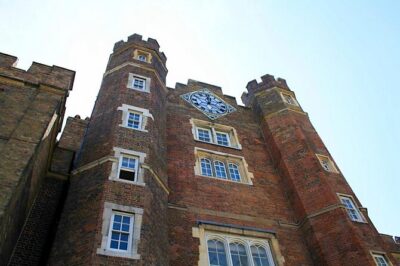
Royal Historic Pubs Walking Guided Tour in London
Read our review →
Private Group: Historical Pub Walking Tour of London
Read our review →
Best Of Liverpool Heritage, History & Culture Guided Walking Tour
Read our review →Browse the lists this tour appears in