
Reviewed · CAMBRIDGE TOURS
The Original Uncomfortable Cambridge™ Tour
Cambridge’s grand colleges are easy to admire. This tour asks you to stop admiring for a moment and ask who paid for them, who was kept out, and whose story was left off the plaque. In about 90 minutes, a student guide covers medieval town-and-gown conflict, questionable university donations, the fight for women’s membership, black student history, enslavement, repatriation, and LGBTQIA+ memory.
I like the small 15-person limit, which gives the walk a sociable feel without turning it into a crowd exercise. I also like the short, questioning bursts of commentary. Guides such as Shubham and Malak have been praised for keeping the discussion lively, interactive, and easy to follow. The main consideration is that this is not a gentle sightseeing stroll. The subject matter can be uncomfortable, and the route is not a good fit if walking is difficult.
Key points to know before booking
- Cambridge without the polished script: The route looks at power, exclusion, money, and memory rather than offering only college dates and famous names.
- Eight thoughtful stops in 90 minutes: You move from King’s College to Great St Mary’s, the Backs, Darwin College, Queens’ College, St Catharine’s, and back to King’s.
- Student-led and capped at 15 people: The guide brings a current connection to university life and can keep the group engaged.
- College interiors are not included: You discuss the colleges from outside, so budget separately if you want to enter them.
- Serious topics, lively delivery: The format uses short sections and interaction instead of one long lecture.
- Good value for history-minded visitors: At $27.56, the price is modest for a focused walking tour, especially if you want a different angle on Cambridge.
A different way to read Cambridge
The usual Cambridge walk points out grand gates, famous scholars, pretty courtyards, and the colleges’ most photogenic views. The Original Uncomfortable Cambridge Tour takes the same handsome streets and asks harder questions.
That change in focus matters. You are not simply collecting facts about old buildings. You are looking at how a powerful institution grew, who benefited from it, and who had to fight for a place within it. The guide also connects historic decisions to modern questions about public memory and responsibility.
The tone is direct but not designed to shock for its own sake. The best parts use a specific site as a starting point, then open a wider discussion. A college entrance becomes a prompt about access. A university donation leads to questions about where wealth came from. A familiar view of the Backs becomes a way to discuss war and political legacy.
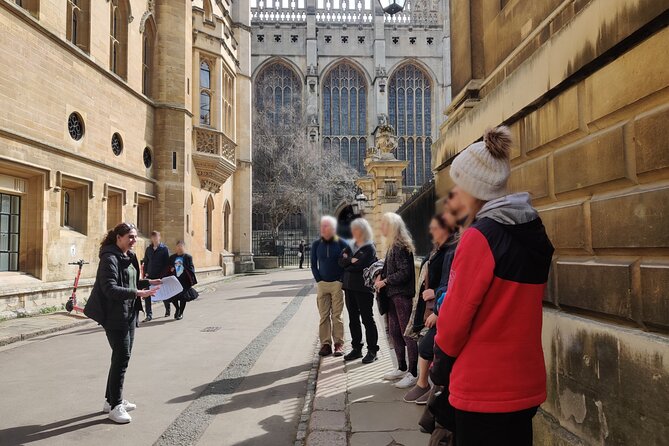
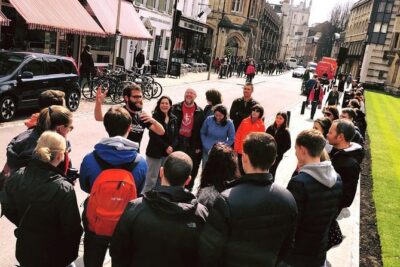
The tour is conducted in English and lasts about an hour and a half. With a maximum of 15 people, you should be able to hear the guide clearly and take part without having to fight through a large group. The route is shared on foot, so wear comfortable shoes and expect to keep moving between stops.
A few more Cambridge half days worth a look
- Cambridge University Walking Tour by Alumni™ Kings College Option
★ 5.0 · 2,336 reviews - Cambridge University With Alumni: Optional Kings College Entrance
★ 5.0 · 1,987 reviews - Punting Tour in Cambridge
★ 4.5 · 1,690 reviews
Starting near King’s College
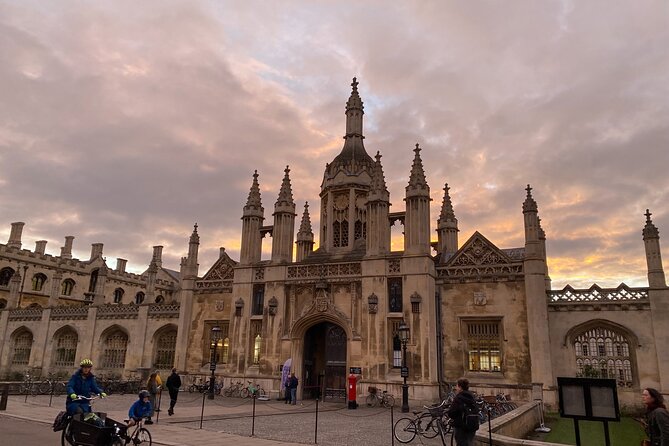
The official meeting point is Cambridge Tourist Information Centre at The Guildhall, 11 Peas Hill. From there, you meet the student guide and make your way to the front of King’s College, where the walking route begins.
King’s is a practical starting point because it puts you immediately beside one of Cambridge’s best-known sights. Yet the purpose here is not simply to admire the chapel or take a quick photograph. The college becomes part of a wider conversation about who gets remembered, whose stories are preserved, and how institutions present themselves.
You finish at King’s later in the walk, when the focus turns to LGBTQIA+ histories and memory. That return gives the tour a useful shape. The same famous college frames both the opening and the ending, but you leave with a less simple view of what its buildings represent.
Admission to King’s College is not included. This tour is therefore best understood as an exterior walking experience. If you want to visit the college interiors, check its separate admission arrangements and allow extra time outside the 90-minute route.
Great St Mary’s and the old town versus university conflict
Great St Mary’s Church is the first substantial stop, with about 15 minutes devoted to medieval tensions between Cambridge’s townspeople and the university.
This is a smart early topic because it challenges the idea that Cambridge has always been one harmonious academic community. The university and the town developed alongside each other, but they did not always share power or interests. The church helps place those tensions in a real civic setting rather than leaving them as a vague background story.
I like this stop because it gives you a framework for the rest of the walk. You begin to see the university not only as a collection of colleges, but also as an institution with authority, privileges, and a complicated relationship with the city around it.
Entry to Great St Mary’s is free for this stop. You should still expect the group to discuss the church rather than spend a long period touring its interior. The overall format is brisk, with about 15 minutes here before the group moves on.
Trinity Hall and the question of university money
Near Trinity Hall and the Old Schools building, the guide discusses problematic donations to the university. This is one of the tour’s most useful subjects because it moves beyond the buildings themselves and asks how institutions were funded.
A college may look timeless, but its finances were shaped by people, industries, and political choices. Donations can support education while also carrying uncomfortable links to wealth made through exploitation or contested activity. The point is not to reduce every historic benefactor to a single label. It is to help you ask better questions about the money behind grand institutions.
You do not enter Trinity Hall as part of the experience. That keeps the ticket price down, but it also means you are learning from the street and from the guide’s explanation rather than seeing college rooms firsthand. For this particular tour, that is not a major weakness. The discussion is the main event.
A completely different sort of day out in Cambridge:
- Cambridge: Guided River Cam Punting Tour
★ 4.7 · 1,469 reviews - Cambridge: University Alumni Tour with Kings College Option
★ 4.7 · 1,282 reviews - Cambridge: Alumni-Led Walking Tour w/ King’s College Option
★ 4.8 · 1,177 reviews - Shared Guided Punting Tour of Cambridge
★ 5.0 · 787 reviews
The Backs, the Civil War, and Oliver Cromwell
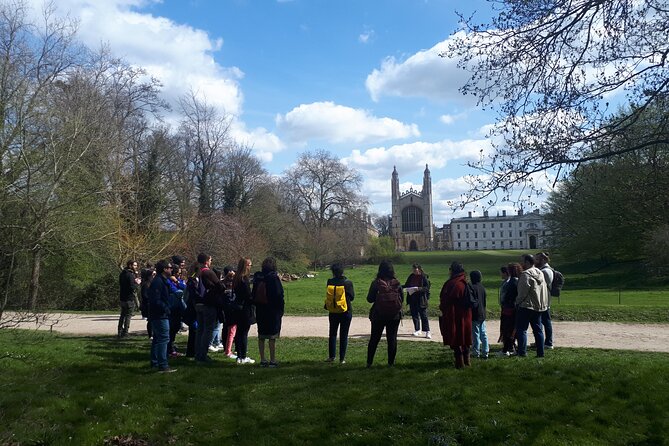
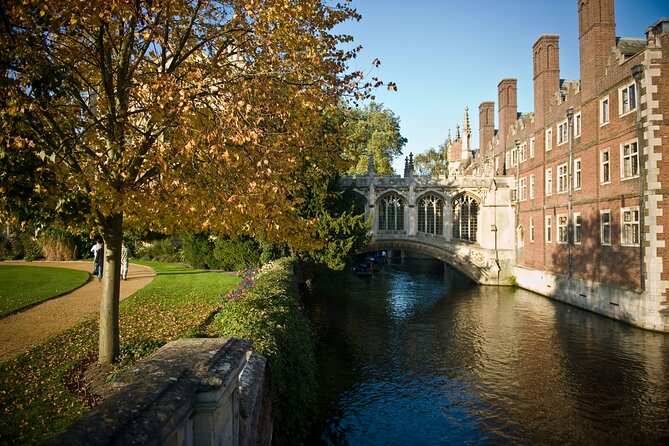
The walk continues to the Backs, one of Cambridge’s most memorable open views. Here, the subject shifts to the English Civil War and the legacy of Oliver Cromwell, with about 20 minutes at the stop.
This is the longest single section of the route, and the setting gives the guide room to connect Cambridge to national political conflict. The Backs are often treated as a postcard view, but the tour uses them as a place to think about authority, rebellion, religion, and the way political figures are remembered.
Cromwell is especially useful for that discussion because his legacy remains contested. Different people can see him as a military and political leader, a defender of Parliament, or a figure tied to harsh rule and upheaval. You should expect the guide to present the subject as a question of memory and interpretation rather than a simple good-versus-bad story.
The Backs are also where the walking conditions may feel most noticeable. Most people can take part, but the activity is not recommended if you have difficulty walking. A 90-minute route with several stops can feel easy to one person and tiring to another, so plan accordingly.
Darwin College and the long fight for women’s membership
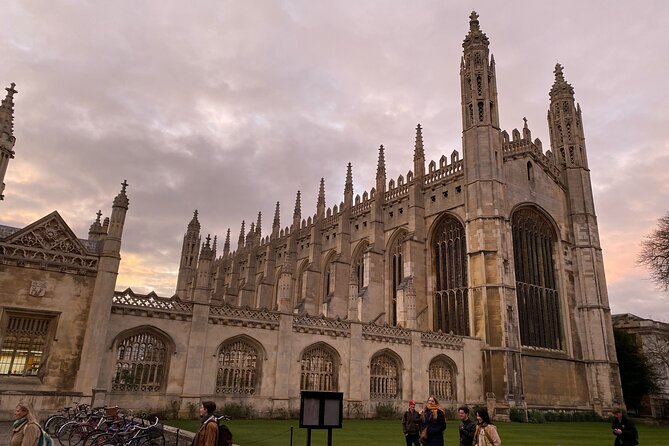
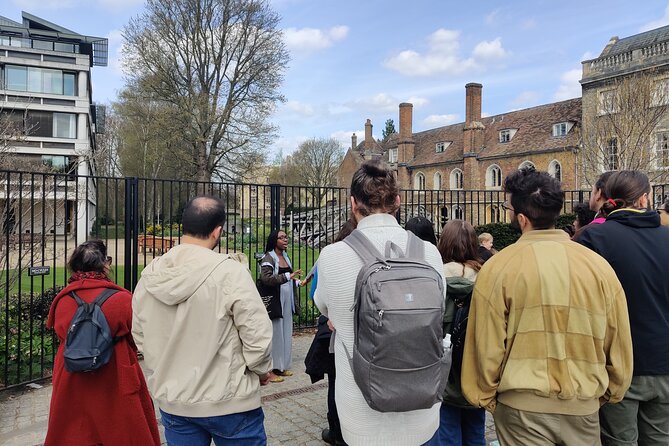
Opposite the site of the former New Hall College, now Darwin College, the guide reviews a map of the colleges and discusses the journey of women as they fought to become full members of the university.
This is a strong example of the tour’s method. Instead of treating women’s access as a single date in a timeline, the guide uses a college site to show that institutional change took time and met resistance. The map also helps you understand how Cambridge’s colleges relate to one another, which is useful if this is your first visit.
The subject has particular force because colleges can look open and welcoming from the outside while their rules once excluded large parts of society. The stop gives you a chance to think about the difference between being allowed to study, being allowed to belong, and being granted full membership and recognition.
Darwin College is not entered. You view the site from outside and listen to the explanation. That makes this stop accessible to anyone who wants the historical context without paying for multiple college admissions.
Queens’ College and the history of black students
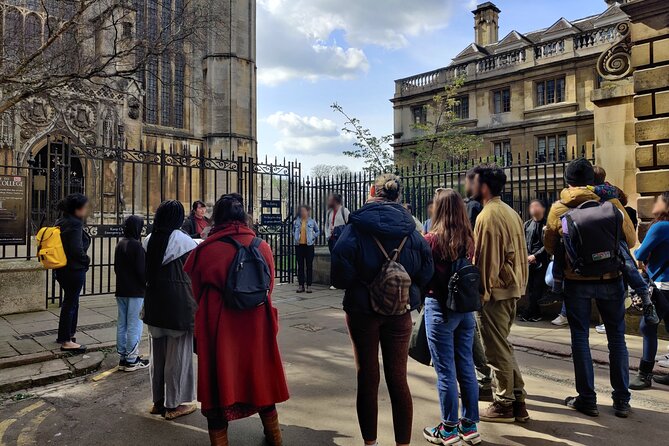
At Queens’ College, the discussion turns to the history of black students at Cambridge University. It is a welcome correction to the narrow version of university history that focuses only on famous white men.
The topic is important not because it adds a token name or two, but because it asks how students from different backgrounds experienced an institution built around old traditions and social expectations. You may find the guide connecting individual experiences to larger questions about belonging, recognition, and who gets included in the official story.
Queens’ College is another exterior stop, and admission is not part of the tour. The guide’s explanation carries the weight here. That makes the quality of delivery especially important, which is why the student-led format matters. A guide who can invite questions and explain the topic in clear sections will make more of the stop than a memorized speech.
The feedback on guides such as Shubham and Malak points to exactly that strength. Their approach has been described as thought-provoking, interactive, and delivered in short bursts. That style suits difficult material because you have time to absorb one idea before moving to the next.
St Catharine’s and contested objects
At St Catharine’s College, the tour takes on controversies involving histories of enslavement and the repatriation of objects. This may be the most directly current part of the walk, since it connects historic collections and institutional practice to present-day arguments about ownership and responsibility.
The subject can feel abstract when discussed in a classroom. Here, the college setting gives it a physical anchor. You are standing beside an institution with a past, and the guide asks what should happen when that past includes involvement in enslavement or objects acquired under unequal conditions.
You should not expect a simple answer delivered in a few minutes. The value of this stop is in showing why repatriation debates are difficult and why public history keeps changing. It also reinforces the tour’s larger point: old buildings are not neutral. They carry decisions made by people, and those decisions can still affect how institutions are viewed today.
Again, you do not enter St Catharine’s. If your main goal is to see college interiors, this experience will not replace a standard college tour. If your goal is to understand the questions behind the buildings, the exterior format works well.
Back at King’s for LGBTQIA+ history and memory
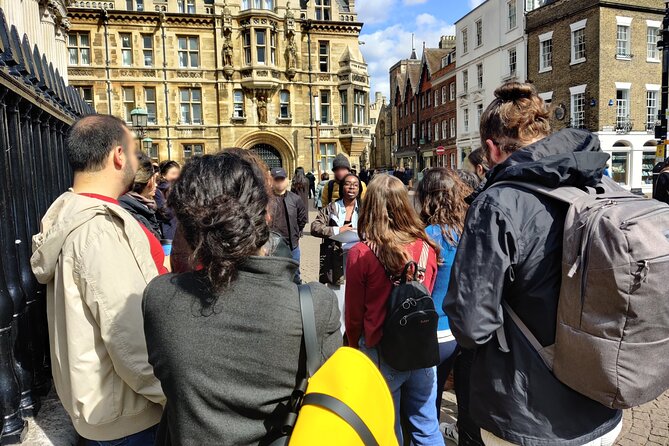
The final stop returns to King’s Parade, close to where the walk began. Here, the guide discusses LGBTQIA+ histories and memory.
Ending with this subject gives the tour a modern and personal note. It also expands the meaning of inclusion beyond gender, race, and money. The question becomes how universities remember LGBTQIA+ people, how those stories have been preserved or ignored, and what it means to make a historic institution more honest about its past.
The return to King’s is convenient. You end in the center of Cambridge, near major sights and easy places to continue exploring. The final 15-minute section also gives the guide time to bring several of the tour’s themes together: access, power, public memory, and the gap between an institution’s image and its full story.
What the $27.56 price gets you
At $27.56 per person, this is reasonably priced for a 90-minute guided walk in central Cambridge. You are paying for a Cambridge University student guide, a carefully chosen route, and a focused subject rather than for entry to the colleges.
That distinction is important. Admission to Trinity Hall, Newnham College, Queens’ College, St Catharine’s, and King’s College is not included. The itinerary also lists Darwin College as a discussion stop, not an included interior visit. If you want to go inside several colleges, your total Cambridge sightseeing budget will be higher.
Still, the tour can be good value because it offers something a standard highlights walk may not. You get a clear theme, eight stops, and a guide who can connect buildings to difficult questions. A small group capped at 15 also makes the price more appealing than a large coach-style commentary.
I would book it as a companion to, not necessarily a replacement for, a classic Cambridge tour. See the grand buildings on your own or with a traditional guide, then use this walk to question the polished version of the city. That combination gives you both the beauty and the context.
Who will enjoy this Cambridge walk
I would recommend it most strongly if you enjoy history with room for discussion. It suits visitors who want more than famous names and pretty college gates, along with locals who think they already know Cambridge but want a different angle.
It is also a good choice for anyone interested in:
- The relationship between Cambridge town and university
- The role of wealth and donations in historic institutions
- Women’s access to higher education
- Black student history
- Enslavement, collections, and repatriation
- LGBTQIA+ history and public memory
- How universities present themselves today
The tour may not suit you if you want a light, purely scenic introduction to Cambridge. The subject matter is serious, and the guide may challenge comfortable assumptions. It is also not recommended for people who have difficulty walking.
The activity requires good weather and a minimum number of participants. If poor weather or insufficient bookings cancel the tour, you are offered another date or experience, or a full refund. You can cancel for a full refund up to 24 hours before the start time.
Should you book the Original Uncomfortable Cambridge Tour?
Book it if you want to understand the people and power behind Cambridge’s grand image. The small group, student guide, and short, interactive sections make difficult topics easier to follow, while the route covers a wide range of subjects in only 90 minutes.
Skip it if you mainly want to enter college buildings, hear a traditional list of famous alumni, or avoid discussions of race, gender, enslavement, sexuality, and contested memory. For everyone else, $27.56 buys a thoughtful second look at a city you may think you already understand.
FAQ
Where does the tour start?
The tour starts at the Cambridge Tourist Information Centre, The Guildhall, 11 Peas Hill, Cambridge CB2 3PP, UK.
Where does the tour end?
The walk ends at King’s Parade, Cambridge CB2, near King’s College.
How long does the experience last?
The tour lasts approximately 1 hour and 30 minutes.
Is admission to the colleges included?
No. Admission to Trinity Hall, Newnham College, Queens’ College, St Catharine’s College, and King’s College is not included.
What language is the tour offered in?
The tour is offered in English.
How many people can join the tour?
The group has a maximum of 15 participants.
Can I cancel for a full refund?
Yes. You can cancel at least 24 hours before the experience start time for a full refund. Changes or cancellations made less than 24 hours before the start time are not accepted for a refund.
Recently added around Cambridge
- Cambridge’s History & Secrets with Self-Guided Walking Tours★ 4.5 · 9 reviews
- Cambridge: The Original Uncomfortable Cambridge™ Tour★ 4.8 · 13 reviews
- Private | Cambridge University Colleges Guided Punting Tour★ 4.5 · 13 reviews
- From Cambridge: Guided Day Tour to Bath and Stonehenge★ 4.8 · 14 reviews
- Tangential Cambridge: Private Walking Tour of Cambridge★ 5.0 · 14 reviews
- Cambridge: Shared Chauffeured Punting Tour★ 4.8 · 18 reviews
- Explore Cambridge Student Life & Top Colleges Walking Tour★ 3.5 · 18 reviews
- Cambridge Famous Alumni Quest Experience★ 4.5 · 18 reviews
Cambridge Tours, compared.
Cambridge University Walking Tour by Alumni™ Kings College Option
Read our review →
Cambridge University With Alumni: Optional Kings College Entrance
Read our review →
University Alumni Tour with Kings College Option
Read our review →
Alumni-Led Walking Tour w/ King’s College Option
Read our review →
Cambridge Walking & Punting Tour by Alumni™ King’s College Option
Read our review →Browse the lists this tour appears in