
Reviewed · LONDON TOURS
Twinings 2-Hour Tea Tasting Masterclass in London
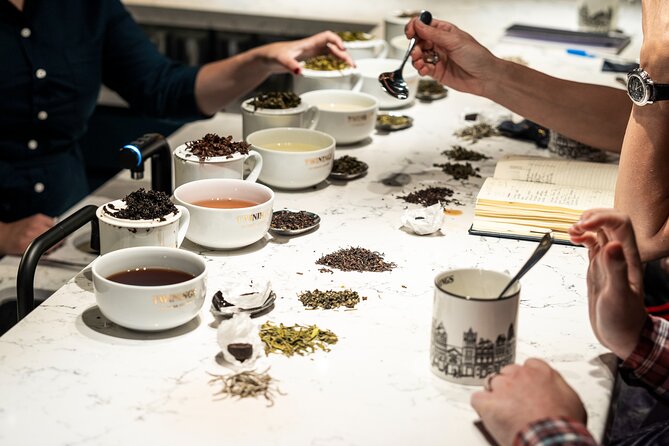
Tea becomes far more interesting when you stop treating it as a quick hot drink. At Twinings on London’s Strand, you spend two hours following tea from plant to cup, learning how it reaches Britain, and tasting six major categories side by side.
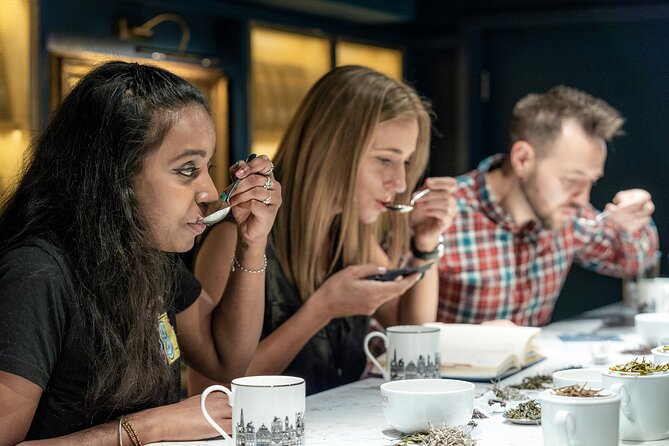
I like the small class size, with a maximum of five people, because it gives you room to ask questions and work through the tasting at your own pace. I also like the hands-on sensory work: you smell, taste, and slurp tea while judging its appearance, aroma, flavor, mouthfeel, and aftertaste. The one drawback is that two hours can feel short if you want a long shopping session afterward.
Key points to know before booking
- Six very different teas: Taste white, yellow, green, oolong, black, and pu’erh teas in one sitting.
- A tiny class: The advertised maximum is five people, so this feels more like a workshop than a lecture.
- Several named tea teachers: Sessions have been led by Alessandra, Liam, Rachel, Rosie, and Angelo, each bringing a personal style to the class.
- Tea and British culture together: The lesson connects tea production with the story of how tea reached Britain and shaped daily life.
- Useful tasting skills: Learn how professionals assess appearance, aroma, flavor, mouthfeel, and finish.
- Good central location: The class starts and ends at 216 Strand, near Temple and public transport.
Starting at Twinings on London’s Strand
The experience begins at 216 Strand, Temple, London WC2R 1AP, at the historic Twinings shop. That location matters. You are not taking a generic tasting in an anonymous hotel room. You begin inside the world of a long-established British tea company, surrounded by the brand and its products.
The activity ends at the same meeting point, which keeps the logistics simple. You do not need to learn a second address or arrange a ride across town afterward. Since the shop is near public transportation, it also fits neatly into a day spent around the Strand, Covent Garden, Temple, or the South Bank.
The class itself may take place in a basement room or bar area connected with the shop. One description calls it a chic, clean, air-conditioned setting. That is useful on a warm London day, when a quiet indoor class can give you a welcome break from sightseeing.
You should allow a little time to find the exact meeting spot. The address is clear, but central London streets can be busy and confusing, especially if you are arriving from another attraction. A mobile ticket is provided, and confirmation arrives when you book.
More Food Tours in London:
- London Bridge & Borough Market Food Tour with 7 Authentic Dishes
★ 5.0 · 1,972 reviews - London Foodie Adventure:More than 10 dishes with Sherpa Food Tour
★ 5.0 · 932 reviews - Eating London: Twilight Soho VIP Food & Drinks Tour
★ 5.0 · 590 reviews
The first lesson: from tea plant to British cup
The opening section explains where tea comes from and how it travels from a young bud to the finished drink. You learn about production, processing, and the broad differences between tea categories.
This background gives the tasting some purpose. Without it, six cups can blur into a parade of unfamiliar flavors. Once you understand that processing affects the final character, the differences between green, oolong, black, and pu’erh tea become easier to notice.
The class also covers the arrival of tea in Britain and its place in British culture. That section should appeal to anyone who likes food and drink with a story attached. Tea is not simply a British invention, of course, and the lesson looks at its wider origins before explaining its role in England.
The teachers bring different personalities to this material. Alessandra is described as especially passionate and ready for detailed questions. Liam has been praised for keeping the session lively while covering both tea and British history. Rachel combines a friendly manner with clear explanations, while Rosie uses humor and interaction to make the class approachable for beginners. Angelo’s session included the tea industry’s effect on British culture.
The exact teacher depends on your date, so you should not book expecting one particular person unless the operator confirms it. Still, the range of teaching styles is encouraging. The class works best when the guide makes technical details easy to follow, and that is precisely where these sessions seem strongest.
Six tea categories, six different tasting experiences
The central tasting includes:
- White tea
- Yellow tea
- Green tea
- Oolong tea
- Black tea
- Pu’erh tea
This is the part I would value most if you normally drink only familiar breakfast tea. The tasting gives you a controlled way to compare major tea families rather than buying several packets and guessing what you might like.
The presentation is interactive. You are given samples and asked to describe what you notice. If you lack the vocabulary, the teacher offers words and categories to help. You may consider the tea’s appearance, aroma, flavor, mouthfeel, and aftertaste.
That five-part approach is practical. It teaches you to slow down and identify what is in the cup. A tea can smell floral but taste earthy. It can feel light in the mouth yet leave a long finish. These small distinctions make tea drinking more engaging without turning it into a stiff academic exercise.
The unusual part for many people is learning how professionals slurp. It may feel impolite at first, but drawing air across the tea helps spread its aroma and flavor. The point is not to perform for the group. It is to use your senses more fully.
You also taste loose-leaf teas, according to the class descriptions. That gives the session a more serious tasting feel than sampling a row of ordinary tea bags. Even if you already know and like Twinings, the class can change how you think about the company’s range and tea quality.
What makes the small group size useful
The maximum group size is five people, which is a major advantage at this price. A tiny group means you can ask why one tea tastes grassy, smoky, sweet, floral, or earthy without waiting through a long line of questions.
It also helps during the sensory exercises. You have time to smell each sample, taste it, and put your reaction into words. A large group could make that process feel rushed or impersonal. Here, the teacher can keep the conversation moving while still responding to individual preferences.
The experience has even operated with a single participant. In that case, the teacher continued to give the full session rather than cutting it short. That is reassuring if you are booking alone, though a solo class naturally has a different feel from a group session.
At the same time, a very small group can make the experience more intimate than expected. If you prefer to sit quietly and listen, you may find the interactive format asks more of you than a standard museum talk. The tasting is designed for participation, not just observation.
More two hour outings in London:
- 2-Hour Jack the Ripper Small Group Walking Tour in London
★ 4.5 · 160 reviews - London Essential 2 hour introductory Walking Tour With a Londoner
★ 5.0 · 125 reviews - 2 Hour Walking Tour from Buckingham Palace to Big Ben
★ 5.0 · 32 reviews - Private 2-Hour Night Tour of London in an Iconic Black Cab
★ 5.0 · 25 reviews
Why the tea history is worth your time
The historical part is not filler between samples. It explains why tea became such a major part of British life and gives context to the company hosting the class.
You learn when tea arrived in Britain, how it was produced, and how tea culture developed. The lesson also links tea production with the broader industry that brought tea to Western markets. That makes the class useful for anyone interested in trade, food traditions, or the way an everyday habit can shape a country’s culture.
I would especially recommend this section to people who think they are not very interested in tea. The class is not only about tasting subtle flavor notes. It also explores how a plant grown far from Britain became part of British routines and identity.
The historical material is delivered by a teacher rather than a guide reading a script. That distinction matters. Alessandra, Liam, Rachel, Rosie, and Angelo have all been described as personable, funny, or engaging in different ways. You can expect the information to be presented as a conversation, with chances to ask questions.
Shopping after the tasting
The class takes place at Twinings, so you finish where you started, with the shop close at hand. The tasting may change what you want to buy. After trying six types and learning how they differ, you can browse with more purpose instead of choosing only by packaging.
A product discount may be offered after the class. That is a useful extra, but I would treat it as a bonus rather than a reason to book. The main value is the lesson and tasting, not the promise of saving on tea.
Plan your shopping expectations carefully. The class lasts about two hours, and the tasting itself takes up much of that time. Some people have wanted more time afterward to browse because they understood the products better by the end. If you want a relaxed shop visit, arrive early or plan to return later.
The shop also adds a sense of place to the activity. You are learning about tea in a setting directly connected to a major British tea brand, not simply tasting samples in a conference room.
Is $69.45 a fair price?
At $69.45 per person, this is not the cheapest way to drink tea in London. You could buy several boxes or loose-leaf samples for far less. The price makes sense only if you want guided instruction, historical context, and a structured tasting led by a tea professional.
The small group helps justify the cost. With a maximum of five people, you receive more direct attention than you would at a large public demonstration. The two-hour length is also well judged. It is long enough to cover production, British tea history, six categories, and tasting technique, but short enough to fit into a busy London day.
The best value comes if you are curious and willing to participate. You are not simply handed six cups and left to decide which one you like. You learn a method for judging tea that you can use at home.
If you already know a great deal about tea, you may find the introductory sections familiar. The session is built for a broad audience, including people who arrive with little or no tea knowledge. For a specialist, the appeal may lie more in the setting, the range of samples, and the chance to discuss tea with an experienced teacher.
Who will enjoy this masterclass most?
This is a strong choice for tea drinkers who want more than afternoon tea sandwiches and a pretty teapot. You will get more from it if you enjoy comparing flavors, asking questions, and learning how everyday products are made.
It also suits mixed-age groups. A family group spanning three generations found it to be a favorite London activity, which makes sense: the format combines a short history lesson, a sensory game, and a familiar drink. You do not need to be a serious tea expert to take part.
It can also work well as a birthday gift or a different kind of date activity. One person received the class as a birthday present and particularly enjoyed trying teas they had never heard of.
You do not have to be a dedicated tea drinker. The class includes enough history and production detail to keep it interesting, and the tasting gives you a chance to discover what you actually prefer. Still, if you dislike tasting unfamiliar drinks or prefer a passive tour, this may not be your best match.
Practical details that affect the day
The experience lasts about two hours and is offered in English. It starts and ends at 216 Strand, Temple, London WC2R 1AP. The activity is near public transportation, and service animals are allowed.
A mobile ticket is accepted, and booking confirmation is provided at the time of booking. Because the class averages booking about 28 days in advance, I would reserve early if your London dates are fixed.
The maximum advertised group size is five. That limit is one of the clearest reasons to book ahead. A class this small can fill sooner than a standard sightseeing walk.
Free cancellation is available if you cancel at least 24 hours before the start time. Canceling or changing the booking within 24 hours means you will not receive a refund, and late changes are not accepted. The cut-off follows London local time, so check the clock carefully if you are booking from another time zone.
My verdict on the Twinings tea tasting
Book this if you want a focused, indoor London activity with real substance. The strongest elements are the six-category tasting, the small class, and the teachers’ ability to make tea production and British tea culture easy to grasp.
At $69.45, the class costs more than a casual tea stop, but it offers far more than a drink and a cake. You leave with a better vocabulary for tea, a clearer sense of how processing changes flavor, and a more thoughtful way to choose what you buy.
I would skip it if your main goal is a traditional afternoon tea, a large historic tour, or plenty of shopping time. For everyone else, especially curious tea drinkers and families seeking a memorable two-hour break from London’s usual sights, this is a smart booking.
FAQ
Where does the Twinings tea masterclass begin?
The class begins at 216 Strand, Temple, London WC2R 1AP, UK.
Where does the activity finish?
The activity ends back at the meeting point at 216 Strand.
How long does the tea tasting last?
The masterclass lasts approximately two hours.
How many people can join the class?
The activity has a maximum of five travelers.
Which teas are included?
You taste white, yellow, green, oolong, black, and pu’erh teas.
Is the class offered in English?
Yes. The masterclass is offered in English.
Is public transportation available near the meeting point?
Yes. The meeting point is near public transportation.
What is the cancellation policy?
You can cancel up to 24 hours before the start time for a full refund. Cancellations or changes made less than 24 hours before the start time are not accepted for a refund.
Recently added around London
- London’s Crown Secret: Self-Guided Royal Puzzle Quest★ 4.5 · 8 reviews
- Postcard London★ 5.0 · 8 reviews
- Windsor Castle, Stonehenge & Roman Baths Private Tour★ 4.5 · 8 reviews
- Private Tour: Downton Abbey London Locations by Taxi★ 5.0 · 8 reviews
- Cotswolds Private Driving Tour from London★ 5.0 · 8 reviews
- Skip-the-line London Westminster Abbey and City of Westminster Kid-Friendly Tour★ 5.0 · 8 reviews
- A Silent Disco Adventure in London★ 5.0 · 8 reviews
- London: National Gallery English Audio Tour with free fast Entry★ 3.0 · 8 reviews
London Tours, compared.

Stonehenge, Windsor Castle, and Bath from London
Read our review →
London Big Bus Hop-On Hop-Off Tour with Optional River Cruise
Read our review →
Stonehenge, Windsor Castle and Bath with Pub Lunch in Lacock
Read our review →
Tower of London and Crown Jewels Exhibition Ticket
Read our review →
Stonehenge, Windsor Castle and Bath Full Day Guided Tour
Read our review →
Windsor Castle, Stonehenge, and Oxford Day Trip from London
Read our review →
London Jack the Ripper Guided Tour with Ripper-Vision
Read our review →Browse the lists this tour appears in