
Reviewed · LONDON TOURS
Ultimate introduction to photography in Central London
London becomes your classroom on this small-group photography workshop, where you learn by making pictures rather than sitting through a long technical talk. Matthew Williams-Ellis takes you from the London Eye and Waterloo’s graffiti tunnels to the South Bank skate park and a final riverside shoot.
I especially like the eight-person limit, which gives Matthew room to help with individual cameras and different skill levels. I also like the way the day moves from basic settings to real creative problems: fast action, slow shutter speeds, composition, and changing evening light.
The main consideration is the price, $232.25 per person, which is a serious spend for a five-and-a-half-hour class. It makes the most sense if you want practical instruction and leave with skills you can keep using, not simply a guided walk around famous sights.
Key points to know before booking
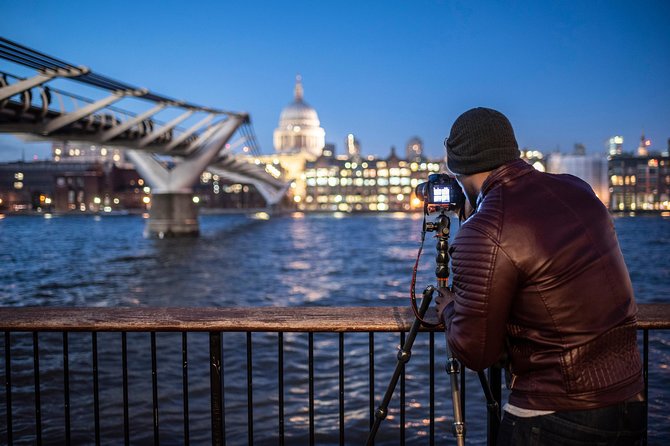
- You learn in the streets, not in a classroom: Settings are explained while you photograph real London scenes.
- The group is capped at eight: Matthew can adjust his teaching for beginners, phone photographers, and more experienced camera users.
- The route gives you varied practice: Expect architecture, graffiti, skateboarding, Thames views, and evening light.
- Manual controls become less mysterious: ISO, aperture, shutter speed, focus, and shooting modes are covered in practical terms.
- The final session changes with the light: You finish with sunset, blue hour, or night photography beside the Thames.
- The day requires decent mobility and good weather: You move between locations and the experience may be rescheduled or refunded if conditions are poor.
Why this London photography class works
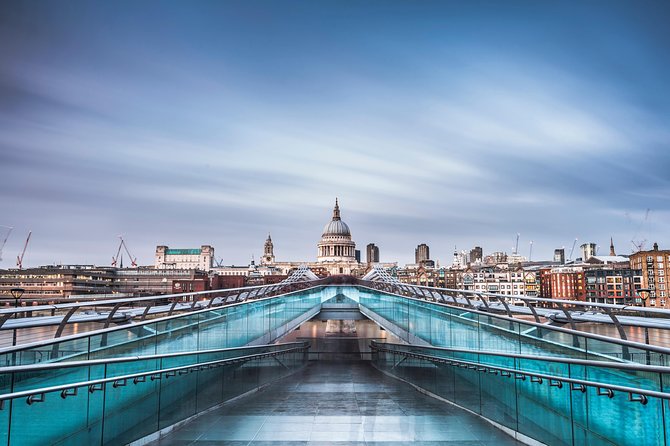
Many photography classes explain ISO, aperture, and shutter speed with diagrams, then send you home to figure out the rest. This workshop takes a more useful approach. You learn a setting, try it on a real subject, look at the result, and then adjust.
That matters because the hard part of photography is rarely memorizing definitions. The hard part is deciding what to change when the picture is too dark, the subject is blurred, or the background distracts from the main idea.
Matthew also puts time into the thinking behind a photograph. You work on how to notice a scene, choose a viewpoint, frame it, and decide what you want the image to say. That creative side is especially useful if you already know how to press the shutter but your pictures still feel flat.
The class is offered in English and lasts about five hours and 30 minutes. With no more than eight people, it has the feel of a workshop rather than a large sightseeing group. That small size is important when everyone arrives with a different camera, phone, or level of experience.
More photo sessions in London:
- Professional Photoshoot in London Photographer
★ 5.0 · 102 reviews - Private landmarks photoshoot for families and couples
★ 5.0 · 92 reviews - Professional Private Photoshoot in London
★ 5.0 · 63 reviews
Starting at the London Eye
The meeting point is the Starbucks on Belvedere Road, near the London Eye. This puts you in one of London’s most recognizable photo areas from the start, with strong subjects for learning the basics of exposure and composition.
The London Eye is useful for more than a souvenir photo. Its large circular shape gives you an immediate lesson in framing, lines, scale, and perspective. You can consider how much sky to include, where to place the wheel in the frame, and how surrounding buildings affect the image.
This is also a sensible place to get comfortable with your camera before the scenes become more demanding. You can work through shooting modes, focusing, ISO, aperture, and shutter speed while photographing a mostly stationary subject.
If you are new to manual settings, expect to spend time understanding how the controls interact. Aperture affects the amount of light and the look of the background. Shutter speed controls motion and blur. ISO helps when the light drops, but it can also affect image quality. The value here is not just learning each term, but seeing what happens when you change one part of the exposure.
Phone photographers are not automatically left out. The teaching can be adapted to mobile cameras, and the workshop can help you make better use of the controls your phone provides. You will not get the same manual options as a DSLR or mirrorless camera, but the lessons about composition, timing, and light still apply.
Photographing Leake Street Arches
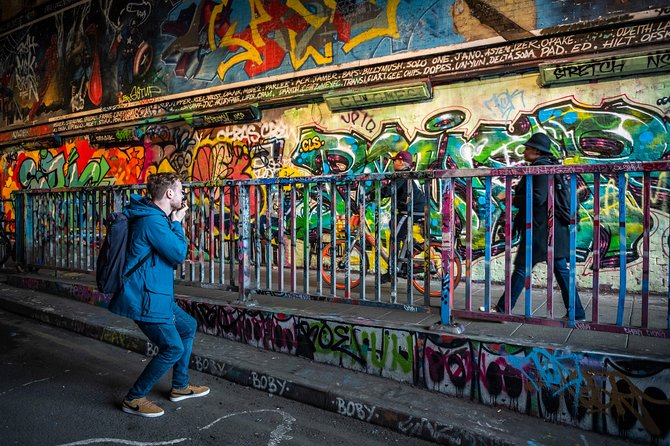
From the polished riverfront, the route moves toward Leake Street Arches, the graffiti tunnels beneath Waterloo Station. This is one of the best parts of the experience for anyone who wants to make more than a standard London postcard.
The arches give you color, texture, repeating lines, and plenty of visual clutter. That makes them good practice for composition. You have to choose what deserves attention and what should stay at the edge of the frame.
Graffiti also gives you a chance to think about contrast. You might work with strong colors, dark tunnel spaces, bright details, or people moving through the scene. The location can look very different depending on your angle and focal length, so it rewards experimentation.
This is where the workshop’s emphasis on creating photographs becomes clear. You are not simply told to photograph a wall. You are encouraged to decide how the wall should feel in the finished image.
The tunnel setting may also challenge your exposure choices. If the light is uneven, you need to think about what part of the scene matters most. A brighter area, a dark passage, or a person crossing the frame can all change how you set up the shot.
Putting shutter speed to work at South Bank
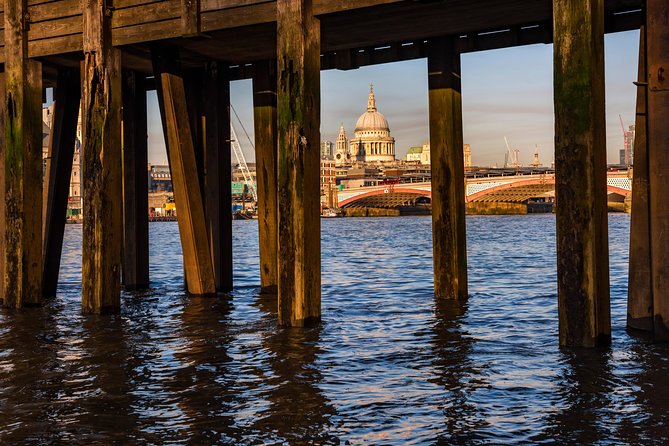
The South Bank skate park adds movement to the day. It gives you a practical reason to use different shutter speeds and think about timing rather than simply pointing at a subject.
Fast action photography can expose gaps in your understanding quickly. If the shutter speed is too slow, movement may blur. If it is fast enough to freeze action, you may need to adjust aperture or ISO to keep the exposure balanced.
You will also have to anticipate the moment. A skater’s position, a jump, or a turn can look ordinary one second and much stronger the next. This makes the skate park useful for learning that photography involves timing as much as technical settings.
The setting is likely to feel less controlled than the London Eye or a building. You may not get the exact image you want on the first try. That is not a flaw in the class. It is the point of practicing with a moving subject while you have guidance close at hand.
If you prefer quiet architectural photography, this section may be less appealing. If you want to understand how shutter speed changes a picture, it is one of the more useful stops.
A few more London half days worth a look
- Stonehenge, Windsor Castle, and Bath from London
★ 4.5 · 18,662 reviews - London Big Bus Hop-On Hop-Off Tour with Optional River Cruise
★ 3.5 · 10,803 reviews - London Small Group Tour of Historical Pubs
★ 5.0 · 10,422 reviews - Stonehenge, Windsor Castle and Bath with Pub Lunch in Lacock
★ 4.5 · 7,402 reviews
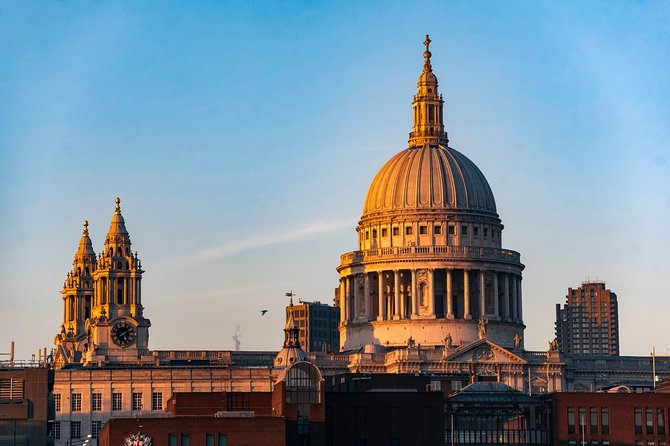
Framing St. Paul’s Cathedral
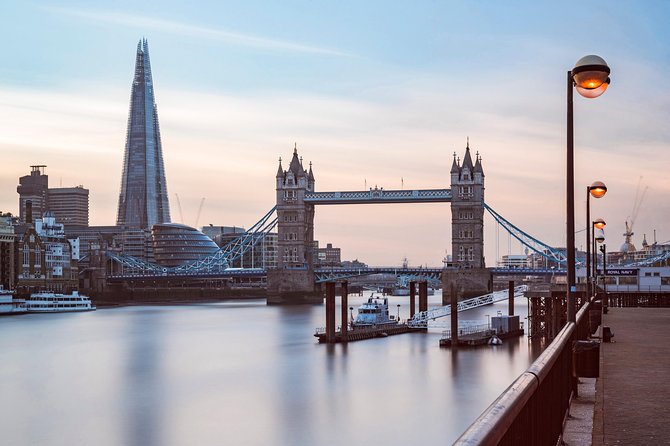
St. Paul’s Cathedral brings the workshop back to architecture and careful composition. Its scale gives you a chance to consider how to fit a major landmark into the frame without allowing it to become a simple centered snapshot.
The cathedral can help you explore perspective, balance, and the relationship between a landmark and its surroundings. You may work on how much of the building to show, where to place it, and how nearby streets or structures contribute to the image.
This part also links the technical and creative lessons. A technically sharp picture can still be dull if the framing says nothing. Matthew’s focus on photographic storytelling encourages you to ask what the image is about before pressing the shutter.
The route is well chosen for this reason. You are not repeating one kind of exercise all day. You move from open riverside views to enclosed graffiti spaces, then to action and architecture. Each setting asks you to make a different decision.
Finishing beside the Thames at sunset and blue hour
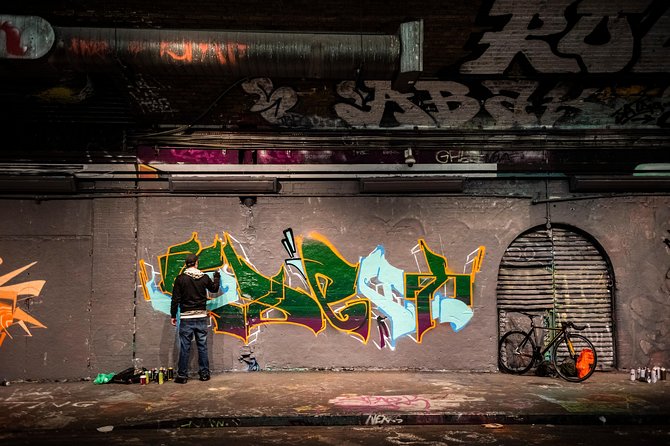
The last part of the workshop uses the changing evening light over the Thames. Depending on the time of year and conditions, the finish may be a sunset, blue-hour, or night shoot.
This is where slow shutter speeds become especially useful. A longer exposure can record movement and make low-light scenes look very different from what your eyes see. You also have to pay more attention to stability, focus, and the balance between bright lights and darker areas.
Blue hour is brief, so you need to work with purpose. The sky may retain color while London’s lights begin to show, giving you a chance to practice exposure in a more complex setting. If the session continues into night, artificial light becomes part of the composition.
The riverside ending gives the day a satisfying change of pace. You begin with basic camera control in daylight and finish by making deliberate choices in difficult light. It is a useful test of how much you have absorbed.
The exact conditions cannot be guaranteed. Weather affects the experience, and poor weather may lead to a new date or a full refund. That policy is reasonable for a class built around outdoor photography, though you should keep some flexibility in your London plans.
What the teaching style is like
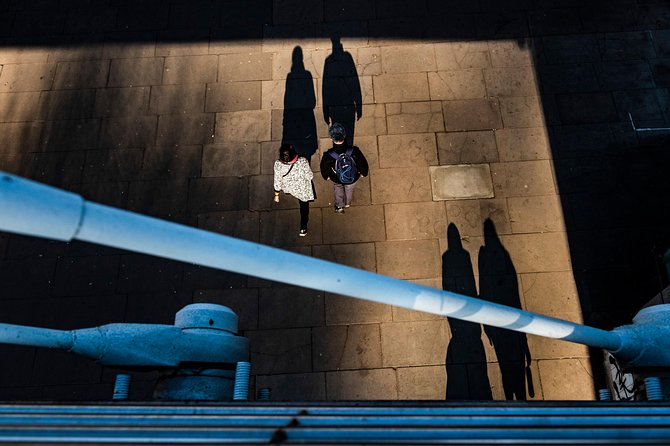
Matthew’s teaching style appears suited to people who feel lost when they leave automatic mode. He starts with the basics, including camera settings, then adds detail as you become more comfortable.
That structure should work well for someone who has owned a DSLR for years but rarely used its manual functions. It also suits complete beginners, since you have time to practice instead of rushing through a list of controls.
The workshop can also handle mixed experience levels. Matthew adjusts the amount of help for each person, which is important in a small group that may include a teenager, retirees using phone cameras, and experienced photographers looking for new techniques.
The strongest benefit is the combination of patience and practical feedback. You are not left to guess why an image failed. You can ask about settings, composition, and the next adjustment while the subject is still in front of you.
One useful outcome is that the class gives you a set of ideas to continue practicing. Previous participants used the advice for future trips, including photographing the northern lights. You should not expect one London session to make you an expert, but you can leave with a clearer plan for improving.
Who will get the most from the $232.25 price
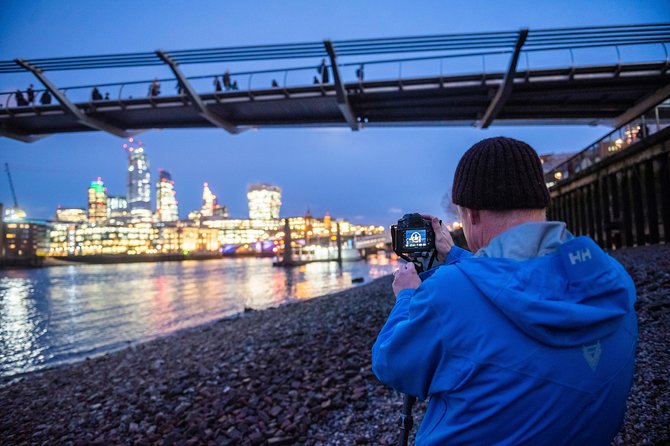
At $232.25, this is not a cheap way to see central London. You are paying for a small group, an extended session, instruction from a professional photographer, and several different shooting conditions.
The value improves if you already own a camera but do not understand what it can do. The workshop can replace hours of scattered online tutorials with direct practice and immediate correction. That is particularly useful if terms such as ISO, f-stops, focus modes, and shutter speed still feel confusing.
It may also work well as a gift. A parent and adult child, or a teenager and parent, can take the class together while working at different levels. The route provides enough variety to keep the day active, and photography gives you a shared task rather than a passive tour.
Phone users should consider it too. You will not receive a separate phone-only course, but the teaching can accommodate mobile photographers and focus on stronger use of the tools already available on your device.
I would hesitate to book it if you only want landmark photos with little instruction. You should also think twice if you dislike walking between outdoor locations or if your schedule cannot absorb a weather-related change.
Practical details for the day
The workshop starts at the Starbucks on Belvedere Road, London SE1 7GQ, and ends back at the same meeting point. It is near public transportation, which makes the start and finish fairly easy to reach within central London.
A moderate level of physical fitness is requested. The supplied details do not give a precise walking distance, so plan for time on your feet between the South Bank, Waterloo, and central London locations.
Bring the camera or phone you actually want to learn. The instruction is most useful when you work with your own controls and menus. If you use a dedicated camera, it helps to know its basic operation, but the course is designed to begin with fundamentals.
Confirmation is sent within 48 hours of booking, subject to availability. Service animals are allowed.
Free cancellation is available up to 24 hours before the local start time for a full refund. Changes or cancellations inside that 24-hour window are not accepted for a refund. Since the class depends on good weather, a cancellation by the operator due to poor conditions gives you the choice of another date or a full refund.
Should you book this workshop?
Book it if you want to stop relying on automatic mode and learn how to make deliberate choices with your camera. The mix of London landmarks, graffiti, skateboarding, slow shutter work, and evening riverside photography gives you more useful practice than a simple photo walk.
I would particularly recommend it to beginners, people upgrading to a new camera, phone photographers who want stronger images, and families or friends who want to learn together. The small group and Matthew’s patient, adaptable teaching style are central to the value.
Skip it if your main goal is a low-cost sightseeing outing or a quick collection of landmark snapshots. At $232.25, this is best treated as a hands-on class, not a standard London tour. If that is what you want, the price is easier to justify, and you should come away with skills that remain useful long after the Thames views have faded from the screen.
FAQ
Where does the photography workshop start?
It starts at the Starbucks on Belvedere Road, London SE1 7GQ, near the London Eye.
Where does the experience finish?
The workshop ends back at the original meeting point.
How long does the workshop last?
The experience lasts approximately five hours and 30 minutes.
How many people can join the group?
The group has a maximum of eight participants.
What photography skills are covered?
You learn about ISO, aperture, shutter speed, shooting modes, focusing, slow shutter speeds, composition, and photographic storytelling.
Is the workshop offered in English?
Yes. The experience is offered in English.
Can I use a phone camera?
Yes. The teaching can accommodate phone photographers and helps you use your phone camera more effectively.
What happens if bad weather cancels the experience?
You will be offered a different date or a full refund if poor weather causes the experience to be canceled.
Recently added around London
- London’s Crown Secret: Self-Guided Royal Puzzle Quest★ 4.5 · 8 reviews
- Postcard London★ 5.0 · 8 reviews
- Windsor Castle, Stonehenge & Roman Baths Private Tour★ 4.5 · 8 reviews
- Private Tour: Downton Abbey London Locations by Taxi★ 5.0 · 8 reviews
- Cotswolds Private Driving Tour from London★ 5.0 · 8 reviews
- Skip-the-line London Westminster Abbey and City of Westminster Kid-Friendly Tour★ 5.0 · 8 reviews
- A Silent Disco Adventure in London★ 5.0 · 8 reviews
- Private Full Day Cotswolds Tour From London★ 5.0 · 8 reviews
London Tours, compared.
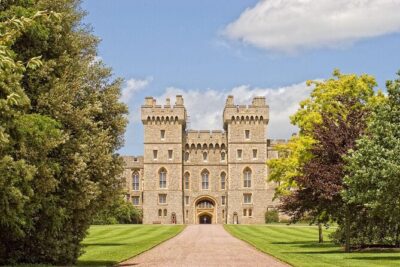
Stonehenge, Windsor Castle, and Bath from London
Read our review →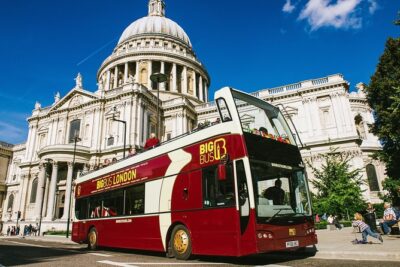
London Big Bus Hop-On Hop-Off Tour with Optional River Cruise
Read our review →
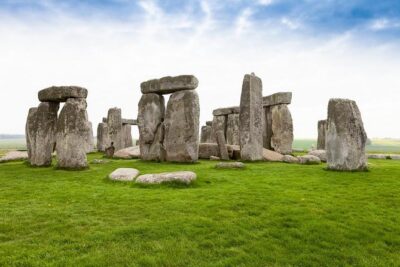
Stonehenge, Windsor Castle and Bath with Pub Lunch in Lacock
Read our review →
Tower of London and Crown Jewels Exhibition Ticket
Read our review →
Stonehenge, Windsor Castle and Bath Full Day Guided Tour
Read our review →
Windsor Castle, Stonehenge, and Oxford Day Trip from London
Read our review →
London Jack the Ripper Guided Tour with Ripper-Vision
Read our review →Browse the lists this tour appears in