
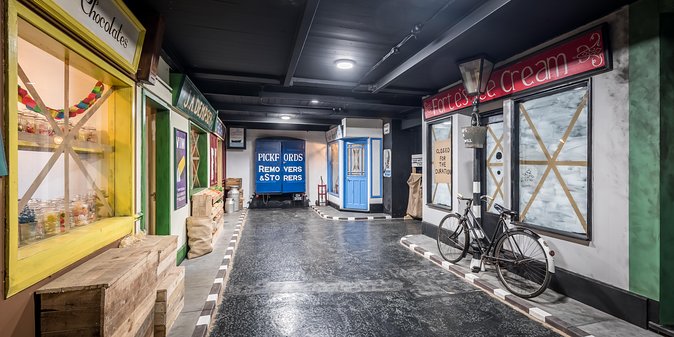
Reviewed · LIVERPOOL TOURS
Western Approaches Self Guided Tour
Liverpool’s Western Approaches HQ is a secret wartime bunker beneath the city center, where commanders tracked German submarines and protected vital Atlantic shipping routes. I like the untouched Map Room, left as it was when the bunker closed in 1945, and the freedom to explore at your own pace rather than follow a timed group.
I also like the hands-on touches: you can sit at desks, try typewriters and teleprinter machines, inspect the telephone exchange, and handle wartime uniforms. The main drawback is that much of the museum depends on written displays, so it may feel less lively than London’s Churchill War Rooms, especially if you prefer strong audio or video storytelling.
Key points to know before you go
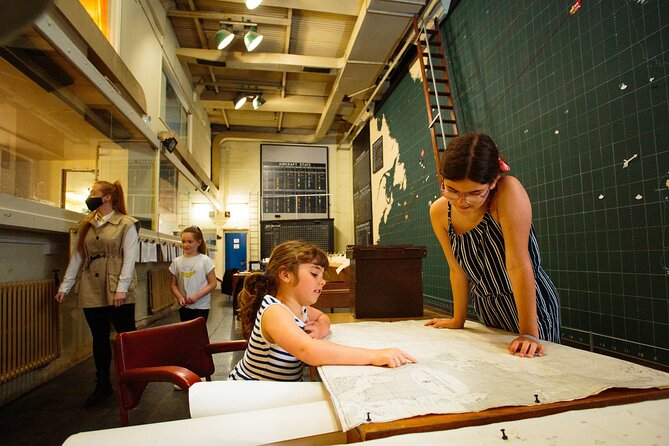
- The Map Room remains frozen in 1945: Convoy routes, shipping lines, and enemy positions were monitored here around the clock.
- You explore independently: Plan on one to two hours, but the annual pass lets you return free within 12 months.
- The bunker is under Liverpool’s center: It is close to the Town Hall and about a five-minute walk from Albert Dock.
- Hands-on details add life: Typewriters, teleprinters, uniforms, desks, and wartime games make this more than a display of glass cases.
- The story belongs to Liverpool: The museum explains how the port helped supply Britain and the Allies during the Battle of the Atlantic.
- Expect stairs: The entrance is at street level, but steps lead down into the bunker.
Why Liverpool’s bunker mattered in the Battle of the Atlantic
Liverpool was one of Britain’s key ports during World War II. Ships carrying food, fuel, weapons, and other supplies crossed the Atlantic, while German submarines tried to sink them before they reached Britain.
That made the Western Approaches a crucial area of water. The name refers to the western sea routes leading toward the British Isles. From this bunker, British forces watched those routes, tracked convoys, studied enemy movements, and passed information to the Royal Navy and the British government.
The museum gives you a practical sense of how much work went into that task. This was not one dramatic command post with a single famous general issuing orders. It was a large, busy operation involving commanders, WRNS personnel, WAAF personnel, clerks, signals staff, and others working through the day and night.
That human scale is one of the best reasons to visit. You see where people sat, how messages moved, and how carefully information had to be handled. A wrong position on a map could send a naval vessel toward danger or leave a convoy exposed.
More self guided walks in Liverpool:
- Liverpool Ghost Hunt: Paranormal Detective Self-Guided Game
★ 4.5 · 26 reviews - Private Liverpool Self-Guided Tour
★ 4.5 · 19 reviews - Westminster Abbey Entrance Ticket Including Audio Guide
★ 4.0 · 661 reviews
Finding the entrance near Liverpool Town Hall
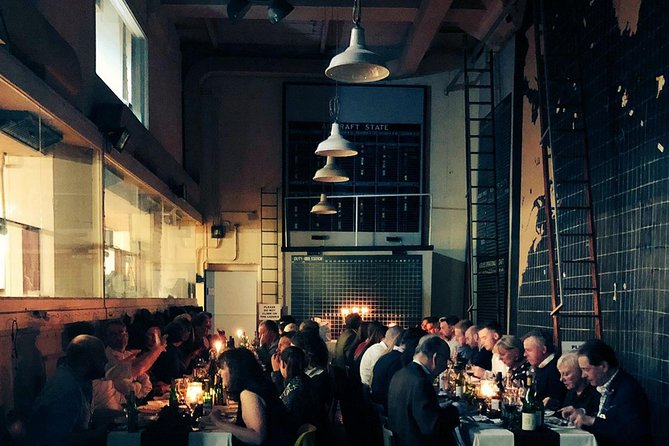
The museum entrance is at street level, close to Liverpool Town Hall. It is also roughly a five-minute walk from Albert Dock, making it easy to pair with the waterfront museums and sights.
The entrance can be a little easy to miss, so give yourself a few extra minutes rather than expecting a grand museum facade. Liverpool’s street signs are not always as clear as they could be, and the bunker does not announce itself with the scale you might expect from a major wartime headquarters.
Once inside, you buy or show your admission before descending into the bunker. The steps are an important practical point. Service animals are allowed, and the site is near public transportation, but you should be comfortable managing a staircase and walking through tunnel-like corridors.
The museum is open daily from 10 a.m. to 6 p.m. The flexible hours make it simple to fit around a morning at the docks or an afternoon in the city center.
Descending into the Western Approaches HQ
The visit begins with a short film explaining the Battle of the Atlantic. This introduction is useful because the bunker’s rooms make more sense once you understand the problem they were trying to solve: how to move ships safely across dangerous waters while keeping British intelligence secret.
From there, you walk through roughly a dozen rooms and corridors. The setting does much of the work. The bunker feels functional rather than polished, with narrow passageways and working rooms that show how people operated below the city during the war.
The museum’s best effect comes from its ordinary details. Desks, telephones, papers, machinery, and work spaces make you think about the people who spent long shifts here. The rooms are not simply a collection of military objects. They show an office at war, where messages arrived, information was checked, and decisions were passed along.
You can take your time. Nobody is pushing you through a fixed schedule, so you can stop to read the explanations or move quickly through sections that interest you less. That freedom matters in a museum with a lot of text.
The Map Room, the heart of the visit
The Map Room is the main reason I would send a World War II enthusiast here. It was the nerve center of the bunker, where convoy routes and shipping lines were monitored and enemy positions were marked with exacting care.
The room has been preserved as it was when the doors closed on August 15, 1945. That date gives the space a powerful sense of closure. You are not looking at a modern recreation built from old photographs. You are seeing a room that remained in place after the war ended.
Large maps cover the walls and table surfaces. Ladders reach high sections, giving you an idea of the scale of the information being handled. Staff had to keep track of many moving vessels and update positions accurately enough for the Royal Navy to respond.
The map is also a reminder that the Battle of the Atlantic was fought with information as much as with ships and aircraft. Finding an enemy convoy or submarine was only useful if the message reached the right people quickly and securely.
This room may be less immediately dramatic than a recreated aircraft hangar or battlefield. Its power comes from concentration. Look closely at the layout, the markings, and the working arrangement. You can almost picture staff members checking reports and moving from one task to the next.
A few more Liverpool half days worth a look
- Beatles Magical Mystery Tour
★ 5.0 · 9,266 reviews - Liverpool: “Blue Route” – City & Beatles Tour
★ 5.0 · 8,562 reviews - Liverpool City Sights Hop On Hop Off City Tour – 24hr Ticket
★ 4.5 · 2,555 reviews - The LFC Stadium Tour
★ 5.0 · 1,548 reviews
Wartime telephones, typewriters, and signal equipment
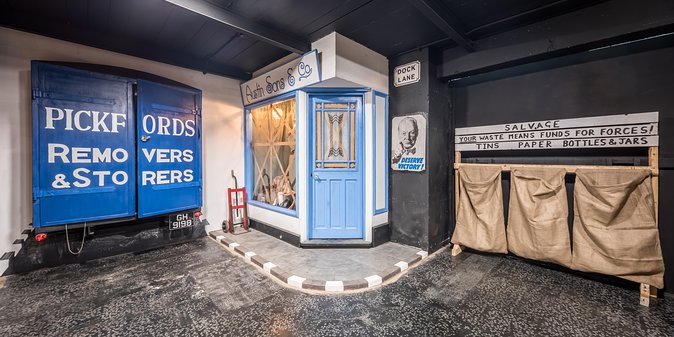
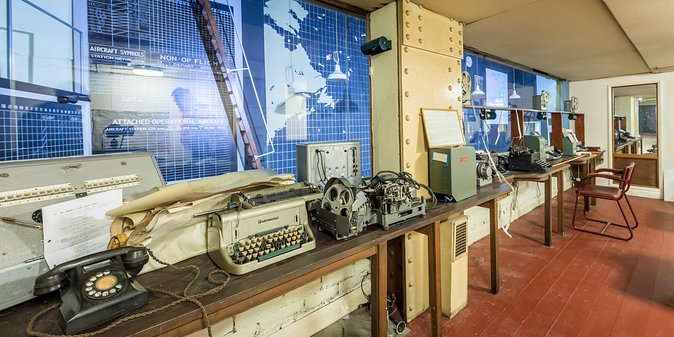
The bunker contains tools used to monitor enemy convoys and report findings to the British government. Among the most unusual objects is one of only two surviving wartime telephones with a direct connection to the War Cabinet in London.
That phone gives the bunker a direct link to the highest level of British wartime decision-making. It is a small object, but it helps explain how quickly information from Liverpool could become part of national policy.
The telephone exchange is another useful stop. It shows the less glamorous machinery behind military coordination. Messages had to be routed, recorded, and passed to the correct department. The work was repetitive, but a missed call or delayed message could have serious consequences.
You can also sit at desks, use typewriters, and try teleprinter machines. These are simple activities, but they help you understand the physical labor involved in communication before digital systems. A message had to be typed, transmitted, received, read, and acted upon.
The museum also displays uniforms, and you can try some on. This is particularly helpful for families, since children may connect more easily with equipment they can see and handle than with long panels of text.
The women who kept the headquarters working
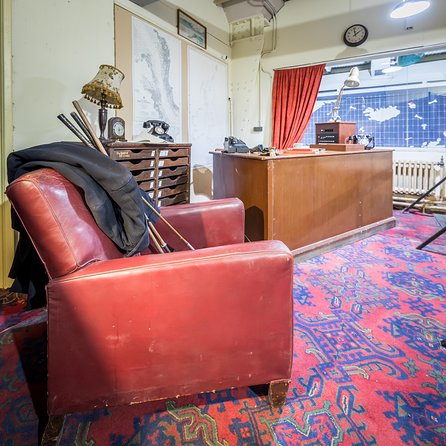
One of the more welcome features is the attention given to WRNS and WAAF personnel. Women worked in the bunker in important operational roles, helping monitor information, operate communications systems, and keep the headquarters running day and night.
The displays concerning the WRNS provide an unexpected extra layer to the visit. They help correct the familiar image of wartime command as a story told only through male officers and famous politicians.
You see the practical side of this work rather than just broad statements about service. The desks, machines, clothing, and rooms show how many people were needed to maintain the flow of information.
I would allow extra time here if this aspect interests you. The museum is small enough that you can return to a room after seeing the rest, especially because your ticket includes free admission for return visits within 12 months.
What the museum does well, and where it feels limited
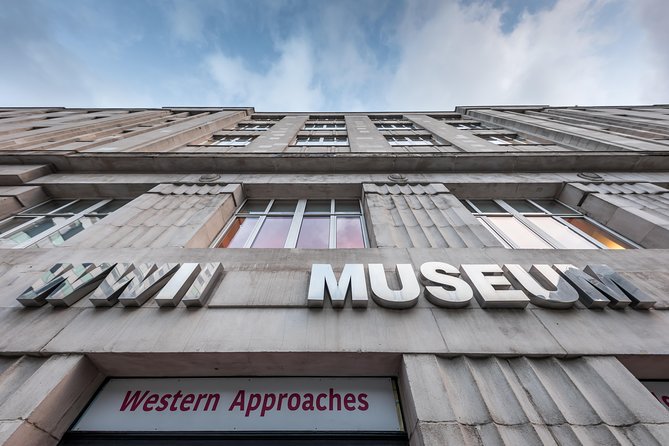
The strongest feature is authenticity. The bunker itself is the exhibit. The corridors and rooms give you a clear sense of an underground headquarters built for urgent, secret work.
The staff also add warmth to the visit. The museum is operated by people who care about the site, and the ongoing restoration means you may see a place that continues to develop. Some sections feel personal and carefully maintained rather than slick or corporate.
The weaker point is presentation. Many displays rely on static objects and written descriptions. There are some films and visual elements, but not every room has audio or an interactive explanation.
If you compare this with the Churchill War Rooms in London, you may find Liverpool’s museum less polished and less theatrical. The Churchill museum has a more developed visitor presentation, while Western Approaches gives you a smaller, more raw setting.
That is not necessarily a reason to skip it. I would simply set your expectations correctly. This is best for someone who enjoys reading, examining machinery, and imagining how a real operations room worked. If you want a highly produced, story-led attraction with constant sound and motion, you may find parts of the visit quiet and text-heavy.
A good stop for families and curious children
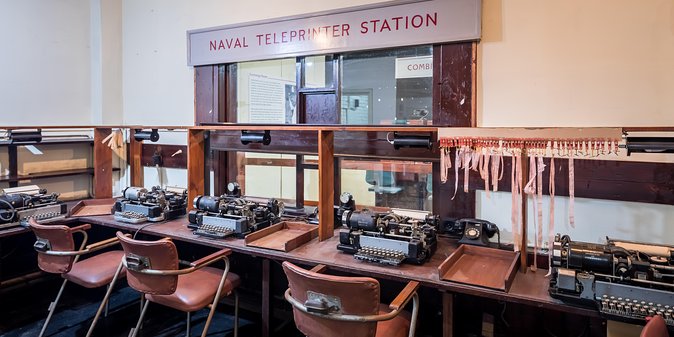
The museum can work well with children, especially those interested in wartime equipment, uniforms, maps, or secret rooms. Typewriters and teleprinters offer something to do, while the bunker itself provides a sense of discovery.
The visit is also short enough to be manageable. The usual time is one to two hours, though it is easy to spend longer if you read every panel or take your time in the Map Room.
At the end, there is a room with traditional games and a film about life in Liverpool during the war. Hot drinks are available at wartime prices, which provides a pleasant pause after walking through the bunker.
The story is not only about battles. The film and displays help you consider how the war affected daily life in Liverpool. That broader view makes the museum more useful for families who want social history as well as military facts.
How much time and money should you allow?
Admission costs $24.26 per person. That is not the cheapest small museum ticket, so value depends on how you use the visit.
For a quick one-hour walk-through, the price may feel high when compared with Liverpool’s larger public museums. But the ticket includes entry to the bunker and free return admission for 12 months. If you are staying in Liverpool for several days, or expect to return to the city during the year, that annual pass changes the calculation.
The museum is also a specialist experience. You are paying for access to an original headquarters, including the preserved Map Room, rather than a general collection of wartime objects. For someone with a strong interest in World War II, naval history, Liverpool, or women’s wartime service, the price is easier to justify.
I would allow at least 90 minutes. You can see the main rooms faster, but rushing would weaken the visit. The text deserves attention, and the Map Room rewards a slow look.
Bookings are often made around three weeks ahead, so reserving in advance is sensible if the museum is central to your plans. You receive confirmation at booking. Free cancellation is available up to 24 hours before the start time, but changes or cancellations inside that window are not accepted and are not refunded.
How to fit it into a Liverpool day
The museum works naturally with a visit to Albert Dock. You could spend the morning by the waterfront, walk toward the Town Hall, and visit Western Approaches before continuing into the city center.
Because the museum is indoors and underground, it can also be a useful choice in poor weather. The daily 10 a.m. to 6 p.m. schedule gives you room to shift the visit around other plans.
Do not treat it as a substitute for every major Liverpool museum. It is focused on one place and one wartime role. Instead, use it to add a layer to the city. After seeing the docks, the bunker helps you understand why Liverpool’s port mattered so much during the war.
The museum’s location also makes a short visit practical. You do not need to give up an entire day, and the self-guided format means you can linger in the rooms that interest you most.
Who should book Western Approaches HQ?
I would recommend it most strongly to:
- People interested in the Battle of the Atlantic and naval operations
- Visitors who enjoy original sites more than polished attractions
- Families with children curious about uniforms, machines, and secret bunkers
- Anyone wanting to understand Liverpool’s wartime role
- Visitors who appreciate women’s history and the work of WRNS and WAAF personnel
- Repeat visitors who can use the 12-month return admission
I would be more cautious if you dislike reading or have limited comfort with stairs. The museum has some interactive touches, but written material carries much of the explanation.
Should you book this self-guided tour?
Book it if you want to walk through a genuine wartime headquarters and see the Map Room left almost exactly as it was in 1945. The atmosphere, working equipment, women’s wartime stories, and direct link to the War Cabinet make this a worthwhile specialist stop in Liverpool.
Skip it if you want a large, heavily produced attraction with constant video, audio, and interactive storytelling. The museum can feel underdeveloped in places, but its modest presentation is balanced by the real bunker and the freedom to explore without a guide or fixed timetable.
At $24.26, the annual return pass is the key value. If you have the time to spend close to two hours, or can return within 12 months, Western Approaches HQ earns its place on your Liverpool itinerary.
FAQ
Where is the Western Approaches HQ Museum?
The museum is beneath Liverpool’s city center, close to Liverpool Town Hall. It is also about a five-minute walk from Albert Dock.
How long does the self-guided visit take?
The visit takes approximately one to two hours. You can explore at your own pace without being rushed.
Is admission included with the booking?
Yes. Admission to Western Approaches HQ Museum and the Battle of the Atlantic Experience is included.
Can I return to the museum after my visit?
Yes. The ticket includes free return admission within 12 months through an annual pass.
What are the museum’s opening hours?
The museum is open Monday through Sunday from 10 a.m. to 6 p.m. The stated opening period runs from March 4, 2024, through March 3, 2027.
Is the bunker accessible to everyone?
There are steps down into the bunker, and visitors should have a moderate level of physical fitness. Service animals are allowed, and the museum is near public transportation.
Recently added around Liverpool
- Liverpool Football Club Museum Entry★ 5.0 · 10 reviews
- The Liverpool Pass®: All top attractions inc. Hop-On Hop-Off Bus Tour | 2-Days★ 4.5 · 11 reviews
- 2-Hour Private Liverpool Walking Tour★ 5.0 · 12 reviews
- Private Liverpool Culture Walking Tour, Ghosts & Two Cathedrals.★ 4.5 · 12 reviews
- Liverpool Film and Music – 2 hour Private Walking Tour★ 5.0 · 12 reviews
- Liverpool’s Best Craft Drinks & Pub Food With A Local: Private & Personalized★ 5.0 · 12 reviews
- Liverpool Ultimate Beatles Ticket To Ride Half-Day PRIVATE Tour★ 5.0 · 12 reviews
- 4 Hour Private Beatles Tour in Liverpool★ 5.0 · 13 reviews
Liverpool Tours, compared.

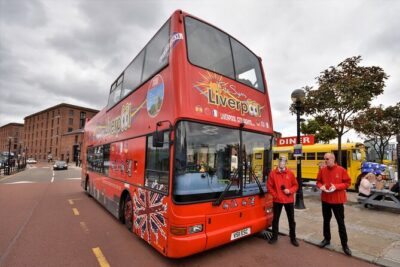
Liverpool City Sights Hop On Hop Off City Tour – 24hr Ticket
Read our review →


Private 3-Hour Guided Beatles Classic Tour of Liverpool
Read our review →
Browse the lists this tour appears in