
Reviewed · MUSEUMS
Secrets of Underground Walking Tour with London Transport Museum
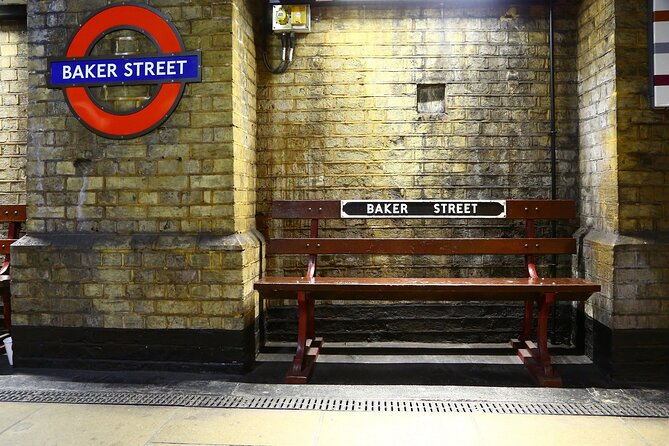
The most intriguing part of this tour is that it turns ordinary Tube journeys into a city history lesson. From Baker Street, you follow the Underground through famous interchanges, former stations, wartime sites, and old railway routes before finishing at Westminster. The Underground becomes the subject, not just the transport.
I like the strong route from Baker Street to Westminster, and I like the included entry to the London Transport Museum, where you can continue exploring at your own pace. Guide John has earned special praise for making the walk both entertaining and informative. The main drawback is important: you do not enter the closed ghost stations. You see the outside of some disused sites, and ticket problems at the museum have also caused frustration, so confirm how your admission will be redeemed.
Key points to know before you book
- Baker Street begins the story: Start beside the Sherlock Holmes statue at 1:00 pm, near one of the world’s first underground railway stations.
- Closed stations are viewed, not entered: The route includes former stations and ghost-platform stories, but public access inside the disused stations is not provided.
- John is a memorable guide: If he leads your walk, expect clear explanations, a good sense of humor, and plenty of background on the Tube.
- Your afternoon moves through seven locations: Baker Street, Oxford Circus, Green Park, Piccadilly Circus, Embankment, Westminster, and the London Transport Museum.
- The museum visit is independent: Tour admission includes the museum, but you must make your own way from Westminster to Covent Garden.
- Budget for Tube travel: You need an Oyster card, Travelcard, or contactless payment card for Zone 1, and that cost is not included.
Why this London Underground tour is worth your afternoon
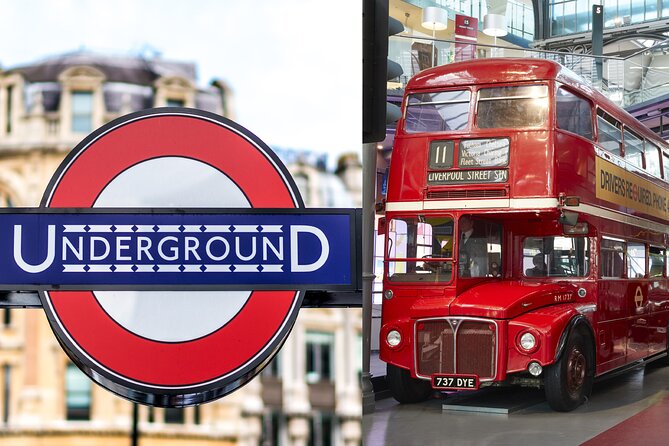
London’s Tube can feel like a maze of tunnels, escalators, and colored lines. This experience gives those places a narrative. You learn why stations were built where they were, how different railway companies shaped the network, and why some platforms disappeared from daily use.
I like tours that help you see a familiar city differently. You may pass through Oxford Circus or Piccadilly Circus several times during a London visit without noticing the layers beneath your feet. Here, the station names become clues to an older London, when steam trains, private railway companies, and new electric lines were competing to move people through the city.
The tour lasts about five and a half hours in total, though the guided Underground portion runs from 1:00 pm until roughly 3:30 pm. The museum portion takes about an hour and a half, but it is not guided and does not have to be treated like a formal group finish. That split suits you if you enjoy having context first and free time afterward.
The walking itself is not a strenuous hike, but you should be comfortable walking around central London and using Tube stations. The group can include up to 25 people. Audio headsets are supplied for the Underground tour, which matters in stations where trains, announcements, and crowds can easily drown out a speaking guide.
More Walking Tours in London
- Tour for Muggles The Ultimate Harry Potter Walking Tour in London
★ 5.0 · 4,684 reviews - London Jack The Ripper Guided Walking Tour
★ 5.0 · 3,131 reviews - Changing of the Guard Guided Walking Tour in London
★ 5.0 · 1,793 reviews
Meeting Sherlock Holmes at Baker Street
Meet at the Sherlock Holmes statue outside Baker Street Underground Station at 1:00 pm. This is a practical starting point, but give yourself time to find the correct station exit. Baker Street has several entrances and a busy road frontage.
The station is one of the original stops on the Metropolitan Railway, often described as the world’s first underground railway. That gives the opening stop real weight. You are not beginning with a general talk about London transport. You are standing at one of the places where the underground railway idea took shape.
Your guide sets up the basic story here: early underground railways were built to solve London’s traffic problems and connect growing parts of the city. The tour then uses the stations themselves as evidence. You can expect about 30 minutes at Baker Street, with the headset helping you catch details as the guide speaks.
If John leads your group, his approach has been described as both entertaining and well informed. That combination matters on a subject that can quickly become a list of dates and railway company names. A good guide makes the changes easier to follow.
Oxford Circus and the logic of interchange
The next stop is Oxford Circus Station, where the Victoria line added an important layer to an older station complex. Construction began in 1962 on the first Walthamstow to Victoria section, with cross-platform interchange planned at Oxford Circus. The Victoria line platforms opened on March 7, 1969.
This stop shows how the Underground grew in stages rather than appearing as one planned system. Different lines were built decades apart, then joined through new passageways and platforms. You begin to see why central London stations can feel so large and confusing.
Oxford Circus is also a useful place to understand the practical side of Tube design. Interchange stations are built around movement. The goal is to shift people from one line to another quickly, and the station’s layout reflects that need. Your guide can point out how later construction changed an older station.
Plan on about 30 minutes here. You should expect to remain in the public parts of the station rather than entering restricted operational areas. The tour’s behind-the-scenes flavor comes mainly from the stories, views, and former sites along the route.
Green Park and Down Street Station
At Green Park, the focus shifts to Down Street Station, a former Piccadilly line stop opened in 1907 by the Great Northern, Piccadilly and Brompton Railway. It sat between what are now Green Park and Hyde Park Corner stations.
Down Street closed in 1932. Its location close to two other stations meant it attracted too few passengers to remain useful. That simple reason tells you something important about the Tube: a station could be architecturally interesting and still fail as a transport stop if another station was close enough.
This is one of the places where you need to keep your expectations in check. The tour description uses language about disused stations and ghost platforms, but you do not receive public access inside Down Street or other closed stations. You see the outside of a couple of former stations and hear what happened to them.
That limitation does not make the stop pointless. In fact, it is useful to learn how much of London’s transport past remains behind ordinary walls and sealed entrances. Just do not book this expecting an underground exploration of abandoned platforms.
More museums and galleries in London:
- Tower of London and Crown Jewels Exhibition Ticket
★ 4.5 · 6,677 reviews - Chelsea FC Stadium Tours and Museum
★ 5.0 · 1,908 reviews - Official tickets: Moco Modern & Contemporary Art Museum
★ 4.5 · 1,157 reviews - British Museum London Guided Tour Semi-Private 8ppl Max
★ 5.0 · 984 reviews
Piccadilly Circus and two railway eras
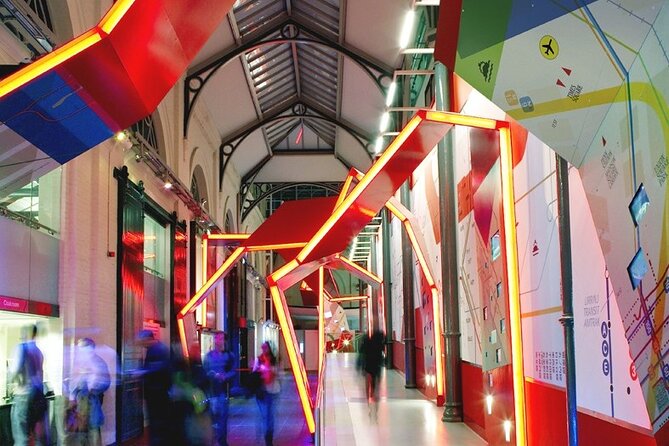
Piccadilly Circus offers another example of the Underground growing through separate companies and separate dates. The station opened on March 10, 1906, for the Baker Street and Waterloo Railway, now the Bakerloo line. Platforms for the Great Northern, Piccadilly and Brompton Railway, now the Piccadilly line, opened later that same year on December 15.
The dates are close, but the railway identities were not originally the same. That is part of what makes London’s network so interesting. The modern colored map can make the Tube look like one coordinated machine, yet its stations often reflect a patchwork of companies, extensions, and later connections.
Piccadilly Circus is also one of the tour’s more recognizable locations. You get the contrast between the famous public square above and the layered transport system below. The stop lasts about 30 minutes, and the guide’s commentary gives you a reason to pause in a place you might otherwise cross quickly.
Embankment and the Thames connection
At Victoria Embankment, the discussion connects Underground development with the river. The Embankment runs along the north bank of the Thames from the City of Westminster toward the City of London. It was developed in the 19th century on land reclaimed from the river’s edge.
Embankment Station sits within that broader story of urban engineering. London was not only building railways. It was reshaping its riverfront, improving roads, and creating space for new infrastructure. The station’s setting helps you see transport as part of a larger plan for the city.
This stop gives the walking tour a change of pace. You are no longer considering only platforms and tunnels. The route links the railway to the streets, river, and public works above ground. Allow about 30 minutes, and keep an eye on your footing as you move through central London.
Westminster Station and the end of the guided walk
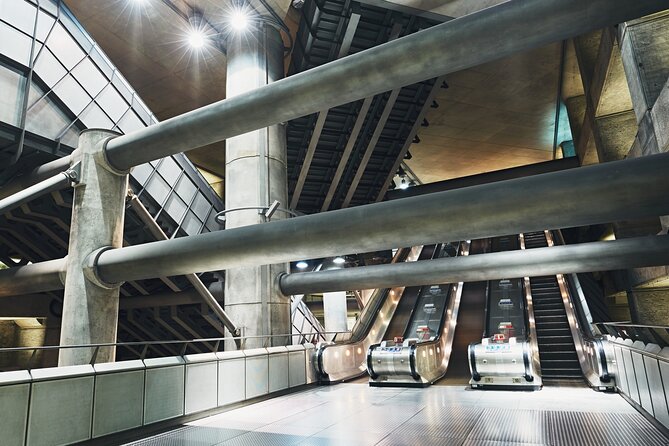
The final Underground stop is Westminster Station, where the tour ends around 3:30 pm. The station opened as Westminster Bridge on December 24, 1868, under the steam-operated District Railway, now the District line. It was part of the first section of that railway, which ran from South Kensington.
Early access came through a passage from Bridge Street and a pedestrian subway beneath the road. Those details show how different the station environment was before modern roads, security arrangements, and passenger flows shaped the area.
Westminster is a fitting finish because it places the Underground beside some of London’s most important civic sights. The guided portion ends at the station, not at the museum, so you should treat this as a real transition point. The tour operator does not provide hotel pickup or drop-off, and transport from Westminster to the museum is your responsibility.
Taking the Tube to the London Transport Museum
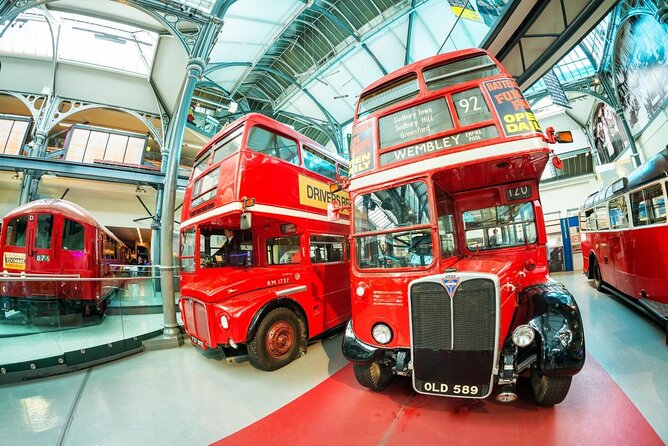
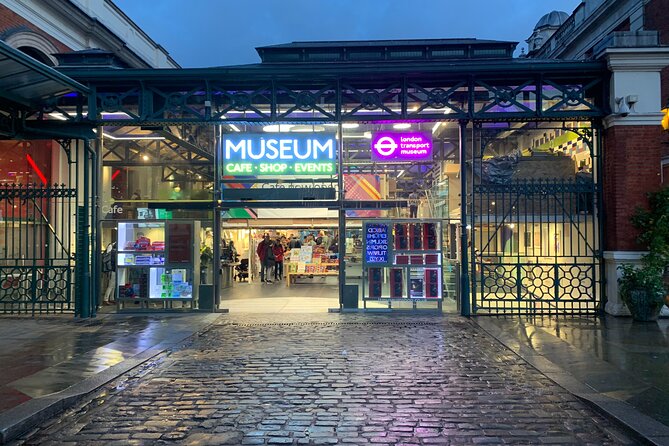
The London Transport Museum is in Covent Garden Piazza, WC2E 7BB. The nearest station is Covent Garden, and the museum is also about a 4 to 10 minute walk from Leicester Square, Holborn, Charing Cross, and Embankment stations.
Your museum entry is included, but the visit is independent. There is no guide accompanying you through the exhibits. That is a strength if you want to linger over vehicles, maps, and displays that catch your interest. It is less ideal if you want the guide to connect every museum exhibit directly to the walking route.
The museum covers London transport over the last 200 years and includes stories about the people who used and worked on the system. You can also look at possible future transport technology. After several hours of station history, this gives you a broader setting for what you have just seen.
Allow about an hour and a half. You may need to plan your route and entry carefully because the Underground tour finishes at Westminster, while the museum is in Covent Garden. The stated distance and station options make the transfer manageable, but it is not part of the guided experience.
What the $32 price really covers
At $32, the price is appealing if you intend to spend time at the museum and value a guide who can explain the Tube as you move through it. You are paying for the guided walk, the audio headset, and museum admission. A half-day walking tour in central London can be good value when it replaces several hours of trying to piece together the Underground’s story on your own.
The value drops if you expect access to closed stations. That is not included. You are viewing selected former stations from outside and learning about restricted areas through commentary.
You also need to add the cost of Zone 1 transport. Bring an Oyster card, Travelcard, or contactless payment card. The fare is not covered by the tour price, and you should not arrive assuming that the guided ticket includes your Tube journeys.
There have also been problems involving museum admission and ticket redemption. Some bookings have led to confusion at the museum, including requests for an extra payment or questions about whether the ticket was valid. I would confirm the exact museum entry procedure before the day of the tour. Keep your booking confirmation available, and if anything is unclear, contact the provider or booking agent before setting out.
The practical rhythm of the afternoon
The 1:00 pm start works well if you want a morning museum visit, lunch, or a quieter beginning to your day. It also means the Underground section takes place during a busy part of the afternoon. Stations can be noisy, so the headset is more than a small extra.
Wear comfortable shoes and expect a moderate level of physical activity. The information provided does not promise special access for people with limited mobility, so contact the provider if you have specific needs.
A maximum group size of 25 keeps this from being a private tour, but the headset should help you follow the guide. If you prefer quiet, slow exploration, the museum portion gives you that freedom after the group walk.
The cancellation terms are simple: cancel at least 24 hours before the 1:00 pm start for a full refund. Changes or cancellations inside 24 hours are not refunded, and a minimum group size is required for the tour to operate.
Who will enjoy this tour most
I would choose this experience if you like transport history, city planning, architecture, or the small details behind familiar places. It suits a first visit to London as well as a return visit for someone who has already seen the major landmarks.
Families can enjoy it if children are interested in trains and urban mysteries, though five and a half hours is a long afternoon for very young children. A family group led by John found the mix of walking and history especially enjoyable, but the route still requires attention and steady movement through stations.
This is also a good choice if you want structure without being led around all day. The guide handles the Underground section, then you decide how long to spend in the museum and where to go afterward.
I would skip it if your main goal is to enter sealed stations or explore abandoned tunnels. The tour does not provide that kind of access. I would also think twice if you dislike transfers, public transport, or a guide-led schedule.
Should you book the Secrets of Underground Walking Tour?
Book it if you want the London Underground explained stop by stop, with a guide who can connect railway dates to the streets you are walking through. The best parts are the Baker Street beginning, the contrasting station stories, the audio equipment, and the freedom to explore the London Transport Museum afterward.
Before paying, be clear about three things: closed stations are seen from outside, Zone 1 transport is extra, and museum entry may require careful ticket handling. If those conditions suit you, $32 is a fair price for a focused afternoon of London transport history. If you want a true restricted-area tour, choose a different experience.
FAQ
Where does the Secrets of the Underground tour start?
It starts at Baker Street Underground Station, beside the Sherlock Holmes statue outside the station, at 1:00 pm.
Where does the guided walking tour finish?
The guided Underground portion finishes at Westminster Underground Station at approximately 3:30 pm.
Is entry to the London Transport Museum included?
Yes. Museum admission is included, but your visit is independent and is not guided.
Where is the London Transport Museum?
The museum is at Covent Garden Piazza, London, WC2E 7BB. The nearest Underground station is Covent Garden. It is also a 4 to 10 minute walk from Leicester Square, Holborn, Charing Cross, and Embankment stations.
Do I need an Oyster card or another travel ticket?
Yes. You need an Oyster card, Travelcard, or contactless payment card for Zone 1. The cost is not included in the tour.
Can I cancel for a full refund?
Yes, if you cancel at least 24 hours before the experience start time. Cancellations or changes made less than 24 hours before the start are not refunded.
Recently added around London
- London’s Crown Secret: Self-Guided Royal Puzzle Quest★ 4.5 · 8 reviews
- Postcard London★ 5.0 · 8 reviews
- Windsor Castle, Stonehenge & Roman Baths Private Tour★ 4.5 · 8 reviews
- Private Tour: Downton Abbey London Locations by Taxi★ 5.0 · 8 reviews
- Cotswolds Private Driving Tour from London★ 5.0 · 8 reviews
- A Silent Disco Adventure in London★ 5.0 · 8 reviews
- Skip-the-line London Westminster Abbey and City of Westminster Kid-Friendly Tour★ 5.0 · 8 reviews
- Gangster Tour of Soho★ 4.5 · 8 reviews
Museums, compared.

Tower of London and Crown Jewels Exhibition Ticket
Read our review →

Official tickets: Moco Modern & Contemporary Art Museum
Read our review →
British Museum London Guided Tour Semi-Private 8ppl Max
Read our review →
The British Museum London – Exclusive Guided Museum Tour
Read our review →


Skip the Line: Liverpool Beatles Museum – The perfect tribute to the Beatles
Read our review →Browse the lists this tour appears in