
Reviewed · JACK THE RIPPER TOURS
Jack the Ripper – What About the Women?
The most worthwhile thing about this two-hour East London walk is its choice of subject. Instead of making Jack the Ripper the star, it puts the women first: who they were, how they lived, and how Victorian poverty shaped their daily choices. You get a sober history lesson rather than a grisly parade of murder details.
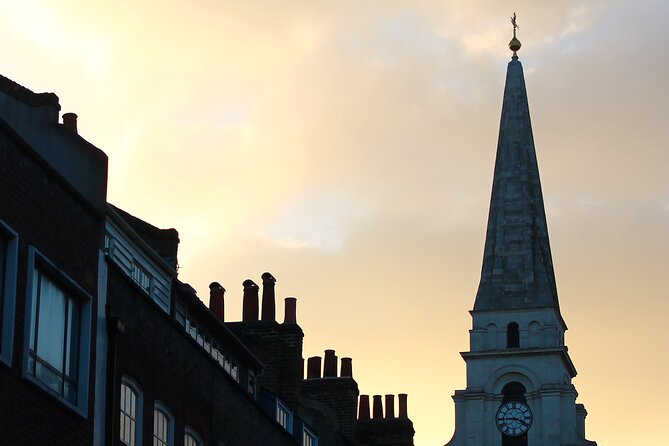
I like the route through Brick Lane, Spitalfields, and Mitre Square, because it connects the murders to a real neighborhood that still changes from street to street. I also like the guides’ human approach. Cecily and Ellie are praised for clear storytelling, warmth, and a firm grasp of both the women’s lives and the area’s past.
The main consideration is walking. The tour lasts about two hours and moves through several East End streets after dark. It is not a classic whodunit built around shocking images or killer mythology, so choose another tour if graphic crime detail is your main reason for booking.
Key points to know before you book
- The women come before the killer: Learn about Martha Tabram, Polly Nichols, Annie Chapman, Mary Jane Kelly, Elizabeth Stride, and Catherine Eddowes.
- The route covers major East End landmarks: Walk from Aldgate through Whitechapel Road, Brick Lane, Spitalfields, Petticoat Lane, and Mitre Square.
- Victorian poverty gets proper attention: Hear about dosshouses, workhouses, spikes, refuges, alcohol addiction, and working-class life.
- It is an evening walk with a small group: The start time is 6:30 pm, and the group is limited to 20 people.
- The tone is suitable for mature families: The subject is serious, but the tour avoids grisly pictures and graphic descriptions.
- The price is fair for a guided London walk: At $34.28 per person, you are paying for a focused local guide and a clear route through a complicated part of London.
Why this is not a standard Jack the Ripper tour
Most tours about the Whitechapel murders make the unknown killer the central character. This one asks a more useful question: what happened to the women before they became names in a crime story?
That change matters. The women were often reduced to labels, especially the claim that all of them were prostitutes. The tour looks more closely at their circumstances and the social pressures around them. You hear about unstable housing, poverty, addiction, poor health, and the limited choices available to working-class women in the Victorian East End.
The result feels closer to social history than true crime. You will still visit murder sites and hear how the cases fit together, but the focus stays on the victims rather than on guessing the killer’s identity.
I appreciate that approach because the usual Jack the Ripper story is already easy to find. The harder task is to remember that these were six individual women with families, work, relationships, disappointments, and hopes. A guide who keeps that in view can make the subject both more respectful and more interesting.
More Ripper walks after dark:
- London Jack the Ripper Guided Tour with Ripper-Vision
★ 4.5 · 4,840 reviews - London Jack The Ripper Guided Walking Tour
★ 5.0 · 3,131 reviews - Ultimate Jack the Ripper : Guided Tour of London
★ 5.0 · 1,495 reviews
Starting on Whitechapel Road with Martha Tabram and Polly Nichols
The meeting point is outside Aldgate station on Aldgate High Street, with a 6:30 pm start. That is a practical location for a walking tour because it is near public transportation and easy to find, though you should allow a little time to locate the correct station exit and gather before the walk begins.
The first section takes place along Whitechapel Road. Here, the guide introduces Martha Tabram and Polly Nichols while explaining the conditions faced by poor residents of the Victorian East End.
This is where the tour sets its tone. Instead of rushing to the crime, you learn about accommodation such as dosshouses, workhouses, and spikes. These were not minor details. Housing, hunger, drink, illness, and insecure work shaped the choices available to people living in the area.
You also hear about charities still working in East London today. That link between Victorian hardship and modern community work gives the opening section a useful present-day connection. It keeps the area from becoming a museum set for a famous crime. People still live and work here, and social problems have not simply vanished.
The stop lasts about 20 minutes. That gives the guide enough time to establish the setting without making the first part feel rushed. You should expect to stand outside for some of the talk, although the route includes places where you can sit if needed.
Brick Lane, Polly Nichols, and East London’s changing identity
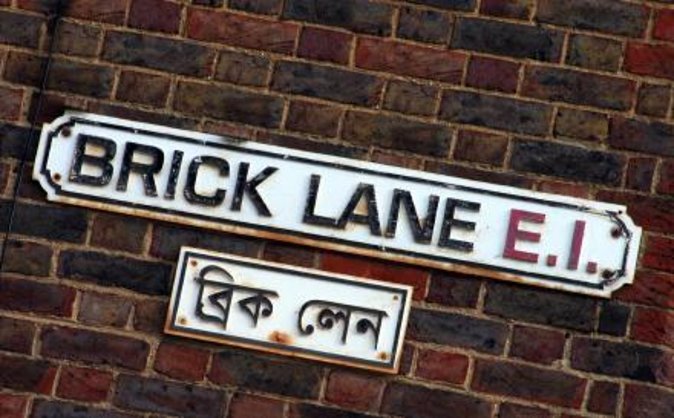
The walk continues toward Brick Lane, one of the most recognizable streets in the East End. The group stops at the site of the pub where Polly Nichols spent her final night, using her story to discuss alcohol and addiction in the Victorian era.
This section is valuable because it treats drinking as a social and personal problem, not just a colorful detail in a murder tale. The guide places Polly’s final movements within the pressures of her life, giving you a better sense of the difficult circumstances surrounding the case.
The route then pauses at Brick Lane Mosque. Here, the story shifts from crime to immigration and cultural change in the East End. The mosque helps explain how this part of London has been shaped by different communities over time.
That wider view is one of the tour’s strengths. You are not simply moving between sites linked to dead women. You are also seeing how streets, buildings, and local identity change while old layers remain visible.
This stop takes about 15 minutes. Brick Lane can be busy, and evening conditions may make it harder to hear if you drift away from the guide. Stay close to the group, especially near crossings and crowded sections.
Spitalfields, Annie Chapman, and the Ten Bells
Spitalfields brings the tour to some of its best-known locations. You visit the former Truman Brewery, once described as the largest brewery in the world, and then continue to 29 Hanbury Street, where Annie Chapman was found on September 8.
The brewery site helps show the scale of industry in the Victorian East End. It also reminds you that this was not an isolated slum detached from London’s economy. People lived close to factories, markets, pubs, workshops, and major commercial activity.
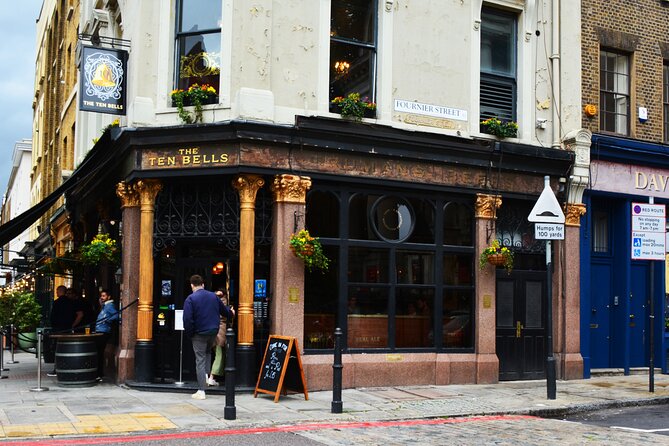
At 29 Hanbury Street, the focus returns to Annie Chapman. Around the corner, the guide discusses Annie’s life near the Ten Bells pub and the personal losses she endured.
The Ten Bells is also a useful lesson in how public memory can distort the past. The pub was once renamed the Jack the Ripper pub, turning a place connected to the women into a piece of killer branding. The movement Reclaim the Night helped push for the name to return to the Ten Bells.
That detail gives you something beyond a murder site. It shows how the story has been packaged for tourists, and how people have challenged that treatment. The tour does not pretend that the modern version of Whitechapel is untouched by the crime industry.
This section lasts around 10 minutes. It is short, but it links the physical locations with the later debate over how the murders should be remembered.
A few more London half days worth a look
- Stonehenge, Windsor Castle, and Bath from London
★ 4.5 · 18,662 reviews - London Big Bus Hop-On Hop-Off Tour with Optional River Cruise
★ 3.5 · 10,803 reviews - London Small Group Tour of Historical Pubs
★ 5.0 · 10,422 reviews - Stonehenge, Windsor Castle and Bath with Pub Lunch in Lacock
★ 4.5 · 7,402 reviews
Old Spitalfields Market and Mary Jane Kelly’s mystery
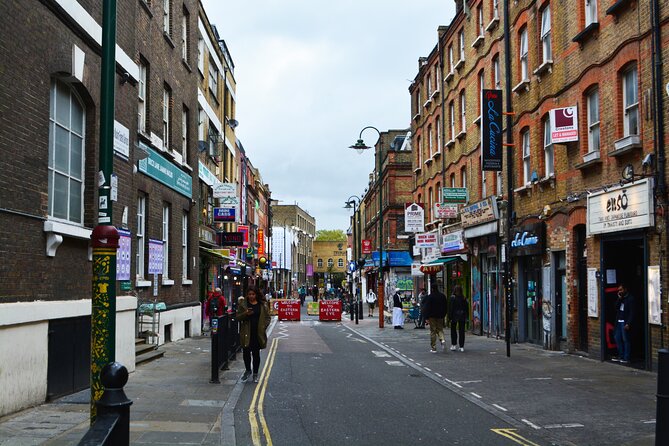
Old Spitalfields Market opened in 1887, the year of Queen Victoria’s Golden Jubilee and one year before the Whitechapel murders began. The market is a good place to consider the sharp contrast between Victorian celebration and working-class hardship.
Markets are useful on a tour like this because they show ordinary life rather than only tragedy. Food, clothing, work, trade, and public gatherings all formed part of the East End’s daily rhythm. The grand confidence of the Victorian era existed beside overcrowding and poverty.
From the market, the walk continues along Crispin Street to the former site of a refuge for working-class people. The guide presents it as an example of support that actually worked, an important contrast to the harsher institutions discussed earlier.
Across the street is the former site of Mary Jane Kelly’s residence. Kelly was the last of the women usually linked to the Whitechapel murders, and her life remains especially mysterious.
The stop lasts about 15 minutes. Spitalfields Market is also the published end point at 65 Brushfield Street, although the route description continues to later locations near Mitre Square. Check your booking details for the exact route and finishing point on your date, especially if you have evening plans afterward.
Petticoat Lane and the textile trade
Petticoat Lane Market receives only about five minutes, but it adds useful economic context. The area was once the heart of the East End textile industry.
That matters because work was central to survival in Victorian London. The textile trade connects the women’s stories to the broader working world around them, including the jobs, markets, and informal commerce that supported local families.
Do not expect a long market visit or shopping stop here. It is a brief location talk within a moving walking route. The value is the connection to industry and working life, not a chance to browse stalls.
St Botolph’s Aldgate, Elizabeth Stride, and Mitre Square
The final major section begins at St Botolph’s without Aldgate. Here, the guide introduces Elizabeth Stride, who came from Sweden, and explains her difficult early life in Gothenburg before her later years in London.
Stride’s story brings immigration and personal struggle together. Her background also broadens the tour beyond a narrow picture of the East End as a place inhabited only by English-born workers. London’s eastern districts were shaped by movement across borders as well as movement within Britain.
The walk finishes near Mitre Square, where Catherine Eddowes was found. Eddowes came from Wolverhampton, and the guide presents her as a spirited woman with her own story, rather than as simply another case file.
This closing section lasts about 25 minutes, the longest single stop on the route. It gives the guide time to bring together the women’s stories, the local setting, and the social conditions that made them vulnerable.
The published end point is Spitalfields Market, while the route details describe the final discussion near Mitre Square. Since the two locations are close in the same part of East London, this is not a major problem, but it is worth confirming where you will actually finish before arranging dinner or transport.
What the guides add to the walk
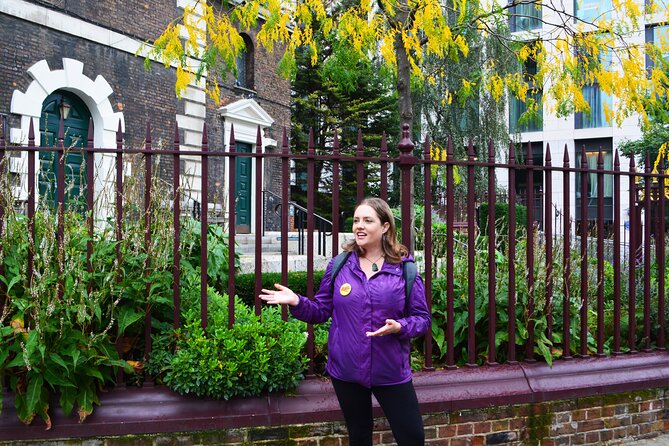
The guide can make or break a history walk, and this experience depends heavily on the person leading it. Cecily is praised for clear speech, warmth, and a fact-based approach. That clarity is especially useful if English is not your first language or if you have difficulty hearing on busy streets.
Ellie is also noted for her strong command of the women’s stories and the local area. Both guides are described as friendly and willing to answer questions, which suits a subject that often raises moral and historical issues rather than simple factual ones.
You may also get practical suggestions for nearby restaurants, pubs, and shops. Those recommendations are a nice bonus at the end of an evening walk, although they are not the main reason to book.
The group maximum is 20 people. That is small enough for a more personal feel than a large city tour, but it is not a private walk. If the full group turns up, you will still need to stay near the guide to hear every stop.
Price, timing, and walking comfort
The cost is $34.28 per person. For London, that is a reasonable price for a two-hour guided walk covering several areas and a difficult subject that benefits from explanation.
You are not paying for entrance tickets, since the stops are viewed from public streets and spaces. You are paying for the guide’s research, route planning, historical context, and ability to connect scattered sites into one understandable story.
The tour starts at 6:30 pm, so expect to explore East London in the evening. That timing suits the atmosphere of the subject, but it also means cooler weather, dimmer streets, and less daylight for seeing architectural details.
Wear comfortable shoes. The walk covers Whitechapel Road, Brick Lane, Spitalfields, Petticoat Lane, St Botolph’s Aldgate, and Mitre Square, with several stops along the way. You may have chances to sit, but you should still be prepared to walk and stand for much of the two hours.
The activity is offered in English and uses a mobile ticket. Service animals are allowed, most people can participate, and the route is near public transportation. Weather matters: if poor weather cancels the walk, you are offered another date or a full refund.
Free cancellation is available up to 24 hours before the start time. Inside that window, changes and refunds are not accepted, so keep an eye on the forecast and your evening schedule.
Who should book this East End history walk?
I would choose this tour if you want the Whitechapel story to be about people rather than a celebrity killer. It suits visitors who have read Hallie Rubenhold’s The Five, or who simply feel that conventional true crime often gives too much attention to the murderer.
It also works well for mature families. One family brought children aged 12 and 15 and found the treatment appropriate because the tour avoids grisly images and graphic descriptions. The subject remains upsetting, so parents should still decide if their children are ready for discussions of murder, poverty, addiction, and exploitation.
This is a good choice for first-time visitors to Whitechapel who want help reading the area. You will hear about immigration, markets, breweries, charities, refuges, pubs, and working-class housing, not just police investigations.
You may prefer a different tour if you want detailed forensic theories, gruesome crime scenes, or an extended search for the Ripper’s identity. Those are not the priorities here. The guide keeps returning to the women and the society around them.
Should you book Jack the Ripper: What About the Women?
Book it if you want a respectful, fact-focused walk through Whitechapel that gives Martha Tabram, Polly Nichols, Annie Chapman, Mary Jane Kelly, Elizabeth Stride, and Catherine Eddowes more than a brief mention.
The strongest reasons are the human focus, the thoughtful Victorian social context, the route through living East End neighborhoods, and guides such as Cecily and Ellie who explain the material with care. At $34.28, the price is fair for a small-group, two-hour walk.
Skip it if your interest is mainly gruesome detail or killer mythology. For everyone else, this is a worthwhile way to see East London at night while remembering the women as people first.
FAQ
Where does the tour start?
The tour starts at Aldgate High Street, London EC3N 1AH, outside Aldgate station.
What time does the tour begin?
The start time is 6:30 pm.
How long does the tour last?
The tour lasts approximately two hours.
Where does the tour finish?
The published end point is Spitalfields Market at 65 Brushfield Street, London E1 6AA. The route description also places the final discussion near Mitre Square, so check the exact finish details when booking.
What language is the tour offered in?
The tour is offered in English.
How much does the tour cost?
The listed price is $34.28 per person.
How many people can join the tour?
The group has a maximum of 20 participants.
Are admission tickets included?
The experience includes an experienced guide. The listed stops have free admission, and the tour takes place along public streets and locations.
Is the tour suitable for children?
The tour is described as appropriate for mature children because it does not use grisly pictures or graphic murder descriptions. The subject still includes murder, poverty, and addiction.
Can I cancel for a refund?
You can cancel up to 24 hours before the start time for a full refund. Cancellations or changes made less than 24 hours before the start are not refunded or accepted. Weather or minimum-group cancellations may result in another date or a full refund.
Recently added around London
- London’s Crown Secret: Self-Guided Royal Puzzle Quest★ 4.5 · 8 reviews
- Postcard London★ 5.0 · 8 reviews
- Windsor Castle, Stonehenge & Roman Baths Private Tour★ 4.5 · 8 reviews
- Private Tour: Downton Abbey London Locations by Taxi★ 5.0 · 8 reviews
- Cotswolds Private Driving Tour from London★ 5.0 · 8 reviews
- A Silent Disco Adventure in London★ 5.0 · 8 reviews
- Skip-the-line London Westminster Abbey and City of Westminster Kid-Friendly Tour★ 5.0 · 8 reviews
- Gangster Tour of Soho★ 4.5 · 8 reviews
Jack the Ripper Tours, compared.
London Jack the Ripper Guided Tour with Ripper-Vision
Read our review →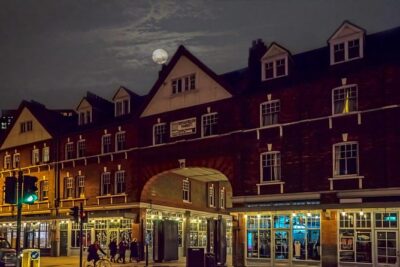
Ultimate Jack the Ripper : Guided Tour of London
Read our review →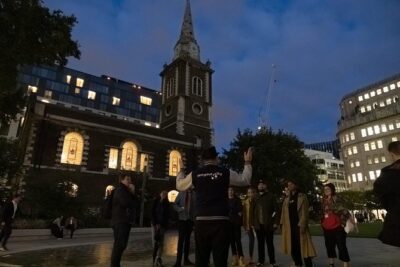

London Jack The Ripper Small-Group Walking Tour
Read our review →

The Original Jack the Ripper Coach Tour of Haunted London
Read our review →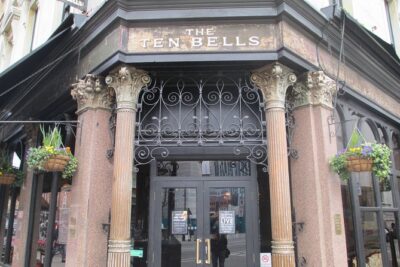
Browse the lists this tour appears in