
Reviewed · CHURCHILL WAR ROOMS TOURS
London in WW2 Walking Tour with Churchill War Rooms Visit
The most powerful part of this London tour comes underground. After a walk through Westminster, you enter Churchill’s War Rooms, the cramped command center where Britain’s wartime government worked beneath the streets. The visit connects famous buildings above ground with the decisions made below it.
I like the small group limit of 15, which gives guides such as Nathan, Jeremy, Babs, Paul, and Francis room to answer questions. I also like that the War Rooms admission is included, since this can be one of London’s pricier history museums when visited separately. The main consideration is time: three hours gives you a strong introduction, but only about an hour inside the museum.
Key points to know
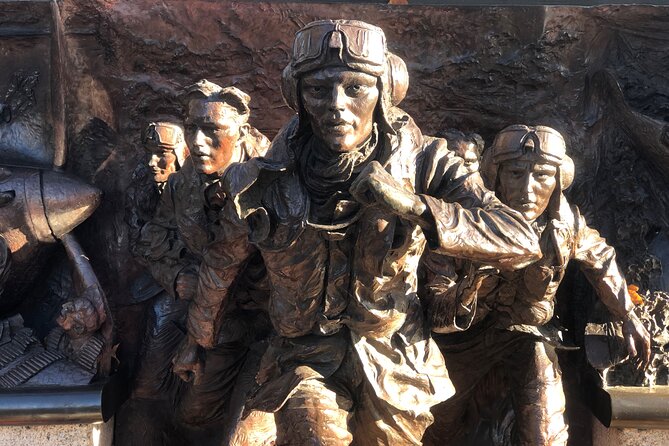
- The walk links real wartime sites: Westminster Bridge, Parliament Square, Whitehall, and Horse Guards Parade all help frame the story.
- Churchill’s War Rooms admission is included: You enter the underground complex after the guided walk.
- The War Rooms portion is self-guided: Your guide sees you inside, then you explore with an audio guide.
- Groups are limited to 15 people: This is useful for questions and for keeping the walking pace together.
- Several major sights are viewed only from outside: Westminster Abbey and the Houses of Parliament are not interior visits.
- The tour costs $104.02 per person: The price makes the most sense if you want both a guided Westminster walk and museum entry in one booking.
Why this tour works as a World War II introduction
London’s World War II story is not confined to a single museum. It is spread across bridges, government offices, memorials, squares, and underground rooms. This experience gives you that broad setting first, then brings you into the place where wartime decisions were made.
I like that order. If you enter the War Rooms without context, the corridors and displays can feel like a collection of offices below the city. The walk helps you understand why Westminster mattered, how government functioned under threat, and why monuments around Whitehall carry such weight.
The tour is offered in English and lasts about three hours. The first part takes place outdoors, so you should dress for London weather and wear comfortable shoes. The route finishes at the Churchill War Rooms on King Charles Street, not back at the starting point.
The meeting point is near the Boadicea and Her Daughters statue on Victoria Embankment. That is a useful location because it places you close to Westminster Bridge and the opening part of the route. You do not receive hotel pickup, and food and drinks are not included, so plan those around the tour rather than expecting a full half-day outing.
More Walking Tours in London
- Tour for Muggles The Ultimate Harry Potter Walking Tour in London
★ 5.0 · 4,684 reviews - London Jack The Ripper Guided Walking Tour
★ 5.0 · 3,131 reviews - Changing of the Guard Guided Walking Tour in London
★ 5.0 · 1,793 reviews
Westminster Bridge and the Houses of Parliament
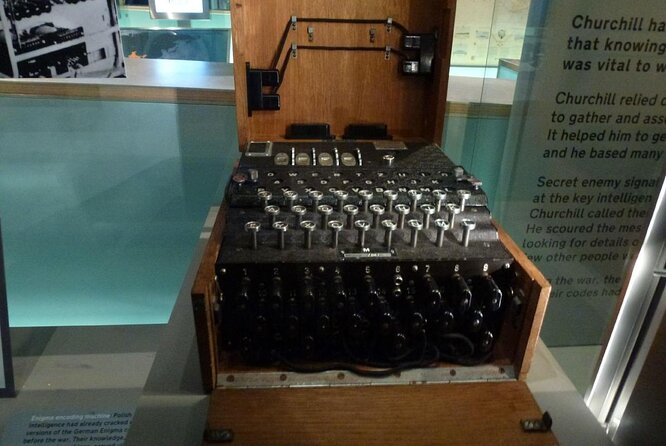
The walk begins at Westminster Bridge, painted green to match the Houses of Commons. From here, your guide sets the scene for wartime Westminster and points out a detail that makes the past feel surprisingly close: unexploded or partially buried wartime bombs are still found in the area.
You visit the bridge from outside for about five minutes. It is a short stop, but it gives you a clear view toward the Houses of Parliament and the river. This is also a good place for your guide to explain how the government district became part of London’s wartime story.
At the Houses of Parliament, the focus turns to the British government’s response to the growing threat from Nazi Germany. You hear about Parliament during the period when Big Ben went quiet and Luftwaffe aircraft filled the skies over London.
You do not go inside Parliament. That distinction matters if you are hoping for an interior tour of the building. The value here comes from the setting and the explanation, especially if you want your photographs and later museum visit to have a stronger sense of place.
The stop lasts about ten minutes. That is enough for a clear introduction, but not enough for a full lesson on British politics during the war. If Parliament is a major interest for you, plan a separate visit.
Parliament Square and Westminster Abbey from outside
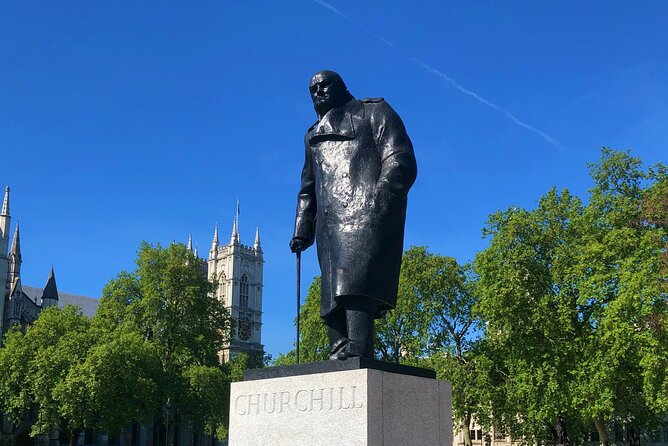
Parliament Square shifts the story from buildings to democratic ideals. Statues here include Mahatma Gandhi, Millicent Fawcett, and Abraham Lincoln. Your guide uses the square to discuss democracy at a time when authoritarian rule threatened the whole of Europe.
This stop is outside and takes about ten minutes. I find that it adds useful balance to a Churchill-focused tour. The subject is not only military strategy or famous speeches. It is also the political system Britain was trying to protect.
Westminster Abbey is another exterior stop. The itinerary gives about ten minutes here, with no admission included. You will not tour the abbey’s interior as part of this experience, so think of this as a historical viewpoint rather than an abbey visit.
The pairing of Parliament Square and Westminster Abbey works well for first-time visitors. You see the institutions, memorials, and public spaces that make Westminster more than a parade of grand stone buildings. Just keep your expectations in check: the tour provides interpretation outside, not an entrance ticket.
Whitehall’s memorials and the human cost of war
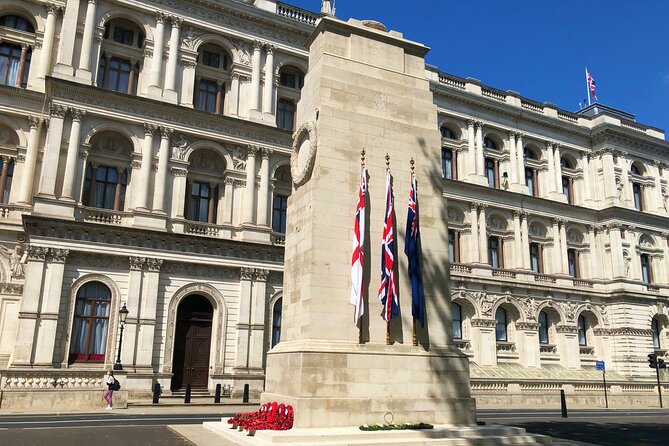
At Whitehall, the tour moves closer to the memorial side of the story. This street is home to the Ministry of Defence and played a central role in the wartime government.
You stop at the Cenotaph and the Women in World War II memorial. These are short exterior visits, about ten minutes each as part of the Whitehall portion, but they offer some of the most personal moments on the route.
I especially like that the tour includes women’s wartime service rather than treating the conflict as a story only of male soldiers and political leaders. The memorials let your guide talk about the people who served, worked, suffered, and died while Britain fought to remain free.
The best guides use these stops to connect public monuments with individual lives. Francis, for example, has been praised for adding personal stories about his mother-in-law’s life during World War II, while also drawing on his own time with Scotland Yard. That kind of personal angle can make a memorial feel less like a stone object and more like a marker of real lives.
You should allow for some standing during this part of the tour. The stops are short, but the walk includes several points where you pause outdoors while listening.
More Churchill War Rooms visits:
- Westminster 3 Hour Walking Tour and Visit of Churchill War Rooms
★ 5.0 · 967 reviews - WW2 London Walking Tour & Churchill War Rooms Entrance Ticket
★ 4.5 · 933 reviews - Churchill War Rooms “Behind The Glass” and Private Car Tour
★ 4.5 · 322 reviews - Sir Winston Churchill Private Walking Tour & War Rooms
★ 5.0 · 130 reviews
Horse Guards Parade and the royal connection
Horse Guards Parade provides a change of mood. The site is known for the mounted cavalry of the King’s Life Guard and for its connection to the official entrance toward Buckingham Palace.
The tour visits from outside for about ten minutes. You get time for photographs and a quick explanation of the ceremonial role of the area. It is not primarily a World War II site, but it helps place the wartime government story within the broader royal and political center of London.
This is one of the less focused stops if your main goal is military history. Still, it breaks up the memorial-heavy sections and gives you another major Westminster landmark without requiring a separate sightseeing walk.
Keep in mind that the itinerary uses traditional descriptions of the royal guard, while the current sovereign is King Charles III. The practical point remains the same: you are seeing an important ceremonial area, not attending a changing-of-the-guard event.
Entering Churchill’s War Rooms
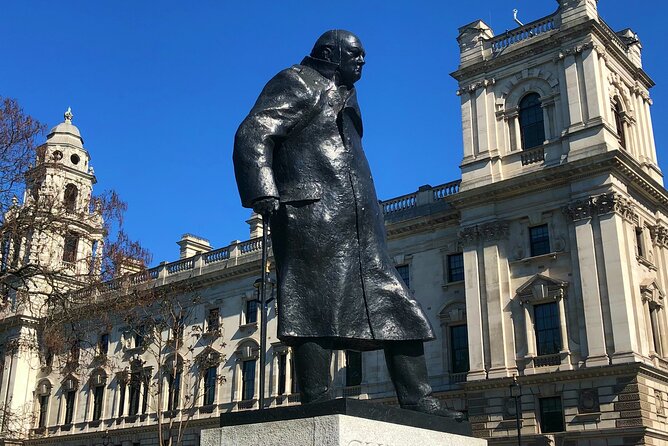
The final stop is the reason many people book this experience. Churchill’s War Rooms occupy an underground complex that served as the nerve center of Britain’s government during the war.
The guide sees you into the museum, but the War Rooms visit is self-guided. You receive an audio guide and can move through the rooms at your own pace. This arrangement has a clear advantage: you are not tied to a group lecture once you enter, and you can spend more time with the displays that interest you most.
The tradeoff is that the guided storytelling ends at the museum entrance. If you want help interpreting every room, ask your guide questions before going inside. Guides including Nathan, Jeremy, Babs, and Paul have been singled out for strong storytelling, humor, and clear explanations, but the exact guide depends on the departure.
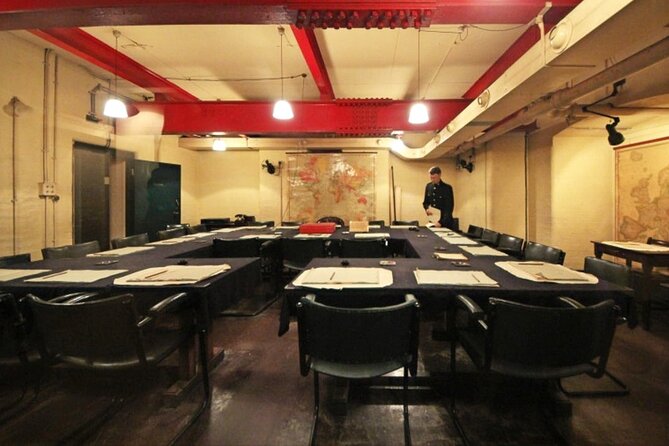
Inside, you see the underground offices used by the government during the conflict. The setting itself is unusually effective. Narrow corridors, working rooms, maps, and wartime offices show the practical pressure behind the public speeches and radio broadcasts.
The museum also includes a Churchill collection that follows his life and career. You can expect more than a room-by-room recreation of the bunker. The experience also explores the man behind the wartime leadership, giving you a fuller picture of his role.
The allotted time is about one hour. That is enough to see the main areas, but it is not generous if you read every panel or want to linger over the Churchill Museum. One useful approach is to let the audio guide lead you through the essential rooms first. If you have extra time afterward, return to displays that caught your attention.
Some visitors spend longer in the museum than the tour’s stated hour. If you are able to remain after the guided portion, check the arrangements at the time of booking or with the operator, since the supplied information only confirms that the tour ends with entry into the War Rooms and that the visit is self-guided.
How the guides shape the experience
The guide is especially important during the outdoor portion. Westminster has plenty of grand buildings, but the meaning is not always obvious from the pavement. A strong guide turns the route into a connected story instead of a list of places.
Nathan is repeatedly praised for his command of World War II history, his ability to adjust the conversation to the group, and his lively delivery. Jeremy is known for mixing detailed explanations with humor. Babs, also called Barbara, is described as passionate, patient, and exceptionally well prepared.
Paul brings strong knowledge of Churchill, London, and the city’s wartime story. Francis has been praised for his treatment of war memorials and personal anecdotes. Richard and James have also been noted for clear, engaging guidance.
You cannot normally choose a particular guide when booking. Still, the range of names and the consistent praise for storytelling suggest that the company has several experienced guides working on this route. The small group size helps here. With no more than 15 people, you have a better chance to hear the guide clearly and ask about details that catch your interest.
The tone can include humor. That works well for a three-hour walk, though the subject remains serious. The strongest approach is a mix of military facts, political context, and human stories, rather than a nonstop focus on Churchill as a heroic figure.
Is $104.02 a fair price?
At $104.02 per person, this is not a cheap walking tour. The price becomes easier to justify because it includes entrance to Churchill’s War Rooms, a local English-speaking guide, a small group, and an audio guide inside the museum.
You are paying for two different experiences. The outdoor section gives you orientation and interpretation around Westminster. The museum section gives you access to a major historical site without needing to arrange a separate visit.
The value is strongest for a first visit to London, especially if you have only a few days and want a guided introduction to the city’s wartime history. It is also useful for families with older children or teenagers. One guide’s personal storytelling and clear explanations have worked particularly well for teenage boys, which suggests that the tour can hold attention beyond textbook facts.
The value is weaker if you already know Westminster well or want a long, detailed museum visit. You may prefer to buy museum admission separately and give the War Rooms more time. You should also skip this tour if you are mainly interested in entering Westminster Abbey or Parliament, since neither interior is included.
Group discounts are available, and the experience is often booked well ahead of time, with an average booking lead of about 48 days. That does not guarantee a sold-out departure, but it is a good reason to reserve early if your London dates are fixed.
Practical details that affect your day
The tour starts at Boadicea and Her Daughters on Victoria Embankment and ends at the Churchill War Rooms on King Charles Street. Since the finish point differs from the start, you can continue sightseeing around Westminster afterward without returning across the river.
The tour is near public transportation, and most people can take part. Service animals are allowed. The route is mainly an outdoor city walk followed by a museum visit, so comfortable footwear and weather protection are sensible choices.
Your mobile ticket is accepted, and confirmation arrives when you book. The tour is in English only. If someone in your group needs a slower pace or has mobility concerns, ask the operator before booking, since the supplied information does not give a detailed step-free route description.
The cancellation policy is flexible if your plans are uncertain. You can cancel up to 24 hours before the start time for a full refund. Changes or cancellations inside that window are not accepted for a refund, and the operator requires a minimum number of people to run the experience.
Who should book this Westminster walk?
I would choose this tour if you want the story of London’s wartime government explained as you walk through the actual district where it operated. It suits first-time visitors, history fans, families with older children, and anyone who wants Churchill’s War Rooms with some useful context before entering.
It is also a good fit if you prefer a human guide outdoors but want freedom inside a museum. The handoff from guided walk to audio-guided visit gives you both forms of sightseeing in one afternoon.
I would think twice if you dislike outdoor walking, want a full interior tour of Westminster Abbey, or plan to spend several hours in the War Rooms. The museum portion is only about an hour, and the major Westminster buildings are viewed from outside.
Should you book the London in WW2 Walking Tour?
Book it if you want a well-shaped introduction to Westminster’s World War II story and value the included War Rooms admission. The strongest reason to go is the combination of location, expert storytelling, and access to the underground headquarters where Britain’s wartime government worked.
At $104.02, the tour asks for a serious budget, but the small group and museum ticket make it a reasonable package for a short London visit. Reserve early if your dates are firm, wear good shoes, and treat the War Rooms as the main event. If you want the museum in detail, plan a separate return visit or allow extra time beyond the guided three-hour schedule.
FAQ
How long does the London in WW2 Walking Tour with Churchill War Rooms Visit last?
The experience lasts approximately three hours. It includes the guided Westminster walk and about one hour at Churchill’s War Rooms.
Is admission to Churchill’s War Rooms included?
Yes. Entrance to Churchill’s War Rooms is included in the tour price, along with an audio guide for the self-guided museum portion.
Is Westminster Abbey admission included?
No. Westminster Abbey is visited from outside, and its entrance ticket is not included.
Does the tour enter the Houses of Parliament?
No. The Houses of Parliament are visited from outside. The guide explains their wartime role during the stop.
Where does the tour begin and end?
The tour begins near the Boadicea and Her Daughters statue on Victoria Embankment, London SW1A 2JH. It ends at Churchill War Rooms on King Charles Street, London SW1A 2AQ.
How many people can join the tour?
The experience has a maximum of 15 people. Small-group organization is included in the tour.
Can I cancel for a full refund?
Yes, if you cancel at least 24 hours before the experience start time. Cancellations or changes made less than 24 hours before the start time are not accepted for a refund.
Recently added around London
- London’s Crown Secret: Self-Guided Royal Puzzle Quest★ 4.5 · 8 reviews
- Postcard London★ 5.0 · 8 reviews
- Windsor Castle, Stonehenge & Roman Baths Private Tour★ 4.5 · 8 reviews
- Private Tour: Downton Abbey London Locations by Taxi★ 5.0 · 8 reviews
- Cotswolds Private Driving Tour from London★ 5.0 · 8 reviews
- Skip-the-line London Westminster Abbey and City of Westminster Kid-Friendly Tour★ 5.0 · 8 reviews
- A Silent Disco Adventure in London★ 5.0 · 8 reviews
- Private Full Day Cotswolds Tour From London★ 5.0 · 8 reviews
Churchill War Rooms Tours, compared.
Westminster 3 Hour Walking Tour and Visit of Churchill War Rooms
Read our review →
WW2 London Walking Tour & Churchill War Rooms Entrance Ticket
Read our review →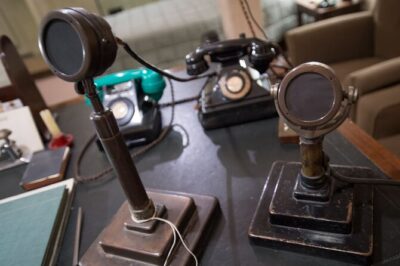
Churchill War Rooms “Behind The Glass” and Private Car Tour
Read our review →
Sir Winston Churchill Private Walking Tour & War Rooms
Read our review →
Winston Churchill’s London and The Churchill War Rooms – A Private Tour.
Read our review →
Winston Churchill Walking Tour with WII War Rooms Entrance
Read our review →Semi-Private WW2 Churchill in Westminster & War Rooms entry
Read our review →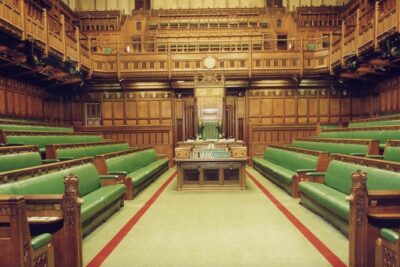
Darkest Hour – Parliament and Churchill War Rooms Private Tour
Read our review →Browse the lists this tour appears in