
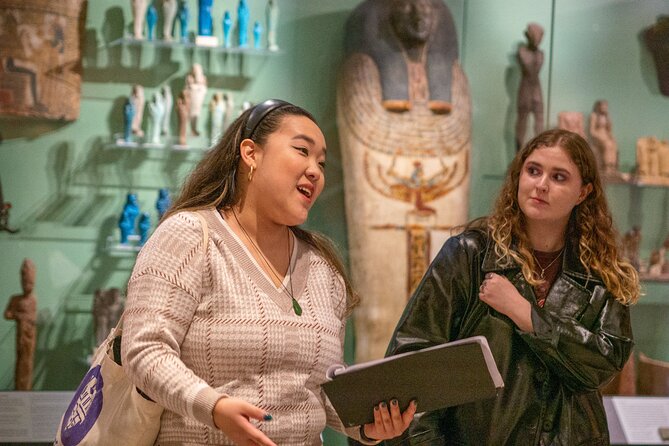
Reviewed · OXFORD TOURS
Ashmolean Museum Tour – by Uncomfortable Oxford™
The most interesting part of this Ashmolean Museum tour is its willingness to ask difficult questions. Instead of simply admiring ancient objects, you examine how they were collected, labeled, displayed, and sometimes removed from their places of origin.
I like the small group limit of 12, which suits the tour’s discussion-based format. I also like the clear route through the museum, moving from colonial collecting to Greek and Roman art, excavation, repatriation, and Egyptian remains. The main consideration is the price: at $96.02 per person for about 75 minutes, this is a specialist discussion tour rather than a low-cost museum orientation.
Key points to know
- A 75-minute route through major Ashmolean galleries: The tour covers the Ashmolean Story Gallery, Cask Gallery, Hellenistic World, colonialism and repatriation display, and Egyptian Galleries.
- A small group capped at 12 people: The size gives you a better chance to hear the guide and join the conversation.
- A frank look at colonial collecting: Early museum practices and the effects of colonialism are part of the central discussion.
- Ancient art examined with fresh questions: Greek and Roman aesthetics, enslavement, replicas, excavations, and display choices all come into play.
- A discussion of mummies and human remains: The final section asks how museums should handle bodies and other human material.
- Flexible booking protection: You can cancel for a full refund up to 24 hours before the start time, subject to the stated conditions.
Starting at the Statue Gallery on Beaumont Street
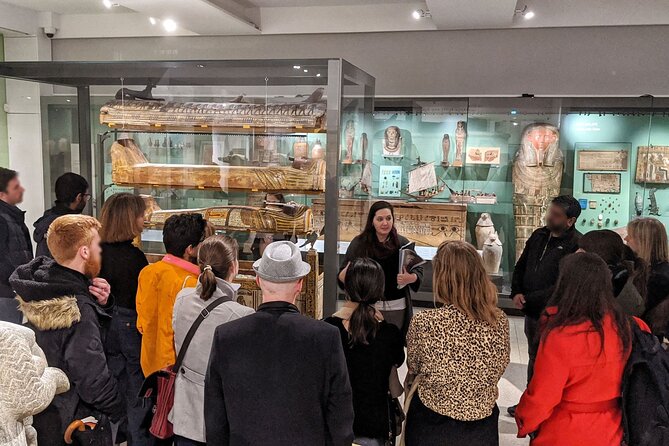
You meet near the main entrance of the Ashmolean Museum, at the Statue Gallery. This is a practical meeting point because you do not need to search through several floors or wait in a distant room.
The museum is at Beaumont Street, Oxford OX1 2PH. It is near public transportation, and the tour ends back at the same meeting point. Confirmation arrives when you book, so you can keep the meeting details on your phone with the mobile ticket.
Allow a little extra time to reach the entrance. The tour itself lasts about 1 hour and 15 minutes, and the schedule is fairly tight. If you arrive late, you may have trouble finding the group once it has moved into the galleries.
The small group format matters here. With no more than 12 people, you should have a reasonable chance to hear the guide’s explanations and take part in questions. That suits Uncomfortable Oxford’s approach, which is built around conversation rather than a rapid list of dates and object names.
More museums and galleries in Oxford:
- Natural History Museum Tour – by Uncomfortable Oxford™
★ 4.5 · 17 reviews - Tower of London and Crown Jewels Exhibition Ticket
★ 4.5 · 6,677 reviews - Chelsea FC Stadium Tours and Museum
★ 5.0 · 1,908 reviews
The Ashmolean Story Gallery and the museum’s beginnings
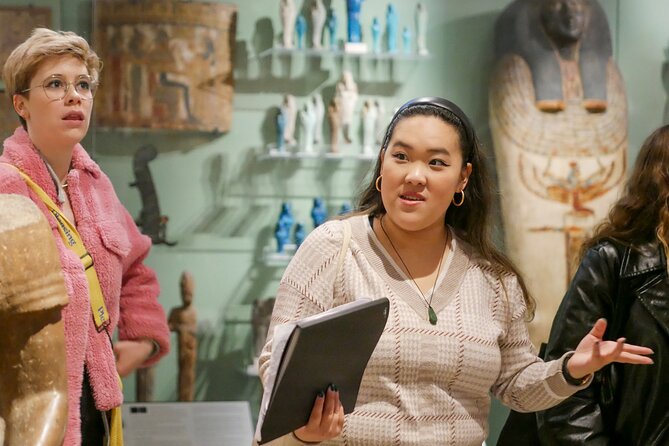
The first substantial stop takes place in the Ashmolean Story Gallery. This section sets up the rest of the visit by looking at how the museum began and how early collecting practices shaped its collections.
You are not simply given a founding date and sent onward. The focus is on the links between museums, colonial power, and the movement of objects. That gives you a useful frame for the later galleries, where the central question is not only what an object is, but how it reached Oxford and why it is presented in a particular way.
I find this a strong opening because it prevents the tour from treating difficult subjects as isolated cases. Once you understand the museum’s origins, questions about ownership, labels, and display feel connected rather than scattered.
This section lasts about 10 minutes. That is enough time to establish the main ideas, but not enough for a long institutional history. If you want a detailed account of every period in the museum’s development, you will need more time on your own.
Greek and Roman art in the 15-minute Cask Gallery stop
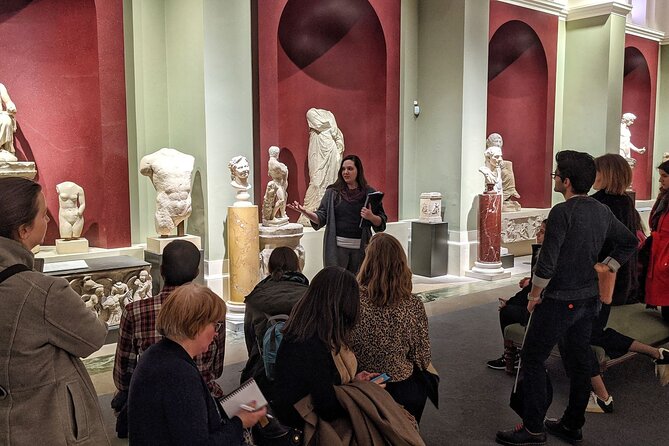
The Cask Gallery shifts the focus to Greek and Roman culture. These collections are often presented as the foundation of Western art, and this tour asks you to consider what that emphasis leaves out.
The discussion includes enslavement practices and the aesthetics of ancient sculpture. That combination is useful. It places beautiful marble and celebrated artistic ideals alongside the labor systems and social inequalities that shaped ancient life.
You can expect questions about why certain cultures receive so much attention in museums, how modern audiences learned to value particular forms of sculpture, and how labels can make ancient societies seem cleaner or more orderly than they were.
This is not a standard greatest hits tour of classical art. If you want a quick explanation of famous statues, this may feel less direct. If you want to understand how museums build ideas about civilization and beauty, the stop offers more to think about.
The Cask Gallery portion lasts about 15 minutes. Since the visit moves at a set pace, you may not spend long with each individual object. The value comes from the connections between several displays and the questions raised by the guide.
Excavation ethics in the Hellenistic World gallery

The Hellenistic World section continues the classical theme but turns toward archaeology. Here, the main subjects are excavation, museum display, and replicas.
That is important because the removal of an object from the ground is often treated as the end of a story. In reality, excavation can involve ownership disputes, unequal relationships, incomplete records, and decisions about which objects deserve attention. The tour gives you a way to consider those issues while looking at objects in the gallery.
Replicas add another layer. A reproduction can help people study or see an important object without moving the original. It can also raise questions about authenticity, authority, and what the public is really being shown. The tour asks you to think about the difference between an original object and the meaning assigned to it in a museum.
This 15-minute stop is likely to suit you if you enjoy archaeology but do not want the subject reduced to treasure hunting. It is less useful for someone seeking a detailed guide to every Hellenistic ruler or artistic style. The emphasis is on museum practice and ethics.
A few more Oxford half days worth a look
- Oxford University Walking Tour With University Alumni Guide
★ 5.0 · 6,905 reviews - 1.5-hour Oxford City and University Walking Tour
★ 4.5 · 1,383 reviews - Oxford Official University & City Tour
★ 5.0 · 1,134 reviews - City Sightseeing Oxford Hop-On Hop-Off Bus Tour
★ 4.5 · 1,042 reviews
Colonialism and repatriation in the museum display
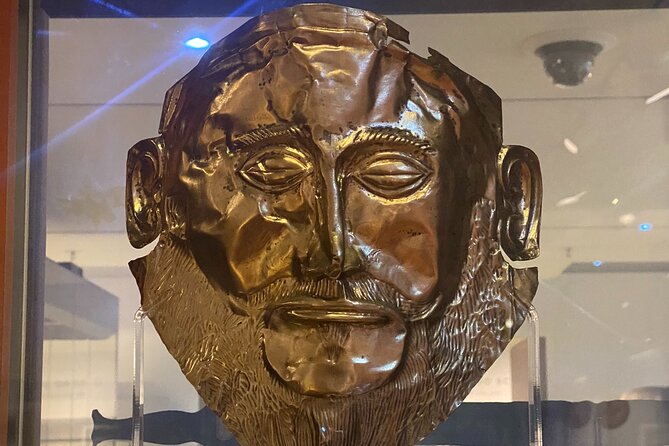
A dedicated museum display on colonialism and repatriation forms the tour’s most direct examination of institutional responsibility. You look at how colonial collecting affected museums and at the arguments surrounding the return of cultural objects.
Repatriation is not a simple question with one answer for every object. It can involve records, legal ownership, cultural importance, past violence, and the wishes of communities or governments. A short tour cannot settle all of those issues, but it can help you recognize why the debate matters.
I like that this subject appears as part of the museum visit rather than as a separate lecture away from the collections. You can connect the ideas to the objects around you and consider how a label, case, or gallery arrangement can influence your view.
This portion lasts about 15 minutes. The time is long enough for a focused discussion, though you should not expect a full case-by-case account of every contested item connected with the museum. The guide’s role is to frame the questions and help you look more critically.
Mummies, bodies, and human remains in the Egyptian Galleries
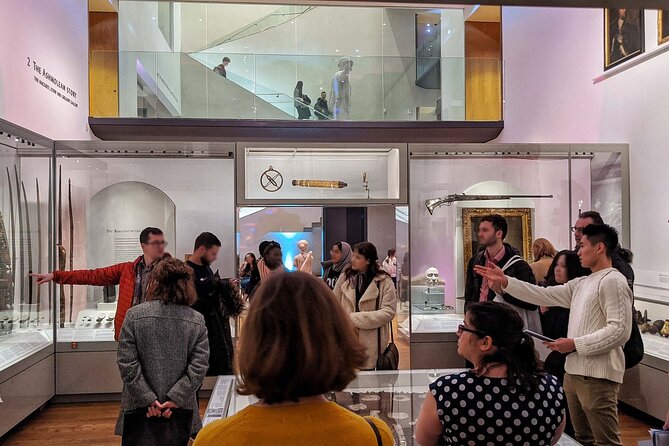
The final stop takes place in the Egyptian Galleries. Here, the tour addresses mummies and human remains as objects on display.
This can be the most personal part of the experience. A mummy is not only an archaeological source or an exhibit. It was once a person, and that fact changes how you might think about lighting, labels, glass cases, photography, research, and public access.
The discussion asks what gives a museum the right to display human remains and how those remains should be treated. It also connects to the wider question of whether museums use respectful language and practices when presenting the dead.
The section lasts about 15 minutes and brings the earlier themes together. Collection, excavation, ownership, research, and display all meet in one subject. If you prefer a light, traditional museum visit, this ending may feel serious. If you want a tour that encourages you to question museum habits, it is a fitting close.
The activity returns to the meeting point after this section. You can then continue exploring the museum independently, although the provided tour information does not specify how long you may remain inside or whether any separate admission conditions apply.
A discussion rather than a one-way lecture
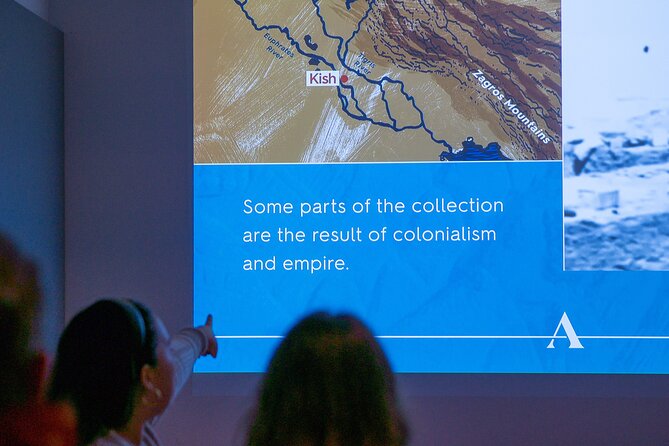
The tone matters as much as the route. The guide is described as open and friendly, with an approach that encourages a stimulating discussion. That is a good match for subjects that can quickly become abstract or uncomfortable.
You should expect information, but also room for questions and reflection. The guide’s job is not only to identify objects. It is to help you consider the choices behind the museum experience: what is shown, what is missing, how objects are described, and who gets to speak for them.
Because the tour is offered in English, you will need to be comfortable following an English-language discussion. The group size should make it easier to ask for clarification, but the experience is not advertised as a private tour or as a language lesson.
The supplied feedback gives special weight to the guide’s friendly manner, clear presentation, and the atmosphere of the museum. Those points are worth noting. A serious subject can become tiring if it is delivered in a rigid or scolding way. This tour appears designed to keep the conversation open while still addressing difficult material directly.
Is $96.02 good value for 75 minutes?
The cost is $96.02 per person, which makes this an expensive short tour by ordinary sightseeing standards. You are paying for about 75 minutes, and the listed museum stops show admission as free. The price therefore reflects the guided interpretation, specialist focus, small group limit, and discussion format rather than a long list of included attractions.
I would not choose it if you only want to see the Ashmolean’s famous objects or get a basic introduction to the building. You can likely get more time in the galleries by visiting independently, though the supplied information does not state the museum’s general admission arrangements.
I would consider the price more reasonable if you value guided context and want a carefully focused conversation about museum ethics. The tour covers several complex topics in a short period, and a group of no more than 12 people gives the guide a better setting for discussion than a large walking tour.
Group discounts are available, so the value may improve if you are booking for several people. Check the final price for your party before booking, since the advertised per-person amount is the clearest guide to the standard cost.
Who will get the most from this Ashmolean visit?
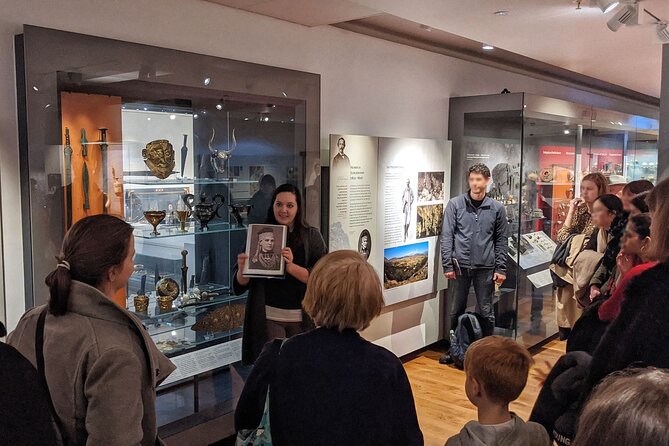
This experience is best for you if you have already seen a conventional museum tour and now want to question how museums operate. It suits people interested in colonialism, archaeology, ancient art, repatriation, public history, and the treatment of human remains.
Students, educators, museum workers, and visitors with a strong interest in cultural ownership may find the format especially useful. You do not need to be an expert, since the tour is designed around explanation and conversation, but you should be ready for serious subjects.
It can also work well for a visitor who wants more than a passive look at objects. The guide’s open approach and the small group make it easier to connect the museum displays with present-day debates.
I would think twice if you want a relaxed, object-by-object tour with a broad sweep of Egyptian, Greek, Roman, and European art. This route is selective. It spends time on ethics and interpretation, so it leaves less room for general collection coverage.
Most people can participate, and service animals are allowed. The experience has a minimum number of participants, so a cancellation is possible if that number is not reached. It also requires good weather according to the booking conditions, with a different date or full refund offered if poor weather causes cancellation.
Booking, cancellation, and practical details
You can cancel up to 24 hours before the start time for a full refund. Changes or cancellations made less than 24 hours before the start time are not accepted for a refund, and the cut-off follows Oxford local time.
The tour begins and ends at the Ashmolean Museum, Beaumont Street. A mobile ticket is offered, and confirmation is provided at booking. Since the route uses several museum galleries within a fixed 75-minute period, arrive ready to begin at the stated meeting point.
The activity is offered in English. Group discounts may be available, and the maximum group size is 12 people. Those details are more than minor booking notes: they tell you that the experience is structured, social, and dependent on a guide leading the group through a planned sequence.
Should you book the Uncomfortable Oxford Ashmolean tour?
Book it if you want to look behind the display cases. The strongest part of this experience is its connected route through collecting, classical art, excavation, repatriation, and human remains. The friendly, discussion-led tone also makes difficult material easier to approach.
Skip it if your main goal is a cheap overview of the Ashmolean or a long, traditional art tour. At $96.02 for roughly 75 minutes, the price demands a clear interest in the subject.
For the right visitor, this is a focused way to see Oxford’s museum culture with sharper eyes. You leave with more than a list of objects. You gain practical questions to carry into every museum you visit next.
FAQ
Where does the Ashmolean Museum tour begin?
The tour begins at the Statue Gallery near the Ashmolean Museum’s main entrance on Beaumont Street, Oxford OX1 2PH, UK.
Where does the tour end?
The activity ends back at the meeting point at the Ashmolean Museum.
How long does the tour last?
The tour lasts approximately 1 hour and 15 minutes.
What language is the tour offered in?
The tour is offered in English.
How many people can join the tour?
The maximum group size is 12 people.
What subjects does the tour cover?
The tour covers the museum’s origins, colonial collecting practices, Greek and Roman culture, enslavement, ancient sculpture, excavation ethics, replicas, colonialism, repatriation, mummies, and human remains.
Is the tour accessible to most people?
Most participants can take part, and service animals are allowed. The experience is also near public transportation.
Can I cancel for a refund?
Yes. You can cancel at least 24 hours before the start time for a full refund. Cancellations or changes made less than 24 hours before the start time are not accepted for a refund.
Recently added around Oxford
- CS Lewis & Tolkien Tour with Magdalen Entry Public tour 13.45★ 5.0 · 8 reviews
- Oxford: to Cotswolds (Half Day)★ 5.0 · 8 reviews
- Oxford Private Guided Walking Tour★ 4.5 · 8 reviews
- Oxford Scenic Cycle Tour- 2 persons minimum summer season★ 5.0 · 8 reviews
- Oxford Walking Tour – Discover its University and Traditions★ 4.0 · 9 reviews
- Oxford PRIVATE Pub and City Evening Walking Tour★ 5.0 · 10 reviews
- Harry Potter in Oxford Tour Divinity School entry Private Tour★ 5.0 · 10 reviews
- 2-Hour Private Walking Tour in Oxford★ 5.0 · 11 reviews
Oxford Tours, compared.

Oxford University Walking Tour With University Alumni Guide
Read our review →
1.5-hour Oxford City and University Walking Tour
Read our review →

City Sightseeing Oxford Hop-On Hop-Off Bus Tour
Read our review →
Harry Potter Walking Tour of Oxford Including New College
Read our review →
Oxford Sightseeing River Cruise Along The University Regatta Course
Read our review →
Afternoon Tea Sightseeing River Cruise in Oxford
Read our review →
Inspector Morse, Lewis and Endeavour Oxford Walking Tour
Read our review →Browse the lists this tour appears in