
Reviewed · CANTERBURY TOURS
Silver Ring Workshop in Kent, England
Making a ring from a dull strip of silver is the real treat here. In Annie’s private Canterbury studio, you learn each step yourself, from sawing and texturing to using a torch, then leave wearing a ring made by your own hands. I love the small-group setting and the fact that Annie demonstrates every stage before you try it.
I also like the personal choices built into the process. You decide on a simple design, choose how to texture or stamp the silver, and work at your own pace with Annie’s calm guidance. The main consideration is that materials are extra, adding £10 to £30 per ring, and beginners’ designs are kept simple, with no signet rings.
Key points to know before booking
- You make the whole ring yourself: Saw, texture, anneal, forge, solder, file, buff, and polish the silver.
- Annie teaches every stage: Her patient, clear demonstrations make the workshop suitable for beginners.
- The workshop is private: Sessions are for one or two people, so this works well for couples, friends, or a special gift.
- The finished ring is genuinely personal: You choose the basic design and can add texture, pattern, or stamping.
- Allow two to three hours: The session begins at 10am and ends back at the Canterbury studio.
- Budget for silver separately: Materials cost £10 to £30 per ring, depending on the finished weight.
Starting with a strip of silver at 76 Castle Street
The workshop begins at 76 Castle Street, Canterbury, at 10am. The studio is in a beautiful old building in the center of Canterbury, and the setting gives the morning a sense of place without turning the class into a formal sightseeing tour.
This is a private activity for one or two people. That matters. You are not trying to hear instructions over a large class, and Annie can watch how you handle each tool. If you need a second explanation, want to adjust the design, or work left-handed, there is room to ask and adapt.
Annie starts by talking through basic ring designs and measuring your finger. This first discussion is useful because it sets realistic limits. You are making a beginner-friendly band, not a complicated piece of fine jewelry. Signet rings are not part of the session, but you can still create something distinctive through its shape, surface, and finish.
You receive an apron and settle at the workbench. Coffee and tea are included, which is a small touch, but welcome during a hands-on class that lasts most of a morning. The tone is relaxed and practical rather than stiff. You are there to learn, not simply watch a professional make something for you.
More workshops and classes in England:
- Surf Lesson
★ 5.0 · 349 reviews - London Traditional English Scone Making and Tea Workshop
★ 5.0 · 271 reviews - Beginner Surf Lesson in Newquay, Cornwall
★ 5.0 · 215 reviews
Sawing the silver to the right length
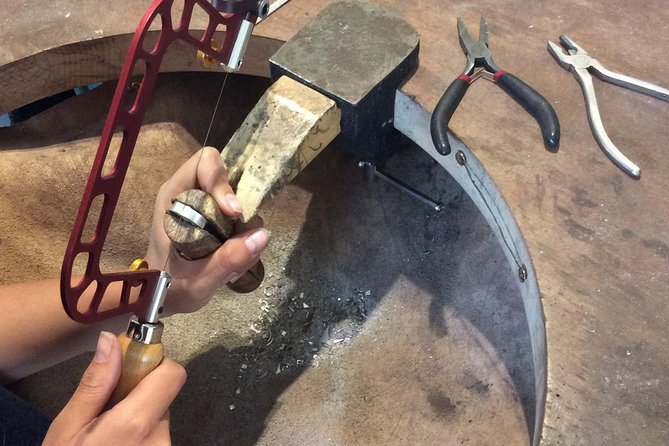
The first practical job is sawing the silver to length. It sounds simple, but this is where the ring begins to feel like your project. You learn to handle the tools and make a clean, measured cut rather than handing the work over to Annie.
She guides you through the process and shows the correct technique before you begin. If your cut is not perfect, that does not ruin the ring. Later filing and shaping help refine the metal, and Annie is there to keep the work moving safely.
At this stage, you also begin thinking about the ring’s final look. A plain band can be clean and understated. You can also add a pattern, textured surface, or stamped detail to make it more individual. These choices are modest by design, but they give the finished piece a clear connection to the person who made it.
The workshop’s strongest feature is this balance between instruction and control. Annie does not simply take over whenever a task becomes tricky. She demonstrates the method, explains why it matters, and lets you repeat it on your own ring.
Adding texture, pattern, or stamped details
Once the silver is cut, you personalize the surface. You may pattern it, texture it, or stamp it, depending on the design you choose. This is the point where two people taking the same class can end up with very different rings.
Keep your expectations sensible. The workshop is aimed at beginners, so the designs remain simple. You will not be creating a large, elaborate piece with complex settings or a raised signet face. Instead, you are learning how surface treatment changes the character of a basic silver band.
That limitation is useful rather than disappointing for most first-timers. A simple design gives you time to learn the tools properly, and the finished ring remains wearable. You also avoid spending the whole session trying to rescue an over-ambitious idea.
Annie’s teaching style is especially important here. She demonstrates on her own piece and then has you repeat the step on yours. This makes the class easy to follow, even if you have no experience with jewelry making or metalwork.
Using heat to anneal and shape the ring
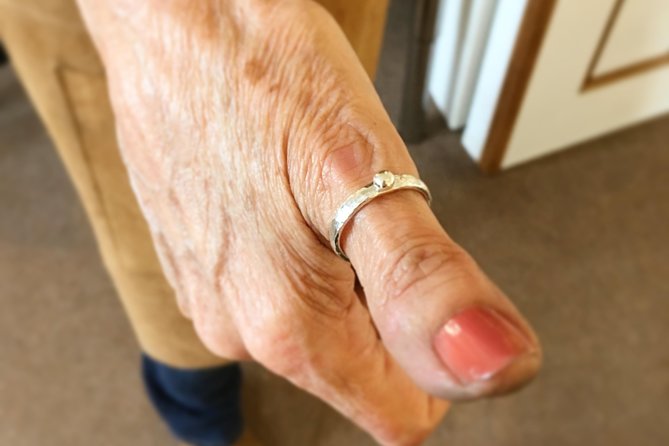
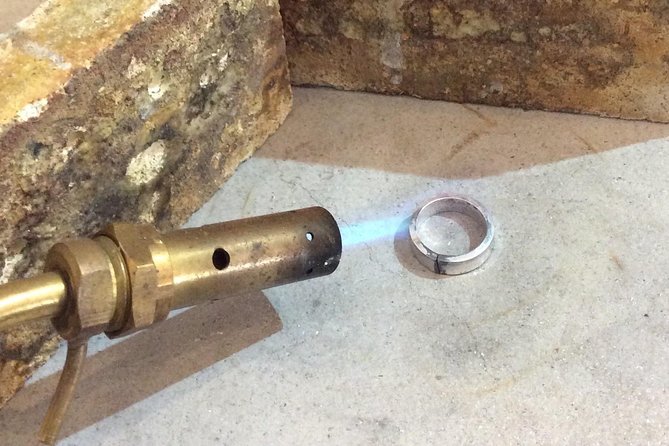
The silver must then be annealed. Annie explains why this is needed and shows you how to use the torch. Annealing softens the metal so it can be worked and shaped without becoming too hard or difficult to handle.
For many people, this is the most memorable part of the workshop. Using a torch can feel intimidating at first, but you are not left to guess what to do. The process is explained in plain terms, and Annie guides you through the technique.
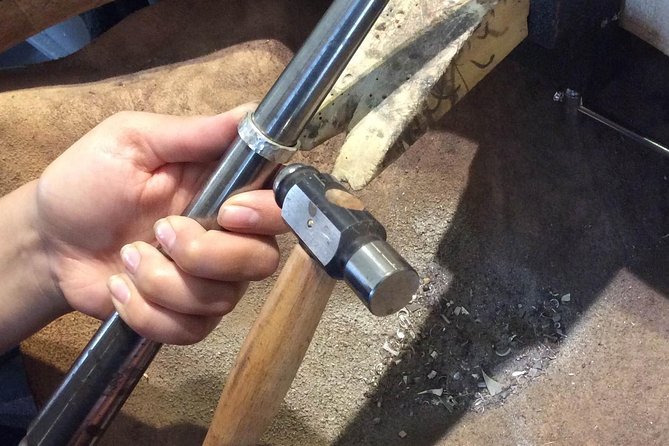
You then forge the ring into shape. The flat strip becomes a curved band, and the project starts to look like an actual ring rather than a piece of raw material. You also saw it to size before soldering, so the fit is considered before the join is made permanent.
This hands-on sequence gives the workshop its value. You are not just decorating a ready-made ring. You are learning how metal changes under cutting, heat, pressure, and finishing. That understanding can change the way you look at handmade jewelry afterward.
If you are nervous about tools or heat, expect to need patience. The class is beginner-friendly, but it is still practical work. You will be holding equipment, making cuts, and handling metal. Annie’s guidance helps, but the ring is yours to shape.
A few more England half days worth a look
- Official Canterbury Guided Walking Tour – 11.00 Tour
★ 5.0 · 422 reviews - Official Canterbury Guided Walking Tour – 14.00 Tour
★ 5.0 · 214 reviews - Cultural Homestay Exploring London, Oxford and National Parks
★ 5.0 · 100 reviews - The Canterbury Classic Tour
★ 5.0 · 100 reviews
Soldering the ring with a torch
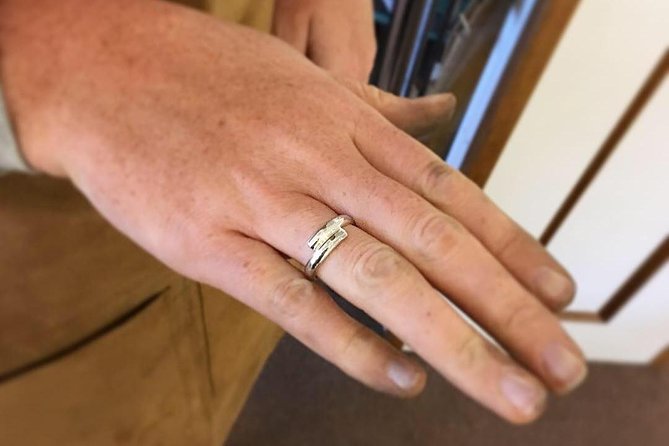
Once the ring has been formed and sized, it is ready to be soldered. Annie explains how soldering joins the two ends, then you use the torch to complete the connection.
This is a key stage, and it is also one where careful instruction matters most. The join must be neat and secure before the ring can be finished. Annie’s method of showing each task first gives you a clear model to follow, while her patient approach leaves room for questions.
The private format helps again. You do not have to rush because another group is waiting for the same torch or workbench. Sessions for one or two people last around two to three hours, with the exact pace shaped by the work and the participants.
Couples often find this part especially meaningful. Some people make rings for each other, anniversary rings, or new wedding rings. The experience suits that purpose because you both work through the same process while making separate pieces. It creates a shared activity without requiring the rings to be identical.
Still, keep the material cost in mind before you book. The advertised price is $131.95 per person, but silver is not included. You pay an additional £10 to £30 per ring at the end, based on the finished weight. That extra amount is modest compared with the cost of many jewelry-making classes, but it should be part of your budget.
Filing, buffing, and polishing the finished piece
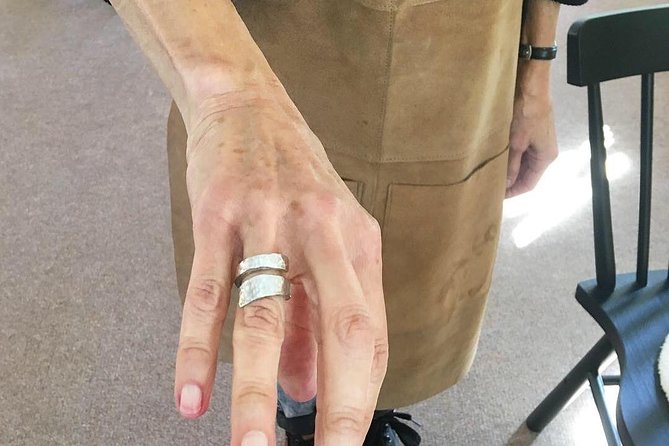
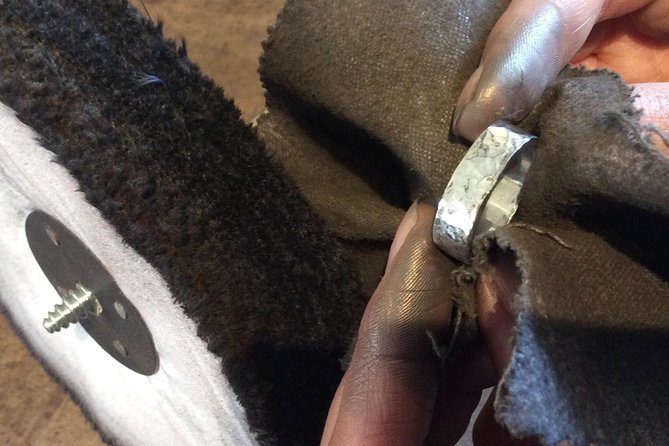
After soldering, the ring needs careful finishing. You use metal files to clean the join, buff away scratches, and polish the surface. This is the slower, more patient part of the workshop, but it is what turns a handmade object into something ready to wear.
The change is satisfying. The ring begins as a dull strip and gradually becomes smooth and bright. You can still see the small decisions you made, especially if you added texture or stamping, but the surface has a finished look.
Do not underestimate this stage. Filing and polishing take time, and the final result depends on working carefully rather than rushing toward the end. Annie shows you how to clean the join and remove marks, then helps you bring out the shine.
This is also where the class gives you a better sense of the work behind handmade jewelry. The finished ring may look simple, but it has passed through many separate stages. That makes the piece feel more valuable, not because it is expensive, but because you understand how it was made.
You leave with the ring you created. The result does not need to look like a showroom piece to be worthwhile. Its appeal comes from the fact that you made the decisions, handled the tools, and took the silver through each stage yourself.
Why Annie’s teaching makes the class work
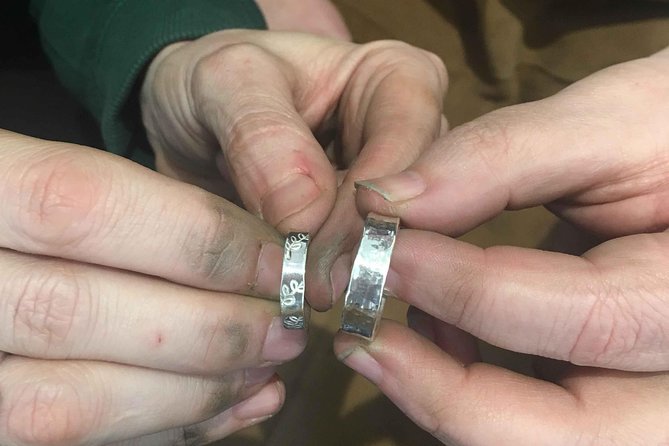
Annie is the central reason this workshop suits beginners. She combines demonstrations with encouragement, and she explains not only what to do but why each step is necessary.
That distinction matters. A class can show you a set of instructions and still leave you feeling lost. Here, you replicate each stage on your own piece after seeing how it works. The method gives you enough independence to feel that the ring is truly yours.
You can also ask questions as you go. The atmosphere is informal, with time for conversation and refreshments while the metal is being prepared or cleaned. The setting is welcoming without taking away from the craft.
Left-handed participants should not worry. One person specifically needed to move to Annie’s workbench for one process, and this was handled without fuss. It is a useful sign that Annie focuses on the person in front of her rather than forcing everyone into one rigid method.
The class has also worked well for complete beginners, couples, siblings, wedding partners, and people booking it as a gift. You do not need a background in art or metalwork. You need curiosity, a willingness to follow instructions, and enough patience to work through the finishing stages.
Cost, timing, and practical planning
The listed cost is $131.95 per person. Silver materials are separate, at £10 to £30 per ring depending on weight, with £10 covering a basic ring. Coffee, tea, an apron, and instruction are included.
I consider the price reasonable for a private, two to three-hour session with a finished piece to take home. You are paying for direct teaching, access to tools, a small-group setting, and the chance to make rather than simply watch. The extra material charge is clear, but remember that the final amount depends on how much silver your ring uses.
The workshop runs Thursday through Saturday, from 10am to 1pm, during the stated operating period. It ends back at 76 Castle Street, so you can plan the rest of your Canterbury day afterward.
The address is near public transportation and close to a multi-story car park, making arrival fairly simple. You receive confirmation within 48 hours of booking, subject to availability. Because the experience is offered only on three days each week and is often booked around 80 days ahead, reserve early if your Canterbury visit has fixed dates.
Free cancellation is available up to 24 hours before the start time for a full refund. Changes or cancellations made inside that 24-hour window are not accepted for a refund, with cut-off times based on local time.
Who will get the most from this Canterbury workshop
This is a strong pick if you want a hands-on activity with a lasting result. It gives you more to remember than a standard craft demonstration because the ring comes home with you.
I would especially recommend it for:
- Couples making anniversary or wedding rings together
- Friends or siblings looking for a shared morning activity
- Visitors who want a creative break from museums and historic buildings
- Beginners curious about jewelry but unsure where to start
- Anyone searching for a personal gift experience
- Left-handed participants who value patient, adaptable teaching
It may be less suitable if you want a complex or highly ornate design. The class is for simple beginner rings, and signet rings are not available. You should also be comfortable with a little physical work, including sawing, filing, forging, and polishing.
The private format makes it a poor match for someone seeking a large social class. If you like meeting a whole room of new people, this may feel quiet. If you prefer focused attention and a relaxed pace, it is a good fit.
Is the ring workshop worth booking?
Book it if you want to make something personal and you value the process as much as the finished object. Annie’s patient instruction, the private setting, and the full start-to-finish approach make this more than a quick souvenir activity.
The best reason to choose it is that you do the important work yourself. You cut the silver, add its surface detail, use the torch, shape the band, solder the join, and polish the final piece. Annie keeps you on track, but she does not turn the ring into a project made by someone else.
Just arrive with realistic expectations. You will make a simple silver ring, not a complex custom jewel, and materials cost extra. If those limits suit you, this is one of Canterbury’s most personal ways to spend a morning, with a wearable reminder of your time in the city.
FAQ
Where does the silver ring workshop take place?
The workshop starts and ends at 76 Castle Street, Canterbury, CT1 2QD, England.
How long does the workshop last?
Sessions for one or two people last approximately two to three hours. The stated time is 10am to 1pm.
What days is the workshop available?
The workshop operates Thursday through Saturday, from 10am to 1pm, during the stated operating period.
Is silver included in the price?
No. Silver materials cost an additional £10 to £30 per ring, depending on the finished weight. The minimum £10 charge covers a basic ring.
What kind of ring can I make?
This is a beginner workshop, so designs are kept simple. You can work with pattern, texture, or stamping, but signet rings are not offered.
Is the workshop private?
Yes. It is a private activity for your group, with sessions designed for one or two people.
Recently added around England
- London’s Crown Secret: Self-Guided Royal Puzzle Quest★ 4.5 · 8 reviews
- Brighton to Heathrow Airport private taxi transfers★ 5.0 · 8 reviews
- The Condensed Canterbury Tour★ 5.0 · 8 reviews
- Postcard London★ 5.0 · 8 reviews
- Private Tour: Downton Abbey London Locations by Taxi★ 5.0 · 8 reviews
- Windsor Castle, Stonehenge & Roman Baths Private Tour★ 4.5 · 8 reviews
- CS Lewis & Tolkien Tour with Magdalen Entry Public tour 13.45★ 5.0 · 8 reviews
- Cotswolds Private Driving Tour from London★ 5.0 · 8 reviews
Canterbury Tours, compared.

Official Canterbury Guided Walking Tour – 11.00 Tour
Read our review →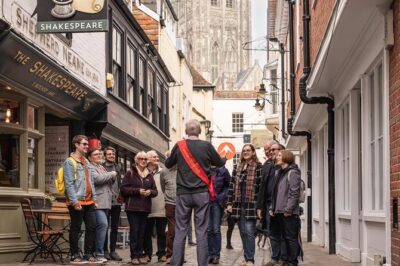
Official Canterbury Guided Walking Tour – 14.00 Tour
Read our review →
Cultural Homestay Exploring London, Oxford and National Parks
Read our review →


Browse the lists this tour appears in