
Reviewed · DEVON TOURS
Plymouth: Best of Plymouth Walking Tour
Plymouth’s story comes into focus as you walk from the Mayflower Steps through the old Barbican and up to Plymouth Hoe. In 102 minutes, Hannah takes you from Elizabethan streets and historic pubs to the sea views around Smeaton’s Tower, linking famous sights with the people and voyages that shaped the port.
I like the personal feel of a tour created by a proud Plymothian, and I like the practical advice on where to eat and how to spend the rest of your time. The route is also family-friendly, dog-friendly, and can be adjusted for mobility scooters.
The main consideration is the ground underfoot. You’ll meet stretches of cobbles and some moderate inclines, so contact Plymouth Walking Tours ahead of time if your group needs a step-free route or other adjustments.
Key points to know before you book
- Start and finish at the Mayflower Steps: Look for the large blue flag opposite the memorial.
- See Plymouth in one compact walk: The 102-minute route covers the Barbican, old streets, St Andrew’s Church, the post-war center, and Plymouth Hoe.
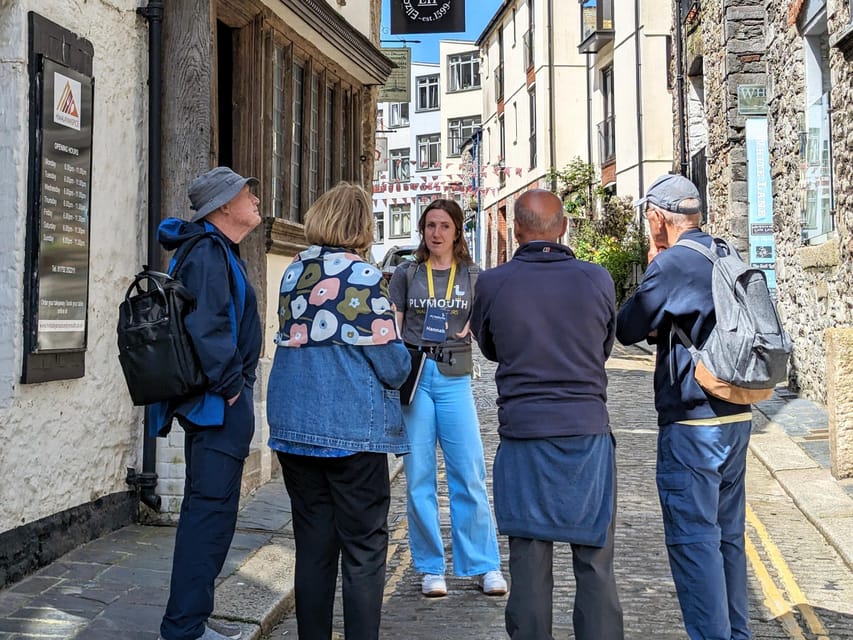
- Meet local guide Hannah: Her background in heritage interpretation and visitor engagement shapes a friendly, story-led tour.
- Expect maritime and local history: Hear about the Mayflower, voyages from Plymouth, former residents, religious life, and the city’s rebuilding.
- Plan around access needs: Cobblestones and inclines remain, but step-free routes and audio description can be arranged.
- Pay about $21.22 per person: The fee covers the walking tour and guide, while attraction admission costs extra.
Starting at the Mayflower Steps
The tour begins opposite the Mayflower Steps Memorial on Plymouth’s Barbican. A large blue flag marks the meeting point, which makes the start fairly easy to find in the waterfront area.
The memorial recalls the passengers and crew of the Mayflower, which left Plymouth in 1620. That familiar event is only one part of the city’s story, but it gives the walk a useful opening point: Plymouth was a port of departure, arrival, trade, work, and naval activity long before modern visitors came for the sea views.
I like starting here because you get context before the walk becomes a string of sights. Instead of seeing the Barbican as only a place for cafés and waterfront photos, you begin to understand it as a working port with centuries of movement through it.
The Mayflower connection also needs a little care. It is important, but Plymouth’s past is much wider than one ship and one voyage. Hannah’s route places the memorial beside stories about the town, its residents, its visitors, and other journeys that began here.
More Walking Tours in Devon:
- The Fawlty Tours walking experience
★ 5.0 · 42 reviews - Ilfracombe Seafront History Walking Guided Tour
★ 5.0 · 18 reviews - Walking Tour of Exmouth in East Devon
★ 5.0 · 12 reviews
New Street and the Elizabethan House
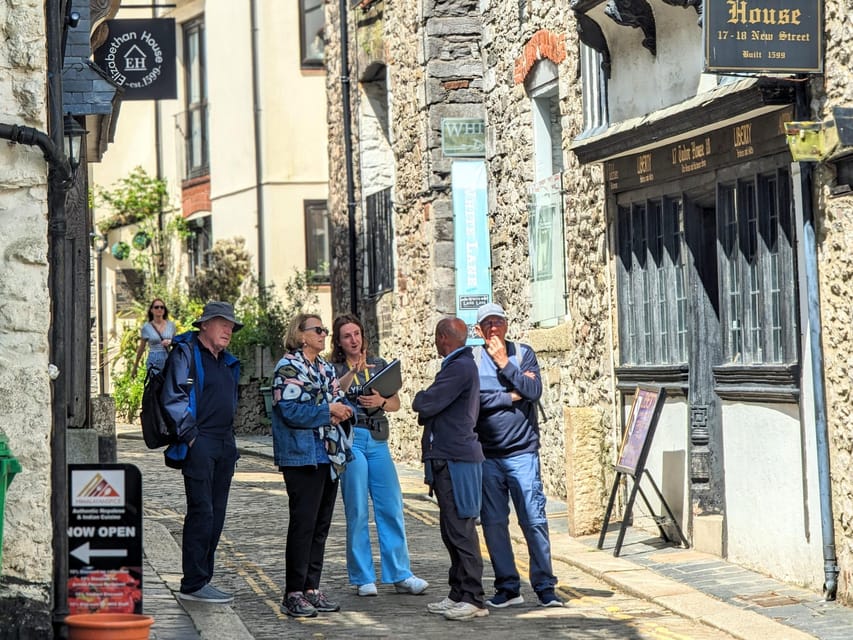
From the waterfront, the route turns toward New Street and Elizabethan Street. This change in setting is one of the walk’s useful features. You move away from the open harbor and into older streets where Plymouth’s built past is easier to picture.
The Elizabethan House is one of the key sights here. The tour does not include admission to attractions, so you should treat the exterior and surrounding streets as part of the walk unless you arrange a separate visit. That keeps the tour affordable, but it also means you may want extra time later if you wish to go inside.
These streets help explain how the port town functioned beyond its ships. Houses, businesses, religious buildings, and drinking places all formed part of daily life. Hannah’s role is especially valuable in this section because local history works best when it is tied to actual streets rather than presented as a list of dates.
If you have only one day in Plymouth, listen for suggestions about what to do after the walk. The tour is designed not only to show you landmarks but also to help you decide where to eat and how to use your remaining time.
Southside Street’s food, pubs, and gin

Southside Street brings the tour back toward some of the Barbican’s most recognizable sights. This is a good stretch for visitors who want local character mixed with practical stops.
You’ll pass iconic pubs, England’s oldest bakery, and the Plymouth Gin Distillery. The route does not include entry fees, tastings, or attraction visits, so do not book this expecting a gin tour or a bakery stop built into the price. Instead, you’ll learn where these places fit into Plymouth’s story and can return on your own.
The food advice is a real benefit. A walking tour that tells you only what a building looked like in the past can leave you unsure where to go next. Here, you can ask about places to eat and get ideas for the rest of your visit while you are already in the area.
Southside Street can also be busy, especially around popular restaurants and pubs. Keep an eye on the pace if you are walking with children or a dog, and allow room for the uneven surfaces. The route is family-friendly and dog-friendly, but that does not make every section smooth or quiet.
The Barbican’s maritime past and night life
The Barbican is more than a pretty waterfront. Its links to Plymouth’s maritime past give the neighborhood much of its identity, while independent shops, coffee shops, pubs, and local art connections make it a natural place to explore after the tour.
I like the balance here. You get history without being shut away from present-day Plymouth. The area is useful for understanding how the city presents its past while still functioning as a place to meet, eat, shop, and go out at night.
The tour also points toward local art history. That detail helps widen the picture beyond naval stories and famous voyages. Plymouth is presented as a city shaped by working people, visitors, artists, religious communities, businesses, and rebuilding.
The word Barbican can make the area sound like one preserved historic quarter. In practice, you’ll see layers from different periods. The walk is strongest when you pay attention to those changes rather than expecting every building to be old.
A few more Devon half days worth a look
- Torquay Coastal RIB Seafari
★ 5.0 · 410 reviews - The story of Agatha Christie’s extraordinary life
★ 5.0 · 333 reviews - Coasteering
★ 5.0 · 191 reviews - 30-Minute Raptor RIB Ride Activity in Torquay
★ 5.0 · 182 reviews
The Merchant’s House and Plymouth’s difficult characters
The Merchant’s House adds a more personal side to the tour. It has links to some of Plymouth’s most notorious historical characters, giving Hannah an opportunity to move from broad city history to individual lives.
That shift matters. Ports tend to produce stories of ambition, wealth, crime, trade, and social change. A building connected with controversial figures can tell you more about how a town worked than a polished monument can.
The supplied information does not specify which people or stories will be covered in detail, so I would not book this expecting a particular character or episode. Think of the stop as a doorway into the less tidy parts of Plymouth’s past.
For me, this is the kind of detail that makes a short walking tour worthwhile. You are not simply checking off famous sights. You are getting clues about the people behind the city’s public image.
St Andrew’s Church and the religious quarter
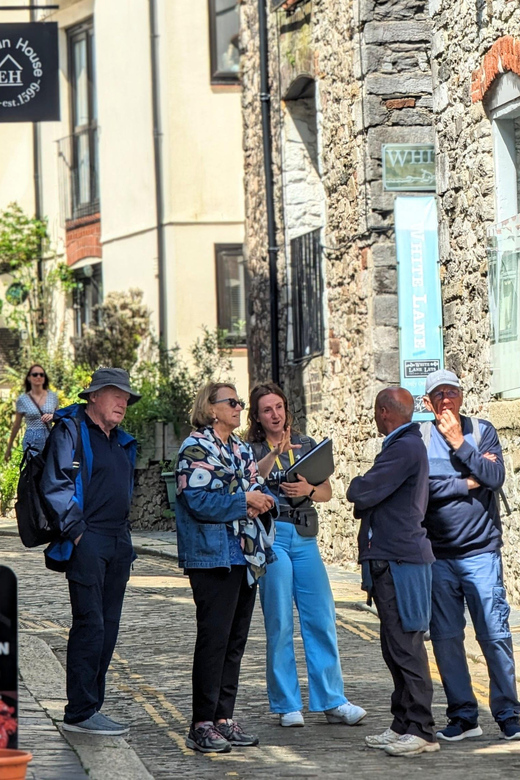
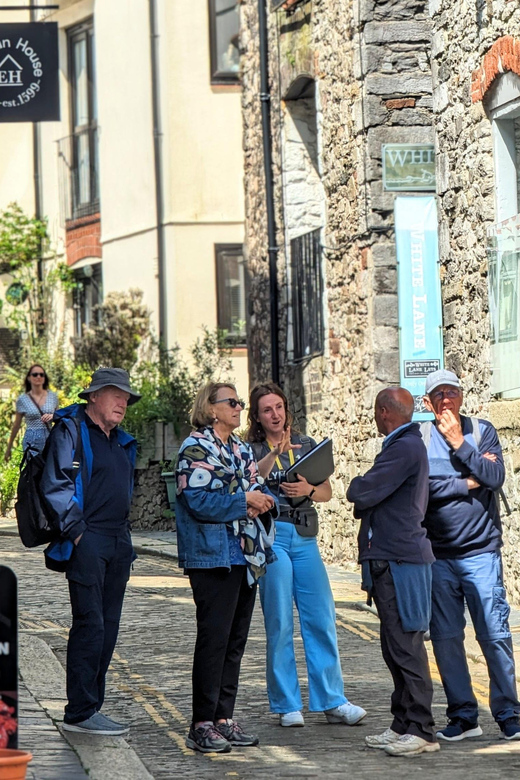
The route continues to St Andrew’s Church and Plymouth’s religious quarter. This section adds another layer to the city, showing that Plymouth was shaped not only by ships and commerce but also by faith and community institutions.
Churches and religious buildings often help explain how older neighborhoods were organized. Even if you are not especially interested in religious architecture, this part gives the walk a change of pace and helps connect the old streets with Plymouth’s civic life.
The tour’s English-language commentary is live, so you can ask Hannah to clarify a point or explain how a site connects with the wider city. That direct exchange is more useful than an audio guide when you want recommendations or have a particular interest in history, culture, or architecture.
The route is designed for a broad audience. Families can follow it, dogs are welcome, and people with visual impairment can request audio description on the route. Contact the provider before arrival rather than waiting until the meeting point.
Plymouth’s 1950s city center

One of the more unusual parts of the walk is the edge of Plymouth’s 1950s city center. This is not the classic old-town stop, but it gives you a chance to see some of the best examples of post-war architecture in England.
Plymouth was heavily affected by wartime bombing and was rebuilt in the years that followed. The post-war center therefore helps explain why the city can feel so different from an old European port with one unbroken historic core.
I appreciate this inclusion because many walking tours avoid newer buildings. Yet the rebuilding is central to Plymouth’s identity. The shift from Elizabethan streets to 1950s planning shows how quickly a city can change, and how architecture records those changes.
This section may appeal most to people interested in urban design, modern history, or the way cities recover after destruction. If you want only medieval or Tudor buildings, it may feel less immediately scenic. Still, it is an honest part of Plymouth, not a detour from the city’s story.
Reaching Plymouth Hoe and Plymouth Sound
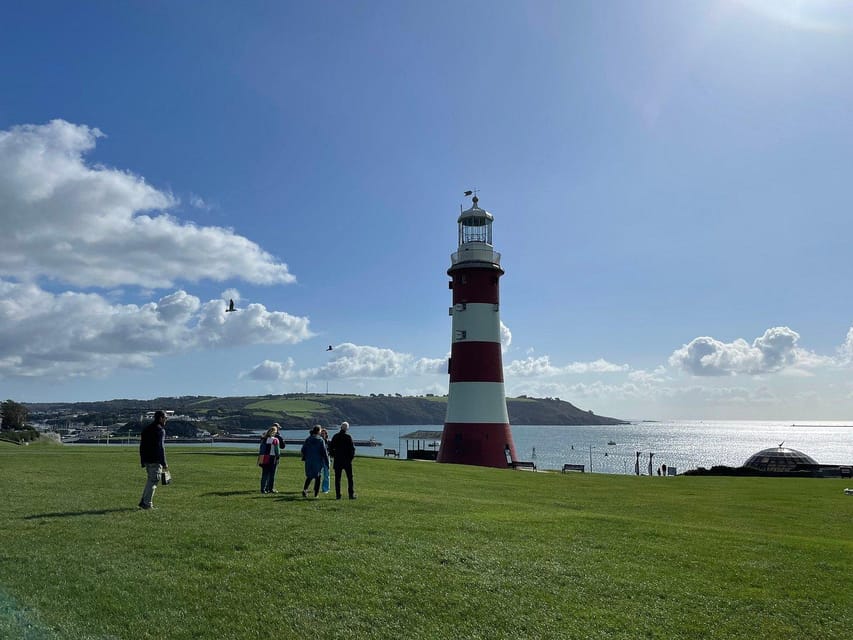
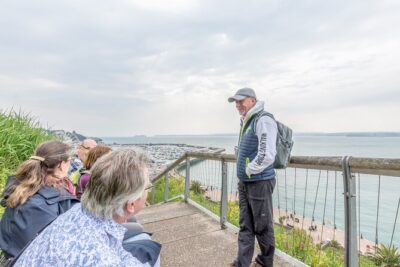
The route then heads toward Plymouth Hoe, where the city opens out toward Plymouth Sound and Cornwall. The contrast is striking: narrow streets and urban buildings give way to wide sea views and open space.
The Hoe is lined with Victorian features, including memorials, terraces, and Tinside Pool. These details show how the waterfront changed into a public place for leisure and remembrance, not only a working harbor.
The views are likely to be one of the tour’s biggest rewards. You can look across Plymouth Sound toward Cornwall and get a clearer sense of the port’s position on the southwest coast. The scenery also gives the historical stories a physical setting. Voyages from Plymouth become easier to picture when you can see the water stretching beyond the city.
Weather will affect this part of the experience more than the older streets. The tour is outdoors from start to finish, and the Hoe can feel exposed. Check the forecast and wear shoes that handle cobbles, inclines, and a full walking route.
Smeaton’s Tower and the final stretch
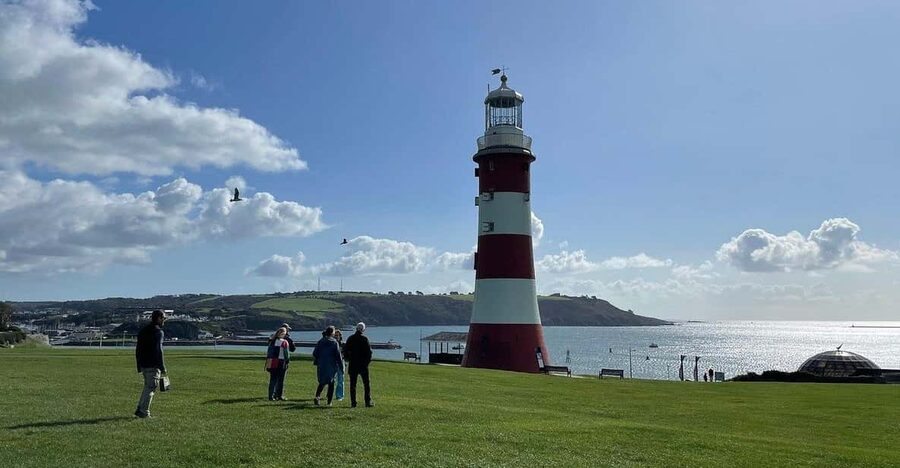
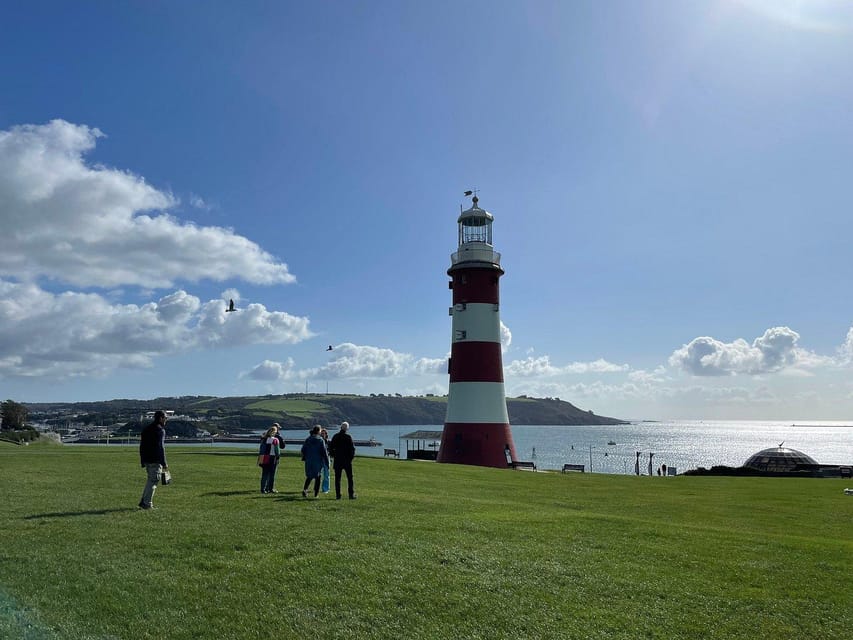
The walk includes Plymouth’s iconic lighthouse, Smeaton’s Tower. Its position on the Hoe makes it an easy landmark to recognize, and it provides a strong final sight for a route that began at the Mayflower Steps.
Admission to attractions is not included. The walk can point out Smeaton’s Tower and explain its place on the Hoe, but you should budget separately if you want to visit any attraction interiors.
Finishing back at the Mayflower Steps is practical. You do not need to arrange transport from a distant endpoint, and you can return to any Barbican restaurant, shop, or sight that caught your attention. It also lets you use the tour as an orientation walk at the beginning of your stay.
At 102 minutes, the timing is long enough to cover a wide area without taking up most of your day. Starting times vary, so check availability before booking. If you are arriving by cruise, train, or another timed connection, make sure the selected start time fits your schedule.
Hannah’s approach and the value of local guidance
Plymouth Walking Tours was created by Hannah, a proud Plymothian with experience in visitor engagement, heritage interpretation, and digital walking trails. That combination suggests a guide who thinks about both the facts and the way people receive them.
The strongest feedback about Hannah centers on three things: her friendly manner, her command of local history, and her flexibility. The tour is described as welcoming and entertaining, with attention to history and culture rather than a rushed list of monuments.
I would value that flexibility in Plymouth because the route crosses several types of ground and several periods of history. You can ask about food, architecture, famous voyages, or local life, and the format allows those interests to shape the conversation.
The tour is in English and includes a live guide. It is wheelchair accessible, but the route still has cobbles and moderate inclines. Step-free options can be used, and audio description can be included for people with visual impairment, but you should contact Plymouth Walking Tours in advance with your group’s needs.
Is $21.22 good value for 102 minutes?
At about $21.22 per person, this is a reasonable price for a guided city orientation, especially if Plymouth is new to you. The cost includes the walking tour and guide, but not admission to attractions.
The value comes from the range covered in a short time. You see the Mayflower Steps, old streets, the Elizabethan House, Southside Street, the Barbican, the Merchant’s House, St Andrew’s Church, post-war architecture, the Hoe, and Smeaton’s Tower. You also receive suggestions for eating and planning the rest of your stay.
It is less suitable if you want long interior visits, a food tasting, or a specialist attraction ticket included. The tour gives you the setting and background, then leaves you free to choose which places deserve more of your time and money.
Free cancellation up to 24 hours before the tour and the reserve-now, pay-later option reduce the risk of booking. Those terms are useful when your schedule is still changing, but you should confirm the exact starting time when checking availability.
Who should book this Plymouth walk?
I would recommend this tour to first-time visitors who want a clear introduction to Plymouth in less than two hours. It is also a good fit if you want local food ideas, maritime stories, and a guide who can point out both famous sights and less obvious city details.
Families should find the format manageable, and dog owners can bring their dogs. People using mobility scooters or wheelchairs can request stair-free routes, though the cobbled areas and inclines mean you should discuss access before booking.
History fans will appreciate the range from the Mayflower and Elizabethan streets to religious buildings and post-war architecture. Architecture fans may especially enjoy the 1950s city center, while people seeking sea views will welcome the final section on the Hoe.
I would look elsewhere if you prefer a tour with included attraction entry, a tasting, or a very small specialist group guaranteed. Those are not part of the stated offer.
Should you book the Best of Plymouth Walking Tour?
Book it if you want a friendly, local introduction that links Plymouth’s waterfront, old streets, rebuilt center, and sea-facing Hoe. Hannah’s local connection and flexible approach add value, while the route gives you useful ideas for what to do after the walk.
Before paying, check the start time, prepare for cobbles and inclines, and contact the provider about step-free access or audio description. At $21.22, it is a sensible way to get your bearings and decide which parts of Plymouth deserve a longer visit.
FAQ
Where does the Best of Plymouth Walking Tour start?
The tour starts at the Mayflower Steps on the Barbican. Look for the large blue flag opposite the Mayflower Steps Memorial.
Where does the walking tour finish?
The tour finishes back at the Mayflower Steps meeting point.
How long does the tour last?
The walking tour lasts 102 minutes. Starting times vary, so check availability when booking.
What language is the tour in?
The live tour guide speaks English.
Is the tour wheelchair accessible?
Yes, the activity is wheelchair accessible. The route includes some cobbles and moderate inclines, but stair-free routes can be used if arranged with the provider.
Can people with visual impairment request support?
Yes. Audio description can be included on the route for people with visual impairment. Contact Plymouth Walking Tours in advance with your access requirements.
Are dogs and children allowed?
The tour is suitable for the whole family and is dog-friendly.
Recently added around Devon
- Explore North Cornwall on Electric Bikes★ 5.0 · 8 reviews
- 1.5-Hour Swanaford Vineyard Tour And Tasting Experience★ 5.0 · 9 reviews
- Doc Martin, Fishermans Friends & North Cornwall★ 5.0 · 9 reviews
- Guided walk on the remote and wild North Cornish coast★ 5.0 · 9 reviews
- Walking Tour of Exmouth in East Devon★ 5.0 · 12 reviews
- Half Day Sea kayak Guided Tour★ 5.0 · 15 reviews
- Ilfracombe Harbour: Ghost Tour★ 4.9 · 15 reviews
- Half Day Guided Canoe Trip in Totnes★ 5.0 · 17 reviews
Devon Tours, compared.

The story of Agatha Christie’s extraordinary life
Read our review →




Guided Wildlife and Sea Cave Kayak Safari in English Riviera
Read our review →
Browse the lists this tour appears in