

Reviewed · ENGLAND
A Story of Discovery, Education and Remembrance
The most striking part of the International Bomber Command Centre is the way it puts human lives ahead of military hardware. Nearly 58,000 names are recorded here, and the centre uses personal stories, voices, maps, and objects to explain what Bomber Command meant to the people who served, supported, and suffered through World War II.
I like the 31.09-metre metal memorial, which gives the visit a clear visual focus and wide views over Lincoln. I also like the balance between the three indoor galleries and the quiet peace gardens. You can spend time with difficult questions inside, then walk outside and think.
The main consideration is time. You can see the centre in two hours, but the full visit can take five, especially if you join a guided tour, use the losses database, and stop at the café. The subject is also emotionally heavy, so this is not a quick, light sightseeing stop.
Key points to know before you go

- The 31.09-metre memorial: See the UK’s tallest metal war memorial and look across the city from the site.
- Nearly 58,000 names: Use the Losses Database to learn more about individuals who died while serving with Bomber Command.
- Three interactive galleries: Follow the story through personal accounts and the Orchestra of Voices, which presents perspectives from all sides of the conflict.
- Free guided tours: Join a complimentary tour of the memorial and gardens when available.
- Peace gardens: Leave time for the two landscaped gardens, which provide a quiet pause after the exhibitions.
- A useful family stop: Hands-on displays can hold the attention of children, while the subject matter gives older visitors plenty to consider.
Why this centre handles a difficult wartime story well
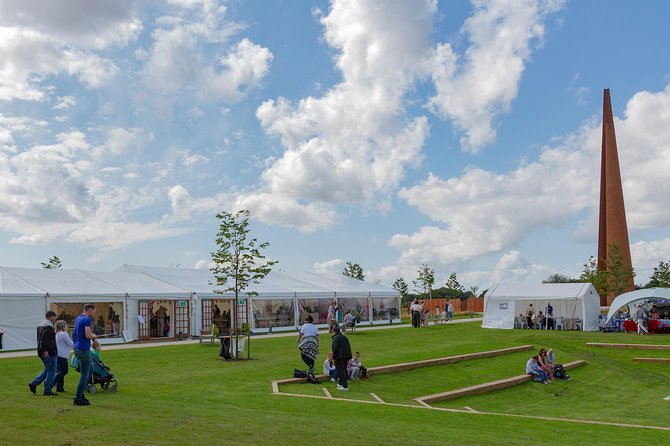
Bomber Command is not a simple subject. It involves courage, sacrifice, military strategy, civilian loss, and lasting debate about the bombing of cities during World War II. The centre does not reduce that story to a single slogan.
Instead, you move through accounts from people on different sides of the conflict. The Orchestra of Voices is especially important because it gives the history a human sound. Rather than reading only dates and aircraft names, you encounter the experiences of people who were there.
That approach makes the centre useful even if you already know something about the war. You may come for the memorial, but the exhibitions help explain the wider setting around it. You gain a better sense of the crews who flew, the people who supported operations, and the civilians affected by bombing.
I appreciate that the centre leaves room for remembrance without avoiding the contentious parts of the story. It is suitable for anyone who wants a more thoughtful account of Bomber Command, not just a display of wartime machinery.
What else people book in England on the same trip:
- Stonehenge, Windsor Castle, and Bath from London
★ 4.5 · 18,662 reviews - London Big Bus Hop-On Hop-Off Tour with Optional River Cruise
★ 3.5 · 10,803 reviews - London Small Group Tour of Historical Pubs
★ 5.0 · 10,422 reviews
Begin with the metal memorial and Lincoln views
The outdoor memorial is the centre’s boldest feature. At 31.09 metres high, it is a powerful vertical marker that can be seen from a distance. Its height also gives you an immediate sense of scale before you enter the galleries.
From the memorial area, you get impressive views over Lincoln. Take a few minutes here before rushing indoors. The outlook connects the site to the surrounding city, while the memorial itself brings your attention back to the people being remembered.
The structure is imposing, but its purpose is simple. It gives the names and stories a place of public remembrance. The design has a clean, symbolic quality rather than an overloaded appearance, which helps keep the focus on those commemorated.
A free guided tour of the memorial and gardens can add much more to this first look. The guide explains the meaning of the site and points out details you might miss alone. If a tour is running during your visit, I would take it early, then return to the outdoor areas afterward at your own pace.
Finding a name among nearly 58,000 losses
The walls record almost 58,000 people who lost their lives while serving with Bomber Command during World War II. That number is hard to grasp as a statistic. Seeing the names together turns it into something more immediate.
The Losses Database lets you find out more about individual people. If you have a family connection, bring the relevant name and details with you. A visit can become especially personal when you locate a relative and then learn more about that person through the database.
Even without a family connection, the database changes the way you read the memorial. Each name represents one person, not just another entry in a large total. Allow extra time here if you want to search carefully.
This part of the centre may be quiet and reflective, and it deserves more than a fast walk past. The memorial is impressive from across the grounds, but the names are where the human weight of the place becomes clearest.
Three galleries that put people before equipment

Inside, three interactive galleries guide you through this period of history. The combination of static displays and hands-on features makes the centre work for different ages and attention spans.
You will find historical information, personal accounts, and displays designed to help you understand what Bomber Command did and how its actions affected others. The galleries are not only about the crews. They present the story through people who were on all sides of the conflict.
That balance is one of the centre’s strongest features. You are encouraged to think about bravery and service, but also about consequences and moral questions. The result is more useful than a simple celebration of wartime operations.
Families should find enough interactive material to keep children involved, though parents may want to prepare younger children for the serious subject. The galleries can engage children around eight to ten years old, based on the way the hands-on displays are used, but the emotional content still calls for some guidance.
Plan on at least an hour indoors if you want to read the displays properly. If you listen to the audio material and stop at the interactive sections, you may need much longer. Visitors who stayed four hours still found more they could have seen, so do not treat the centre as a brief add-on.
A completely different sort of day out in England:
- Beatles Magical Mystery Tour
★ 5.0 · 9,266 reviews - Liverpool: “Blue Route” – City & Beatles Tour
★ 5.0 · 8,562 reviews - Stonehenge, Windsor Castle and Bath with Pub Lunch in Lacock
★ 4.5 · 7,402 reviews - Oxford University Walking Tour With University Alumni Guide
★ 5.0 · 6,905 reviews
The Orchestra of Voices and the value of personal testimony
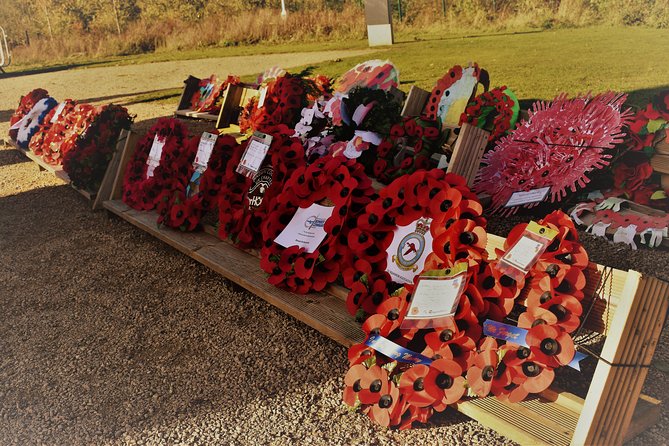
The Orchestra of Voices is a key part of the exhibition experience. It presents the period through spoken perspectives, giving the galleries a stronger sense of human presence.
Personal testimony matters here because Bomber Command can otherwise feel like a subject made up of aircraft, targets, dates, and statistics. Voices remind you that the war was lived by individuals with fear, duty, uncertainty, and loss.
I would take time to listen rather than racing through every display. You do not need to absorb every detail in one visit. Pick out the accounts that catch your attention, then use the surrounding material to place them in context.
The centre is at its best when it asks you to hold two ideas at once: people could show great courage, and the campaign could still produce terrible consequences. That is not always comfortable, but it is the reason the visit feels more substantial than a standard war memorial.
Peace gardens provide a needed pause
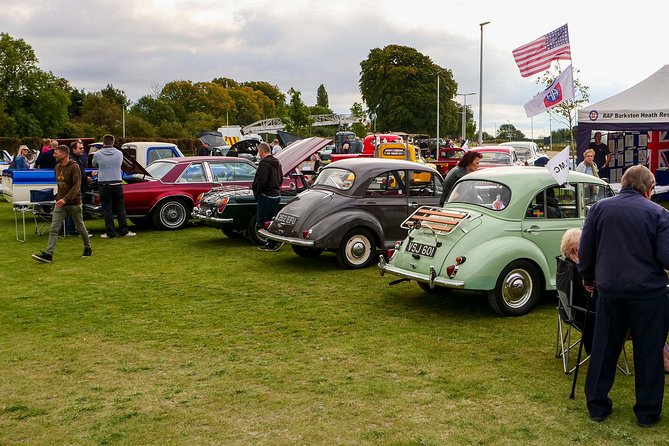
After the galleries and memorial, spend time in the two landscaped Peace Gardens. They offer a calmer setting for reflection and stop the visit from becoming one long sequence of heavy information.
The gardens are also useful if you are visiting with children or with someone who needs a break from the exhibitions. You can walk, sit, and regain your bearings before deciding what to see next.
I would not rush through the gardens simply because the indoor displays seem more substantial. Their quiet setting is part of the centre’s design. The contrast between the crowded names, strong voices, and open outdoor space gives the visit a natural rhythm.
If you join the guided tour, the gardens become more meaningful because the guide can connect the planting and memorial spaces to the centre’s purpose. The tours are free and led by experienced guides, though the supplied details do not give fixed tour times or group sizes. Ask on arrival what is available that day.
A practical stop at the Hub Café
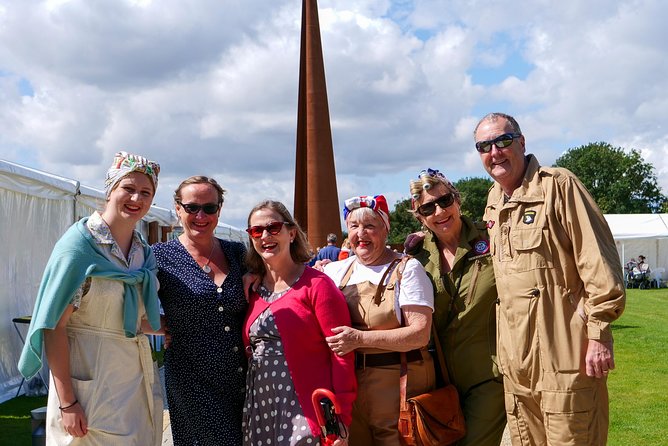
The Hub Café serves locally sourced food and drink, making it a convenient place to break up a two to five-hour visit. You do not need to leave the centre to find refreshments, which is helpful if you plan to stay for the full exhibition and outdoor tour.
The café is also a sensible choice for families. A meal or drink gives children a pause between the interactive galleries and the memorial grounds. It can help turn the visit into a relaxed half-day rather than a tiring rush.
Food quality is part of the centre’s appeal, but I would still plan your day around the history rather than the café. The exhibitions and memorial are the main reasons to come. The café adds practical value and makes a longer stay easier.
How much time should you allow?

The stated duration is approximately two to five hours. That range is honest because the centre supports both a short visit and a detailed half-day.
Allow around two hours if you want to see the memorial, walk through the main galleries, and spend a little time in the gardens. Choose closer to four or five hours if you want to:
- Search the Losses Database
- Listen carefully to the Orchestra of Voices
- Join the free guided tour
- Read the gallery material in detail
- Spend unhurried time in the peace gardens
- Eat at the Hub Café
The centre is open Tuesday through Sunday, from 9:30 a.m. to 4 p.m., during the stated operating period. It is closed on Mondays under those listed hours, so check the date before setting out.
The ticket redemption point is the International Bomber Command Centre on Canwick Avenue, Lincoln, LN4 2HQ. Parking fees are not included. The centre is near public transportation, but the information provided does not specify routes or journey times, so check your transport plan before you go.
Is the $15.94 admission good value?
At about $15.94 per person, admission is fair value if you give the centre enough time. You are paying for access to three galleries, the memorial site, the losses database, the peace gardens, and the opportunity to join a free guided tour.
The value improves for visitors who stay three or four hours. A short visit still gives you the memorial and the main story, but a longer stay lets you use the personal material that makes the centre distinctive.
The free outdoor tour is another plus. It adds explanation without an extra charge, and a guide can help connect the memorial, gardens, names, and wider story.
Parking is not included, so drivers should allow for that extra cost. Still, the admission price is reasonable for a substantial historical centre rather than a single monument.
Who will get the most from this visit?
I would recommend the International Bomber Command Centre to:
- People with a family link to Bomber Command
- Visitors interested in World War II and military history
- Anyone who wants to consider the moral questions around bombing
- Families with older children who can engage with serious history
- Visitors who value memorials, personal testimony, and guided interpretation
- Lincoln visitors looking for a thoughtful half-day activity
It is less suited to anyone seeking a quick attraction with light entertainment. The centre is moving and sometimes difficult. You should expect to spend time reading, listening, and thinking.
The interactive displays make it accessible to different ages, but the subject remains serious. Children can enjoy the hands-on sections, yet adults should be ready to explain death, conflict, and civilian impact in suitable terms.
The centre also has a Changing Places facility, and service animals are allowed. Most people can participate, and the site is near public transportation.
Cancellation and booking details
Confirmation is provided at booking. You can cancel for a full refund if you do so at least 24 hours before the experience start time. Cancellations or changes made less than 24 hours in advance are not accepted for a refund, and cut-off times follow local time.
The experience is offered in English. It is booked, on average, eight days in advance, so booking ahead is sensible if your schedule is fixed.
Should you book the International Bomber Command Centre?
Yes, if you want a serious and well-presented account of Bomber Command that gives space to remembrance and debate. The memorial is visually powerful, but the galleries, voices, database, and guided garden tour are what turn the visit into a fuller understanding of the people behind the wartime statistics.
Book it if you can spare at least three hours. Families should use the interactive displays and café to pace the visit, while anyone researching a relative should allow extra time for the Losses Database.
Skip it only if you want a fast, cheerful attraction or have no interest in difficult wartime history. For everyone else, the combination of human stories, open views, peaceful gardens, and careful interpretation makes this a worthwhile stop near Lincoln.
FAQ
Where is the International Bomber Command Centre?
The centre is at Canwick Avenue, Lincoln, LN4 2HQ, United Kingdom.
How long does a visit take?
The visit takes approximately two to five hours, depending on how closely you explore the galleries, database, memorial, gardens, guided tour, and café.
What are the opening hours?
The listed opening hours are Tuesday through Sunday, from 9:30 a.m. to 4 p.m. The stated operating period runs from March 17, 2020, through February 3, 2027.
Is a guided tour included?
Free tours of the memorial and gardens are available with experienced guides. Admission to the centre is included with the ticket.
Can I search for a family member?
Yes. The centre records almost 58,000 individuals who died while serving with Bomber Command, and the Losses Database provides more information about them.
Is parking included?
No. Parking fees are not included in the admission price.
Can I cancel my booking?
Yes. You can receive a full refund if you cancel at least 24 hours before the experience start time. Changes or cancellations made less than 24 hours in advance are not accepted for a refund.
Recently added around England
- Brighton to Heathrow Airport private taxi transfers★ 5.0 · 8 reviews
- London’s Crown Secret: Self-Guided Royal Puzzle Quest★ 4.5 · 8 reviews
- Postcard London★ 5.0 · 8 reviews
- The Condensed Canterbury Tour★ 5.0 · 8 reviews
- Private Tour: Downton Abbey London Locations by Taxi★ 5.0 · 8 reviews
- Windsor Castle, Stonehenge & Roman Baths Private Tour★ 4.5 · 8 reviews
- CS Lewis & Tolkien Tour with Magdalen Entry Public tour 13.45★ 5.0 · 8 reviews
- Cotswolds Private Driving Tour from London★ 5.0 · 8 reviews