
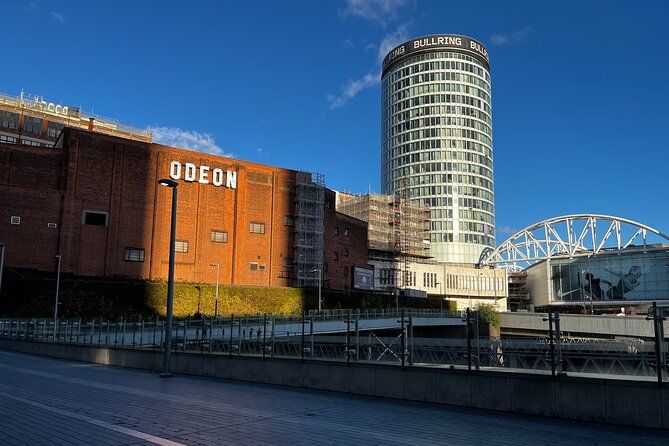
Reviewed · BIRMINGHAM TOURS
Birmingham Private Self-Guided Walking Tour
Birmingham’s best surprise is how quickly its industrial past gives way to modern city life. This self-guided walk takes you from the old canals at Gas Street Basin through grand civic spaces, shopping streets, Chinatown, and the LGBTQ+ district. The canal-to-city route gives you a useful first look at Birmingham without committing to a formal group tour.
I like the freedom to pause, wander, and finish when it suits you. I also like the recorded guide by Helen, which uses a human voice rather than a computer-generated one, plus the mix of famous sights and less familiar corners such as Roundhouse Birmingham. The main drawback is the app access: two people had serious trouble finding the tour and following the instructions, so you should prepare before your walking day.
- Thirty-five miles of canals: Begin at Gas Street Basin and see the waterways that moved coal, iron, and other goods.
- A human-narrated guide: Helen leads the route with audio, photos, videos, directions, and extra recommendations.
- A broad city-center sweep: The walk links Brindley Place, Centenary Square, Victoria Square, the Bullring, Chinatown, and the Gay Village.
- A lesser-known stop: Roundhouse Birmingham adds an unusual 19th-century building to the standard city sights.
- Three weeks of access: You can use the tour during that period instead of rushing to complete it immediately.
- A very low price: At $12.26 per person, the value is good if the app works for you and you enjoy independent sightseeing.
From Gas Street Basin to Birmingham’s modern center
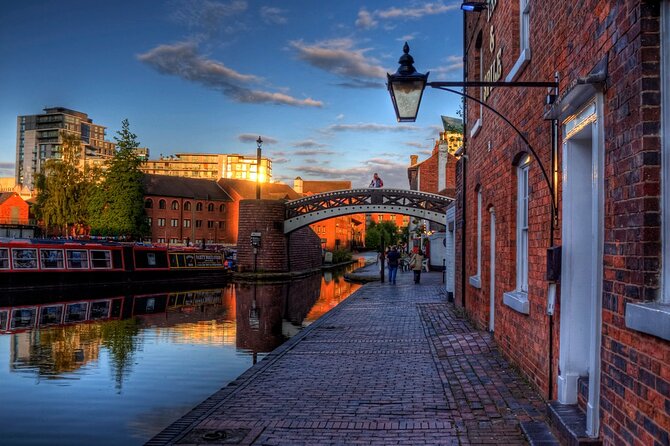
The walk begins at 197 Wharfside Street, beside Gas Street Basin. This is the right place to start because Birmingham’s canals explain much of the city’s growth.
You’ll hear the familiar claim that Birmingham has more canals than Venice. The exact comparison is not correct, but Birmingham does have about 35 miles of waterways. These channels were built to carry coal, iron, and other materials during the industrial era.
Allow about 15 minutes here. The stop is free, and the basin offers an easy introduction to Birmingham’s working past before the route moves into newer entertainment and cultural districts.
The first practical task is simply finding the starting point. The tour does not provide an in-person guide, and the audio begins through the app, so you need to arrive with your phone charged and your access details ready. Do not leave the instructions until you are standing on Wharfside Street.
Brindley Place and the National Sea Life Centre
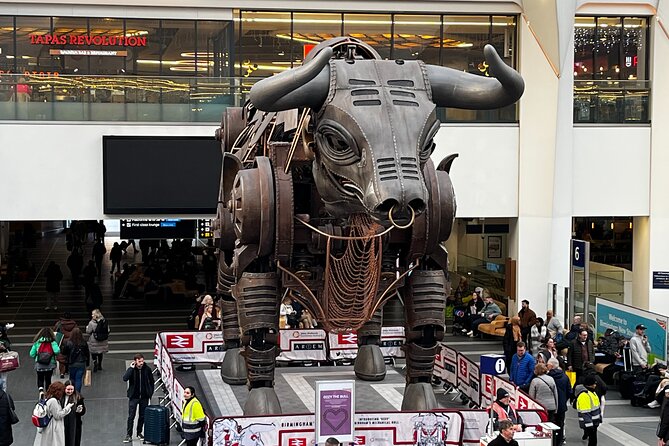
A short walk brings you to Brindley Place, named for James Brindley, the 18th-century engineer who helped change the way goods moved around Britain. The stop itself is brief, about five minutes, but the name gives you useful context for the canals you have just seen.
The nearby National Sea Life Centre is one of the area’s main architectural and family attractions. You’ll get information about it during the walk, but admission is not included. Treat this as an outside view and a possible extra, not part of the paid tour.
That distinction matters. The $12.26 price covers the self-guided route and app material, not entry to attractions along the way. If you decide to visit the Sea Life Centre, you will need separate time and a separate ticket.
More Walking Tours in Birmingham
- Birmingham Walking Tour: Canals, Victorians & Today (1:30pm)
★ 5.0 · 346 reviews - Discovering Birmingham 2 hour Walking Tour to the Jewellery Quarter
★ 5.0 · 333 reviews - Birmingham Slogging Gangs Walking Tour with Edward Shelby
★ 4.5 · 306 reviews
Roundhouse Birmingham, a short stop with character
Roundhouse Birmingham takes the walk slightly away from the most obvious city-center sights. Designed by W. H. Ward and built in 1874, it is one of Birmingham’s distinctive but less familiar buildings.
The planned stop is only five minutes, yet it may be one of the most rewarding parts for people who like architecture and old infrastructure. It breaks up the run of modern venues and shopping areas with a building linked to the city’s industrial age.
The route gives you a glimpse rather than a long visit. That is fine for a first orientation walk, but do not expect an extended architectural tour. The value here comes from being directed to somewhere you might otherwise pass by.
Arena Birmingham and the ICC
The route next points out Arena Birmingham and the International Convention Centre, usually called the ICC. These are modern venues that reflect Birmingham’s role as a destination for concerts, conferences, and large public events.
There is not a stated admission stop at either venue. Instead, they help you read the city’s present-day identity. The canals tell you how Birmingham handled goods; the arena and convention center show how it now handles entertainment, business, and culture.
This part can feel more like an orientation walk than a formal sightseeing visit. You are connecting major buildings and learning why they matter, rather than entering each one.
Centenary Square and the Library of Birmingham
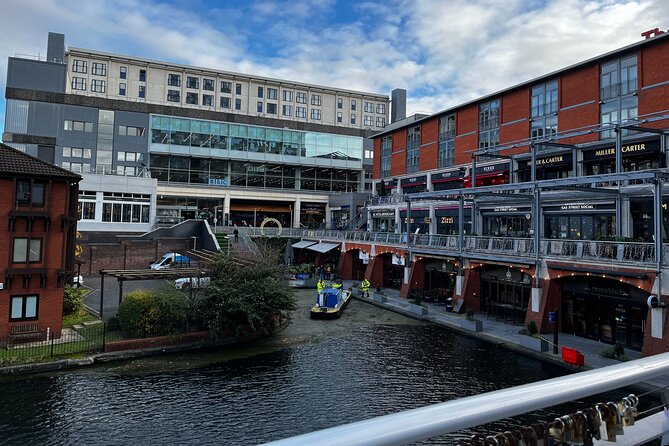
Centenary Square is one of the route’s more important public spaces. Its story reaches back to the late 19th century, when it was known as Congreve Square, named for Sir William Congreve. The square’s changing name reflects Birmingham’s shifting civic identity.
Plan for about 10 minutes here. The space links several major cultural buildings, so it works well as a pause point. You can take in the scale of the area while the guide explains how it fits into the city’s development.
The Library of Birmingham follows, with another 10-minute stop. Its institutional roots go back to 1861, when the earlier Birmingham Library was established. The building and its role give the tour a useful change of pace after the canals and event venues.
I like this section because it shows that Birmingham is not only a place of old factories and retail streets. Its public library is part of the city’s cultural story, and the route puts that story into a walkable sequence.
A completely different sort of day out in Birmingham:
- Entry ticket to Hoo Zoo and Dinosaur World in Telford
★ 5.0 · 591 reviews - Cadbury World Entry Ticket
★ 3.0 · 524 reviews - Birmingham City Centre Daily Walking Tour (10:30am & 2pm)
★ 5.0 · 265 reviews - SEA LIFE Birmingham Admission Ticket
★ 3.0 · 218 reviews
Chamberlain Square and Victoria Square
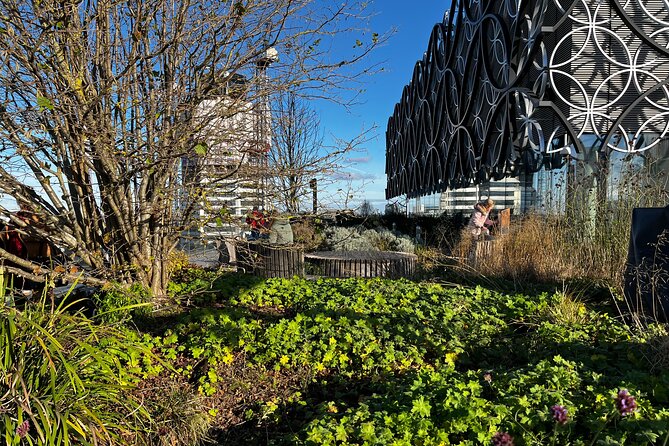
Chamberlain Square is named for Joseph Chamberlain, a major Birmingham political figure. It was once called Corporation Street Square, and its history connects with the city’s civic growth in the late 19th century.
The stop lasts about 10 minutes. Listen for the way the square relates to the institutions around it. This is a good place to pay attention to names, monuments, and public buildings, since the route uses them to explain how Birmingham presents its own story.
Victoria Square comes next, also for about 10 minutes. It began as Council House Square and took its current name in 1901 to honor Queen Victoria’s Diamond Jubilee.
These two squares are close enough to make sense together, but they offer different moods. Chamberlain Square feels tied to civic improvement and public institutions, while Victoria Square brings you closer to Birmingham’s central ceremonial heart. You can move through both without needing transport.
St Philip’s Cathedral Garden
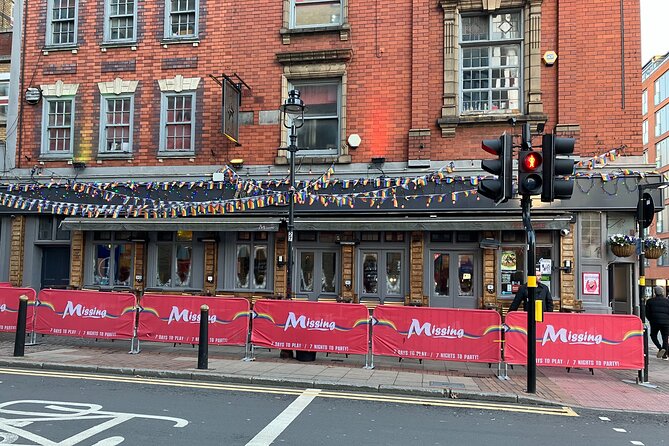
St Philip’s Cathedral, often called Birmingham Cathedral, is the next major pause. The Anglican cathedral dates to the early 18th century and is described as the third-smallest cathedral in the United Kingdom.
The stop is planned for about 10 minutes and takes place in the cathedral garden. The garden gives you a quieter break from the city streets and a chance to view the cathedral from outside.
Because the route specifies the garden rather than an interior visit, check your expectations. This is a short stop for atmosphere, orientation, and background. It is not a guided church tour or a guaranteed opportunity to explore the building inside.
Grand Central, New Street Station, and the Bullring
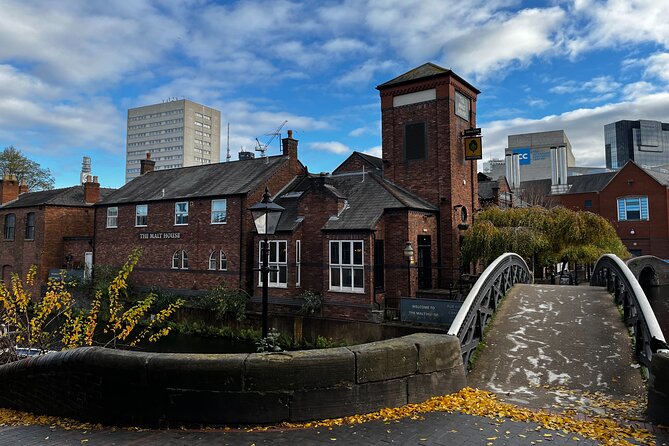
The walk then turns toward Grand Central and the Bullring, one of Birmingham’s busiest shopping areas. Grand Central sits next to Birmingham New Street Station, a major rail hub with Victorian origins.
The modern Grand Central atrium contains more than 60 shops and restaurants. You’ll have about 15 minutes for this section, enough to understand the connection between transport, retail, and the center of the city.
The Bullring itself is represented by the well-known Bull Statue. The bull symbolizes strength, resilience, and Birmingham’s industrial character. It is an easy landmark to spot and a useful navigation point, especially if you want to pause before continuing.
This part of the route is less about old walls and more about contemporary city life. You’ll see how Birmingham combines a historic railway center with modern shopping and public art. If you dislike commercial areas, the stop may feel less personal than Gas Street Basin or the cathedral garden, but it is important to understanding how the city works today.
St Martin’s Church in the Bull Ring
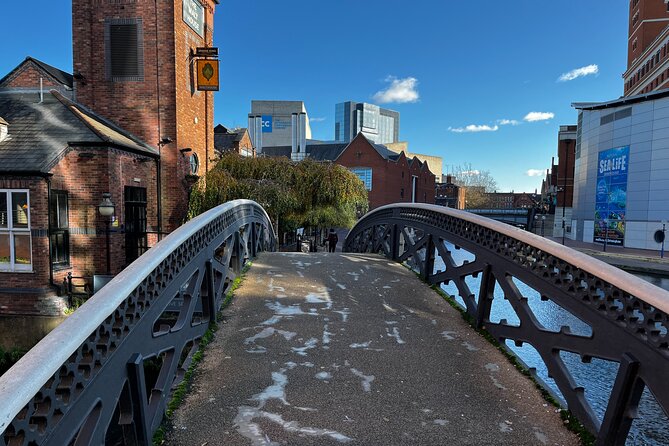
St Martin’s Church, officially St Martin in the Bull Ring, is Birmingham’s oldest parish church. Its roots reach back more than 800 years, making it one of the clearest links between the modern Bullring and the older settlement beneath it.
The planned stop lasts 10 minutes. That is enough for an exterior look and the historical explanation, though not for a full church visit. The church’s location is what makes it especially interesting: old religious Birmingham sits beside a major modern retail center.
I find this contrast one of the route’s strongest themes. You move from the bull statue and large shopping complex to a medieval parish church in only a few minutes. It is a good reminder that Birmingham was not created all at once during the industrial age.
Chinatown, food, and a change of pace
Birmingham’s Chinatown is described as a cultural district in the center, with restaurants, traditions, and Chinese community history. The stop lasts about 10 minutes.
The route does not include a meal or restaurant booking. Instead, you get an introduction to the quarter and can decide if you want to return later for food. That flexible arrangement suits a self-guided tour because you are not locked into a group schedule.
Chinatown also gives the walk a stronger sense of modern Birmingham. After the canals, churches, and civic squares, this district shows how the city’s identity has been shaped by different communities and continuing change.
Finishing in Birmingham’s Gay Village
The final stop is Birmingham’s Gay Village, a colorful and inclusive district in the city center. The route presents the area through the resilience and achievements of the LGBTQ+ community.
The planned stop lasts about 15 minutes, and the tour ends here. You are then free to continue around the city center at your own pace.
Ending in the Gay Village is a sensible choice. It leaves you near places to continue exploring, eat, or simply walk back toward central Birmingham. It also gives the route a modern social finish after its strong focus on canals, civic buildings, and older landmarks.
How the app works, and where it can go wrong
The package includes three weeks of unlimited access through the app. You receive a map, GPS route, directions, stop information, audio, videos, photos, and recommendations.
Helen provides the audio narration, and it is not computer-generated. That small detail matters. A human voice usually makes a self-guided walk easier to follow and less mechanical, especially when you are listening while looking around.
The app experience deserves careful preparation. One person spent about an hour trying to locate the starting address and never completed the tour. Another had trouble because the written directions appeared at the end of the descriptions rather than near the beginning, causing several early points to be missed.
You can reduce that risk by reading the confirmation email’s Before You Go section before leaving. Log in to the Exploro app ahead of time, confirm that the tour appears in your account, and check the starting point on a map. The access process is supposed to work inside the app, but the reported problems show why you should not wait until the day itself.
If you miss a stop, the route can be recovered. One person missed a few early points, then got back on track and completed the walk in just over three hours. That flexibility is one of the advantages of an app-based tour.
Timing, walking effort, and group size
The estimated duration is two to three hours, but you should allow closer to three if you stop for photos, pause at shops, or need time to find your bearings. The individual stop times add up to a fairly relaxed city walk rather than a rushed march.
A moderate level of physical fitness is recommended. No special activity is described, but you will be on foot across a series of city-center stops. Wear shoes you can use comfortably for several hours.
This is a private activity, meaning only your group participates. You do not walk with strangers, but you also do not have a guide beside you to answer questions or repair a wrong turn. Service animals are allowed, and the route is near public transportation.
The listed operating hours cover Monday through Sunday, 12:00 AM to 11:30 PM, from October 1, 2024, through July 2, 2027. The broad hours are useful if you prefer an early or late walk, but daylight and your comfort with city streets should guide your choice.
Is $12.26 good value?
At $12.26 per person, this is inexpensive for a three-hour introduction to central Birmingham. You are paying for route planning, narration, app access, images, videos, and background information rather than a live professional guide.
The price works best if you want a flexible orientation walk. You can pause for coffee, spend longer at the canals, skip a shopping stop, or continue after reaching the Gay Village. The three-week access period also means you are not forced to complete it immediately.
The value drops sharply if you expect personal storytelling, spontaneous questions, or help with navigation. You also need to pay separately for attractions such as the National Sea Life Centre. The tour is best viewed as a low-cost digital guide, not a substitute for a private human-led tour.
The rating provided for the experience is 4 out of 5 from 13 reviews. The praise centers on the unusual places, the first-time audio-tour experience, and the way the route reveals parts of Birmingham that are easy to miss. The complaints are not about the city sights. They focus on access instructions and the app process, so that is the issue to weigh most carefully.
Who should book this Birmingham walk?
I would choose this tour if you are comfortable using a smartphone and want an inexpensive first look at Birmingham. It suits independent visitors, couples, families who prefer their own pace, and anyone with only a few hours in the center.
It is also a good choice if you have already seen the main shopping streets and want extra context about the canals, civic squares, Roundhouse Birmingham, and the Gay Village. The route gives you more than a straight point-to-point walk.
I would choose a live tour instead if you want detailed conversation, personal recommendations in the moment, or reassurance at every turn. You should also think twice if app setup frustrates you or if you are unlikely to read the instructions before arrival.
Should you book it?
Book it if $12.26 feels like a fair price for a flexible audio route and you are willing to prepare the app before you go. The strongest parts are the broad route, human narration by Helen, free access to the outdoor sights, and the useful mix of industrial, civic, religious, commercial, and community history.
Skip it if you need a guide waiting at the start or if technical uncertainty would spoil your day. For everyone else, this is a practical way to get your bearings in Birmingham, provided you confirm access in advance and allow about three hours.
FAQ
How much does the Birmingham Private Self-Guided Walking Tour cost?
The tour costs $12.26 per person.
How long does the walking tour take?
The estimated duration is two to three hours. You should allow extra time if you stop often or need to recover from a wrong turn.
Where does the tour start?
It starts at 197 Wharfside Street, Birmingham B1 1QH, United Kingdom.
Where does the tour end?
It ends in Birmingham’s Gay Village. Afterward, you are free to continue walking around Birmingham City Centre.
Is there an in-person guide?
No. This is a self-guided activity delivered through an app, with recorded narration by Helen.
What does the app include?
The app includes three weeks of unlimited access, a map, GPS route, directions, stop information, audio, videos, photos, and recommendations.
Is the audio narration computer-generated?
No. The audio guide is narrated by Helen and is not computer-generated.
Are admission tickets included?
The outdoor stops are free, but admission to the National Sea Life Centre is not included.
Can I cancel or change the booking?
No. The experience is non-refundable and cannot be changed for any reason.
More self guided walks in Birmingham
- On the Origins of Charles Darwin: A Self-Guided Audio Tour of Shrewsbury
★ 4.5 · 16 reviews - Westminster Abbey Entrance Ticket Including Audio Guide
★ 4.0 · 661 reviews - Western Approaches Self Guided Tour
★ 5.0 · 505 reviews - Golden Tours York Hop-on Hop-off Open Top Bus Tour with Audio Guide
★ 4.5 · 468 reviews
Recently added around Birmingham
- Best of Birmingham 12km Running Tour★ 5.0 · 12 reviews
- On the Origins of Charles Darwin: A Self-Guided Audio Tour of Shrewsbury★ 4.5 · 16 reviews
- Taste of Shrewsbury Food and Drink Tour with Guide★ 5.0 · 22 reviews
- Cotswolds Full-Day Tour From Birmingham★ 4.5 · 30 reviews
- From Birmingham Stonehenge and Bath Day Tour★ 4.5 · 33 reviews
- Birmingham Ghost Hunt: Haunted Self-Guide Tour & Quest★ 4.5 · 37 reviews
- 2.5-Hours Walking Tour of Birmingham into Black Heritage Madiba★ 5.0 · 49 reviews
- Birmingham Gangs Nighttime Historical Walking Tour with Pub Stops★ 5.0 · 53 reviews
Birmingham Tours, compared.

Entry ticket to Hoo Zoo and Dinosaur World in Telford
Read our review →
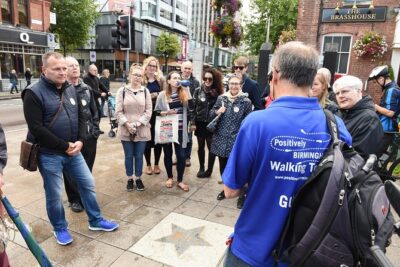
Birmingham Walking Tour: Canals, Victorians & Today (1:30pm)
Read our review →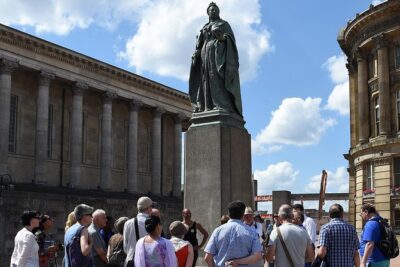
Discovering Birmingham 2 hour Walking Tour to the Jewellery Quarter
Read our review →
Birmingham Slogging Gangs Walking Tour with Edward Shelby
Read our review →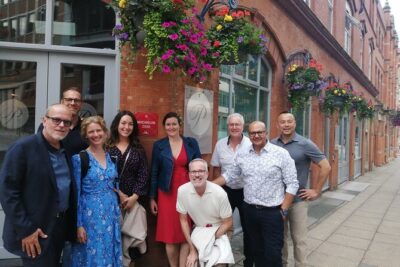
Birmingham City Centre Daily Walking Tour (10:30am & 2pm)
Read our review →

Fun, Flexible Treasure Hunt Around Birmingham with Cryptic Clues & Hidden Gems
Read our review →Browse the lists this tour appears in