
Reviewed · BIRMINGHAM TOURS
Birmingham Walking Tour: Canals, Victorians & Today (1:30pm)
Birmingham’s story makes the most sense on foot: canals explain its industrial rise, Victorian civic buildings show its ambition, and modern projects such as the Library of Birmingham and The Mailbox reveal how the city keeps changing. This two-hour route links those pieces without asking you to spend the afternoon inside a museum.
I like the local guide-led storytelling, especially with guides such as Jonathan and Michael, who bring personal knowledge, humor, and current city details to the walk. I also like the route’s range, from Gas Street Basin and Brindleyplace to Victoria Square, Town Hall, and the BBC’s base at The Mailbox.
The main consideration is the title’s emphasis on canals. You see important canal locations, but only part of the walk follows the water, so you should book this as a broad Birmingham city introduction rather than a canal-only outing. The pace and route require moderate physical fitness, and poor weather can lead to cancellation.
Key points before you book
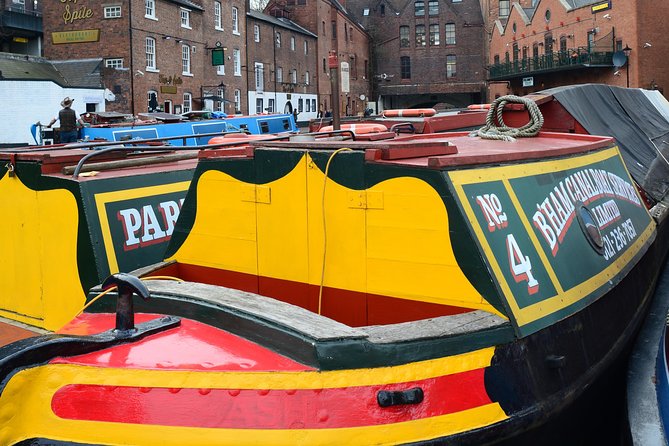
- Gas Street Basin in 15 minutes: See the atmospheric meeting point of Birmingham’s canal network and learn why waterways mattered to the city’s growth.
- Jonathan and Michael lead the way: Both guides are praised for clear explanations, wit, and a strong feel for Birmingham’s past and present.
- A city tour with three time periods: The route connects industrial canals, Victorian buildings, and newer projects including the Library of Birmingham, The Mailbox, and The Cube.
- Radio headsets may help: A live audio system can let you hear the guide without standing right beside him, though the system is not used on every departure.
- A central start and finish: Meet at the Library of Birmingham in Centenary Square at 1:30pm, then return to the same point after roughly two hours.
- A low-cost first look: At $20.80 per person, the walk is priced sensibly for a guided introduction, particularly if you are new to the city.
Why this Birmingham walk works as an introduction
Birmingham is not a city that reveals its story from one postcard view. Its character is spread between grand civic buildings, former industrial routes, rebuilt public squares, and modern developments. A guide helps you connect those pieces instead of simply walking past them.
This route gives you that framework in a compact afternoon. You begin at the Library of Birmingham, move toward the ICC and Brindleyplace, reach Gas Street Basin, then turn through the city centre’s Victorian and modern landmarks before returning to Centenary Square.
I would choose this tour early in a Birmingham visit. It gives you names, routes, and a basic sense of how the centre fits together. You can then return to the places that catch your eye, such as the canals, Birmingham Museum & Art Gallery, or the public art around the civic squares.
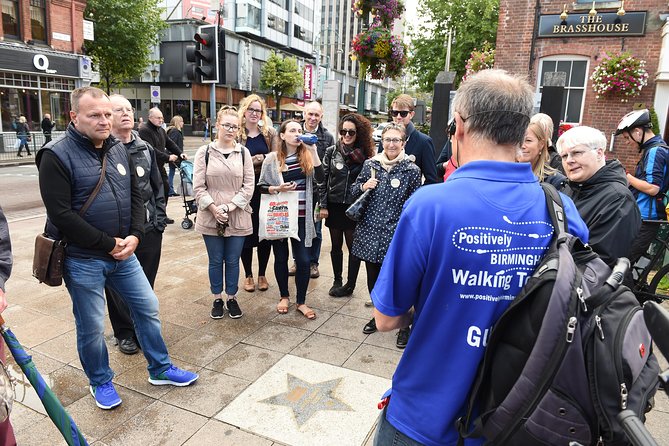
The tour is offered in English and has a maximum group size of 35. That is not a private walk, but it is still small enough for a guide using a transmitter and receiver system to keep the group together. Some departures may not use the audio equipment, so you should not assume it will always be provided.
More Walking Tours in Birmingham
- Discovering Birmingham 2 hour Walking Tour to the Jewellery Quarter
★ 5.0 · 333 reviews - Birmingham Slogging Gangs Walking Tour with Edward Shelby
★ 4.5 · 306 reviews - Birmingham City Centre Daily Walking Tour (10:30am & 2pm)
★ 5.0 · 265 reviews
Starting beneath the Library of Birmingham
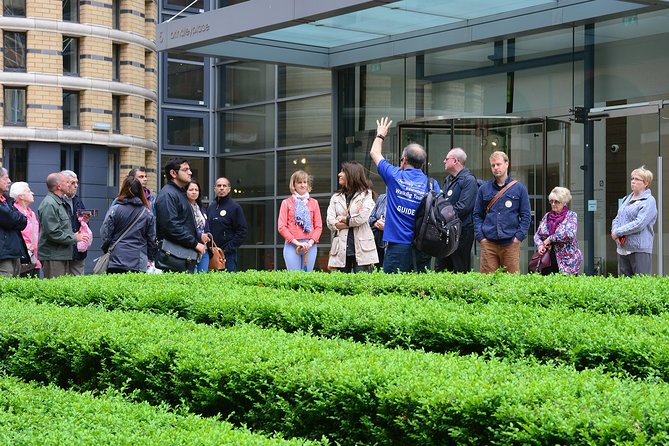
The tour begins at the Library of Birmingham in Centenary Square, a useful meeting point because the building itself is one of the city’s major attractions. It also serves as the end point, which makes the afternoon easy to manage if you are using public transport or have another booking later.
The library is a good first lesson in Birmingham’s changing identity. It is a modern public building rather than an old monument, and the route uses it to frame the city’s move into the future. You will spend about 10 minutes here, with no admission charge.
Do not expect a full interior visit or a long stop inside the library. The value is the guide’s explanation of the building and its place in the city, plus a clear starting point for the walk. Arrive ready to stand outdoors and walk rather than treating this as a seated orientation talk.
The ICC, Symphony Hall, and Brindleyplace
The next stop is the International Convention Centre Birmingham, or ICC, where the guide discusses the centre’s role in city life and points out Symphony Hall. The stop lasts about 10 minutes and is free.
This section helps you see Birmingham as a working city, not only a collection of old buildings. The ICC and Symphony Hall draw conferences, performances, and large public events, so they help explain why this part of the centre remains important beyond its architecture.
You then spend roughly 10 minutes at Brindleyplace. Here the focus shifts to the area’s earlier history and its modern redevelopment. That contrast is one of the tour’s useful habits: you are repeatedly asked to look at what is in front of you while considering what occupied the same ground before.
Brindleyplace also places you near the canal-side part of the route. The setting is attractive, but this is not a long pause for food or shopping. The guide is using the area to explain Birmingham’s redevelopment, so keep your attention on the urban changes rather than expecting free time.
Gas Street Basin and the canal story
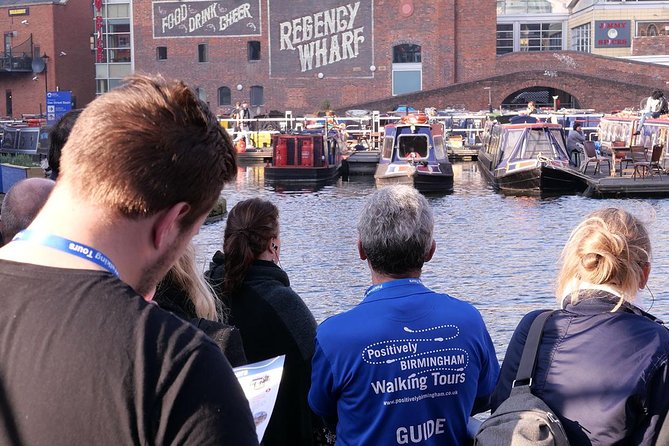
Gas Street Basin receives the longest stop, about 15 minutes, and it is the most obvious answer to the canal part of the tour. This is an atmospheric centre of Birmingham’s canal network, where the guide explains the arrival and importance of the canals.
I like this stop because it gives a practical way to understand Birmingham’s industrial growth. Waterways are easy to romanticize, but here they are treated as working infrastructure that helped move goods and supported the city’s expansion. The basin’s appearance also gives you one of the more scenic sections of the walk.
Still, you should set your expectations correctly. One person found the walk less focused on canals than expected, and that is a fair reading of the route. Gas Street Basin is a key stop, but the rest of the afternoon moves through civic, cultural, and commercial districts.
If your main interest is canal architecture or a longer waterside stroll, this tour may feel too broad. If you want to understand how the canals fit into the wider story of Birmingham, the stop does its job well.
A completely different sort of day out in Birmingham:
- Entry ticket to Hoo Zoo and Dinosaur World in Telford
★ 5.0 · 591 reviews - Cadbury World Entry Ticket
★ 3.0 · 524 reviews - SEA LIFE Birmingham Admission Ticket
★ 3.0 · 218 reviews - Fun, Flexible Treasure Hunt Around Birmingham with Cryptic Clues & Hidden Gems
★ 5.0 · 167 reviews
Victorian ambition in Victoria Square
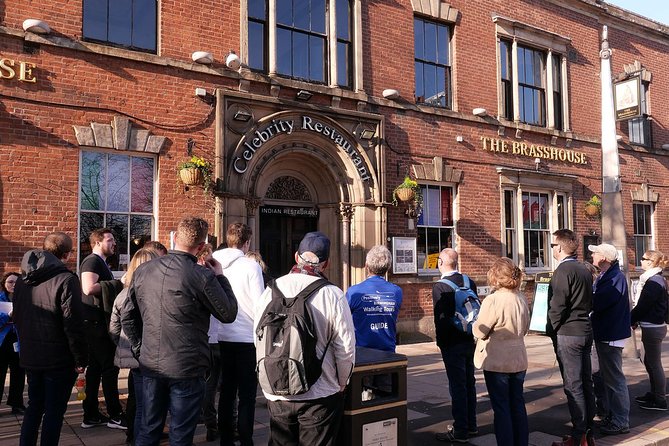
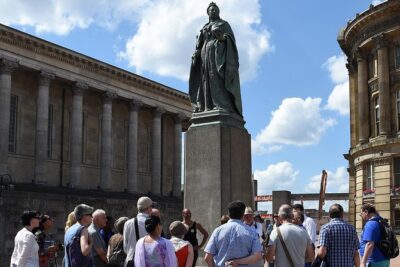
The route continues to Victoria Square for about 10 minutes. The guide uses public art and the square’s buildings to discuss Birmingham’s Victorian development, then links that period to the city you see today.
This is where the tour’s title becomes especially useful. Birmingham’s Victorian civic centre was built to project confidence, wealth, and civic purpose. The walk does not reduce the square to a list of dates. Instead, it asks you to notice how public art, civic buildings, and later changes shape the way the city presents itself.
The square is also a good place to hear the guide’s personal perspective. Jonathan is described as having run Birmingham walks for years and drawing on his own research, while Michael spent his working life explaining Birmingham to students at Birmingham City University. That background matters here, where a guide’s ability to explain connections is more valuable than a memorized list of facts.
You will not have an extended interior visit at this stop. The strength is the outdoor explanation and the chance to take in several important views at once.
Chamberlain Square and Birmingham Museum & Art Gallery
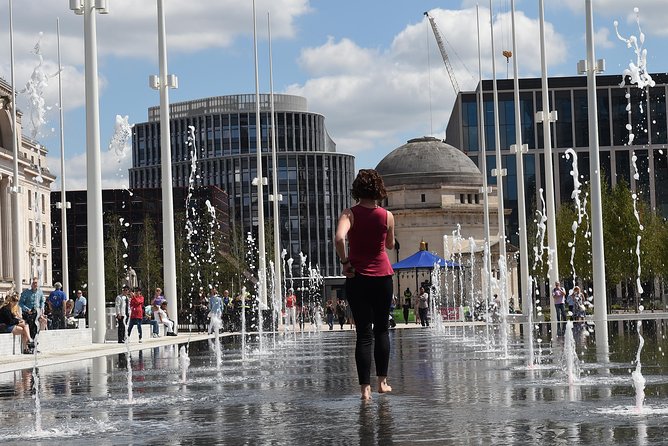
At Chamberlain Square, the discussion turns to how Birmingham is moving forward. The stop lasts about 10 minutes, giving the guide room to explain current changes without losing the historical thread.
The route then passes the entrance to Birmingham Museum & Art Gallery, with about two minutes devoted to its striking 1880s double portico. The museum itself is not presented as a full visit, so you should not book this walk expecting entry, galleries, or time to browse collections.
That brief stop is still worthwhile for architecture lovers. A large civic museum entrance can tell you plenty about the city’s ambitions in the Victorian period, and seeing it in the context of Chamberlain Square makes the building easier to place.
If you want to visit the museum properly, plan a separate visit. The walking tour gives you the exterior and the context, not the museum experience.
The Mailbox and The Cube show modern Birmingham
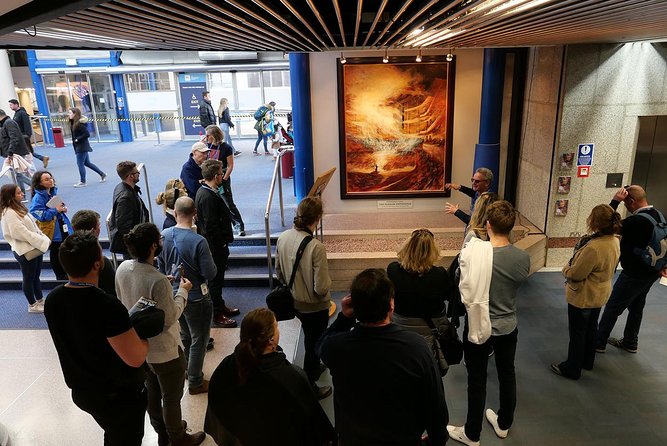
The walk reaches The Mailbox, a former post office sorting office converted into a mixed-use development. The stop lasts about five minutes and includes the building’s connection to the BBC’s Birmingham headquarters.
This is one of the clearest examples of adaptive reuse on the route. Instead of treating Birmingham’s past as something sealed off in old monuments, the guide shows how an earlier working building has been given a new role. That is a useful way to read the city’s modern development.
The Cube is nearby and receives only about a minute. It is a major development at the rear of The Mailbox, with upper-floor views described as among the best in the city. Since the scheduled stop is brief, you should think of it as a sighting and explanation rather than a visit to the upper floors.
The tour also includes the Ikon Gallery, originally built as a school and one of more than 40 buildings designed by architects Martin and Chamberlain. The information supplied does not give it a separate numbered stop or duration, so the guide may treat it as a passing point while walking between larger sections of the route.
These modern stops are valuable because they keep the tour from becoming a purely Victorian history lesson. You get a sense of how Birmingham has reused old structures and added new ones, with the guide connecting architecture to everyday city life.
The Hall of Memory and ICC Mall
The Hall of Memory is a five-minute stop. This Art Deco memorial was built in 1925 to remember those who died in the First World War and now includes later conflicts. The building contains Art Deco details, including tablets by William Bloye.
It is a quieter moment in a tour that otherwise moves through busy civic and commercial spaces. The guide can explain how Birmingham remembers wartime loss, while the design gives you something specific to look at rather than a purely verbal history lesson.
The route then passes through ICC Mall, the main connection between Centenary Square and the canal-side area. This 10-minute section helps tie together places you have already seen, especially the ICC, the square, and the waterways.
The route can feel like a brisk city walk here. That is useful if you want to see a lot in two hours, but it leaves less time for lingering over photographs or reading every plaque. Wear comfortable shoes and keep your camera ready rather than expecting long pauses at every landmark.
Birmingham Town Hall closes the Victorian thread
Birmingham Town Hall is the oldest building in Victoria Square, dating from 1834, and the tour spends about five minutes here. It provides a strong closing point for the Victorian side of the story.
The building’s date helps put the city’s civic development into order. By this point, you have seen how canals supported growth, how Victorian leaders expressed civic ambition, and how later projects reshaped the centre. Town Hall gives that story an older anchor.
The tour then returns to the Library of Birmingham. Because the start and finish are the same, you do not need to arrange a second pickup point or guess where the guide will leave you. The walk lasts approximately two hours, though the precise pace can depend on the group and conditions.
The guides make the difference
The strongest feature is the guiding. Jonathan is repeatedly described as energetic, entertaining, and full of local detail. His style includes humor and what one person called dad jokes, which may suit you if you prefer a relaxed walk rather than a formal lecture.
Michael brings a different strength. He is described as friendly, witty, and experienced at explaining the city, with a background teaching at Birmingham City University. Both names appear in the tour’s feedback, but your guide will depend on the date and departure.
The best guides on this route do more than recite dates. They explain why Birmingham looks the way it does, point out surviving details, and connect older buildings with changes from recent decades. One useful benefit is the chance to ask questions as you go.
The pace has generally been described as good, with enough ground covered to see a lot without dawdling. It can also be quick, particularly with an energetic guide, so tell the guide if you are struggling to keep up. The stated requirement is moderate physical fitness.
Audio equipment, group size, and practical comfort
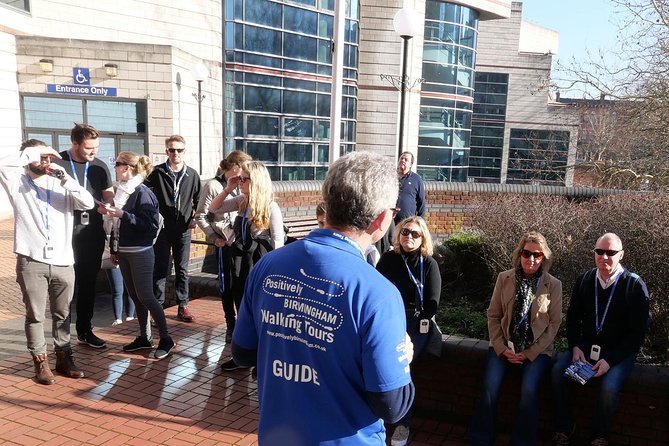
The operator uses a live audio system on some tours. Each participant may receive a receiver, while the guide wears a radio transmitter. Bring earphones with a standard 3.5mm socket, or a new pair can be provided.
This is a small but useful detail. In a city centre with traffic, pedestrians, and open public spaces, you can hear the guide without crowding around him. One person specifically found the microphone made the commentary easy to understand.
The system is not guaranteed on every departure, according to the tour details. If hearing every word is important to you, ask when booking or arrive prepared to stay reasonably close to the guide.
The maximum group size is 35. A smaller group can feel almost private, while a full group will feel more like a standard city walking tour. The audio equipment helps reduce that difference, but the experience is still less flexible than a private guide.
The tour is near public transportation, allows service animals, and is offered in English. There are no attraction admission fees listed for the stops, since the walk mainly views buildings and public spaces from outside.
Is $20.80 good value?
At $20.80 per person, I consider this a fair price for a two-hour guided introduction. You are paying for a local guide, a planned route, live commentary, and a useful overview of central Birmingham rather than admission to a major attraction.
The value is strongest if you are new to the city or want help making sense of several districts in one afternoon. It is also a sensible choice if you enjoy architecture, public art, industrial history, and urban redevelopment.
The value is weaker if you want a long canal walk, extended museum time, or detailed entry into each landmark. The route gives you context and exteriors, not a series of interior tours.
The tour is often booked about 16 days ahead, so do not leave it until the last minute if your schedule is fixed. You can cancel for a full refund up to 24 hours before the 1:30pm start. Cancellations inside that window are not refunded, and changes are not accepted. The experience requires good weather, so a weather cancellation brings the option of another date or a full refund.
Who should book this walk?
I would recommend it to first-time visitors who want a clear introduction without spending half a day in a museum. It also suits returning visitors who know Birmingham’s centre but want the buildings and streets explained properly.
Architecture fans will appreciate the mixture of Victorian civic design, Art Deco memorial work, modern redevelopment, and the unusual history of the Ikon Gallery. People interested in industrial Britain will value Gas Street Basin and the explanation of the canals, though they should not expect the whole tour to stay beside the water.
The walk also suits local residents and adopted Brummies. The guides use personal knowledge, current city details, and stories that can add meaning even if you already recognize the main landmarks.
I would hesitate only if you need a slow pace, dislike outdoor walking in uncertain weather, or want a narrowly focused canal tour. In those cases, the route may feel too broad and fast.
Should you book Birmingham Walking Tour: Canals, Victorians & Today?
Yes, if you want a friendly, well-priced orientation to Birmingham that covers more than the obvious postcard stops. The strongest reasons to book are the range of subjects, the central start and finish, and guides such as Jonathan and Michael, who bring humor and first-hand city knowledge to the route.
Book it early in your stay, ideally at 1:30pm on a day with decent weather. You will leave with a working map of the centre, a better sense of Birmingham’s past and present, and a useful list of places to revisit on your own.
FAQ
Where does the Birmingham walking tour start?
The tour starts at the Library of Birmingham in Centenary Square, Birmingham B1 2ND, UK.
What time does the tour begin?
The scheduled start time is 1:30pm.
How long does the walking tour last?
The experience lasts approximately two hours.
Where does the tour finish?
The walk ends back at the Library of Birmingham, the meeting point.
What language is the tour offered in?
The tour is offered in English.
How much does the tour cost?
The listed price is $20.80 per person.
Does the tour include attraction admission?
The route mainly visits public areas and views buildings from outside. The listed stops do not require an additional admission payment as part of the walk.
Is an audio system provided?
A live audio system may be used, but not on every tour. When it is used, each participant receives a receiver and the guide wears a radio transmitter. You can bring earphones with a 3.5mm socket, or a new pair can be provided.
Can I cancel for a full refund?
Yes. You must cancel at least 24 hours before the start time for a full refund. Cancellations or changes made less than 24 hours before the tour are not accepted for a refund. If poor weather causes the operator to cancel, you can choose another date or receive a full refund.
Recently added around Birmingham
- Best of Birmingham 12km Running Tour★ 5.0 · 12 reviews
- Birmingham Private Self-Guided Walking Tour★ 4.0 · 13 reviews
- On the Origins of Charles Darwin: A Self-Guided Audio Tour of Shrewsbury★ 4.5 · 16 reviews
- Taste of Shrewsbury Food and Drink Tour with Guide★ 5.0 · 22 reviews
- Cotswolds Full-Day Tour From Birmingham★ 4.5 · 30 reviews
- From Birmingham Stonehenge and Bath Day Tour★ 4.5 · 33 reviews
- Birmingham Ghost Hunt: Haunted Self-Guide Tour & Quest★ 4.5 · 37 reviews
- 2.5-Hours Walking Tour of Birmingham into Black Heritage Madiba★ 5.0 · 49 reviews
Birmingham Tours, compared.

Entry ticket to Hoo Zoo and Dinosaur World in Telford
Read our review →
Discovering Birmingham 2 hour Walking Tour to the Jewellery Quarter
Read our review →
Birmingham Slogging Gangs Walking Tour with Edward Shelby
Read our review →
Birmingham City Centre Daily Walking Tour (10:30am & 2pm)
Read our review →

Fun, Flexible Treasure Hunt Around Birmingham with Cryptic Clues & Hidden Gems
Read our review →
Skip the Line: House and Garden Admission Ticket
Read our review →Browse the lists this tour appears in