
Reviewed · BRITISH MUSEUM TOURS
British Museum Highlights Private Tour in London including the Rosetta Stone
The British Museum can swallow an entire day before you reach the Rosetta Stone. This private tour gives you a clear route through its vast collection, linking famous objects to the people, beliefs, and events behind them. You will see Egyptian mummies, Athenian sculpture, and Sutton Hoo treasures without spending your first hour studying a floor plan.
I like the one-to-one guide attention, which lets you ask questions instead of following a fixed speech. I also like the compact format: it suits a first London visit, a short stay, or anyone who wants an orientation before exploring alone. The main caution is value. The museum itself is free, so $141.56 per person pays for the guide, planning, and time saved. The advertised duration also needs checking, since the tour is described as about 2 hours 30 minutes in one place and 1 hour 30 minutes in the itinerary.
Key points at a glance
- Rosetta Stone in person: See the stone that helped scholars decipher Egyptian hieroglyphs.
- A focused museum route: Move through major galleries rather than trying to cover all 70.
- Private attention: Your guide can adjust the conversation to your interests and questions.
- Four major themes: Expect Greek sculpture, ancient Egypt, Assyrian reliefs, and Anglo-Saxon Sutton Hoo treasures.
- Useful for short stays: The tour gives you a working map of the museum before you continue alone.
- Plan for walking: The route can involve roughly two hours of standing and walking, and the museum may be crowded.
Why a private guide helps inside the British Museum
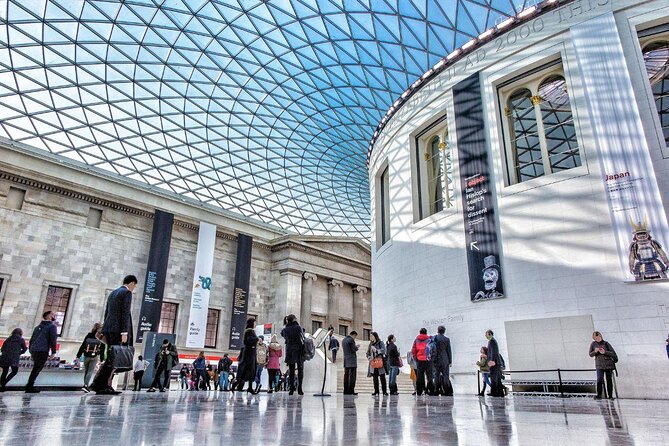
The British Museum contains more than eight million objects covering about two million years of human history. Its nearly one-million-square-foot interior includes 70 galleries, so the challenge is not finding something interesting. The challenge is deciding what to skip.
That is where this tour earns its keep. Rather than wandering from room to room, you follow a planned route through some of the museum’s best-known objects. A good guide supplies the missing links: why an object matters, how it was found, what it tells us about its makers, and how it reached the museum.
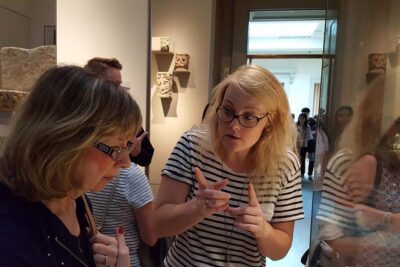
The private format is especially useful if you have a particular interest in ancient Egypt, classical Greece, archaeology, or British history. You can ask for more explanation in one section and less in another. Several guides named in the feedback, including Rob, Trudy, Guy, Norma, and ZoZo, were praised for bringing energy and clear explanations to the visit. Guides vary, of course, and the quality of the experience depends heavily on who leads your group.
This is not a complete museum visit. No short tour could be. Think of it as a guided first pass, followed by independent time in the galleries that catch your eye.
More British Museum visits:
- British Museum London Guided Tour Semi-Private 8ppl Max
★ 5.0 · 984 reviews - The British Museum London – Exclusive Guided Museum Tour
★ 5.0 · 555 reviews - British Museum Guided Tour
★ 4.0 · 470 reviews
Meeting at Montague Place by the north entrance
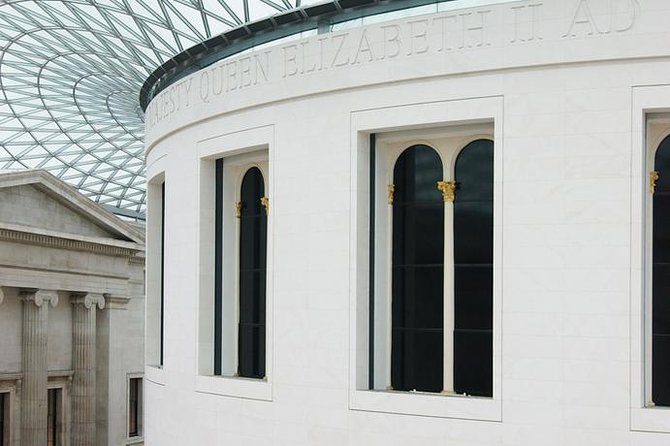
The meeting point is Montague Place, by the museum’s north entrance. Look for the doorway with stone lions. Your guide is supposed to hold a sign, but meeting instructions deserve careful attention here.
A few people had trouble locating the guide, including one case in which no sign was visible and another in which the contact number did not provide enough help. One older instruction also referred to a hotel whose name had changed. I would arrive early, stand by the north entrance rather than the main museum frontage, and keep the operator’s contact details ready on your phone.
The museum is near public transportation, but hotel pickup and drop-off are not included. You make your own way to Montague Place, and the activity ends back at the meeting point.
The museum’s free admission is an important detail. You are not paying $141.56 for entry. You are paying for a private English guide, the route through the galleries, and the chance to ask questions. That can be a fair exchange if your London schedule is tight or the scale of the collection feels intimidating. It is harder to justify if you have a full day and enjoy exploring museums at your own pace.
The Rosetta Stone and the power of translation
The Rosetta Stone is usually the first object people want to see, and for good reason. Its importance is not mainly its appearance. The stone carries the same decree in three scripts, including Egyptian hieroglyphs, which gave scholars the key to reading a writing system that had long resisted translation.
A guide can turn this from a famous name into a real historical problem. You begin to understand why the stone mattered: it connected a readable script with hieroglyphic writing and helped make the language of ancient Egypt accessible to modern study.
The stone is one of those objects that can look smaller than expected after years of seeing it in books. The useful part of having a guide is the explanation around it. You can ask about the scripts, the process of decipherment, and the role of the stone in the museum’s collection instead of simply taking a photograph and moving on.
Because the British Museum is often crowded, your guide also helps you reach the object without wasting time searching through rooms. Do not expect a quiet, private viewing. This is a famous exhibit in a major public museum, and the atmosphere can be busy.
The Parthenon Frieze and classical Athens
The route also includes the Parthenon Frieze, a long sculptural work connected with the Acropolis in Athens. The carving is just over three feet high and about 525 feet long, so its scale is easy to underestimate when you hear only the name.
The frieze once formed part of the Parthenon, and a guide can explain how the figures fit into the building and the religious world of ancient Athens. You are not simply looking at isolated marble pieces. You are seeing part of a larger architectural design.
This section also opens the door to discussion about the museum’s collecting practices and the continuing debate over objects removed from their original settings. The supplied tour details focus on the art and its ancient setting rather than promising a full treatment of the ownership question, so ask if that issue matters to you.
The Greek galleries may be packed, and you may spend a fair amount of time standing while the guide talks. One practical advantage of a private group is the ability to ask for a pause or request a little more time at a work that interests you.
More museums and galleries in London:
- Tower of London and Crown Jewels Exhibition Ticket
★ 4.5 · 6,677 reviews - Chelsea FC Stadium Tours and Museum
★ 5.0 · 1,908 reviews - Official tickets: Moco Modern & Contemporary Art Museum
★ 4.5 · 1,157 reviews - The Postal Museum Admission Ticket
★ 4.5 · 347 reviews
Egyptian rooms, mummies, and ideas about the afterlife
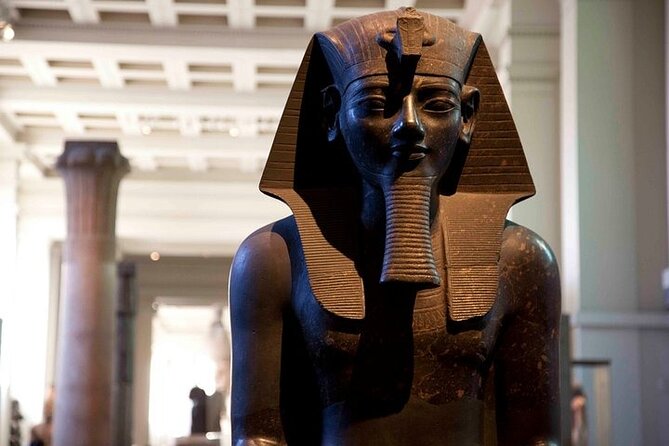
The Egyptian Rooms form another major part of the route. Here you can expect mummies and objects connected with burial, death, and the afterlife. The best guides do more than label the objects. They explain how these pieces fit into ancient Egyptian beliefs about the body, death, and what came after.
This is one of the strongest reasons to choose a guided visit. A mummy can seem like a dramatic object but a confusing one. Context helps you understand the purpose of burial practices and why so many related objects were placed with the dead.
The Egyptian collection is large, and the tour can only show a small portion. The route may favor major displays and recognizable pieces rather than obscure objects. That is sensible for a first visit, but it can feel hurried if Egyptian culture is your main reason for coming.
The museum can also become warm and crowded. One account described the galleries as packed and uncomfortable on a busy day. Wear comfortable shoes, carry water if permitted, and expect to walk and stand for much of the visit.
Sutton Hoo and the Anglo-Saxon story
The tour moves beyond Egypt and Greece to objects from the British Isles, including finds from Sutton Hoo. The burial site is famous for its ship burial, which revealed a remarkable group of Anglo-Saxon objects.
The value here is the story of discovery. These artifacts survived centuries, avoided grave robbers, and eventually came to light as an unexpected archaeological find. A guide can connect the objects to burial customs, craftsmanship, status, and the wider story of Anglo-Saxon England.
Sutton Hoo is a useful change of pace after the large Egyptian and Greek displays. It reminds you that the museum is not only about civilizations far from Britain. It also holds important material from the islands themselves.
If this section interests you, tell your guide early. A private tour gives you a better chance of receiving more than a quick stop and a short label reading. You can also ask where to return after the guided portion ends.
A route that may include Assyrian reliefs and other highlights
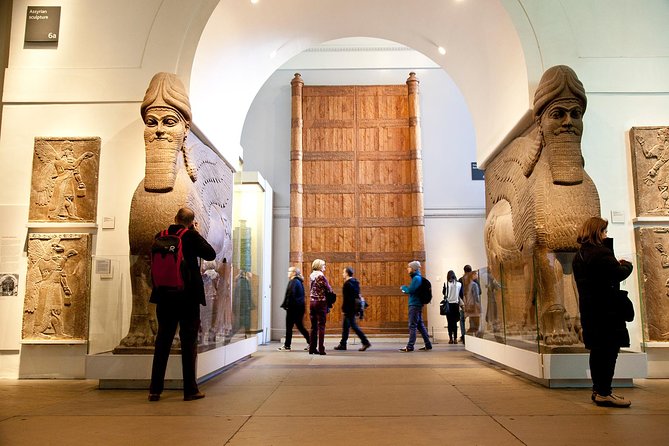
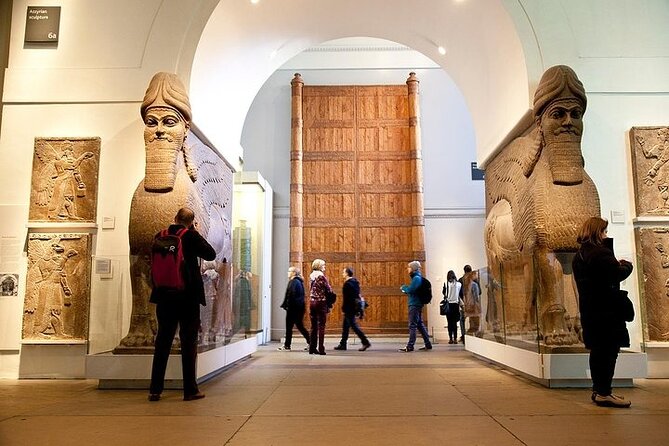
The core plan centers on the Rosetta Stone, Parthenon sculpture, Egyptian mummies, and Sutton Hoo. Depending on the guide and the pace of your group, you may also see Assyrian reliefs and other important displays along the way.
One particularly useful feature is orientation. Your guide may point out where other major galleries are located, so you can return to them after the tour. That makes the visit more useful than a simple parade of famous objects. You finish with a sense of direction.
The route is not identical every time. Crowds, gallery conditions, the guide’s interests, and your own questions can affect the order and amount of time spent at each stop. That flexibility is a benefit of the private format, but it also means you should not expect a precisely timed checklist.
What the 90-minute to 2.5-hour timing means
The tour is described as lasting approximately 2 hours 30 minutes, while the itinerary states 1 hour 30 minutes for the museum visit. That is a meaningful difference, particularly if you are arranging airport connections, theater tickets, or a tight London sightseeing day.
Treat the timing as flexible and confirm the current duration before booking. In either case, this is a highlights visit, not a full museum day. Some people find the pace ideal because it cuts through the clutter. Others feel that a museum this large deserves a longer independent visit.
I would set aside extra time after the guided route if your schedule allows. The tour is designed to end at the meeting point, and you can then continue exploring on your own. That follow-on time is where you can revisit a favorite gallery or see displays that did not fit the guide’s plan.
The private format does not always mean a large, formal group. Some bookings have involved only two or three participants, while the activity is officially private for your own group. A small party makes it easier to hear, ask questions, and adjust the pace.
Price, free admission, and the real value
At $141.56 per person, this is a premium add-on to a museum with free admission. That price makes sense only if you value expert planning and saved time.
I would consider it worthwhile in three situations:
- You have only a few hours in London.
- You are visiting the British Museum for the first time and feel unsure where to begin.
- You want live explanations and the freedom to ask questions.
I would skip it if you have a full day, enjoy reading museum information, or prefer to follow your own interests. You can enter for free and spend many hours building your own route.
The strongest value comes from the first hour of orientation. Once you understand the layout and have seen the headline objects, you can explore with a purpose rather than wandering at random. The tour also avoids the common problem of leaving a huge museum having seen many rooms but understanding very little.
Practical limits and guide quality
Most people can take part, but the route requires walking and standing, and may include stairs. Baby strollers are not permitted on the tour. The supplied information also indicates that the activity is not designed for wheelchair users, although one wheelchair user was able to join a group. If accessibility is important, confirm arrangements directly before paying.
Guide quality matters more here than on a simple sightseeing transfer. Several guides were praised for strong storytelling, patience, enthusiasm, and a clear grasp of the displays. Trudy was singled out for her energy and ability to manage crowds. Rob was praised for arriving early, giving a useful briefing, and explaining the museum’s architecture as well as its objects. Guy was described as engaging, while Norma was praised for making an efficient route feel lively.
There was also a serious complaint about a guide being hard to understand, reading display cards too closely, giving incorrect information, and using a flashlight in a low-light gallery after a security warning. Another booking failed because the guide did not appear. These incidents appear to be exceptions among the supplied feedback, but they are worth taking seriously because you are paying for personal service.
If your guide gives an answer that sounds uncertain, ask for clarification. A good guide should be open about what is known and what remains debated. Museum rules also come first, especially around lighting and fragile objects.
Who should book this British Museum tour?
This experience suits a first-time visitor who wants the main stories without spending hours getting oriented. It is also a good match for families with older children, couples with a short London stop, and anyone who learns better through conversation than through labels.
It may work well before an independent afternoon in the museum. Let the guide show you the essential rooms, then use the rest of your time to return to Egypt, Greece, Sutton Hoo, or another gallery that caught your attention.
You should think twice if your interest is highly specialized. A short highlights tour cannot give ancient Egypt, Greek sculpture, or Anglo-Saxon archaeology the attention each subject deserves. You may prefer free entry, a self-guided route, and a full day inside.
The free cancellation policy allows a full refund when you cancel at least 24 hours before the start time. Changes or cancellations inside that window are not accepted for a refund, so keep the cutoff in mind when planning around flights.
Should you book it?
Book this tour if the British Museum feels too large to tackle alone, your London time is limited, and you want the Rosetta Stone, Parthenon Frieze, Egyptian Rooms, and Sutton Hoo placed in context. The private guide and chance to ask questions are the main reasons to pay the fee.
Skip it if the $141.56 price feels high for a free museum or if you prefer slow, independent viewing. Either way, plan more time than the guided route if you can. The best use of this experience is not to see every room. It is to get your bearings fast, understand a few major objects properly, and then choose what deserves your own attention.
FAQ
How much does the British Museum Highlights Private Tour cost?
The listed price is $141.56 per person. Museum admission itself is free, so the cost covers the private English guide and tour service rather than entry to the museum.
How long does the tour last?
The tour summary gives an approximate duration of 2 hours 30 minutes. The itinerary lists 1 hour 30 minutes for the museum visit, so confirm the current timing before booking.
Is the tour private?
Yes. The activity is described as private, meaning only your group participates. Some past groups have been very small, with two or three people.
Where do I meet the guide?
Meet at Montague Place by the British Museum’s north entrance. The entrance has stone lions by the doorway, and the guide is expected to hold a sign.
What does the tour include?
It includes a professional English-speaking guide and all fees and taxes.
Are food, drinks, and hotel transfers included?
No. Food, drinks, hotel pickup, and hotel drop-off are not included.
Which British Museum objects are included?
The route includes the Rosetta Stone, the Parthenon Frieze, Egyptian mummies and related displays, and Anglo-Saxon objects connected with Sutton Hoo. Other galleries may be included depending on the route and your interests.
Can I explore the museum after the tour?
Yes. The guided portion ends back at the meeting point, and you can continue exploring the museum independently afterward.
Can I cancel for a refund?
You can cancel for a full refund at least 24 hours before the experience start time. Cancellations or changes made less than 24 hours before the start time are not accepted for a refund.
Recently added around London
- London’s Crown Secret: Self-Guided Royal Puzzle Quest★ 4.5 · 8 reviews
- Postcard London★ 5.0 · 8 reviews
- Private Tour: Downton Abbey London Locations by Taxi★ 5.0 · 8 reviews
- Windsor Castle, Stonehenge & Roman Baths Private Tour★ 4.5 · 8 reviews
- Cotswolds Private Driving Tour from London★ 5.0 · 8 reviews
- Skip-the-line London Westminster Abbey and City of Westminster Kid-Friendly Tour★ 5.0 · 8 reviews
- A Silent Disco Adventure in London★ 5.0 · 8 reviews
- Gangster Tour of Soho★ 4.5 · 8 reviews
British Museum Tours, compared.
British Museum London Guided Tour Semi-Private 8ppl Max
Read our review →
The British Museum London – Exclusive Guided Museum Tour
Read our review →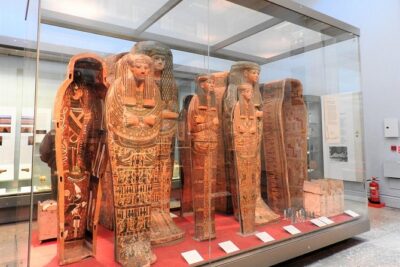
Private Guided Tour of the British Museum – Tickets Included
Read our review →
British Museum Guided Tour with Priority Timeslots(Small Group)
Read our review →
British Museum & National Gallery of London Semi-Private 8ppl Max
Read our review →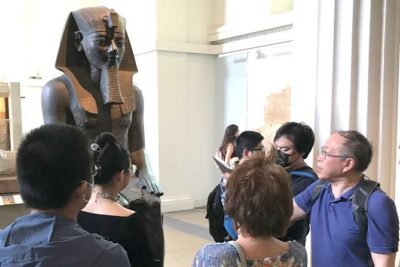
Explore Biblical Artifacts at the British Museum
Read our review →
Crash course in archaeology at the British Museum
Read our review →Browse the lists this tour appears in