
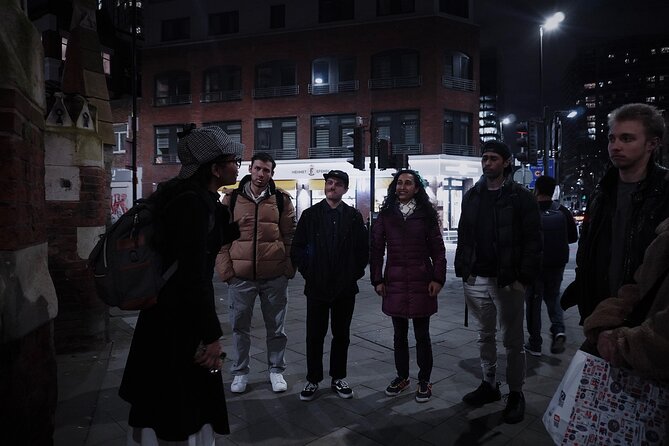
Reviewed · JACK THE RIPPER TOURS
Interactive Jack the Ripper Night Walk: London’s Murder Mystery
The question here is not simply who Jack the Ripper was. It is how a few narrow streets, dim courtyards, frightened residents, and disputed clues still hold London’s most famous unsolved murder story together. This two-and-a-half-hour night walk takes you from Whitechapel Church to Mitre Square, with the final crime scene as its grim endpoint.
I like the route for two reasons: it connects the murders to the lives of poor Victorian women, and it uses real streets rather than a museum display. Guides such as Tyson, Lisa, Jess, and Sadie have made the story lively, clear, and personal. The old photographs and reports shared during the walk add useful detail.
The main drawback is practical: you do not return to the starting point. You finish at Mitre Square, so you need to plan your way onward. A few people have also found it hard to hear every word in busy or open areas, so staying close to the guide matters.
Key points to know before you book
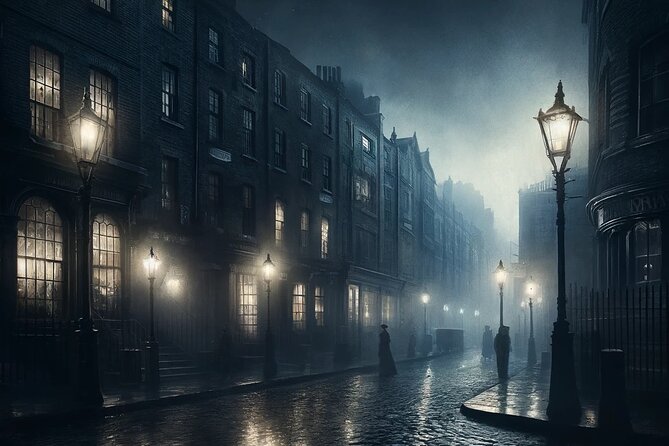
- The route ends at Mitre Square: Start at St Mary’s Whitechapel Church Memorial and finish near the site connected with Catherine Eddowes’s murder.
- Seven main stops shape the walk: Brick Lane, Princelet Street, Puma Court, The Ten Bells, Gunthorpe Street, Goulston Street, and St Botolph’s Aldgate lead into the final stop.
- The focus is more than the killer: You hear about poverty, crime, women’s lives, shelter, police clues, and the people caught in the case.
- The group can include up to 25 people: That is large enough for shared energy, but you should remain near the guide to hear clearly.
- Several guides receive strong praise: Tyson is especially good at remembering names and answering questions, while Lisa, Jess, and Sadie bring different styles to the story.
- The $22.99 price buys a full evening walk: At roughly 150 minutes, it offers a lot of guided time for the cost, though the value depends on your interest in dark history.
Why this Whitechapel walk works after dark
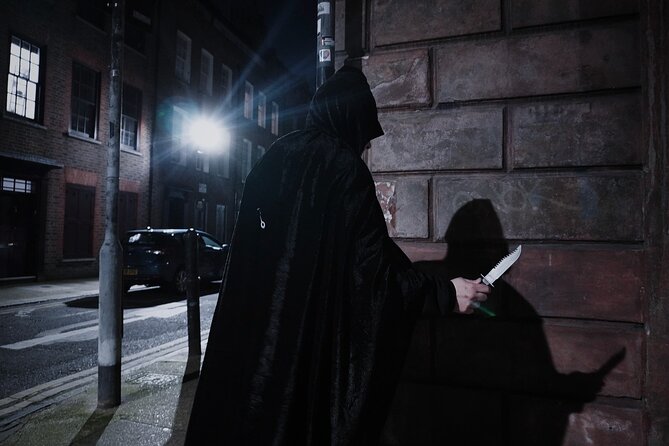
Jack the Ripper stories can become cheap horror theater. This experience has the chance to do something better because the route puts the crimes into the streets where the people involved actually lived, worked, drank, sought shelter, and died.
You move through Whitechapel and Spitalfields after dark, when the narrow lanes naturally feel more atmospheric. That mood is part of the appeal, but the best material is the social setting around the murders. Poverty, overcrowding, desperation, and limited safety shaped the lives of women in the area. The tour uses those conditions to explain the case instead of treating the victims as names in a crime puzzle.
The mystery remains unsolved. You are not promised a final answer, and that is important. The title invites you to help solve the case, but the useful experience is weighing evidence and competing ideas rather than receiving a neat revelation.
Guides have room to shape the evening. Tyson is praised for keeping the group involved, remembering names, and handling questions. Lisa adds historical context and provides old images and reports for download. Jess is described as funny and patient, while Sadie brings an especially spirited and empowering focus to the women’s stories. Your exact guide will depend on the date, but these details show the range of the presentation.
More Walking Tours in London
- Tour for Muggles The Ultimate Harry Potter Walking Tour in London
★ 5.0 · 4,684 reviews - London Jack The Ripper Guided Walking Tour
★ 5.0 · 3,131 reviews - Changing of the Guard Guided Walking Tour in London
★ 5.0 · 1,793 reviews
Starting at St Mary’s Whitechapel Church Memorial
The walk begins at St Mary’s Whitechapel Church Memorial, at an unnamed road in London E1 1FE. Arrive ready to walk for about two and a half hours, since the route crosses several historic streets and does not loop back to the start.
This is a useful place to begin because the church area connects the story to the edge of Victorian Whitechapel. The tour is not only about isolated crime scenes. It looks at a district where churches, pubs, lodging areas, alleys, and charitable shelters sat close to danger.
The group limit is 25 people. That keeps the walk from becoming an enormous crowd, though it is still big enough that you may need to position yourself close to the guide. One person specifically noted difficulty hearing at times, so do not drift to the back when the group stops.
Brick Lane and the world behind the headlines
Brick Lane is now associated with street art and curry restaurants. The tour asks you to picture an earlier period, when this part of East London formed part of one of London’s most notorious slums.
The point of this stop is context. Crime did not happen in a vacuum. Poverty and desperation affected where people lived, how they found work, and how exposed they were at night. You hear how those pressures shaped daily life before the tour moves into the more specific Ripper story.
The stop lasts about 17 minutes, as do the other listed stops. That gives the guide enough time to explain the setting without keeping you in one place for too long. Brick Lane is also a reminder that modern London can cover its older layers quickly. Restaurants and murals now occupy streets that once carried a very different reputation.
Princelet Street and Annie Chapman
Princelet Street has a cobbled, old-fashioned appearance that helps you imagine East London in the 1880s. The street offers one of the clearest visual links between present-day London and the period being discussed.
Here the focus turns toward the movements associated with the Ripper case and the life of Annie Chapman. That shift matters. Instead of hearing only about a sequence of murders, you begin to see the people involved within a neighborhood and a set of difficult choices.
The stop is not a preserved crime scene in the strict sense, so you should not expect every detail to look exactly as it did in 1888. Its value is the atmosphere and the street pattern. The cobbles, tight passage, and older buildings help you understand why the guide keeps returning to questions of visibility, isolation, and vulnerability.
More Ripper walks after dark:
- London Jack the Ripper Guided Tour with Ripper-Vision
★ 4.5 · 4,840 reviews - Ultimate Jack the Ripper : Guided Tour of London
★ 5.0 · 1,495 reviews - The Original Jack the Ripper : Guided Tour
★ 5.0 · 1,264 reviews - London Jack The Ripper Small-Group Walking Tour
★ 5.0 · 1,013 reviews
Puma Court and the danger of narrow alleys
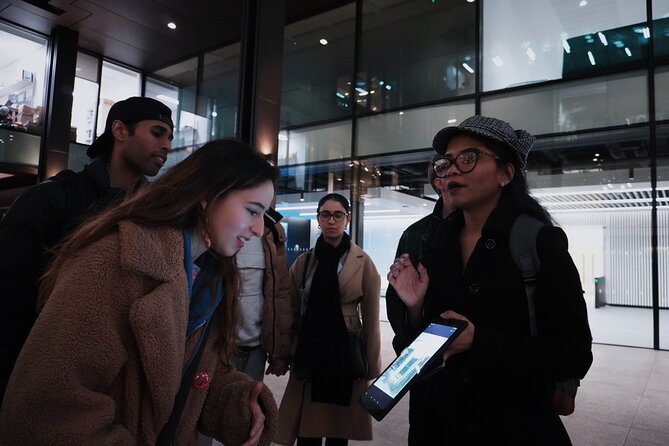
Puma Court is presented as one of Spitalfields’ eeriest alleys. It is a brief stop, but an effective one for thinking about how exposed the victims were in quiet corners after dark.
This is where the tour’s mood becomes strongest. The dark passage gives physical form to details that can otherwise feel distant on a page. You can consider how quickly a person might disappear from public view in a place like this, even when only a short distance from busier streets.
The guide’s delivery makes a real difference here. The story needs restraint. Too much theatrical effect could make the stop feel like a haunted-house attraction, while a clear explanation of the circumstances keeps attention on the victims and the conditions around them.
The Ten Bells and the final hours of the victims
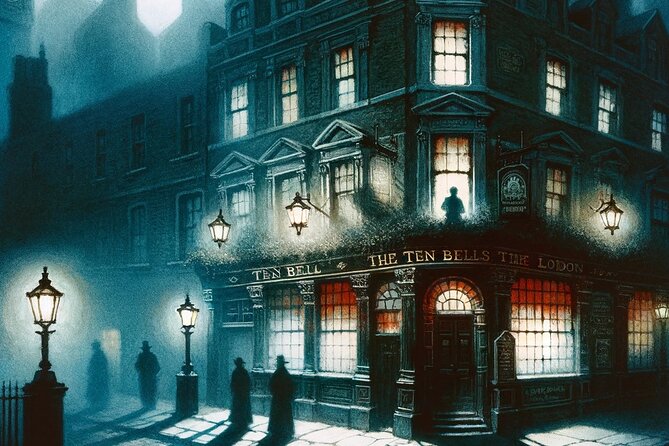
The Ten Bells is one of the most recognizable names on the route. The historic pub is linked to several victims who were reportedly seen there before their deaths.
The group gathers outside rather than treating the pub as a separate entertainment stop. The guide recounts the women’s final hours and explains how the pub fits into the broader case. This is one of the route’s strongest links between an ordinary social place and the terrible events that followed.
I appreciate that the experience includes the women’s stories instead of using them only as clues in a killer’s tale. Sadie’s approach, in particular, is described as empowering and spirited, which can help prevent the evening from becoming too focused on the murderer.
The Ten Bells is also a good point to remember that historical associations can be complicated. You are hearing how the pub connects to the case, not stepping into a perfectly preserved scene from the murders. The value lies in the narrative and the location’s place in public memory.
Gunthorpe Street and Martha Tabram
Gunthorpe Street is a narrow passage with a grim connection to Martha Tabram. She was violently killed there, though she is not officially counted among the Ripper’s victims.
That uncertainty makes this stop useful. It shows how the case expanded beyond a fixed list of names. Some historians believe Tabram may have been the first victim, while others do not accept the link. The tour gives you a chance to consider why her murder has remained part of the discussion.
This is also one of the better moments for understanding how a mystery grows. Once several killings share certain broad features, people naturally search for a single offender. But similar crimes do not automatically prove one person was responsible. A good guide should keep that distinction clear, and the tour’s unanswered final question leaves room for that uncertainty.
Goulston Street and the disputed clue
At Goulston Street, the subject changes from the streets themselves to evidence. After the double murder, investigators connected this area with a bloodied piece of apron and a chalk message.
The clue caused fierce debate. Was the message written by the killer, or did it belong to someone else? Was it connected to the murders at all? The tour uses this stop to show how fragile the evidence can be and how easily a sensational case attracts theories.
This is where old photographs and reports become especially helpful. Lisa is credited with supplying a useful download of historic images and documents, giving you something to examine beyond the spoken account. If your guide offers similar material, save it for later. The details can blur after a long evening of names and dates.
Goulston Street also keeps the mystery honest. You may leave with a stronger theory, but not with proof. That is a better result than a forced solution.
St Botolph’s Aldgate, safety beside danger
St Botolph’s Aldgate marks a quieter side of the story. The church stood near the edge of Whitechapel and offered shelter to many women during the Victorian period.
The location creates a sharp contrast. A place of safety stood only steps from streets where women faced real danger. That contrast helps you think about the limited support available to people living in poverty and how charity, policing, and personal safety overlapped.
This stop broadens the tour beyond murder. You learn about the social structures around the victims, including the places where women might seek help. That context gives the evening more substance and helps explain why the case mattered so much to the city.
Mitre Square, the final and darkest stop
The walk ends at Mitre Square, London EC3A 5DE. This is where Catherine Eddowes was brutally murdered, and the violence of the crime shocked the city.
Ending here gives the route a clear shape. You begin with the district and its social conditions, move through connected streets and disputed evidence, then finish at one of the best-known crime scenes in the case. Since you do not return to St Mary’s Whitechapel Church Memorial, check your onward plans before the tour begins.
Mitre Square is not just a dramatic finale. It brings together the themes introduced earlier: dark public spaces, vulnerable people, limited protection, and an investigation clouded by uncertain evidence. The final stop can feel heavy, so this is not a casual ghost walk for everyone.
Is $22.99 fair for 150 minutes?
At $22.99 per person, the price is reasonable for a guided London walk lasting about 150 minutes. You are paying for a substantial amount of guide time, seven listed stops before the finale, and a route through Whitechapel and Spitalfields rather than a short talk outside one building.
The value is strongest if you enjoy social history, unsolved crimes, and walking tours that connect several locations. It is less compelling if you want entry to historic interiors or a formal museum presentation. Admission tickets for the stops are listed as free, so the cost is mainly for the guide, storytelling, route planning, and historical material.
Group discounts are available, which can help if you are booking with family or friends. You can also upgrade to a private tour if you want a more personal format. A private option should appeal to people who prefer more direct questions and a pace shaped around their group, though the supplied price applies to the regular experience.
The tour is offered in English. The maximum group size is 25, and confirmation arrives at booking. Most people can participate, but you should be comfortable walking outdoors after dark for the full duration.
Which kind of guide suits the story?
The guide is the biggest variable in a walking tour like this. The route has strong locations, but the evening depends on clear speaking, control of the group, and the ability to separate fact from theory.
Tyson is a strong choice if you like an interactive presentation. He is praised for remembering people’s names, using that information to keep the group involved, and answering questions well. Jess brings humor and patience, which can make a long walk easier for couples and mixed-age groups.
Lisa’s contribution is useful if you want more than atmosphere. The old photographs and reports help anchor the spoken story in documentary material. Sadie’s approach gives more attention to the women and their experiences, rather than allowing the killer to dominate every part of the evening.
You cannot choose the guide from the information provided, so book this with the understanding that styles may vary. If hearing every sentence is important to you, stay near the front and speak up if the group spreads out.
Who should book this night walk?
I would recommend it to you if you want London history with a strong sense of place. It suits adults and older children who can handle a grim subject and enjoy walking between several locations.
It is also a good fit for repeat visitors to London. Brick Lane, Spitalfields, and Aldgate take on a different meaning when you learn how poverty, shelter, pubs, and police work shaped the area in the 1880s.
You may want to skip it if murder stories make you uncomfortable, or if you prefer attractions with indoor seating and a fixed exhibit. The atmosphere is intentionally unsettling, and the ending at Mitre Square is particularly stark.
The experience also works best for people who accept uncertainty. If you need the identity of Jack the Ripper settled by the final minute, you may feel frustrated. If you enjoy examining clues and asking who can really be trusted, the lack of a solution is part of the point.
Should you book it?
Book this tour if you want a well-priced, location-based look at the Jack the Ripper case, with attention to Victorian poverty and the women involved. The 4.9 rating from 171 listed ratings and the 97 percent recommendation figure suggest strong overall satisfaction, especially with guides who make the material engaging.
The practical decision is simple. Plan for 2 hours and 30 minutes outside, remain close enough to hear, and arrange your onward route from Mitre Square. Cancel at least 24 hours before the start time if your plans change, since cancellations inside that window are not refunded.
For a fuller and more personal experience, consider the private upgrade. For most people, the standard group walk offers the better value, especially at $22.99. Just remember that the mystery remains a mystery, and that is exactly what the route is built around.
FAQ
How long is the Jack the Ripper night walk?
The experience lasts approximately 2 hours and 30 minutes.
Where does the tour start?
The tour starts at St Mary’s Whitechapel Church Memorial, at an unnamed road in London E1 1FE, UK.
Where does the tour end?
The tour ends at Mitre Square, London EC3A 5DE, the site connected with Catherine Eddowes’s murder.
Does the tour return to the starting point?
No. The route finishes at Mitre Square, so you need to arrange your onward journey from there.
What language is the tour offered in?
The tour is offered in English.
How large can the group be?
The maximum group size is 25 people.
Is there a private tour option?
Yes. You can upgrade to a private tour for a more personal experience.
What is the cancellation policy?
You can cancel for a full refund if you cancel at least 24 hours before the experience start time. Cancellations or changes made within 24 hours are not accepted and are not refunded.
More evening outings in London
- London by Night Bus Tour with Christmas Lights and Live Guide
★ 4.5 · 2,040 reviews - London by Night Sightseeing Tour – Open Top Bus
★ 4.5 · 1,060 reviews - London by Night Sightseeing Open Top Bus Tour with Live Guide
★ 4.5 · 977 reviews - River Thames Evening Cruise with Sparkling wine and Canapés
★ 4.0 · 569 reviews
Recently added around London
- London’s Crown Secret: Self-Guided Royal Puzzle Quest★ 4.5 · 8 reviews
- Postcard London★ 5.0 · 8 reviews
- Private Tour: Downton Abbey London Locations by Taxi★ 5.0 · 8 reviews
- Windsor Castle, Stonehenge & Roman Baths Private Tour★ 4.5 · 8 reviews
- Cotswolds Private Driving Tour from London★ 5.0 · 8 reviews
- Skip-the-line London Westminster Abbey and City of Westminster Kid-Friendly Tour★ 5.0 · 8 reviews
- A Silent Disco Adventure in London★ 5.0 · 8 reviews
- Gangster Tour of Soho★ 4.5 · 8 reviews
Jack the Ripper Tours, compared.
London Jack the Ripper Guided Tour with Ripper-Vision
Read our review →
Ultimate Jack the Ripper : Guided Tour of London
Read our review →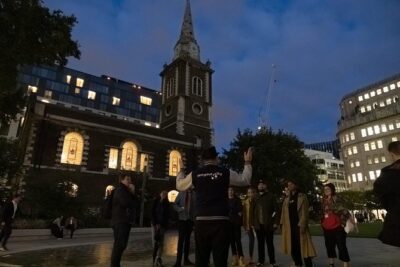

London Jack The Ripper Small-Group Walking Tour
Read our review →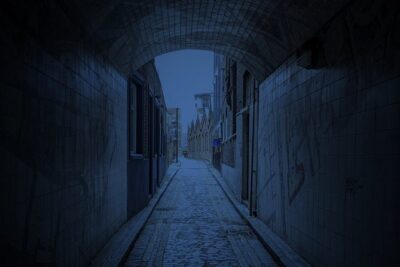

The Original Jack the Ripper Coach Tour of Haunted London
Read our review →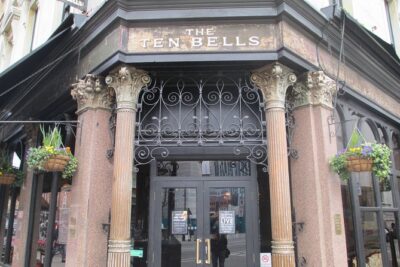
Browse the lists this tour appears in