
Reviewed · JACK THE RIPPER TOURS
Jack the Ripper and Victorian London Beyond the Shadows
Jack the Ripper’s story is only part of this East End walk. The stronger thread is the world around the crimes: poor housing, hard lives, social prejudice, and the women whose names are often reduced to a grisly footnote. Victorian Whitechapel comes into sharper focus as you move through the streets after dark.
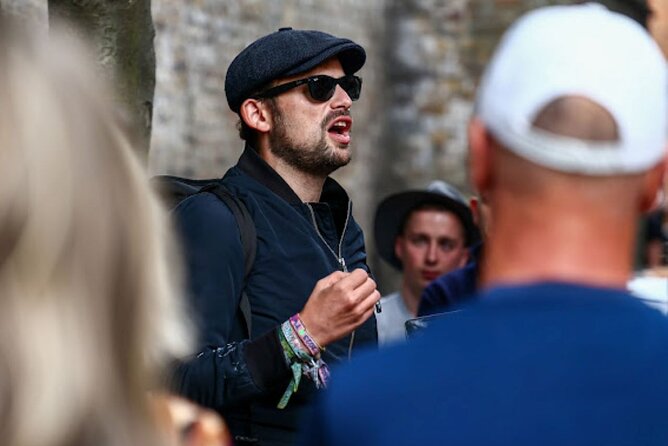
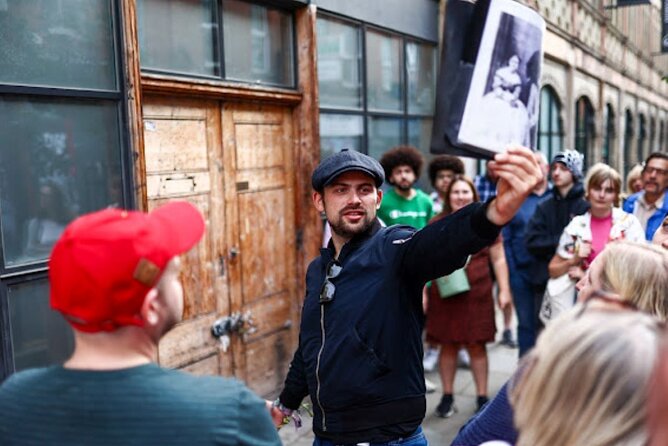
I like the tour’s focus on the victims and its use of local context. I also like the guides’ personal style, especially Nick, a historian and East End native who uses an iPad with period photographs and encourages questions. The main drawback is simple: you walk for two and a half hours, and the subject matter includes murder, poverty, and disturbing details.
Key points to know before you go
- A victim-focused story: The tour gives attention to the lives and struggles of the women killed, not just the killer’s identity.
- Four strong East End locations: You visit Brick Lane, Spitalfields Market, the Ten Bells pub, and Goulston Street.
- Guides with different strengths: Nick is praised for his local connection, theatrical storytelling, and factual approach. Matt is also described as engaging and lively.
- More than a crime walk: Expect social and economic background on Victorian London, plus an account of how the East End changed.
- An evening start: The walk begins at 7:30 pm at Braham Street and ends at Spitalfields Market.
- Good value for walkers: At $24.98, the price is modest for a 2-hour-30-minute guided walk, though you should be ready to spend the evening on foot.
Why this East End walk feels different
Many Jack the Ripper walks are built around one question: Who was the killer? This experience takes a more thoughtful route. It still traces the murders and the places tied to them, but it also asks you to consider the women who lived in Whitechapel and Spitalfields, and the conditions that shaped their choices.
That change in emphasis matters. The victims are too often labeled simply as prostitutes, with their names, families, work, and daily hardships pushed aside. Here, you can expect more attention to their lives and to the reasons survival in Victorian London was so difficult.
The tour also places the crimes in the wider East End. You hear about poverty, social divisions, and the way the neighborhood developed over time. By the end, the area is not just a backdrop for a crime story. It is a living part of London with a past that still shapes its streets.
The tone is serious, but not stiff. Nick is described as funny, theatrical, and highly interactive. He uses an iPad to show historical photographs, which can help connect modern streets with the scenes being discussed. He also makes room for questions, so the walk can feel more like a conversation than a lecture.
More Ripper walks after dark:
- London Jack the Ripper Guided Tour with Ripper-Vision
★ 4.5 · 4,840 reviews - London Jack The Ripper Guided Walking Tour
★ 5.0 · 3,131 reviews - Ultimate Jack the Ripper : Guided Tour of London
★ 5.0 · 1,495 reviews
Starting at Braham Street at 7:30 pm
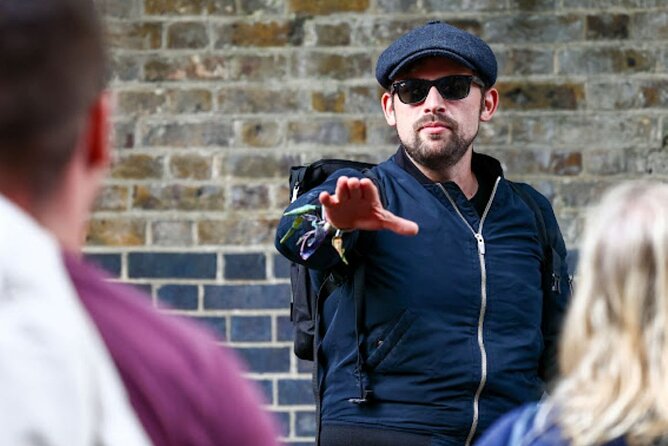
The meeting point is Braham Street in London’s E1 district, with a 7:30 pm start. That timing suits the subject. The East End takes on a different character after sunset, and the evening setting adds atmosphere without requiring a late-night finish.
You should arrive with comfortable shoes and enough time to locate the starting point. The walk ends at Spitalfields Market, not back at Braham Street, so plan your onward route from the market. The end point is near public transportation, which makes it useful for getting back to your hotel or continuing your evening.
The group can include up to 40 people. That is not a tiny private walk, so your experience may depend partly on the group size and how close you stay to the guide. Still, the guide style appears designed to involve the whole group, and some bookings have gone ahead for very small parties, including groups of two.
Service animals are allowed, and most people can take part. The practical issue is stamina. This is a walking tour, not a series of short stops reached by vehicle, and one participant specifically advised remembering that you will walk a lot.
Brick Lane and the East End’s social story
Brick Lane is the first major setting. Today it is known for food, shops, art, and a strong mix of cultures. The useful part of the visit is not simply seeing the street as it is now, but comparing it with the East End of 1888.
Your guide explains the socio-economic pressures that shaped life here. The area was marked by hardship, crowded living conditions, and limited choices for people at the bottom of Victorian society. That context helps explain why the crimes caused such fear and why the police investigation became tangled in class, gender, and local distrust.
Brick Lane also gives the tour a clear sense of change. The neighborhood has developed greatly in recent decades, and the walk connects those changes with the communities that have passed through the East End. You see how a district associated with deprivation can later become one of London’s most culturally active areas.
There is a small trade-off. Brick Lane is a modern working street and food destination, not a preserved Victorian set. That is part of its value, but it means you need to use your imagination. The guide’s explanations and photographs do much of the work.
Spitalfields Market, then and now
Spitalfields Market is both a stop during the walk and the finishing point. Today, it offers food, clothing, music, and independent shops, with a steady mix of London residents and visitors. It is a lively contrast to the grim events being discussed.
The market helps show how the East End has shifted. The same broad district that once carried a reputation for poverty and danger now draws people for shopping and dining. This contrast is not used to erase the past. Instead, it gives you a clearer sense of how London neighborhoods change and how old streets acquire new uses.
Because Spitalfields is the endpoint, it is also convenient. You can stop for food afterward or use nearby public transportation. The tour does not include a meal, so you should budget separately if you want to eat at the market.
The market can also be a busy place. If you prefer a quiet, intimate finish, a crowded public setting may feel less atmospheric than the darker streets earlier in the evening. For most people, though, the change of mood is welcome after a serious subject.
A few more London half days worth a look
- Stonehenge, Windsor Castle, and Bath from London
★ 4.5 · 18,662 reviews - London Big Bus Hop-On Hop-Off Tour with Optional River Cruise
★ 3.5 · 10,803 reviews - London Small Group Tour of Historical Pubs
★ 5.0 · 10,422 reviews - Stonehenge, Windsor Castle and Bath with Pub Lunch in Lacock
★ 4.5 · 7,402 reviews
Ten Bells and the familiar Ripper story
The Ten Bells pub is linked to the Ripper case and has appeared in documentaries and films about it. That connection makes it one of the most recognizable stops on the route.
The guide uses the pub as a bridge between the popular version of the story and the documented events. You hear about the people connected with the area and the way the pub became part of the public memory surrounding the case. This is where the tour’s factual approach matters. The story has attracted a great deal of speculation, so separating evidence from later claims is useful.
You should not expect the Ten Bells to function as a museum exhibit. It is a historic pub in a working part of London, and the tour’s focus is the explanation given outside or around the location. The value comes from knowing why this place became linked with the case, not from expecting a preserved crime scene.
The subject can be uncomfortable here. The tour deals with real murders, and the setting can encourage a sensational tone. According to the supplied details, the guide instead gives respectful attention to the women and their circumstances. That makes the stop more worthwhile for people who want history rather than horror theatrics.
Goulston Street and the events of September 30, 1888
Goulston Street is tied to the Ripper investigation and to the unrest that followed the double murders of Elizabeth Stride and Catherine Eddowes on September 30, 1888. This stop adds a wider public response to the story.
Rather than treating the murders as isolated incidents, the walk shows how fear spread through the East End. The riots and unrest that followed reveal how tense the area already was. Suspicion of the police, anger over living conditions, and fear of further violence all formed part of the atmosphere.
This is also one of the places where chronology helps. Nick is praised for taking the group through the facts in order, which can make a complicated case easier to follow. The murders, investigation, public panic, and later interpretations are easier to understand when they are not presented as one muddled tale.
Goulston Street may not look dramatic today. That is worth knowing before you book. The experience depends on the guide’s storytelling and your interest in connecting an ordinary modern street with events from 1888.
What the guides add to the walk
Nick is the name most closely associated with this experience. He is described as a trained historian, an East End native, and a passionate storyteller. Those qualities suit this subject, since the walk needs both local knowledge and care with difficult material.
His approach appears to be interactive rather than formal. He asks questions, involves the whole group, and invites you to think about the evidence. He also uses an iPad to show real photographs connected with the stories. The photographs may be hard to view, but they provide a direct link to the period.
Nick’s local background is especially useful when the tour shifts from 1888 to the modern East End. He can speak about the streets as part of a changing London neighborhood, not merely as old crime locations.
Matt is also named as a guide and is described as engaging and fun, with a tendency to cover Victorian-era history as well as the murders. If you book, the guide may affect the exact tone, but the central themes remain the same: factual detail, the victims’ lives, and the East End’s social setting.
One practical point comes from the guide’s style. Nick is said to enjoy talking about history, so ask questions if you have them. That can make the walk more rewarding, but people who prefer a tightly scripted, fast-moving presentation may find the conversational approach less controlled.
Is $24.98 good value?
At $24.98 per person, this is a reasonably priced London activity. You receive about 2 hours and 30 minutes of guided walking, several historic locations, local context, and a guide who brings visual material and personal knowledge to the subject.
The value is strongest if you want more than a spooky evening. A short walk built only around famous murder sites might feel thin at this price. This experience covers the victims, Victorian society, the East End’s changes, and the later public image of the case, giving you more substance for your money.
There are limits. The price does not include food, drinks, or transportation after the walk. You also pay for interpretation rather than entry to a major attraction. If you dislike walking or already know the case in detail, the value may be less clear.
I would compare it with the cost of other guided London activities. For less than $25, you get a full evening program in a central district and finish at a place where you can continue on your own. That is a fair deal, especially for history fans.
Who should book this tour?
This walk suits you if you enjoy true crime but want the human story kept in view. It is also a good choice if you like London social history, local neighborhoods, and guides who explain how places changed.
Families can take part, but use your judgment. The tour concerns murder and may include upsetting photographs and details. The supplied information says most people can participate, but it does not give a recommended minimum age, so parents should decide based on the children in their group.
You should also book it if you prefer an interactive guide. Nick’s style includes questions, discussion, and visual material. If you want a silent stroll with a few prepared facts, this may not be the right match.
The walk is less suitable for anyone who cannot comfortably walk for about two and a half hours. Wear shoes that you can manage on city streets, and remember that the finish is at Spitalfields Market rather than the start.
Free cancellation is available if you cancel at least 24 hours before the 7:30 pm start. Changes or cancellations made inside that window are not refunded, so keep the cutoff in mind when planning.
Should you book Jack the Ripper and Victorian London Beyond the Shadows?
Book it if you want a serious, human-centered East End tour rather than a simple hunt for the killer’s identity. The strongest reasons are the attention given to Elizabeth Stride, Catherine Eddowes, and the other victims, along with the effort to explain Victorian poverty and the neighborhood’s later development.
Nick’s local connection, historical training, photographs, and easy conversation add real value. The walk is also affordable, well placed for an evening in East London, and ends at Spitalfields Market, where you can eat or continue exploring.
Skip it if you dislike grim subjects, long walks, or stories that leave some mystery unresolved. The killer’s identity is not the only point here, and the experience asks you to think about the people and society behind the headlines. For the right audience, that is exactly what makes this tour worth your time.
FAQ
Where does the tour start?
The tour starts at Braham Street, London E1, at 7:30 pm.
Where does the tour end?
The tour ends at Spitalfields Market, 65 Brushfield Street, London E1 6AA.
How long does the tour last?
The walking experience lasts approximately 2 hours and 30 minutes.
What language is the tour offered in?
The tour is offered in English.
How much does the tour cost?
The listed price is $24.98 per person.
How many people can join the tour?
The maximum group size is 40 people.
Can I cancel for a full refund?
Yes. You can cancel up to 24 hours before the experience start time for a full refund. Cancellations or changes made less than 24 hours before the start are not refunded or accepted.
Recently added around London
- London’s Crown Secret: Self-Guided Royal Puzzle Quest★ 4.5 · 8 reviews
- Postcard London★ 5.0 · 8 reviews
- Private Tour: Downton Abbey London Locations by Taxi★ 5.0 · 8 reviews
- Windsor Castle, Stonehenge & Roman Baths Private Tour★ 4.5 · 8 reviews
- Cotswolds Private Driving Tour from London★ 5.0 · 8 reviews
- Skip-the-line London Westminster Abbey and City of Westminster Kid-Friendly Tour★ 5.0 · 8 reviews
- A Silent Disco Adventure in London★ 5.0 · 8 reviews
- Gangster Tour of Soho★ 4.5 · 8 reviews
Jack the Ripper Tours, compared.
London Jack the Ripper Guided Tour with Ripper-Vision
Read our review →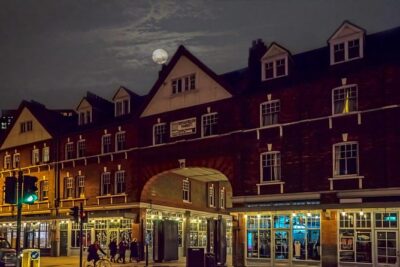
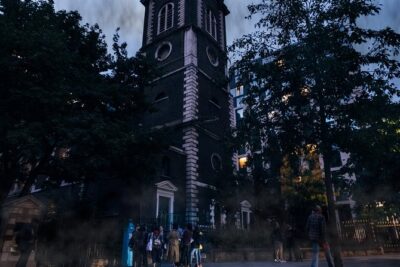
Ultimate Jack the Ripper : Guided Tour of London
Read our review →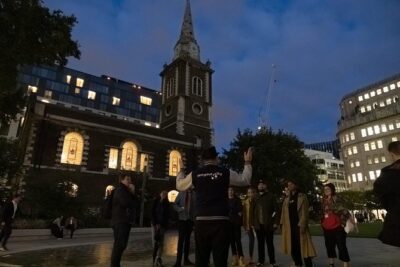
London Jack The Ripper Small-Group Walking Tour
Read our review →

The Original Jack the Ripper Coach Tour of Haunted London
Read our review →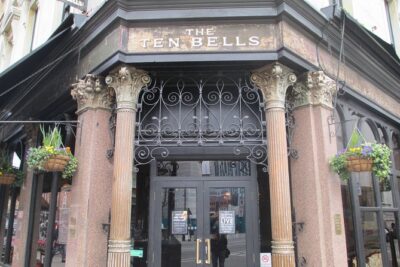
Browse the lists this tour appears in