

Reviewed · OXFORD TOURS
Oxford: 90 minute Architectural & Historical Highlights Tour
Oxford’s story is written into its stonework, and this 90-minute walk gives you a useful key to read it. With Sophie guiding you, you move from Protestant martyrs and medieval city gates to Tolkien, C. S. Lewis, Christopher Wren, Harry Potter, and the modern university.
I like the small group limit of 15, which should make questions easier and keep the walk personal. I also like the free map and guidebook, plus Sophie’s practical recommendations for places to eat and drink. The main drawback is the pace: 17 stops in about an hour and a half means plenty of looking and listening, but little time for long interior visits.
Key points to know before booking
- A fast tour with a wide reach: You cover major colleges, libraries, churches, monuments, and streets in 90 minutes.
- Guide Sophie brings the history to life: Her English and French, humor, and ability to engage children and adults are valuable strengths.
- You see Oxford’s famous academic core: The route includes the Bodleian Library, Radcliffe Camera, Sheldonian Theatre, Bridge of Sighs, and several colleges.
- One medieval college entry is included: The itinerary also lists Balliol College admission as not included, so confirm exactly which college interior you will enter.
- The route begins at the Weston Library: It finishes at the Golden Cross, placing you near the center for food, drinks, and more sightseeing.
- Weather matters: The walk can be canceled in poor weather, with a new date or full refund offered.
What this Oxford walk does best
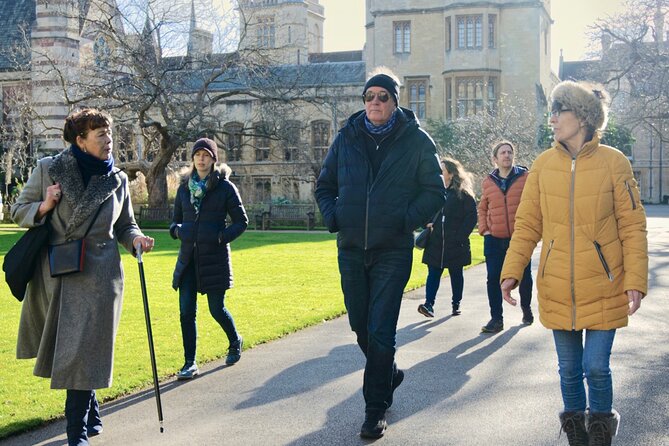
Oxford can feel like a grand puzzle. College gates open onto quiet courtyards, medieval lanes run beside Victorian monuments, and a building that looks like a church may be tied to university exams, science, or literature. This tour gives you the broad picture before you explore on your own.
The route is not built around one single sight. Instead, it connects the city’s academic, religious, political, and literary threads. You hear about the Protestant martyrs at the Martyrs’ Memorial, the origins of the university, the Oxford Movement, the Bodleian Library, and figures such as Edmund Halley, John Radcliffe, Thomas Bodley, Christopher Wren, J. R. R. Tolkien, and C. S. Lewis.
Sophie is the named guide, and her style appears especially suited to people who want stories rather than a string of dates. She guides in English and has also handled tours in French. Her humor and ability to keep children, parents, and grandparents involved are useful on a route that could otherwise feel like a heavy dose of university architecture.
The walk is best understood as an orientation. You will see and discuss far more than you can enter in 90 minutes. That is a strength if you are in Oxford for a day and want to decide what deserves a longer visit. It is a limitation if you want a detailed college tour with time inside each building.
More History Tours in Oxford:
- Natural History Museum Tour – by Uncomfortable Oxford™
★ 4.5 · 17 reviews - Reformation Oxford Christian History Tour private groups
★ 5.0 · 14 reviews - London Small Group Tour of Historical Pubs
★ 5.0 · 10,422 reviews
From the Martyrs’ Memorial to Oxford’s oldest surviving tower
The walk begins at the Weston Library on Broad Street and first reaches the Martyrs’ Memorial. This Victorian monument recalls the 16th-century Protestant martyrs, an early reminder that Oxford’s past was not only about scholarship. Religion, royal power, and public punishment shaped the city in serious ways.
You then reach St Michael at the North Gate. Its Anglo-Saxon tower was part of the medieval city gate and is probably Oxford’s oldest surviving building. The short stop is a good example of how this tour works: Sophie uses a compact landmark to open up several centuries of local stories.
These first stops help you see Oxford as a city before it became the polished university setting pictured in guidebooks. The university and the town have always been closely linked, sometimes uneasily. That relationship becomes clearer as the walk enters the college area.
Exeter and Lincoln: college gates with famous alumni
Exeter College offers a quick look at the Oxford college tradition. Its chapel was influenced by the Oxford Movement and modeled on Paris’s Sainte-Chapelle. The connection gives you a useful architectural comparison, especially if you have seen the French original.
Exeter’s alumni include Philip Pullman, J. R. R. Tolkien, and Alan Bennett. Those names help bridge the gap between old stone and modern culture. You are not simply looking at a medieval institution frozen in time. The colleges continue to shape writers, artists, scientists, politicians, and public figures.
At Lincoln College, the original front on Turn Street helps explain the university’s early relationship with the city. Lincoln is also associated with the Wesley brothers and with former British prime minister Rishi Sunak. The short stop will not provide a full college visit, but it gives you a chance to notice how college façades face, frame, and sometimes separate themselves from Oxford’s public streets.
This is one place where the route’s quick rhythm matters. You will get a clear introduction to the buildings and their stories, but you should plan to return later if a particular college catches your eye.
St Mary’s Church and the medieval roots of the university
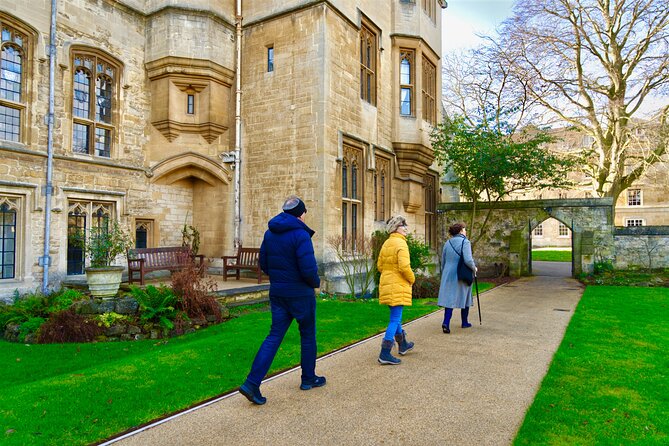
The University Church of St. Mary the Virgin was the university’s first building and is listed in the Domesday Book. It is one of the most important stops for understanding that Oxford began as a religious center as well as an academic one.
The church is known for its stained glass, and the tour uses it to explain how the setting inspired C. S. Lewis. You may also learn about the church’s magnificent spire, which can be climbed, although this walk does not present that climb as part of the itinerary.
This stop adds needed depth. Many first-time visitors see Oxford as a collection of colleges and libraries. St. Mary’s makes clear that faith, worship, and medieval learning were tightly linked. For visitors from the United States, especially, that religious foundation may be less familiar than the university’s academic reputation.
A few more Oxford half days worth a look
- Oxford University Walking Tour With University Alumni Guide
★ 5.0 · 6,905 reviews - 1.5-hour Oxford City and University Walking Tour
★ 4.5 · 1,383 reviews - Oxford Official University & City Tour
★ 5.0 · 1,134 reviews - City Sightseeing Oxford Hop-On Hop-Off Bus Tour
★ 4.5 · 1,042 reviews
Oriel, Corpus Christi, and Merton on the old lanes
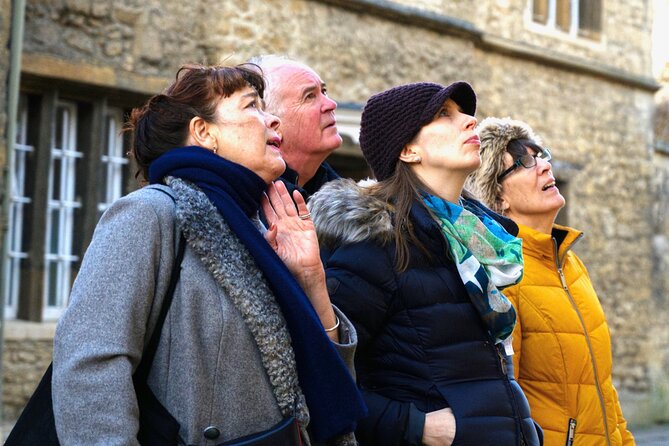
Oriel College is one of Oxford’s oldest colleges. Its front quad and Oriel windows offer a compact lesson in the details that make Oxford’s college architecture so rewarding. Oriel is also known for rowing, while nearby Corpus Christi holds an annual tortoise race, a reminder that Oxford’s traditions are not all solemn.
The route passes east of Christ Church. You do not spend the main tour inside it, but the nearby Christ Church Picture Gallery is suggested as a worthwhile return visit. That is practical advice: Christ Church is famous enough to deserve more time than a brief exterior pass can provide.
Corpus Christi has early 16th-century architecture decorated with animal figures, including a pelican. The college sits on a cobbled street listed as a national treasure. Look closely here. Small carved details can be easy to miss if you focus only on the grand entrances and towers.
Merton College is another strong architectural stop. It is Oxford’s third college, with a 15th-century frieze over the gatehouse that tells part of the story of how colleges were founded in the university’s early years. Its chapel has decorated flying buttresses, and Merton’s library is the oldest continuously surviving library in Oxford.
Merton also connects the buildings to book culture. Thomas Bodley, who founded the Bodleian Library, studied there. That link prepares you for the libraries later in the walk.
Examination Schools and Queen’s College
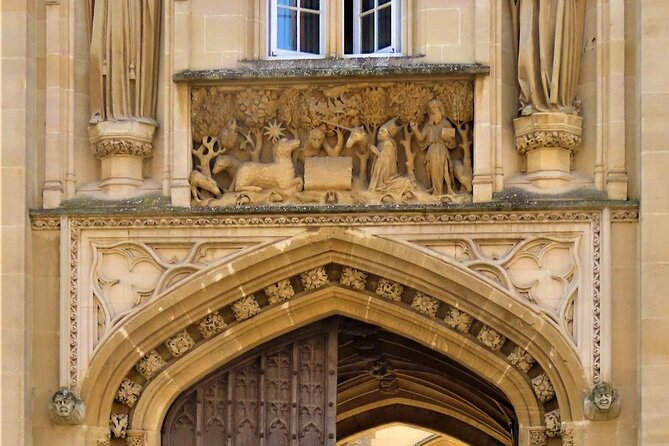
The Examination Schools show a different Oxford. The university held its first written exam in the early 19th century, while this Victorian building dates from the era when Jacobean and Tudor design was considered thoroughly modern. Its style is more theatrical than the plain idea of an exam hall might suggest.
The building also reflects an effort to make education more widely available. That social change is worth noting because Oxford’s image can seem exclusive and medieval. The university has also adapted to new ideas about testing, access, and public education.
Queen’s College brings architecture, alumni, and the High Street together. Rowan Atkinson is among its better-known former students. The college was founded for poor scholars from northern England, and one of those scholars later became wealthy enough to fund its 18th-century rebuilding. Christopher Wren and Nicholas Hawksmoor contributed designs.
The High Street itself has changed many times. It was the road to London, and it is linked with Frank Cooper’s marmalade, which became an international product. The street was also home to England’s first coffee house, founded after Jewish people were welcomed back into England following their earlier banishment during the 13th century and the later period of Oliver Cromwell’s Republic.
That mix of food, commerce, religion, politics, and university life is one reason I value this stop. Oxford is not only a campus. It is a working city with old connections to trade and public life.
New College, the Bridge of Sighs, and Wren’s Oxford
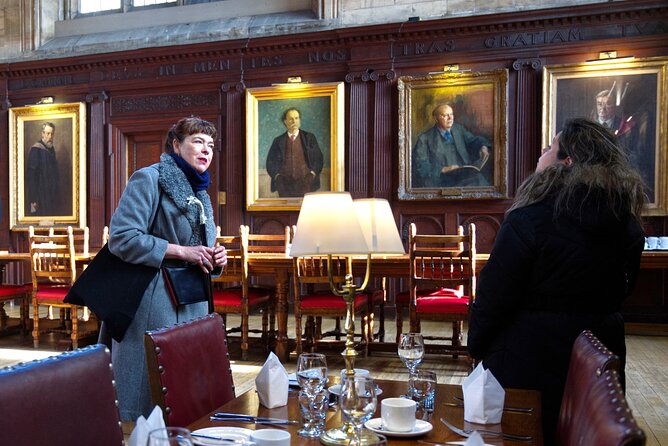
New College’s gatehouse tells the story of its foundation after the 14th-century plagues. Its setting has also appeared in film productions, so it may look familiar even if you have never visited Oxford before.
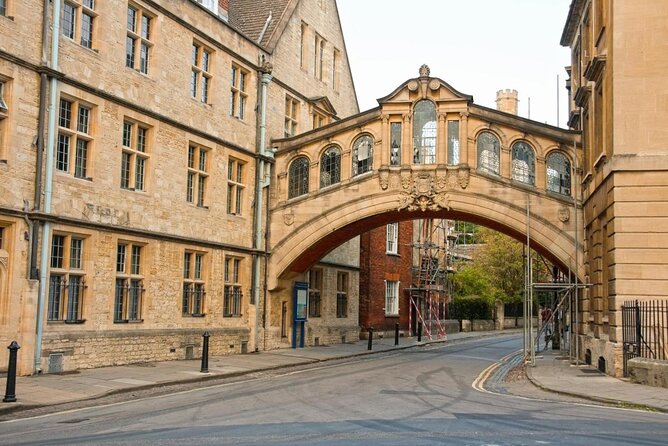
The Bridge of Sighs is one of the city’s most photographed sights. It belongs to Hertford College and resembles a Venetian bridge, but it was built in the 20th century. Nearby is the house associated with Edmund Halley, the astronomer whose name was given to the comet.
This is a classic Oxford moment: an apparently ancient view turns out to be relatively modern, while a less showy neighboring building has a connection to a major scientific figure. Sophie’s quick stories help keep the tour from becoming a simple procession of pretty façades.
At the Sheldonian Theatre, you see the 17th-century building used for Oxford University ceremonies. It is generally credited as the first building by Christopher Wren, who also designed St. Paul’s Cathedral in London. The tour also notes his work as Oxford’s Astronomer of Photography, as described in the supplied tour information.
The Sheldonian is a good reminder to look up. Oxford’s ceremonial buildings were designed to impress, and their purpose is tied to the university’s rituals as much as to their appearance.
The Divinity School, Bodleian Library, and Harry Potter locations
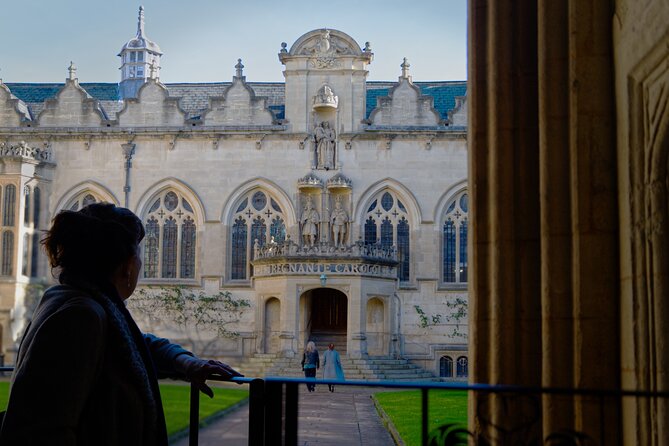
The Oxford Central Library area introduces two important rooms. The medieval perpendicular Divinity School sits beneath the later Duke Humphrey’s Library, built in the 15th century to house a gift of more than 200 books from the king’s brother.
Both rooms were chosen by J. K. Rowling for Harry Potter scenes. The film connection is likely to interest younger visitors, but the real value is older: these spaces show how books, teaching, and ceremony were organized in medieval Oxford.
The Bodleian Library follows naturally. Today it holds more than 13 million books, while its 17th-century buildings reveal the long development of the university library. The tour explains how the library began and how it still operates.
Do not expect to browse the collection or spend a long time inside. The stop is mainly an exterior and historical introduction. Still, it helps you understand why the Bodleian is more than a famous photo backdrop. It is a working research library with centuries of institutional rules behind it.
Radcliffe Camera and the final stop at Balliol
The Radcliffe Camera was Oxford’s first science library. Its circular form is one of the city’s defining views, but the story behind it is just as useful. The building was funded by Sir John Radcliffe, a royal physician and one of Oxford’s more eccentric and generous benefactors.
The final stop is Balliol College. The supplied details connect it with the point when undergraduates began to gain access to the university and its colleges. Balliol is listed with admission not included, so treat this as an exterior stop unless your booking details specifically confirm entry.
There is an important detail to clarify before you book. The tour is advertised as including entry to a medieval college, yet Balliol’s admission is listed separately as not included. College access can depend on the day and current opening arrangements, so confirm which college interior is included and what admission, if any, you must pay yourself.
The tour ends at the Golden Cross on Cornmarket Street. That is a useful finish, since you are close to central Oxford and can continue with lunch, coffee, shopping, or another college visit.
How much value do you get for the price?
The displayed price is $0 per person, which makes the experience an exceptional value if that price applies to your booking. You receive a 90-minute guided introduction, a map and guidebook, local suggestions for food and drink, and entry to a medieval college as advertised.
Because the price is shown as zero, check the final booking page carefully for current availability and any conditions. I would also confirm the college-entry detail because the itinerary separately marks Balliol admission as not included.
Even at a paid rate, the value would depend on what you want. A short guided walk can save you time and give you context that is hard to gather from plaques and maps. It will not replace a full college visit, a library tour, or a climb up St. Mary’s spire.
Timing, group size, and the feel of the walk
The group is limited to 15 people. That is small enough for Sophie to respond to questions and adjust her explanation, though the experience is still a walking tour rather than a private tour.
The route covers many stops in 90 minutes. Individual visits range from three to seven minutes, with Balliol receiving the longest listed stop at 15 minutes. This tells you to wear comfortable shoes and expect frequent pauses rather than long stretches inside one building.
The tour is offered in English. Sophie has also guided families in English and French, and her ability to keep different ages involved is a particular advantage for family groups.
The experience needs good weather. If poor weather forces cancellation, you are offered another date or a full refund. The cancellation policy otherwise says the booking is non-refundable and cannot be changed, so choose your date with care.
Who should book this Oxford introduction?
I would choose this walk if you are visiting Oxford for the first time, making a day trip from London, or trying to get your bearings before choosing which buildings to visit in greater detail.
It suits you especially well if you enjoy:
- History tied to real buildings and streets
- Architecture explained in plain language
- Literary and film connections
- A small group rather than a large guided crowd
- Practical advice about eating and drinking afterward
- A guide who can make the past accessible to children and adults
It may not suit you if your priority is a slow, detailed interior tour. The pace is brisk, and many colleges are seen from the outside. You should also be ready to walk in open-air conditions and confirm the exact college-entry arrangement before paying or finalizing your plans.
Should you book the 90-minute Oxford tour?
Book it if you want a lively first look at Oxford’s colleges, libraries, churches, and famous streets, especially with a guide who combines clear explanations, humor, and personal attention. Sophie’s English and French make the tour useful for mixed-language groups, and the small size should help you stay connected to the story.
Skip it if you already know central Oxford well or want extensive time inside each college. For most first-time visitors, though, this is a smart starting point. Take the map and guidebook, note the buildings you want to revisit, and use Sophie’s food and drink advice to continue exploring after the walk.
FAQ
Where does the Oxford tour start?
The tour starts at the Weston Library on Broad Street, Oxford OX1 3BG, UK.
Where does the tour finish?
The tour finishes at the Golden Cross, Oxford OX1 3EU, UK.
How long does the tour last?
The tour lasts approximately 90 minutes.
What language is the tour offered in?
The tour is offered in English. Sophie has also guided some groups in French, but English is the stated tour language.
Is college entry included?
The tour information says entry to a medieval college is included. Balliol College is also listed as a stop with admission not included, so confirm which college interior is covered before booking.
Is the tour suitable for children?
Most people can participate, and Sophie has guided groups containing children, parents, and grandparents. The available information does not give a minimum age.
How many people can join the tour?
The maximum group size is 15 people.
Is pickup available?
Pickup is listed as offered. The stated meeting point, however, is the Weston Library on Broad Street, so confirm the pickup arrangement when booking.
What happens if bad weather cancels the tour?
If poor weather causes cancellation, you are offered a different date or a full refund. If you cancel for another reason or request an amendment, the experience is non-refundable and cannot be changed.
Recently added around Oxford
- CS Lewis & Tolkien Tour with Magdalen Entry Public tour 13.45★ 5.0 · 8 reviews
- Oxford: to Cotswolds (Half Day)★ 5.0 · 8 reviews
- Oxford Private Guided Walking Tour★ 4.5 · 8 reviews
- Oxford Scenic Cycle Tour- 2 persons minimum summer season★ 5.0 · 8 reviews
- Ashmolean Museum Tour – by Uncomfortable Oxford™★ 5.0 · 9 reviews
- Oxford Walking Tour – Discover its University and Traditions★ 4.0 · 9 reviews
- Oxford PRIVATE Pub and City Evening Walking Tour★ 5.0 · 10 reviews
- Harry Potter in Oxford Tour Divinity School entry Private Tour★ 5.0 · 10 reviews
Oxford Tours, compared.
Oxford University Walking Tour With University Alumni Guide
Read our review →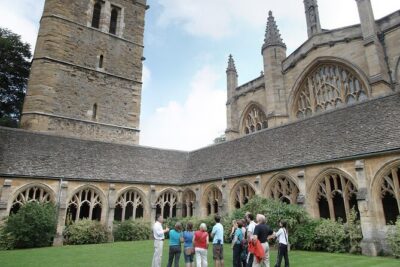
1.5-hour Oxford City and University Walking Tour
Read our review →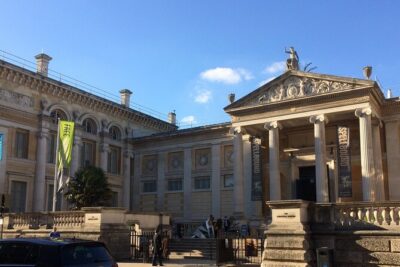

City Sightseeing Oxford Hop-On Hop-Off Bus Tour
Read our review →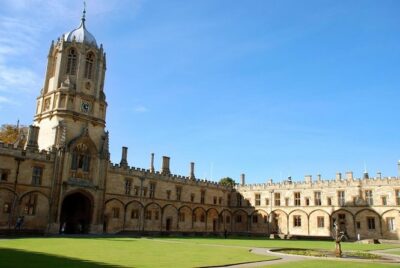
Harry Potter Walking Tour of Oxford Including New College
Read our review →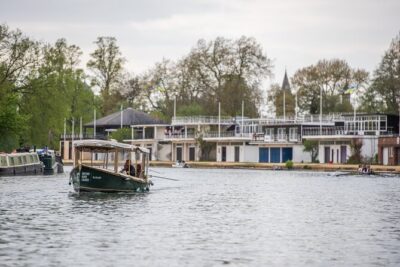
Oxford Sightseeing River Cruise Along The University Regatta Course
Read our review →
Afternoon Tea Sightseeing River Cruise in Oxford
Read our review →
Inspector Morse, Lewis and Endeavour Oxford Walking Tour
Read our review →Browse the lists this tour appears in