
Reviewed · MANCHESTER TOURS
Private Manchester Self-Guided Tour
Manchester’s story comes into focus as you walk from the Vimto monument to Roman Castlefield. Along the way, you get cotton-industry tales, Alan Turing, the Gay Village, the IRA bombing, old pubs, grand Victorian buildings, and a few darker chapters. The route packs a lot of Manchester into roughly two to three hours.
I like the freedom to set your own pace and the fact that Jake’s recorded narration is a human voice rather than computer-generated audio. I also like the practical GPS route, photos, videos, and restaurant suggestions. The main catch is clear: this is an app-based self-guided walk, not a live tour, and getting the activation code and GPS permissions working may take patience.
Key points to know before you book
- Start at the Vimto monument: The route begins near Manchester M1 and ends at Castlefield Bowl by the Roman fort.
- Jake provides the narration: Audio commentary, images, videos, directions, and recommendations are delivered through an app.
- Eighteen points are included: The route covers famous sights along with several smaller details, including the Guardian Telephone Exchange and old market buildings.
- Plan for paid entry at two major sights: Manchester Cathedral and the John Rylands Library are listed with admission not included.
- You control the timing: The advertised walk lasts about two to three hours, but you receive three weeks of unlimited access.
- Bring a charged phone: One user had trouble with the activation code and drained a phone battery after a little over an hour.
A self-guided route through Manchester’s big stories
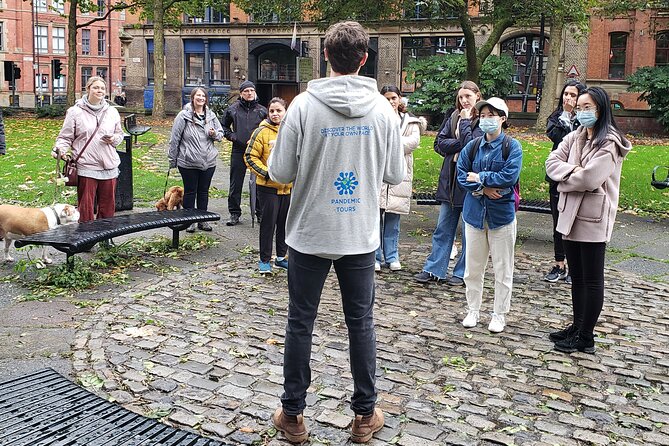
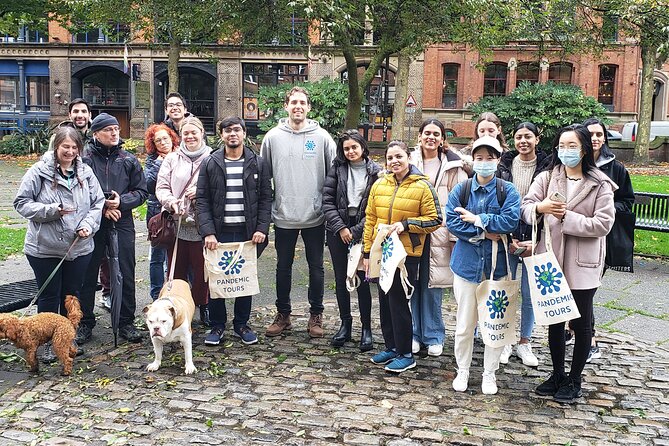
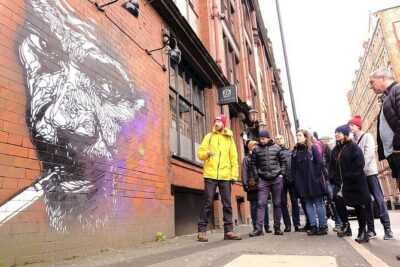
This walk is best understood as a narrated city orientation rather than a standard walking tour. You do not meet a guide at a set time, join a group, or follow a flag through the streets. Instead, you use your phone to move between GPS-marked stops while Jake explains what you are seeing.
That format works well in Manchester. The city centre is compact enough to cross on foot, yet its story jumps from Roman Britain to cotton mills, Victorian civic pride, the fight for LGBTQ+ rights, music, transport, and modern urban renewal. A good route helps you connect those pieces instead of seeing each building as an isolated photo stop.
The tour is priced at $12.35 per person. That is a reasonable fee if you want spoken explanations and directions without paying for a private guide, especially since access lasts three weeks. It is less attractive if you only want a map or basic facts, since Manchester’s city centre can be explored independently at no charge.
More self guided walks in Manchester:
- Murder Detective Self-Guided Tour in Manchester
★ 3.5 · 16 reviews - Westminster Abbey Entrance Ticket Including Audio Guide
★ 4.0 · 661 reviews - Western Approaches Self Guided Tour
★ 5.0 · 505 reviews
Starting with Vimto and Manchester’s modern identity
The first stop is the Monument to Vimto, where the tour introduces the drink that began in Manchester and became one of the North’s best-known soft drinks. You get about five minutes here, enough for the origin story and a clear explanation of how the route works.
It is a clever starting point because it is local, unusual, and easy to overlook. A tour that begins with a soft drink feels less stiff than one that opens with a grand civic building. You start with a bit of northern character before moving into more serious subjects.
The next stop is the Alan Turing Memorial in Sackville Gardens. The commentary explains who Turing was, why he matters to Manchester, and how the gardens’ monuments connect with the city’s LGBTQ+ story. This is a short stop, around ten minutes, but it gives the walk an important human focus.
From there, the route enters the Gay Village and follows Canal Street. You hear about the street’s difficult past and the local effort that helped make it the welcoming public space it is today. Allow around 15 minutes for this section.
I like the change in tone here. The tour does not treat Manchester only as an industrial museum. It also shows how parts of the city have changed through community action. Canal Street is more meaningful when you know something about that past.
Chinatown and the grand civic centre
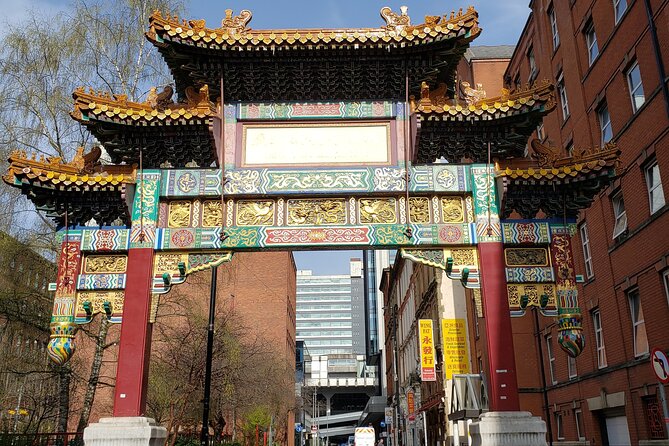
Chinatown is a quick ten-minute stop around the distinctive archway, shops, and restaurants. The tour explains Manchester’s connection with its twin city in China and why the archway was built.
This is primarily an orientation stop. You will not spend long exploring the restaurants or shops during the narrated route, so consider returning later if you want a meal. The value here is context, especially if you are curious about how Chinatown fits into the city centre.
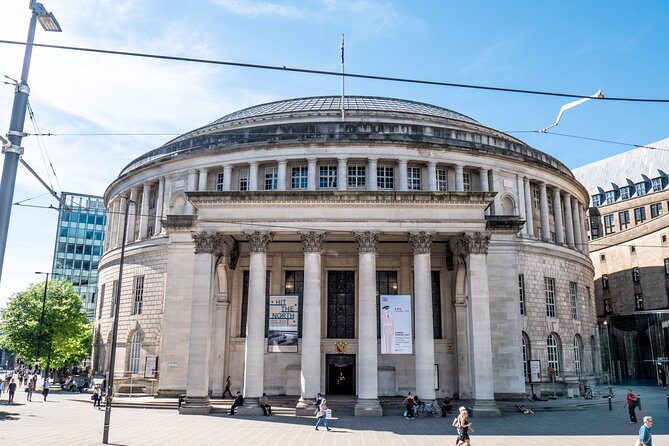
St Peter’s Square receives more attention, with about 15 minutes devoted to its buildings and public events. The route points out Manchester Central Library, the Midland Hotel, Manchester Town Hall, and other landmarks.
The square gives you a useful lesson in civic Manchester. The library represents public education and access to books. The Midland Hotel reflects the confidence and wealth created by northern industry. The town hall supplies the grand Gothic setting. The narration also explains why the square is called St Peter’s Square and recounts events connected with the space.
Several nearby points are treated as separate pieces of the commentary. You learn about the former public lending and reference library, including how Manchester responded to the Public Libraries Act of 1850. You also get background on the Midland Hotel, which has been part of city life for more than 118 years.
This part of the walk may feel information-heavy, but it is useful if Manchester is your first stop in the city. You can quickly identify the buildings you are likely to revisit later.
Bridgewater Hall and the darker side of Manchester
The Bridgewater Hall section takes around 15 minutes and broadens the story beyond music and architecture. The tour describes the surrounding area and two grim events connected with Manchester Central Station, one in 1819 and another in 1963.
The approach is not simply a parade of attractive buildings. Manchester’s past includes violence, political unrest, tragedy, and social change. Hearing about those events while standing in the actual area gives the city more weight, though you should expect some of the material to be somber.
The route then continues to the Royal Exchange Theatre. Here, the cotton industry takes centre stage. You learn how cotton helped Manchester grow, what the trade brought to the city, and what consequences followed from that growth.
This is one of the most useful history stops because cotton is the key to understanding Manchester’s rise. The Royal Exchange was tied to the business world that made the city powerful. The tour also explains the IRA bombing and its effect on Manchester, adding a modern chapter to the building’s story.
You spend about 15 minutes here. If you want a detailed industrial-history lesson, this section will feel brief. If you want a readable introduction while walking, the timing keeps the route moving.
A few more Manchester half days worth a look
- The Manchester City Stadium Tour
★ 5.0 · 4,176 reviews - Alcotraz Prison Cocktail Experience in Manchester
★ 5.0 · 1,216 reviews - LEGOLAND Discovery Centre Manchester
★ 4.0 · 1,049 reviews - Manchester Afternoon Walking Tour
★ 5.0 · 1,033 reviews
The Shambles, old pubs, and the Corn Exchange
The Shambles is presented as one of the most attractive squares in the city centre. It is home to the Old Wellington and Sinclair’s Oyster Bar, two of Manchester’s best-known historic pubs.
The Old Wellington is described as the oldest pub in the city centre, and the narration explains its connection with John Shaw’s Punch House. You also hear why it remains popular and relatively inexpensive. This is practical information, not just architectural trivia. If you want a traditional stop for a drink or simple food, you will know why the pub attracts attention.
The square also links back to the cotton trade through the Royal Corn Exchange. The tour explains how the success of cotton helped other markets grow and how the Corn Exchange became a place for trading goods.
Another narrated point covers the former Corn Exchange itself. The building began in 1837 and is now a listed structure containing a food court, hotel, and other uses. This is a good example of Manchester’s habit of giving old commercial buildings a second life.
You can cover the area in about ten minutes, though I would allow extra time if you want to look inside the pubs or stop for food. The route provides recommendations, but it does not include meals.
Manchester Cathedral and the John Rylands Library
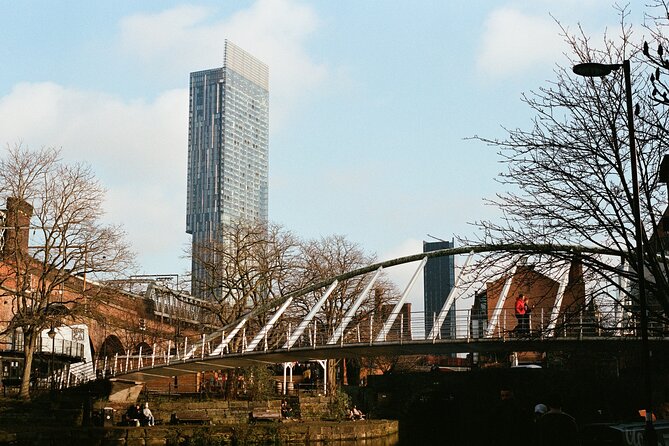
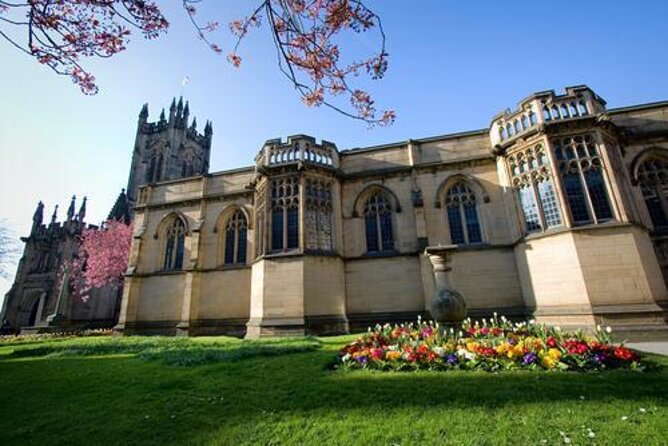
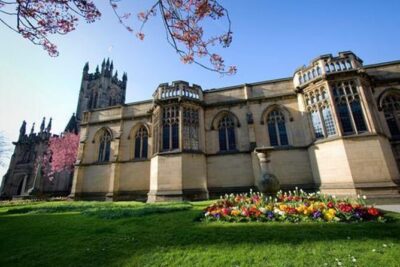
Manchester Cathedral is a brief five-minute stop. It is the seat of the Bishop of Manchester and the city’s parish church, so it is one of the city centre’s essential landmarks.
The short timing suggests that the tour is mainly giving you an introduction from outside or a quick look around. Admission is not included. If you want to enter, check the opening arrangements yourself before relying on the walk’s schedule, since the tour is available at any time but an attraction may not be.
The John Rylands Library gets a much longer 30-minute section. This is likely to be one of the route’s architectural highlights. The interior has a dramatic, old-world appearance, and the audio describes it as one of Manchester’s best-kept secrets and one of the country’s most striking libraries.
The tour encourages you to go inside if you have time, but admission is not included. This is an important cost and timing point. The route can introduce the building in a few minutes, while a proper visit will take longer and may change your finishing time.
I especially like the way this stop breaks up the industrial and political material. The library brings you back to books, scholarship, architecture, and public learning. It also gives you a reason to pause rather than simply photograph another façade.
Manchester Central and the city’s railway past
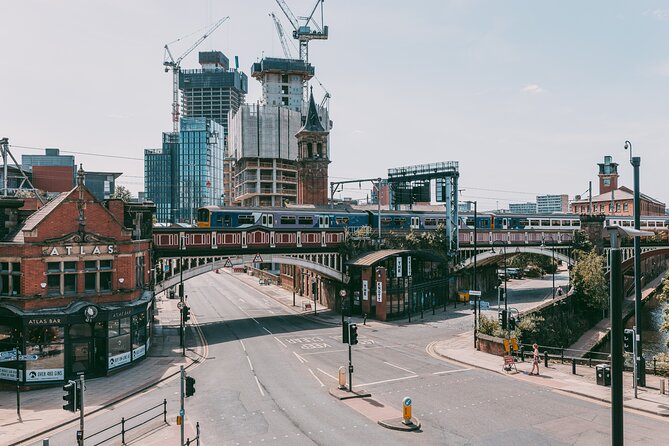
Manchester Central is now a convention centre, but it was once Manchester Central Train Station, operated by the Midland Railway. The tour spends about ten minutes explaining that transformation.
The stop also includes stories connected with the site, from a massacre before the railway existed to the mysterious suitcase left at the station in 1965. These details give the building a sense of drama without requiring a long visit.
This section works best if you look at the structure as a piece of transport history rather than only as a modern event venue. The route shows how Manchester repeatedly adapts old buildings for new purposes.
Nearby, the commentary returns to the Midland Hotel and the old library. These extra audio points make the central section feel fuller than a simple list of headline attractions. They also help you notice details that you might otherwise walk past.
Castlefield and the Roman beginning
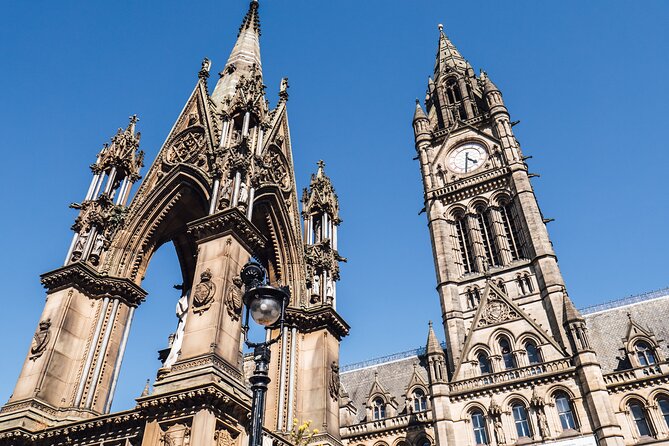
The final main stop is Castlefield Urban Heritage Park. The tour ends near Castlefield Bowl and Deansgate, close to the reconstructed Roman fort.
Here, the focus shifts back to the city’s earliest beginnings. You learn about Manchester’s Roman heritage, why the city is called Manchester, and how the reconstructed remains fit into the area. The route then gives you time to walk around the canals and supplies suggestions for eating and further sightseeing.
Castlefield is a fitting finish because it joins several layers of Manchester in one place: Roman foundations, canals, railway development, old warehouses, and modern public spaces. After the crowded civic centre, the canals also offer a calmer place to continue your afternoon.
The Guardian Telephone Exchange is another point in this area. The tour calls it a best-kept secret of Manchester and helps you spot the landmark, which is exactly the sort of small detail that can make a self-guided walk feel more personal.
The route officially finishes at Castlefield Bowl, Rice Street, Manchester M3 4JR. From there, you are near Deansgate and the Roman fort, with recommendations for more places to eat and visit.
What the app does well, and where it can trip you up
The package includes three weeks of unlimited access, a map, directions, a GPS route, stop-by-stop information, audio, pictures, videos, and recommendations. That extra access matters if you prefer to split the walk over two days or repeat a section after visiting a museum.
Jake’s narration is a strong feature. The voice is presented as a real human guide rather than a computer-generated reading, which makes a difference during a long walk. Clear stories are easier to follow when you are watching traffic, checking a building, or deciding where to stop.
The main technical risk is activation. After booking, you receive an email with instructions, but the booking reference is not the activation code. Read the Before You Go section carefully, download the Pandemic Tours app, and allow location access when requested.
GPS guidance is available, but it depends on your phone’s location permission. If you deny that permission, the route may not guide you as expected. One user needed more than 30 minutes and help from support to get the code working. Another reported that the phone battery ran out after a little more than an hour.
I would start with a fully charged phone and, if possible, carry a power bank. Downloading the app before you reach the starting point is also sensible. These are small preparations, but they can prevent the first stop from becoming a technical workshop.
Who will get the best value from this walk?
This experience suits independent-minded visitors who want structure without a person setting the pace. You can pause for lunch, enter the library, take photos, or stop the audio whenever you like.
It also suits first-time visitors who want a broad introduction to Manchester. The route covers major landmarks, social history, industrial development, architecture, pubs, and Roman remains in one compact circuit.
You may want something else if you prefer lively conversation, spontaneous questions, or detailed answers from a local guide. There is no in-person guide, no group atmosphere, and no live schedule. The route is also focused on central tourist sights, so it is not designed as an offbeat neighborhood walk.
The advertised rating is 4.1 from 37 reviews, which suggests a generally positive but uneven experience. The praise centres on easy navigation, useful local recommendations, human narration, and stories that make the city easier to understand. The negative experiences focus almost entirely on confusing setup, GPS permissions, and battery use.
At $12.35, I see the tour as good value for the content and three-week access, provided you understand what you are buying. You are paying for a guided audio route, not an escorted walk.
Should you book the Private Manchester Self-Guided Tour?
Book it if you want a low-cost introduction to central Manchester and like exploring at your own speed. The route links Vimto, Turing, Canal Street, Chinatown, St Peter’s Square, the cotton trade, old pubs, the library, railway history, and Roman Castlefield in a sensible two to three hour plan.
Skip it if you expect a live guide or want an effortless experience with no phone setup. Before paying, make sure you are comfortable downloading an app, using GPS, granting location access, and keeping your phone charged. With those conditions understood, this is a practical way to get your bearings and decide which parts of Manchester deserve a closer look.
FAQ
Is this a guided walking tour with a person?
No. It is a private self-guided activity for your group, delivered through an app with audio narration by Jake. There is no in-person guide.
How long does the Manchester tour take?
The tour takes approximately two to three hours. You receive three weeks of unlimited access, so you can use the route more flexibly than the advertised walking time suggests.
Where does the tour start?
The starting point is the Monument to Vimto at Vimto Park, Manchester M1, UK.
Where does the tour finish?
The route finishes at Castlefield Bowl on Rice Street, near Deansgate and the Roman fort.
What is included in the price?
The price includes three weeks of app access, maps, directions, GPS routing, stop information, audio narration, videos, pictures, recommendations, and activation instructions.
Are entrance fees included?
No. Admission to Manchester Cathedral and the John Rylands Library is not included. The other listed stops are marked as free admission.
What language is offered?
The tour is offered in English.
Recently added around Manchester
- Private Cocktail Making Class in Manchester★ 5.0 · 8 reviews
- MANCHESTER: Yorkshire Adventure – Sightseeing Day Trip Tour★ 5.0 · 9 reviews
- Manchester: Luggage Storage Central★ 5.0 · 10 reviews
- Musical MADchester Quest Experience in Manchester★ 4.0 · 14 reviews
- Murder Detective Self-Guided Tour in Manchester★ 3.5 · 16 reviews
- Manchester’s Music Scene with a Local Host, Private + Custom★ 4.0 · 17 reviews
- Inspirational guided walking tour of Media City & The Quays★ 5.0 · 23 reviews
- Italian Afternoon Tea Experience in Manchester★ 4.0 · 25 reviews
Manchester Tours, compared.


Alcotraz Prison Cocktail Experience in Manchester
Read our review →



Manchester iFLY Indoor Skydiving Experience – 2 Flights & Certificate
Read our review →Browse the lists this tour appears in