
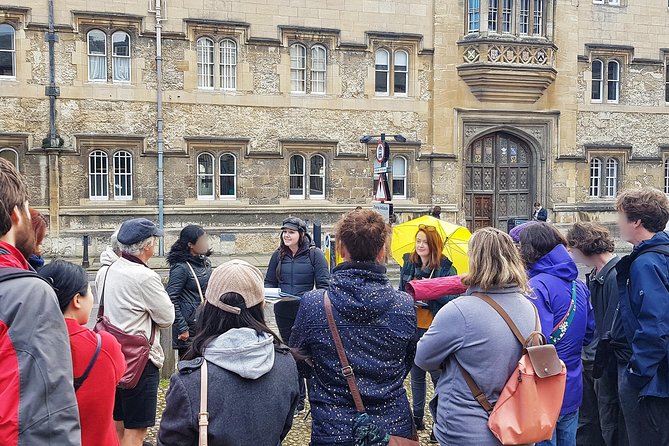
Reviewed · OXFORD TOURS
Women and Queer Histories Tour – by Uncomfortable Oxford™
Oxford can look like a storybook of stone colleges and famous scholars. This 90-minute walk asks you to read the city differently, focusing on the women and queer people whose lives were shaped by its institutions, streets, rules, and silences. The route links women’s education and childcare with trans history, masculinity, and public control.
I like two things here. First, the stops are tied to real places, from the former hospital site at the Radcliffe Observatory Quarter to Somerville College and the War Memorial Garden. Second, the guides invite discussion rather than simply reciting dates. That makes the tour feel more like a shared examination of Oxford than a standard procession past college gates.
The main consideration is the subject matter. This is not a light introduction to Oxford, and some topics are difficult. The discussion format also means the experience can depend on the group and guide, so book it if you want to think and talk, not just take photographs.
Key points to know before you book
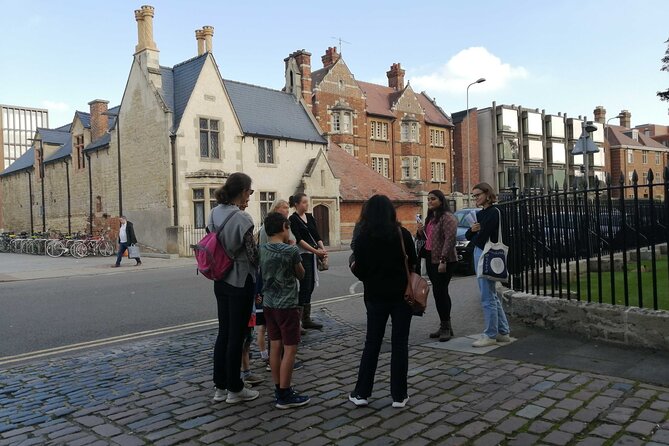
- The route crosses seven sites: You walk from the Radcliffe Observatory Quarter to the Clarendon Building in central Oxford.
- The focus is specific: Women’s rights, access to education and childcare, queer lives, trans history, masculinity, and the policing of women all shape the tour.
- Student guides lead the walk: Your guide is a University of Oxford student, bringing the subject close to the university’s present-day life.
- Small groups help discussion: The maximum is 15 people, giving you a better chance to ask questions.
- The tour takes about 90 minutes: It is compact enough to fit around other Oxford plans, but still covers seven stops.
- The price is $27.54 per person: With no attraction admission included, you are paying for the guide’s research, interpretation, and conversation rather than entry tickets.
Why this Oxford walk feels different
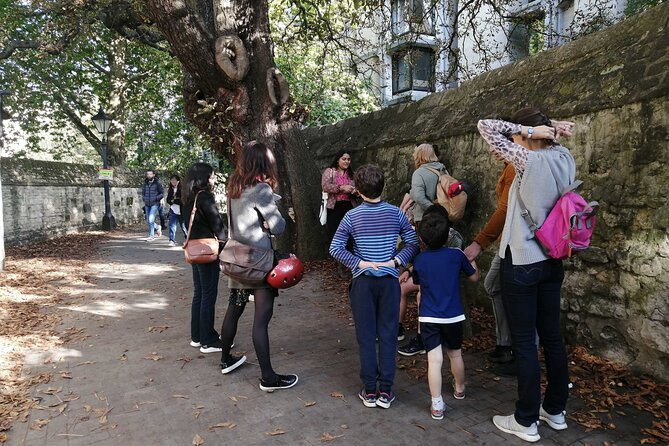
The best reason to choose this tour is its point of view. A classic Oxford walk tends to celebrate buildings, famous alumni, academic traditions, and picturesque courtyards. This one looks at how those places affected people who did not always fit the university’s old ideals.
That change in focus matters. Architecture can hide as much as it reveals. A grand college may tell you who had power, but not who was excluded from it. A city street may look ordinary until you learn how gender, class, sexuality, or university status shaped the people allowed to use it freely.
The tour begins by asking how difficult histories survive, or fail to survive, in the built environment. From there, the route moves through women’s education, childcare, trans lives, masculinity, early modern representations of women, and official control of women in the city.
You should expect questions and conversation along the way. The guide may ask you to consider how Oxford should deal with uncomfortable parts of its past and present. If you prefer a fixed script with a clear list of dates, this may feel less predictable. If you like an open exchange, that format is one of the tour’s strongest features.
A few more Oxford half days worth a look
- Oxford University Walking Tour With University Alumni Guide
★ 5.0 · 6,905 reviews - 1.5-hour Oxford City and University Walking Tour
★ 4.5 · 1,383 reviews - Oxford Official University & City Tour
★ 5.0 · 1,134 reviews
Starting at the Radcliffe Observatory Quarter
The meeting point is at the Radcliffe Observatory Quarter on Woodstock Road, Oxford OX2 6GG. The walk begins at the old hospital site, where the guide introduces a key idea: some communities are hard to find in the physical city because their stories were not given monuments, plaques, or prominent buildings.
This is a useful opening because it sets up the whole route. You are not simply looking for famous names carved into stone. You are learning to notice absence, access, and the way institutions shape whose lives are remembered.
The first stop lasts about 15 minutes and has no admission charge. You will be standing outdoors, so sensible shoes and weather-ready clothing make the experience easier. The meeting point is near public transportation, but you should allow time to find the correct spot before the start.
Somerville College and the fight for women’s education

Outside Somerville College, the guide turns to the women who first attended Oxford and the barriers they faced. The stop lasts around 10 minutes and takes place outside one of the university’s best-known women’s colleges.
This is more than a college-history stop. It asks what it meant for women to enter an institution built around male authority and long-standing academic customs. The discussion can help you see education not as an automatic right, but as something that had to be argued for, organized, and defended.
Because you remain outside, you should not book this tour expecting extensive interior access to college buildings. The value is in the interpretation of the site and the social questions it raises. You get a sharper sense of how architecture and academic tradition can reflect older ideas about who belongs.
St Paul’s Nursery and the problem of childcare
At St Paul’s Nursery, the group spends about 10 minutes discussing access to childcare and the barriers faced by academics. The site is described as the first nursery for academics, making it a particularly practical stop on a tour that could otherwise remain focused on symbols and famous individuals.
Childcare changes the question of access. It is not enough to ask if women are legally or formally allowed into education. You also need to ask whether the institution is organized around the realities of family life, paid work, and care.
I find this one of the most useful subjects on the route because it connects history to a problem you can understand without specialist knowledge. The stop shows how an academic career depends on support systems that are often treated as private concerns.
The stop is short, so do not expect a full institutional history of the nursery. Instead, use it as a prompt to think about the practical barriers that can keep talented people out of universities or make academic work harder to sustain.
A completely different sort of day out in Oxford:
- City Sightseeing Oxford Hop-On Hop-Off Bus Tour
★ 4.5 · 1,042 reviews - Harry Potter Walking Tour of Oxford Including New College
★ 4.5 · 930 reviews - Oxford Sightseeing River Cruise Along The University Regatta Course
★ 4.5 · 652 reviews - Afternoon Tea Sightseeing River Cruise in Oxford
★ 5.0 · 583 reviews
The War Memorial Garden and Laurence Michael Dillon
The War Memorial Garden provides the setting for a discussion of Laurence Michael Dillon and the history of trans people. This stop lasts about 10 minutes and adds a direct queer-history focus to a route otherwise anchored in women’s rights and university access.
Dillon’s story helps broaden the tour beyond a simple account of women entering Oxford. It points to the ways trans lives have existed within, and been affected by, institutions that often recorded people according to narrow categories.
The garden setting may feel quieter than the city streets that come later, but the subject is serious. The tour does not treat queer history as an optional side note. It places it within the wider story of Oxford, its people, and the rules used to define public and private life.
If you are looking for a tour devoted only to famous LGBTQ figures, this may not be the right choice. The focus here is wider, linking one person’s story to the question of how trans histories are remembered and understood.
Lamb and Flag Passage and Oxford masculinity
The walk then enters older parts of the city through Lamb and Flag Passage. This 15-minute stop examines masculinity in both the town and the university.
The location is well chosen for the theme. A passageway feels more intimate and less formal than a college frontage, allowing the discussion to move from institutional authority to everyday ideas about male identity, status, behavior, and belonging.
This part of the tour is important because a women’s and queer histories walk should not discuss gender only as a problem affecting women. Masculinity also has a history. It shapes who is expected to lead, who is allowed to speak, and how power operates in the relationship between the university and the city.
The town and university distinction adds another layer. Oxford has never been just a collection of colleges. It is also a working city, and the interests of university members and local residents have not always matched. The stop invites you to consider how gender works differently across those settings.
Wadham College and representations of women
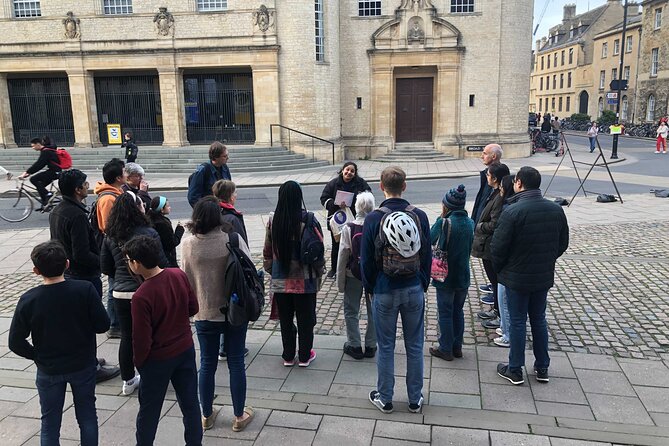
Outside Wadham College, the guide discusses representations of women from the early modern period. The 15-minute stop includes women from wealthy and humble backgrounds, which helps avoid a narrow focus on elite women alone.
That contrast matters. Historical records often favor people with money, education, property, or official connections. Including women from different social positions gives you a better sense of how class affects visibility and opportunity.
The college provides a strong visual setting for the discussion, but remember that the tour’s emphasis is on what the place represents rather than on touring its rooms. The subject is how women were depicted and understood, and how those depictions changed depending on social standing.
This is another place where the walk encourages you to question polished historical narratives. A beautiful college can preserve images of women while still telling you little about the actual choices available to them.
The Clarendon Building and policing women
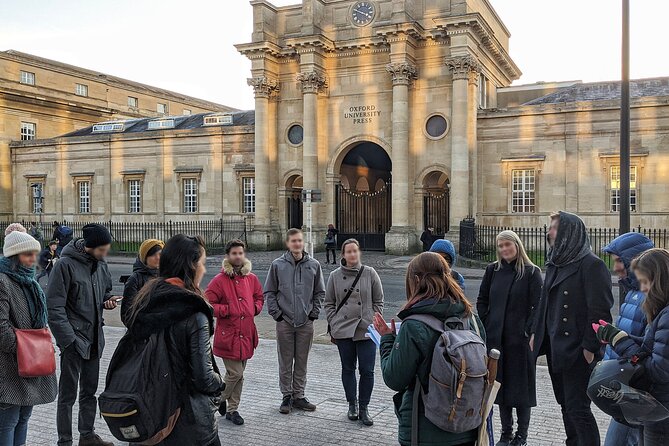
The final stop is the Clarendon Building on Broad Street, at the historic office of the vice-chancellor. Here, over about 15 minutes, the group looks at the policing of women in the city.
Ending at the center of university authority gives the route a clear shape. You begin by considering whose histories are missing from the built environment and finish by examining how official power has regulated women’s presence and behavior.
The Clarendon Building is also a practical endpoint. The tour finishes in central Oxford, outside 48 Broad Street, so you can continue to nearby sights, find food, or connect with other plans without making a long return journey.
The final subject can be uncomfortable, but that is part of the point. The tour asks you to see control and exclusion as part of Oxford’s story, not as problems that happened somewhere else.
How the discussion format works
The guides are University of Oxford students, and the experience is designed to be interactive. You are likely to be asked for your thoughts, invited to compare viewpoints, or encouraged to consider what should happen when historic institutions carry difficult legacies.
That approach has clear advantages. It keeps you involved, and it allows the guide to respond to the group rather than forcing every question into a rigid script. The small maximum of 15 people supports this style, since a discussion is much harder to manage with a large crowd.
The tradeoff is that you may not receive the same delivery every time. Student guides can bring energy, personal interest, and a close connection to university life, but the pace and emphasis may vary. The available feedback points to guides such as Devika, Julie, Cameron, Olivia, Waqar, Waqas, and Chase on different Uncomfortable Oxford experiences, with repeated praise for engaging presentation and thoughtful questions. Those names should not be taken as a promise that one of them will lead this particular departure.
One practical tip: come ready to listen as well as speak. You do not need to be an expert in feminism, queer history, or Oxford politics. The value comes from asking honest questions and allowing room for other views.
Price, pace, and practical value
At $27.54 per person, the tour is priced like a specialist walking experience rather than a basic orientation walk. There are no admission fees at the stops, so your payment covers the guide, the research behind the route, and the time spent making connections that are easy to miss on your own.
I think the price is fair if you want a focused subject and an active conversation. It is less compelling if you only want a quick introduction to Oxford’s headline sights, since the walk does not center on standard tourist attractions or interior visits.
The duration is about 90 minutes. That is long enough to cover seven stops without turning the outing into a half-day commitment. The individual stops last 10 or 15 minutes, so expect a steady walk with brief discussions rather than long lectures at one location.
The group limit of 15 is a real advantage. It should give you more room to hear the guide, ask questions, and take part without shouting over a crowd. Mobile tickets make arrival simple, and confirmation is provided when you book.
Service animals are allowed, and most people can take part. The tour is near public transportation. Since the route is outdoors and moves through city streets and passages, check the conditions on the day and wear comfortable footwear.
Free cancellation is available if you cancel at least 24 hours before the start time. Cancellations within 24 hours are not refunded, and changes inside that period are not accepted.
Who will get the most from this tour
I would choose this walk if you have already seen some of Oxford’s famous buildings and want a different set of questions. It suits visitors interested in feminism, women’s education, queer history, trans history, social class, and the relationship between universities and cities.
It also works well for people who enjoy discussion. The guide’s job is not only to deliver information, but to help the group consider what that information means. You may leave with questions that are not neatly resolved, which is a strength if you enjoy thoughtful travel.
The tour may be less suitable for young children who need constant movement or for anyone wanting a purely scenic walk. The themes include exclusion, control, and difficult social history. You should choose it because you want that frank approach.
Students, academics, educators, and visitors who have a personal connection to gender or queer history may find particular value here, but you do not need any such background. The route is built around places in Oxford, so general curiosity is enough.
Should you book the Women and Queer Histories Tour?
Book it if you want Oxford to become more than a beautiful backdrop. In 90 minutes, you will connect seven city sites with questions about access, identity, care, memory, and power. The small group and discussion-led format make the experience more personal than a standard walk.
Skip it if you want college interiors, famous literary anecdotes, or a gentle overview with no difficult subjects. For everyone else, especially visitors who have already seen the postcard Oxford, this is a worthwhile way to look again and notice who has been left out of the usual story.
FAQ
Where does the Women and Queer Histories Tour start?
It starts at the Radcliffe Observatory Quarter, Woodstock Road, Oxford OX2 6GG, at the old hospital site.
Where does the tour end?
The walk ends in central Oxford outside the Clarendon Building at 48 Broad Street, Oxford OX1 3AZ.
How long does the tour last?
The tour lasts approximately 1 hour and 30 minutes.
How much does the tour cost?
The listed price is $27.54 per person.
How many people can join the tour?
The maximum group size is 15 people.
Who leads the tour?
The walk is led by University of Oxford students.
What subjects does the tour cover?
It covers women’s rights, women’s access to Oxford, childcare and academic barriers, trans history, masculinity, representations of women, and the policing of women in the city.
Are admission tickets included at the stops?
There is no admission charge listed for the stops. The experience is an outdoor walking tour.
Are service animals allowed?
Yes. Service animals are allowed.
Can I cancel for a full refund?
Yes, if you cancel at least 24 hours before the experience starts. Cancellations made less than 24 hours before the start time are not refunded.
Recently added around Oxford
- CS Lewis & Tolkien Tour with Magdalen Entry Public tour 13.45★ 5.0 · 8 reviews
- Oxford: to Cotswolds (Half Day)★ 5.0 · 8 reviews
- Oxford Private Guided Walking Tour★ 4.5 · 8 reviews
- Oxford Scenic Cycle Tour- 2 persons minimum summer season★ 5.0 · 8 reviews
- Ashmolean Museum Tour – by Uncomfortable Oxford™★ 5.0 · 9 reviews
- Oxford Walking Tour – Discover its University and Traditions★ 4.0 · 9 reviews
- Oxford PRIVATE Pub and City Evening Walking Tour★ 5.0 · 10 reviews
- Harry Potter in Oxford Tour Divinity School entry Private Tour★ 5.0 · 10 reviews
Oxford Tours, compared.

Oxford University Walking Tour With University Alumni Guide
Read our review →
1.5-hour Oxford City and University Walking Tour
Read our review →

City Sightseeing Oxford Hop-On Hop-Off Bus Tour
Read our review →
Harry Potter Walking Tour of Oxford Including New College
Read our review →
Oxford Sightseeing River Cruise Along The University Regatta Course
Read our review →
Afternoon Tea Sightseeing River Cruise in Oxford
Read our review →
Inspector Morse, Lewis and Endeavour Oxford Walking Tour
Read our review →Browse the lists this tour appears in