
Reviewed · BRITISH MUSEUM TOURS
Explore Biblical Artifacts at the British Museum
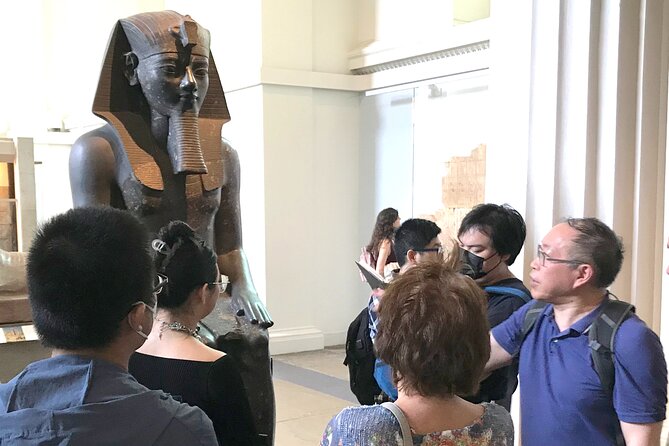
The most interesting part of this British Museum visit is the link between famous objects and familiar Bible passages. Guide David builds a timeline from Egypt and Assyria to Rome, helping you place Joseph, Moses, Jonah, Hezekiah, Jesus, and Paul in a real ancient setting.
I like the small maximum of 10 people, which gives the tour room for questions. I also like the practical study material: a Google Doc with notes and Bible verses, plus advice on using a Bible app offline. The main drawback is time. Three to four hours on museum floors can be tiring, and this tour is not a good match for someone fresh off a long-haul flight.
Key points to know
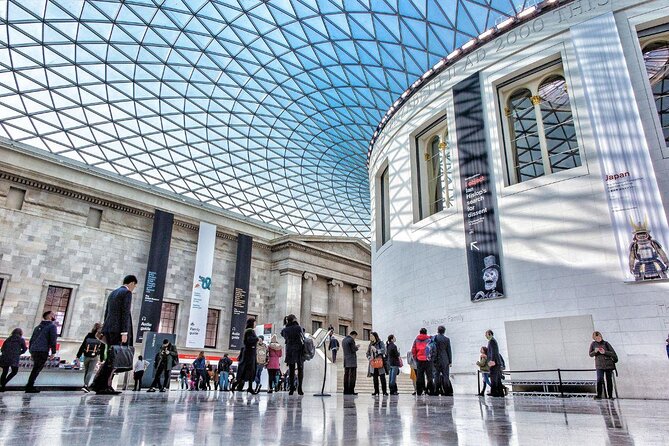
- A Bible-centered route through major galleries: See Assyrian lamassu, Egyptian pharaohs, Greek sculptures, Roman emperors, and objects tied to the world of Jesus and Paul.
- David provides the structure: His approach links artifacts, historical rulers, and specific Bible passages rather than treating each gallery as a separate stop.
- The group is capped at 10 people: That is a useful size for questions and a more focused museum visit.
- Plan on a half day: The usual experience lasts 3 to 4 hours, though an especially engaged group may stay longer.
- Study before and after: The Google Doc and Bible app make the tour more useful if you read the material before arriving.
- Comfort matters: Folding stools are available at the museum, but you need to locate and carry one if standing becomes difficult.
Why this tour changes the way you see the British Museum
The British Museum can feel like a giant catalogue of objects. You move from a statue to a relief, then to a coin, often with little sense of how the pieces fit together.
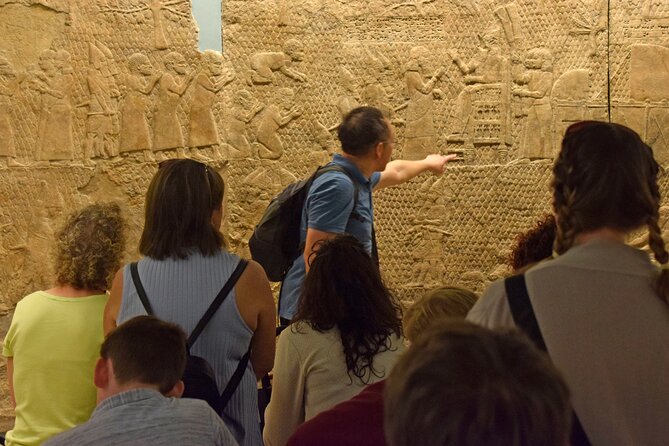
This tour gives you a thread to follow. David uses the Bible as the organizing line, then adds the political and cultural setting around it. An Assyrian ruler is no longer just a name on a wall. A Roman coin becomes part of the world surrounding Jesus. A Greek object can help explain the setting in which Paul worked.
That approach will suit you best if you already read the Bible or want to understand its ancient setting. The tour is faith-friendly, but it is not limited to people with a strong religious background. One useful feature is the way the guide builds a basic timeline at the start, giving you a framework before the objects begin to pile up.
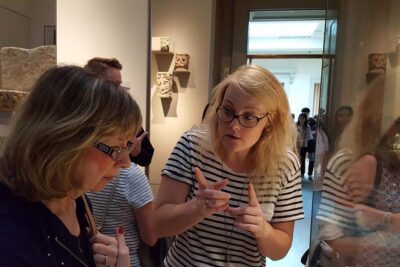
The tone is also more personal than a standard museum audio guide. David is described as funny, clear, energetic, and willing to handle side questions. He may point out small details you could easily miss, such as the reading direction of an Egyptian cartouche, details on bronze city gates, or the types of coins used during Jesus’ lifetime.
More British Museum visits:
- British Museum London Guided Tour Semi-Private 8ppl Max
★ 5.0 · 984 reviews - The British Museum London – Exclusive Guided Museum Tour
★ 5.0 · 555 reviews - British Museum Guided Tour
★ 4.0 · 470 reviews
Starting with Egypt, Assyria, and Greece
The first part takes place on the ground floor, beginning with the Egyptian, Assyrian, and Greek galleries. This is a strong opening because the objects are large, memorable, and tied to some of the major powers named in the Old Testament.
The 40-ton Assyrian lamassu beasts are among the tour’s most striking sights. These winged human-headed bulls guarded entrances and projected royal power. Here, the value of a guide is clear: instead of simply admiring the scale and carving, you consider Assyria’s role in the Bible and its dealings with Israel and Judah.
The discussion includes Jonah, Ahab, and Hezekiah in the Assyrian setting. You will not just hear names from a distant text. You will see the kind of royal art and imperial messaging produced by the powers that shaped those stories.
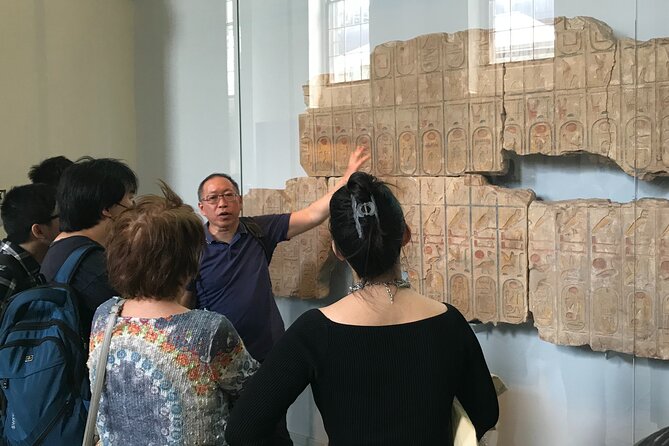
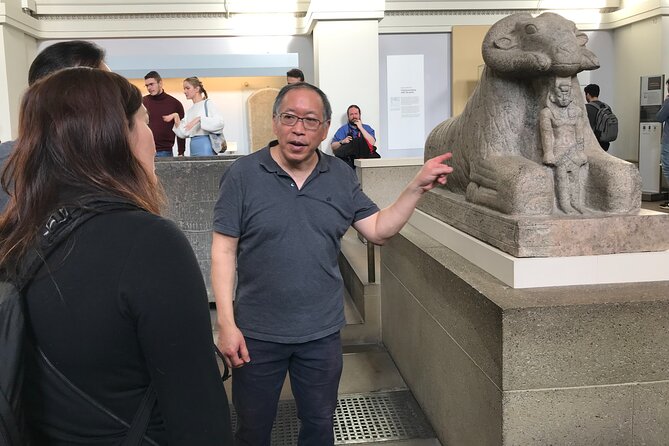
The Egyptian galleries bring in Joseph and Moses. The route includes statues of famous pharaohs, giving you a visual sense of the rulers and court culture connected with Egypt. The museum cannot recreate the biblical narrative, of course, but its objects provide a material setting for thinking about the people, rulers, and customs found in the text.
The Greek galleries add another layer. Paul’s work took place in a world shaped by Greek language and culture, so this portion helps connect the Old Testament story to the wider Mediterranean setting of the New Testament.
One caution: the route covers several civilizations in a short time. If you want a slow, object-by-object museum study, this may feel brisk. The tradeoff is that you leave with a clearer sequence of events and empires.
Roman galleries and the world of Jesus and Paul
After a break, the group goes upstairs to the Roman galleries. This shift brings the tour closer to the New Testament and to the political world that governed Judea and much of the Mediterranean.
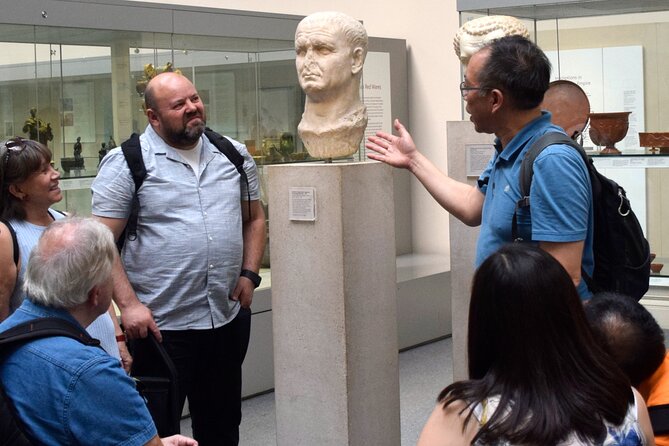
You will look at Roman emperors and objects connected directly with Jesus and Paul. Coins are especially helpful here. Seeing the faces of rulers from the period can make the political references in the Bible easier to picture. The tour also discusses the kinds of coins used during Jesus’ lifetime.
This part is likely to appeal even if you are less familiar with Old Testament kings. The names and dates can seem abstract on the page, but Roman portraits and coins give them a physical presence. Paul’s journeys also make more sense when you remember that he moved through Greek-speaking cities within the Roman system.
The Roman section is not only about confirming a verse or matching a name to an artifact. It helps you ask better questions about the text. Who held power? What did a ruler want people to see? Why did coins carry a particular face? What did imperial culture look like in daily life?
David’s method is to connect these questions to Scripture while keeping the objects in view. The tour is therefore part museum visit and part guided Bible study. If you want a purely secular art-history presentation, this focus may not be what you are after. If you want to examine the Bible through objects, it is the central reason to book.
Persian and Babylonian galleries, if time allows
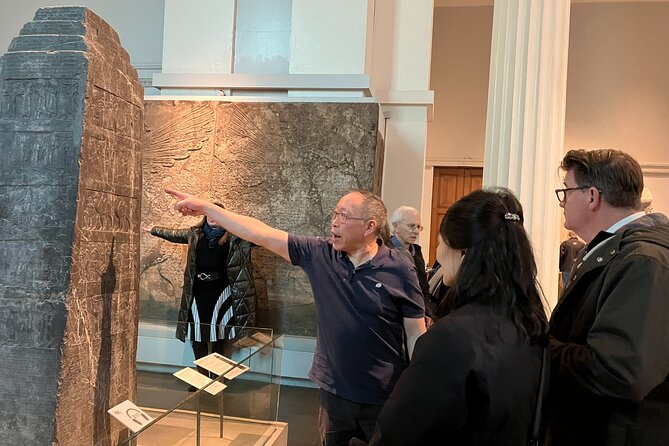
Persia and Babylon may be added depending on the schedule and the group’s interests. This flexible element is useful because it lets the guide respond to the people in front of him, but it also means you should not expect every possible gallery on every departure.
These areas matter for understanding the political powers that affected Israel and Judah. The ancient timeline becomes easier to follow when you can see the succession of empires rather than studying each one in isolation.
The flexible route also explains why the tour may run closer to four hours, and in some cases longer. A small group with many questions can spend more time at an object. Gallery closing times may require David to change the order, so the exact route is not fixed in stone.
That is a benefit for an engaged group, but it makes the experience less predictable than a tightly scripted walk. If a particular gallery matters most to you, raise it with the guide rather than assuming it will receive equal time.
More museums and galleries in London:
- Tower of London and Crown Jewels Exhibition Ticket
★ 4.5 · 6,677 reviews - Chelsea FC Stadium Tours and Museum
★ 5.0 · 1,908 reviews - Official tickets: Moco Modern & Contemporary Art Museum
★ 4.5 · 1,157 reviews - The Postal Museum Admission Ticket
★ 4.5 · 347 reviews
The study material makes a real difference
The Google Doc is more than a bonus if you use it properly. It contains study notes and related Bible verses, giving you a way to prepare before the visit and review afterward.
I would open the material before arriving, even if you only scan the main headings. A little preparation helps you recognize the names and periods David discusses. It also lets you spend more time looking at the objects instead of trying to remember every reference on the spot.
A Bible app that works in airplane mode is recommended, with YouVersion suggested as one option. This is practical advice because the tour may ask you to look up passages as you move through the galleries. Check that the app is ready before you arrive rather than waiting until the museum floor.
The material also gives the experience some life after the tour. Follow-up information may clarify subjects raised during the visit. One example included a video about how a Persian king’s rhyton was used to pour wine. That kind of extra reference can help you continue studying after your London sightseeing day is over.
Comfort, pace, and the museum setting
Three to four hours is a long time to spend on hard museum floors. Folding stools are available at the British Museum, and David can point you toward them. You can carry one along during the tour if you prefer to sit for some of the explanations.
This is a particularly useful detail for older adults or anyone who finds long periods of standing uncomfortable. It is also worth remembering that the group moves through several galleries, so a stool is one more thing to manage as you walk.
Some parts of the museum may feel warm. That caused discomfort for at least one younger participant, so families should consider the age and patience of every child before booking. Older children and teenagers can follow the material, especially if they enjoy history, Scripture, or asking questions, but the experience is still a sustained museum lesson.
The tour is not recommended for someone who has just arrived from a long-haul flight. That advice makes sense. You need enough energy to listen, walk, read passages, and absorb a steady stream of names and dates. Put this experience later in your London schedule rather than making it your first activity after landing.
Is $77.50 a fair price?
At $77.50 per person, this is not a casual stroll through a free museum. The British Museum itself has free admission, so the price mainly pays for David’s time, planning, specialist subject knowledge, route design, and study support.
The value depends on how you would use the museum without a guide. If you are comfortable creating your own Bible-focused route, reading labels, and tracing historical connections, you can visit the galleries without paying for a tour. But the museum is large, and making those links on your own takes preparation.
This experience earns its price when you want the museum organized around one clear theme. You are paying to have the Egyptian, Assyrian, Greek, Persian, Babylonian, and Roman material arranged into a story that connects with Scripture.
The small group limit helps. With no more than 10 people, the guide has a better chance to answer questions and adjust the pace than on a large coach tour. The study document and follow-up information add value as well, especially if you plan to keep studying after your London visit.
For a family, the cost can add up quickly. One parent specifically hesitated about paying for a child and later felt the time was worthwhile, while a younger teen found the warm galleries uncomfortable. I would book this for children who already show interest in the subject, not simply because the British Museum is on the family itinerary.
Who should book this experience?
I would recommend it most strongly to:
- Readers of the Bible who want physical context for its people and empires
- Students of ancient history who enjoy comparing texts with museum objects
- Church groups or families with older children and teenagers
- First-time British Museum visitors who want a clear route instead of wandering
- Anyone who values discussion, questions, and a guide-led study
You may want to skip it if you prefer to explore at your own speed, dislike religious interpretation, or have only a short time at the museum. It is also a poor fit if you are exhausted from a long flight or cannot comfortably spend several hours walking and standing.
The tour is offered in English. Most people can participate, service animals are allowed, and the meeting point is at the British Museum on Great Russell Street. Public transportation is nearby, but the supplied details do not specify a particular station or route, so check the museum location before setting out.
Planning the rest of your London day
Treat this as a half-day activity. The stated duration is about 3 to 4 hours, and the experience ends back at the museum meeting point.
That makes it easy to plan another London activity afterward. You can spend the morning at the museum and have the afternoon free, or schedule the tour first and continue sightseeing nearby once it ends. Leave some breathing room rather than booking another timed attraction immediately afterward, since questions and gallery changes can affect the finish.
The museum itself offers enough material for a full day, but this tour is designed to give you a focused portion of it. If you want to return later for other rooms, you will still have plenty left to see.
The experience is commonly booked about 23 days ahead. That is a useful planning guide, particularly if your London dates are fixed. Group discounts are available, and the ticket is mobile, so keep an eye on your email and booking apps for important messages before the tour.
A practical verdict
The published record is unusually strong, with a 5 rating from 120 reviews and recommendation from 100 percent of bookers. More important than the numbers is the consistent praise for David’s ability to explain a difficult timeline, connect verses with objects, and keep a long museum visit lively.
Book this tour if you want the British Museum to function as a visual aid for Bible study. You will get the most from it if you read the supplied notes first, prepare an offline Bible app, and arrive rested.
Skip it if you want a general survey of the museum, a short highlights walk, or complete freedom to linger. For the right audience, though, this is a focused and unusually personal way to connect ancient artifacts with the people and events of Scripture.
FAQ
Where does the tour start?
It starts at the British Museum, Great Russell Street, London WC1B 3DG, United Kingdom.
Where does the experience end?
The tour ends back at the British Museum meeting point.
How long does the tour last?
The planned duration is approximately 3 to 4 hours. One group stayed close to 5 hours because of extended interest and questions, so allow flexibility.
How much does the tour cost?
The listed price is $77.50 per person.
Is British Museum admission included?
The itinerary lists the admission ticket as free. The experience price covers the guided activity rather than a separate museum admission charge.
How many people can join?
The tour has a maximum of 10 travelers.
What language is the tour offered in?
The tour is offered in English.
What should I prepare before arriving?
Review the Google Doc with study notes and Bible verses, install the Viator and Tripadvisor apps to check messages, and prepare a Bible app that works in airplane mode. YouVersion is suggested.
Can I cancel for a full refund?
Yes. You can cancel at least 24 hours before the experience start time for a full refund. Cancellations or changes made less than 24 hours before the start time are not accepted for a refund.
Recently added around London
- London’s Crown Secret: Self-Guided Royal Puzzle Quest★ 4.5 · 8 reviews
- Postcard London★ 5.0 · 8 reviews
- Private Tour: Downton Abbey London Locations by Taxi★ 5.0 · 8 reviews
- Windsor Castle, Stonehenge & Roman Baths Private Tour★ 4.5 · 8 reviews
- Cotswolds Private Driving Tour from London★ 5.0 · 8 reviews
- Skip-the-line London Westminster Abbey and City of Westminster Kid-Friendly Tour★ 5.0 · 8 reviews
- A Silent Disco Adventure in London★ 5.0 · 8 reviews
- London: National Gallery English Audio Tour with free fast Entry★ 3.0 · 8 reviews
British Museum Tours, compared.
British Museum London Guided Tour Semi-Private 8ppl Max
Read our review →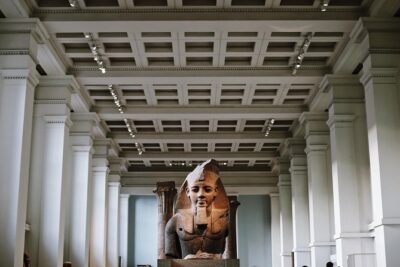
The British Museum London – Exclusive Guided Museum Tour
Read our review →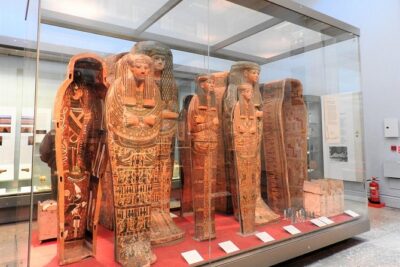
Private Guided Tour of the British Museum – Tickets Included
Read our review →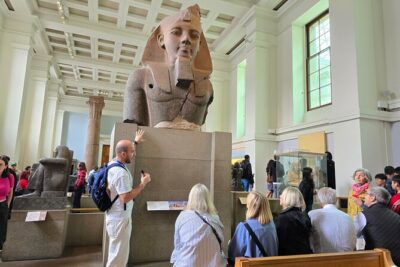
British Museum Guided Tour with Priority Timeslots(Small Group)
Read our review →
British Museum & National Gallery of London Semi-Private 8ppl Max
Read our review →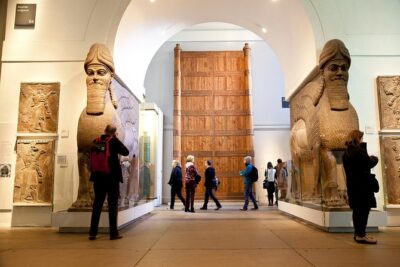
British Museum Highlights Private Tour in London including the Rosetta Stone
Read our review →
Crash course in archaeology at the British Museum
Read our review →Browse the lists this tour appears in