
Reviewed · BRITISH MUSEUM TOURS
British Museum Guided Tour with Priority Timeslots(Small Group)
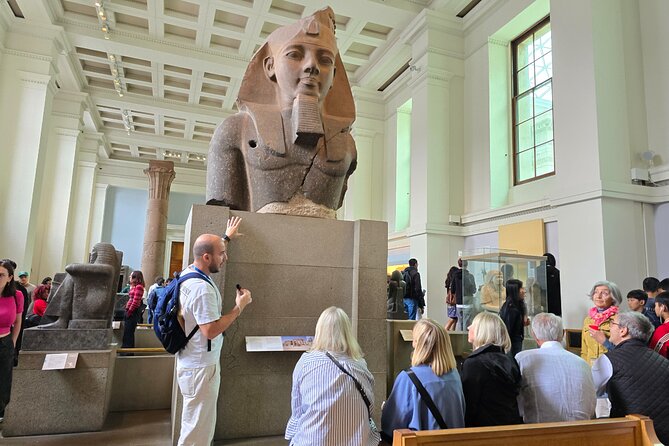
The British Museum can swallow an entire day before you’ve found the Rosetta Stone. This two-hour guided tour gives you a sensible route through its biggest sights, from Egyptian mummies and the bust of Ramesses II to the Parthenon sculptures and the Easter Island Moai.
I like the small-group limit of 15, which makes it easier to ask questions and stay with the guide. I also like the headset option, especially since the museum can be crowded and noisy. The main drawback is simple: two hours only gives you the museum’s opening chapter, not the whole book. You may also spend more time in one area than another, depending on your guide and group interests.
Key points before you book
- Two hours at the major highlights: You’ll get a focused introduction rather than an attempt to cover every gallery.
- Small group, maximum 15 people: This is more personal than a large flag-following group.
- Priority timeslot at the main entrance: Your booking includes entry for the scheduled time.
- A guide who adds stories and context: Daniel, James, Joey, Rebekka, Tara, Antonio, and Tony are among the guides named in guest feedback.
- Headset available in crowded rooms: You can hear live commentary without standing shoulder to shoulder with the guide.
- Free museum admission, paid guidance: The museum itself is free, so the $48.60 price pays for the timed access, route planning, and live interpretation.
Why the British Museum needs a plan
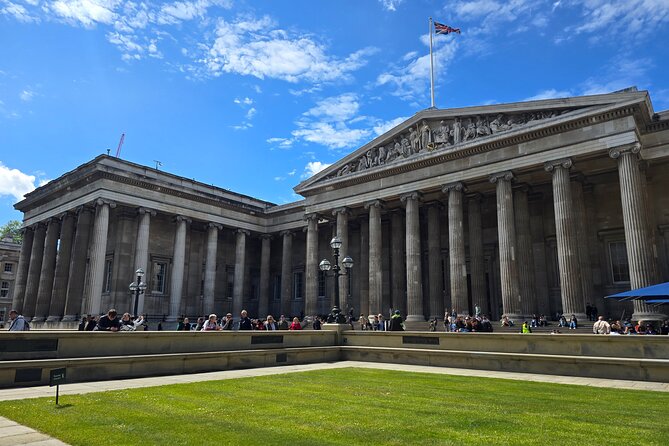
The British Museum holds more than 8 million objects in over 70 galleries. That number is almost comic when you have only a morning or afternoon in London.
You could wander in and simply follow the crowds toward the Rosetta Stone. You could also spend half an hour admiring one Egyptian statue, then realize you have not yet found the Parthenon sculptures. The building rewards curiosity, but it does not make a short visit easy.
This tour solves the first problem: deciding what matters most. Your guide leads you to a selection of famous objects and explains why they matter, how they were made, and what questions they raise. The exact order can vary, but the stated route includes Egyptian statues and mummies, the Rosetta Stone, Parthenon sculpture, an Assyrian winged bull, the Easter Island Moai, the Sutton Hoo ship burial, the Lewis Chessmen, and other major pieces.
I see this as an orientation tour. You are not trying to finish the British Museum. You are learning how its rooms fit together and which objects deserve more of your time after the guide leaves.
More British Museum visits:
- British Museum London Guided Tour Semi-Private 8ppl Max
★ 5.0 · 984 reviews - The British Museum London – Exclusive Guided Museum Tour
★ 5.0 · 555 reviews - British Museum Guided Tour
★ 4.0 · 470 reviews
Meeting at Great Russell Street and entering on time
The meeting point is the British Museum on Great Russell Street, London WC1B 3DG. Entry is through the main entrance with a priority timeslot, and the activity begins and ends at the meeting point.
A scheduled entrance matters here. The museum is a major London attraction, and the point of a timed booking is to reduce uncertainty at the start of your visit. You still need to arrive ready for the agreed meeting time. The tour runs for about two hours, so a late start can cut into the already limited time.
The museum is near public transportation, which makes it practical to fit into a day around Bloomsbury, Covent Garden, Soho, or the West End. The experience is offered in English.
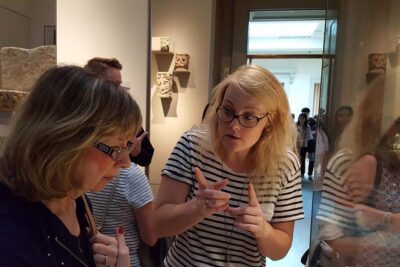
Once inside, expect the guide to gather the group and set a route through selected galleries. The group can include up to 15 people. That is not private touring, but it is small enough for a guide to respond to questions and keep the pace under control.
Egyptian statues and mummies: starting with the ancient world
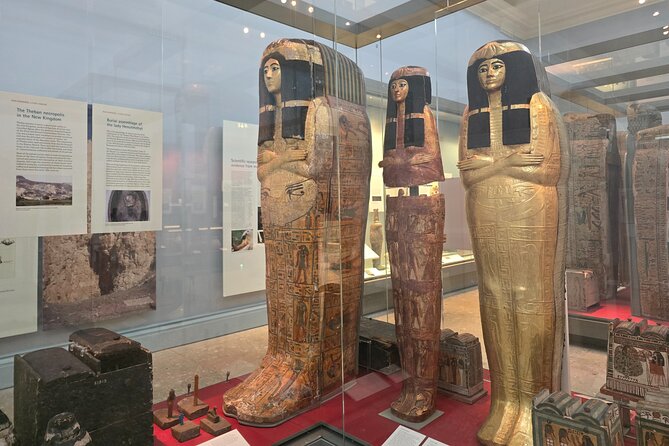
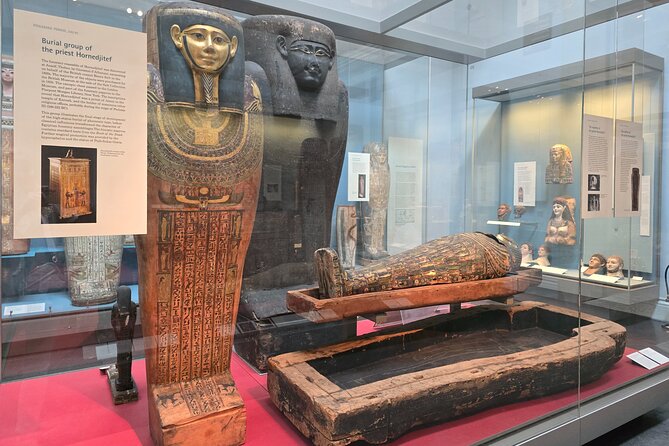
The Egyptian galleries provide an immediate sense of the museum’s scale. You may see statues, mummies, and carved figures from different periods, giving you a quick way to understand how objects move from burial places and temples into a modern museum collection.
A good guide does more than point at a statue and read its label. Daniel, James, Joey, and other guides are praised for explaining objects through stories, humor, and useful background. That matters in rooms where several similar-looking figures can blur together.
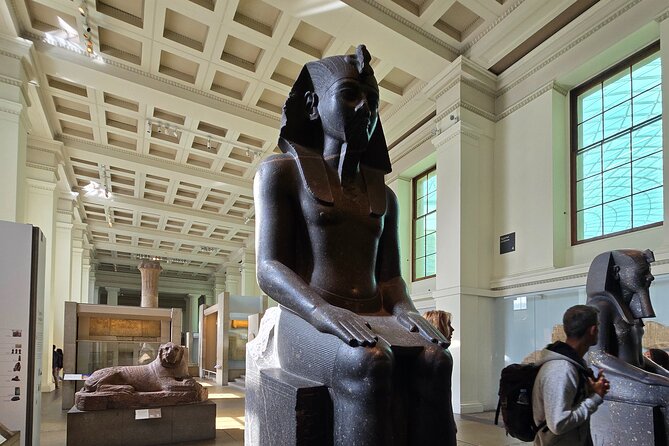
Ramesses II is one of the named highlights. The large bust gives the tour a clear focal point, but the real value is the explanation around it. You get help noticing the details that make a royal image different from an ordinary portrait, while also hearing how the object fits into ancient Egyptian culture.
Mummies can be a strong choice for families and first-time museum visitors, but the subject is not light. If you prefer art, politics, or archaeology, tell your guide what interests you. The tour has room for questions and, in at least some cases, guides have adjusted the visit to include requested objects.
The Rosetta Stone and the power of one inscription
The Rosetta Stone is one of the museum’s essential stops. It is famous because the same decree appears in three scripts, giving scholars the key to reading Egyptian hieroglyphs.
The object itself is not huge, and it often draws a crowd. This is where the headset can help. Instead of trying to hear a guide over nearby groups, you can listen while looking closely at the stone and the people around you.
I appreciate this stop because it shows how a single object can change the study of an entire civilization. You are not just checking off a famous name. You are seeing a practical tool that helped connect an ancient writing system with the modern world.
The guide’s job is especially useful here. The label can tell you what the stone is. A live explanation can help you understand why its discovery mattered and how scholars used the inscriptions.
More museums and galleries in London:
- Tower of London and Crown Jewels Exhibition Ticket
★ 4.5 · 6,677 reviews - Chelsea FC Stadium Tours and Museum
★ 5.0 · 1,908 reviews - Official tickets: Moco Modern & Contemporary Art Museum
★ 4.5 · 1,157 reviews - The Postal Museum Admission Ticket
★ 4.5 · 347 reviews
Assyrian winged bulls and the museum’s larger scale
The Assyrian winged bull brings a different kind of impact. These immense figures were designed to guard important spaces, and their size makes them easy to appreciate even during a fast-moving tour.
This part of the visit also shows why navigation is so valuable. The British Museum is not a tidy line of rooms. You move between periods, regions, and display styles. A guide gives the collection a human route instead of leaving you to guess which corridor leads to the next major object.
One small practical point: popular exhibits can be crowded, and you may find other groups gathered around the same pieces. The headset is useful, but it does not create extra room. Keep your attention on the guide, stay close enough to follow the group, and expect some stops to be busy.
The tour is described as informative and fast-moving. That is an advantage if you have limited time, but it also means you should not expect long, quiet periods at every object.
Parthenon sculptures and the questions behind the display
The Parthenon sculptures are another major stop. These pieces connect the museum to ancient Athens and to long-running debates about ownership, removal, and the modern display of cultural heritage.
The tour does not promise a full seminar on the subject, but a live guide can give you more context than a quick glance at a label. This is one reason I would choose a guided visit over walking in alone if you have never been to the museum.
The sculptures also help balance the route. After Egyptian objects and Assyrian guardians, you see how another ancient culture represented gods, people, movement, and ideal form. A guide can help you compare these traditions rather than treating every gallery as a separate stop.
If this is the part of the museum you most want to study, say so at the beginning. One guest specifically felt that the tour spent a long time in Mesopotamia and would have preferred more attention elsewhere. That is a useful warning: the route is broad, but not every section receives equal time.
Moai, Sutton Hoo, and the Lewis Chessmen
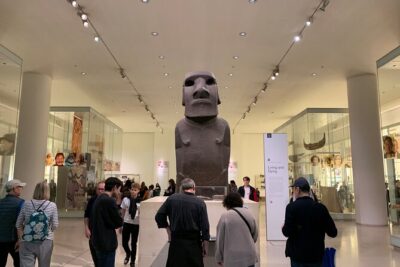
The Easter Island Moai adds a Pacific perspective to a tour that could otherwise lean heavily toward Egypt, Greece, and Mesopotamia. It is a memorable change of scale and subject, with a cultural story that deserves more than a quick photograph.
The Sutton Hoo ship burial takes you into early medieval Britain. It gives the tour a local connection and shows that the British Museum is not only about ancient Egypt and Greece. The Lewis Chessmen offer a smaller, more intimate stop. These medieval chess pieces are easy to remember because they combine everyday play with distinctive carved faces and personalities.
Together, these objects make the route feel wider. You move from monumental stone and royal imagery to burial practice, trade, craft, and leisure. You will not master each culture in two hours, but you will get a useful set of doorways for a later visit.
That is the best way to judge the itinerary. It is not a specialist tour of one civilization. It is a carefully chosen sampler of the collection’s most recognizable and teachable objects.
Guides who make the route easier to follow
The strongest part of this experience is the guide. Names appearing in guest feedback include Daniel, James, Joey, Rebekka, Tara, Antonio, and Tony.
Daniel is repeatedly singled out for combining detailed information with humor and an easy manner. He is also praised for answering questions and making the museum feel less confusing on crowded days. James is described as a strong storyteller who keeps attention from one object to the next. Joey is noted for preparation, flexibility, and enthusiasm for history.
That does not mean every tour will have the same guide. You should book the experience for the format and subject, not for a guaranteed personality unless your booking specifically confirms one. Still, the pattern is encouraging: the guides are expected to interpret the objects rather than repeat the printed text.
This distinction matters. A museum label gives you facts. A guide can connect those facts, point out details you might miss, and explain why one object deserves ten minutes while another can be passed in a few seconds.
The headset, crowds, and pace
A headset is available, and the equipment has been especially useful in crowded areas. You can hear live commentary while standing slightly apart from the guide, which is much better than trying to catch every sentence in a noisy gallery.
Ask about the headset when you meet the guide if it has not already been offered. It is most useful when another group is nearby or when the guide needs to move ahead to the next object.
The pace is brisk. Two hours is enough to cover the high points, but not enough to linger at every display. You may feel that a favorite section ends just as you begin to settle in. That is the trade-off for seeing a wide range of the museum.
I would wear comfortable shoes and keep your attention on the route. The tour ends back at the meeting point, and you are free to continue exploring afterward. This makes the quick pace easier to accept because the guided portion can function as your map for the rest of the visit.
What the $48.60 price really buys
The cost is $48.60 per person. Entry to the British Museum itself is free, so you should be clear about what you are paying for.
You are paying for an expert-led route, a main entrance priority timeslot, a small group, and live explanation over roughly two hours. You are not paying for exclusive access to the galleries or a private viewing of the objects. Other visitors and tour groups will still be present.
For a first visit with only a short window in London, I think the price can make sense. The museum is so large that a poorly planned visit can waste valuable time. A guide gets you to the essential pieces quickly and gives you enough context to make the rest of your visit more rewarding.
For a museum lover with a full day and strong research skills, the value is less obvious. You may prefer to enter free, choose your own galleries, and spend hours with a smaller number of objects. The paid tour is most useful when time, confidence, or navigation is the problem.
Tips are not included. The experience is recommended by 97 percent of travelers and has a 4.9 rating from 192 reviews, which suggests a very strong level of satisfaction, though the individual guide and exact route remain important parts of the experience.
Who should book this two-hour visit
I would recommend it to first-time visitors, families who want a clear route, and anyone with only a short London itinerary. It is also a good first step if the museum feels intimidating and you want someone to show you where to begin.
It suits people who enjoy stories and context more than silent, self-directed looking. You can ask questions, request particular objects, and use the guide’s suggestions to plan your own time afterward.
It may not suit you if you want a slow art-study session or a narrow specialist focus. The museum is enormous, and a general highlights route must leave plenty unseen. The Mesopotamian galleries, for example, may receive substantial attention on one departure, while another group may spend more time on different objects.
Most people can participate, and the museum is near public transportation. The tour is offered in English only, so you should be comfortable following spoken English for two hours.
Booking, cancellation, and practical details
Confirmation is provided when you book. Free cancellation is available if you cancel at least 24 hours before the experience begins. Changes or cancellations inside that 24-hour window are not accepted for a refund.
The activity may be canceled if the minimum number of participants is not reached. In that case, you are offered another date or experience, or a full refund. The stated policy also says the experience requires good weather, with a new date or full refund offered if poor weather causes cancellation.
That weather condition is unusual for an indoor museum visit, so check the terms attached to your booking and keep your plans flexible. Do not assume that a free museum admission means the guided booking can be changed at the last moment.
Should you book the British Museum guided tour?
Book it if you want a clear introduction to a famously overwhelming museum and you have about two hours to spare. The priority timeslot, small group, headset, and direct route remove several common frustrations. The guides, particularly Daniel, James, and Joey, are praised for making the objects engaging rather than simply repeating labels.
Skip it if you have a full day, prefer complete freedom, or want to focus on one collection at your own pace. The museum is free, and no two-hour route can do justice to its entire 8 million-object collection.
For most first-time visitors with a tight London schedule, I would pay for the structure, then stay afterward to revisit the rooms that caught your attention. That combination gives you the best of both approaches: a strong start, followed by time to wander on your own.
FAQ
How long does the British Museum guided tour last?
The tour lasts approximately two hours.
How much does the tour cost?
The listed price is $48.60 per person.
Is admission to the British Museum included?
Yes. Entry to the British Museum through the main entrance with a priority timeslot is included.
Is the British Museum itself free?
The guided booking includes entry, while the museum itself is free to the public. The tour price pays for the guide, timed entry arrangement, and guided experience.
What language is the tour offered in?
The tour is offered in English.
How large is the group?
The activity has a maximum of 15 participants.
Is a headset included?
A headset option is available. The equipment is useful for hearing live commentary clearly in crowded galleries.
Where does the tour meet?
The meeting point is the British Museum, Great Russell Street, London WC1B 3DG, United Kingdom.
Where does the tour end?
The activity ends back at the meeting point.
Can I continue exploring after the guided portion?
Yes. After the two-hour tour, you are free to continue exploring the British Museum at your own pace.
Can I cancel for a full refund?
Yes, if you cancel at least 24 hours before the experience start time. Cancellations or changes made less than 24 hours before the start are not refunded or accepted.
Is the tour available by public transportation?
The meeting point is near public transportation, and most people can participate.
Recently added around London
- London’s Crown Secret: Self-Guided Royal Puzzle Quest★ 4.5 · 8 reviews
- Postcard London★ 5.0 · 8 reviews
- Private Tour: Downton Abbey London Locations by Taxi★ 5.0 · 8 reviews
- Windsor Castle, Stonehenge & Roman Baths Private Tour★ 4.5 · 8 reviews
- Cotswolds Private Driving Tour from London★ 5.0 · 8 reviews
- Skip-the-line London Westminster Abbey and City of Westminster Kid-Friendly Tour★ 5.0 · 8 reviews
- A Silent Disco Adventure in London★ 5.0 · 8 reviews
- Gangster Tour of Soho★ 4.5 · 8 reviews
British Museum Tours, compared.
British Museum London Guided Tour Semi-Private 8ppl Max
Read our review →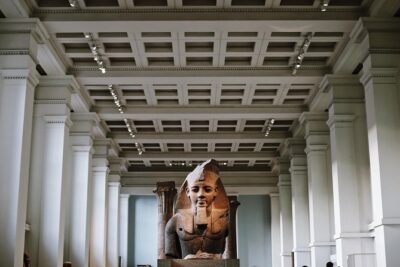
The British Museum London – Exclusive Guided Museum Tour
Read our review →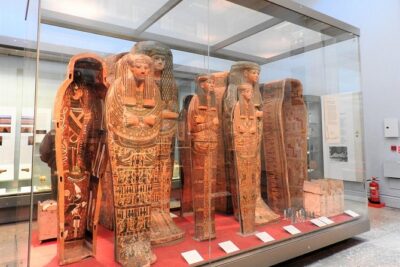
Private Guided Tour of the British Museum – Tickets Included
Read our review →
British Museum & National Gallery of London Semi-Private 8ppl Max
Read our review →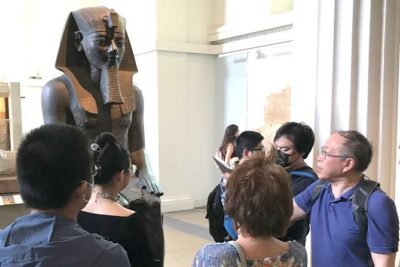
Explore Biblical Artifacts at the British Museum
Read our review →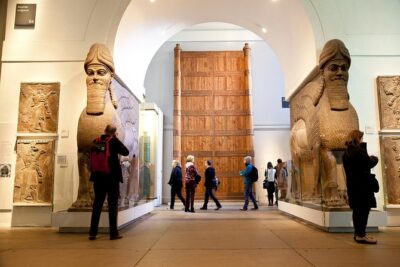
British Museum Highlights Private Tour in London including the Rosetta Stone
Read our review →
Crash course in archaeology at the British Museum
Read our review →Browse the lists this tour appears in