
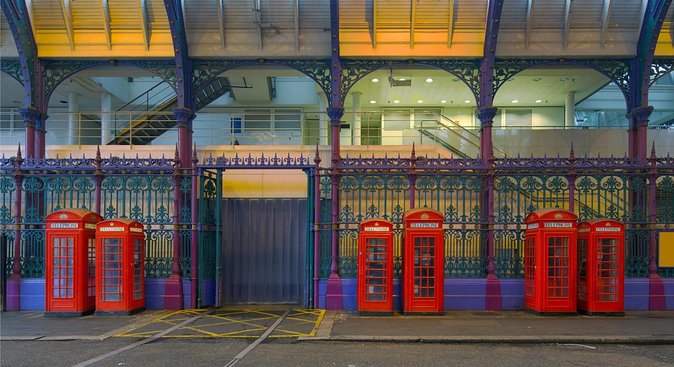
Reviewed · WALKING TOURS
Burnings, Butchery & Black Death: A Walking Tour of London’s Bloody Past
London’s darkest stories are often tucked behind ordinary doors and down unremarkable lanes. This two-hour walk links plague pits, public executions, medieval hospitals, old markets, and Victorian sewage in a compact part of the City.
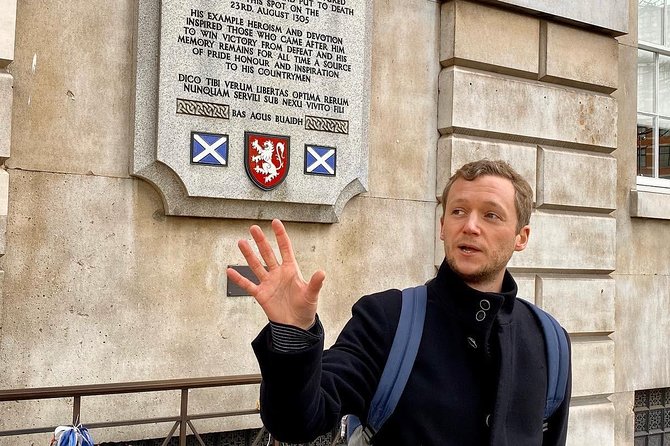
I like the way the tour goes beyond the usual Jack the Ripper material, and I like the small groups, capped at 15 people. Guide Tom brings humor and sharp local detail, including filming locations, Blitz damage, and stories you could easily miss while walking alone.
The main drawback is the pace. Ten stops in about two hours means you get a brisk introduction rather than a long visit at each place. The tour also needs good weather, and the subject matter includes death, disease, executions, and grisly medical history.
Key points to know before you book
- Ten dark-history stops in two hours: The route covers Smithfield, Charterhouse, St. John’s Gate, St. Bartholomew’s Hospital, and several lesser-known corners.
- A small group makes a difference: The maximum group size is 15, so you should be able to hear the guide and ask questions.
- Tom is the named guide: He is described as clear, funny, approachable, and able to connect old events with modern London.
- The walk avoids tired Jack the Ripper material: Expect plague, butchery, burnings, hospitals, bomb attacks, the Great Fire, ghosts, and Victorian sanitation.
- One church admission is included: Entry to St. Bartholomew the Great is included, while the other listed stops are viewed from outside or are free.
- The price is modest for a focused history walk: At $27.73 per person, the value rests mainly on the guide’s storytelling and access to overlooked places.
Why this corner of London works so well
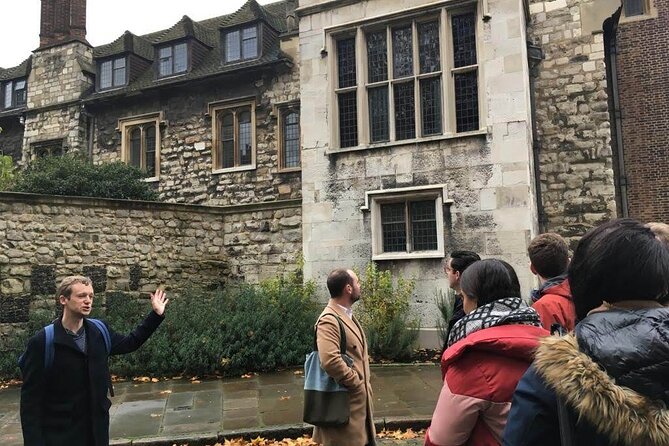
The tour begins near Aldersgate Street, close to Barbican, and ends on Ely Place near Farringdon Station. That route is useful because it keeps you in one of London’s oldest areas while showing how many layers can fit into a small patch of city.
You move from medieval religious life to meat trading, from plague and punishment to hospitals and Victorian sanitation. The subjects are grim, but the walk is not simply a parade of horrors. It explains how London worked, how people responded to crisis, and how old events still shape the streets under your feet.
I especially like this kind of route for a return visit to London. You do not need a major landmark at every stop. A narrow passage, a church wall, or a pub entrance can carry more atmosphere than a grand building if your guide explains what happened there.
The area also rewards close attention. Several stops are easy to pass without noticing. That is the point of having a guide here. Tom’s role is less about leading you from one famous attraction to another and more about pointing out the details that ordinary sightseeing leaves behind.
More Walking Tours in London
- Tour for Muggles The Ultimate Harry Potter Walking Tour in London
★ 5.0 · 4,684 reviews - London Jack The Ripper Guided Walking Tour
★ 5.0 · 3,131 reviews - Changing of the Guard Guided Walking Tour in London
★ 5.0 · 1,793 reviews
Charterhouse and the plague pits
The first stop is Charterhouse, a fourteenth-century monastery linked with a plague pit. It sets the tone at once: this is London’s past viewed through disease, belief, death, and survival.
You are not simply hearing that plague once reached London. You are placed beside a site tied to the city’s response to mass death. The monastery gives the story a religious setting, while the plague pit points to the practical problem of disposing of huge numbers of bodies.
The stop lasts about 10 minutes, so expect an explanation from outside rather than an extended visit. Admission is free. For me, that makes this a strong opening because it turns an ordinary urban site into a place with serious weight.
If you dislike medical or burial stories, this is an early warning about the tone. If you enjoy social history, it gives you a useful way to think about how disease changed London far beyond the loss of individual lives.
Smithfield Market and a thousand years of butchery
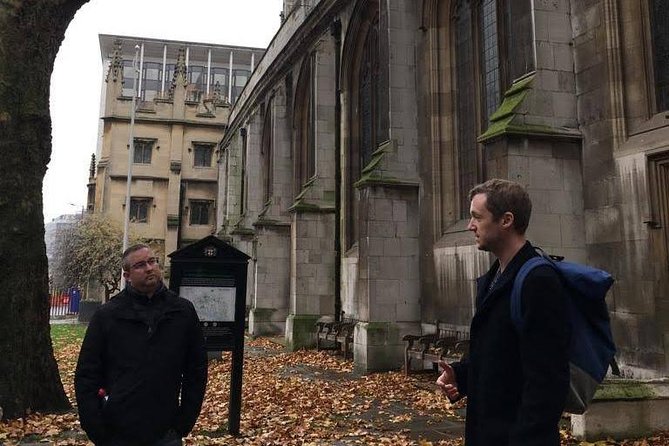
Smithfield Market brings the walk into one of its clearest themes: food, trade, and public violence. The market is described as a one-thousand-year-old meat market, and its long use helps explain why this area became associated with blood in more than one sense.
The guide connects the market with London’s working life. Butchery was not hidden away in a modern industrial zone. Meat trading took place close to homes, roads, churches, and places of punishment. That makes Smithfield a strong stop for understanding how medieval and later London smelled, sounded, and functioned.
The stop is again around 10 minutes. You should expect a short, focused talk rather than a full market tour. Still, the setting does much of the work. This is one of the places where the walk’s title makes immediate sense.
The wider area also carries reminders of wartime London. Tom includes information about bomb attacks during the Blitz, showing that the district’s grim past did not end with the Middle Ages. That movement between centuries is one of the tour’s strengths.
St. John’s Gate and the medieval Knights Hospitallers
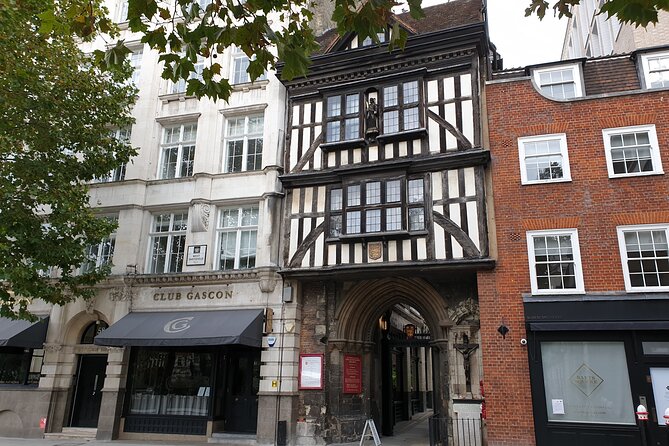
At St. John’s Gate, the story shifts from markets and plague to the Knights Hospitallers. This was home to a medieval religious and military order, and it also connects with the later origins of St. John Ambulance.
That link gives the stop more range than a simple account of old stonework. You hear how a medieval institution can remain part of a living tradition centuries later. It is a useful reminder that London history is not arranged in neat, separate boxes.
The tour spends about 10 minutes here. Admission is free, and the stop is best suited to listeners who enjoy institutional history, medieval orders, and the way old buildings gain new purposes.
I would pay attention to the transitions at this point. Tom’s storytelling is praised for connecting one subject to the next, and this is where that skill matters. The walk is moving quickly through a thousand years, so a clear guide keeps the route from feeling like a pile of unrelated facts.
A completely different sort of day out in London:
- Stonehenge, Windsor Castle, and Bath from London
★ 4.5 · 18,662 reviews - London Big Bus Hop-On Hop-Off Tour with Optional River Cruise
★ 3.5 · 10,803 reviews - London Small Group Tour of Historical Pubs
★ 5.0 · 10,422 reviews - Stonehenge, Windsor Castle and Bath with Pub Lunch in Lacock
★ 4.5 · 7,402 reviews
Cloth Fair and the noise behind a quiet lane
Cloth Fair is described as a quiet alley with a noisy history. It is exactly the sort of place you could walk past without understanding its importance.
The value here comes from contrast. The lane may feel still and residential now, but its past was tied to crowds, trade, and the activity around Smithfield. London often works this way. A peaceful lane can preserve the shape of a much louder past.
The stop lasts about 10 minutes and costs nothing to visit. You may not get a dramatic view, but you get a better sense of how the city hides its age in small spaces.
I like stops such as this because they sharpen your eyes for the rest of your London trip. After hearing the story of Cloth Fair, you may look differently at alleys, old walls, and odd turns in the road.
William Wallace and the surprise of Braveheart
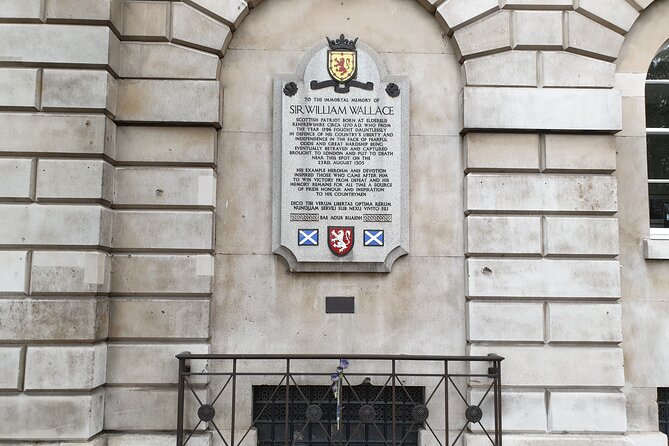
The William Wallace Memorial adds a different kind of drama. Wallace, known widely through the Braveheart story, is remembered here in London, far from the Scottish settings most people associate with him.
This stop is a reminder that famous figures can appear in unexpected places. The memorial also keeps the walk from becoming too narrowly focused on plague and punishment. You get a political and national story mixed into the darker urban history.
The visit takes about 10 minutes and is free. Do not expect a large monument complex or a long museum visit. The appeal lies in the guide’s context and in the surprise of finding Wallace in this part of the city.
For me, this is also where Tom’s references to popular culture and filming locations fit nicely. The walk uses familiar stories as entry points, then adds less familiar London detail.
St. Bartholomew the Great, one of London’s oldest churches
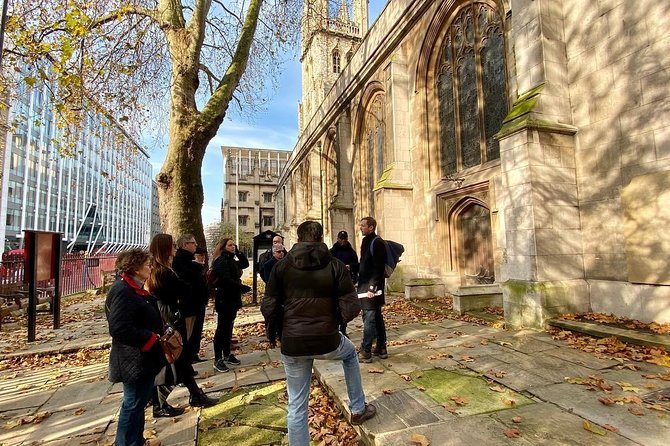
St. Bartholomew the Great is the only listed stop with admission included. It is London’s oldest surviving parish church, and its age gives the tour a strong architectural and religious center.
Inside, you get a change of mood. The street stories about disease, markets, and punishment lead into a place shaped by worship and centuries of daily life. The church is not just a backdrop. It helps explain how religion, medicine, charity, and power overlapped in medieval London.
Allow about 10 minutes here as part of the guided walk. Since the tour includes entry, this is one of the clearest added benefits beyond simply strolling through public streets.
You should not book this expecting a long church visit with time for quiet personal exploration. The schedule is tight. Still, the inclusion makes the price easier to justify, especially when paired with the guide’s explanation of the church’s place in the area.
The Golden Boy and the Great Fire
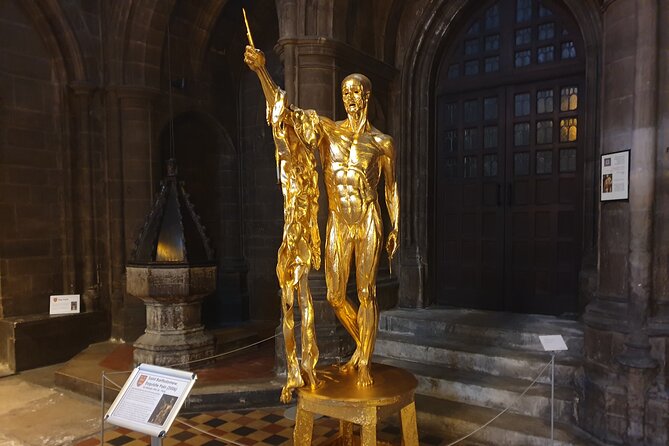
The Golden Boy of Pye Corner marks the place where the Great Fire of 1666 finally stopped. It also carries a later story involving eighteenth-century ghost hysteria.
This is an excellent example of how one small marker can hold several different chapters of London history. The Great Fire is familiar, but the tour connects the physical stopping point with the way fear and rumor continued to shape public behavior afterward.
The stop takes about 10 minutes and is free. The Golden Boy itself is not a huge attraction, so your enjoyment depends on the explanation around it. That is true of several locations on this walk.
I appreciate the practical lesson here: you do not need to visit a grand museum to understand a major event. Sometimes the best clue is a small memorial that makes the city’s old disasters feel local and specific.
Holborn Viaduct and the River Fleet
At Holborn Viaduct, the tour reaches Victorian London and the River Fleet, described as the city’s largest open-air sewer. This is one of the most useful stops for understanding how London’s growth created new public-health problems.
The subject is unpleasant, but it explains why sanitation became such a serious concern. Rivers and streams were turned into drains, streets grew crowded, and the city had to build new systems to manage waste and disease.
The stop lasts around 10 minutes and is free. You will not see the old open sewer as it once existed. Instead, the guide helps you read the modern street as a cover over an older waterway.
This part should appeal to anyone who likes infrastructure and city planning. It also gives the tour a broader purpose. London’s bloody past was not only about executions and violence. It included the daily dangers created by poor sanitation and rapid urban growth.
Ye Olde Mitre and the best possible ending
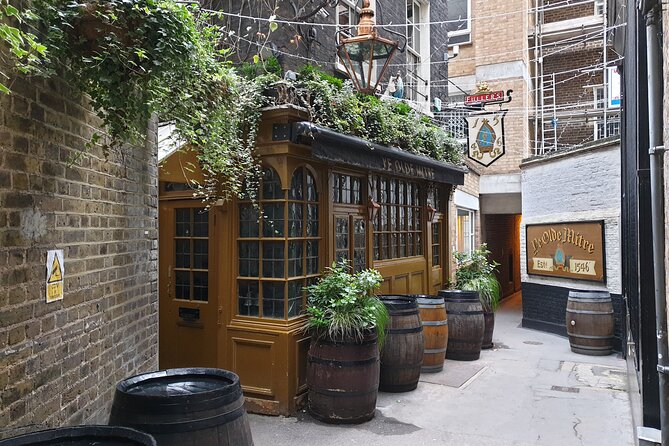
Ye Olde Mitre is a pub tucked down an alleyway, and it provides the tour’s most relaxed stop. The pub is free to enter in the sense that there is no separate attraction ticket, though food and drinks are your own expense.
The old, atmospheric setting makes a good place to finish a walk about London’s rougher centuries. A stop here can turn the history into something social and immediate. You can discuss what you have seen over a meal or drink instead of simply leaving at the final story.
Specific food praise focuses on cheese toasties and pork pies, so this is a useful place to consider lunch after the walk. The tour does not state that a meal is included, so budget separately if you want to eat.
I like the ending because it feels more like London than a formal finale. You finish in a pub rather than at a large monument, and the route ends on Ely Place near Farringdon Station.
St. Bartholomew’s Hospital and the medical past
The final listed stop is the St. Bartholomew’s Hospital Museum, described as the oldest surviving hospital in the country. It brings the tour back to medicine, but with a different emphasis from the plague-pit opening.
Here, the story is about organized care, treatment, and the long development of hospitals. The stop helps connect the suffering described earlier with the institutions that tried to respond to it.
The museum is listed as free, and the stop lasts roughly 10 minutes. Since the whole experience is only about two hours, do not expect a full museum visit. Think of it as a guided introduction and a prompt for a longer return visit if medical history catches your interest.
This is one of the places where the tour’s range becomes clear. In a short distance, you move from medieval religious life to modern ideas about hospitals and public care.
How much value do you get for $27.73?
At $27.73 per person, I consider this a good-value walking tour if you want interpretation rather than paid attractions. Most stops are free, and only St. Bartholomew the Great is specifically listed with admission included. You are paying mainly for the route, the research, and the guide’s ability to make small sites meaningful.
That value depends on your interests. If you prefer entering major landmarks and spending an hour inside each one, this may feel too light. If you enjoy finding overlooked places and hearing the stories that connect them, the cost is modest for two hours of focused guiding.
The small group matters here. With a maximum of 15 people, you should have a better chance of hearing Tom clearly than on a large city walk. You can also ask questions about the area, restaurants, pubs, and further places to explore.
The tour is offered in English and uses a mobile ticket. It starts on Aldersgate Street near Barbican and finishes on Ely Place around the corner from Farringdon Station, which makes the end point useful for continuing your day.
Who will enjoy this walk most?
I would recommend it to adults and older children with an interest in London’s less polished past. You should be comfortable with subjects such as plague, executions, butchery, disease, ghost stories, and medical history.
It also suits people who have already seen the main London sights. The walk shows you parts of the City that are easy to miss, and it avoids repeating the standard Jack the Ripper route.
The experience is also a good fit for history fans who prefer a guide with a sense of humor. Tom is described as clear, approachable, and able to answer questions while keeping the stories moving.
I would think twice if you want a gentle sightseeing stroll or a detailed interior tour. Ten stops in 120 minutes means a brisk rhythm, and bad weather can lead to a cancellation or a new date.
Most people can take part, service animals are allowed, and the tour runs near public transport. You can cancel for a full refund up to 24 hours before the start time. If poor weather cancels the experience, you are offered another date or a full refund.
Should you book Burnings, Butchery & Black Death?
I would book this tour if you want London history with a darker edge, especially if you have already seen the major landmarks. The best reason to go is the combination of small-group access and overlooked places, not a single famous attraction.
Choose it for the Charterhouse plague connection, the old Smithfield market, St. Bartholomew’s church, the River Fleet story, and the chance to finish near Ye Olde Mitre. Choose it for Tom’s lively delivery and the useful links between medieval London, the Great Fire, the Blitz, Victorian sanitation, and modern city life.
Skip it if you dislike grisly subjects or want lots of time inside each site. For everyone else, $27.73 buys a compact, well-focused look at the London that sits just below the surface of the usual sightseeing route.
FAQ
How long is the walking tour?
The tour lasts approximately two hours.
How much does the tour cost?
The listed price is $27.73 per person.
How many people can join the tour?
The tour has a maximum group size of 15 people.
Where does the tour start and finish?
It starts at Underground Ltd on Aldersgate Street near Barbican. It ends on Ely Place, around the corner from Farringdon Station.
Is entry to any attraction included?
Admission to the Church of St. Bartholomew the Great is included. The other listed stops are free or viewed without a separate admission ticket.
Can I cancel for a full refund?
Yes. You can cancel at least 24 hours before the experience start time for a full refund. Cancellations or changes made less than 24 hours before the start time are not refunded, and poor weather may lead to a different date or a full refund.
Recently added around London
- London’s Crown Secret: Self-Guided Royal Puzzle Quest★ 4.5 · 8 reviews
- Postcard London★ 5.0 · 8 reviews
- Private Tour: Downton Abbey London Locations by Taxi★ 5.0 · 8 reviews
- Windsor Castle, Stonehenge & Roman Baths Private Tour★ 4.5 · 8 reviews
- Cotswolds Private Driving Tour from London★ 5.0 · 8 reviews
- A Silent Disco Adventure in London★ 5.0 · 8 reviews
- Skip-the-line London Westminster Abbey and City of Westminster Kid-Friendly Tour★ 5.0 · 8 reviews
- Private Full Day Cotswolds Tour From London★ 5.0 · 8 reviews
Walking Tours, compared.
Oxford University Walking Tour With University Alumni Guide
Read our review →
Tour for Muggles The Ultimate Harry Potter Walking Tour in London
Read our review →
Cambridge University Walking Tour by Alumni™ Kings College Option
Read our review →
Blackbeard to Banksy – The Ultimate Walking Tour of Bristol
Read our review →
Air Raid Shelter + St. Nicholas Market Walking Tour
Read our review →
Walking Tour of Bath with Blue Badge Tourist Guide
Read our review →
Changing of the Guard Guided Walking Tour in London
Read our review →Browse the lists this tour appears in