
Reviewed · WALKING TOURS
Winston Churchill & London in World War II Walking Tour
The most memorable part of this tour is the way ordinary London streets become wartime evidence. You walk from Westminster Bridge past Parliament, Whitehall, and the Cenotaph while hearing how Britain’s government faced the threat of invasion, the Blitz, and the Luftwaffe. Guides including Nathan, Jeremy, Babs, and Francis are praised for turning dates and buildings into clear, human stories.
I like the small groups of no more than 15, which make it easier to hear the guide and ask questions. I also like the finish outside the Churchill War Rooms, since the walk gives you useful context before you enter the underground headquarters. The main drawback is that the War Rooms ticket is not included unless you choose that option, and the indoor visit uses an audio guide rather than continuing with your walking guide.
Key points to know before booking
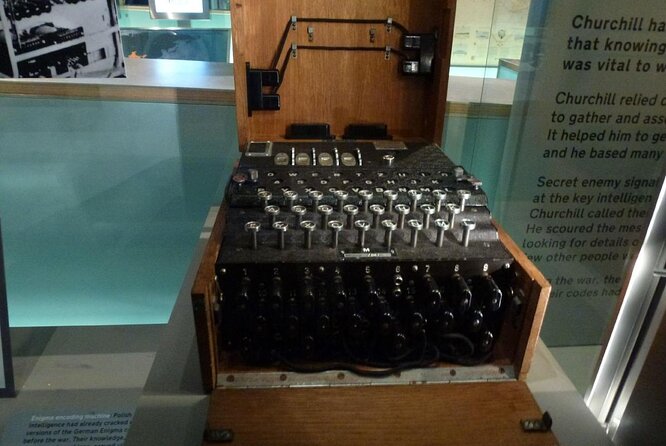
- Wartime Westminster in a compact walk: See Parliament, Westminster Abbey, Whitehall, Horse Guards Parade, and the Cenotaph in one route.
- A strong guide can make the difference: Nathan, Jeremy, Babs, Francis, Richard, Martin, Paul, and other guides are praised for clear storytelling, humor, and personal wartime anecdotes.
- The walk is gentle: You cover several central London sights, but the route is described as easy and not strenuous.
- The Churchill War Rooms are optional: The walking portion ends outside, and admission is separate unless you choose the package that includes it.
- Good preparation for the museum: The street tour explains the political and military setting before you enter Churchill’s underground offices.
- Small-group attention: The maximum group size is 15, with an English-speaking local guide.
Why this tour makes wartime Westminster easier to understand
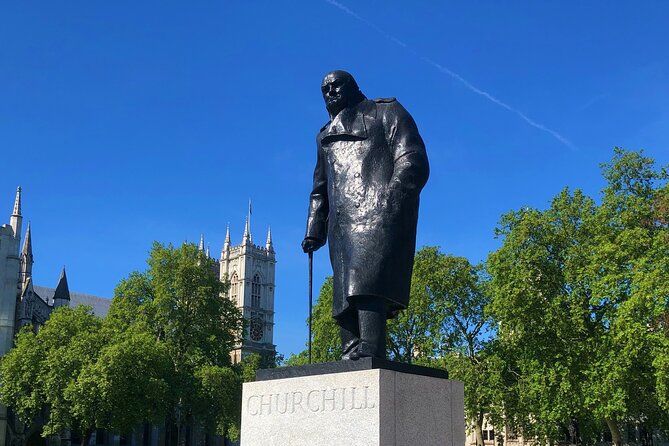
London offers plenty of grand buildings, but it can be hard to see how they fit into the Second World War. This walk gives you a useful thread to follow. Westminster Bridge, Parliament Square, Whitehall, and the Churchill War Rooms are close together, yet each place reveals a different part of the wartime story.
You begin with the public face of government, then move toward the offices where decisions were made. Along the way, the guide explains how Parliament responded to the threat from Nazi Germany, how London coped with bombing, and how Churchill’s government organized the defense of Britain.
I would not book this as a general Westminster sightseeing tour. The route does include major landmarks, but the focus is firmly on wartime politics, military pressure, civilian life, and Churchill’s role. That makes it a good choice if you want historical context rather than a long list of architectural facts.
The walk lasts roughly 1 hour 30 minutes to 3 hours, depending on the schedule and pace. One stated arrangement ends at 2:30 p.m. outside the Churchill War Rooms. Allow extra time if you plan to enter the museum afterward, since the indoor visit can take as long as you wish.
More Walking Tours in London
- Tour for Muggles The Ultimate Harry Potter Walking Tour in London
★ 5.0 · 4,684 reviews - London Jack The Ripper Guided Walking Tour
★ 5.0 · 3,131 reviews - Changing of the Guard Guided Walking Tour in London
★ 5.0 · 1,793 reviews
Starting at Westminster Bridge
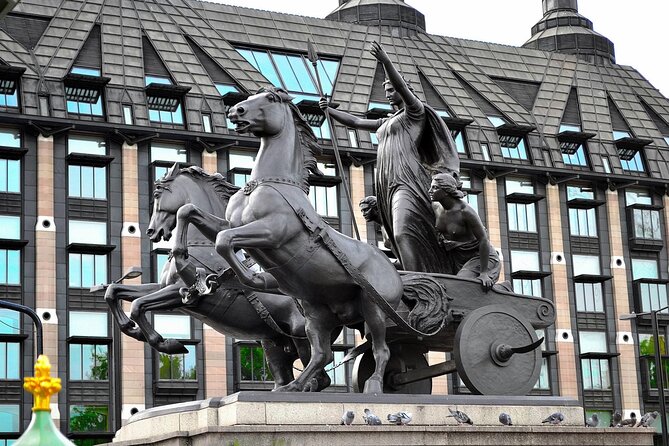
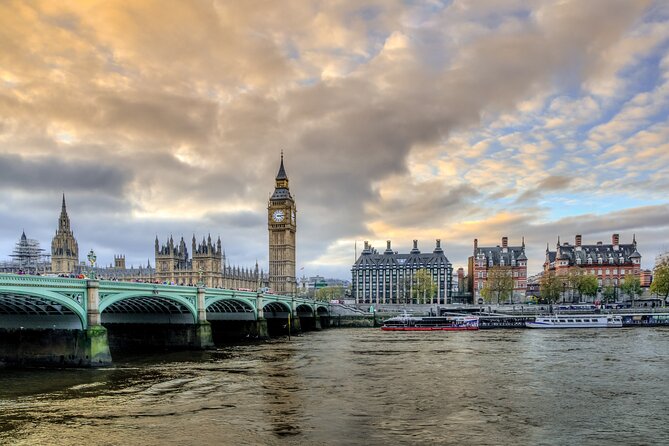
The meeting point is by the statue of Boadicea and Her Daughters on Victoria Embankment. From there, the route begins at Westminster Bridge, painted green to reflect its connection with the Houses of Commons.
The bridge is a strong opening point because it places you directly between the river, Parliament, and the government quarter. The guide discusses wartime bombing here, including the fact that unexploded Second World War bombs are still found in London from time to time.
You only spend about five minutes at the bridge, so this is not a long riverside stop. Think of it as a quick orientation and a first reminder that the war was not a distant event for London. The city’s streets and river crossings were part of daily life during the bombing.
Because the meeting point is near public transportation, it is practical for a morning or early afternoon plan. Still, arrive with enough time to locate the statue. A central London meeting point can be busy, and the group needs to leave on schedule.
Parliament and the silence of Big Ben
At the Houses of Parliament, the guide explains how Britain’s political center reacted as the threat from the Third Reich grew. You hear about the looming danger, the Luftwaffe filling the skies, and the decision to silence Big Ben during the war.
This stop lasts about ten minutes and takes place outside. You do not enter Parliament, so the value comes from the guide’s explanation rather than from an interior visit. That is worth keeping in mind if you want a full tour of the building itself.
I like this stop because it connects military events to the machinery of government. The Second World War was not only fought by pilots and soldiers. It was also managed through speeches, emergency decisions, debate, and the constant pressure of protecting a country under attack.
The best guides appear to use this section to explain Britain’s point of view. One American participant especially valued hearing the war presented from the British side and said the walk made the War Rooms more meaningful afterward. That is an important benefit for anyone who has learned the war mainly through an American or continental European lens.
Parliament Square and the meaning of democracy
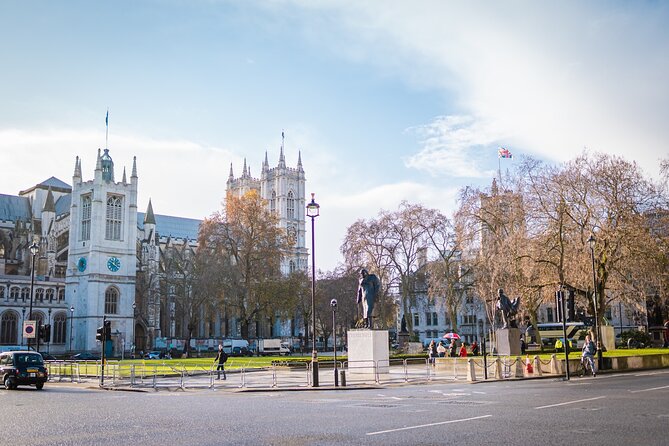
Parliament Square shifts the mood from military danger to the political values Britain was trying to defend. Statues here honor figures including Mahatma Gandhi, Millicent Fawcett, and Abraham Lincoln.
The guide uses the square to discuss democracy during the dark years of the war. This is a short ten-minute stop, but it gives the route a wider frame. You are not just looking at monuments. You are considering the political system that the British government claimed to be protecting.
There is no admission charge for the square, and you visit outside. The stop works well for first-time visitors because it adds meaning to a place that many people otherwise pass through quickly while taking photographs of Parliament.
A completely different sort of day out in London:
- Stonehenge, Windsor Castle, and Bath from London
★ 4.5 · 18,662 reviews - London Big Bus Hop-On Hop-Off Tour with Optional River Cruise
★ 3.5 · 10,803 reviews - London Small Group Tour of Historical Pubs
★ 5.0 · 10,422 reviews - Stonehenge, Windsor Castle and Bath with Pub Lunch in Lacock
★ 4.5 · 7,402 reviews
Westminster Abbey and the local heroes of the Blitz
Westminster Abbey is another exterior stop. The guide discusses its connection with the last Anglo-Saxon king and its place as a major Church of England landmark, then turns to how the abbey survived the Blitz.
The story includes local heroes who helped protect the building. That personal scale is one of the pleasures of a good walking tour. Instead of treating the Blitz as a series of statistics, the guide can show how people near the abbey responded to danger and worked to protect a place of national importance.
You do not enter Westminster Abbey, and admission is not included. If seeing the interior is a priority, plan a separate visit. This tour gives you wartime context outside, but it is not a substitute for an abbey visit.
The stop lasts around ten minutes. It is also a useful reminder that wartime London was full of places with symbolic value. Damage to a government building, church, or monument carried meaning far beyond the cost of repairing stone.
Whitehall, the Cenotaph, and women’s wartime service
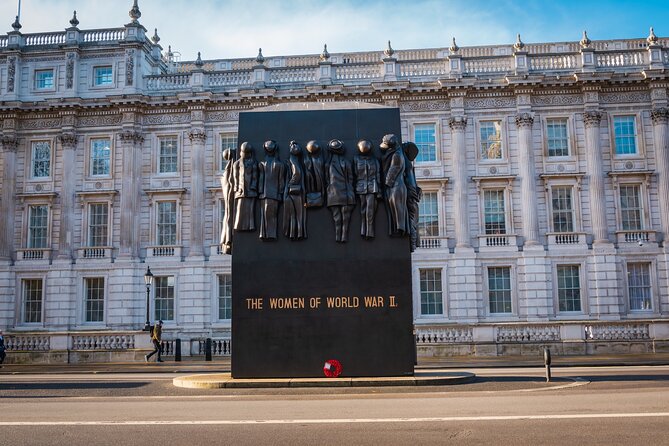
Whitehall is the longest stop, at about twenty minutes. It was home to the Ministry of Defence and played a central role in the government’s wartime work.
Here you visit the Cenotaph and the Women in World War II memorial. The guide explains the sacrifices made by men and women, giving the stop a broader focus than Churchill alone. You get a chance to pause, pay your respects, and consider the many forms of service required during the war.
I see this as one of the most worthwhile parts of the route. Churchill naturally draws much of the attention, but Whitehall helps correct the idea that one famous leader explains everything. Government workers, service members, pilots, families, and women in wartime roles all shaped Britain’s response.
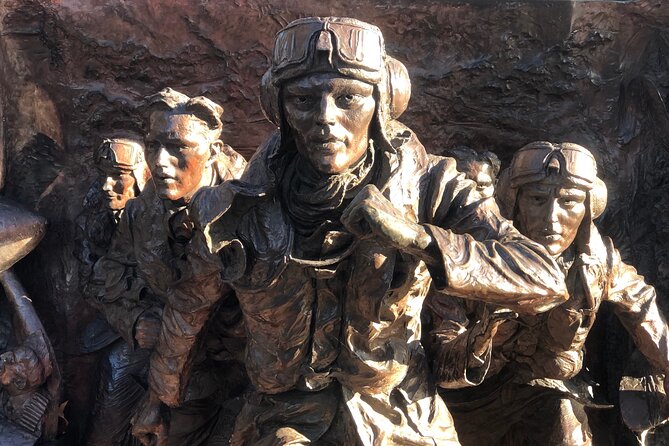
The memorial stops are outside and free. They are also easy places for the group to gather, which helps the guide keep the history organized. Several guides are praised for adding stories about Battle of Britain pilots, soldiers, and family experiences of the Blitz. Those details can make this section feel more personal than a standard monument tour.
Horse Guards Parade and a final London landmark
At Horse Guards Parade, you have the chance to photograph the mounted cavalry of the Queen’s Horseguards. The stop lasts about ten minutes and remains outside.
This is the route’s most traditional sightseeing moment. It gives you a striking ceremonial setting after the more serious memorials of Whitehall. The guide also points out the official entrance connected with Buckingham Palace.
The stop is not focused entirely on wartime history, and that is useful. The tour gives you a few classic London views along the way, so it does not feel like a lecture conducted on anonymous streets. You get landmark photographs while the guide keeps the main historical theme in view.
The horses and ceremonial setting can draw a crowd, so listen for the guide and keep the group’s meeting point in mind. The tour is not a free-form photo walk. You need to stay with the group as it moves toward the War Rooms.
Reaching the Churchill War Rooms
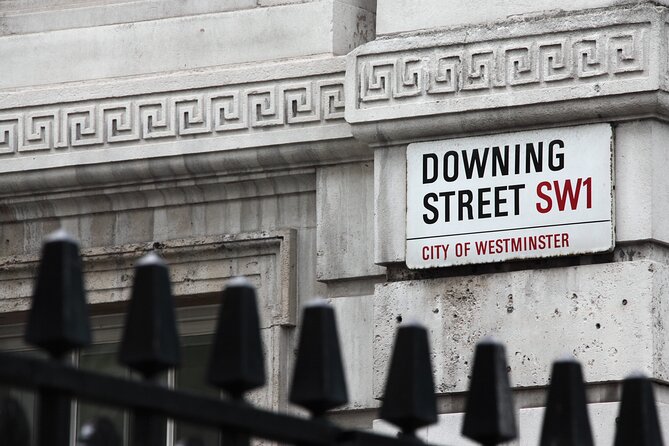
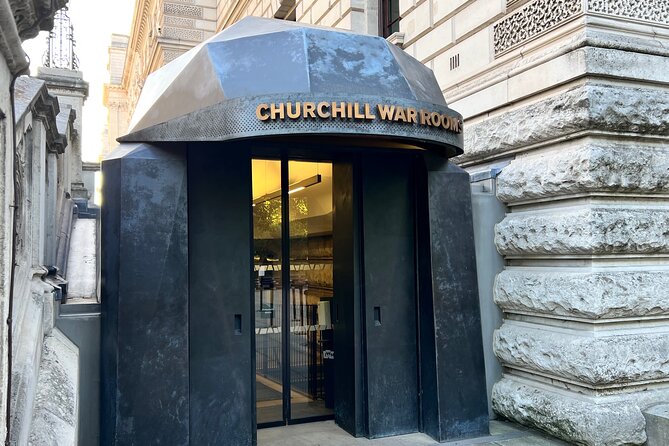
The walk ends outside the Churchill War Rooms on King Charles Street. This underground complex became the center of the British government’s wartime effort as leaders worked to prevent invasion and direct the war.
The walking guide does not normally take you through the interior as part of the basic tour. Admission is not included, although you can choose an option that adds the entrance ticket for convenience. Check the exact package when booking so you know if your ticket covers the museum.
I strongly suggest allowing time for the War Rooms if your schedule permits. The street walk explains the buildings, political pressure, and wartime setting. Inside, the preserved offices and rooms give you a physical sense of how the government operated underground.
The museum uses an audio guide. That is useful if you want to move at your own pace, stop in certain rooms, or spend extra time with the displays. It may disappoint you if you prefer a live guide. One person found the audio format frustrating and left before finishing, while another appreciated being able to take as much time as needed.
The exit can also be confusing. Give yourself a moment to follow the signs rather than rushing out. If you are booking the walking tour and museum together, treat them as two connected but separate experiences: a live outdoor tour followed by a self-guided indoor visit.
The guides are a major part of the value
The strongest praise is directed at the guides. Nathan is repeatedly described as friendly, funny, and exceptionally well prepared, with a talent for weaving stories into the route. Jeremy is praised for a good pace, clear English, humor, and strong explanations of Westminster’s political role.
Babs is described as an easygoing storyteller who even paid attention to shade on a sunny day. Francis is praised for being informative, polite, entertaining, and helpful in getting the group to the War Rooms entrance. Richard is described as funny and well informed, while Martin and Paul are noted for bringing pilots, soldiers, and Blitz experiences to life.
Guide assignments can vary, so you cannot book a particular person unless the provider confirms it. Still, the pattern is clear: this tour depends heavily on the individual guide. One less enthusiastic assessment found the guide pleasant but somewhat old-fashioned and dull, so expectations should remain sensible.
A small group helps. With a maximum of 15 people, you have a better chance of hearing the stories and asking a question than on a large coach tour. In one unusual case, cancellations left a participant with what felt like a private tour. Do not count on that, but it shows how the group size can affect the experience.
How much walking and what pace to expect
The route is described as easy and not strenuous. It connects several central sights, but the walk is short enough for most people who can manage ordinary city walking.
You should still wear comfortable shoes. The route includes bridges, public squares, pavements, and busy central streets. You may pause often while the guide speaks, but you will be standing outdoors for much of the tour.
The exact duration varies from about 90 minutes to as much as three hours. That may reflect different schedules, group pace, and the amount of storytelling. Some accounts place the actual walk at around two hours, while the stated route includes short stops totaling more than an hour and a half.
I would keep the rest of the day flexible. If you add the War Rooms, do not schedule a tight lunch reservation immediately afterward. The walking tour ends at the museum, but the museum visit itself is not included in the walking time.
Is $38.89 a fair price?
At $38.89 per person, this is a reasonable price for a small-group guided walk in central London, especially if you value interpretation rather than simply seeing the landmarks. You are paying for a local English-speaking guide, a focused theme, and a route that joins several important sites without requiring separate planning.
The price does not include food, drinks, hotel pickup, or entrance tickets. Westminster Abbey and Parliament are exterior stops, and the Churchill War Rooms cost extra unless you choose a package with admission. That means the total day can cost more than the headline price.
I think the value is strongest for someone who would otherwise walk past these places without understanding their wartime role. It is less useful if you already know Westminster well or mainly want to enter the buildings.
The group limit also matters. A small walking tour is more personal than a large sightseeing group, and the guide’s stories are the main product. If the guide is as engaging as Nathan, Jeremy, Babs, or Francis are described, the cost feels fair.
Who should book this Westminster walk?
I would recommend it to:
- First-time London visitors interested in the Second World War
- People who want Churchill War Rooms context before entering
- Families with teenagers who prefer stories to a formal lecture
- Visitors who want a gentle walk with major landmarks included
- Anyone curious about Britain’s political and civilian experience of the war
- People who prefer a small group over a large bus tour
It may be less suitable if you want to enter Westminster Abbey or Parliament during the tour. It is also not ideal if you dislike audio guides, since the War Rooms use a self-guided audio format after the outdoor portion.
The English-only format is another practical point. The tour is offered in English, so you should be comfortable following spoken explanations outdoors, sometimes near city traffic and other groups.
Confirmation arrives at booking. Service animals are allowed, the route is near public transportation, and most people can participate. The activity requires a minimum number of participants, so a cancellation is possible if that number is not reached. Free cancellation is available up to 24 hours before the start time, but changes or cancellations inside that window are not accepted for a refund.
Should you book it?
Book this tour if you want the Churchill War Rooms to mean more than a set of preserved underground rooms. The walk gives you the political setting, the memorials, the government buildings, and the human stories that help connect the museum to the city above it.
I would add the War Rooms ticket if your schedule allows. The outdoor walk is worthwhile on its own, but the two parts work best together. Just remember that the museum is self-guided, and you may need more time than the walking portion itself.
Skip it if you want a full interior tour of Westminster Abbey or Parliament, or if you already have a strong grasp of wartime London. For most history-minded visitors, though, the modest price, easy pace, small group, and strong storytelling make this a sensible addition to a Westminster day.
FAQ
Where does the Winston Churchill and London in World War II Walking Tour begin?
The tour begins at the Boadicea and Her Daughters statue on Victoria Embankment, London SW1A 2JH.
Where does the walking tour end?
The walking tour ends outside the Churchill War Rooms on King Charles Street, London SW1A 2AQ.
Is admission to the Churchill War Rooms included?
It is not included in the basic tour. You can choose an option that adds entrance tickets for convenience.
Does the tour enter Westminster Abbey or Parliament?
No. Westminster Abbey and the Houses of Parliament are visited from outside, and admission is not included.
How large is the tour group?
The tour has a maximum of 15 participants.
What is the cancellation policy?
You can cancel up to 24 hours before the experience start time for a full refund. Cancellations or changes made less than 24 hours before the start time are not accepted for a refund.
Recently added around London
- London’s Crown Secret: Self-Guided Royal Puzzle Quest★ 4.5 · 8 reviews
- Postcard London★ 5.0 · 8 reviews
- Private Tour: Downton Abbey London Locations by Taxi★ 5.0 · 8 reviews
- Windsor Castle, Stonehenge & Roman Baths Private Tour★ 4.5 · 8 reviews
- Cotswolds Private Driving Tour from London★ 5.0 · 8 reviews
- Skip-the-line London Westminster Abbey and City of Westminster Kid-Friendly Tour★ 5.0 · 8 reviews
- A Silent Disco Adventure in London★ 5.0 · 8 reviews
- Private Full Day Cotswolds Tour From London★ 5.0 · 8 reviews
Walking Tours, compared.

Oxford University Walking Tour With University Alumni Guide
Read our review →
Tour for Muggles The Ultimate Harry Potter Walking Tour in London
Read our review →
Cambridge University Walking Tour by Alumni™ Kings College Option
Read our review →
Blackbeard to Banksy – The Ultimate Walking Tour of Bristol
Read our review →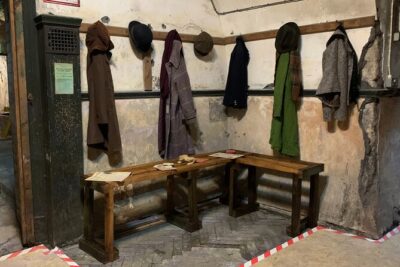
Air Raid Shelter + St. Nicholas Market Walking Tour
Read our review →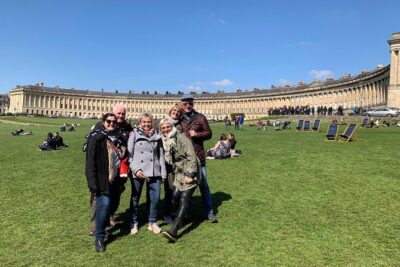
Walking Tour of Bath with Blue Badge Tourist Guide
Read our review →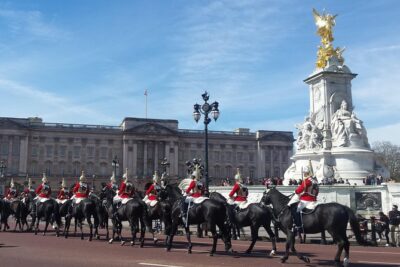
Changing of the Guard Guided Walking Tour in London
Read our review →Browse the lists this tour appears in