
Reviewed · BRITISH MUSEUM TOURS
Private Guided Tour of the British Museum
The British Museum can feel like several museums packed into one grand building. A private tour with Anthony Matthews gives you a clear route through the Egyptian, Greek, and Roman collections, with stories and context that the small display labels cannot provide. He is described as a retired archaeologist and Blue Badge Guide, and his approach combines archaeology, science, humor, and ancient-language skills.
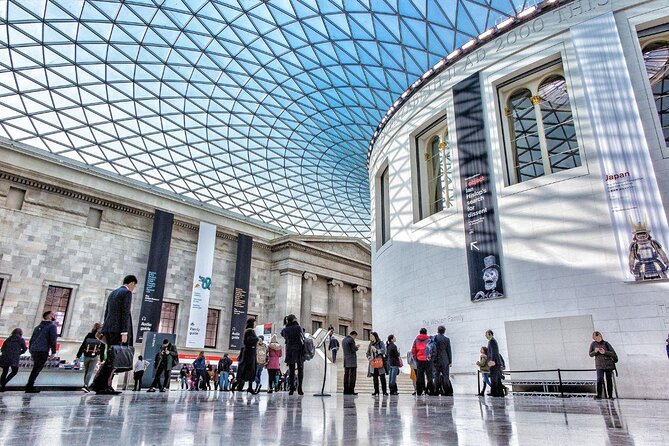
I especially like two things here: the tour is private for your group of up to six, and the route can bend toward what interests you most. I also like the practical time management. Anthony has met groups early so they could be near the front of the line and get a head start before the museum became crowded.
The main consideration is pace. Two to two and a half hours is enough for a strong introduction, not enough for the whole British Museum. The price of $344.49 is good value for a full group, but a costly choice for one or two people who prefer wandering alone.
Key points to know before you book
- Rosetta Stone and ancient scripts: Learn why the stone unlocked Egyptian hieroglyphs, and hear explanations of translations and inscriptions.
- A route built around your interests: Focus on Egypt, Greece, Rome, or a mix of major objects from across the museum.
- A guide with archaeological training: Anthony Matthews brings excavation, acquisition, and scientific context to the displays.
- Helpful for families: The storytelling and questions work especially well for children and teenagers interested in ancient civilizations.
- Private group pricing: One fee covers up to six people, so the per-person cost improves sharply when you fill the group.
- Morning or afternoon choice: You can fit the visit around the rest of your London day, though an early start may help with crowds.
Why a private guide helps at the British Museum
The British Museum is free to enter, but free admission does not make it simple. Its collection covers thousands of years and many parts of the world. You can spend an hour in one room and still feel that you have barely begun.
That is where a private guide earns the fee. Instead of trying to decide which objects matter most, you get a route with a purpose. Anthony can point out the major pieces, explain why they matter, and keep the visit moving when your attention starts to flag.
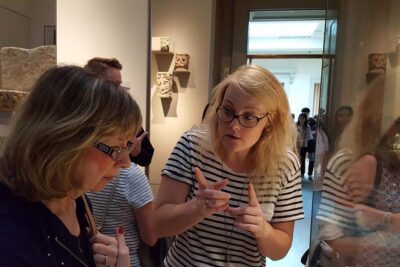
The private format also gives you room to ask questions. If your child wants to know how an object was made, or you want to understand how archaeologists identify and interpret it, the conversation can follow that thread. You are not waiting for a large group to catch up or listening to a fixed script that ignores your interests.
The experience is offered in English and includes a licensed, insured guide and the entrance ticket. The museum itself has no vehicle component, so plan to reach the meeting point in central London on your own.
More British Museum visits:
- British Museum London Guided Tour Semi-Private 8ppl Max
★ 5.0 · 984 reviews - The British Museum London – Exclusive Guided Museum Tour
★ 5.0 · 555 reviews - British Museum Guided Tour
★ 4.0 · 470 reviews
Beginning with the Rosetta Stone
The Rosetta Stone is the natural opening point. It is one of the museum’s best-known objects, but its importance goes far beyond fame. The stone carries the same decree in different scripts, giving scholars the key to reading Egyptian hieroglyphs.
Anthony explains how the translation worked and why comparing the scripts mattered. That turns the stone from a famous slab behind glass into a practical lesson in how modern understanding of ancient Egypt was built.
This is a good early stop because it gives you a method for looking at the rest of the museum. You begin to ask not only what an object is, but how researchers know what it is, what its inscription says, and what evidence supports the story attached to it.
Crowds can gather around the Rosetta Stone, especially at busy times. A private guide who knows the building and arrives early can help you reach the main displays before the heaviest flow. That early advantage is useful, but it is not a promise of an empty gallery. The museum remains a major London attraction.
Egypt beyond the famous stone
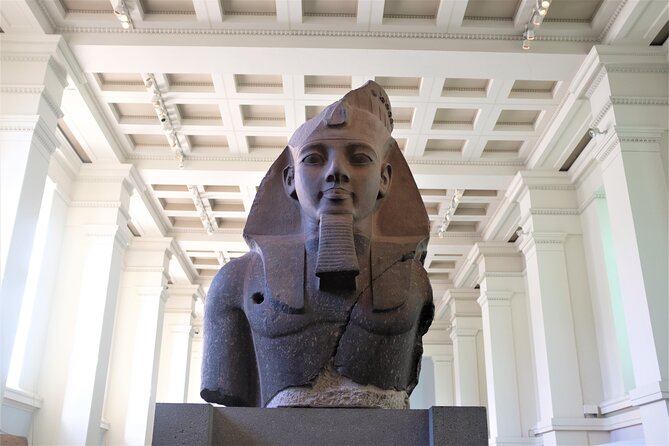
The Egyptian section offers far more than one object. The route may include a statue of Tutankhamun, with an account of his short life and death, along with sarcophagi, canopic jars, and material connected with the Book of the Dead.
These objects make more sense when you understand their role. A sarcophagus is not simply a decorated container, and a canopic jar is not just a small stone vessel. The guide can connect funerary objects with Egyptian ideas about the body, the afterlife, and the rituals thought to protect the dead.
The Book of the Dead section also helps explain how images and written spells worked together. You might hear ancient signs read aloud, including hieroglyphs on a wall, a sarcophagus, or the Rosetta Stone. That kind of direct engagement gives the objects a human scale.
Families often benefit from this part of the visit. Egyptian names, tombs, mummies, and strange-looking jars naturally hold a young person’s attention. Anthony’s use of questions, anecdotes, and humor is particularly useful when younger members of the group are beginning to tire.
Still, Egypt alone could fill a long morning. If it is your chief interest, tell the guide before the tour. If you also want Greece and Rome, expect a brisk selection rather than a room-by-room examination.
Greek sculpture and the Parthenon marbles
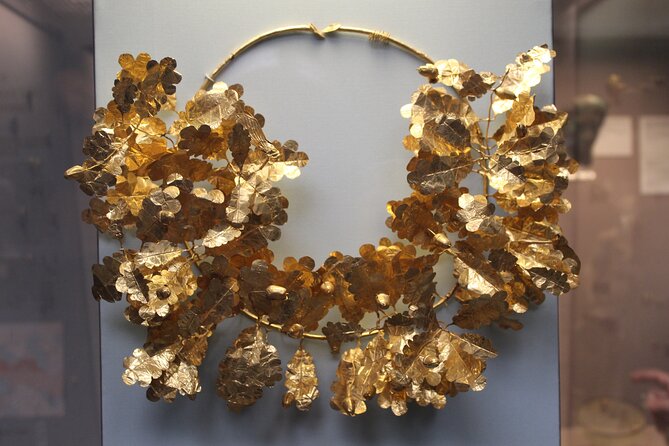
The Greek galleries shift the focus from writing and burial to sculpture, myth, politics, and the human form. You may see Greek statuary, a gold headdress, and scenes of Amazons fighting.
The Parthenon sculptures, often called the Elgin Marbles, bring an important question into the visit: how did these objects reach London, and what arguments surround their ownership and display? The guide can give the museum’s collection a wider context, including how objects were acquired and what physical evidence may remain from their removal.
That context matters because a museum visit should not treat every object as if it arrived without a complicated past. One review of the tour described Anthony pointing out crowbar marks on some objects. Details like that make acquisition history visible, even when the display itself looks polished and formal.
Greek art can also be easier to understand when you connect it to stories. Scenes of combat, gods, heroes, and Amazons are not random decoration. They reflect ideas about identity, danger, courage, and the boundary between Greek society and its imagined outsiders.
If your family already enjoys Greek mythology, this section may become the highlight. If not, the guide’s storytelling gives you a way into the objects without requiring prior study. You do not need to know every god or recognize every hero before you arrive.
More museums and galleries in London:
- Tower of London and Crown Jewels Exhibition Ticket
★ 4.5 · 6,677 reviews - Chelsea FC Stadium Tours and Museum
★ 5.0 · 1,908 reviews - Official tickets: Moco Modern & Contemporary Art Museum
★ 4.5 · 1,157 reviews - The Postal Museum Admission Ticket
★ 4.5 · 347 reviews
Roman engineering, politics, and luxury
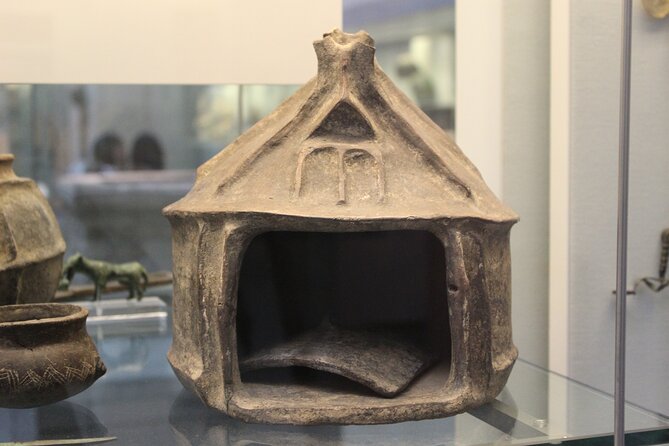
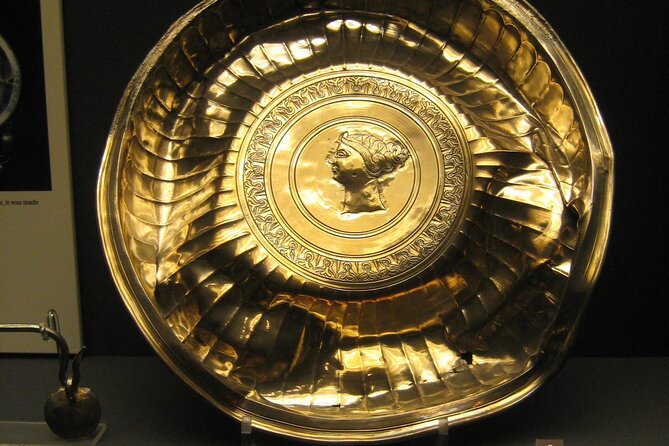
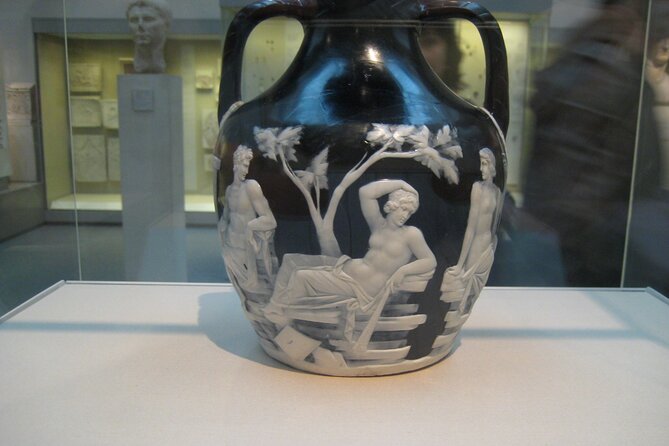
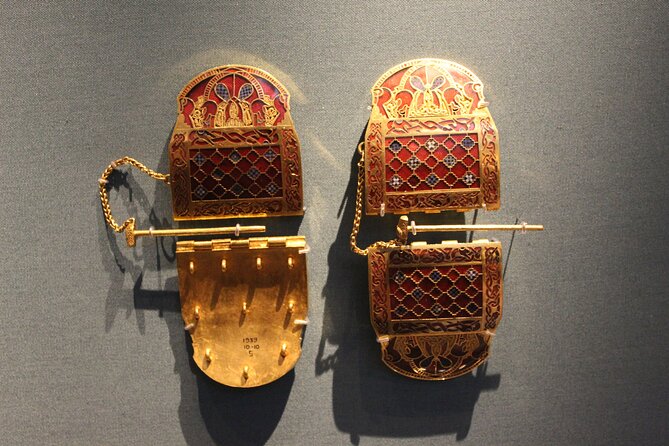
The Roman section provides a useful contrast with Greece. Here the tour may cover the origins of Rome, Roman technology, propaganda in glass, alligator armor, and fine gold jewelry.
The phrase Roman propaganda can sound abstract, but an object makes the idea easier to grasp. Art and decoration could promote an emperor, a military ideal, or a vision of Roman power. Glass objects and jewelry show another side of the empire, one concerned with trade, fashion, craft, and status.
Alligator armor is the sort of unusual detail that helps keep a highlights tour from becoming a list of marble heads and inscriptions. It also shows how wide the Roman world was and how the empire drew on materials and ideas from many regions.
This portion is valuable if you want more than mythology. The Roman displays connect daily life, technology, military culture, and political messaging. You can ask how something was made, what it was used for, or what its presence says about the society that produced it.
The drawback is the same one found throughout the museum: each object can open a much longer story. A skilled guide has to choose. You will leave with a framework and several memorable examples, not a complete course in Roman archaeology.
Anthony Matthews and his guiding approach
The guide is the heart of this experience. Anthony Matthews is repeatedly described as an archaeologist, a Blue Badge Guide, and a person pursuing a doctorate. The supplied information also identifies him as a retired archaeologist. His background gives him a different angle from a guide who relies only on dates and legends.
You can expect attention to how objects were excavated, translated, interpreted, and acquired. He has also been praised for reading hieroglyphs and for explaining the science behind the artifacts. That approach suits you if you want to understand the evidence, not only hear an entertaining story.
At the same time, the tone is not presented as dry or academic. Anthony uses humor, anecdotes, and questions, and he is reported to work well with children, teenagers, and adults together. One family with children aged 11 and 14 found that the guide kept everyone engaged for the full visit. Another family said their 15-year-old particularly enjoyed the Greek and Egyptian material.
His ability to personalize the route is important. You can focus on ancient Egypt, Greece, and Rome, or ask for a broader highlights visit. A couple with limited time in London used the morning to see the most important objects before an afternoon commitment. That is exactly the sort of situation in which private guiding provides the greatest benefit.
Is $344.49 a fair price?
The listed price is $344.49 per group of up to six people. That works out to about $57.42 each if six people share the cost. For a family or group of friends, that is a reasonable price for a licensed, insured guide and a focused visit to one of London’s most difficult museums to tackle efficiently.
For two people, the same fee becomes about $172.25 each. At that point, you should be honest about your priorities. If you enjoy reading labels, following a map, and choosing your own objects, the museum’s free admission may be enough. If your London schedule is tight, or if you want expert interpretation and a route built around Egypt, Greece, or Rome, the private fee makes more sense.
The value also depends on how many people in your group will truly listen and ask questions. A private visit lets you stop for clarification, change the emphasis, and move on when a display does not appeal. That flexibility is hard to get in a standard group tour.
You are paying for time saved as much as information gained. The British Museum has enough material to overwhelm a first-time visit. A guide can help you leave with a coherent picture instead of a blur of statues, mummies, and unfamiliar names.
Timing, access, and practical details
The experience offers a choice of morning or afternoon departures. Morning is the better pick if you want the best chance of reaching the major highlights before crowds build. Anthony has arrived before the meeting time for some groups and helped them get near the front when the doors opened.
The advertised duration is approximately two hours and 30 minutes, while the stop itself is listed as two hours. Treat it as a roughly two to two-and-a-half-hour experience and avoid scheduling a tight connection immediately afterward. The exact pace can depend on your interests, questions, and the museum’s crowd levels.
The tour begins and ends at the meeting point in Greater London, London, United Kingdom. No air-conditioned vehicle is included, so this is a walking museum visit rather than a transport package.
A mobile ticket is provided, and confirmation is received at booking. Service animals are allowed, and the museum is near public transportation. Most people can take part, but the building is two thousand years old in a city with old infrastructure, so not every area is fully accessible.
The activity is private, meaning only your group participates. Free cancellation is available up to 24 hours before the start time for a full refund. Changes or cancellations made less than 24 hours ahead are not accepted for a refund, and the cut-off follows local time.
Who will get the most from this tour
I would choose this tour for a first visit to the British Museum, especially if you have only one day in London. It is also a strong choice for families with children or teenagers, since the guide can adjust the language, pace, and subject matter.
It suits you if you like ancient Egypt, Greek mythology, Roman engineering, archaeology, or the practical question of how scholars know what they know. It also works well for adults who want a lively explanation rather than a silent march through galleries.
The tour is less suitable if you want to see every collection, spend long periods sketching, or browse at your own pace. Two and a half hours passes quickly, and a private guide cannot make the museum smaller. Tell Anthony your priorities early so the time goes toward the objects you care about most.
Some people have booked two sessions back to back to create a six-hour museum day. That is possible as a planning idea based on the tour format, but it would be a demanding amount of information. Most first-time visitors will find one session a better starting point.
Should you book the British Museum private tour?
Book it if you want the British Museum to make sense quickly. Anthony Matthews appears particularly well suited to groups who value archaeology, ancient languages, and lively storytelling, and his work with children is a major advantage for families.
The strongest reason to choose it is not simply that you see famous objects. It is that you understand why the Rosetta Stone matters, how Egyptian funerary objects fit together, what Greek sculpture communicated, and how Roman objects reflected power and daily life.
Skip it if you are traveling alone on a strict budget and enjoy exploring museums independently. For a group of four to six, however, the price becomes much easier to justify. Arrive ready with a short list of interests, choose a morning if possible, and let the guide handle the museum’s enormous scale.
FAQ
How much does the private British Museum tour cost?
The price is $344.49 per group, with up to six people included.
How long does the tour last?
The experience is advertised as approximately two hours and 30 minutes. The museum stop itself is listed as two hours, so allow roughly two to two-and-a-half hours.
Is the tour private?
Yes. Only your group participates in the activity.
Is museum admission included?
Yes. The inclusions list covers the entrance ticket and a licensed, insured guide.
Who guides the tour?
The named guide associated with the experience is Anthony Matthews. The supplied information describes him as a retired archaeologist and Blue Badge Guide, with archaeological expertise and experience explaining ancient languages.
Can the tour be tailored to my interests?
Yes. The tour can be adjusted to suit your interests and needs. Possible subjects include ancient Egypt, Greece, Rome, archaeology, and the museum’s major highlights.
What objects might I see?
The route may include the Rosetta Stone, a statue of Tutankhamun, sarcophagi, canopic jars, Book of the Dead material, Greek statuary, a gold headdress, Amazons fighting, Roman technology, glass propaganda, alligator armor, and gold jewelry.
Are morning and afternoon tours available?
Yes. You can choose a morning or afternoon tour.
Is transportation included?
No. The tour does not include an air-conditioned vehicle. The activity begins and ends at the stated meeting point in London.
Is the tour accessible to everyone?
Most people can participate, and service animals are allowed. The museum is near public transportation, but not every area is fully accessible because of the age of the building and the city around it.
Recently added around London
- London’s Crown Secret: Self-Guided Royal Puzzle Quest★ 4.5 · 8 reviews
- Postcard London★ 5.0 · 8 reviews
- Private Tour: Downton Abbey London Locations by Taxi★ 5.0 · 8 reviews
- Windsor Castle, Stonehenge & Roman Baths Private Tour★ 4.5 · 8 reviews
- Cotswolds Private Driving Tour from London★ 5.0 · 8 reviews
- Skip-the-line London Westminster Abbey and City of Westminster Kid-Friendly Tour★ 5.0 · 8 reviews
- A Silent Disco Adventure in London★ 5.0 · 8 reviews
- Gangster Tour of Soho★ 4.5 · 8 reviews
British Museum Tours, compared.
British Museum London Guided Tour Semi-Private 8ppl Max
Read our review →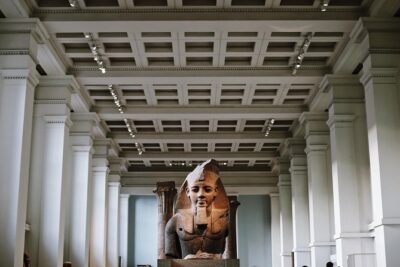
The British Museum London – Exclusive Guided Museum Tour
Read our review →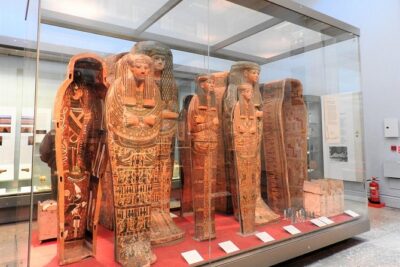
Private Guided Tour of the British Museum – Tickets Included
Read our review →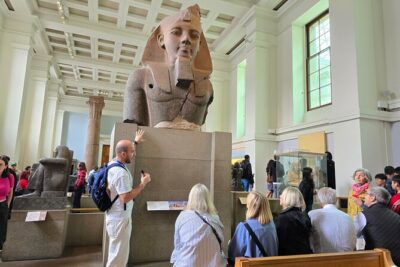
British Museum Guided Tour with Priority Timeslots(Small Group)
Read our review →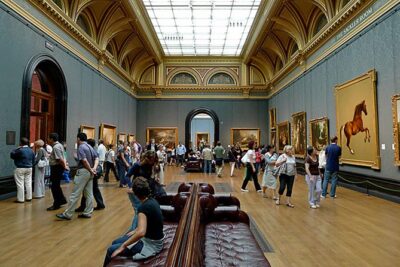
British Museum & National Gallery of London Semi-Private 8ppl Max
Read our review →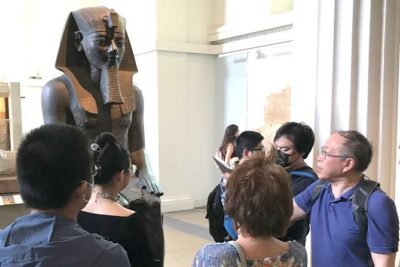
Explore Biblical Artifacts at the British Museum
Read our review →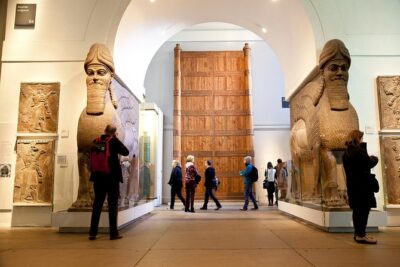
British Museum Highlights Private Tour in London including the Rosetta Stone
Read our review →Browse the lists this tour appears in