
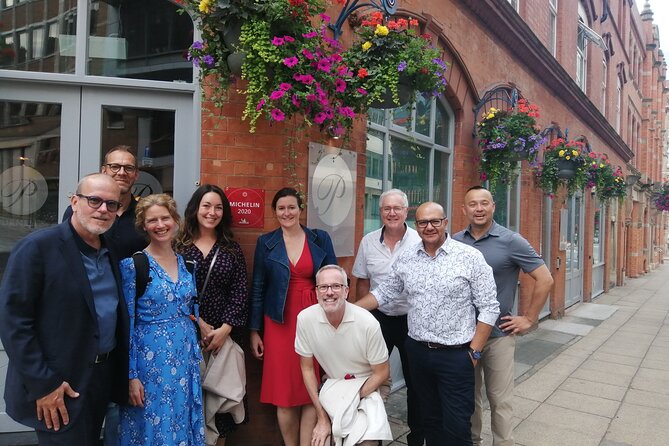
Reviewed · BIRMINGHAM TOURS
Birmingham City Centre Daily Walking Tour (10:30am & 2pm)
Birmingham’s city centre makes more sense when someone points out how its industrial past, wartime memory, and modern rebuild fit together. This 90-minute walk gives you that framework, moving from the cathedral and Victorian civic buildings to canals, music landmarks, and the contemporary centre.
I like the relaxed pace and the route’s useful mix of major sights and small details you could easily miss alone. I also like the local touch: guides such as Dee, Phil, Peter, Richard, and Carlos have been praised for making the walk friendly, funny, and easy to follow. The main drawback is simple: you see the outside of most buildings, and a cold or wet day can make the frequent outdoor stops less pleasant.
Key things to know before booking
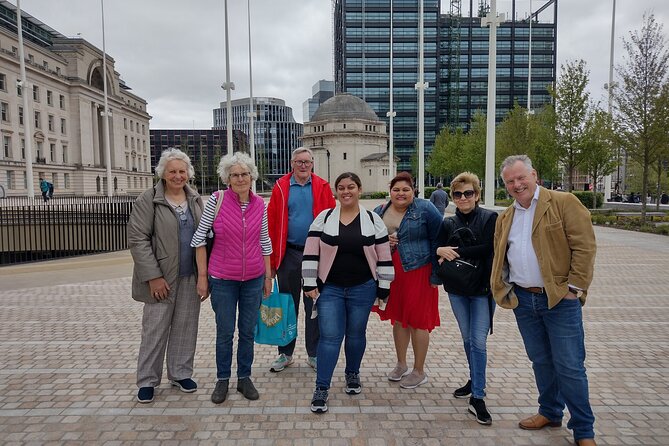
- A compact route with a clear story: The walk connects Birmingham’s industrial growth, civic pride, wartime sacrifices, and current city life.
- Twelve central stops: You pass St Philip’s Cathedral, Victoria Square, Town Hall, the Museum and Art Gallery, Broad Street, Symphony Hall, and Ikon Gallery.
- A good first-day activity: The route finishes near Brindleyplace, making it easy to continue exploring after you have your bearings.
- Local guides shape the experience: Dee, Phil, Peter, Richard, and Carlos are among the guides praised for humor, local color, and clear explanations.
- Outdoor sightseeing only: The tour does not allow time to go inside the main buildings, and some admission tickets are not included.
- Small groups are possible: The maximum group size is 20, while some departures may have only a few people.
Why this walk works as a Birmingham introduction
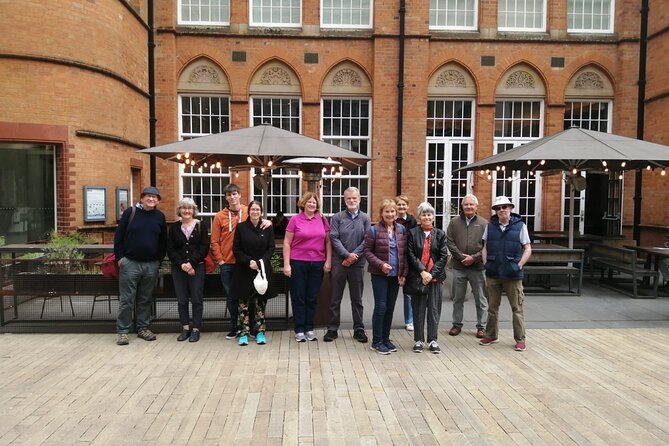
Birmingham can feel scattered at first. Its public squares, grand civic buildings, canals, museums, music venues, and newer developments do not all belong to one obvious visual style. That is exactly why a guided walk helps.
You are not simply ticking off buildings. The guide links the city’s growth during the Industrial Revolution with its later civic ambitions, the effect of the two World Wars, and the way Birmingham has reshaped its centre in recent decades. The result is a useful outline of the city rather than a stack of disconnected dates.
The route is about 1 hour 30 minutes and is described as an easy walk at a relaxed pace. It covers central streets and public spaces, including places vehicles cannot reach directly. You should still expect to be on your feet for most of the session, with several short stops of roughly five minutes each.
Guides have different personalities, and that matters here. Dee is praised for warmth and engaging stories, Phil for local knowledge and a willingness to show a favorite city viewpoint, and Peter for packing the walk with facts. Other guides, including Richard and Carlos, have been praised for giving the city character beyond the standard sightseeing script.
More Walking Tours in Birmingham
- Birmingham Walking Tour: Canals, Victorians & Today (1:30pm)
★ 5.0 · 346 reviews - Discovering Birmingham 2 hour Walking Tour to the Jewellery Quarter
★ 5.0 · 333 reviews - Birmingham Slogging Gangs Walking Tour with Edward Shelby
★ 4.5 · 306 reviews
Starting beneath Birmingham Cathedral
The meeting point is Birmingham Cathedral in Cathedral Square, on Colmore Row, postcode B3 2QB. The guide introduces the city here, in the shadow of St Philip’s Cathedral, before leading the group through the centre.
One practical point deserves attention. The old flagpole used as a meeting marker has reportedly been removed. Look for the wheel in Cathedral Square instead, and watch for the guide’s bright orange jacket. That small adjustment can save you a few minutes of searching, especially at the 10:30am or 2pm start.
Cathedral Square is a sensible opening point because it places you beside one of Birmingham’s best-known civic buildings without asking you to begin with a long walk. It also gives the guide room to set up the main theme: a city that changed quickly as industry, commerce, and civic ambition reshaped it.
The stop at St Philip’s Cathedral Garden follows almost immediately. Built during the Industrial Revolution, the cathedral provides an early link between Birmingham’s religious centre and its period of rapid growth. The stop is brief, so think of it as an introduction to the building and its setting rather than a cathedral visit.
Victorian ambition at Victoria Square and Town Hall
Victoria Square takes you into 19th-century Birmingham. The guide uses the square to explain Victorian Birmingham and the city’s growing confidence.
This is where the walk begins to show how Birmingham wanted to present itself. The public buildings around the square reflect a city that was no longer content to be seen only as an industrial centre. You get a sense of the civic pride behind its architecture, even during a short stop.
Birmingham Town Hall comes next. The building was created to symbolise the city’s rising status, and its doors have welcomed figures ranging from Charles Dickens and Emmeline Pankhurst to Bob Dylan, the Rolling Stones, and the Beatles.
That guest list gives the guide plenty of room for memorable stories. The useful point is not only who appeared there, but what the hall says about Birmingham’s place in public life. It connects Victorian civic culture with later political, literary, and music history.
You do not go inside during this short walk, and admission is not included. If Town Hall interests you, make a note to return later rather than expecting the tour to provide an interior visit.
Museum, art, and Birmingham’s wartime story
The Birmingham Museum and Art Gallery is the next major stop. Even from outside, its building gives the group a strong visual pause, while the guide introduces artists connected with Birmingham.
This part works well for anyone who wants more than architecture. The emphasis on local artists helps show that the city’s identity is not only about factories, engineering, and commerce. It also has a creative side that deserves time of its own.
Again, the walk does not include time inside. Admission is not included, so treat this as a preview. If you plan to visit the museum, the tour can help you decide what deserves a longer look later in your trip.
Chamberlain Square shifts the subject to the First and Second World Wars. Here, you learn about Birmingham’s role in both conflicts and the sacrifices made by local people.
The stop adds weight to the walk without turning it into a formal memorial tour. It helps explain why certain city spaces carry more meaning than their appearance might suggest. The guide’s job is especially important here, since a five-minute stop needs clear storytelling rather than a long list of names and dates.
A completely different sort of day out in Birmingham:
- Entry ticket to Hoo Zoo and Dinosaur World in Telford
★ 5.0 · 591 reviews - Cadbury World Entry Ticket
★ 3.0 · 524 reviews - SEA LIFE Birmingham Admission Ticket
★ 3.0 · 218 reviews - Fun, Flexible Treasure Hunt Around Birmingham with Cryptic Clues & Hidden Gems
★ 5.0 · 167 reviews
From Centenary Square to the Hall of Memory
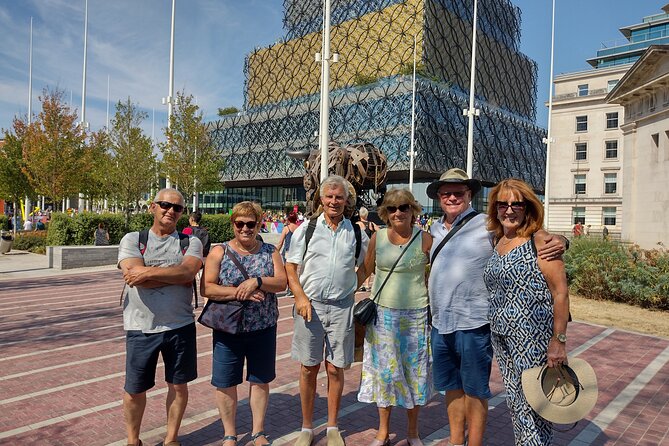
Centenary Square brings the story from old Birmingham to the modern city. The guide points out newer architecture and discusses how people live in Birmingham today.
This is one of the route’s useful contrasts. Within a short distance, you move from older civic buildings to a more contemporary public space. You can see how the city has tried to update its centre while keeping earlier landmarks in the same broad area.
The Hall of Memory gives the route another memorial stop. It honours those who gave their lives for Birmingham and Britain.
You should expect to view the hall from outside rather than spend time inside. Admission is not included, and the tour’s pace means the guide will focus on why the building matters and how it fits the city’s public memory.
Baskerville House follows, with an introduction to John Baskerville. This adds a different strand to the story, moving away from grand civic buildings and wartime remembrance toward printing, design, and the people who helped shape Birmingham’s intellectual and commercial life.
The stop is short, but it is the sort of detail that makes a city walk more rewarding. You may pass a building or name without knowing why it matters. A local guide gives you a reason to look again.
Broad Street, music, and Birmingham’s canal quarter
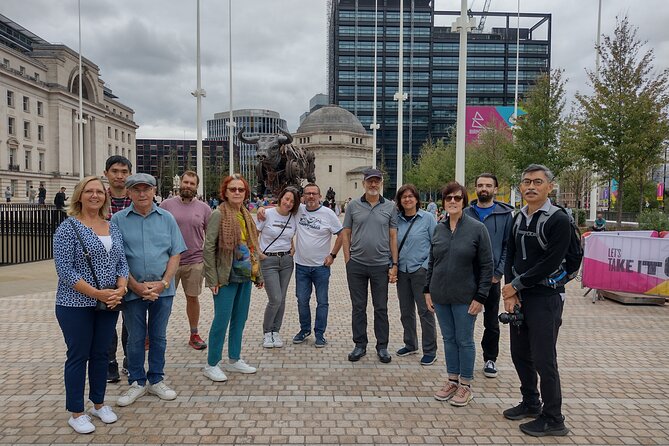
Broad Street is described as Birmingham’s own walk of fame. The route then continues toward Symphony Hall and the canals.
Music is a particularly enjoyable thread in this part of the walk. The route includes references to the city’s strong connection with major performers, and one guide has also pointed out the Black Sabbath Bridge. These details give Broad Street and the canal quarter a more personal feel than a standard architecture tour.
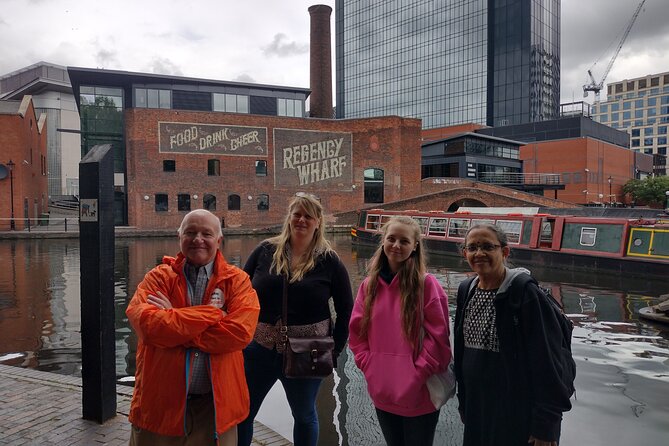
At Symphony Hall, the walk moves alongside one of Birmingham’s industrial canals. This is a valuable change of pace after the squares and civic buildings. The canal setting helps you see another side of the city, where industrial transport routes now form part of the public walking network.
The tour does not include entry to Symphony Hall. It is best understood as a stop for context and exterior views, not a concert visit.
The canal section is also one of the places where the tour earns its price. You could find the main squares alone, but a guide helps connect the waterway to Birmingham’s industrial development and current city life. You also avoid the hassle of working out how the central streets lead toward the canal quarter.
Finishing at Ikon Gallery and Oozells Square
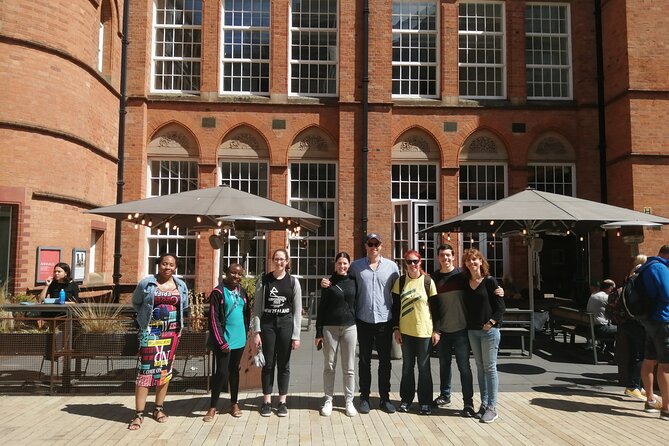
The final stop is Ikon Gallery at 1 Brindleyplace, in Oozells Square, Birmingham B1 2HS. Its Neo-Gothic exterior creates a pleasing final contrast with the modern surroundings.
The gallery combines an older-looking façade with contemporary art inside, which neatly echoes the broader route. Birmingham’s centre is not one single historic district. It is a mix of old buildings, rebuilt public spaces, canals, entertainment venues, and new development.
The tour ends here, rather than returning to the cathedral. That is practical if you want to continue around Brindleyplace, the canals, or Broad Street. It also means you should plan your route afterward if you need to return to the starting area.
Ikon Gallery admission is not included. The tour does not promise an interior visit, so you will need a separate plan if you want to see the exhibitions.
What you get for $19.41
At $19.41 per person, this is reasonably priced for a 90-minute guided introduction, especially if you are new to Birmingham. The value comes from the connections between the stops, not from entry to attractions, since the walk is mainly an outdoor experience.
You are paying for a local guide, route planning, historical context, and the chance to ask questions as you go. A guide can also point out details you would probably miss while navigating with a phone. Several people who took the walk with only a small group found the experience especially engaging, since it allowed more direct conversation.
The price is less attractive if you want extensive interior sightseeing. Town Hall, Birmingham Museum and Art Gallery, Hall of Memory, Symphony Hall, and Ikon Gallery are not included as visits. You will need to budget separate time and possible admission costs for those places.
I see the tour as a city orientation, not a full Birmingham attraction pass. Book it early in your visit, then return to the buildings that interest you most.
Group size, pace, and weather
The maximum group size is 20. That is small enough for a guide’s voice to remain fairly personal, though the actual group may be much smaller. Some departures have had only a few people, and one had just two participants.
A small group can change the tone considerably. You can ask more questions, move at a natural pace, and get suggestions for the rest of your stay. Larger groups will still benefit from the short route, but you may want to stay close to the guide at each square.
Most people can take part, and the tour is near public transport. Service animals are allowed. The information provided does not give a detailed accessibility assessment, so if you have specific mobility needs, contact the provider before booking.
Weather matters. The experience can be canceled in poor conditions, with a different date or full refund offered. Even when it runs, Birmingham’s open squares and canal paths can feel cold in winter. Wear a warm outer layer and comfortable shoes, and consider the forecast before choosing a departure.
The 10:30am start is useful if you want the rest of the day for museums and shopping. The 2pm option may suit a slower morning or an arrival day. Because the tour finishes near Ikon Gallery, each start time leaves you in a useful part of the centre for the evening.
Who will get the most from this tour
I would choose this walk if you are visiting Birmingham for the first time and want a quick, organized introduction before exploring alone. It is also useful if you live nearby but have never looked at the city as a sightseer. One participant who was born in Birmingham still found the walk a helpful way to notice the city anew.
Families can do well with it. A 10-year-old joined one walk and enjoyed learning about the city through the guide’s stories. The short duration and easy pace are more manageable than a long, heavily academic tour.
It also suits visitors who like history presented through places rather than lectures. You get civic buildings, memorials, art, music, canals, and modern architecture in one compact route.
I would hesitate only if you need a fully sheltered activity, want to go inside several attractions, or prefer a highly specialized tour focused on one subject. This walk covers a lot of ground, so it offers breadth rather than detailed study.
My booking advice
Book this for your first day, ideally before setting aside time for the museum, Town Hall, or the canal quarter. You will finish with a better sense of where those places fit and which ones deserve a return visit.
When you book, remember that the meeting point is by Birmingham Cathedral in Cathedral Square, and the missing flagpole can cause confusion. Look for the wheel and the guide’s bright orange jacket. The activity is usually booked about 11 days ahead, so reserving early is sensible if your schedule is fixed.
Free cancellation is available up to 24 hours before the start time. Changes or cancellations inside that window are not accepted for a refund, and a minimum group size is required for the tour to operate.
Should you book the Birmingham city centre walk?
Yes, if you want a friendly, affordable overview with a local voice. The strongest parts are the clear route, the mix of old and new Birmingham, the canal finish, and guides such as Dee and Phil who bring humor and personal insight to the facts.
Go in knowing what it is: a brisk outdoor introduction with short stops, not a series of building visits. If you can handle the weather and are happy to explore interiors later, $19.41 buys a useful start to Birmingham.
FAQ
How long is the Birmingham City Centre Daily Walking Tour?
The tour lasts approximately 1 hour and 30 minutes.
What time does the tour start?
You can choose a 10:30am or 2pm departure.
Where does the tour begin?
It starts at Birmingham Cathedral in Cathedral Square, Colmore Row, Birmingham B3 2QB, UK.
Where does the tour end?
The walk ends at Ikon Gallery, 1 Brindley Place, Oozells Square, Birmingham B1 2HS, UK.
What sights are included on the route?
The route includes Cathedral Square, St Philip’s Cathedral Garden, Victoria Square, Birmingham Town Hall, Birmingham Museum and Art Gallery, Chamberlain Square, Centenary Square, the Hall of Memory, Baskerville House, Broad Street, Symphony Hall, and Ikon Gallery.
Are admission tickets to the buildings included?
No. The walk mainly covers exterior views and explanations. Admission is not included for locations such as Birmingham Town Hall, Birmingham Museum and Art Gallery, the Hall of Memory, Baskerville House, Symphony Hall, and Ikon Gallery.
Can I cancel the booking?
Yes. You can cancel up to 24 hours before the experience for a full refund. If poor weather or an insufficient number of participants causes the tour to be canceled, you will be offered another date or experience, or a full refund.
Recently added around Birmingham
- Best of Birmingham 12km Running Tour★ 5.0 · 12 reviews
- Birmingham Private Self-Guided Walking Tour★ 4.0 · 13 reviews
- On the Origins of Charles Darwin: A Self-Guided Audio Tour of Shrewsbury★ 4.5 · 16 reviews
- Taste of Shrewsbury Food and Drink Tour with Guide★ 5.0 · 22 reviews
- Cotswolds Full-Day Tour From Birmingham★ 4.5 · 30 reviews
- From Birmingham Stonehenge and Bath Day Tour★ 4.5 · 33 reviews
- Birmingham Ghost Hunt: Haunted Self-Guide Tour & Quest★ 4.5 · 37 reviews
- 2.5-Hours Walking Tour of Birmingham into Black Heritage Madiba★ 5.0 · 49 reviews
Birmingham Tours, compared.

Entry ticket to Hoo Zoo and Dinosaur World in Telford
Read our review →
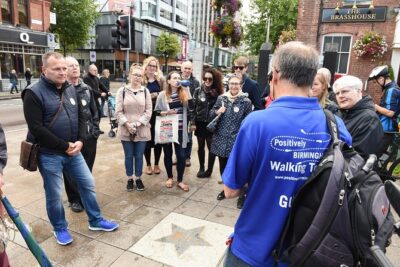
Birmingham Walking Tour: Canals, Victorians & Today (1:30pm)
Read our review →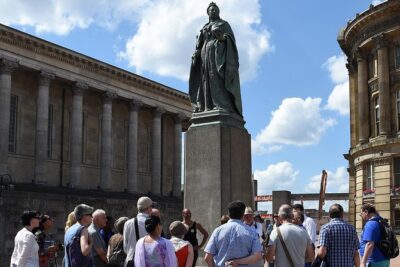
Discovering Birmingham 2 hour Walking Tour to the Jewellery Quarter
Read our review →
Birmingham Slogging Gangs Walking Tour with Edward Shelby
Read our review →

Fun, Flexible Treasure Hunt Around Birmingham with Cryptic Clues & Hidden Gems
Read our review →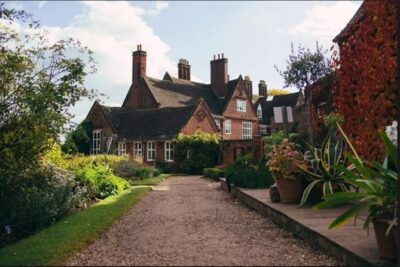
Skip the Line: House and Garden Admission Ticket
Read our review →Browse the lists this tour appears in