
Reviewed · BRITISH MUSEUM TOURS
British Museum London Guided Tour Semi-Private 8ppl Max
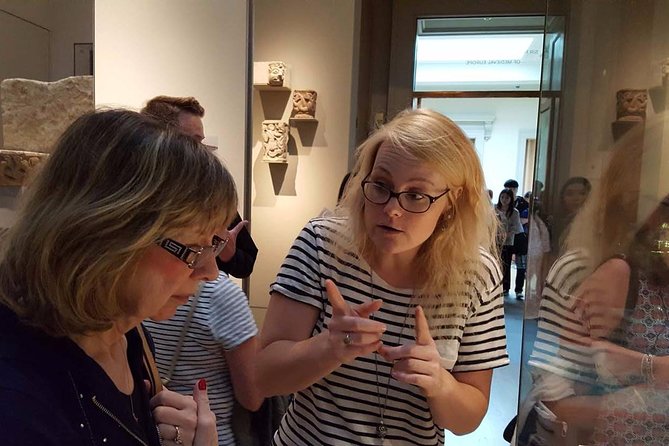
The British Museum can swallow an entire day, yet this small-group tour of no more than eight people gives you a firm route through its greatest treasures in about two and a half hours. You’ll see the Rosetta Stone, the Mummy of Katebet, the Lewis Chessmen, Parthenon sculptures, and the Assyrian lion-hunt reliefs without wandering blindly through room after room.
I like two things here: the intimate group makes it easier to hear and ask questions, and the guides bring useful context to objects you might otherwise glance at and pass. Guides such as Ivo, Jake, James, Laurence, Steph, and Guy have been singled out for clear explanations, humor, and honest discussion of how contested objects entered the collection. The main drawback is that this is a highlights tour, not a full survey, and the museum can still be crowded.
Key points at a glance
- Eight people maximum: A small group makes it easier to stay with the guide and ask questions.
- Famous objects plus less obvious finds: Expect the Rosetta Stone, Lewis Chessmen, Katebet’s mummy, Parthenon sculptures, and Assyrian reliefs.
- About 2.5 hours: A useful format if London is packed with sights and your museum time is limited.
- Guide-led interpretation: The value comes from historical context, stories, and help finding the important rooms.
- Several start times: You can fit the visit around other plans.
- Practical limits: No hotel transport, no temporary exhibitions, no large bags, and the tour is not suitable for wheelchair users or people with walking disabilities.
Why a small group matters inside the British Museum
The British Museum holds around eight million objects covering 6,000 years of human history. That number is impressive, but it is also the problem. On your own, you can spend twenty minutes studying one room and still feel you have barely begun.
A group capped at eight gives the visit a more personal feel than a standard large walking tour. You are not trying to hear a guide over a crowd of thirty people. You can ask why an object matters, how it was used, or why it ended up in London. The guide can also adjust the pace when your group is particularly interested in one section.
This matters most in crowded galleries. Andy, for example, has been praised for helping a family move through busy areas while still reaching the pieces they wanted to see. A small group does not remove the crowds, but it gives your guide a better chance of keeping everyone together.
The tour can also be booked as a private option if you want your own party only. The supplied details do not state the private-tour price, so check the amount before booking. The shared semi-private version is the more useful comparison for most people.
More British Museum visits:
- The British Museum London – Exclusive Guided Museum Tour
★ 5.0 · 555 reviews - British Museum Guided Tour
★ 4.0 · 470 reviews - Private Guided Tour of the British Museum – Tickets Included
★ 5.0 · 193 reviews
Starting at Great Russell Street
You meet at the British Museum, Great Russell Street, London WC1B 3DG. The museum is near public transport, but hotel pickup and drop-off are not included, so plan to reach the meeting point on your own. An Uber or taxi is suggested for direct transport.
Choose your start time when you book. That flexibility helps if you are fitting the museum between Westminster, the Tower, or an afternoon train. Still, do not treat the start time casually. One practical tip is simple: arrive early enough to find the entrance, clear security, and locate the meeting point without rushing.
Bring comfortable shoes. Two and a half hours on museum floors is a moderate physical outing, and the route involves walking between galleries. An umbrella is also sensible for London’s changeable weather, particularly if you are waiting outside before entry.
Security rules affect what you can carry. Large bags and suitcases are not allowed inside. Only a handbag or small, thin backpack is permitted through security. If you are moving between hotels or heading to a train, arrange luggage storage before the tour.
The opening introduction puts the collection in perspective
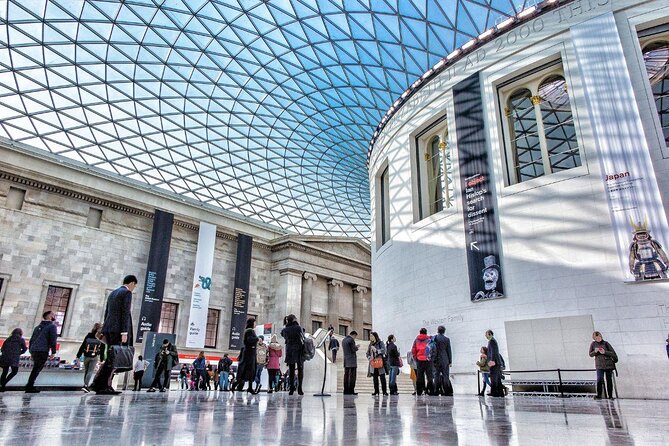
Your guide begins with an introduction to the museum and the scale of its collection. This is not just background filler. It helps you understand why a focused route is useful.
The museum covers objects from ancient Egypt, Assyria, Greece, medieval Europe, Japan, and many other parts of the world. You might see samurai armor in one area and a 7th-century BC Assyrian relief in another. Without a guide, these changes in place and time can feel disconnected.
The better guides turn the route into a story about what people made, believed, feared, and valued. Guy has been praised for making the material accessible even for teenagers, using humor without treating the subject lightly. Becky has been noted for making the selected objects feel alive through stories and clear explanations.
The tone is serious but not stiff. You will learn about fallen empires and ancient societies, but the visit is designed to be enjoyable rather than academic. That balance is important if your group includes people with different levels of interest in museums.
Egyptian objects, including the Mummy of Katebet
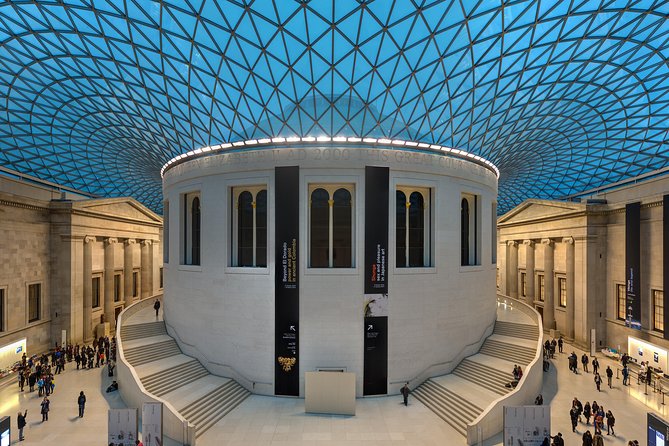
The Mummy of Katebet is one of the featured stops. A mummy can easily become a quick visual encounter: a case, a name, a date, and then on to the next room. A guide gives you a better chance of understanding the person behind the object and the beliefs surrounding burial.
Your guide explains the purpose and meaning of what you see, not just its age. That kind of context is where the tour earns its fee. You are not simply collecting famous names. You are learning how the object fits into the culture that made and used it.
The route is selective, so you should not expect a detailed tour of every Egyptian room. If Egyptian collections are your main reason for coming, tell the guide at the start if there is time to shape the emphasis. The tour is built around major highlights, but several guides have shown a willingness to respond to group interests.
More museums and galleries in London:
- Tower of London and Crown Jewels Exhibition Ticket
★ 4.5 · 6,677 reviews - Chelsea FC Stadium Tours and Museum
★ 5.0 · 1,908 reviews - Official tickets: Moco Modern & Contemporary Art Museum
★ 4.5 · 1,157 reviews - The Postal Museum Admission Ticket
★ 4.5 · 347 reviews
The Rosetta Stone and the power of one object
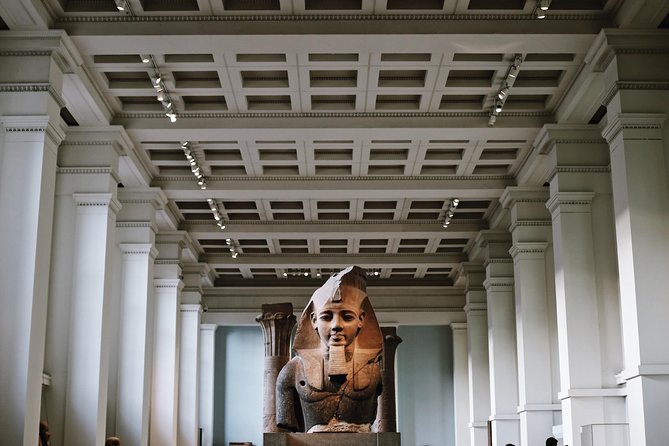
The Rosetta Stone is an essential stop, and the guide uses it to explain how a single artifact changed the study of ancient Egypt. You see the actual stone, not a reference to the language-learning program, and learn why its inscriptions matter.
This is a good example of the difference between seeing and understanding. The stone itself may not look as dramatic as a huge sculpture or a decorated tomb object. Its importance comes from the information it carries and the role it played in interpreting Egyptian writing.
Some guides build the whole route around the Rosetta Stone and then connect it to other objects. Steph has been praised for shaping the visit like a story that begins with this famous piece. That approach gives the tour a clear thread instead of making it feel like a random list of museum stops.
Expect crowds around the stone. The guide can help you see it and explain it, but you may not have a quiet, private moment in front of the case.
Assyrian reliefs and the less predictable highlights
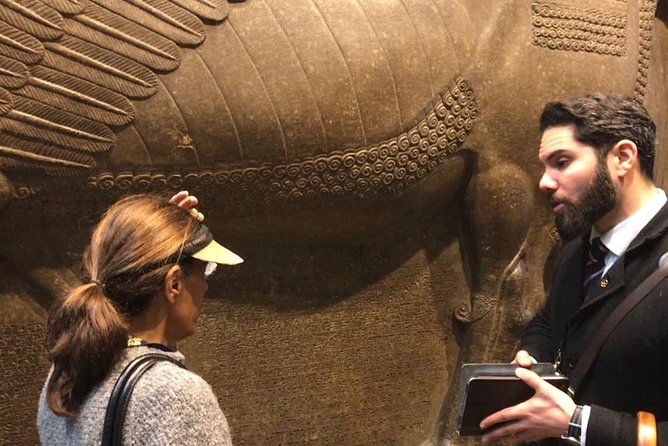
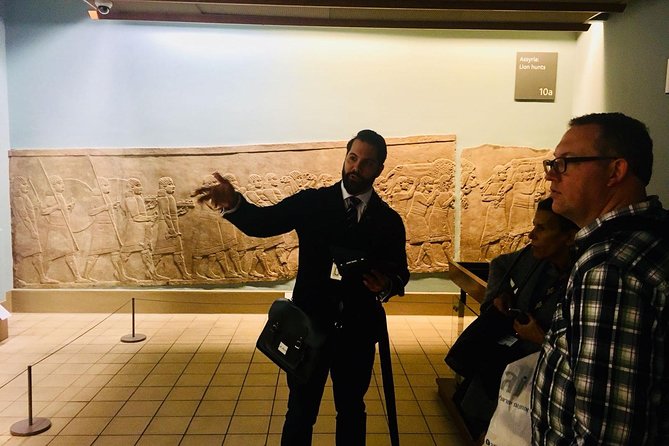
The Assyrian section is one of the most rewarding parts of the route because it adds something beyond the expected Egyptian and Greek treasures. The lion-hunt reliefs, dating from the 7th century BC, show the power and skill of the Assyrian court.
James has been praised for including this section along with the better-known attractions. That choice is smart. If you only visit the Rosetta Stone and Parthenon sculptures, you miss some of the museum’s most dramatic storytelling.
The reliefs reward close looking. A guide can point out details in the carving and explain what the hunting scenes communicated about kingship and power. I would pay attention here even if your main interest is elsewhere. This is the kind of stop you may not choose on a first independent visit, yet it can become one of the most memorable.
The group’s time is limited, so the guide cannot linger over every panel. If you want a longer look, note the room and return after the tour.
The Lewis Chessmen and medieval Europe
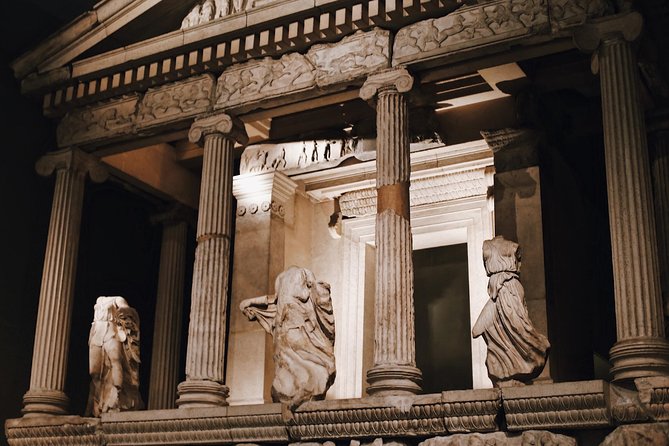
The 12th-century Lewis Chessmen bring the tour into medieval Europe. They are smaller and more familiar in scale than many of the museum’s enormous sculptures, but their faces and individual character make them easy to remember.
This stop helps break up the tour’s ancient focus. You move from Egyptian burial practices and Assyrian royal imagery to a medieval game set, gaining a sense of how objects can reveal everyday life as well as political power.
A good guide explains why the chessmen matter rather than treating them as a cute display. Their craftsmanship, use, and survival make them a useful bridge between art, trade, leisure, and medieval society.
Again, expect a brief visit rather than a specialist lecture. The value is in the connection between this object and the larger route.
Parthenon sculptures and contested ownership
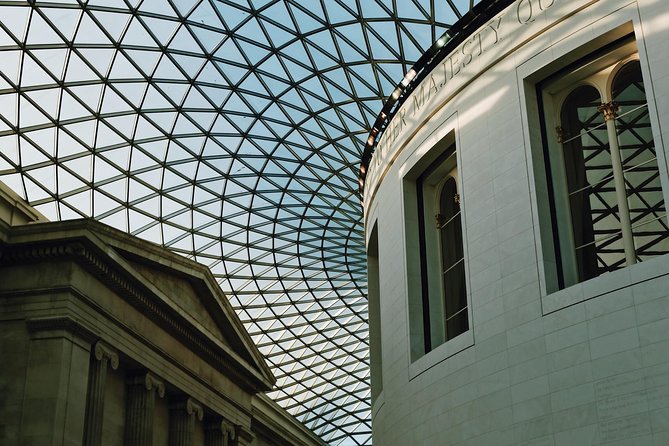
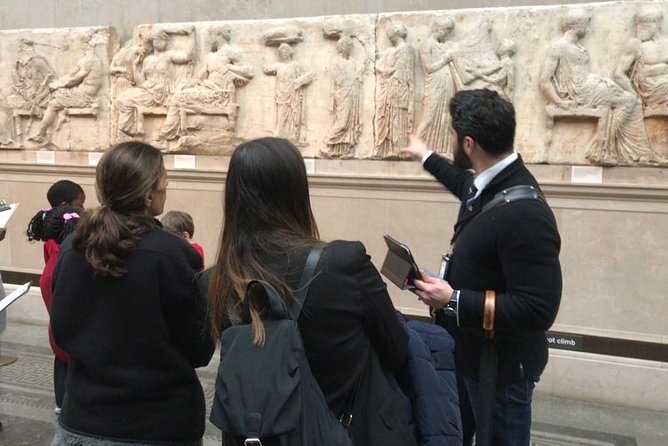
The Parthenon sculptures are among the museum’s most famous displays. The tour may include them alongside the Rosetta Stone and other major attractions, giving first-time visitors a clear introduction to the collection.
This is also an area where a thoughtful guide matters. The presence of Greek sculptures in London raises questions about acquisition, empire, ownership, and the return of cultural objects. Jake has been praised for addressing controversial subjects directly rather than presenting the collection as if every acquisition were uncomplicated.
Eleisha has also been praised for offering honest answers about contested objects and bringing a modern perspective to side conversations. That does not mean every question will have a simple answer. It means you can expect space for the museum’s difficult parts as well as its artistic achievements.
The guide’s treatment will vary by person, but the tour is not limited to admiring beautiful objects. You are encouraged to think about how they arrived here and what that means today.
A route built for time-pressed visitors
At 2.5 hours, this tour is long enough to give the museum shape but short enough to leave room for the rest of London. That is its strongest practical feature.
You will not see eight million objects. You will not even see every famous gallery. Instead, you get a deliberate selection of ancient and medieval highlights. Laurence has been praised for showing the best of the museum in the allotted time, while Lawrence has been praised for reaching spectacular sights efficiently.
That efficiency helps if this is your first visit. The British Museum can produce decision fatigue. Do you start with Egypt, Greece, Rome, Assyria, Asia, or medieval Europe? A guide removes that first burden and gives you a starting point.
The trade-off is freedom. You move at the guide’s pace, and the route may not match your personal priorities. If you want to spend an hour with one civilization or work through every room slowly, visit independently instead, or stay after the tour to revisit the galleries that caught your attention.
Guide quality and the value of interpretation
The guide is the main reason to book this experience rather than simply enter the museum. Names repeatedly associated with strong visits include Ivo, Jake, James, Andy, Eleisha, Stephanie, Steph, Laurence, Lawrence, Darcy, Guy, Matilda, Becky, and Sacha.
The praise is consistent in a few useful areas. Guides are described as clear, friendly, witty, and able to answer questions. Several are noted for adjusting the route to family interests. Others have followed up with extra materials or offered suggestions for other things to do in London.
Of course, you cannot select a particular guide unless the booking system allows it. Treat the names as examples of the level and style you might encounter, not a guarantee. The strongest fit is a guide who can explain objects in plain language, keep the group moving, and make room for questions.
Some museum rooms require quiet or restrict speaking. Your guide will provide information before entering those areas. This means the tour may sometimes pause for an explanation outside a room rather than continue talking beside the display.
Is $108.44 good value?
At $108.44 per person, this is not a cheap way to enter the British Museum. The museum itself has free admission, but the paid experience buys you planning, interpretation, and a small group.
I think the value is good if you have limited time or feel uneasy tackling a huge museum alone. The guide’s route can save you from wandering past important objects, and the small group creates more room for questions than a large coach-style tour.
The value is weaker if you already know the collection well, prefer a slow self-guided visit, or want to focus on temporary exhibitions. Temporary exhibitions are not included, and the standard museum admission ticket is free. You are paying for the guided service, not for entry to a special paid exhibit.
Group discounts may be available, so compare the total price for your party before booking. A private upgrade could make sense for a family with a strong shared interest, but only if the added cost fits your budget.
Practical details before you book
The tour requires at least two people to operate. If that minimum is not met, you will be offered another date or experience, or a full refund.
Free cancellation is available up to 24 hours before the start time. If you cancel later, the amount paid is not refunded, and changes made inside that 24-hour window are not accepted.
The tour is not available to people with walking disabilities or those using a wheelchair. You should have a moderate level of physical fitness. Ask before booking if someone in your party may struggle with the walking pace or museum access arrangements.
The museum can sometimes close or delay opening without warning. If opening is delayed by more than one hour, an alternative may be offered, but the stated conditions do not promise a refund or discount in that situation. Collections and accessible rooms can also change during the year.
You must provide a mobile phone number with the country code. That is important for meeting arrangements and last-minute contact.
Who should book this British Museum tour?
I would choose this for a first visit to London, especially if you have only one morning or afternoon for the museum. It also suits families, couples, and small groups who want history explained without signing up for a large tour.
Teenagers may respond well to guides who use humor and vivid stories. Adults interested in colonial collecting and disputed ownership should appreciate the chance to ask direct questions. The tour also works for repeat visitors who want a fresh route through familiar rooms.
I would skip it if you want a quiet, unhurried museum day. Independent visitors can enter for free, set their own pace, and return to favorite galleries. You should also skip it if you need wheelchair access, plan to bring luggage, or mainly want a temporary exhibition.
Should you book it?
Book this tour if the British Museum feels too large to tackle on your own and you want the major objects placed in a useful story. The eight-person limit, 2.5-hour route, and strong record of guides who explain difficult subjects well make it a practical choice for a busy London schedule.
Do not book it expecting total coverage or a private encounter with every famous object. You will see selected highlights, share the galleries with museum crowds, and need to follow the group’s pace. For most first-time visitors, that is a fair trade for leaving with a clear sense of what you saw and why it matters.
FAQ
How long does the British Museum tour last?
The tour lasts approximately 2 hours and 30 minutes.
How many people can join the semi-private tour?
The group has a maximum of eight people. A private option is also available.
What objects are included on the route?
The route can include the Mummy of Katebet, the 12th-century Lewis Chessmen, the Rosetta Stone, Parthenon sculptures, and Assyrian lion-hunt reliefs. Collections may vary during the year.
Is museum admission included?
The activity includes the semi-private guided tour. The British Museum’s general admission ticket is listed as free. Temporary exhibitions are not included.
Is hotel pickup or drop-off provided?
No. You meet at the British Museum on Great Russell Street, and the tour ends back at the meeting point.
Can I bring a large bag or suitcase?
No. Large bags and suitcases are not allowed inside. Only handbags or small, thin backpacks are permitted through security.
Can I cancel for a full refund?
Yes, if you cancel at least 24 hours before the experience start time. Cancellations made less than 24 hours before the start time are not refunded.
Recently added around London
- London’s Crown Secret: Self-Guided Royal Puzzle Quest★ 4.5 · 8 reviews
- Postcard London★ 5.0 · 8 reviews
- Windsor Castle, Stonehenge & Roman Baths Private Tour★ 4.5 · 8 reviews
- Private Tour: Downton Abbey London Locations by Taxi★ 5.0 · 8 reviews
- Cotswolds Private Driving Tour from London★ 5.0 · 8 reviews
- Skip-the-line London Westminster Abbey and City of Westminster Kid-Friendly Tour★ 5.0 · 8 reviews
- A Silent Disco Adventure in London★ 5.0 · 8 reviews
- London: National Gallery English Audio Tour with free fast Entry★ 3.0 · 8 reviews
British Museum Tours, compared.
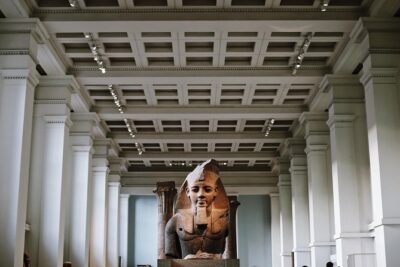
The British Museum London – Exclusive Guided Museum Tour
Read our review →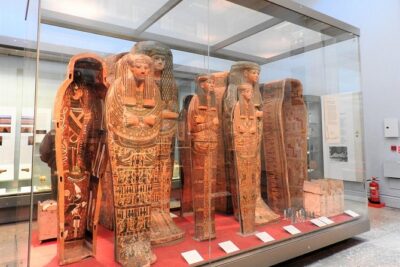
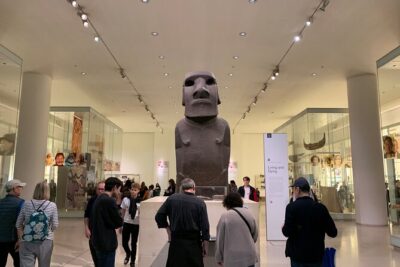
Private Guided Tour of the British Museum – Tickets Included
Read our review →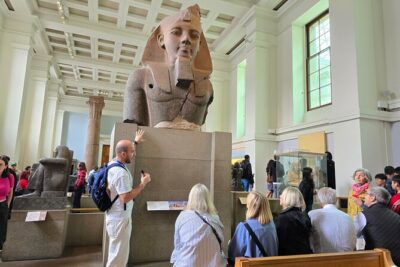
British Museum Guided Tour with Priority Timeslots(Small Group)
Read our review →
British Museum & National Gallery of London Semi-Private 8ppl Max
Read our review →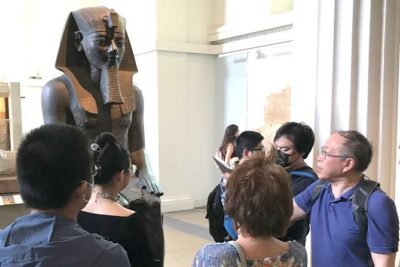
Explore Biblical Artifacts at the British Museum
Read our review →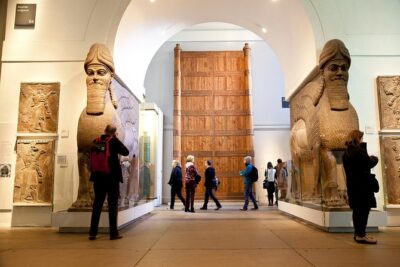
British Museum Highlights Private Tour in London including the Rosetta Stone
Read our review →
Crash course in archaeology at the British Museum
Read our review →Browse the lists this tour appears in